REVIEW · BERLIN
Berlin: 1-Hour Segway Tour
Book on GetYourGuide →Operated by Firewheels Tour GmbH · Bookable on GetYourGuide
Berlin feels like it moves differently on two wheels. In just one hour, you glide past major sights from Cold War days and today, with the added bonus of a practice session so you’re not learning while you’re sightseeing. I especially like how the tour pairs big-picture monuments with photo-friendly stops, and how you’ll hit both memorial space and architecture without it turning into a marathon. One possible drawback: with any Segway tour, you’re sharing roads and crossings, so if you’re nervous on busy streets, slow down mentally and follow your guide’s pace.
This isn’t a laid-back stroll; it’s active, controlled, and guided. You’ll see Checkpoint Charlie (including the former border control area), the Brandenburg Gate, the Holocaust Memorial, plus an architectural circuit around Gendarmenmarkt on the alternate route. If you want one very specific segment like the Berlin Wall area or a particular loop, just make sure the route you booked matches the sights you care about most, because the itinerary is set by option.
In This Review
- Key things to know before you book
- Segway setup and the practice that actually matters
- Two routes: Option A vs Option B and how to pick
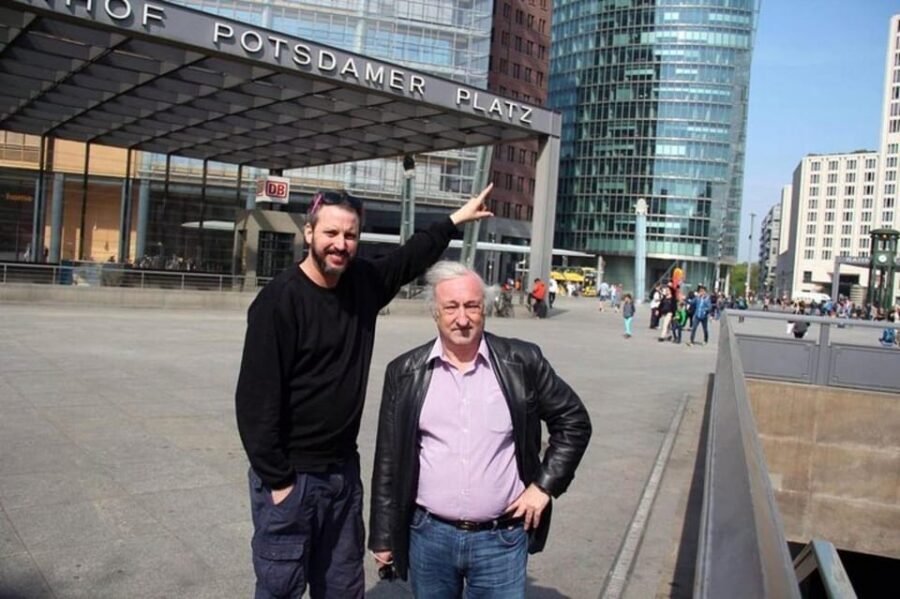
- Rolling past Checkpoint Charlie and the Wall at Potsdam Square
- Brandenburg Gate: the iconic stop you actually get time to process
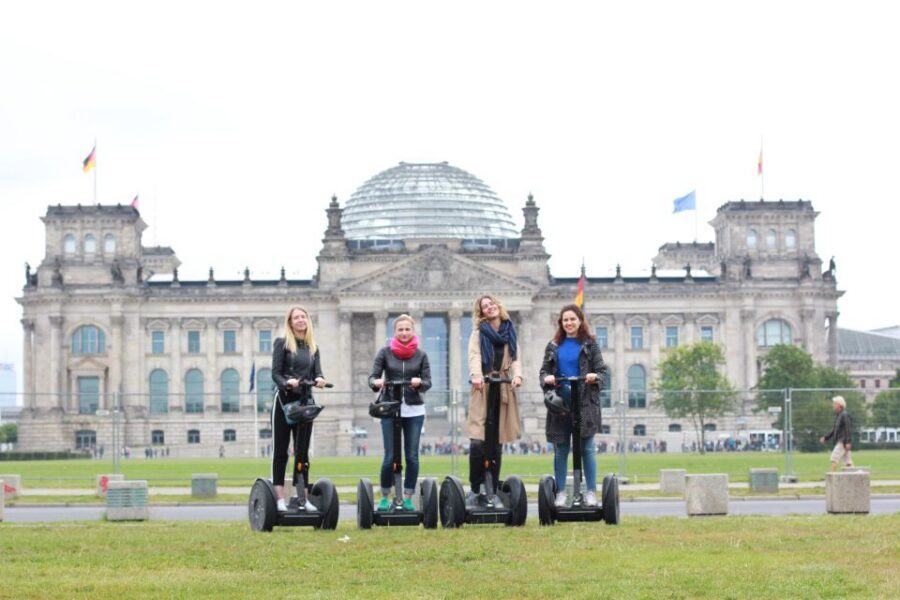
- Reichstag area and the German Chancellery: politics in motion
- Gendarmenmarkt and Berlin’s “designed city” feeling
- Sony Center and Philharmonie: modern Berlin after the memorials
- Holocaust Memorial stop: how to handle a solemn moment on a short tour
- What one hour feels like in real terms
- Meeting point and start-of-tour sanity tips
- Who should book this Segway hour
- Should you book the Berlin 1-hour Segway Tour?
- FAQ
- How long is the Berlin 1-hour Segway tour?
- Is there a practice session before we start riding?
- What sights do we see on the two route options?
- What’s included in the price?
- What are the age and weight requirements?
- Where is the meeting point?
Key things to know before you book
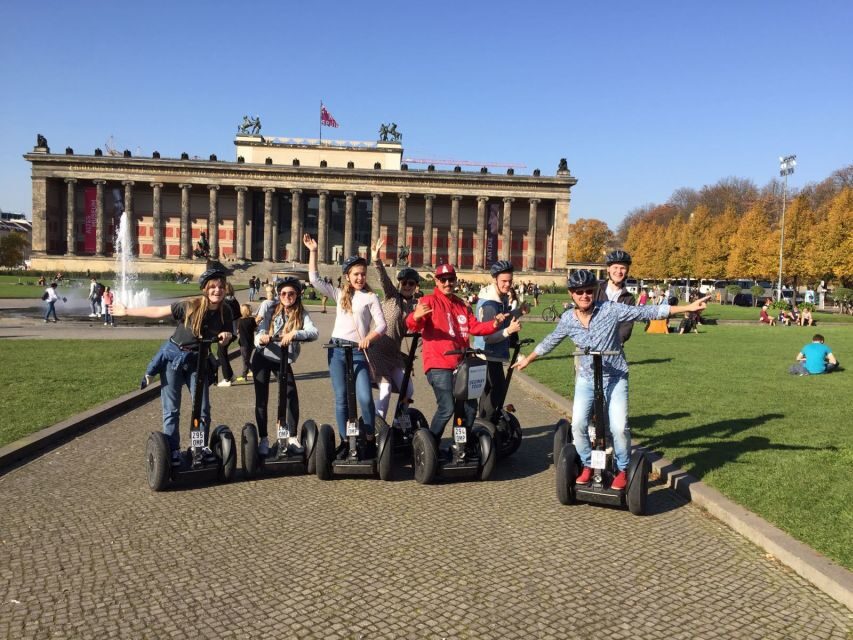
- Practice session first: you get a short on-site training run before you start rolling with the group
- Two fixed route loops: Option A focuses on government and central sights; Option B leans into Gendarmenmarkt and Potsdam Square
- Photo-worthy Cold War stops: you pass Checkpoint Charlie and the Berlin Wall remains at Potsdam Square
- A solemn memorial stop: the route includes the Holocaust Memorial to Jewish victims of the Nazi regime
- Weather gear is handled: raincoats, gloves, and warm vests are provided depending on conditions
- English guiding: live English commentary, with the usual advice to ask questions if anything is unclear
Segway setup and the practice that actually matters
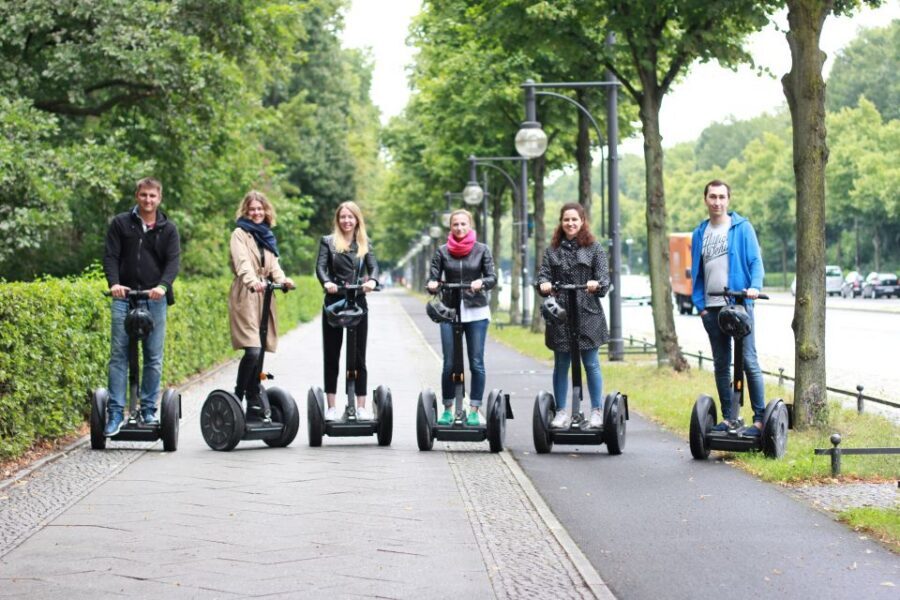
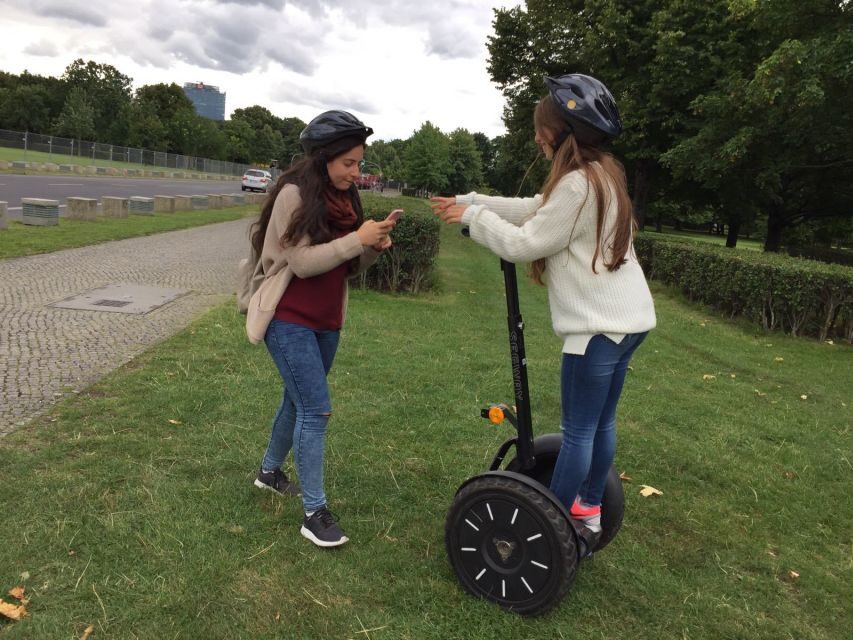
The biggest reason I like this tour format is simple: you get a practice session before you set off. Segways are easy once you understand the balance point, but you still want that first minute to happen somewhere safe, not while you’re trying to read street signs and hold a steady line.
Plan to show up ready to move. Wear comfortable shoes and clothes that fit the weather, and don’t underestimate Berlin conditions—one review hit the point that it was good but cold. The good news: you’ll be given raincoats, gloves, and warm vests depending on the weather, which helps you stay on the ride instead of shivering through it.
You also get a helmet, and that’s not just a box to tick. It means the provider is treating the Segway part as a real activity, not a gimmick. If you’re the kind of person who likes clear rules, you’ll probably feel more comfortable after the initial training.
You can also read our reviews of more tours and experiences in Berlin


Two routes: Option A vs Option B and how to pick
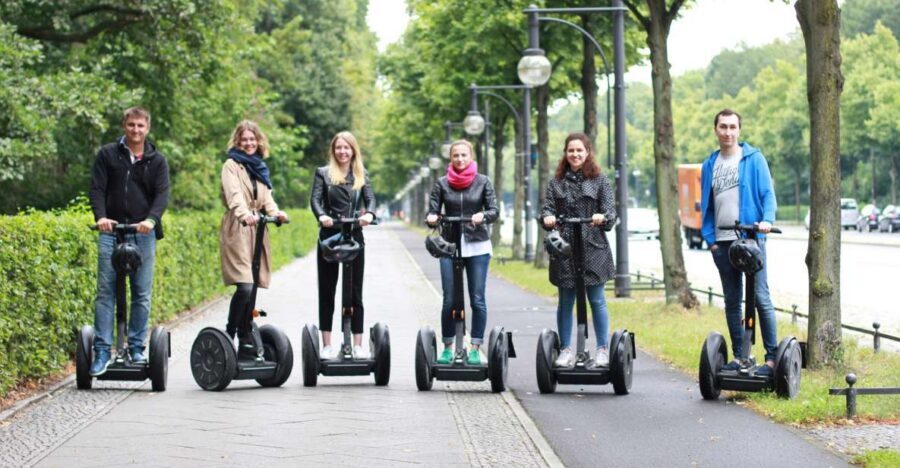
You get to choose between two routes, and that choice changes the feel of the hour. Option A is more “classic monument and government corridor,” while Option B is more “squares, culture zone, and Cold War perimeter.”
Option A: Brandenburg Gate – Central Train Station – German Chancellery – Swiss Embassy – Reichstag Building – Holocaust Memorial.
This reads like a straight line through major civic landmarks. If you want the Brandenburg Gate moment early and you care about the executive/leadership side of Berlin, this is the route you’ll likely enjoy most.
Option B: Gendarmenmarkt – Checkpoint Charlie – Berlin Wall remains at Potsdam Square – Sony Center – Philharmonie – Brandenburg Gate – Holocaust Memorial.
This one is tighter thematically: start with a stylish public square, move into Cold War storytelling around Checkpoint Charlie and the Wall area, then shift to modern Berlin near the Sony Center and the Philharmonie. If you’re most excited by the Cold War contrasts, Option B is usually the more satisfying arc.
Practical tip: before you arrive, decide which option matches what you want photographed most—architecture around Gendarmenmarkt or the government-heavy sweep. Also, check in with your guide or at the start of the tour so you’re aligned. One experience note mentioned route expectations weren’t confirmed the way they hoped, so it’s smart to speak up early.
Rolling past Checkpoint Charlie and the Wall at Potsdam Square
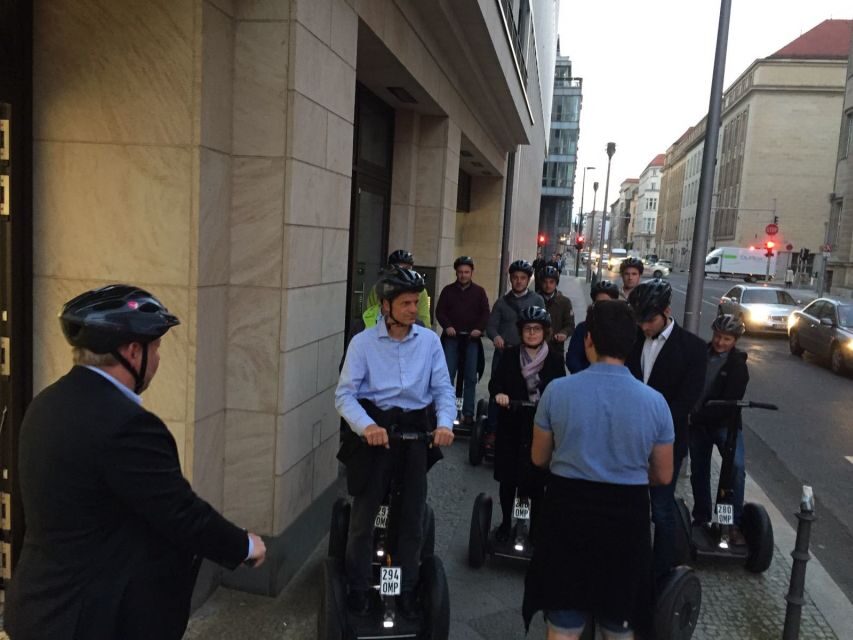
Cold War Berlin hits hard in small doses, not just in textbooks. On this tour you ride past Checkpoint Charlie, specifically the former border control area between East and West Berlin. Seeing that space from street level gives you a different scale—this wasn’t some distant event. It was right there, shaping everyday movement.
If you choose Option B, you also get the Berlin Wall remains at Potsdam Square. Even when you’re only seeing fragments, the value is the context your guide can add while you’re still in motion. You get to connect the dots quickly: border control, then the Wall remnants nearby, then the city’s later layers.
One caution from real-world experience: a few streets may feel less comfortable when you’re crossing. If you’re still getting used to the Segway balance, treat crossings like a skill check. Keep your weight steady, let the guide set the timing, and don’t rush your own learning curve. The tour is designed to get you confident, but your comfort level still matters.
Brandenburg Gate: the iconic stop you actually get time to process
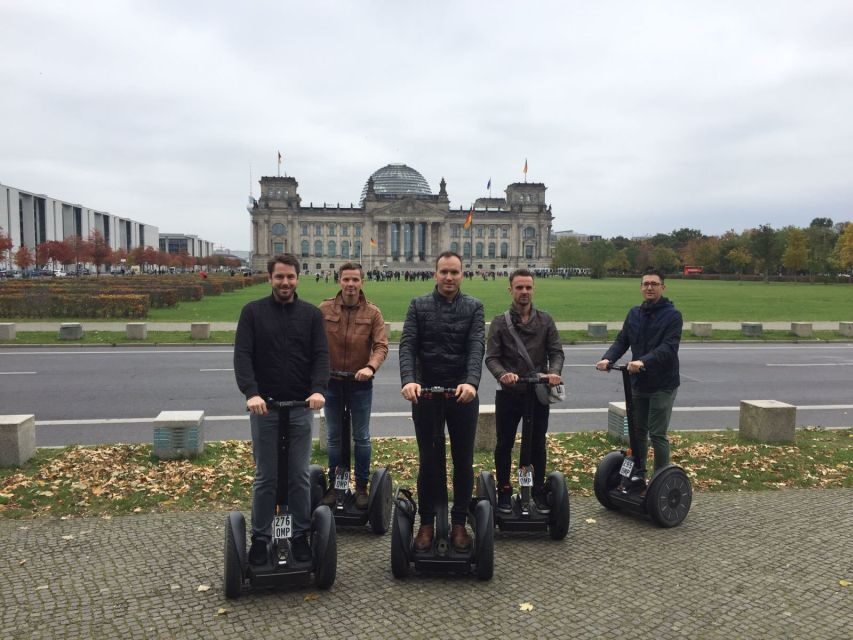
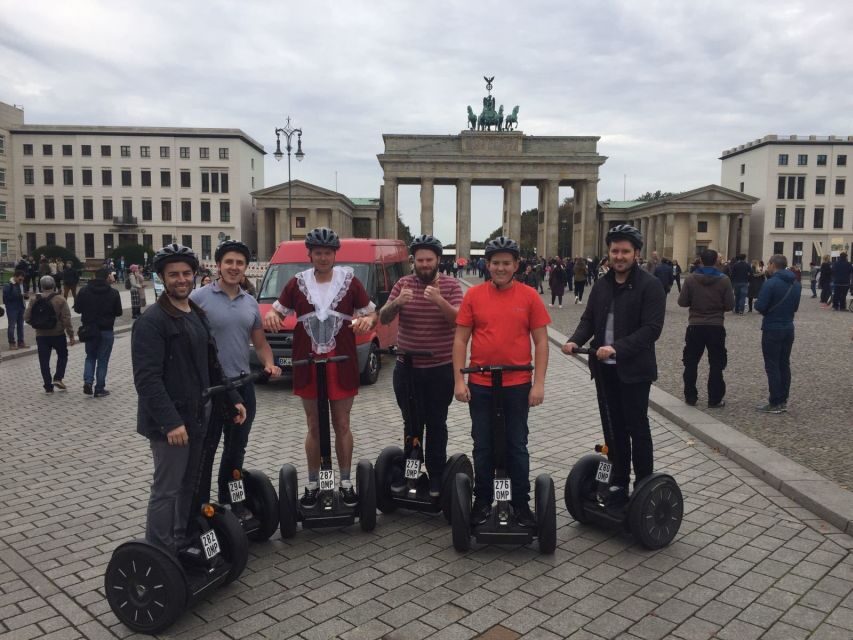
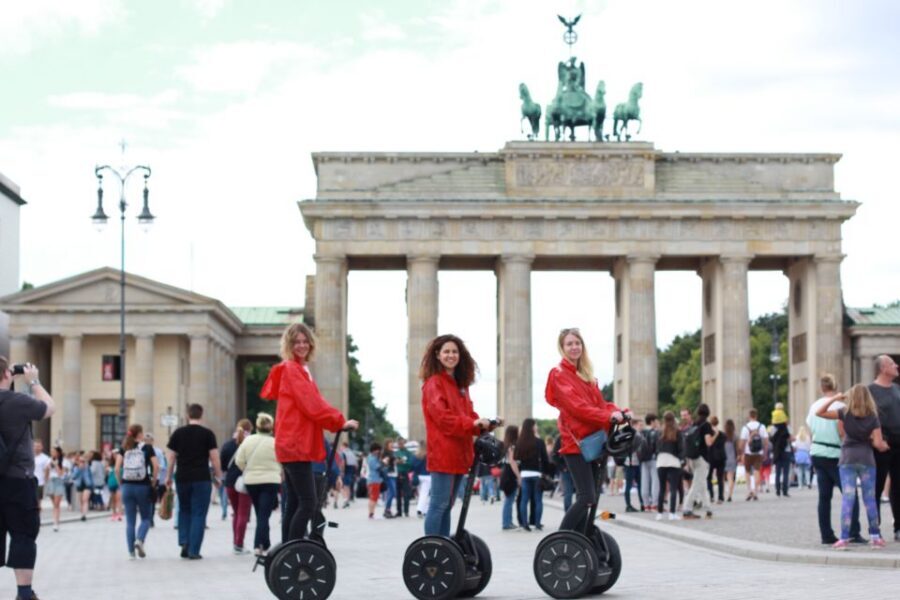
The Brandenburg Gate is a familiar silhouette, but seeing it while you’re gliding past it—with a guide pointing things out as you go—helps it click. It’s not a quick drive-by. On these routes, it’s a key landmark stop, and it anchors the hour so you can orient your Berlin memories around something solid.
I like that it’s paired with both Cold War context and memorial space later in the ride. That means you’re not only collecting “pretty postcard views.” You’re also seeing how Berlin presents multiple eras in one compact route.
If you care about photos, this is usually where you’ll want to slow down in your mind. Think about where you’ll stand, how you’ll frame the gate, and how you’ll avoid blocking anyone. The Segway makes it easy to move, but it’s your job to keep the photo moment respectful and safe.
Reichstag area and the German Chancellery: politics in motion
Option A takes you around the German Chancellery—described in the tour details as the executive office of the head of state. Even if you don’t spend time reading every sign, gliding past that kind of building gives you a sense of how the city organizes power in physical space.
You’ll also pass the Swiss Embassy and the Reichstag Building on Option A. For many people, these stops are about more than architecture. They’re about connecting Berlin’s political identity to what you’re seeing in the street scene.
A side note that matters: this is one-hour sightseeing, so explanations can move fast. If you want more depth, ask questions. The tour format gives you that chance with a live guide, and it’s the best way to turn passing sights into something you remember for longer.





Gendarmenmarkt and Berlin’s “designed city” feeling
If you choose Option B, you’ll visit Gendarmenmarkt and its architectural ensemble. This is the part of the tour where Berlin looks staged in the best way: clean lines, classic public-square energy, and a feeling of order. It’s a relief after Cold War sites, and it gives your brain a moment to enjoy the city’s design.
I like that Gendarmenmarkt is not just a quick name-drop. The tour positions it as a real highlight, meaning the guide is likely to talk through what you’re looking at while you ride the perimeter.
Gendarmenmarkt also works well for photos because a public square naturally offers multiple angles. If you’re careful about where you park the Segway and where you step aside for pictures, you’ll end up with shots that actually show context—street, buildings, and the sense of place.
Sony Center and Philharmonie: modern Berlin after the memorials
Still on Option B, you’ll ride by the Sony Center, described as a shopping and entertainment complex. Nearby you’ll also pass the Philharmonie. This is the “present day” contrast Berlin is famous for: monumental past, then modern city life.
The value here is pacing. If you go straight from Wall-era locations into modern spaces, you see how Berlin reuses, redevelops, and reframes areas over time. You’re not only learning what happened; you’re seeing what exists now.
From a rider’s perspective, these stops also break up the more emotionally intense sections. They’re a reminder that your hour is active sightseeing, not just memorial fatigue. Still, keep your senses on the road and crossings, because modern routes often mean more cars and more intersections.
Holocaust Memorial stop: how to handle a solemn moment on a short tour
The Holocaust Memorial is included on both routes, specifically to the Jewish victims of the Nazi regime. This is the part of the ride where you should slow down, even if the tour moves on a schedule.
Segway tours are inherently motion-based, but a memorial needs a different kind of attention. Even if you don’t have long free time, you can still do a respectful pause: look, breathe, and let the guide’s context land before you roll to the next section.
Practical advice: bring a quiet mindset to this stop. If you need to take a step back from the crowd or adjust your pace, do it. Your body is new to the ride, your attention might be divided, and it’s okay to prioritize the moment over speed.
What one hour feels like in real terms
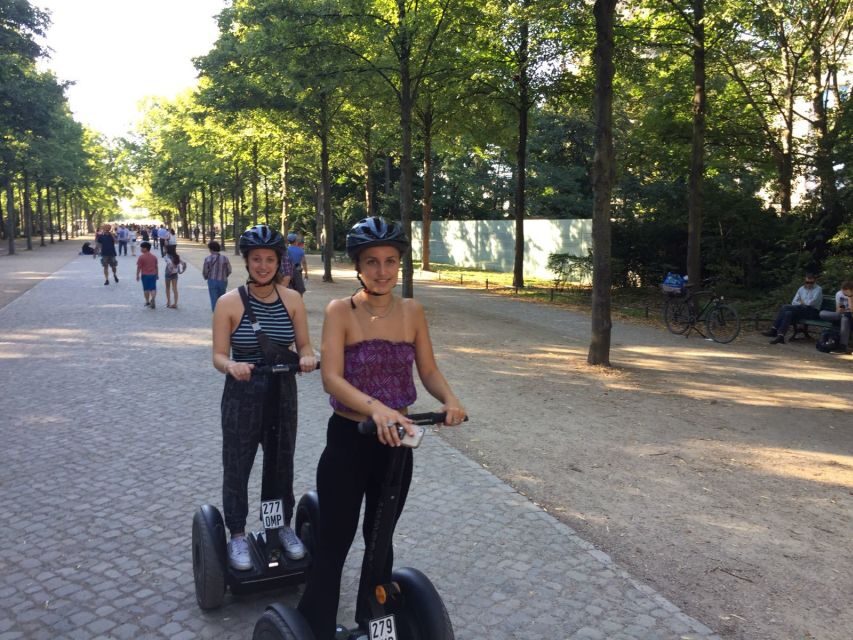
A 1-hour Segway tour sounds short, but it’s exactly the point. You’re not trying to exhaust Berlin—you’re collecting a focused set of symbols and then getting out while the experience is still fresh.
You’re also getting more than riding time. The tour includes the practice session, the professional guide, and equipment like helmets plus weather gear. That means the $53 price isn’t just for the Segway itself; it’s for having someone manage route flow and help you interpret what you’re seeing at speed.
Is $53 a bargain? It depends on what you value. If you like structured sightseeing with a guide and you want to move through multiple major sites without spending hours commuting between them, it’s good value. If you’d rather linger and roam independently, one hour may feel like a taste, not a meal.
My take: for most people, it’s a strong intro to Berlin’s key eras—Cold War, modern city planning, and memorial space—without requiring you to plan a complex route map.
Meeting point and start-of-tour sanity tips
You meet at Robot city, Claire-Waldhoff-Straße 6, 10117 Berlin. This matters because Segway tours are time-sensitive. One review noted a guide arrived late enough that they questioned whether they were at the right place. The fix is simple: arrive a little early, confirm you’re at the correct entrance, and be ready to gear up.
Once you’re suited up and briefed, the experience usually clicks quickly. Still, if your English is rusty or the guide’s phrasing is fast, don’t struggle silently. Ask questions. The tour is set up for interaction, and asking once often clarifies everything else.
Who should book this Segway hour
This tour is best for adults and teens who want a guided “high-impact highlights” loop and don’t mind riding actively for an hour. It’s also a good choice if you like photographing landmarks from a moving perspective—something you don’t get on walking tours.
You must be at least 15 years old, and you need to fall within a 45 to 118 kilogram weight range. It’s not suitable for children under 15, so plan accordingly if you’re traveling as a family.
If you’re nervous about Segways on public crossings, you can still consider it, but go in with the right mindset: slow and steady, follow the guide, and expect that some streets may feel less comfortable until you trust the machine.
Should you book the Berlin 1-hour Segway Tour?
Book it if you want a guided hour that strings together Berlin’s Cold War markers, an iconic symbol like the Brandenburg Gate, and the Holocaust Memorial—all while you’re actively gliding and getting quick interpretation. I also think it’s a solid pick if you like an efficient route and don’t want to spend your first day juggling transit and planning.
Skip it if you need lots of quiet time to linger, or if you strongly prefer walking pace over riding pace. It’s also not for anyone outside the age and weight rules.
If you do book, arrive early at Robot city, choose the option that matches your must-see list (government corridor or Gendarmenmarkt-to-Cold-War loop), and be ready to ask the guide questions. If you get a great guide—one name that came through in feedback was Morgan—you’ll likely feel like the hour flew by in the best way.
FAQ
How long is the Berlin 1-hour Segway tour?
The tour duration is 1 hour.
Is there a practice session before we start riding?
Yes. A practice session is included before you set off.
What sights do we see on the two route options?
Option A includes Brandenburg Gate, Central Train Station, German Chancellery, Swiss Embassy, Reichstag Building, and the Holocaust Memorial. Option B includes Gendarmenmarkt, Checkpoint Charlie, Berlin Wall remains at Potsdam Square, Sony Center, Philharmonie, Brandenburg Gate, and the Holocaust Memorial.
What’s included in the price?
The tour includes a professional guide, a practice session, helmets, and weather gear such as raincoats, gloves, and warm vests depending on conditions.
What are the age and weight requirements?
You must be at least 15 years old, and your weight must be between 45 and 118 kilograms.
Where is the meeting point?
The meeting point is Robot city, Claire-Waldhoff-Straße 6, 10117 Berlin, Germany.