REVIEW · BERLIN
PRIVATE BEHIND THE BERLIN WALL and COLD WAR BERLIN TOUR
Book on Viator →Operated by Birchys Berlin Tours · Bookable on Viator
Berlin still carries a Cold War bruise. This private walking tour strings together major Wall-era sites, from Potsdamer Platz to the Berlin Wall Memorial, in about four hours. What I like most is the mix of famous landmarks and personal escape stories, and the fact it’s led by an English-speaking licensed guide who keeps the pace human-sized.
One thing to plan for: this is a walking-heavy route with plenty of outdoor time. If it’s cold or rainy when you’re in Berlin, dress for weather and expect a few stops to warm up and reset.
In This Review
- Key highlights worth planning for
- Start at Birchys Berlin Tours and settle into a tight four-hour loop
- Price and value: what you pay for (and what you don’t)
- Potsdamer Platz: from desolation to the city’s re-unified reset button
- Topography of Terror: the surviving Wall fragment and the escape tension
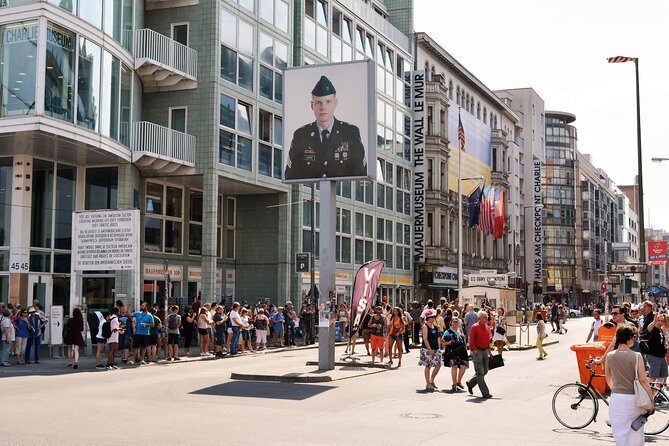
- Checkpoint Charlie: failed attempts, real face-offs, and why it became a symbol
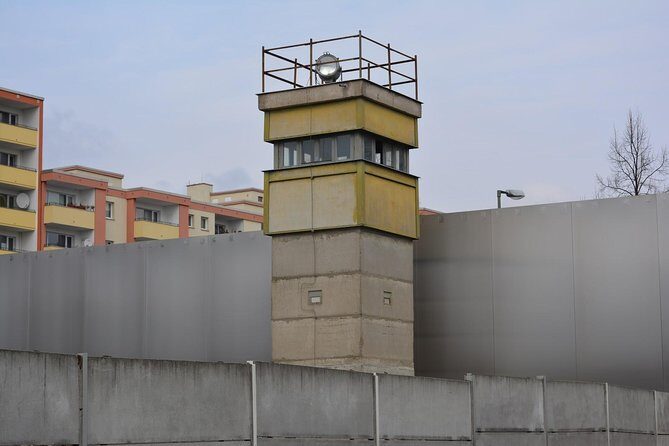
- GDR Watch Tower: a rare BT-variant that survived a private effort
- Berlin Wall Memorial: the 1km walk and the preserved cross-section
- Walking pace, rest breaks, and how guides keep it from getting heavy
- Who this tour suits best
- Should you book this Cold War Berlin Wall tour?
- FAQ
- How long is the Private Behind the Berlin Wall and Cold War Berlin tour?
- Is this a private tour or shared with others?
- Where do I meet the guide?
- What language is the tour in?
- Are entry tickets needed for the stops?
- What’s included in the price?
- What is the cancellation policy?
Key highlights worth planning for
- Private by design, with your own group only so the guide can tailor the pace and answer questions
- Licensed English guide focused on Cold War context, politics, and the people caught in between
- Free-entry stops at every listed site, so you’re not juggling separate ticket costs
- A route built for contrasts, from Potsdamer Platz reborn to the Wall’s most haunting preserved sections
- A rare survival stop, the GDR Watch Tower and its BT-variant survival story
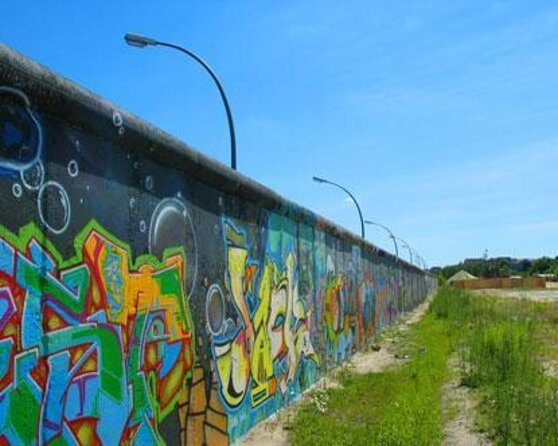
- The Wall Memorial’s 1km walk, including the only preserved complete cross-section of wall and death-strip
Start at Birchys Berlin Tours and settle into a tight four-hour loop
You’ll meet at Birchys Berlin Tours, Ebertstraße 24 (10117 Berlin), and the tour ends back at the same place. It runs about 4 hours, and you can choose either a morning or afternoon start. It also includes a mobile ticket, which is handy when you’re moving quickly between stops.
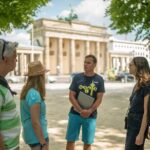
This is a private tour, so it’s just your group. That matters on a topic like the Berlin Wall, where you’ll want time for questions and real context, not a rushed script. Pickup is offered, which can make the start easier if you’re staying farther out, and the guide can time the walk to fit what’s going on that day.
The price is $173.75 per person, which is steep only if you expect it to be mostly sightseeing. Where it feels like good value is that you’re paying for a guide to connect the dots—why these locations mattered, how the Cold War shaped daily life, and what people risked to escape.
You can also read our reviews of more private tours in Berlin


Price and value: what you pay for (and what you don’t)
The tour includes an expert licensed tour guide and keeps things focused on walking. You’re not paying for private vehicles (the tour notes that it does not use any vehicles), and food and drinks are not included.
A big value point: every listed stop shows Admission Ticket Free. So you’re paying mainly for interpretation and wayfinding, not museum entry fees. That’s a smart setup for travelers who want serious meaning without adding more logistics and costs.
One caution: since this is a walking tour that moves across Berlin, there may be some sections where you use public transport between areas. The information provided doesn’t promise zero transit, so I’d budget a bit for that just in case.
Potsdamer Platz: from desolation to the city’s re-unified reset button
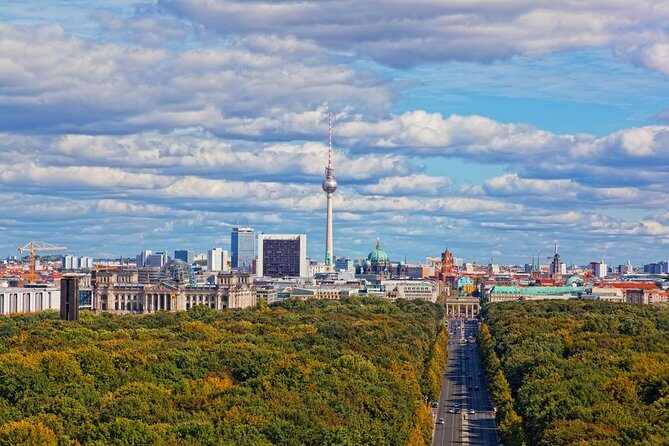
Potsdamer Platz is a strong first stop because it shows how fast Berlin can reinvent itself. In the Cold War era, this area was basically emptiness and tension, tied to the Wall’s presence and the struggle between East and West. Today, it’s a high-rise business and entertainment quarter, and the contrast is the point.
You don’t just get a quick look; you get the story behind the transformation. You’ll understand why this spot became a symbol of re-unified Berlin—the kind of place where politics, architecture, and everyday life collide.
If you’re hoping for long time here, don’t. It’s listed at about 15 minutes, so treat it as a fast setup: a launchpad for everything darker you’ll see next.
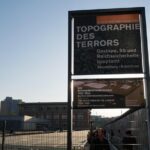
Topography of Terror: the surviving Wall fragment and the escape tension
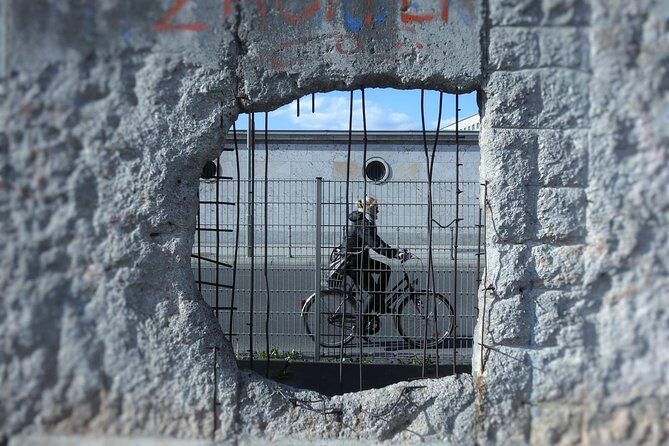
Next up is Topography of Terror, where the experience turns from redevelopment to survival evidence. A specific Wall fragment still exists here—described as the only surviving piece in this part of Berlin. That detail changes the feeling of the visit. You’re standing near remnants, not just recreations.
This stop also connects the Wall to the machinery of control. It sits next to the former-Luftwaffe Headquarters, which was used during the East German period as the House of Ministries. That’s a powerful pairing: the same physical space gets reused by different regimes, but the purpose—control—keeps echoing.
What makes this stop especially memorable is the escape angle. The tour notes that the area is tied to one of the more incredible escapes into West Berlin. You’ll likely find yourself listening with extra attention here, because the story turns the Cold War from an idea into something people actually bet their lives on.
Checkpoint Charlie: failed attempts, real face-offs, and why it became a symbol
Checkpoint Charlie is the name most people know first, but the tour approach keeps it from becoming a tourist photo-op. You’ll hear why it was such a hotspot for both failed and successful escapes—because by the early 1960s, crossing points weren’t just borders. They were choke points, staffed by people with hard rules and shifting power.
The stop also frames a famous confrontation: in autumn 1961, there was an incredible face-off between American and Soviet forces. That’s the Cold War in miniature—two superpowers, high tension, and the world watching for the next move.
It’s listed at about 20 minutes, so you’re not stuck waiting around. You’ll get the meaning quickly, then move on before your attention fades.




GDR Watch Tower: a rare BT-variant that survived a private effort
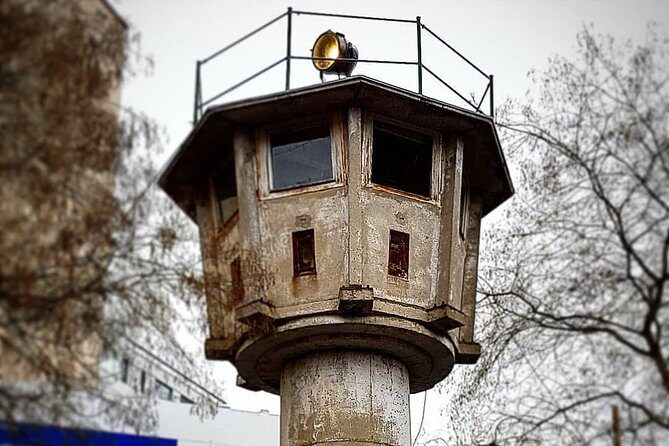
This is a smaller stop, but it’s the kind you remember. The GDR Watch Tower is described as the last of the BT-variant watchtowers that once surrounded West Berlin. That phrasing matters: you’re not seeing just any tower, you’re seeing a rare survival.
The tower also has a survival story tied to a private initiative. In other words, this wasn’t preserved by pure luck—it was saved by someone who cared. That makes your visit feel a bit like conservation, not just history.
Time-wise, you’ll spend about 10 minutes here. It’s short by design, but it works well after the big-name intensity of Checkpoint Charlie. By now, you understand that surveillance wasn’t abstract. It was physical: structures, sightlines, and systems built to watch people moving.
Berlin Wall Memorial: the 1km walk and the preserved cross-section
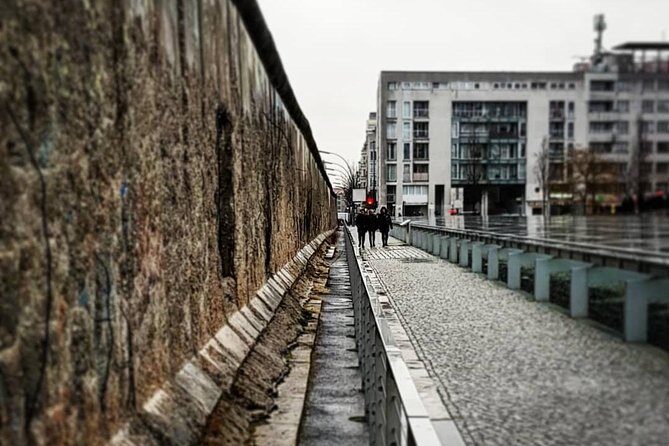
If you want one stop that really hits, it’s the Berlin Wall Memorial. It’s described as over 1km long, and it includes the only preserved complete cross-section of the Berlin Wall and the death-strip. That’s unusually direct. Instead of talking about what was built, you can see the structure that made escape so brutally hard.
The tour frames the memorial as a place of tragic loss and incredible escapes. That pairing is important because the Wall isn’t only history. It’s grief, fear, and sudden hope—sometimes in the same moment. Walking the route, you’ll get the sense that the memorial is designed to be understood step by step, not glanced at.
Expect about 1 hour 20 minutes here. If you’re short on time in Berlin, this is still the stop I’d protect, because it’s the one that offers you the most tangible sense of how the wall-and-death-strip system worked.
Walking pace, rest breaks, and how guides keep it from getting heavy
A walking tour can start to feel long when you’re staring at concrete and listening to tough stories. The guides here tend to manage that well. In the feedback I saw, people praised guides for keeping the pace realistic, including rest pauses.
One example: Cairan was repeatedly singled out for timed pacing and smart scheduling, including getting you to key places at moments that make sense and tend to be quieter. Another recurring theme is that guides build in warm-up breaks—sometimes at cafes with things like banana bread and cinnamon rolls. Even if you don’t care about pastries, the takeaway is useful: you’re not expected to steam through four hours without a reset.
If you’re traveling with kids or older family members, this tour format often works because a good guide can slow the group without turning it into a slog. The route is structured, but the human side—questions, timing, and comfort—seems to be handled.
My practical advice: wear layers, bring a hat, and keep gloves handy. Berlin weather can flip the mood fast, and you’ll enjoy the stories more when your body feels comfortable enough to focus.
Who this tour suits best
This is ideal if you want Cold War Berlin with meaning, not just landmarks. If you’re the kind of traveler who asks why a place matters, you’ll like how the tour connects politics to real geography—Wall remnants, border chokepoints, and the institutions built around control.
It’s also a good fit for history students or anyone who wants the human angle. In the feedback, guides were praised for telling stories that stick—especially escape attempts and the long shadows those attempts cast for families.
If you’re not a history person, the tour can still work because the structure is simple: walk, look, understand. Just be ready for serious topics, since the Wall wasn’t a trivia theme. It was life-and-death infrastructure.
Should you book this Cold War Berlin Wall tour?
Book it if you want one guided afternoon that ties together Potsdamer Platz, Topography of Terror, Checkpoint Charlie, a surviving watchtower, and the Berlin Wall Memorial—without turning it into a museum binge.
Skip it (or at least consider timing carefully) if you hate walking in cold weather or you expect an easy, low-stress sightseeing day. This experience is built on outdoors walking and standing, and it’s meant to feel emotionally weighty.
If you’re choosing between a random Wall photo stop and a guided route that explains why each location became important, I’d pick the guided option every time. You’re paying for the missing layer: context that makes the sites stop being background and start being understandable.
FAQ
How long is the Private Behind the Berlin Wall and Cold War Berlin tour?
It lasts about 4 hours (approximately).
Is this a private tour or shared with others?
It’s a private tour/activity, meaning only your group participates.
Where do I meet the guide?
The tour starts at Birchys Berlin Tours, Ebertstraße 24, 10117 Berlin, Germany, and it ends back at the meeting point.
What language is the tour in?
The tour is offered in English.
Are entry tickets needed for the stops?
The listed stops show Admission Ticket Free, so you should not need paid admission for them.
What’s included in the price?
The tour includes an expert licensed tour guide. Food and drinks and private transportation are not included.
What is the cancellation policy?
You can cancel for a full refund up to 24 hours in advance of the experience start time. If you cancel less than 24 hours before, the amount paid is not refunded.