REVIEW · BERLIN
2.5-Hour Berlin Wall and Memorial Sites Walking Tour
Book on Viator →Operated by Berlin Bike Tour · Bookable on Viator
Some parts of Berlin hit you fast. This walking tour traces the Berlin Wall where it mattered—across memorial ground and former border paths. You start at the Square of November 9, 1989 and follow the old boundary line through the story of the Cold War in Berlin and Germany, with stops tied to the former “death strip” and key wall-related sites.
I particularly like how the route is designed to help you see the Wall in sections, not just as one big “thing.” You also get a more personal experience thanks to a maximum group size of 12, which makes it easier to ask questions as you move from one station-linked spot to another.
The one thing to keep in mind is that this is a walking tour with a moderate fitness expectation, so plan on being on your feet for the full 2.5 hours—even with a pause built in.
In This Review
- Key moments you’ll walk past
- Starting at the Square of November 9, 1989
- Bornholmer Strasse: ex-border crossing and getting oriented
- Reading the route: Ulbricht Curve and Schwedter Way
- Gleim tunnel: seeing how the Wall changed space
- Berlin Wall Park: what remains after the Wall
- Bernauer Street tunnel and the memorial role of the site
- Church of Reconciliation: a pause for reflection
- Viewing platform of the Berlin Wall Memorial
- Finishing at Berlin-Nordbahnhof: wrap-up with real-world momentum
- Price and value: is $25.45 worth it?
- What the tour pacing feels like (and why it works)
- Who should book this walking tour
- Should you book the 2.5-Hour Berlin Wall and Memorial Sites Walking Tour?
- FAQ
- How long is the Berlin Wall and Memorial Sites walking tour?
- Where does the tour start and end?
- What time does the tour start?
- How many people are in the group?
- Is a mobile ticket provided?
- What’s included in the price?
- Is food included?
- What fitness level do I need?
- What is the cancellation policy?
Key moments you’ll walk past
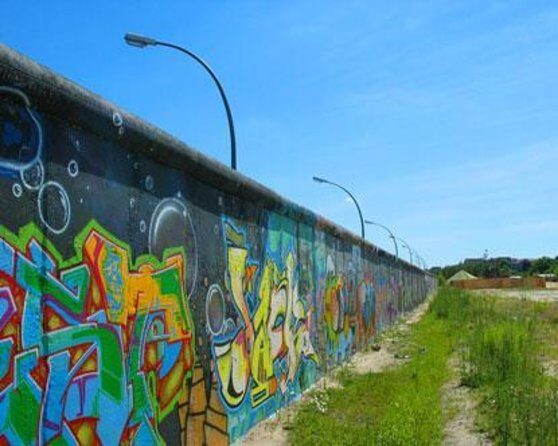
- Square of November 9, 1989: the story’s pivot point in the city itself
- Bornholmer Strasse ex-border crossing: a natural place to understand how the boundary worked
- Ulbricht Curve, Schwedter Way, and Gleim tunnel: named segments that make the Cold War route feel real
- Berlin Wall Park and Bernauer Street tunnel: the Wall’s footprint still shows up in today’s streetscape
- Church of Reconciliation and the viewing platform: spiritual and practical stops that help you process what you’re seeing
- End at Berlin-Nordbahnhof: you finish near a major transit node, easy for onward plans
Starting at the Square of November 9, 1989
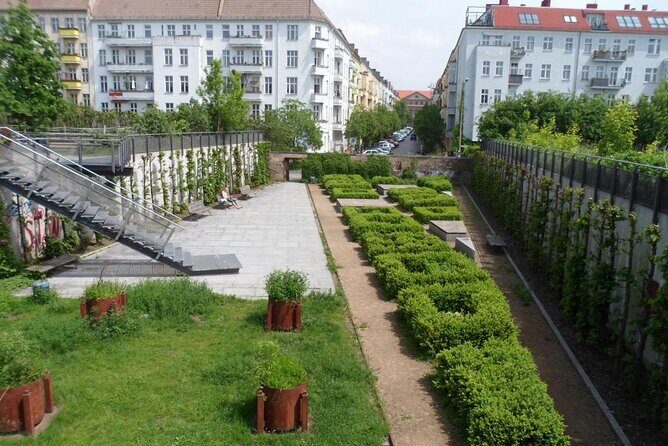
You begin at Bornholmer Str. 75A, 10439 Berlin, at a site linked to the Wall’s dramatic turning point. The Square of November 9, 1989 is more than an address stop—it’s where the Wall story changes direction after 28 years of splitting.
From the start, the guide’s job is to turn “history” into geography. You follow the old boundaries on foot, and you learn how the Cold War played out in Berlin through specific locations rather than broad summaries.
You can also read our reviews of more walking tours in Berlin



Bornholmer Strasse: ex-border crossing and getting oriented
The route is anchored by the ex-border crossing at Bornholmer Street. This is where you can start picturing the boundary not as a straight line on a map, but as a working system with stations, pathways, and checkpoints that affected everyday life.
There’s also an inclusive pause during the walk, which matters more than you might think on memorial tours. It gives you a breather so the details from the previous stretch can actually land.
Reading the route: Ulbricht Curve and Schwedter Way
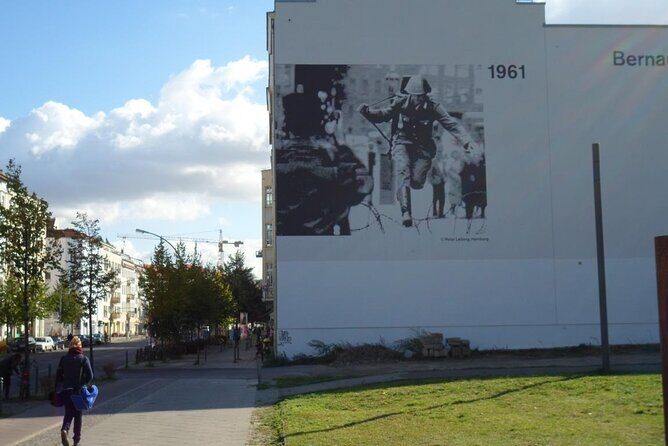
Next, you move into named stretches tied to the former border world—Ulbricht Curve and Schwedter Way. What I like about this kind of stop is that it helps you “read” the city as you walk. Even if you don’t know Berlin Wall terminology, the guide turns those names into an easy mental model for how the Wall moved through built-up areas.
This is where a guided route pays off. Alone, it’s easy to wander past pieces that look like ordinary streets or paths. With a guide, you’re learning what to look for as you pass places that are documented by the city and connected to the Wall’s former presence.
Gleim tunnel: seeing how the Wall changed space
You also stop at Gleim tunnel, a reminder that the Wall didn’t only cut through open areas. It also shaped movement through specific infrastructure points.
A tunnel stop tends to do two things for your understanding. First, it makes the boundary feel more physical, because you’re confronted with how space itself was controlled. Second, it helps you connect what you heard about the “death strip” concept to real-world barriers and routes.
Berlin Wall Park: what remains after the Wall
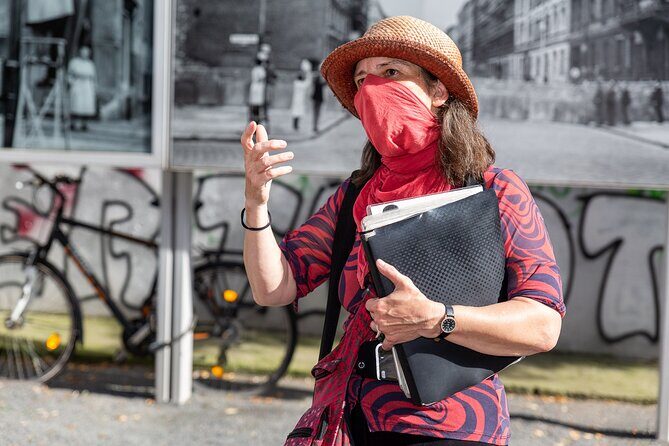
At Berlin Wall Park, the tour shifts from “where the Wall was” to “what’s left now.” You see the former boundary reflected in today’s paths and memorialized traces.
I like this transition because it keeps the tour from becoming only sad or only abstract. You’re not just told what existed—you’re shown how the city has kept parts of the Wall’s footprint visible, so you can connect past and present while you’re still walking.




Bernauer Street tunnel and the memorial role of the site
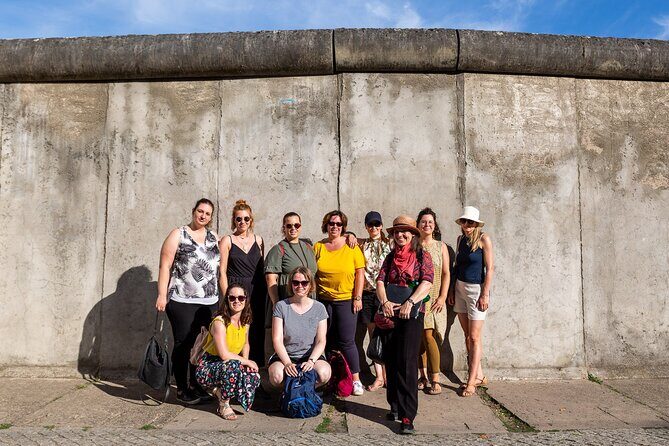
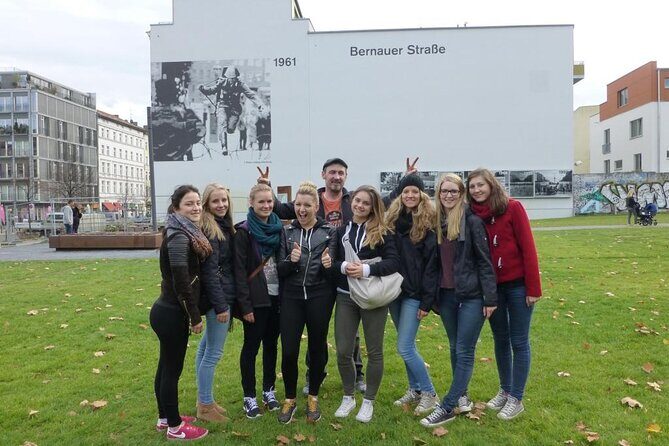
Another key stop is Bernau Street tunnel, followed by major memorial viewing ground connected to the Bernauer Strasse Memorial area. The value here is the way the guide ties places together along the old route instead of treating each site as a standalone attraction.
In practical terms, this is where you start to understand why people come here to remember. Memorial stops aren’t just plaques and photos; they’re built around the idea that the Wall’s effects were spread across many points, including spaces designed for movement and access.
Church of Reconciliation: a pause for reflection
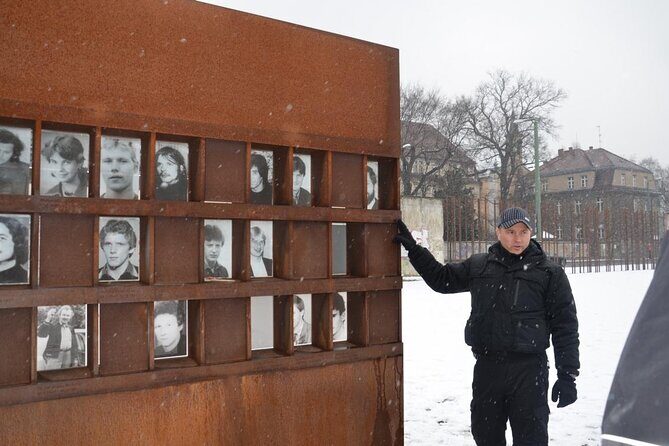
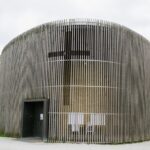
You’ll also visit the Church of Reconciliation. It’s a strong contrast point after tunnel and boundary-focused stops, and it helps you process what you’ve been learning with a different kind of atmosphere.
This isn’t just a “check the box” church visit. In a Wall tour, places like this often help you shift from facts and route names toward human impact. You’ll likely find it easier to absorb the meaning of the story when the tour includes a setting that invites slower attention.
Viewing platform of the Berlin Wall Memorial
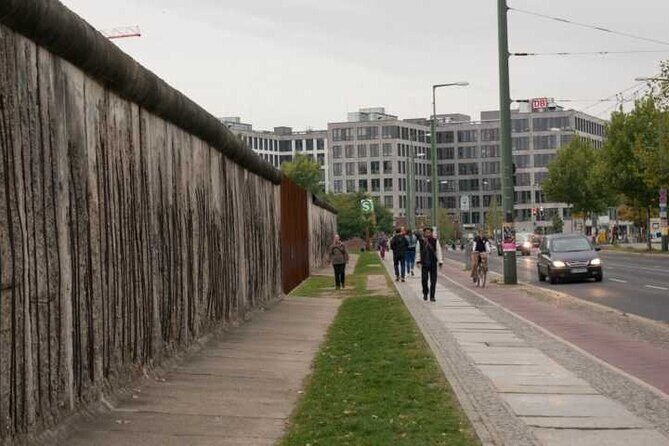
Then comes one of the tour’s most memorable moments: the viewing platform of Berlin Wall Memorial. A viewing platform is valuable because it gives your brain a wider frame—something walking tours often struggle to provide.
Even when details are still on your mind from earlier stops, standing somewhere designed for looking helps you reorganize the story spatially. You can connect the earlier segments you walked—like the named curves and tunnels—to the overall layout of where the boundary was.
Finishing at Berlin-Nordbahnhof: wrap-up with real-world momentum
The tour ends at Berlin-Nordbahnhof (Invalidenstraße 131 area). Finishing at a transport hub is practical, because you can move on right away without feeling stuck at the edge of the tourist map.
By the time you reach Nordbahnhof, the route has covered multiple former border-related points: from the Square of November 9, 1989 and Bornholmer Street, through station and tunnel-linked sites, and onward to major memorial ground. That “start to finish” structure makes it easier to remember the Wall as a system across Berlin instead of a single photo you’ve seen before.
Price and value: is $25.45 worth it?
At $25.45 per person for about 2 hours 30 minutes, this tour is priced like a budget-friendly memorial add-on—and it also includes key quality boosts. You get a local guide, plus a professional guide, and the tour is designed to skip the long lines.
Here’s the practical value equation: you’re paying for context and pacing. Berlin Wall sites can be overwhelming on your own because there’s so much to read, and so many spots that are easy to miss. With a guided route across major points, your money is effectively buying interpretation—help with connecting the “why” to the “where.”
Also, the small-group limit (max 12) matters for value. Even when the tour includes line-skips, the experience still depends on how much time you get with your guide. A smaller group keeps questions possible and keeps explanations from feeling rushed.
What the tour pacing feels like (and why it works)
The route is built around moving from one named point to another, including Ulbricht Curve, Schwedter Way, Gleim tunnel, Berlin Wall Park, Bernau Street tunnel, and then toward memorial viewing and the church. That sequence helps you keep track of the Wall story as a chain of locations, not a random list of stops.
The inclusion of a pause is also a smart detail. Memorial tours often turn into nonstop walking and nonstop reading. A built-in break gives you a chance to reset your attention, so you don’t leave with facts but without understanding.
Who should book this walking tour
This tour is a great fit if you want to see several major Wall memorial sites in one go, with help understanding the boundary and “death strip” context. It’s also a strong choice if you like small-group guiding and prefer not to stand in lines while you’re trying to learn.
It’s especially good for visitors who arrive wanting a structured story: you start at the Square of November 9, 1989 and you finish at Nordbahnhof, with clear stops along the former route. If you’re the type who learns best by walking through places and asking questions, you’ll probably enjoy this format.
If you have very limited mobility, you might want to consider a different option, since the tour expects a moderate fitness level and you’ll be walking for the full duration.
Should you book the 2.5-Hour Berlin Wall and Memorial Sites Walking Tour?
Yes—if your goal is a guided, efficient route through key Wall memorial points with strong explanation and a small-group feel. The price is reasonable, and the big “value lever” is what you’re buying: interpretation across multiple sites, plus line-skips and a group capped at 12.
I’d book it if you want the Wall to make sense as a system—mapped by stops and route segments—rather than as disconnected memorials. If you’d rather read everything at your own pace with minimal walking, you might prefer a self-guided plan instead.
FAQ
How long is the Berlin Wall and Memorial Sites walking tour?
It runs for about 2 hours 30 minutes.
Where does the tour start and end?
It starts at Bornholmer Str. 75A, 10439 Berlin, and ends at Berlin-Nordbahnhof (Invalidenstraße 131, 10115 Berlin).
What time does the tour start?
The start time listed is 3:00 pm.
How many people are in the group?
The maximum group size is 12 travelers.
Is a mobile ticket provided?
Yes, the tour includes a mobile ticket.
What’s included in the price?
You get a local guide / professional guide and the tour is set up to skip long lines.
Is food included?
No, food and drinks are not included.
What fitness level do I need?
You should have a moderate physical fitness level.
What is the cancellation policy?
You can cancel for a full refund up to 24 hours before the experience starts. Changes made less than 24 hours before the start aren’t accepted, and cancellations within 24 hours of the start aren’t refunded.