REVIEW · BERLIN
Berlin’s Best: 2 Hour Walking Tour Third Reich and the Cold War
Book on Viator →Operated by Insider Tour Berlin · Bookable on Viator
Berlin is history you can walk on. This 2-hour route connects the symbols of Nazi rule to the everyday reality of the Cold War, using major landmarks that bus tours often miss. You’ll get a local guide’s explanations as you move, so the story lands in your head, not just in your photos.
I especially like how the tour hits big, recognizable stops like Brandenburg Gate and Checkpoint Charlie while still adding the less-obvious details that make Berlin feel layered instead of staged. I also like the pacing: it’s short enough to fit into a tight itinerary, but long enough for the guide to turn grim locations into clear, human context.
One possible drawback: you’ll spend time at several emotionally heavy sites (Holocaust Memorial, Hitler’s bunker area). If you prefer a lighter, less confrontational approach, you might want to balance this day with something more upbeat.
In This Review
- Key Things I’d Highlight From This Tour
- Why This 2-Hour Walk Beats a Bus Ride in Berlin
- Price and Value: What $24.07 Buys You
- Timing, Meet-Up, and What to Bring
- Stop-by-Stop: From Reunified Germany to the Machinery of War
- Brandenburg Gate: Why This Icon Means Reunified Germany
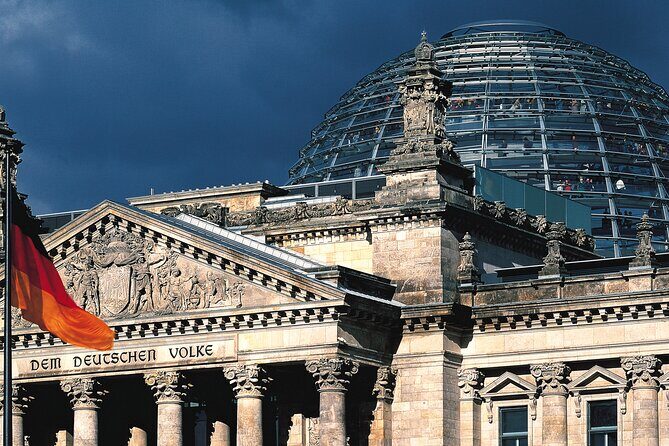
- Reichstag Building: Parliament, Fire, and Hitler’s Use of Power
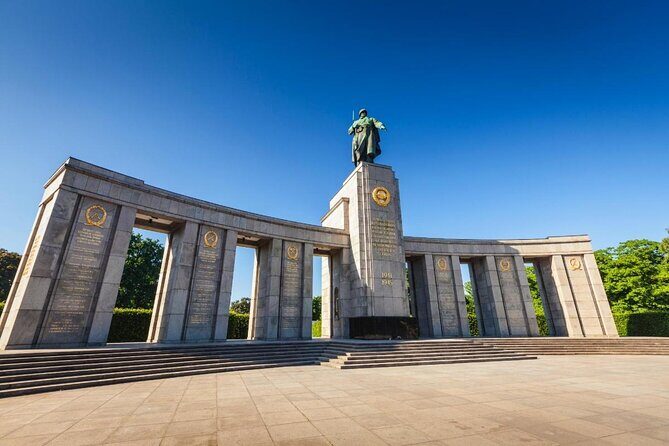
- Soviet Memorial Tiergarten: Tanks and the Cost of WWII
- Victory Column and Speer’s Germania Plan
- Holocaust Memorial: Immense Space for Remembering the Murdered Jews of Europe
- Fuhrerbunker: Where Hitler’s Last Days Ended
- Aviation Ministry of Berlin (Goering’s Air Ministry Site)
- Topography of Terror: SS, Gestapo, SD, and the Exhibition Space
- Niederkirchnerstraße: A Berlin Wall Piece and Stories of Escape
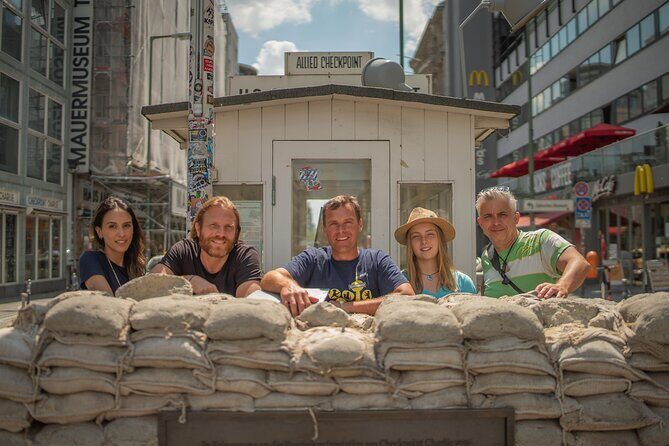
- Checkpoint Charlie: Tank Standoff, Wall Collapse, and Reunification
- How the Guide Makes the Dark Parts Manageable (Without Softening Them)
- Who Should Book This Tour (and Who Might Skip It)
- My Decision: Should You Book?
- FAQ
- How long is the Berlin Third Reich and Cold War walking tour?
- Where do I meet the guide?
- Is the tour offered in English?
- How many people are in a group?
- What are some of the main stops on the route?
- Are there admission fees for the stops?
- What is the refund policy if I need to cancel?
Key Things I’d Highlight From This Tour
- One clear storyline: Nazi power symbols to Cold War checkpoints, all on foot
- Major landmarks in real order: Brandenburg Gate to Reichstag to the Wall’s edge and beyond
- Time for questions: guides are praised for answering people’s curiosity
- Historic locations, not just viewpoints: you’ll stand where events shaped daily life
- Works in winter too: just plan for cold, because it’s an outdoor walk
- A small group feel: up to 30 people, so it doesn’t turn into a cattle line
Why This 2-Hour Walk Beats a Bus Ride in Berlin
Berlin rewards walking. That’s not a slogan here—it’s practical. This tour moves in a way that lets you understand how neighborhoods, monuments, and street corners line up with what happened there.
A bus is fast, but it’s also detached. On this walk, you’re close enough to notice scale—wide spaces like the Brandenburg Gate, the political weight around government buildings, and the tight, human scale of places tied to escape attempts. The guide’s commentary helps you “read” each location instead of just passing it.
You also get a useful intensity level. Two hours is long enough for meaning, but short enough that you’re not exhausted before the story is finished.
You can also read our reviews of more walking tours in Berlin



Price and Value: What $24.07 Buys You
At $24.07 per person for about two hours, you’re paying for two things: a live local guide and access to a structured route through hard-to-piece-together history.
A key value point: the listed stops have free entry indicated for each major stop. That doesn’t mean there’s no cost at all in the world—just that you’re not stacking multiple ticket prices on top of the tour fee while you’re trying to absorb a dense subject.
And you’re not paying for a huge group experience. This runs with a maximum of 30 travelers, which matters for questions and for hearing explanations while standing outdoors.
Timing, Meet-Up, and What to Bring
You should plan to arrive 15 minutes early. The meeting spot is at the Brandenburg Gate, at the Tourist Information office on the Pariser Platz side. Look for the guide with a pink umbrella.
Because this is an outdoor walk, bring sensible walking shoes. In winter, bring warm layers and gloves—people specifically call out the cold, and the tour still runs, so dressing for weather is not optional.
The tour is in English only, and it uses a mobile ticket, which is convenient if you like to keep everything in your phone.
Stop-by-Stop: From Reunified Germany to the Machinery of War
Brandenburg Gate: Why This Icon Means Reunified Germany
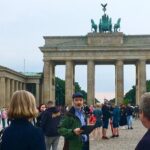
The tour kicks off at Brandenburg Gate, and right away the guide frames it as a symbol for a Germany that moved beyond division. This is a smart first stop because it sets a big idea: the same city can represent opposite eras, depending on who’s using it and what the world thinks it stands for.
Even if you’ve seen the gate in photos, standing there helps you understand why it became a shorthand for national meaning. You’ll hear how it fits into reunification—and why it matters when the tour later turns to the darker history of the 20th century.
You can also read our reviews of more tours and experiences in Berlin


Reichstag Building: Parliament, Fire, and Hitler’s Use of Power
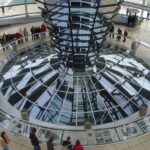
Next is the Reichstag Building, the house of Germany’s parliament. But this stop isn’t treated as architecture trivia. The point is how one building can absorb a century of political shifts.
You’ll hear the story of the Reichstag fire in 1933 and how Hitler used the building during his dictatorship. The lesson for you is simple: when governments gain control of symbols, they also try to control the narrative. Berlin’s landmarks don’t just sit there—they get fought over in meaning.
Soviet Memorial Tiergarten: Tanks and the Cost of WWII
At the Soviet Memorial in the Tiergarten, the focus turns to the war’s physical aftermath. You’ll see Soviet T34/76 tanks and WWII-era field artillery on the memorial grounds.
This stop anchors the tour in the reality that Berlin was not only a stage for ideology; it was a place of brutal destruction. The guide’s commentary helps you understand why the memorial’s objects matter—what they represent, and how memory gets placed into a city plan.
Victory Column and Speer’s Germania Plan
From there, you’ll move to the area near the Victory Column. The story here is unsettling because it mixes ambition with manipulation.
You’ll learn why Albert Speer moved the column from its original location to its current site, and you’ll hear about his plans for a new world-capital called Germania—a proposed name for Berlin if Nazi Germany had won WWII.
For you, this is one of those stops that makes the city feel like a document. You start noticing how buildings and monuments were used to project power, not just commemorate it.
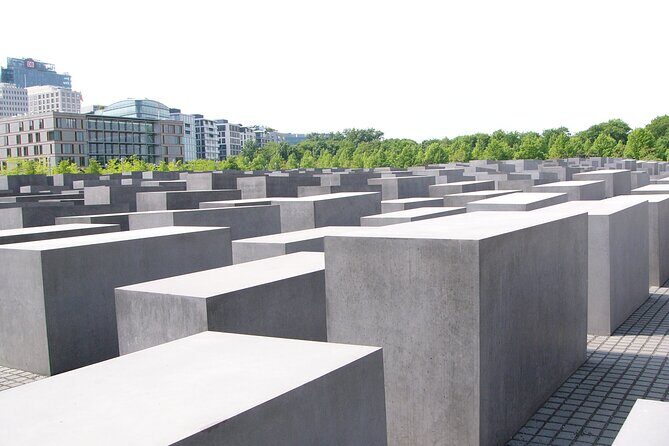
Holocaust Memorial: Immense Space for Remembering the Murdered Jews of Europe
The tour then goes to the Holocaust Memorial, also called the Memorial to the Murdered Jews of Europe. Expect a quieter, more reflective stop.
This memorial is built to create an emotional experience through scale and layout. You walk through an environment meant to hold weight, not provide easy comfort. The guide’s role here is to keep you grounded in respectful context while you absorb what the memorial represents.
It’s not a stop for jokes. It’s a stop for attention.
Fuhrerbunker: Where Hitler’s Last Days Ended
Next is the Fuhrerbunker area—Hitler’s bunker site. Standing above it, you’ll hear what happened in the bunker during the final days of WWII, including Hitler’s suicide on April 30, 1945.
This part of the tour is handled with care: you’re not just learning dates. You’re also hearing how Germans live with this past today, and why remembrance and accountability matter.
For many people, this is the most intense moment on the route. If you need to pause, this is a good place to do it—take a breath, and let the guide keep the pace steady.
Aviation Ministry of Berlin (Goering’s Air Ministry Site)
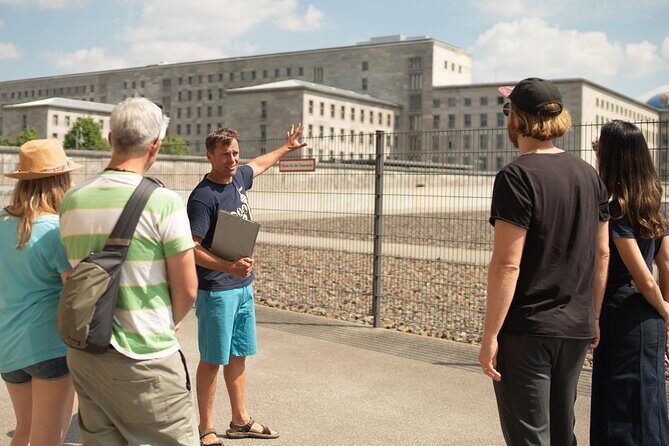
At the Aviation Ministry of Berlin, you’ll walk along the length of Hermann Göring’s airforce ministry area. The big point is the shift from Nazi structures to postwar political life.
You’ll also hear that this location was where East Germany (GDR) was proclaimed in 1949. That change of use is striking: the site’s meaning changes as power changes hands.
For you, it’s a reminder that Cold War history didn’t replace WWII history. It often reused the physical structures that came before.
Topography of Terror: SS, Gestapo, SD, and the Exhibition Space
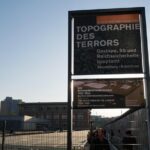
Next is Topography of Terror, tied to the headquarters of the SS, Gestapo, and SD in Nazi Germany. Today, the area houses the Topography of Terror exhibition, but on the walk you’re focused on the site itself first.
This is a powerful stop because it connects names you might have only read in books to a real, specific location in the city. You’ll learn about the institutions and the crimes they enabled during WWII.
The value here is clarity. The guide helps you see how systems worked, not just what happened at the end.
Niederkirchnerstraße: A Berlin Wall Piece and Stories of Escape
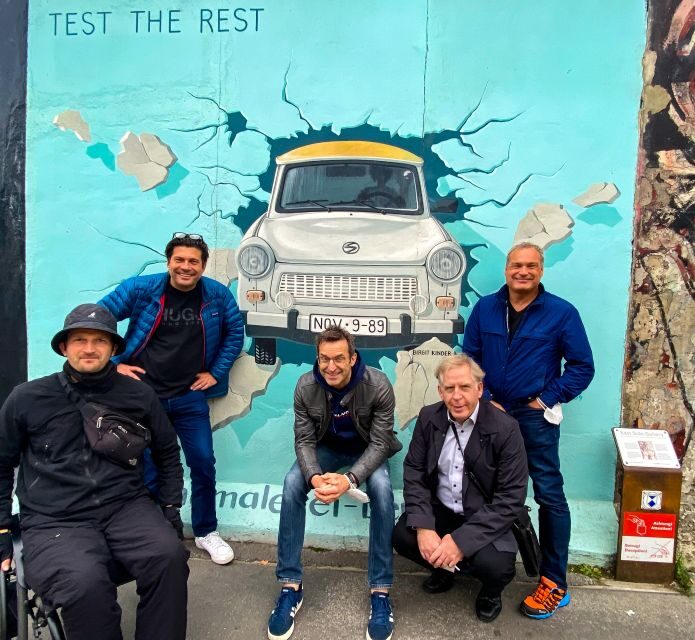
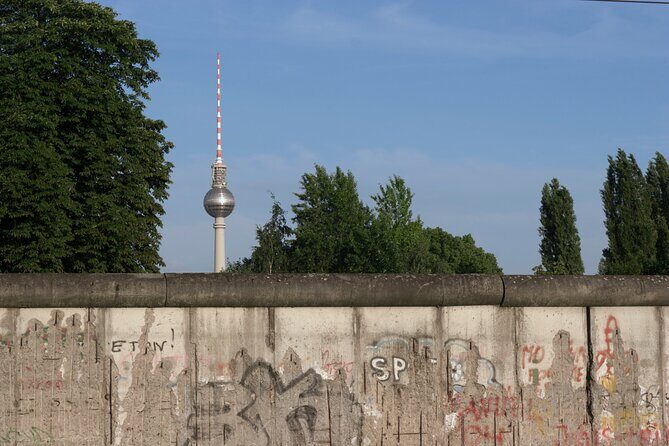
At Niederkirchnerstraße, you’ll see a large piece of the Berlin Wall. The tour turns personal here: you’ll hear stories about people escaping over the Wall and what happened to those who tried but didn’t make it.
You’ll also learn about daily life on both sides of the Wall—East Berlin and West Berlin. This stop is why the tour’s Cold War focus feels real. It’s not just about treaties and tanks; it’s about the people living with restrictions.
If you want to understand what a wall meant, this is one of the best ways to do it without spending a full day in museums.
Checkpoint Charlie: Tank Standoff, Wall Collapse, and Reunification
The tour ends at Checkpoint Charlie. It’s the most famous checkpoint through the Berlin Wall, so it naturally works as a dramatic finale.
You’ll hear about the Soviet vs USA tank standoff in 1961 on this street, and you’ll also learn how the Berlin Wall came down on the night of November 9, 1989.
Then comes the payoff: the guide connects the end of the Cold War to reunification in the years that followed. It’s a fitting ending because you’ve already walked from the gate of Germany’s reunified symbol to the places that enforced division.
How the Guide Makes the Dark Parts Manageable (Without Softening Them)
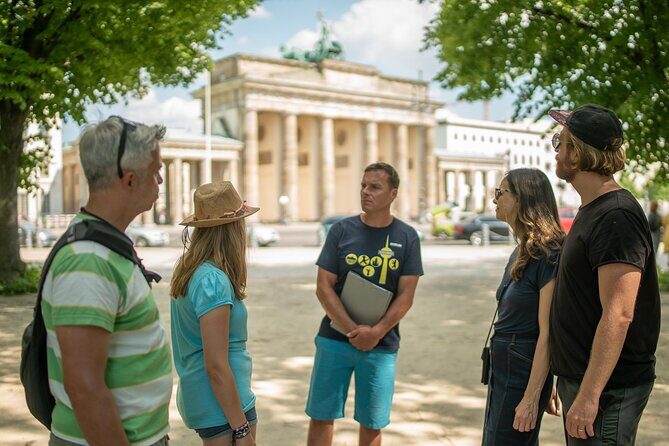
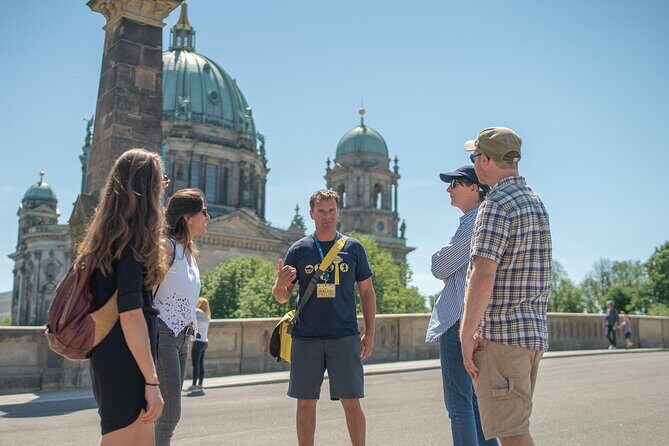
This is one of those tours where the guide matters as much as the route. The strongest comments you’ll see about this experience focus on guides who can balance respect with clear storytelling—without rushing you past difficult facts.
Some guides also use historical images at certain stops. That small addition helps you connect past scenes to the exact spot you’re standing in. It can also make the timeline easier to hold in your head.
You’ll also notice a recurring theme: the pace is set to let you ask questions. That matters because Berlin history isn’t simple. People come with different levels of background, and being able to ask right there makes the tour feel less like a lecture and more like a guided conversation.
Who Should Book This Tour (and Who Might Skip It)
This walking tour is a strong pick if you want:
- a short, structured introduction to Berlin from the Third Reich into the Cold War
- a route through major landmarks you can later revisit on your own
- a guide who helps you connect places to events, not just facts
It can also work for families, if everyone is ready for heavy topics. One group specifically mentions an 11-year-old and a 16-year-old feeling comfortable asking questions, which suggests the guide style can be adaptable.
You might skip this tour if you’re looking for a purely scenic Berlin day or if you know you want minimal exposure to WWII and Holocaust-related content.
My Decision: Should You Book?
If you’re asking whether this tour is worth it, I’d say yes—especially for a first or second day in Berlin. For the money, you get a tight route across major sites that are otherwise hard to connect in your head without a lot of independent reading.
It’s also a good choice when you want your Berlin history in a human order: symbols, power, institutions, division, escape attempts, then the end of the Wall. That arc is clear, and the guide helps you keep it clear.
Book it if you’re ready for heavy material, and schedule it when you can pay attention. This isn’t background noise history.
FAQ
How long is the Berlin Third Reich and Cold War walking tour?
The tour lasts about 2 hours.
Where do I meet the guide?
Meet at Brandenburg Gate at Pariser Platz side, in front of the Tourist Information office. Arrive 15 minutes early and look for the guide with a pink umbrella.
Is the tour offered in English?
Yes. This tour is offered in English only.
How many people are in a group?
The maximum group size is 30 travelers.
What are some of the main stops on the route?
You’ll visit Brandenburg Gate, the Reichstag Building, the Soviet Memorial in the Tiergarten, the Holocaust Memorial, the Fuhrerbunker site area, Topography of Terror, a Berlin Wall section at Niederkirchnerstraße, and the tour ends at Checkpoint Charlie.
Are there admission fees for the stops?
The tour details list free admission tickets for the stops mentioned (including major sites like Brandenburg Gate, Reichstag Building, the Holocaust Memorial, and others on the route).
What is the refund policy if I need to cancel?
You can cancel for a full refund if you cancel up to 24 hours in advance. If you cancel less than 24 hours before the experience starts, the amount you paid is not refunded.