REVIEW · BERLIN
Berlin: Backyards of Berlin 2-Hour Tour
Book on GetYourGuide →Operated by Paaßens & Kniestedt Berlin kompakt GmbH · Bookable on GetYourGuide
Berlin’s backyards have stories. This walk turns courtyards into history lessons, one doorway at a time. You’ll move through Hackesche Höfe and the Spandauer Vorstadt area, learning how an ordinary-feeling neighborhood became a place of changing communities and shifting powers.
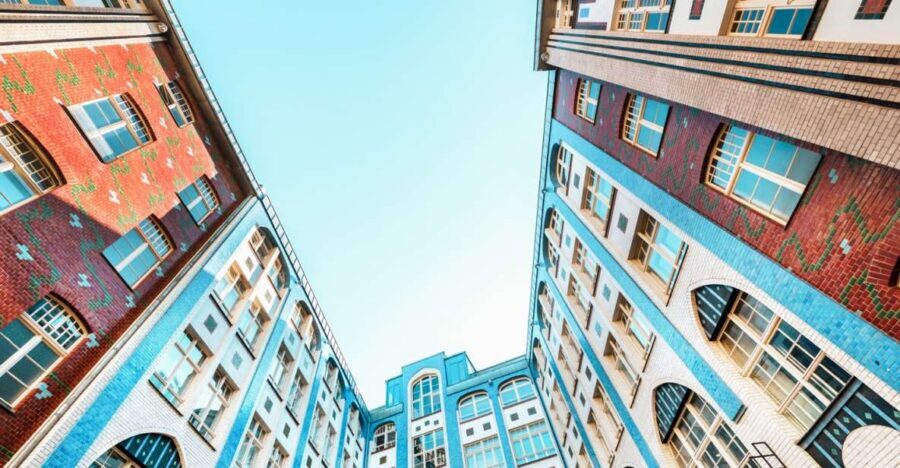
What I like most is the sheer variety of what you see in only two hours: courtyards like the Hackesche Höfe complex and the Sophie-Gips-Höfe, plus views behind major facades along Sophienstraße and Große Hamburger Straße. I also like the way the Jewish story is treated as part of the city’s everyday geography, including the area linked to Berlin’s early cemetery and the New Synagogue setting on Oranienburger Straße.
The main consideration: two hours can feel long if you’re not into multiple courtyard stops and architectural “behind-the-scenes” moments. One review specifically flagged that a shorter pace (around 1.5 hours) might suit some people better, and that a couple of storefront-style stops could be skipped if you want faster time on the street.
In This Review
- Key Courtyard Highlights You’ll Actually Notice
- Courtyards in Spandauer Vorstadt: Why This 2-Hour Walk Works
- Finding Hackesche Höfe: Your Starting Gate Into the Backyards
- Sophienstraße and the Courtyard Chain: Artisan Spaces and Street Life
- Große Hamburger Straße: A Road of Tolerance and Religious Architecture Up Close
- Oranienburger Straße and the New Synagogue Area: Learning the City’s Memory Map
- Heckmann Höfe at the End: One More Courtyard Layer to Close the Loop
- The Guide Factor: Wit, Planning, and Questions That Actually Get Answered
- Price and Value for a $21, Two-Hour Courtyard Story
- Who This Tour Suits Best (and Who Might Prefer Something Else)
- Practical Tips to Get the Most From Your Two Hours
- Should You Book the Berlin Backyards Tour?
- FAQ
- How long is the Berlin Backyards Tour?
- Where do I meet the guide?
- What languages are offered?
- What’s included in the price?
- Do I need food or drinks for the tour?
- Can I request special interests like Jewish history or urban planning?
Key Courtyard Highlights You’ll Actually Notice
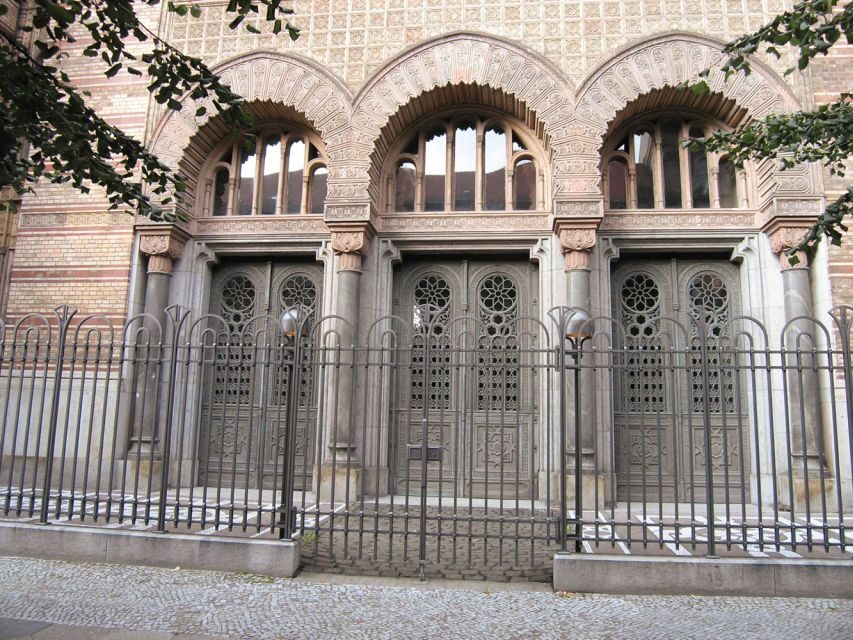
- Hackesche Höfe courtyards: a quick way to understand how this revitalized district is laid out
- Sophie-Gips-Höfe and Sophienstraße: street-level life that still connects back to older Berlin
- Große Hamburger Straße as a road of tolerance: the neighborhood’s mixed religious and social story in walking form
- Jewish history around Oranienburger Straße: the New Synagogue area and the adjacent Postfuhramt context
- Heckmann Höfe at the end: one more back courtyard to make the whole route feel complete
Courtyards in Spandauer Vorstadt: Why This 2-Hour Walk Works
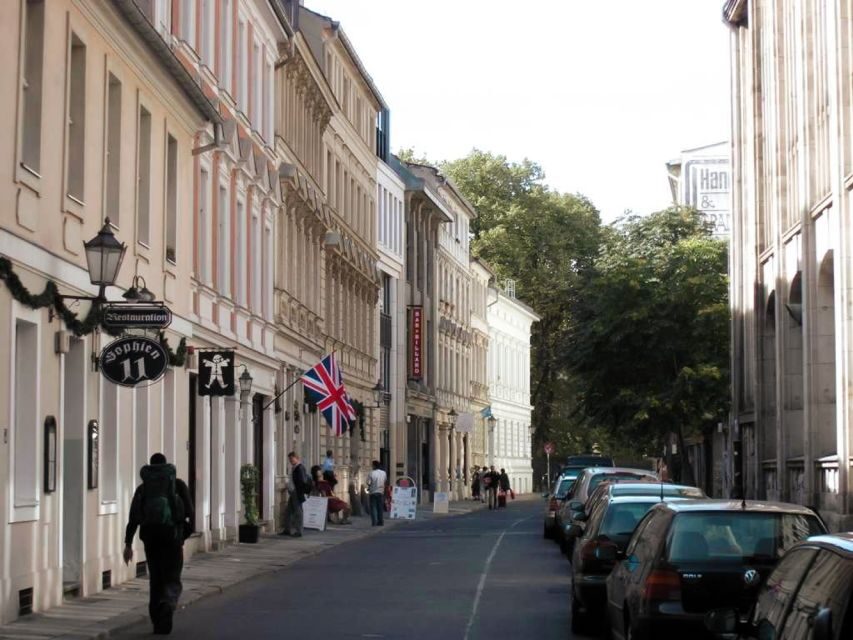
This tour is built on a simple idea: Berlin’s big history isn’t only on grand squares. It’s also in the spaces people pass every day while never noticing what’s behind them. You’ll walk through an older neighborhood of Berlin and focus on the courtyards—those semi-private spaces that shape how a district feels.
Two hours is a smart length for this kind of route. You can cover several areas, learn names and context, and still have enough energy to keep exploring on your own right after. If you’ve ever looked at a Berlin façade and wondered what’s happening inside, this is the answer key.
What makes it especially worthwhile is the balance of themes. You’re not only looking at buildings as objects. You’re connecting religious, cultural, and urban-planning changes to the physical space you’re standing in. That’s where courtyards become more than pretty gaps between structures.
You can also read our reviews of more tours and experiences in Berlin



Finding Hackesche Höfe: Your Starting Gate Into the Backyards
You start at Hackesche Höfe, first courtyard, at the Cash counter of Chamäleon. That matters because Hackesche Höfe isn’t just one courtyard—it’s a whole complex. Starting in the first courtyard helps you orient fast, then the rest of the walk feels like a guided progression rather than a string of separate stops.
Hackesche Höfe is also a good “first lesson” space. Courtyards here show you how older urban fabric can be repurposed without wiping out what came before. You’ll see how the district’s unusual fate connects to the way people use these spaces now.
Practical tip: wear shoes that handle cobbles or uneven paving. Courtyards sound smooth in theory, but you’ll be walking on real Berlin surfaces for the full two hours.
Sophienstraße and the Courtyard Chain: Artisan Spaces and Street Life
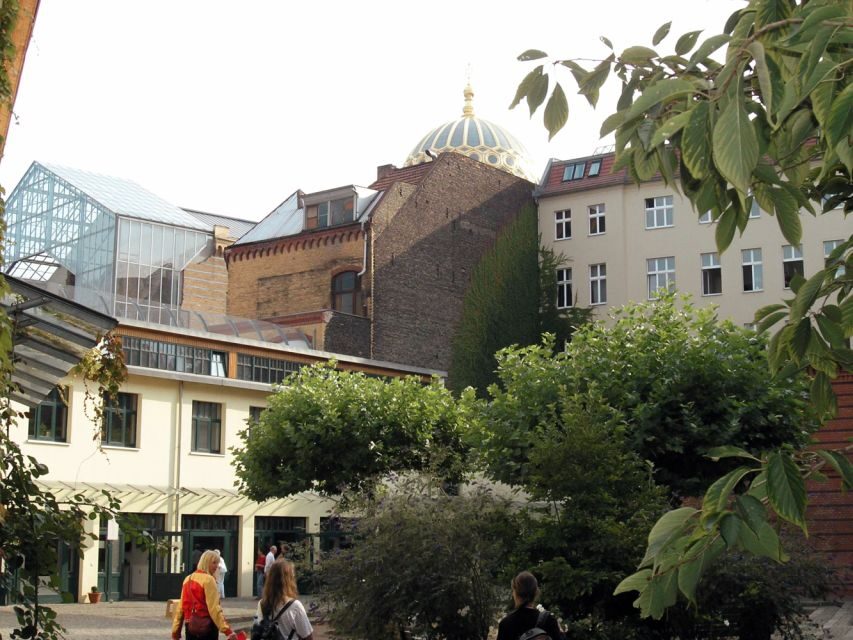
From Hackesche Höfe, the walk moves into the orbit of Sophienstraße and the surrounding courtyard network. This is where you start seeing the “how” behind Berlin’s interior-world. You’re not just looking at one-off courtyards; you’re learning the logic of how they link to streets.
You’ll visit or pass by the courtyard of an artisan association and also the Sophie-Gips-Höfe. Even if you’re not a building-history nerd, these names help you remember the route. More importantly, you’ll understand why these spaces were valuable and why they still are: courtyards create a smaller world with different rules than the street.
One reason I recommend this part to you is that it slows your brain down in a good way. On a normal sightseeing day, you sprint from landmark to landmark. Here, the stops ask you to notice small changes: entrance placement, the feel of passageways, and the way façades face inward rather than outward.
If you’re the type who prefers only major monuments, this segment might feel more “local.” But that’s exactly the point. Courtyards are where neighborhood history becomes legible.
Große Hamburger Straße: A Road of Tolerance and Religious Architecture Up Close
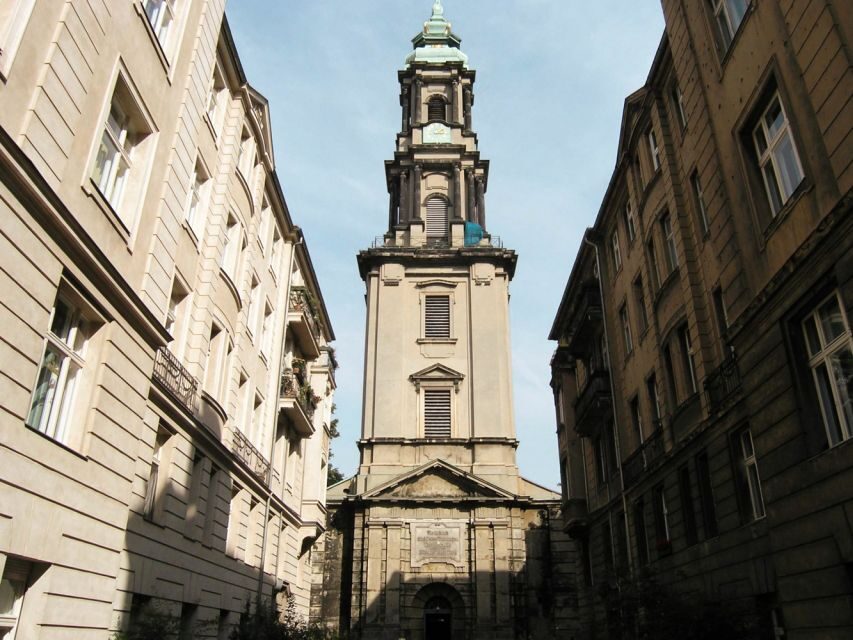
Große Hamburger Straße earns its description as a road of tolerance because the district’s buildings reflect different communities and institutions that lived side-by-side—often not comfortably, but undeniably in the same urban footprint.
On this stretch, the tour includes looking behind the facades of a major Catholic institution and viewing the city’s most important Baroque church. I like this choice because it gives you two different reading angles:
- The institution-level story (what a big religious building represents in civic life)
- The architectural story (what Baroque form does in the street scene)
Then the narrative turns toward Jewish history in Berlin, including the fate of the Jewish community in this part of the city and the mention of Berlin’s first cemetery. That’s powerful because it connects displacement and change to physical proximity. You’re not learning abstract tragedy; you’re walking through the same kind of neighborhood geography where those histories unfolded.
Consideration for you: this part can be emotionally heavy. If you’re traveling with someone who prefers lighter stops, agree ahead of time that you’ll treat this as a meaningful segment and then reset afterward in a courtyard or viewpoint.
Oranienburger Straße and the New Synagogue Area: Learning the City’s Memory Map
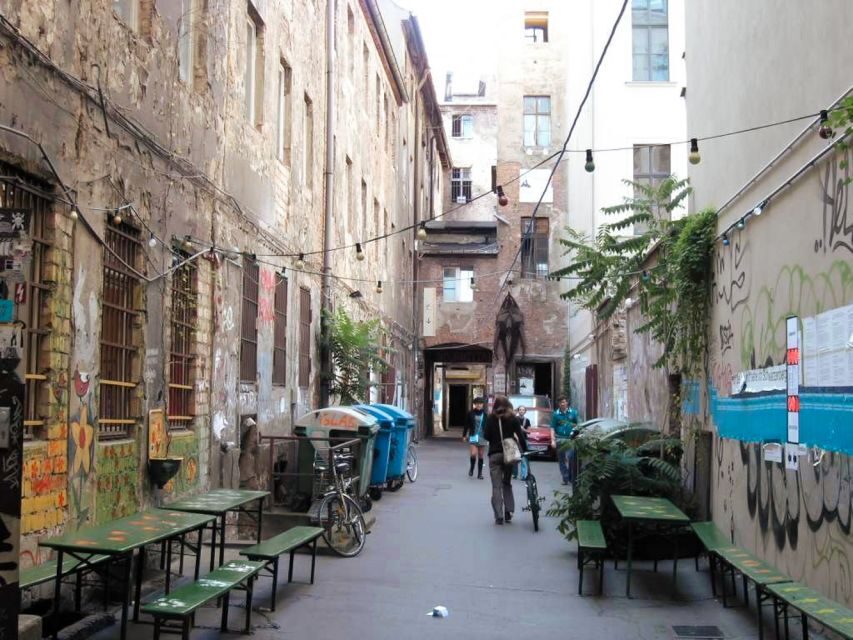
Oranienburger Straße is where the tour becomes very specific. You’ll learn about the imposing New Synagogue and the adjacent Postfuhramt. Even without going deep into architectural details you don’t need, these two site references help you anchor the story.
The New Synagogue matters in the way it marks presence: a visible statement that this community had life, institutions, and cultural weight in the city. The Postfuhramt reference matters too because it helps you understand how city functions and community narratives share the same blocks.
I find it useful when a walking tour doesn’t just say important words, but ties them to the places you can point at. Standing on Oranienburger Straße while you hear what the buildings relate to makes the city’s memory map feel real.
If you like photos, this is one of your best sections. You’ll have enough viewpoints to capture façades and street context, not only interior courtyards.





Heckmann Höfe at the End: One More Courtyard Layer to Close the Loop
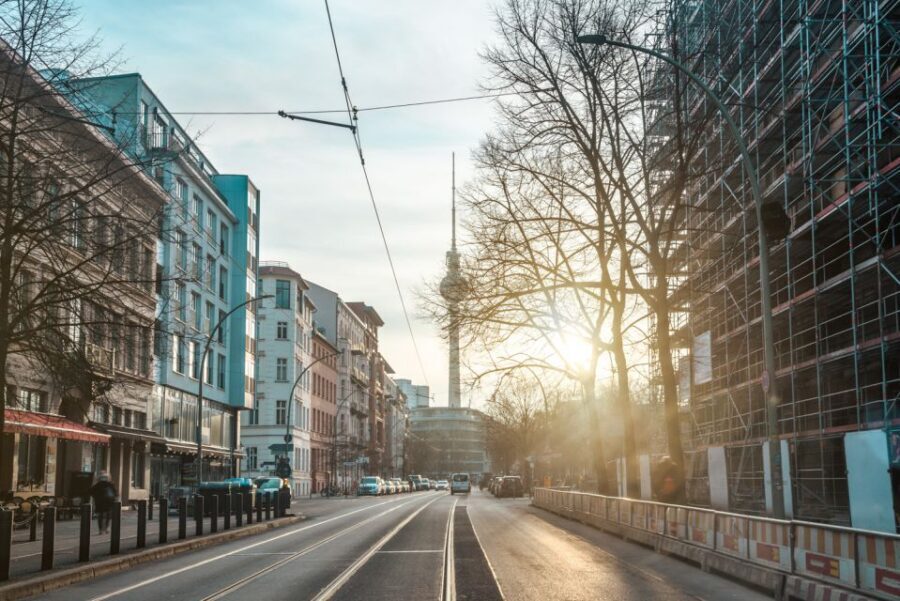
The tour finishes with the Heckmann Höfe, one of the more interesting back courtyards of the neighborhood. I like putting a courtyard at the end for one simple reason: it gives you a final “scale check.” After seeing big religious buildings and the New Synagogue area, you return to the smaller, more human scale of interior space.
This ending also helps your brain file everything correctly. Courtyards stop being a list of stops and start looking like a system—spaces that connect street life to private or semi-private daily realities.
If you’re planning more Berlin time after the tour, Heckmann Höfe is a good moment to decide where you want to go next. You’ll leave with a better instinct for how to keep exploring without needing another full guided session.
The Guide Factor: Wit, Planning, and Questions That Actually Get Answered
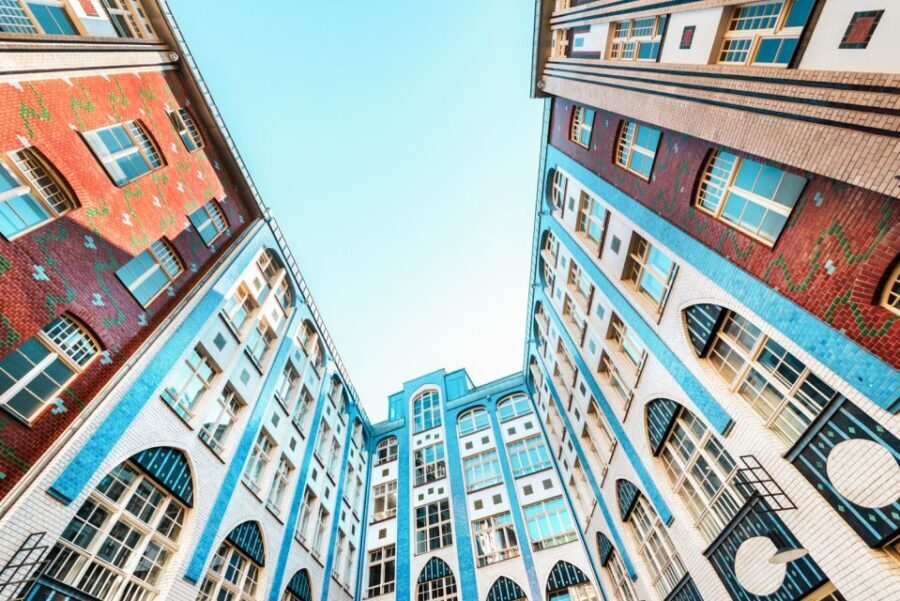
The quality of this experience depends heavily on the guide, and the pattern in feedback is strong. People highlight that the guide delivered information with a lot of wit, and that even in cold weather the time moved quickly. Another key theme is planning: the tour route feels thought-out, and the guide is open to questions.
That combo matters for you because a courtyard tour can easily become slow if the guide is just reading facts. Here, you’re getting a guided story with pacing that keeps you moving and a way to ask follow-ups. That turns the courtyards into more than sightseeing stops.
If you have special interests—Jewish history, urban planning, or city history—you can also arrange them with the operator in advance. That’s the kind of option I look for, because it lets you customize depth without turning the tour into a confusing free-for-all.
One small caution: if you’re someone who wants only the most famous sights, you may end up wanting to skip some of the smaller segments. There’s at least one hint that some storefront-style elements could be less important than the core courtyard story.
Price and Value for a $21, Two-Hour Courtyard Story
At $21 per person for a 2-hour guided walking tour, the value is pretty solid—especially because what you’re buying is not just access to a place. You’re buying interpretation: street-level context for Hackesche Höfe, Sophienstraße, Große Hamburger Straße, and Oranienburger Straße, plus the final courtyard at Heckmann Höfe.
This isn’t a long trip with lots of logistics. You’re on foot, so you’re paying for time with a live guide and a structured route that would be harder to assemble yourself in a way that makes sense. If you’ve ever tried to “courtyard hop” on your own, you know how easy it is to get lost in the wrong courtyards or miss the meaning of what you’re seeing.
The tour includes the tour guide and a private walking tour format. That combination matters for quality: you should expect the guide to keep things coherent and responsive to the group’s pace.
Food and drink aren’t included, so plan to grab a snack or drink before or after. You’ll likely want something warm after two hours, especially if you’re visiting in winter.
Who This Tour Suits Best (and Who Might Prefer Something Else)
This is a great fit if you like:
- History you can see: Jewish history, church architecture context, and the urban planning behind courtyards
- Walking tours with meaning, not just photo stops
- Learning street names and what they stand for, so Berlin feels navigable
You’ll likely enjoy it even more if you’re traveling with someone who asks questions. The guide’s openness to questions is part of the tour’s value.
If, on the other hand, you’re short on time and only want the biggest headline monuments, you might find the courtyard format less satisfying. The tour’s pacing can also feel like a lot if you’re sensitive to cold or you prefer a quicker route.
Practical Tips to Get the Most From Your Two Hours
A few small things can make a big difference:
- Bring a warm layer. Courtyard routes still involve open-air walking between stops.
- Keep your phone charged for maps and quick notes. This route works best if you remember the street names as you go.
- If you’re particularly focused on Jewish history or urban planning, tell the guide early. The operator allows special interests to be arranged in advance, and it helps the guide tailor emphasis.
Also, remember the meeting point precisely: Hackesche Höfe, first courtyard, Cash counter of Chamäleon. Arrive a few minutes early so you don’t start the walk stressed.
Should You Book the Berlin Backyards Tour?
I’d book it if you want a thoughtful Berlin experience that goes beyond façades and famous squares. The route makes sense for a first or mid-trip visit because it ties together courtyards, architecture, and the story of Jewish life in the city’s neighborhood geography. The guide quality—wit, good planning, and a willingness to answer questions—sounds like the real engine behind the high rating.
I’d think twice if you’re very time-sensitive or if you strongly prefer fewer stops in favor of longer time at one landmark. The two-hour format can feel like a lot if you’re not into multiple courtyard viewpoints and smaller segments.
If your goal is to understand how Berlin neighborhoods work from the inside out, this is a smart, good-value way to do it.
FAQ
How long is the Berlin Backyards Tour?
The tour lasts 2 hours.
Where do I meet the guide?
You meet at Hackesche Höfe, first courtyard, at the Cash counter of Chamäleon.
What languages are offered?
The tour is available in English and German.
What’s included in the price?
The included items are the tour guide and a private walking tour.
Do I need food or drinks for the tour?
Food and drink are not included, so you’ll want to plan for that on your own.
Can I request special interests like Jewish history or urban planning?
Yes. Special interests (including Jewish history, urban planning, and city history) can be arranged with the tour operator in advance.