REVIEW · BERLIN
Berlin during Nazism – Tour in Italian
Book on Viator →Operated by Vive Berlin Tours · Bookable on Viator
Berlin hits hard, in the best way.
This Italian guided tour of Nazi Germany’s Berlin is built around real locations, not just dates, and it moves quickly enough to stay gripping for 3 hours. I especially like the small-group format (max 20) because you get real attention, and the guide can answer questions as you go. The stops also connect big political events to human stories, including Jewish community landmarks.
One thing to consider: the subject matter is intensely heavy. You’ll stand in places tied to persecution, forced deportations, and Nazi medical killing, so it’s not the tour for a carefree afternoon stroll.
In This Review
- Key points worth knowing
- A 3-hour Italian walk through Berlin’s hardest chapter
- Potsdamer Platz meet-up: quick way to spot your group
- German Resistance Memorial Center and Operation Valkyrie’s setting
- T4 Memorial: when Nazi eugenics became policy and killing
- Anhalter Bahnhof ruins: why the station matters
- Scheunenviertel: Jewish Quarter stories you can actually walk through
- Otto Weidt’s workshop: the Berlin Schindler story
- New Synagogue and what 1866 meant
- Old Jewish Cemetery traces: what survives after destruction
- Guides make or break a history tour, and this one tends to deliver
- Price and value: what you get for $27.87
- Who this tour suits (and who should rethink it)
- Should you book Berlin during Nazism in Italian?
- FAQ
- What language is the guide for this tour?
- Where is the tour meeting point, and where does it end?
- How long does the tour last?
- Is a ticket included for the sites you visit?
- Do I need public transportation for this tour?
- How big is the group?
- What’s the cancellation window for a full refund?
Key points worth knowing
- Italian guide, real-world pacing: 3 hours that cover major sites without dragging.
- Resistance and planning, not only punishment: you start at the story of how Nazis were challenged from within.
- T4 memorial stops you cold: it explains how Nazi eugenics logic led toward mass murder.
- Anhalter Bahnhof and the death trains: the ruins put the deportations in a concrete, physical way.
- Jewish Berlin landmarks are front and center: New Synagogue, old cemetery traces, and the Scheunenviertel area.
- Otto Weidt’s workshop adds a rare kind of hope: hiding and hiring as survival strategy.
A 3-hour Italian walk through Berlin’s hardest chapter
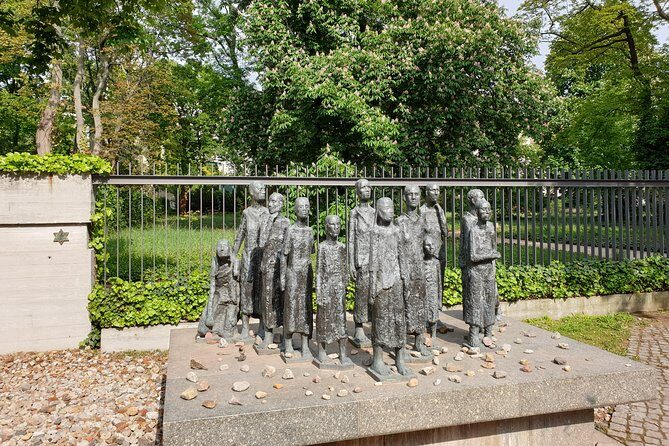
This is a compact, focused tour of Nazi Germany in Berlin, guided in Italian. With an approx. 3-hour duration, it works well if you want meaningful context without losing an entire day to history.
The big value here is that you’re not only learning about Hitler’s rise and the road to World War II. You’re also shown how Berlin changed after the war, and why many of these sites matter today. Berlin’s history can feel like a blur of monuments unless someone puts the timeline in order—and this tour does that.
You can also read our reviews of more tours and experiences in Berlin.


Potsdamer Platz meet-up: quick way to spot your group
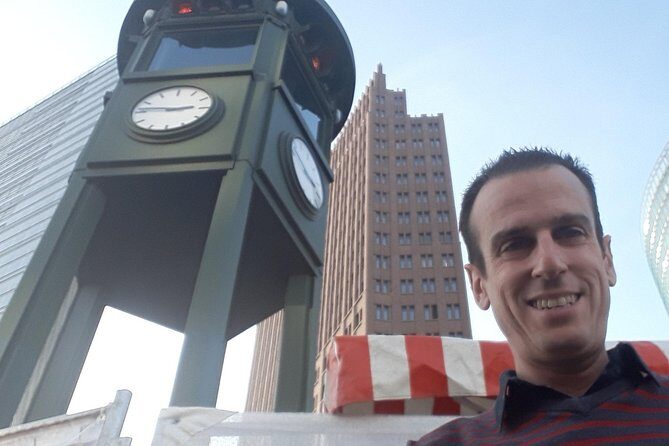
The tour starts at Potsdamer Platz 10 (near S/U-Bahn Potsdamer Platz). You’ll find the team by looking for the blue bicycle of Vive Berlin Tours and the logo flag—an easy visual anchor when you’re navigating a busy square.
From the start, the tour sets a practical rhythm: short stop windows, guided explanations on the sidewalk, and enough time at each site to read the basics without rushing everyone. The tour ends at Hackescher Markt, so it’s easy to keep your day moving afterward.
German Resistance Memorial Center and Operation Valkyrie’s setting
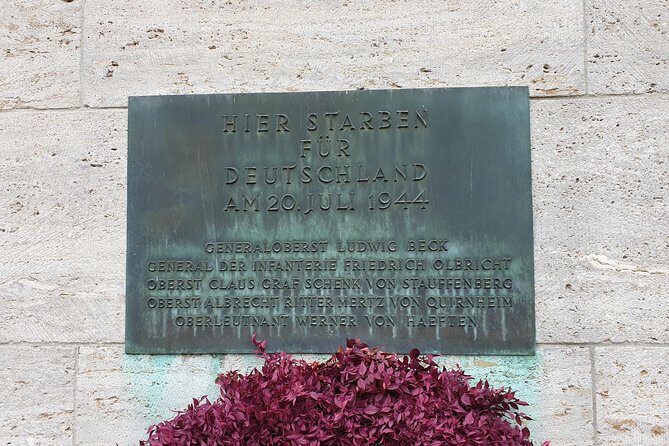
Your second stop is the German Resistance Memorial Center, in the location where Operation Valkyrie was directed. That detail matters because it reframes resistance: this isn’t only about people hiding quietly. It’s about individuals and groups planning to act against the Nazi dictatorship between 1933 and 1945.
In practical terms, this stop helps you understand how complicated the era was. Nazi power was massive, but opposition still existed—and not all resistance looked the same. A good guide will keep it clear and grounded, so you don’t get lost in the names and dates.
Time here is about 25 minutes, and you’ll want it. This is one of those stops where you’ll likely catch the thread that makes later sites feel more connected.
T4 Memorial: when Nazi eugenics became policy and killing
Next comes the T4 Memorial for the Victims of the Nazi Euthanasia Program. This is one of the most emotionally difficult parts of the route, because the memorial marks the killing of around 300,000 victims—people targeted because of mental or physical disabilities or chronic diseases.
The name T4 refers to the office in Tiergartenstrasse No. 4, and the memorial makes the point that this program is considered a precursor to the Holocaust. That context is important. It shows the logic was already built—before mass deportation and extermination were fully underway.
This stop lasts about 15 minutes. I’d treat that as your minimum time for processing, not your maximum. If the topic hits hard (it will), slow down and let the explanation land.
Anhalter Bahnhof ruins: why the station matters
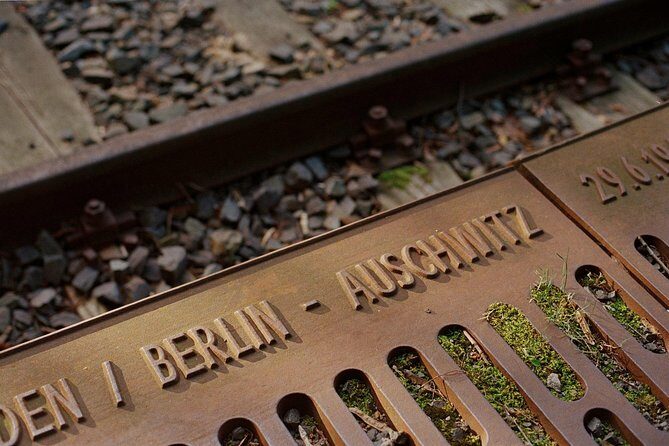
Then you move to Anhalter Bahnhof, now mostly ruins after Second World War destruction. Historically, it was the biggest European station by the late 1800s—yet by 1942 to 1945, trains leaving this area were used to send people on the road to death camps.
The value of a place like this is simple: it takes the idea of deportation and puts it back into geography. You can stand where people had to go, and suddenly the Holocaust becomes less like a textbook chapter and more like a system that used everyday infrastructure.
The stop is short—about 10 minutes—but you’ll likely remember it longer than that. If you do one “location with a punch” on this tour, this is a strong candidate.



Scheunenviertel: Jewish Quarter stories you can actually walk through
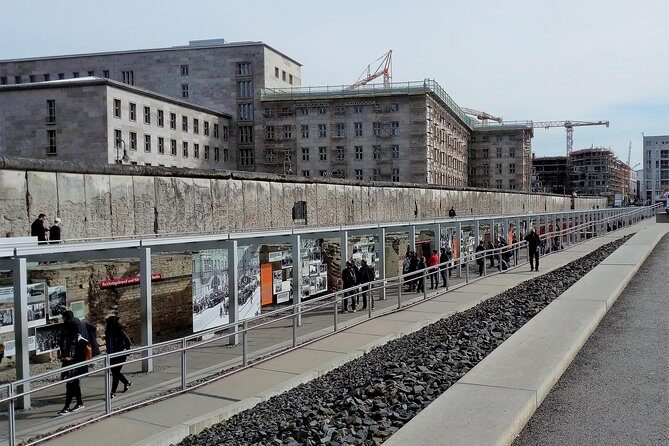
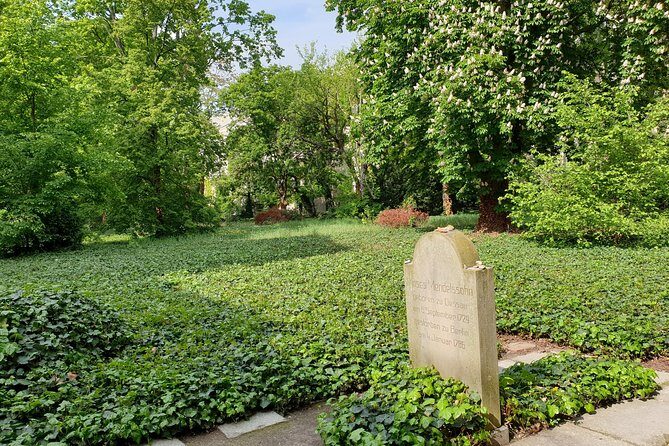
After that, you shift into the Scheunenviertel area, often called part of the Jewish Quarter within Mitte. This section is about continuity and change: Jewish life before the war, what was lost, and what remains in the urban fabric.
You’ll visit key Jewish institutions connected with learning and worship, including the Neue Synagoge and a school linked to Moses Mendelssohn. That matters because it reminds you the community wasn’t only a victim category. It was cultural, intellectual, and deeply rooted in Berlin.
This stop is about 45 minutes, which is generous compared with the rest. It’s also the section where the tour can feel lighter in tone without becoming lighter in subject. You’re still learning—but with more room for context.
Otto Weidt’s workshop: the Berlin Schindler story
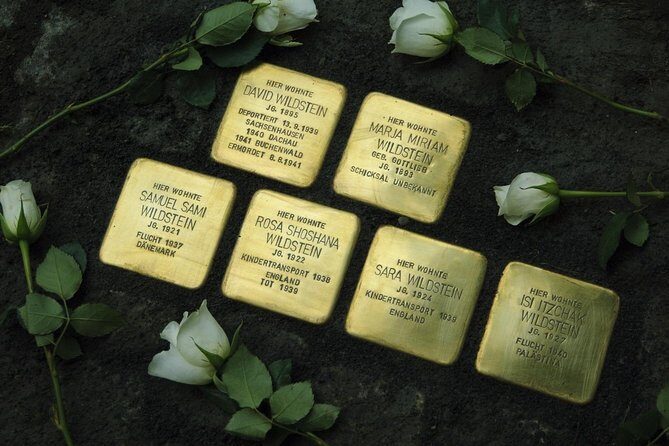
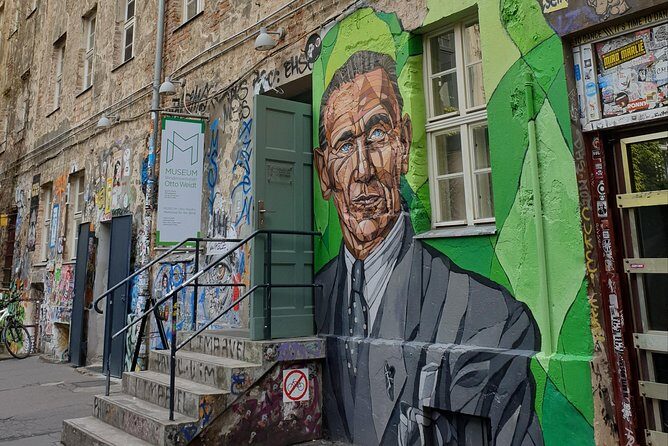
One of the most memorable stops is the Museum Blindenwerkstatt Otto Weidt. Otto Weidt—often compared to the “Schindler from Berlin” reference you may hear—hired Jewish workers, including blind and disabled employees, and helped them avoid deportation to Nazi extermination camps.
The museum’s location ties it directly to the original factory space. That physical connection matters. It turns the story from a name into a place, and from a moral idea into day-to-day choices and work.
Time here is about 15 minutes. Keep an eye on how the guide frames it: it’s easy for stories like this to become only inspirational. The best guides will also show the risks and limits, so the hope doesn’t erase the danger.
New Synagogue and what 1866 meant
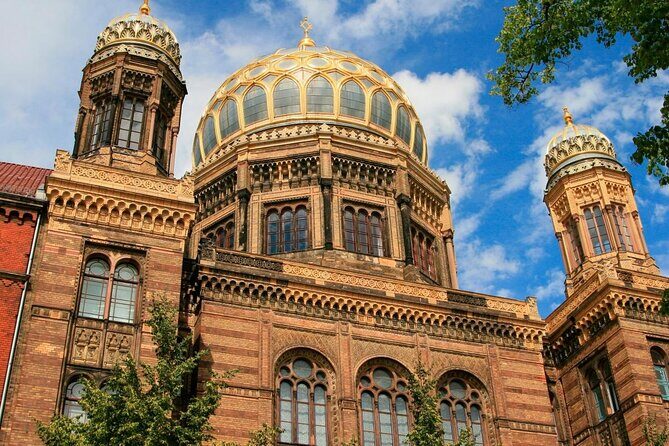
Then you reach Stiftung Neue Synagoge Berlin – Centrum Judaicum and the New Synagogue (Neue Synagoge). Built in 1866, it was designed to seat about 3,200 people, once the largest Jewish place of worship in Germany. That scale is the point: the synagogue wasn’t a small, sidelined building. It was a public statement that a thriving Jewish community existed in Berlin.
The guide’s job here is crucial. If the explanation stays factual, the stop becomes powerful on its own. If it connects the synagogue to the broader timeline, it helps you see how persecution attacked not only lives but institutions and identity.
This is about 10 minutes. Even so, it’s long enough to notice the significance the guide highlights and to understand why the building remains meaningful today.
Old Jewish Cemetery traces: what survives after destruction
Your final key stop is the Alter Judischer Friedhof (Old Jewish Cemetery) at Hamburger Straße. This was once the resting place of many prominent members of Berlin’s Jewish community, and today it’s described as the oldest recognizable cemetery in the inner city—though very little remains of the original place.
The memorial reality here is blunt: the cemetery was destroyed during the Nazi period by the Gestapo. So you’re learning about loss in a different form than deportation. It’s erasure—attempts to remove memory from the city.
Plan on about 10 minutes here. I’d use it to absorb what’s left rather than look for dramatic remnants. The absence is part of the message.
Guides make or break a history tour, and this one tends to deliver
Vive Berlin Tours uses professional guides who keep the story organized and teach you without turning it into a lecture you tune out. Strong mentions in past tours include guides like Fabio, Paolo, Lorenzo, Vita, Silvio, Federica, and Zuleika—often praised for being prepared, clear in explanations, and able to hold attention even when the topic is difficult.
If you’re the kind of person who likes asking questions, this tour tends to be friendly to that. Several guides are noted for answering thoughtfully, and that matters because Nazi-era history is full of moral and factual complexity. A good guide helps you hold onto the thread.
Also: the tour operates in all weather, so your guide’s pacing will matter if rain shows up. Past groups have done it in cold and rain, and the tour format is built to keep moving.
Price and value: what you get for $27.87
At $27.87 per person, this is priced like a “real guided walking tour,” not a museum-only add-on. For that money, you get a professional guide, the Italian language service, and local taxes.
You also won’t face surprise entrance fees for the listed stops, because the stops are marked admission ticket free on the tour schedule. What you do need to plan: public transport. Transportation to and from attractions is not included, and Berlin’s transit can be confusing if you’re just winging it.
My practical advice: grab a day ticket for zones AB. If you’re stacking this tour with other central sights, it can save you time and stress. And bring water or a snack if your schedule allows—food and drinks aren’t included.
Who this tour suits (and who should rethink it)
This tour is ideal if you want a structured way to learn about Nazi Germany in Berlin, especially if you like connecting history to specific places you can point to. It’s also a good fit for couples or small families, since the group size is capped at 20 and the tour is paced for attention.
It’s not a great match if you’re looking for a casual walking tour. The route includes memorials for Nazi medical killing and deportations, so the emotional weight is real. If you’re traveling with young kids, you might want to think carefully about how they handle intense historical topics.
Comfort matters too. You walk between sites and the stops are outdoors, so good shoes are the smartest gear you can bring.
Should you book Berlin during Nazism in Italian?
If you want a guided Berlin experience that’s factual, place-based, and not sugarcoated, I’d book it. The combination of resistance, T4 euthanasia, deportation-related sites, and Jewish landmarks gives you a wider picture than a one-note Nazi history tour.
I’d especially book if you:
- want explanations in Italian without needing to piece together your own research
- like small groups where your guide can answer questions
- want free access to key memorial stops with a clear route in about 3 hours
Skip it only if you know you’re not ready for heavy content or if you’re trying to make every minute “light and fun.” Berlin won’t let you avoid the truth here—and that’s exactly why this tour can be so meaningful.
FAQ
What language is the guide for this tour?
The tour provides a guide in Italian.
Where is the tour meeting point, and where does it end?
It starts at Potsdamer Platz 10, 10785 Berlin and ends at Hackescher Markt, 10178 Berlin.
How long does the tour last?
The duration is about 3 hours.
Is a ticket included for the sites you visit?
Local taxes and the professional guide are included. The itinerary shows stops with admission ticket free, but you should still plan for the tour’s specific included items versus any optional extras.
Do I need public transportation for this tour?
Transportation to and from the attractions is not included. You should buy a day card for Berlin public transport for zones AB.
How big is the group?
The tour has a maximum of 20 travelers.
What’s the cancellation window for a full refund?
You can cancel for a full refund up to 24 hours in advance of the experience’s start time. If you cancel later than that, the amount paid is not refunded.