Berlin’s resistance stories hit differently on foot. This walking tour puts you in the Jewish quarter with World War II specialist guides and focuses on everyday choices—fear, denial, and courage—rather than only big speeches. I also like how the small group size keeps things respectful and personal, with time for Q&A and a steady pace through places most visitors miss.
One thing to consider: this is heavy material about persecution and genocide, and you’ll be outdoors in changing weather for about 2.5 hours, with no food provided.
In This Review
- Key highlights worth your time
- How this Berlin resistance walk feels in real life
- Your route: what each stop teaches (and what to watch for)
- Former Imperial Post Office: setting the mood
- New Synagogue Berlin and the Moses Mendelssohn Jewish Gymnasium
- Grosse Hamburger Straße Cemetery: memory that won’t fit in a postcard
- Otto Weidt’s Workshop for the Blind: courage with receipts
- Block of Women (Rosenstraße Protest area): resistance that looks ordinary
- Museum Island and Neue Wache: history beside power
- Bebelplatz and the Memorial to the 1933 Nazi Book Burning
- Former deportation centre, then Trains to Life – Trains to Death
- Stolpersteine memorials: the city as a memory map
- Finish near Friedrichstraße station
- Why the guide quality makes a big difference here
- Price and value: $56 for 2.5 hours, is it worth it?
- Who this tour is best for (and who might reconsider)
- Tips to get the most out of it
- Should you book this Berlin resistance walk?
Key highlights worth your time
- Otto Weidt’s workshop: see how one man shielded blind and deaf Jewish workers from Nazi persecution
- Rosenstraße Protest area (Block of Women): hear how German women demanded the release of their husbands
- Bebelplatz and the 1933 book burning memorial: understand the Nazi push against free thought and intellectual freedom
- Stolpersteine memorials and quiet courtyards: notice the small, personal markers that keep memory close
- Trains to Life – Trains to Death: connect policy to the machinery of deportation
- Then-and-now photos plus historical maps: make the route feel grounded, not just narrated
How this Berlin resistance walk feels in real life
Berlin has plenty of famous Holocaust sites. This tour aims somewhere more human: the spaces where resistance could be quiet, local, and risky—where people had to decide, day by day, whether to cooperate, look away, or fight back.
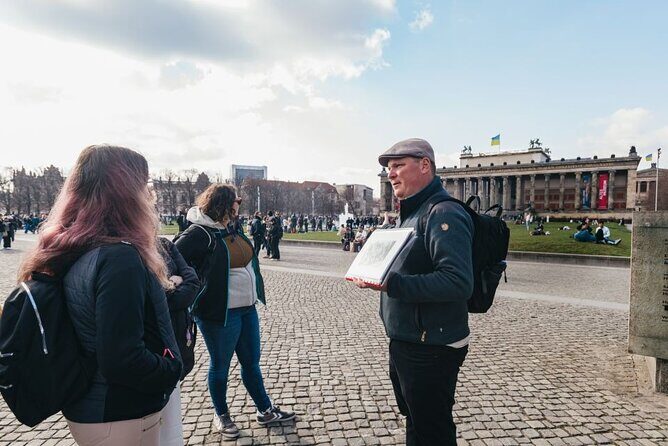
You start at the former Imperial Post Office, then head into Berlin’s older Jewish quarter. The guide leads in English and keeps the tone focused and respectful. The small group matters here. You’re not crammed shoulder-to-shoulder, and you’re more likely to hear the details that turn history into something you can actually follow.
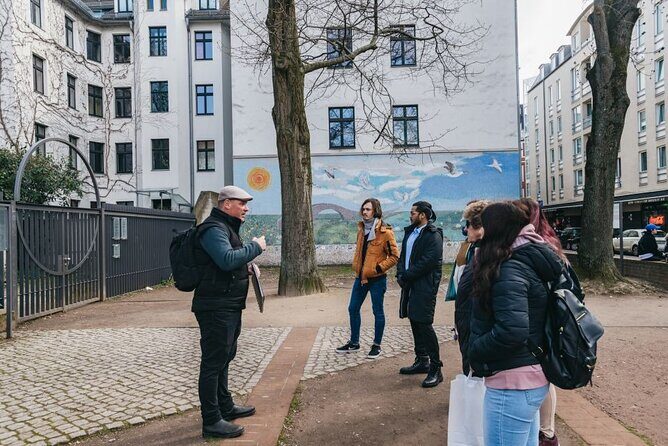
Expect a lot of walking. It’s not a bus tour with stop-and-go photos. You’ll move past cobblestones, plaques, and courtyards where the stories still cling to the places. And you’ll hear how Nazi ideology worked on everyday life: not only the arrests and deportations, but also the state-approved antisemitism and the Nazi fantasy of “Aryan superiority,” including their racist idea of “Sub-Races.”
This isn’t meant to be shocking for the sake of shock. It’s meant to help you understand resistance as something that took many forms.
You can also read our reviews of more tours and experiences in Berlin.


Your route: what each stop teaches (and what to watch for)
Former Imperial Post Office: setting the mood
The former Imperial Post Office is a fitting opening. It signals systems—communication, organization, the kind of infrastructure that can make evil easier to spread and harder to stop. Before you even reach the Jewish quarter, the guide frames what you’re about to see: not just events, but choices.
Practical tip: arrive about 10 minutes early. The guide stands at the main entrance holding a blue umbrella, so you can get oriented quickly and start on time.
New Synagogue Berlin and the Moses Mendelssohn Jewish Gymnasium
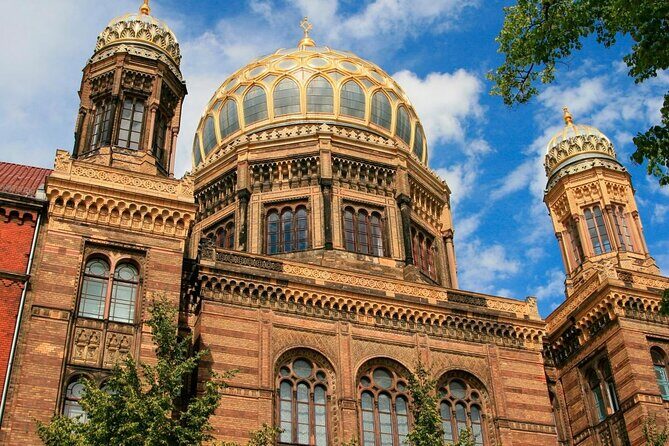
You visit the New Synagogue Berlin–Jewish Centre for a guided orientation that helps you situate the community in its own physical setting. Then you move on toward the Jüdisches Gymnasium Moses Mendelssohn.
These stops matter because they counter the idea that Jewish life in Berlin only shows up in memorials. You’re seeing institutions—education and worship—so later, when you hear about families torn from homes and deported, it hits with more weight. You’ll also better understand what was lost beyond the scale of the tragedy.
A drawback to note: if you’re sensitive to listening in enclosed, echoing spaces, you might want to bring your patience. The material is serious, and the guide keeps it that way.
Grosse Hamburger Straße Cemetery: memory that won’t fit in a postcard
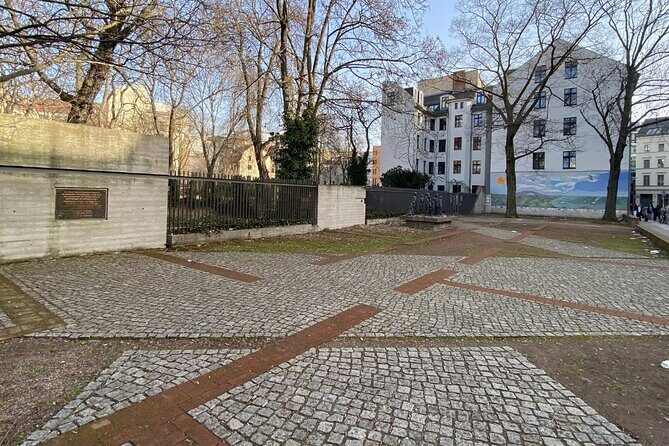
At the large cemetery on Grosse Hamburger Straße, the tour slows down. Cemeteries can feel quiet and simple from a distance. Up close, you realize they hold dense family histories—names, generations, and the long reach of loss.
This stop gives you a mental reset: a place to let the story breathe before it moves into specific acts of rescue and protest.




Otto Weidt’s Workshop for the Blind: courage with receipts
Then you get to one of the tour’s most concrete and inspiring stories: Otto Weidt’s workshop for the blind. The tour explains how Weidt shielded blind and deaf Jewish workers from persecution.
What I like here is the grounding. It’s not only a hero narrative. It’s the real mechanics of survival: a workplace, daily protection, and the risk of being caught. You also learn why this kind of resistance mattered. When Nazis controlled public life, survival depended on who could hide people, provide cover, or buy time.
If you’re the type who likes specifics—who did what, where, and how—that workshop delivers.
Block of Women (Rosenstraße Protest area): resistance that looks ordinary
The tour brings you to the women’s protest site linked to Rosenstraße. Here you hear the story of German women standing up to the Nazis to demand the release of their Jewish husbands.
This part helps you understand that resistance wasn’t only covert. Sometimes it was public pressure—organized enough to matter, brave enough to risk punishment, and simple enough to feel human.
Pay attention to the guide’s emphasis. The lesson isn’t that resistance solved everything. It’s that collective action and moral clarity could still appear in a system designed to crush dissent.
Museum Island and Neue Wache: history beside power
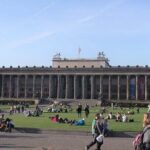
You then pass through major central Berlin sites like Museum Island and Neue Wache. These aren’t “Holocaust locations” in the narrow sense, but they’re useful context. They show how Berlin layers memory over time—and how national identity and public space can be shaped.
If you tend to get lost in dates, these stops help you keep the big picture: Berlin’s public face has always been contested. The tour uses them to keep you oriented in the city, not drifting around on emotions alone.
Bebelplatz and the Memorial to the 1933 Nazi Book Burning
Next comes one of the most famous symbolic acts of the Nazi campaign against free thought: the 1933 book burning site at Bebelplatz.
This stop is crucial for understanding Nazi ideology beyond antisemitism. The tour explains the Nazi belief system and how they treated intellectual freedom as a threat. Seeing the memorial in the real place helps the message land. This was propaganda, control, and intimidation—performed publicly.
Look closely at how the guide connects this to later oppression. If the Nazis could target books and ideas, they could target people with the same logic: remove what they feared, isolate it, and control the narrative.
Former deportation centre, then Trains to Life – Trains to Death
You’ll also visit the former deportation centre and then the site known as Trains to Life – Trains to Death.
This portion matters because it connects policy to movement—how persecution became logistics. It’s the difference between hearing about genocide as an abstract horror and seeing how the system worked through trains, schedules, and state authority.
A simple way to process it: focus on what the guide emphasizes about dehumanization as a method. Not only what happened, but how the machinery reduced individuals into cargo.
Stolpersteine memorials: the city as a memory map
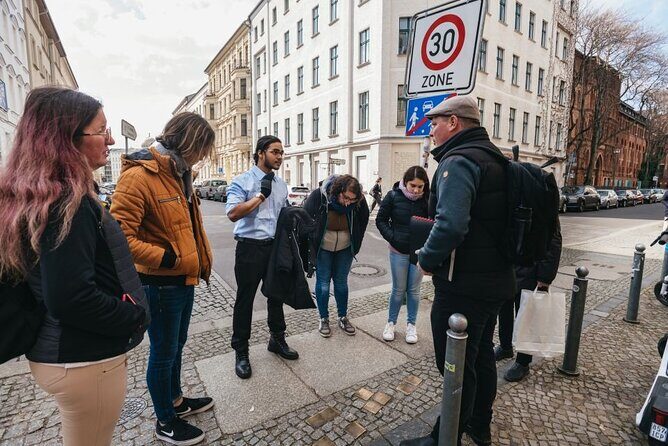
Along the way, you’ll encounter Stolpersteine memorials—small, personal markers that bring names and lives into everyday walking routes.
This is the kind of site that can feel easy to overlook if you’re rushing. Don’t rush. Let the scale hit you: the memory is literally on the ground in the middle of normal streets.
If you’ve never seen Stolpersteine before, you’ll probably find this one of the most haunting experiences on the walk because it’s so subtle. It forces you to slow down without drama.
Finish near Friedrichstraße station
The tour ends near Berlin Friedrichstraße station. In the real world, that’s convenient: you’re close to major transit links and you can keep exploring afterward.
If you’re planning dinner right after, I’d set a simple expectation: this tour runs about 2.5 hours and there’s no food included, so you’ll likely want to eat soon after you finish.
Why the guide quality makes a big difference here
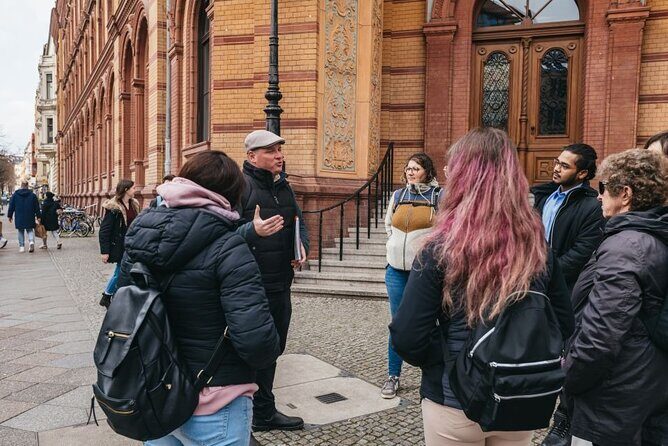
The biggest value isn’t just that you cover important locations. It’s how the guide tells the story—especially on such a sensitive topic.
The guides you might meet include names like Tom and Hannah, both praised for being friendly, professional, and easy to listen to. Tom is highlighted for being very knowledgeable and good at answering questions. Hannah gets praise for passion and for sharing heroes who aren’t widely known. In other words, you’re not only reciting facts—you’re hearing how people argued with themselves, chose actions, and lived through fear.
You also get interactive discussion and Q&A, plus “then & now” photographs and historical maps. That mix helps you connect what you’re seeing with what it used to mean.
Price and value: $56 for 2.5 hours, is it worth it?
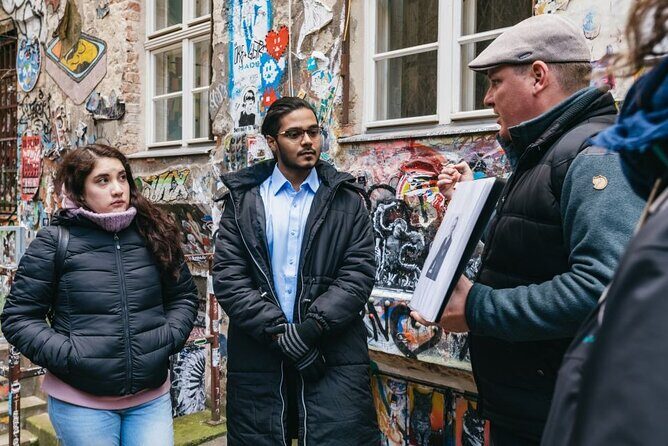
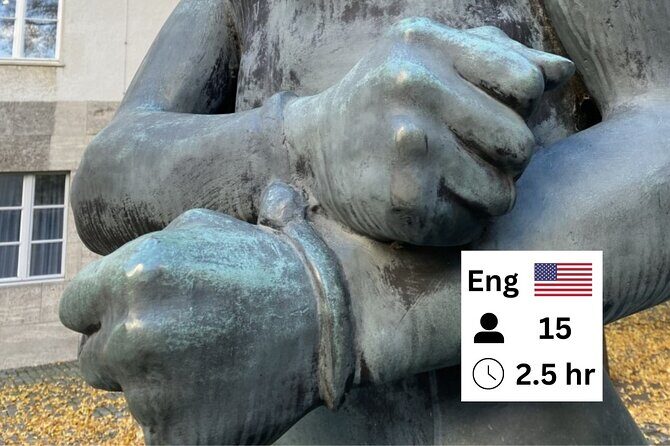
At $56 per person for about 2.5 hours, this sits in the mid-range for Berlin’s walking tours. What makes it feel like good value is the combination of:
- Expert local historian guidance
- Small group size (limited to a small number of participants)
- Entry to museums and memorials
- Then-and-now photos and historical maps
- Time for Q&A instead of a fast script
If you planned to visit these sites on your own, you’d likely spend money on entries and still miss the story links between them—especially the “ordinary resistance” angle. You’re paying for interpretation: why these locations matter and how different forms of resistance actually looked.
If budget is tight, treat it as a priority tour. You can always see less emotionally intense sites on your own later.
Who this tour is best for (and who might reconsider)
This is ideal if you:
- want Berlin history with an honest focus on the Jewish quarter
- like real-world stories tied to specific people and actions
- want a guided framework for understanding Nazi ideology and state-sponsored antisemitism
- appreciate a small group and respectful pacing
It may be less comfortable if you:
- don’t handle heavy, emotionally intense topics well
- prefer lighter, quick-hit sightseeing rather than sustained reflection
- need frequent breaks beyond what a standard 2.5-hour walk typically allows
One more practical note: you’re allowed comfortable shoes, water, and an umbrella. You’re not allowed alcohol and drugs, which is both sensible and keeps the tone respectful.
Tips to get the most out of it
Bring comfortable shoes, water, and plan for weather. The tour runs in all conditions, so a rain layer helps just as much as sun protection. Also, consider carrying a small notebook or phone notes. The route covers multiple sites with different kinds of resistance—so having a quick way to capture what hits you can help you process later.
During Q&A, ask questions that connect the stories to bigger patterns. For example: how ordinary people made decisions when resistance meant personal risk. The guide’s format is built for that kind of discussion.
Should you book this Berlin resistance walk?
If you want one tour that helps you understand resistance as real human behavior—quiet, collective, and sometimes astonishingly direct—this is a strong choice. The combination of WWII specialist guidance, small group size, and stops like Otto Weidt’s workshop and the 1933 book burning memorial gives you both story and place.
Book it if you’re ready to face difficult history in a guided, structured way. Skip it (or pair it with extra unhurried time) if you’re hoping for a lighter day. This isn’t about entertainment. It’s about seeing how courage survived even when the world tried to erase it.