REVIEW · BERLIN
Berlin: Karl-Marx-Allee 2-Hour Tour
Book on GetYourGuide →Operated by Sonderweg-Berlin · Bookable on GetYourGuide
Names change; the buildings tell the truth. On this Karl-Marx-Allee walk, I really like how the tour connects street names, politics, and architecture in plain language, and I also love the big visual moments like the Frankfurter Tor towers and the Kosmos cinema. One thing to plan for: it’s a fast 2-hour route, so you’ll want comfy shoes and a sharp eye for the changing details as you move.
You’ll follow the boulevard through Friedrichshain and stop at key landmarks that explain why this part of Berlin feels so intentionally designed. In recent groups with Tobias (a standout guide from the feedback), the pacing felt lively and informative, with historical photos, old posters, and plenty of on-the-walk anecdotes to keep it from becoming a lecture. Still, if you’re hoping for a slow, meandering photo safari with lots of free time at every corner, this is more of a guided highlights-and-context sprint.
In This Review
- Key things to know before you go
- Karl-Marx-Allee’s big idea: one boulevard, many political faces
- Frankfurter Tor towers: the Berlin landmark you’ll keep pointing at
- Friedrichshain apartment buildings and arcades: where daily life meets design
- Kosmos cinema and Josef Kaiser: when leisure becomes architecture
- Strolling Karl-Marx-Allee: reading the street’s rhythm and intent
- Hochhaus an der Weberweise and the Church of the Resurrection ruins
- Strausberger Platz: gateway energy and distinctive high-rise blocks
- Price and value: $23 for 2 hours of built-environment storytelling
- Who should book this Karl-Marx-Allee tour (and who might not)
- What to expect on the day: guide languages and a tight timeline
- Should you book this tour?
- FAQ
- How long is the Berlin Karl-Marx-Allee tour?
- How much does the tour cost?
- What’s included in the price?
- Is hotel pickup and drop-off included?
- Where does the tour meet?
- What languages is the tour offered in?
- Is free cancellation available?
- Is there a reserve now & pay later option?
- How highly rated is this experience?
Key things to know before you go
- A 2-hour walking route focused on one of Berlin’s most famous post-war boulevards
- Frankfurter Tor as an architectural centerpiece with distinctive towers
- Friedrichshain arcades and the apartment-building look of the era
- Kosmos cinema (Josef Kaiser) for design-minded architecture lovers
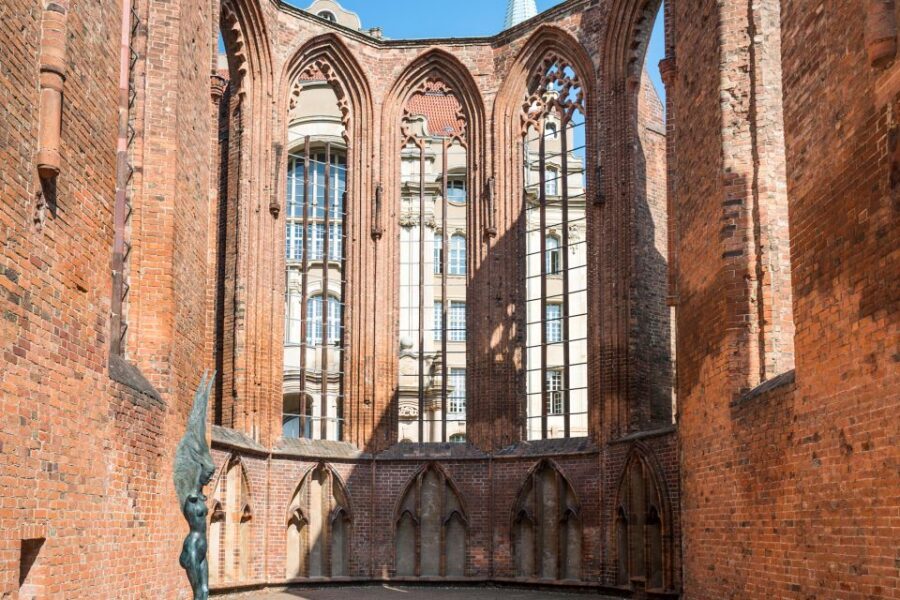
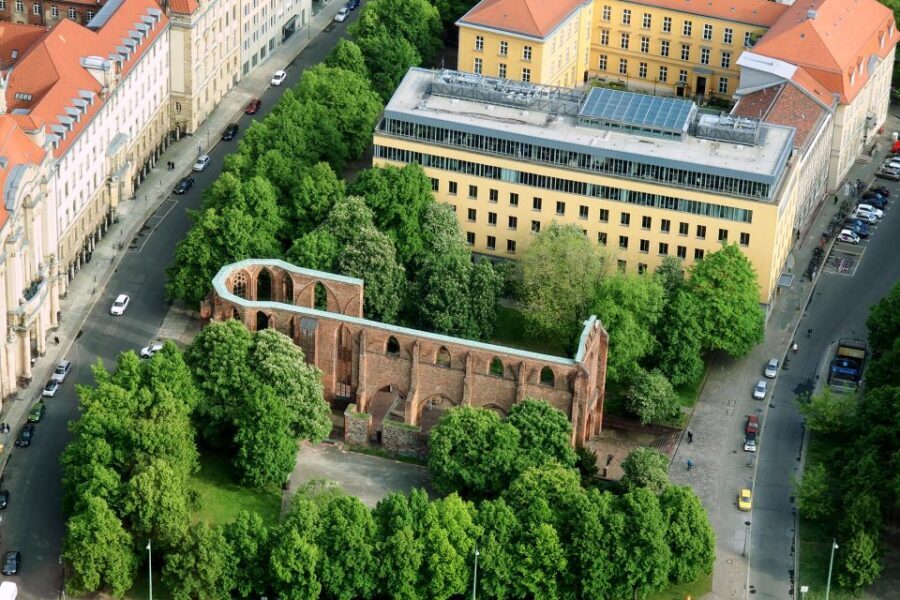
- Church of the Resurrection ruins as a visible reminder of what survived and what didn’t
- Strausberger Platz high-rises that set the tone for the socialist city center idea
Karl-Marx-Allee’s big idea: one boulevard, many political faces
Karl-Marx-Allee isn’t just a street. It’s nearly 2 kilometers of planning, built to be seen, walked, and remembered. The tour helps you read the place like a timeline: it started as Frankfurter Allee, became Stalinallee, and later took its current name.
That naming history matters because it shows how the same physical space can carry new meanings. You’ll also hear why this boulevard is considered one of the largest monuments in Berlin’s capital city story and why it’s treated as an important example of post-war urban development.
If you like architecture that has a “why,” not just a “wow,” you’ll click with this tour. It’s not only about pretty facades; it’s about how cities try to express ideals through mass housing, wide streets, and carefully positioned landmarks.
You can also read our reviews of more tours and experiences in Berlin



Frankfurter Tor towers: the Berlin landmark you’ll keep pointing at
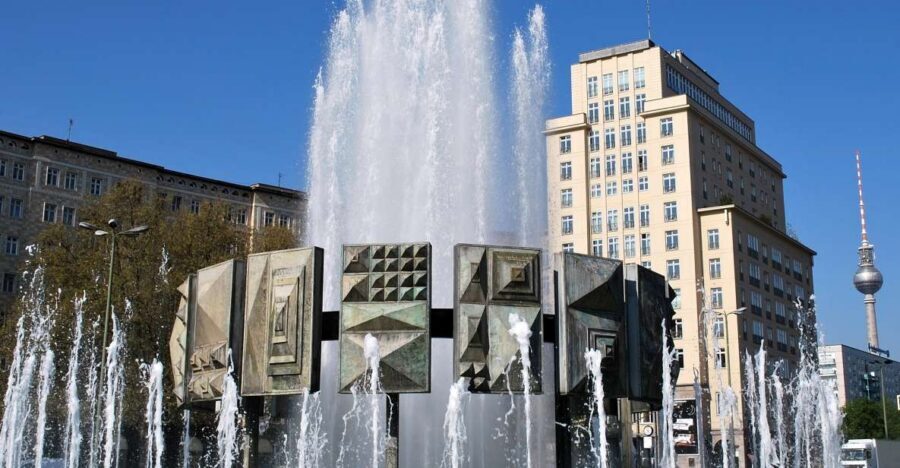
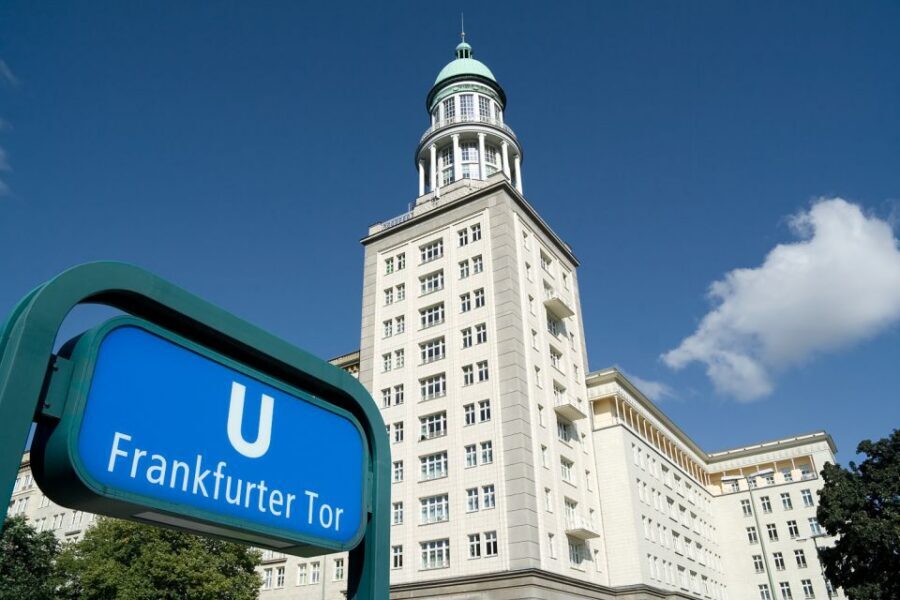
The tour’s architecture lesson begins with Frankfurter Tor, famous for its distinctive towers. This is the kind of building that makes you stop mid-walk—because it looks like a gateway, not just another block along the road.
As you stand near it, you’ll get a quick education in how monumental design turns an everyday street into something ceremonial. The towers frame the street’s visual rhythm, and the experience is almost like the boulevard is telling you where you are and what period it represents.
Practical note: because the landmark is a focal point, it’s also a common photo stop. If you’re traveling with a phone camera and you care about angles, arrive ready to take a couple shots fast, then move on before the group shifts.
Friedrichshain apartment buildings and arcades: where daily life meets design
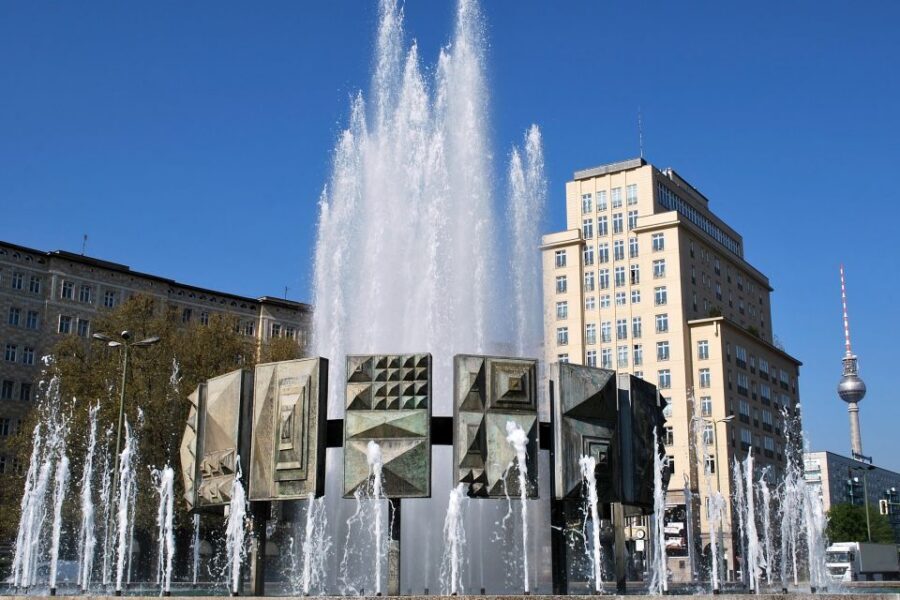
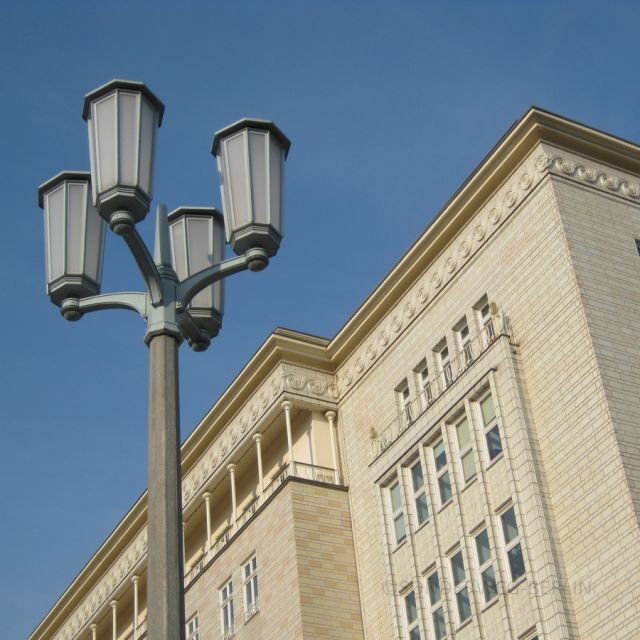
Next you’ll head through Friedrichshain and look at apartment buildings with arcades. This is where the tour shifts from “monument” to “how people actually moved and lived,” without losing the big architecture picture.
Arcades can sound like a small detail until you see them in context. Here, they help explain how the built environment shaped everyday routines—covering walkways, shaping the street edges, and creating that very specific sense of order you get in planned residential districts.
You’ll likely find this stop hits best if you’ve ever wondered why some cities feel easy to walk while others feel chaotic. The boulevard’s design tries to do the work for you: it channels movement, controls views, and makes the walking experience feel deliberate.
One consideration: if you’re not interested in mass housing or the layout of residential blocks, this part may feel more architectural than emotional. But if you enjoy understanding the “human” side of big political construction, it’s a smart stop.
Kosmos cinema and Josef Kaiser: when leisure becomes architecture
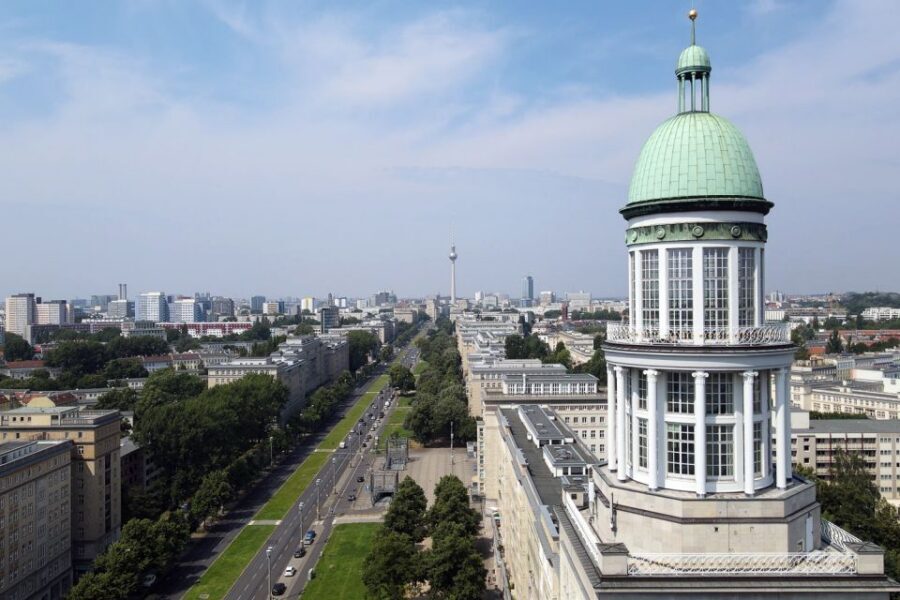
Then comes a standout detour for design lovers: the Kosmos cinema, designed by Josef Kaiser. A cinema seems casual—until you realize buildings like this are designed to shape mood, movement, and attention.
The tour uses the cinema to connect the idea of public culture with the architectural ambition of the street. It’s a helpful reminder that monumental streets aren’t only about administration and slogans; they also carry everyday recreation and cultural life.
In recent feedback, Tobias was praised for bringing this area to life using historical photos, old posters, and small anecdotes. That kind of storytelling matters here, because it turns a building from a facade into a place with a function and a past.
If you’re the type who walks into old theaters just to look at the bones, you’ll appreciate this stop. And if you’re less into architecture, the cinema still works because it’s an easy, recognizable use of a building.
Strolling Karl-Marx-Allee: reading the street’s rhythm and intent
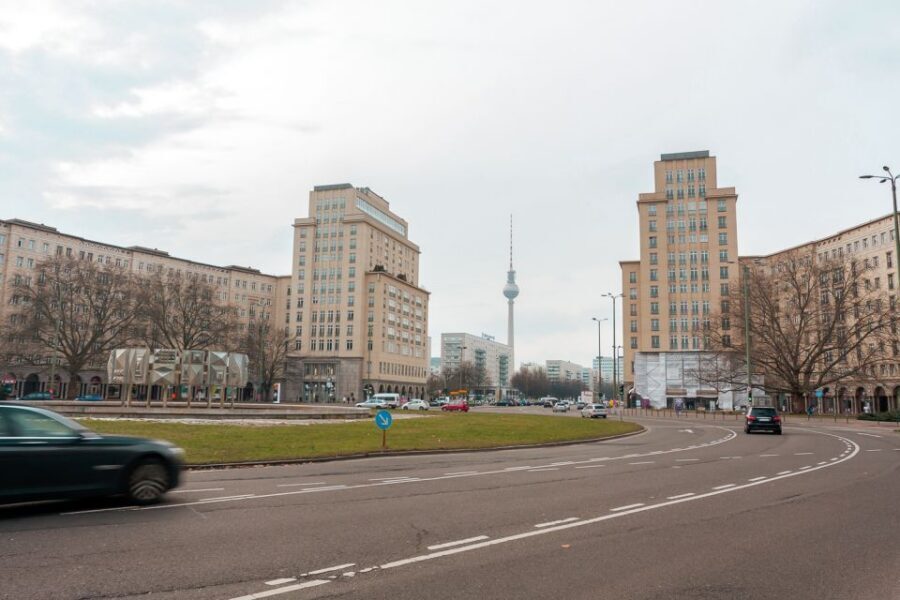
After the headline landmarks, the tour becomes a guided stroll along the boulevard. This is the part you should enjoy with your eyes slightly raised, not only straight ahead.
Karl-Marx-Allee works visually because so much of the street was planned at once. That means the spacing, the building scale, and the street’s long sweep all reinforce the feeling that this is more than an address. The tour helps you see that post-war urban development goal: create a grand spine for the city while still building livable spaces along it.
This walk is also a good time to connect the name changes you heard earlier to what you’re actually seeing. The street’s physical continuity makes the political shifts feel more grounded. You’re not reading history in a museum; you’re watching it happen in layers.
Tip: pause once or twice when the guide points something out. It’s tempting to keep walking, but the details are easier to catch if you stop and let the streetscape settle in.


Hochhaus an der Weberweise and the Church of the Resurrection ruins
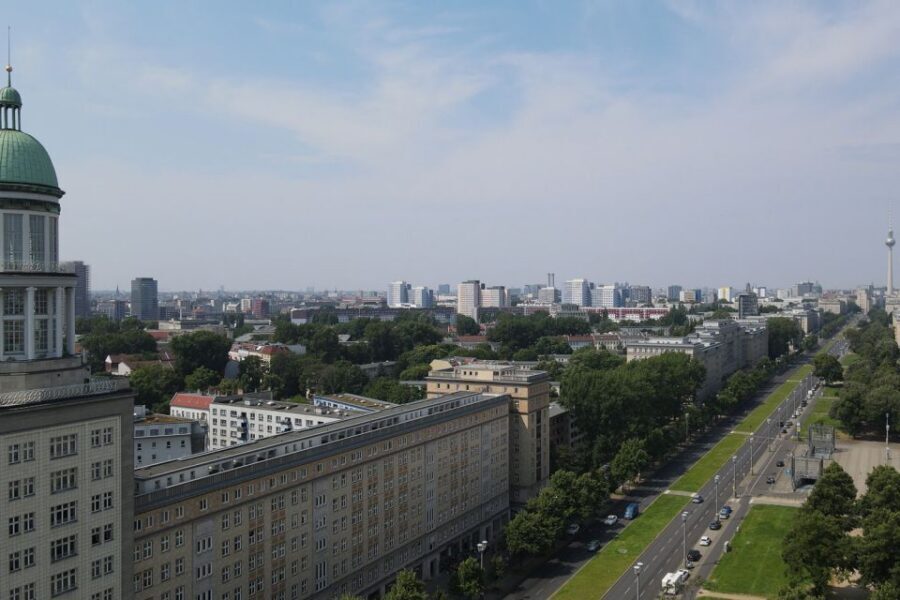
The route includes Hochhaus an der Weberweise, a high-rise that helps show the boulevard’s ambition for height and presence. This stop is useful because it breaks up the more repetitive feel you can get from long stretches of mid-rise blocks.
High-rises change how you experience a street. They add depth to the view, and they help explain why the boulevard feels like a designed urban corridor rather than just a long road.
Then the tour brings in the Church of the Resurrection with partial ruins. This is one of those stops that does emotional work. Ruins have a different kind of storytelling power than preserved facades, because they show what damage happened and what was left behind.
Balanced advice: ruins can be the most memorable part, but they’re also the part where your expectations may clash with reality if you expected a full structure. The key is to think of it as evidence—an on-site reminder that the city’s story includes loss, not only construction.
If you like your travel grounded—less postcard, more human consequence—this stop is worth paying attention to.
Strausberger Platz: gateway energy and distinctive high-rise blocks
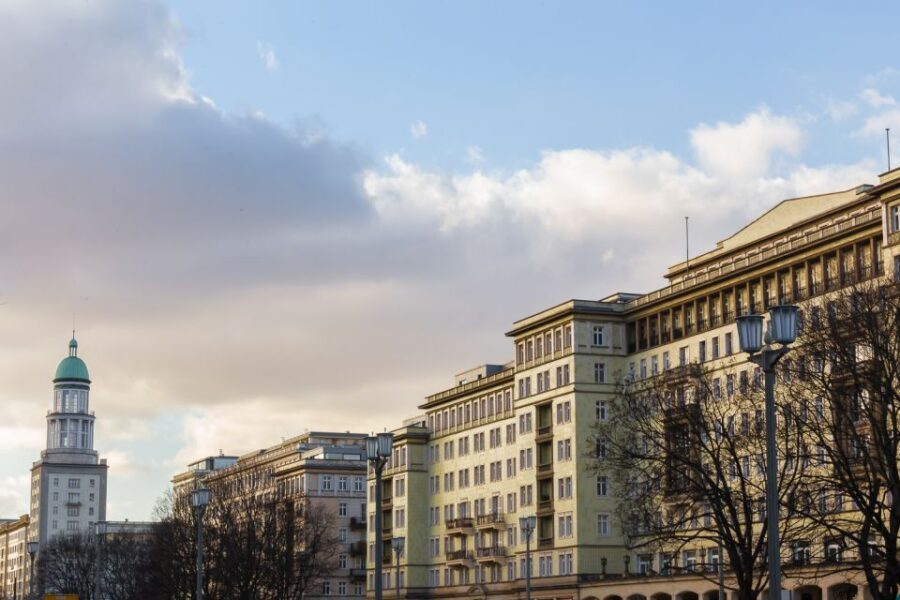
The tour ends by strolling through Strausberger Platz and its distinctive high-rise buildings. This area works as a kind of gateway toward the socialist city center idea, and you can feel the shift in how the space holds attention.
High-rise clusters at a square tend to create a specific “arrival” feeling. You’re moving through a corridor, then suddenly you have a node—something like an urban room where views open up and the street plan becomes clearer.
This is also where the tour’s overall theme clicks: the boulevard isn’t random. It’s part of a larger city concept, with squares, lanes, and landmark buildings designed to shape how people orient themselves.
If you’ve ever wanted to understand Berlin beyond the big museum hits, this is a strong “middle ground” ending: architecture you can walk through, history you can read without tickets.
Price and value: $23 for 2 hours of built-environment storytelling
At about $23 per person for a 2-hour walking tour, this is priced like a straightforward guided city experience—not a special-ticket attraction. What makes it feel like good value is the mix of major stops clustered into one route: Frankfurter Tor, Kosmos cinema, notable apartment blocks, a high-rise, and even the Church of the Resurrection ruins.
You’re paying for more than the distance. You’re paying for interpretation: how the guide ties architecture and street names into a readable narrative. That’s also why the guide quality matters here, and the feedback is very consistent about that point—Tobias in particular is praised for being communicative, passionate, and engaging, and for choosing a route that actually explains what you’re looking at.
One more practical angle: hotel pickup isn’t included. That means your personal value depends on how easy it is for you to reach the meeting point on your own. If you’re already near the area or you’re comfortable using transit/walking, you’ll get the best out of the time you’re paying for.
Who should book this Karl-Marx-Allee tour (and who might not)
This tour is a great match if you want:
- architecture and city planning explained in a quick, guided way
- a focused route that covers multiple key landmarks in 2 hours
- context for Berlin’s post-war development and the street’s name changes over time
- a lively guide style, especially if you like stories supported with old photos and posters (a strength highlighted in feedback about Tobias)
You might want to skip or complement it if:
- you prefer totally self-paced wandering with lots of stops that take a long time
- you’re only after one or two iconic sights and nothing else
- you get tired quickly from walking without extended breaks
What to expect on the day: guide languages and a tight timeline
The tour is a walking format with an expert guide. It runs in English or German, and recent feedback highlights that the guide can keep the group engaged with historical anecdotes and visual materials like old posters and photos.
Because it’s 2 hours, the timeline is necessarily tight. You’ll be moving from stop to stop with short windows to look around, which is ideal for people who like structure. If you’re the kind of traveler who needs long sits at every corner, plan to do extra independent time afterward.
Also note: the meeting point can vary based on the option you book. That’s normal for walking tours, but it’s your job to double-check the exact starting location before you set off.
Should you book this tour?
Yes—if you want a smart, efficient way to understand Karl-Marx-Allee as more than a name. For the price, you get a concentrated tour of major architecture moments: Frankfurter Tor’s towers, the Kosmos cinema designed by Josef Kaiser, Friedrichshain’s arcaded apartment buildings, Hochhaus an der Weberweise, the Church of the Resurrection partial ruins, and Strausberger Platz.
Also, the guide feedback is strong enough that I’d take it seriously. Tobias is specifically praised for knowledge, energy, and for using historical photos and old posters to make the setting feel real, not just described.
If you’re in Berlin for a short visit and you want one guided walk that ties together street design, political change, and visible architecture, this is a solid bet.
FAQ
How long is the Berlin Karl-Marx-Allee tour?
The tour lasts 2 hours.
How much does the tour cost?
It’s listed at $23 per person.
What’s included in the price?
The price includes a walking tour and an expert guide.
Is hotel pickup and drop-off included?
No, hotel pickup and drop-off are not included.
Where does the tour meet?
The meeting point may vary depending on the option booked.
What languages is the tour offered in?
The live guide offers German and English.
Is free cancellation available?
Yes. You can cancel up to 24 hours in advance for a full refund.
Is there a reserve now & pay later option?
Yes, you can reserve now and pay later.
How highly rated is this experience?
It has an overall rating of 5 with 116 reviews.