REVIEW · BERLIN
Small Group Tour: “Wild Kreuzberg”
Book on GetYourGuide →Operated by BBT-Sightseeing & More · Bookable on GetYourGuide
Kreuzberg walks fast—so does its story. This small-group tour is a 3-hour taste of Berlin that goes beyond postcard sights, mixing everyday life at Kottbusser Tor with punk-era streets and the leftovers of the city’s famous squatter culture. I like the way it connects big themes—mass production, alternative art spaces, and neighborhood change—to places you can actually point at while you walk.
Two things I especially like: you’ll spend real time around Oranienstraße/SO36 energy, and you get to slow down for coffee at Oranienhöfe while the guide puts names and history behind what you’re seeing. One drawback to keep in mind: the tour runs in German only, and you’ll walk in all weathers (rain poncho is provided, but the streets stay the streets).
Wild Kreuzberg Highlights You’ll Feel While Walking
- Kottbusser Tor with the U1 overground rails cutting the square in two, right where daytime and nightlife collide
- Oranienstraße and SO36 streets built around markets, cafés, bars, and alternative clubs
- Oranienhöfe coffee stop plus the Home for the Blind, adding a human, local angle to the neighborhood
- Museum of Objects and mass production history, then on to Bethanien and the art-squat scene
- Fontane-Apotheke and Görlitzer Park, including the old train-station-to-park transformation
- Over the walk, you’ll also pass major landmarks like the Kreuzberg Museum area and end near the Oberbaumbrücke East-West link
In This Review
- Why Kreuzberg Feels Like Two Cities at Once
- Meeting at 137 Skalitzer Straße by Gold Exchange (And Finding Your Guide Fast)
- Kottbusser Tor: Everyday Life Meets Night-Culture Energy
- Adalbertstraße and the Kreuzberg Museum Stop: Seeing the Built Environment
- Oranienstraße (SO36) and the Punk-Era Shape of Kreuzberg
- Oranienhöfe Coffee Break + The Home for the Blind
- Museum of Objects and Mass Production: Small Details, Big Systems
- Bethanien and the Squatters’ Afterlife at Mariannenplatz
- Oberbaumbrücke: East and West Linked by One Walk
- Fontane-Apotheke and Görlitzer Park: From Train Station to Park Life
- Pace, Weather, and the Practical Reality of a 3-Hour Walk
- Price at About $24: What You’re Really Paying For
- Language and Guide Style: German-Only Is a Factor
- Should You Book Wild Kreuzberg?
- FAQ
- What’s the duration of the Wild Kreuzberg tour?
- How big is the group for this tour?
- Where do I meet the guide?
- What’s the nearest U-Bahn station?
- Is food included?
- What’s included in the price?
- What language is the tour guide?
- Does the tour run in bad weather?
- How does cancellation work?
Why Kreuzberg Feels Like Two Cities at Once
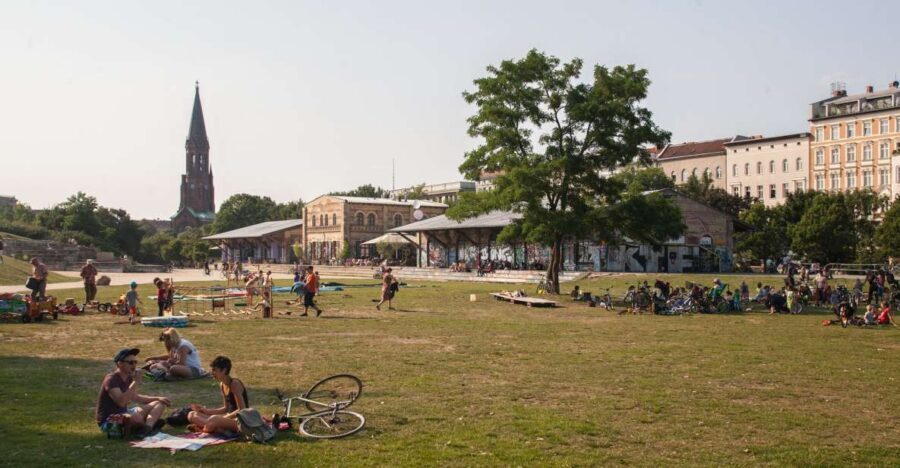
Kreuzberg has a built-in contrast. One side is loud, fast, and modern—markets, restaurants, Arabic eateries, Turkish food stalls, and cafés that look like they’ve always belonged on this block. The other side shows texture: old buildings, squatter-era spaces, and institutions that survived long enough to become part of the neighborhood’s identity.
That’s what makes this tour work. It doesn’t treat Kreuzberg like a theme park. Instead, you’re walking a line through the city’s real pressure points: where different communities meet, where nightlife and daily errands rub shoulders, and where Berlin’s counterculture left physical traces you can still find on foot.
You’ll also notice a practical benefit to the route design. The tour stays in walkable clusters, so you’re not constantly changing contexts in transit. The neighborhood does the connecting for you.
Meeting at 137 Skalitzer Straße by Gold Exchange (And Finding Your Guide Fast)
Your start is 137 Skalitzer Straße, in front of Gold Exchange, next to REWE. If you like to arrive and get set, this is helpful—there’s a clear, street-level landmark combo to locate yourself quickly.
The nearest U-Bahn station is Kottbusser Tor (U1 and U8). Take the Skalitzer Straße exit to keep the first stretch simple. Your guide will carry a sign with the operator logo, so you’re not left scanning faces.
This matters more than you might think on a walking tour. When you start clean, you spend the next 3 hours actually seeing places instead of doing last-minute navigation.
You can also read our reviews of more tours and experiences in Berlin.
Kottbusser Tor: Everyday Life Meets Night-Culture Energy
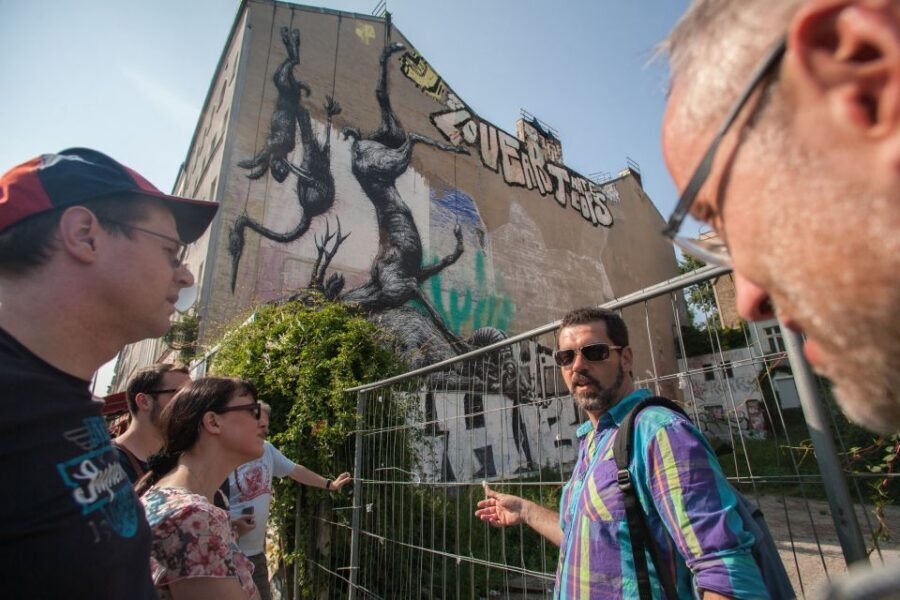
The tour begins at Kottbusser Tor, where the neighborhood feels like it runs two schedules at once. You get everyday Berlin—people moving, browsing, grabbing food. Then you’re surrounded by the vibe of Kreuzberg nightlife, because the square also serves as a staging ground for bars and alternative clubs.
One detail you’ll likely notice quickly: the square is divided by the famous overground rails of the U1 line. That’s not just scenery. It shapes how people cross, where storefronts sit, and how the area feels physically split—east-side intensity on one side, west-side momentum on the other.
From there, the route leads you past imposing older buildings from the early 1900s and toward key Kreuzberg anchors like the Sozialpalast area. The guide’s job is to translate those structures into stories you can actually remember—who lived here, what the neighborhood became, and why certain corners have reputations.
Adalbertstraße and the Kreuzberg Museum Stop: Seeing the Built Environment
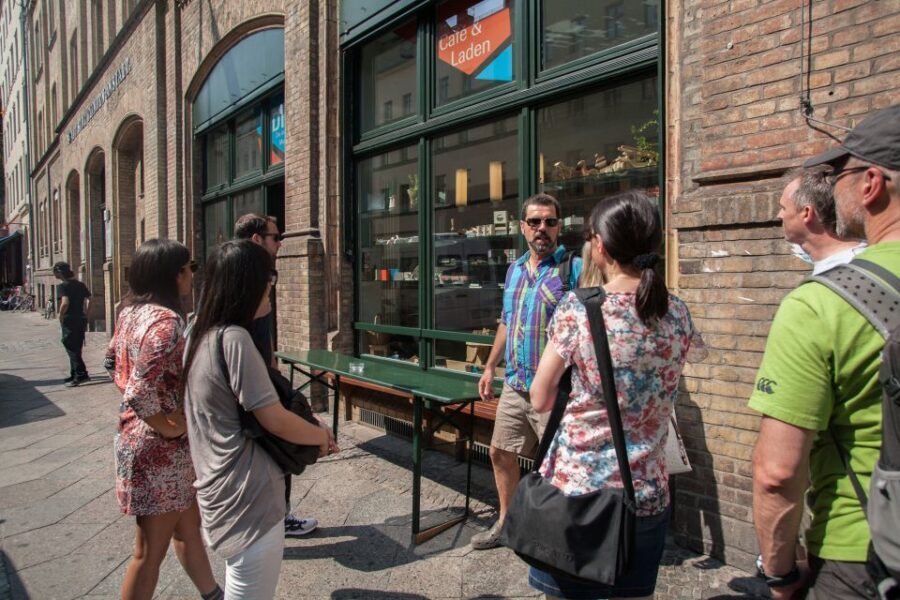
As you move along, you’ll catch sight of the Adalbertstraße skyscrapers and visit the Kreuzberg Museum area. This is the part of the walk that helps you stop thinking of Kreuzberg as just cafés and street life and start seeing it as a place shaped by planning decisions, redevelopment pressure, and real community change.
The museum stop adds context without turning the tour into a museum day. Think of it as a grounding point: you’ve been absorbing neighborhood mood, then the guide gives you a framework to understand what you’ve been seeing.
Oranienstraße (SO36) and the Punk-Era Shape of Kreuzberg
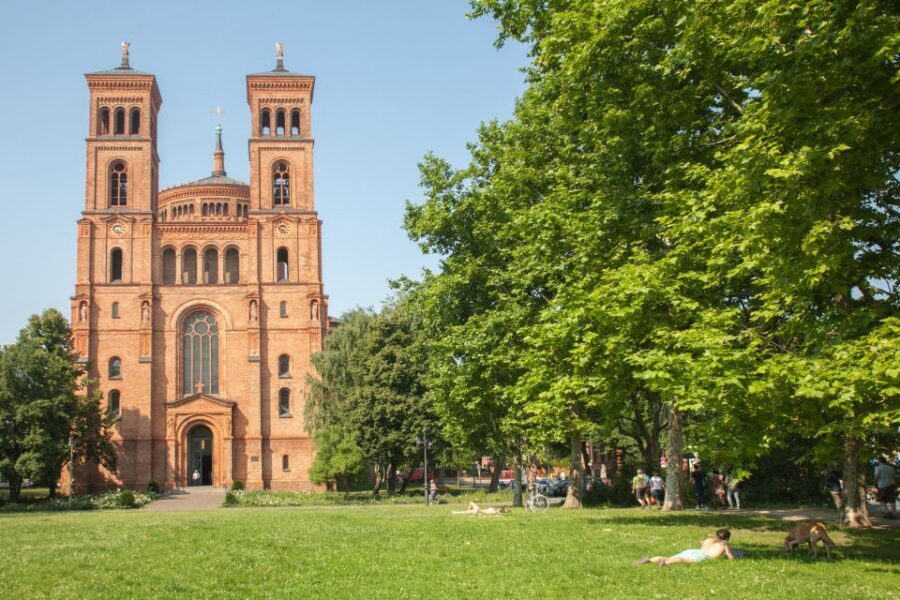
This is the walk’s emotional center: Oranienstraße. The tour frames it as the heart of the former SO36 postal district—Berlin’s punk district reputation is strongly tied to this area. And you can feel that in the mix of businesses: restaurants and bars side by side with shops and cafés that carry that slightly rebellious edge Kreuzberg is known for.
Along Oranienstraße, you’ll see how Kreuzberg’s identity works in practice. It’s not just one subculture; it’s different worlds sharing the same streets. Markets and food set the rhythm. Alternative venues keep the atmosphere charged. It’s the kind of place where you can’t fully “opt out” of the neighborhood, because the street life reaches you even while you’re just walking.
There’s a smart reason this stop is where it is. The tour spends enough time here that you can build a sense of place before it moves into the heavier, more specific squat-history sites.
Oranienhöfe Coffee Break + The Home for the Blind
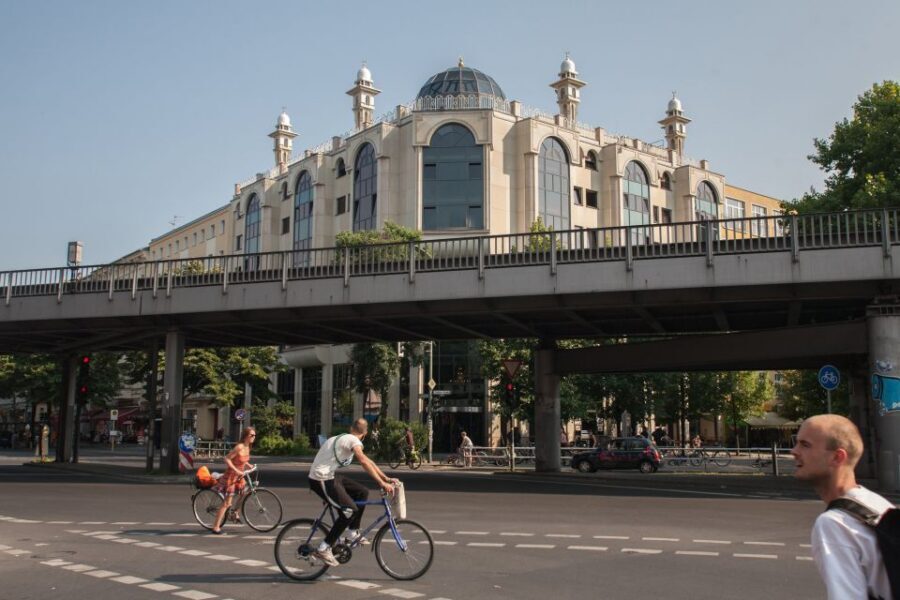
One of the more relaxing moments comes with a coffee break at Oranienhöfe, after you stop at the Home for the Blind. This combination does two things at once.
First, it breaks up the walking rhythm, which is practical. Second, it changes the tone. Squatter culture can sometimes make tours feel like they’re only focused on protest and politics. Here, you get a different type of Berlin story—one tied to daily life, care institutions, and the kind of community reality that sits underneath the louder myths.
Oranienhöfe also gives you a “pause and people-watch” feeling. You’ll be able to look around with a bit more clarity after the guide connects what you’re seeing to why this corner mattered.


Museum of Objects and Mass Production: Small Details, Big Systems
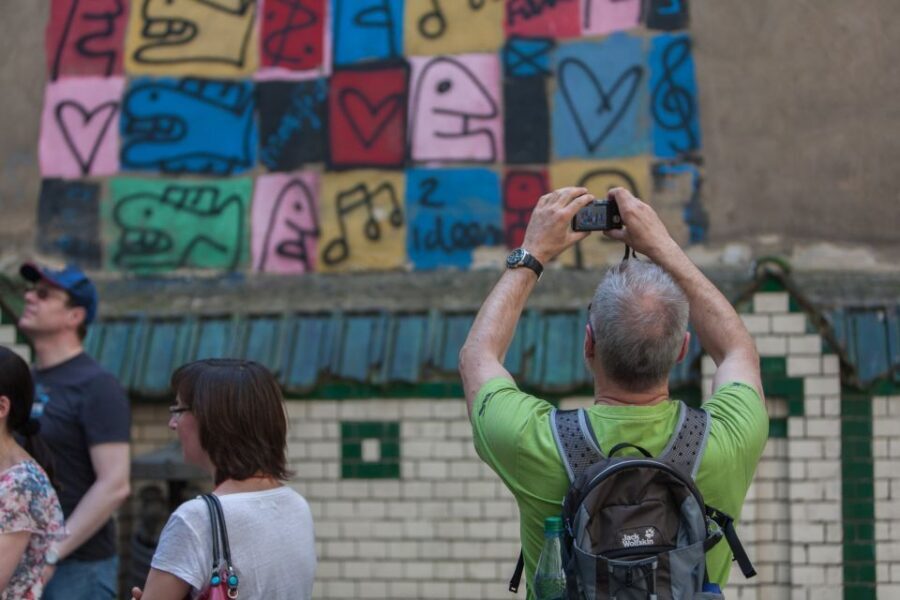
After the café and neighborhood center, the tour shifts into a more thoughtful mode with the Museum of Objects, focused on the history of mass production. This is a good match for Kreuzberg because this area has long been a place where everyday consumption meets alternative thinking.
Even if you’re not a museum person, this stop helps you notice something you might otherwise ignore on the street: modern life isn’t just built by design—it’s built by systems. Mass production shapes the goods people buy, the things they discard, and even how neighborhoods evolve around cheap, accessible products.
Then you’ll continue on toward Mariannenplatz, where you’ll connect that “how the world makes objects” idea to “how the world makes spaces” through the art-squat scene.
Bethanien and the Squatters’ Afterlife at Mariannenplatz
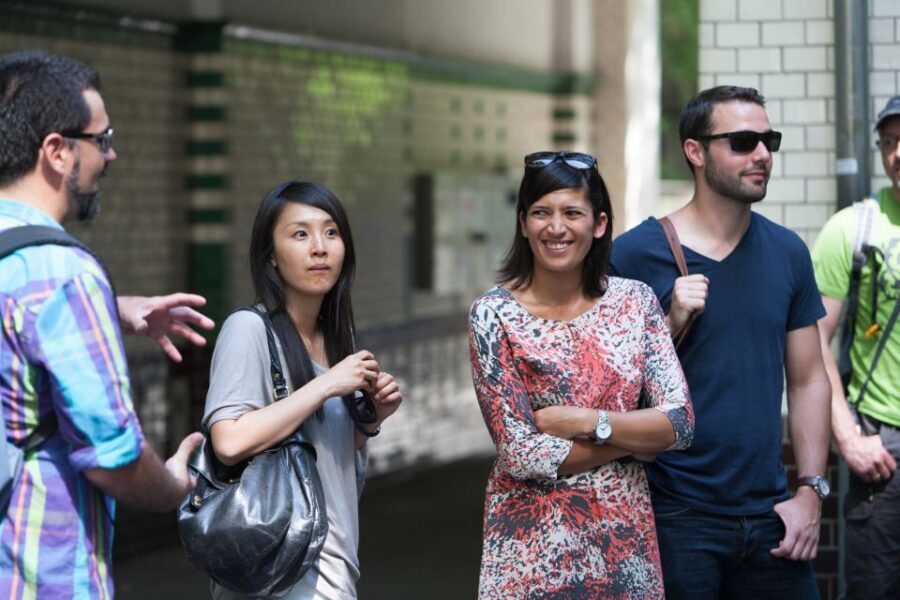
At Mariannenplatz, you’ll find Bethanien, described as an art squat in a former hospital. That’s a powerful contrast in one location: healthcare as an institution, repurposed into an art space by people who didn’t wait for permission.
Next door is the Rauchhaus, where you’ll see more traces of the squatter life from days gone by. This part of the walk matters because it turns an abstract idea—Berlin’s squatter scene—into tangible architecture. You’re looking at buildings that keep their weight and purpose even after the original function changed.
A practical tip: keep your eyes up as you move here. The details around entrances, signage, and how the spaces sit can tell you a lot about how these buildings were adapted.
Oberbaumbrücke: East and West Linked by One Walk
As you head toward the Oberbaumbrücke, the tour gives you a symbolic capstone. The bridge is presented as a link between East and West Berlin.
Even if you know the bridge already, the meaning changes when you’ve spent the previous hours walking Kreuzberg’s cultural layers. You’re not just seeing a landmark now; you’re seeing how Berlin’s major divisions show up in everyday routes, neighborhoods, and rebuilding stories.
This part tends to leave you with a clearer mental map. You can connect what you learned about neighborhood culture to how Berlin physically grew and changed.
Fontane-Apotheke and Görlitzer Park: From Train Station to Park Life
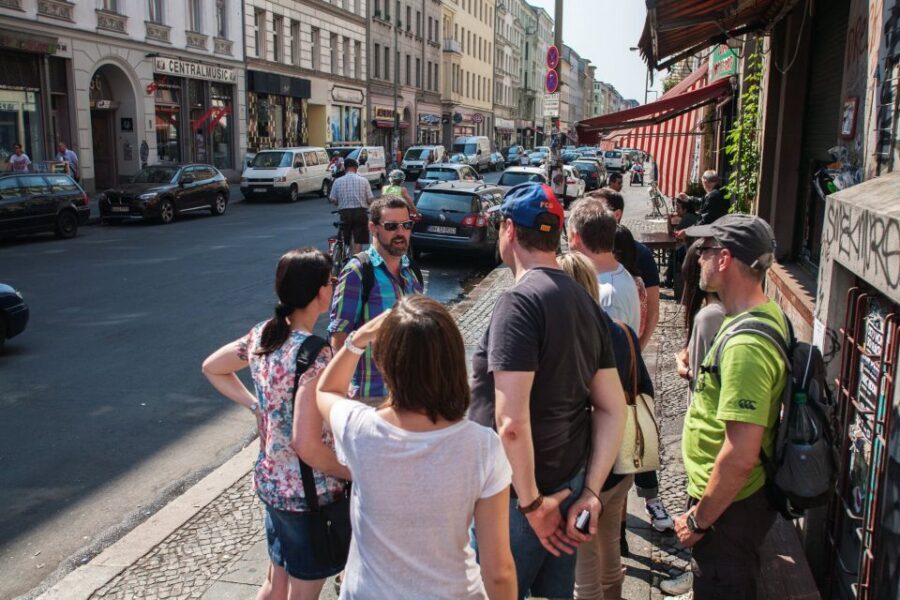
The tour also includes Fontane-Apotheke, described as well-known. It’s a small stop, but pharmacy culture in Berlin is real: these places often become long-term neighborhood anchors, not just places for medicines.
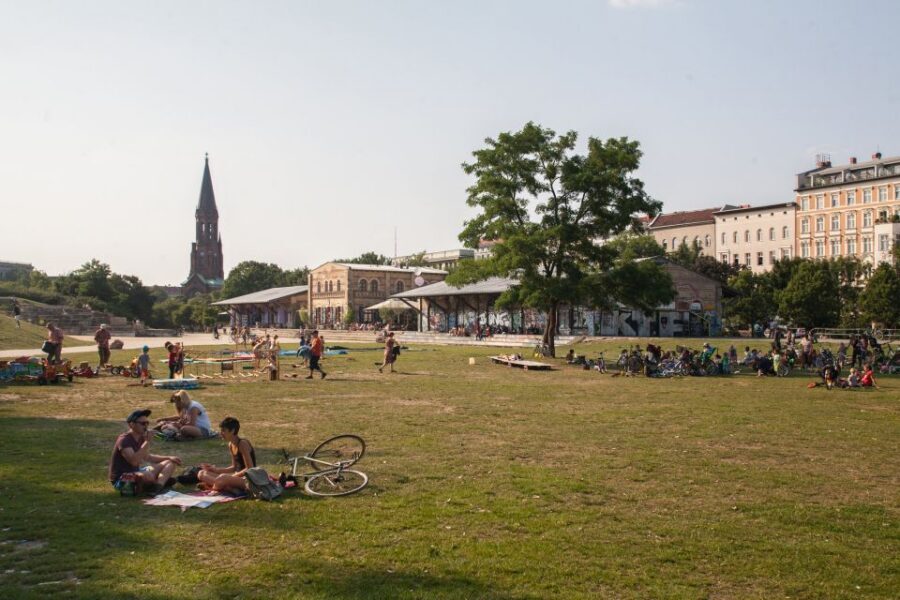
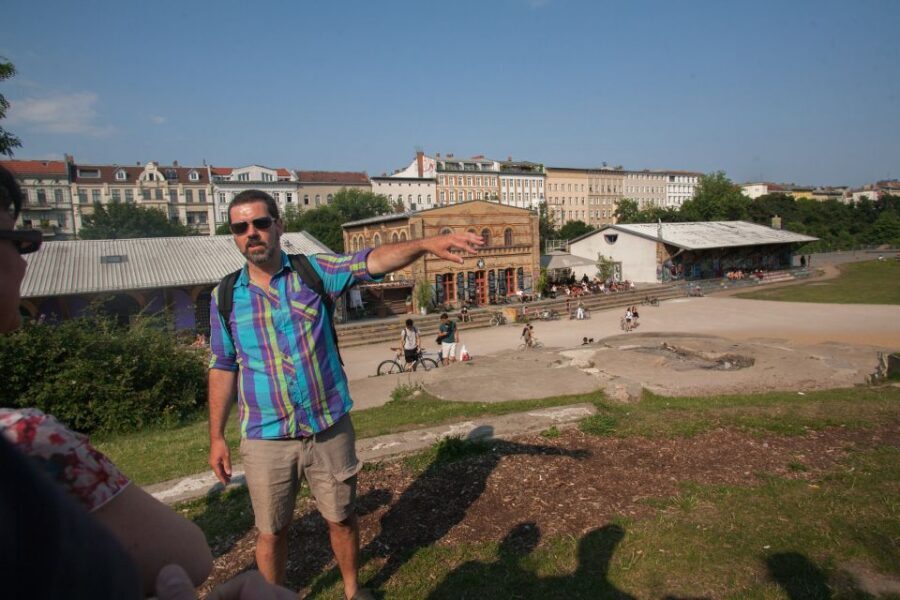
Then comes Görlitzer Park, previously a train station. That transformation is exactly the kind of Berlin story you want on a walk like this: industrial infrastructure converted into public space. It’s another example of Berlin doing what it does best—taking leftovers and turning them into daily life.
If you’re the type who likes to understand how a city uses space, this section will feel especially satisfying. You’ll start seeing the neighborhood as layers: transportation, then public use, then culture.
Pace, Weather, and the Practical Reality of a 3-Hour Walk
This is a 3-hour walking tour. That’s long enough to feel like you actually moved through Kreuzberg as a place, not just as a checklist.
Bring comfortable shoes. You’ll be on streets for the full experience, and the route includes squares and park edges. The tour runs in all weathers. Rain ponchos are distributed if needed, so you won’t be stranded in drizzle—but you should still dress for walking.
The group size is small: minimum is listed as 3 pax and maximum 12 pax. In another note, there’s a minimum participant requirement of 2 persons for the tour to run. Either way, you’ll generally get a more personal pace than you’d find on large bus tours.
Price at About $24: What You’re Really Paying For
At around $24 per person, this tour is priced like a “value” option rather than a luxury experience. What makes it feel worth it is not just the sites—it’s the time and the connections.
You’re getting:
- A city guide (live, German) who ties the neighborhood together
- Multiple stops that mix culture and specific locations, not just generic photos
- A coffee break moment at Oranienhöfe
- Duties and a rain poncho if necessary
Food and drink are not included, so you’ll want to plan around that. The good news: you’re not paying extra for meals you may not eat. For many people, that means you can keep your budget under control and still take the tour.
One more value angle: Kreuzberg changes fast. A short, focused walk with context helps you avoid the common mistake of wandering around without knowing what you’re looking at.
Language and Guide Style: German-Only Is a Factor
The tour is in German with a live guide. If you speak at least conversational German, this will likely feel smooth. If you don’t, you should be realistic: you may follow the highlights visually, but you’ll lose the meaning the guide is delivering at each stop.
One guide name that has come up in customer feedback is Ferenz, praised for being very individual and bringing a lot of wild, detailed Kreuzberg context. That kind of approach is exactly what you want from this type of tour: specific stories tied to specific corners.
Should You Book Wild Kreuzberg?
Book it if you want a small-group Kreuzberg walk that focuses on places tied to daily life and alternative culture—not just monuments. The route makes sense for first-timers who want orientation fast, and it also works for repeat visitors who want the squatter-and-reuse angle explained in plain terms.
I’d skip it (or treat it as a visual tour only) if German-only guidance is a dealbreaker for you. Also, if you hate walking in any weather, plan on dealing with rain or cold street air.
If you’re comfortable with 3 hours on your feet and you like neighborhoods with real people and real edge, this is an easy “yes” at the $24 level—because the value comes from context, not from fancy extras.
FAQ
What’s the duration of the Wild Kreuzberg tour?
It lasts 3 hours.
How big is the group for this tour?
The tour is offered as a small group, with min. 3 pax and max. 12 pax.
Where do I meet the guide?
Meet at 137 Skalitzer Straße, in front of Gold Exchange and next to REWE.
What’s the nearest U-Bahn station?
The nearest stop is Kottbusser Tor (lines U1 and U8), using the Skalitzer Straße exit.
Is food included?
No. Food and drink are not included.
What’s included in the price?
You get duties, a city guide, and a rain poncho if necessary.
What language is the tour guide?
The live guide provides the tour in German.
Does the tour run in bad weather?
Yes, it runs in all weathers. On rainy days, you’ll be given a rain poncho.
How does cancellation work?
You can cancel for a full refund up to 24 hours in advance.
If you tell me your German level and what day/time you’re aiming for, I can help you decide whether this should be your first Kreuzberg stop or a later add-on.