REVIEW · BERLIN
Berlin: E-Boat Sightseeing Spree Cruise in German & English
Book on GetYourGuide →Operated by Berliner Wassertaxi · Bookable on GetYourGuide
Berlin from water level feels different. This quiet, electric cruise follows the Kupfergraben Canal and shows you Berlin’s big landmarks without the walking grind. I especially love the Museum Island views from both sides of the water.
The ride is also a treat because it’s calm and practical. You get a comfortable interior with a retractable roof plus heating, and the German/English commentary keeps you oriented. The one drawback to plan for is the stairs: you need to climb down about 20 steps, and it is not suitable for wheelchair users.
In This Review
- Key Highlights Worth Your Time
- Why the Kupfergraben Canal Cruise Changes How You See Berlin
- The Electric Boat Comfort: Retractable Roof and Heated Interior
- Meeting at Museumsinsel (U5) and Getting Onboard Smoothly
- The 1-Hour Route: From Zeughaus Toward Central Berlin’s Icons
- Zeughaus and Pergamon Museum: Starting with a Classic Museum-Island Backdrop
- Museum Island: Two-Sided Views and Easy Photo Angles
- TV Tower and Berlin Cathedral: Big Landmarks, Short Time
- Nikolaiviertel: The Reconstructed Heart You Can See in Context
- Mühlendammschleuse to Humboldt Forum: Canal Mechanics Meet Modern Berlin
- Mühlendammschleuse: The Water-Engineering Moment
- Humboldt Forum: Modern Architecture Framed by the Water
- Weidendammer Brücke, Reichstag, and Berlin Hauptbahnhof: Big Views Without the Crowd Chaos
- Weidendammer Brücke: A Bridge Where the Whole City Feels Present
- Reichstag: Government Quarter Views in Motion
- Berlin Hauptbahnhof: Transportation Logic, Visible in One Pass
- Futurium, Friedrichstraße, and Bode Museum: Berlin’s Current Mood
- Futurium: A Modern Stop on a Classic Water Route
- Friedrichstraße: Hip City Energy from the Water
- Bode Museum: Another Museum Island Anchor Before You Sail Back
- Audio Guide in German and English: How to Get More Out of Every Minute
- Price and Value: Is $25 Worth an Hour on the Spree?
- Best Time to Sail and Practical Tips for Photos
- Who This Cruise Suits (and Who Should Skip It)
- Should You Book This E-Boat Sightseeing Spree Cruise?
- FAQ
- How long is the cruise?
- What languages are available for the tour commentary?
- Where do I meet the boat?
- Are drinks included in the price?
- Is there heating or protection from bad weather?
- Is the cruise wheelchair accessible?
Key Highlights Worth Your Time
- Electric boat silence makes the audio easier to hear and the whole trip feel relaxed
- Retractable roof + heating keeps you comfortable in cool weather
- Museum Island and Nikolai Quarter views let you see where Berlin grew from and what it became
- Schloßbrücke and Kupfergraben Canal scenery are the real stars, not just the famous backdrops
- Small-group feel on a less-crowded boat compared to bigger sightseeing options
- Restrooms onboard so you can focus on the sights
Why the Kupfergraben Canal Cruise Changes How You See Berlin
Berlin can feel like it’s made for looking sideways—broad boulevards, sharp angles, and a lot of history stacked in layers. From the water, those layers line up in a way that makes sense fast. You glide along the Kupfergraben Canal and the Spree River with a front-row seat to Museum Island, the Government Quarter, and the Nikolai Quarter area.
What makes this cruise genuinely useful is that it’s timed like a sightseeing shortcut. In about an hour, you get a visual map of central Berlin, with landmarks placed along a single water route. If you are short on time, or you want a break from museums and monuments, this is a smart way to get your bearings.
And yes, the boat is electric, so it stays quiet. That means you are not fighting engine noise just to understand the story behind what you are seeing. You end up with a more “city-watching” feeling than a hurried tourist sprint.
You can also read our reviews of more boat tours in Berlin
The Electric Boat Comfort: Retractable Roof and Heated Interior
This is the kind of boat ride that stays pleasant even when Berlin weather gets moody. You are inside a comfortable cabin with a glass roof. In nicer weather, the roof can retract, so you still get open-air views and photos. When it’s cooler, the heating system helps you stay cozy.
One small detail I really like: the glass roof can improve how clearly you hear the commentary. On cooler days, your ears get a break compared to an open deck where sound bounces around. Add in the fact that the boat is quiet, and the whole experience stays low-stress.
There are also restrooms onboard, which matters more than people think. Berlin sightseeing has a way of turning into “one more stop” and suddenly time becomes a problem. Having that option on the boat lets you enjoy the views without doing constant mental math.
Meeting at Museumsinsel (U5) and Getting Onboard Smoothly
The meeting point is straightforward and central. Go to the landing stage at Museumsinsel, located directly by the U5 subway station. Use exit B, then walk about 20 steps toward the Spree Canal to find the Berliner Wassertaxi landing stage named Zeughaus.
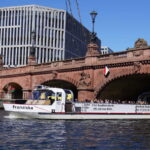
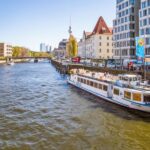
The boat is moored on the Spree Canal right in front of Zeughaus at Schloßbrücke in Berlin-Mitte. You might board one of three electric boats: Koningin Wilhelmina, Prins Bernhard, or Oranje Nassau. Either way, the staff will have you checked in and seated.
Here’s the practical heads-up: the boat arrives about 30 minutes before departure, and check-in ends 5 minutes before sailing. You are guaranteed a seat, but if you arrive too late, you may not sit together with your group. Also, you will climb down roughly 20 steps to reach the boat. Plan your timing so those steps don’t turn into a rushed workout.
And one more rule for comfort: luggage or large bags are not allowed, and baby carriages aren’t allowed either. If you are traveling light, you will be fine.
The 1-Hour Route: From Zeughaus Toward Central Berlin’s Icons
This cruise is about getting a coherent visual story in a short time. The route focuses on central Berlin sights along the Kupfergraben Canal and the Spree-adjacent stretch, then loops back to where you started. You’ll also get an audio guide in German and English, so you can follow along without constantly scanning for a signpost.
Think of it like a moving orientation map. You can pick out what you saw later when you walk around. And if you are planning a museum day, this gives you a clear sense of where everything sits relative to each other.
Zeughaus and Pergamon Museum: Starting with a Classic Museum-Island Backdrop
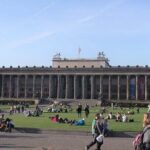
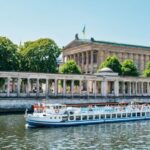
You start at Anlegestelle Zeughaus Berliner Wassertaxi, near the Museumsinsel area. As you pull away, you pass by Pergamon Museum along the way. Even from the water, you can recognize the scale and importance of this museum complex.
If you are museum-curious, this is a great warm-up. You see the building presence first, then later you can decide how much time you want to spend on the inside. If you are not museum-inclined, no problem—the views alone give you context for why this area is such a focal point.




Museum Island: Two-Sided Views and Easy Photo Angles
Museum Island is the centerpiece, and you see it from the water on both sides. That matters because Berlin’s best photos are often about perspective, not just subject matter. From the canal approach, the buildings look less like distant monuments and more like parts of a planned city pocket.
You also get the feeling of how the island interacts with the canal system. It’s not just “a place you visit.” It’s a place designed into the waterways.
If you like photos, this is one of your best stretches for getting shots without crowds climbing onto the same angles you would fight on land.
TV Tower and Berlin Cathedral: Big Landmarks, Short Time
Next up, the route takes you past the TV Tower and then on toward Berlin Cathedral. These are major “orientation anchors” for Berlin. From the water, they read as part of the skyline rather than separate stops.
The TV Tower is especially useful as a reference point. Once you see it from the canal, you’ll have an easier time understanding distances and direction when you later walk through Mitte or use the transit system.
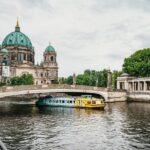
Berlin Cathedral, meanwhile, brings that unmistakable monumental feel. You get it as a view, not as an entrance. It’s a good way to decide whether you want to plan time for the interior later.
Nikolaiviertel: The Reconstructed Heart You Can See in Context
As you cruise onward, you pass the Nikolaiviertel area, a reconstructed historical heart of Berlin. From the water, the setting helps you understand the neighborhood’s character without needing to stop and read every plaque.
This is one of those sections where the commentary helps a lot. You’re not just seeing rooftops and brickwork—you’re learning why the area was rebuilt and how it connects to the city’s older core.
If you want a balanced mix of modern Berlin and the past, this stretch delivers. It’s central, but not purely corporate or purely monumental.
Mühlendammschleuse to Humboldt Forum: Canal Mechanics Meet Modern Berlin
One of the most interesting parts of a canal cruise is that it shows you practical Berlin infrastructure. You don’t just see buildings; you see how the waterways function.
Mühlendammschleuse: The Water-Engineering Moment
You glide past Mühlendammschleuse. Even if you don’t become a water-works student, it’s a good reminder that these canals are active systems. The lock area gives a “how it works” feeling that you won’t get from a purely scenic river stroll.
It’s also visually different from the landmark-heavy moments. That variety is part of what keeps the cruise from feeling repetitive.
Humboldt Forum: Modern Architecture Framed by the Water
After that, you reach the Humboldt Forum area. From the canal, it shows up as elegant architecture along the route, framed by the river edges and bridges. It’s a different tone than the older museum buildings, which makes the contrast easy to notice.
If you are traveling with someone who thinks museums are all indoor hours, this outdoor “framing” helps you make a more convincing case. They get the architecture without committing to a ticket right away.
Weidendammer Brücke, Reichstag, and Berlin Hauptbahnhof: Big Views Without the Crowd Chaos
Bridges are where water cruises really get fun. They act like stage sets, slicing the scenery and creating those classic lines for photos.
Weidendammer Brücke: A Bridge Where the Whole City Feels Present
As you pass Weidendammer Brücke, the view opens up with a sense of scale. The bridge helps you connect what you’re seeing on the water with the city streets above. It’s the kind of landmark you can recognize instantly after seeing it once.
Also, bridges are great for audio clarity. With the boat gliding smoothly, you often catch the commentary about what you are approaching and see it right away.
Reichstag: Government Quarter Views in Motion
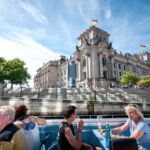
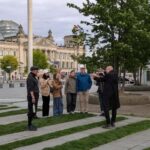
The cruise continues toward the Reichstag area. Seeing the Reichstag from the water gives it a new angle. On land, you approach it through the surrounding pathways. On the canal, it feels like part of the city’s formal layout.
This is a good stop for people who want a quick “government district” overview without booking a separate guided visit. You get a strong look at the building from a distance, and you can decide later what kind of deeper visit you want.
Berlin Hauptbahnhof: Transportation Logic, Visible in One Pass
Berlin Hauptbahnhof appears along the route as well. It’s not a quiet museum stop. It’s a functioning hub. From the water, you can sense how the station sits within Berlin’s larger transport and development plan.
If you are trying to understand Berlin as a working city, not just a museum city, that matters.
Futurium, Friedrichstraße, and Bode Museum: Berlin’s Current Mood
The second half of the cruise keeps moving through central areas, where Berlin shifts into a more modern, street-life rhythm.
Futurium: A Modern Stop on a Classic Water Route
You pass Futurium on the way. Even though the boat ride doesn’t turn into a walk-through, it gives you visual context. You’re seeing Berlin’s present-day cultural and future-focused identity from the same water corridor as historic landmarks.
It’s a nice reminder that Berlin’s story isn’t frozen in one century.
Friedrichstraße: Hip City Energy from the Water
Friedrichstraße is one of the streets that people immediately associate with central Berlin energy. From the boat, you get a view that feels more like a moving city portrait than a stop on a checklist.
The guided audio helps you connect the vibe with specific landmarks along the route. That’s how you turn a sightseeing cruise into something you remember later.
Bode Museum: Another Museum Island Anchor Before You Sail Back
You also pass Bode Museum along the route. Like the other Museum Island sights, it shows up as an architectural presence from the water. It’s a nice close to the museum-heavy stretch.
By the time you return toward Zeughaus, you’ve basically seen the museum side, the government side, and the neighborhood side—all without hopping between disconnected attractions.
Audio Guide in German and English: How to Get More Out of Every Minute
The commentary is provided in German and English. That means you can follow the story even when you do not speak German. It also helps with photo timing. The audio often gives context right as you approach what it’s describing, so you’re not just staring out the window wondering what you are looking at.
Because the boat is quiet and the interior is protected, the audio stays clear. On cooler days when you keep the glass roof closed, it can improve hearing compared to open-deck tours. That clarity is a big reason this cruise feels like good value: you actually learn what you see instead of just collecting views.
If you want to get the most out of it, listen on one language at a time and let the other play in the background only when you need it. You’ll absorb more that way.
Price and Value: Is $25 Worth an Hour on the Spree?
At around $25 per person for a 1-hour cruise, the value depends on what you want from Berlin sightseeing. If your goal is to see a lot of famous landmarks in one shot, this is a strong deal because you’re getting the cruise plus sight information in German and English.
You do need to plan for one thing: drinks are available to purchase onboard, but they are not included. If you want something other than tap-water vibes, budget a little extra. That said, the cruise itself is already doing the heavy lifting, and the views cover a lot of “walkable attraction” territory.
This price also makes sense if you’re traveling with someone who wants a break from walking. You can build the rest of your day around the cruise, rather than cramming it in and tiring yourself out before dinner.
Best Time to Sail and Practical Tips for Photos
Bring sunglasses, a sun hat, and sunscreen. Berlin sunlight can show up fast, and the canal route gives you lots of open sky angles between landmark stretches.
For photos, I’d focus on two stretches: Museum Island and the Government Quarter approach (including the Reichstag area). Those sections give you strong building lines and recognizable silhouettes. Also, since the boat is electric and quiet, you can take your time lining up shots without feeling rushed by engine noise or crowd movement.
Weather-wise, this is one of those tours that performs well when conditions aren’t perfect. The heated interior and retractable roof mean you are not trapped on a freezing deck. If Berlin gives you clouds, you still get the same route and the audio remains audible.
Who This Cruise Suits (and Who Should Skip It)
This cruise is a great fit if you want:
- A low-effort way to see central Berlin landmarks
- Comfort for cool weather thanks to heating and a glass roof
- Clear German/English audio guidance while you watch the city slide by
It may not be the best match if:
- You need wheelchair access, since it is not suitable for wheelchair users
- You rely on strollers, since baby carriages are not allowed
- You’re traveling with large luggage or bulky bags, since those aren’t allowed either
- You’re not comfortable with the 20-step climb down to board
If you can manage the stairs and travel light, you’ll likely find it a relaxing, efficient hour.
Should You Book This E-Boat Sightseeing Spree Cruise?
If you want one ticket that covers multiple Berlin “musts” without exhausting your legs, I’d book this. The quiet electric ride, comfortable interior, and German/English audio make it feel more like a calm guided city watch than a noisy attraction stop.
It’s also a smart choice when your schedule is tight. You get a strong overview of Museum Island, the Nikolai Quarter area, and government landmarks in an hour. Then you can build the rest of your day with more confidence—where to walk, what to revisit, and what to skip.
If you are planning a cold-weather visit, this one becomes even more appealing thanks to the heating and retractable roof. Just give yourself time to handle the steps and you’ll be set.
FAQ
How long is the cruise?
The cruise lasts 1 hour.
What languages are available for the tour commentary?
The information about the sights is available in German and English.
Where do I meet the boat?
You meet at the landing stage called Anlegestelle Zeughaus Berliner Wassertaxi, located directly at the Museumsinsel underground station (U5), exit B. Walk about 20 steps toward the Spree Canal.
Are drinks included in the price?
No. Drinks are available to purchase onboard, but they are not included.
Is there heating or protection from bad weather?
Yes. The boat has a retractable roof and a heated interior, so you can stay comfortable in cool conditions.
Is the cruise wheelchair accessible?
No, it is not suitable for wheelchair users, and you must climb down about 20 steps to get to the boat.