REVIEW · BERLIN
Cold War and Berlin Wall Tour in Italian
Book on Viator →Operated by Vive Berlin Tours · Bookable on Viator
Berlin’s wall lives on in street-level details. This Cold War and Berlin Wall Tour in Italian strings together several major landmarks so you get the story fast, from Potsdamer Platz through East Berlin icons. I like that you follow a plan on foot, so you get your bearings fast instead of piecing things together. I also love the human angle: you hear about the victims and the systems used to escape, not just dates.
One thing to consider: it’s a 3.5-hour walk, and some stops are brief, so you’ll want to be okay with moving at a steady pace.
In This Review
- Key Highlights You’ll Actually Feel on This Walk
- Getting Oriented at Potsdamer Platz with Vive Berlin Tours
- Berlin-Nordbahnhof: Ghost Stations and the Reality Underground
- Memorial of the Berlin Wall: How the Wall Was Built to Stop People
- Alexanderplatz and GDR Architecture: Big Squares, Big Pressure
- Berlin TV Tower: A GDR Landmark Seen from the Outside
- Karl-Marx-Allee: Stalinist-Era Buildings and the Start of the GDR
- East Side Gallery: The Wall’s Longest Stretch Turned Into Murals
- Price and Value: Why $27.87 Can Make Sense Here
- Who This Tour Fits Best (and Who Might Want Another Option)
- A Quick Note on Guides and the Tone of the Story
- Should You Book This Cold War and Berlin Wall Walk?
- FAQ
- How long is the Cold War and Berlin Wall tour?
- What language is the guide?
- Where does the tour start and end?
- What key sites are covered during the walk?
- Is admission included for the stops?
- Is transportation included?
- How big is the group?
- What’s the cancellation policy?
Key Highlights You’ll Actually Feel on This Walk
- Italian-speaking guide who keeps the history readable and connected as you walk
- Memorial of the Berlin Wall focused on how the wall worked and why people tried to leave
- Alexanderplatz + Karl-Marx-Allee for GDR architecture and the public mood around the fall of the Wall
- Berlin-Nordbahnhof ghost station talk inside a real, eerie underground setting
- East Side Gallery as a long stretch of Wall turned into murals about freedom
- Small group limit of 25 so you can ask questions and stay oriented
Getting Oriented at Potsdamer Platz with Vive Berlin Tours
Your day starts at Potsdamer Platz 10, at the meeting point for Vive Berlin Tours. Look for the blue bicycle by the office sign and the flag with the logo. It’s an easy landmark to spot, and it matters because the whole tour runs on a clear walking route—no wandering required.
The tour uses a mobile ticket, which keeps things simple. You won’t be juggling paper vouchers. And since you’re near public transportation, you can arrive without overthinking transit in advance.
This is also where you’ll feel the main value of the format. Instead of studying Berlin’s Cold War map like a homework assignment, you get a guided route that puts each stop in the larger story. That’s especially helpful if you’ve only got a few hours in the city.
You can also read our reviews of more tours and experiences in Berlin.


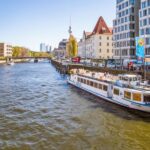
Berlin-Nordbahnhof: Ghost Stations and the Reality Underground
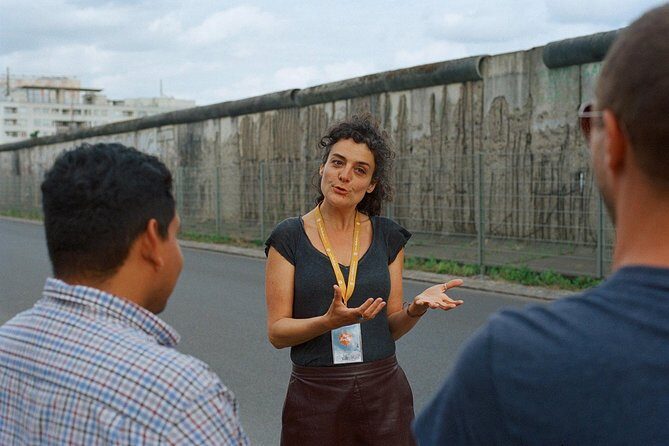
The first walking segment brings you to Berlin-Nordbahnhof station, where the guide talks about ghost stations. You’ll be hearing this in the place where the Cold War split wasn’t abstract—it was built into the daily movement of people and trains.
Even with just about 10 minutes, this stop changes how you look at Berlin afterward. Above ground, the city can feel like normal Europe. Underground, it’s different: you get a sense of how systems were designed to control access.
If you like history that has a physical “weight” to it—signage, tunnels, platforms—this is a strong early moment. It sets a darker tone before you reach the more direct Wall memorial areas.
Practical note: this is a station stop, so expect it to be brisk. Wear shoes you’re comfortable in. You’ll thank yourself later around the Wall sections.
Memorial of the Berlin Wall: How the Wall Was Built to Stop People
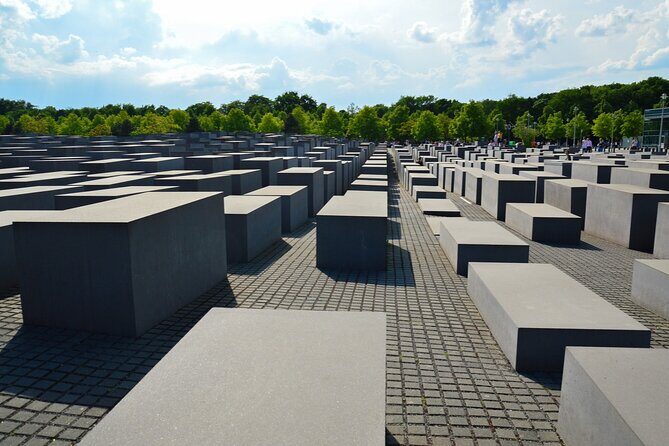
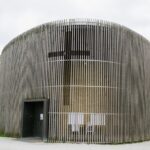
The heart of the tour is the Memorial of the Berlin Wall, with roughly 50 minutes here. This is where the story shifts from background to mechanisms: how it was possible to build the Wall the way it was, and what that meant for real human lives.
What I like most is that the commentary doesn’t stay generic. The guide focuses on the tragic stories of the victims of the Wall and explains the escape systems people used. That detail helps the history feel concrete. You start to understand the Wall as more than a barrier. It was an entire setup—planned, maintained, and enforced.
This is also a good place to slow down mentally. Take a moment to look at the layout and imagery around you, and listen for how the guide connects it to later stops like Alexanderplatz and Karl-Marx-Allee. When the route clicks in your head, the city becomes a timeline.
If you’re someone who wants the emotional impact of the Cold War with context, this stop is the anchor. Many tours skim the Wall’s symbolism; this one helps you understand the human cost behind it.
Alexanderplatz and GDR Architecture: Big Squares, Big Pressure
Next up is Alexanderplatz, with about 15 minutes. This is not a “stand and take photos” stop. The guide connects the area to the German Democratic Republic (GDR) and its typical architecture, so you can read the buildings as part of a political era.
Alexanderplatz also gets attention for the popular manifestations that helped lead to the fall of the Wall. That matters because it shows you the Wall wasn’t only about concrete and borders. It was also about public pressure and changing attitudes.
Think of this section as the tour’s bridge between the memorial’s direct Wall story and the broader East Berlin setting. You’re moving from “how it worked” to “how society changed.”
If you enjoy urban history—how power shows up in squares, streets, and building styles—this portion will make you look longer than you planned.
Berlin TV Tower: A GDR Landmark Seen from the Outside
You’ll get a quick look at the Berlin TV Tower with about 10 minutes. The key detail here: you visit only outside. That’s actually a good use of time on a walking tour.
From street level, the tower functions like a recognizable symbol. The guide frames it as a GDR structure that still stands as Berlin’s tallest building. You don’t need an elevator ticket to grasp the point. You’re seeing how skyline icons can represent a political story as much as any monument.
The outside-only format also keeps the day moving. You’ll avoid a long sit-down wait, which helps when the tour has multiple stops to cover.
If you’re planning to do Berlin TV Tower later anyway, this acts as a quick orientation moment, so you can decide whether the view from above is worth your time.




Karl-Marx-Allee: Stalinist-Era Buildings and the Start of the GDR
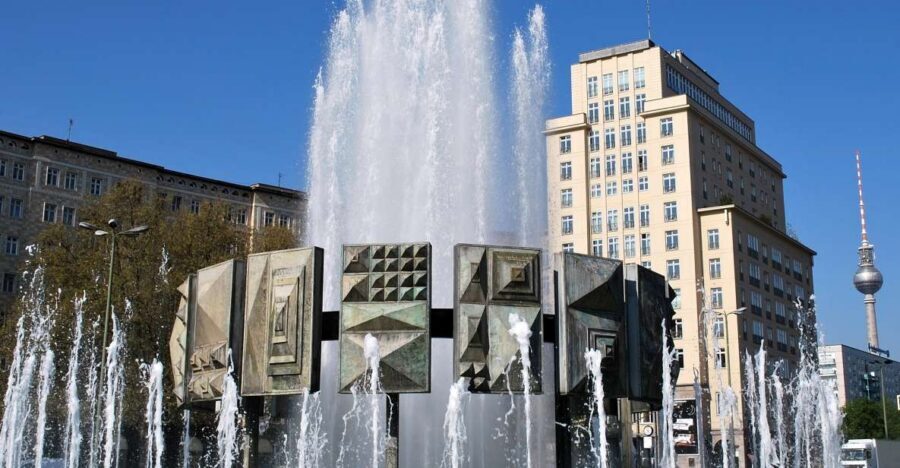
The tour continues along Karl-Marx-Allee, about 20 minutes, surrounded by buildings from the Stalinist era. This stop helps you understand how the GDR visually communicated authority and identity through architecture.
The guide also covers the beginnings of the GDR, and that’s the real value. Buildings aren’t just pretty backgrounds here. They’re part of a message—who mattered, what the city intended to project, and how the regime wanted people to feel.
One practical reason this stop works on a guided walk: it gives you a framework while you’re physically close to the buildings. Without a guide, you might notice the style. With a guide, you learn what the style was doing politically.
If you like when history shows up in real streets instead of behind glass, this is one of the best segments on the route.
East Side Gallery: The Wall’s Longest Stretch Turned Into Murals
The final major highlight is the East Side Gallery, with about 20 minutes. This is the longest part of the Berlin Wall mentioned on the tour route and the one most famous for its murals about freedom.
I like ending here because the emotional tone shifts. You’ve spent time on control, tragedy, and escape. Now you’re in a place where the Wall becomes something else—public art with a political message.
You can think of this stop as the Wall’s afterlife. It’s still a historical object, but it’s also a canvas. That contrast helps you carry the story home: the same surface that once divided people can later be used to talk back.
If you want a photo, this is your time. If you want reflection, this is also your time. Either way, the guide will help you read what you’re seeing.
The tour ends in the East Side Gallery area (10243 Berlin), and the guide can advise which public transport to take afterward.
Price and Value: Why $27.87 Can Make Sense Here
At $27.87 per person for about 3 hours 30 minutes, this tour is priced like a solid afternoon plan, not a premium museum-day splurge. The value comes from coverage and interpretation.
Here’s why it’s a good deal compared with doing Berlin Cold War sights one by one:
- You get a guided route that links multiple key locations into one narrative.
- The planned stops are set up with free admission at each listed site on the route, so you’re not paying extra just to access viewpoints.
- The group size max is 25 travelers, which keeps the vibe from turning into a big cattle-line history lecture.
- You’re not buying separate tickets for transport between far-flung points inside the day. You’re walking a route your guide has structured.
There’s also a timing benefit. On this kind of tour, the “cost” isn’t just money. It’s the time you’d spend figuring out which stop comes next and how it all connects. Here, the guide handles that planning.
Also, it’s common for people to book ahead (on average, about 24 days in advance). If you’re traveling in a busy season, I’d treat that as a sign to lock in your slot early.
Who This Tour Fits Best (and Who Might Want Another Option)
This walk is ideal if you want Cold War Berlin without turning your day into a research project. You’ll get a guided thread through the Wall, GDR architecture, and the emotional lead-up to 1989.
It’s also a strong pick if you prefer learning in context. The tour is designed for walking, not sitting in one place for hours. You’ll hear the story while you’re looking at the built environment.
You’ll likely especially appreciate it if:
- you like city-walking history,
- you want Italian commentary,
- you want the major sights covered in one go,
- you want human stories alongside political events.
One gentle warning: because stops are time-limited, you won’t get a slow, lingering “everything in detail” pace. If you want to study maps for hours or you plan to read every plaque at leisure, you might feel slightly rushed.
A Quick Note on Guides and the Tone of the Story
The standout theme from the experience is the quality of the Italian guide’s delivery. In one case, Antonella is singled out for making the moments around 1989 feel immediate and personal. Another guide is praised for being extremely well prepared and explaining the sad period clearly.
That matters because Cold War topics can sometimes feel like a list of dates. A good guide keeps it human, keeps it organized, and helps you understand why each place matters.
This is the kind of tour where your questions come easier because the story is told with direction, not chaos.
Should You Book This Cold War and Berlin Wall Walk?
If you’re short on time and you want the Wall story told with context, I’d book it. The route concentrates key places that shape how Berlin’s Cold War era feels on the ground. The Italian guide component is a real bonus if you’d rather understand everything fully instead of catching only half the meaning through English.
Skip it only if you’re looking for a long museum-style deep study at one location, or if you need a very slow pace with lots of free time at each stop. This tour is built for movement, and it rewards travelers who enjoy that walking-and-learning rhythm.
If you book, come ready for a mix of heavy history and a final burst of meaning at the East Side Gallery. It’s a practical way to understand Berlin’s past without getting lost in too many separate visits.
FAQ
How long is the Cold War and Berlin Wall tour?
It lasts about 3 hours 30 minutes.
What language is the guide?
The tour includes a guide who speaks Italian.
Where does the tour start and end?
It starts at Potsdamer Platz 10, 10785 Berlin, Germany, and ends at the East Side Gallery area in Berlin (10243 Berlin, Germany).
What key sites are covered during the walk?
You’ll visit Berlin-Nordbahnhof (ghost stations talk), the Memorial of the Berlin Wall, Alexanderplatz, the Berlin TV Tower (outside only), Karl-Marx-Allee, and the East Side Gallery.
Is admission included for the stops?
The listed stops on the route show admission tickets as free.
Is transportation included?
No. Transportation to and from attractions is not included, and the guide can advise which public transport to take at the end.
How big is the group?
The tour has a maximum of 25 travelers.
What’s the cancellation policy?
You can cancel for a full refund up to 24 hours before the start time.