REVIEW · BERLIN
All of Berlin (city panorama)
Book on Viator →Operated by cultourberlin · Bookable on Viator
Berlin clicks into place fast on foot. In one 4-hour circuit with a Spanish guide, you get the city’s big symbols and clear context without spending your whole day researching. I especially like the guide commentary that ties sights to events, and the tight route that stacks famous stops—think Berlin Cathedral and Brandenburg Gate—into a manageable plan. One caution: it’s a lot of walking, so it’s not the right pick if you struggle with long distances on foot.
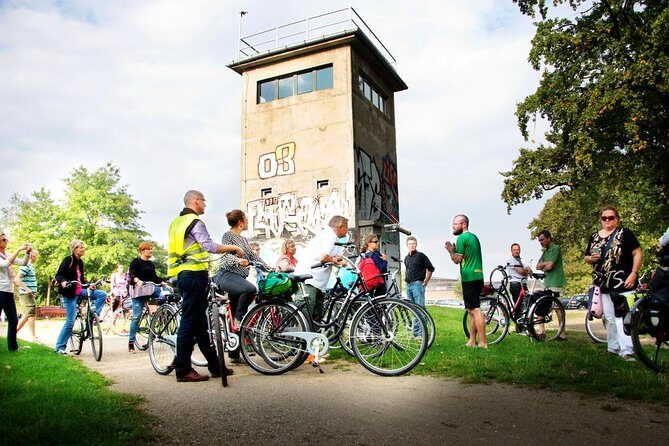
You also travel in a small group (up to 25 people), so you’re not lost in a crowd, and you have time to pause at each spot instead of just being rushed past. If you’re lucky enough to have a guide like Juan, the historical storytelling really makes the buildings click into meaning fast. The tour runs on a mobile ticket, starts at the Berlin TV Tower area, and aims to get you oriented quickly.
If you want a first-day Berlin plan that still feels personal, this is a strong choice. The main drawback is simply pace: you’ll be outside for long stretches, and some stops are quick photo-and-story moments rather than long museum time.
In This Review
- Key things to know before you go
- Why This Berlin “City Panorama” Tour Is Great for Limited Time
- Starting Point at Berlin TV Tower: Getting Oriented in Minutes
- Alexanderplatz and Neptune Fountain: East Berlin’s Signature Square
- Rotes Rathaus and Nikolaiviertel: City Power Meets Old Berlin
- Berlin Cathedral and Lustgarten: Central Berlin’s “Core”
- Unter den Linden and Staatsoper: A Royal Way That Became Public Stage
- Bebelplatz and Neue Wache: Where 20th-Century Memory Hits Hard
- Gendarmenmarkt: One of Berlin’s Most Beautiful Public Squares
- Checkpoint Charlie and the Cold War Story
- Potsdamer Platz and the Holocaust Memorial Near Brandenburg Gate
- Ending at Brandenburg Gate: History, Tiergarten Views, and What You’ll Actually Remember
- Price, Group Size, and Language: Is $25.58 Good Value?
- Walking Comfort and Smart Tips for Getting the Most
- Who Should Book This Tour (and Who Might Skip It)
- Should You Book It?
- FAQ
- How long is the tour?
- What language is the guide?
- Where does the tour start?
- What’s included in the tour price?
- Is it suitable for people with limited mobility?
- How many people are in a group?
Key things to know before you go
- Small group (max 25) means better attention and smoother stops.
- Spanish-only commentary; you’ll get the full experience if that works for you.
- Highlights in one loop: Alexanderplatz, Gendarmenmarkt, Checkpoint Charlie, Holocaust Memorial, Brandenburg Gate.
- UNESCO-listed museum complex area gets pointed out as part of the story of Berlin’s layers.
- New Wache memorial visit includes admission, so you don’t have to hunt tickets for that stop.
- Not ideal for limited mobility since long walking is part of the design.
Why This Berlin “City Panorama” Tour Is Great for Limited Time
This tour is built for the reality most people face: Berlin is huge, and your first day can vanish fast if you rely on guesswork. Instead of you piecing together routes and transit lines, you follow a guide who knows how to connect the dots between locations. You also get a practical rhythm—short walks, clear photo windows, and enough time at each point to understand what you’re seeing.
The value is in efficiency. For about the price of a couple of guided hours in many major European cities, you cover a lot of ground: from Alexanderplatz in East Berlin territory to the Brandenburg Gate area in the West-style city center. And because you’re walking, you get access to streets and squares that buses skip.
The other big win is context. Berlin’s landmarks can look like beautiful architecture until you learn what happened there. The guide’s storytelling turns those facades into a timeline you can actually remember.
You can also read our reviews of more city tours in Berlin


Starting Point at Berlin TV Tower: Getting Oriented in Minutes
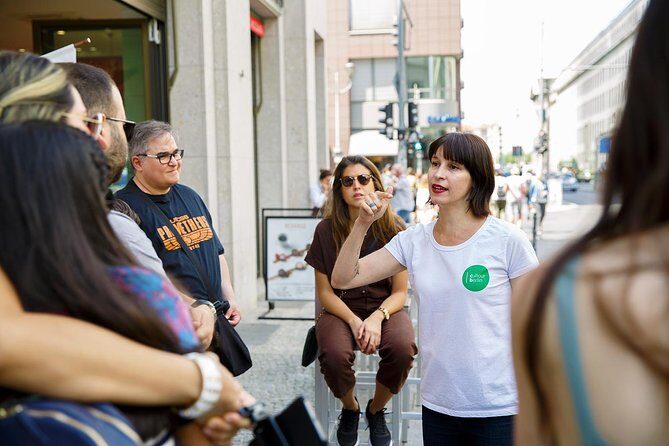
You kick off at the Berlin TV Tower area (Panoramastraße 1A). That’s a smart starting move because the tower zone anchors you in the city’s modern center, right where Alexanderplatz sits nearby. From here, the guide sets the stage: what this square is, why it looks the way it does, and how the monuments fit into Berlin’s development.
You’ll also be next to a major visual landmark, so even if you get a little turned around later, your mental map has an obvious reference point. The stop is relatively short, but it’s designed to help you understand the “where am I” part first.
Practical note: the tour starts at 10:00 am, so you’ll want breakfast or coffee before you meet. Berlin mornings can be cool, and once you’re on the move, you’ll appreciate being warmed up.
Alexanderplatz and Neptune Fountain: East Berlin’s Signature Square
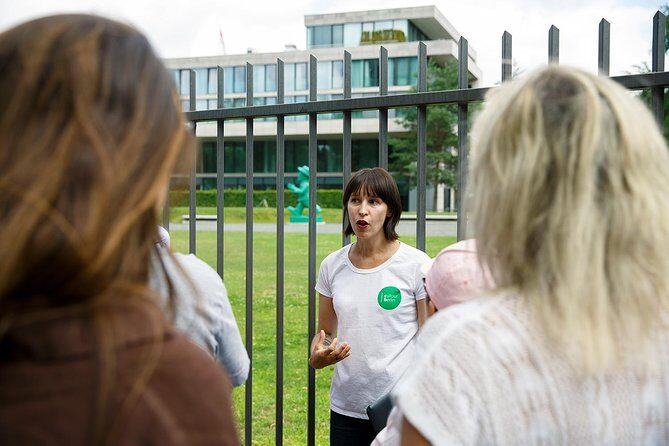
At Alexanderplatz, you’ll see the square’s layout and monuments and learn how the area’s identity evolved over time. It’s one of those places where the scale feels modern even though Berlin’s story goes way further back. The guide helps you read it instead of just noticing it.
Then you step to Neptunbrunnen (Neptune Fountain), right in the middle of the square. Even if you’ve seen fountains in other cities, the point here is symbolic: what the fountain represents, and how that connects to the broader cultural picture of Alexanderplatz. This quick stop is mostly about meaning, not museum-level detail.
If you like photography, this is a good segment. You’ll get open space views, and the fountain is an easy focal point for a group shot without needing to climb or squeeze.
Rotes Rathaus and Nikolaiviertel: City Power Meets Old Berlin
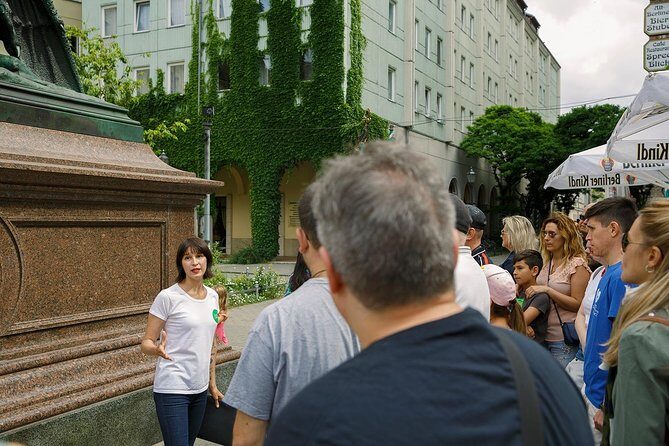
Next comes the Rotes Rathaus, the red town hall building. The key idea is the role of the Berlin council and how local power shows up in architecture and public life. The admission detail isn’t included for this stop, so you shouldn’t plan on going inside during the time there. Think of it as a “read the building from the outside” moment.
Then the tour shifts toward Nikolaiviertel, described as one of the most original parts of Berlin. This area is tied to the city’s long foundation story, and the guide points out details like St Georg in the middle of the square. That kind of small, specific clue helps the neighborhood feel less like a generic historic quarter and more like a lived-in pocket of time.
This is one of those stops where walking feels worth it. You’re not just seeing famous buildings; you’re sampling the old-city vibe that contrasts with the big-squares feeling of Alexanderplatz.
Berlin Cathedral and Lustgarten: Central Berlin’s “Core”
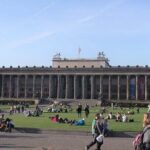
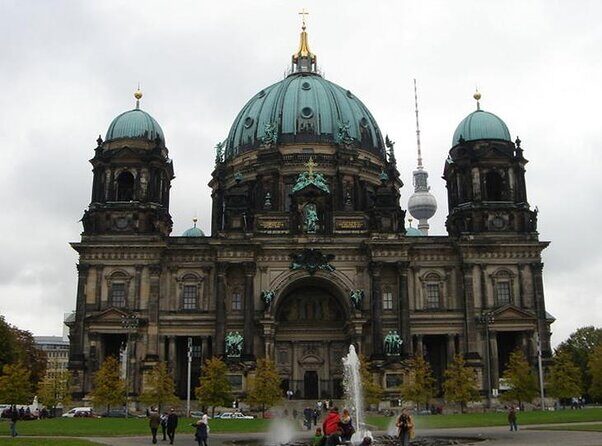
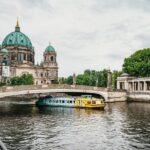
From Nikolaiviertel, you head toward the Berliner Dom (Berlin Cathedral). You’ll spend time looking at the dome and decoration, and the guide explains the history behind the church and who helped make it possible. That matters because Berlin Cathedral can look like pure grandeur, but the story gives you a reason for why it took that form.
The next stop is the Lustgarten, a central green space with a name that has a meaning you’ll understand during the visit. The guide also frames why it sits exactly where it does, and it’s treated as a core spot of the city center. Even if you only have a short time there, it helps you feel Berlin’s layout: the open space, the sightlines, and the way major civic buildings cluster nearby.
Small drawback to keep in mind: these are “look and listen” stops. The tour doesn’t turn into a cathedral full of long prayer-time visits. If you want deep interior time, you’ll likely need a separate plan later.




Unter den Linden and Staatsoper: A Royal Way That Became Public Stage
The route then points you to Unter den Linden, described as one of Berlin’s main streets and historically a royal way connecting the palace area and the Tiergarten. This is a great segment for anyone who likes the idea of cities as changing stories: the street keeps its identity, but the meaning shifts over time.
You’ll also see Staatsoper Unter den Linden, the opera house. The focus here is cultural and visual. The building’s beauty and role in Berlin’s arts world become part of the narrative, and the guide connects the opera house to what Berlin chooses to celebrate publicly.
This part of the tour works well if you enjoy grand architecture, but it’s also a useful rest from nonstop “history in tiny squares.” It’s a wide street, with enough space to pause without feeling trapped.
Bebelplatz and Neue Wache: Where 20th-Century Memory Hits Hard
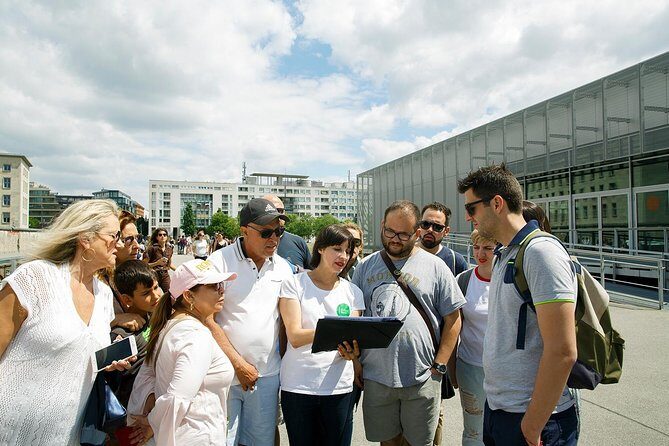
At Bebelplatz, you’ll learn why this square mattered so much in the 20th century. The guide points out the memorial in the center and explains why Hitler’s propaganda minister played an important role there. This stop is one of the emotional pivots of the tour because it turns a normal public square into a place loaded with political symbolism.
You’ll then move to Neue Wache, another memorial stop, with time to look at the art piece by Käthe Kollwitz. The tour includes admission here, which is useful because you don’t have to scramble for tickets or decide last minute what to skip. The key idea is that the memorial has been adapted for different times of history—so it’s not just a static monument.
If you’re sensitive to heavy subjects, this is where you’ll notice it most. The upside is that you’re not doing it alone: the guide’s commentary gives you a framework for what the memorial is trying to communicate.
Gendarmenmarkt: One of Berlin’s Most Beautiful Public Squares
Then you get a breather: Gendarmenmarkt. This is often cited as one of Berlin’s most beautiful public squares, and the tour gives you the exact reason. You’ll look at the harmonious ensemble of the concert hall and two church buildings, each with towers that frame the square.
What I like about this stop is the contrast. After the seriousness of memorials, you’re back to an architectural “readable” space—something you can enjoy visually without feeling you need to process every detail. The guide still connects the beauty to cultural life, but the mood is lighter.
For photos, it’s a strong spot because the symmetry helps your pictures look good even if you only have a quick moment.
Checkpoint Charlie and the Cold War Story
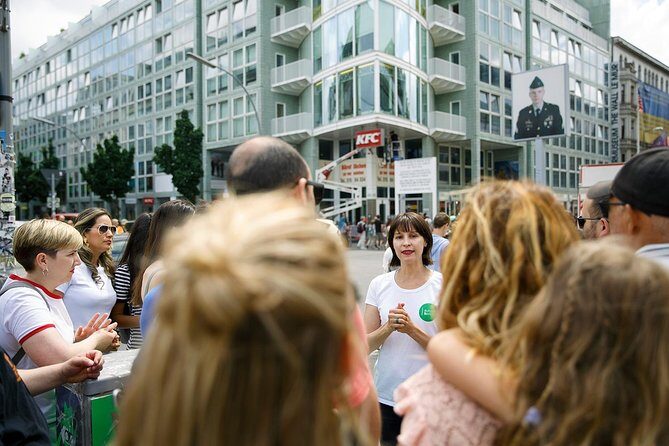
Next is Checkpoint Charlie, the reminder of the former border crossing and the Cold War partition of Berlin. You’ll spend more time here than many other points—enough to absorb what the place stands for beyond the obvious signage.
This is where the tour’s pacing makes sense. Checkpoint Charlie isn’t a single-building stop. It’s a concept, and you need time to understand how the border worked in daily life. The guide’s historical framing helps you connect the square to the larger geography of East and West.
One consideration: since this is a high-profile location, you’ll want to keep your eyes on the guide and group. It’s easy to drift into photo mode and then miss the story bits that make the stop meaningful.
Potsdamer Platz and the Holocaust Memorial Near Brandenburg Gate
After Checkpoint Charlie, you head to Potsdamer Platz, explained in terms of what it was from the beginning until today. It’s presented as one of the more modern parts of Berlin right now. That comparison matters, because Potsdamer Platz is one of those “before and after” spaces where Berlin’s changes feel visible.
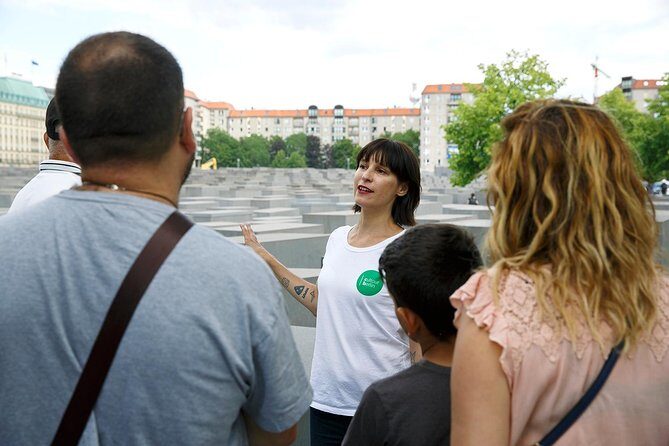
Finally, you reach the Holocaust Memorial (Memorial to the Murdered Jews of Europe) near Brandenburg Gate. The tour spends time here because the meaning of the author matters. Even if you’ve seen photos, being there helps. The layout forces you to slow down and think, and the guide adds structure to what you’re meant to take in.
This stop is intentionally placed close to the end of the tour because it gives you a powerful finish. You’re heading to one of Berlin’s most iconic symbols, and the memorial ensures the story doesn’t turn into simple sightseeing.
Ending at Brandenburg Gate: History, Tiergarten Views, and What You’ll Actually Remember
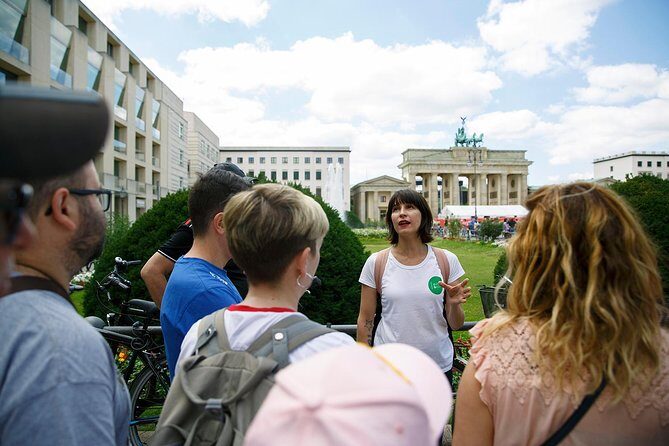
You wrap up at Brandenburg Gate with views toward the Tiergarten area, the Parisian square, and the Adlon Hotel. The guide connects the landmark to the history behind it, so you leave with a clear reason the gate is treated as more than just a photo stop.
This is the kind of “final scene” that helps your trip stick in your memory. If you only visit Berlin’s sights as isolated checkboxes, the city can feel like separate eras. This ending helps them blend into one story: modern Berlin is shaped by what came before, sometimes in brutal ways, sometimes in cultural rebirth.
The route also includes time at the gate itself, so you’re not just passed through. You get a moment to take in the surroundings and picture where you’ll go next.
Price, Group Size, and Language: Is $25.58 Good Value?
At $25.58 per person for about 4 hours, the price is low for a guided loop that hits major landmarks. The real reason it feels like value is that you save your own planning time. Instead of sorting out a route between far-flung points, you follow someone who already knows the logic of the city.
It also helps that the group size is capped at 25 travelers, so you get a bit more attention at each stop. And because it’s walking-focused with areas you can’t easily reach by car or bus, you’re paying for guidance, pacing, and interpretation—not just transport.
The main trade-off is language: the guide is Spanish only. If you’re not comfortable with Spanish, you’ll miss part of the experience. But if Spanish is your language, the guide commentary becomes the heart of the tour.
Walking Comfort and Smart Tips for Getting the Most
This tour is designed around getting to places on foot, and not every part is a quick curb-to-curb photo. If your walking is limited, you may find the full loop tiring. It’s not recommended for people who aren’t able to walk properly for long distances.
So plan like a walker, not like a museum-goer. Wear comfortable shoes and bring water. Berlin weather can shift, so a light layer helps too. If you need a break, this is also the kind of route where you can regroup with the guide when you’re ready—just don’t disappear.
One more practical tip: since several stops are short, you’ll get more out of the tour if you listen closely during the first minute of each stop. The guide often gives the context right at the start, and it changes how you see the building.
Who Should Book This Tour (and Who Might Skip It)
This is a strong choice for you if:
- You want a first-day orientation tour.
- You like history told in a way that connects buildings to events.
- You want to see many famous Berlin sights in one go without planning transit and routes.
You might skip this one if:
- You need lots of interior time at major landmarks.
- You can’t handle long walking stretches.
- You’re not comfortable with Spanish commentary.
Should You Book It?
If Berlin is new to you, I think this is one of the smartest ways to start. It’s efficient without feeling like a sprint, and the guide-led historical explanations help you understand what you’re seeing instead of just collecting photos. The only clear reason to pass is walking comfort or language preference. If those check out, you’ll likely come away with a mental map of Berlin that lasts longer than a single day.
FAQ
How long is the tour?
The tour is approximately 4 hours.
What language is the guide?
The tour is operated by a local guide who speaks only Spanish.
Where does the tour start?
It starts at Berlin TV Tower, Panoramastraße 1A, 10178 Berlin, Germany.
What’s included in the tour price?
A Spanish-speaking local guide is included. Some stops have admission marked as included or not included, while others are listed as free.
Is it suitable for people with limited mobility?
It is not recommended for people who are not able to walk properly for long distances.
How many people are in a group?
The tour has a maximum of 25 travelers.