REVIEW · BERLIN
Hitler’s Berlin – the rise and fall (Small Group)
Book on Viator →Operated by On the Front Tours · Bookable on Viator
Hitler’s Berlin is heavy, but this tour helps. In just about 2.5 hours, you’ll connect the dots from Nazi ideology and the Holocaust to the final days of the regime—on a focused walking route that stays close to major memorial sites.
I like how it uses a small-group format (max 15), so you can actually ask questions and get direct answers. The guide also brings an academic WWII background, which matters on a topic where sloppy facts can do real harm.
My other big win is the mix of places: parliament power, wartime destruction, and survivor memorials, all in one route. The main drawback is simple: it’s a lot of serious history on your feet, so moderate walking and cold-weather patience are part of the deal.
In This Review
- Key things you’ll notice on this tour
- Getting Your Bearings: Brandenburg Gate to Topographie of Terror
- The story the guide is aiming for: how Nazi power became catastrophe
- Stop 1: Memorial to the Sinti and Roma Victims of National Socialism
- Stops 2 and 3: Reichstag power and Soviet remembrance in Tiergarten
- Stop 4: Holocaust Memorial for the Murdered Jews of Europe (and why you get to talk)
- Stop 5: Monument to Homosexuals Persecuted Under the National Socialist Regime
- Stop 6: Fuhrerbunker—Hitler’s final days, without turning it into spectacle
- Stop 7: Johann Georg Elser Memorial—resistance beyond the battlefield
- Stop 8: Aviation Ministry of Berlin—power made into offices
- Stop 9: Topography of Terror—Gestapo headquarters, plus a real break
- Then & Now photos and historic maps: the secret sauce for making sense
- Small-group pacing: listening well matters as much as walking
- Price and value: why $54.44 can feel fair (or not)
- Who this tour suits best
- Should you book Hitler’s Berlin: the rise and fall (Small Group)?
- FAQ
- How long is the Hitler’s Berlin (Small Group) tour?
- Where does the tour start and where does it end?
- Is the tour offered in English?
- What’s the group size?
- What should I bring or consider for the walk?
- Are any admissions included or free?
- Is food or drinks included?
Key things you’ll notice on this tour
- Small group (max 15): more chances for questions than big-coach tours
- A tight “rise to fall” storyline: you see how power grew and then collapsed
- Memorials with built-in reflection time: not just photo stops
- Then & Now photos and historic maps: you get spatial context fast
- Stops include less-talked-about victim groups: Sinti and Roma, and homosexuals targeted under Nazism
- Break at Topographie: time for tea/coffee and restrooms
Getting Your Bearings: Brandenburg Gate to Topographie of Terror
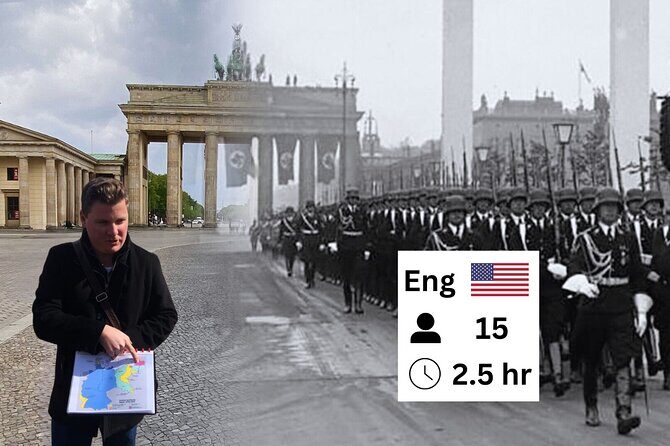
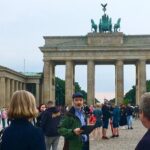
This tour starts at Brandenburg Gate, Pariser Platz and ends at Topographie des Terrors on Niederkirchnerstraße. That end point is handy: you’ll be right in the middle of where a lot of Berlin visitors naturally want to go next, so it’s easy to keep building your day without long transfers.
The walking route is set up for people who want the core sites without turning it into an all-day marathon. One review noted it felt like only about four to five city blocks, and the schedule keeps transitions short. Still, the tour is paced as a true walking tour, not a sit-down museum day. You’ll want comfortable shoes and layers.
You should also plan for the weather. It runs in all weather conditions, and the guide’s job is to keep the story moving even when it’s windy or cold. If your body gets cranky standing around in winter, dress like you expect to be outside the whole time—because you will.
And one more practical note: it’s offered in English with a mobile ticket. If you like to reduce hassle, that’s a plus—no print-out scramble.
You can also read our reviews of more tours and experiences in Berlin.


The story the guide is aiming for: how Nazi power became catastrophe
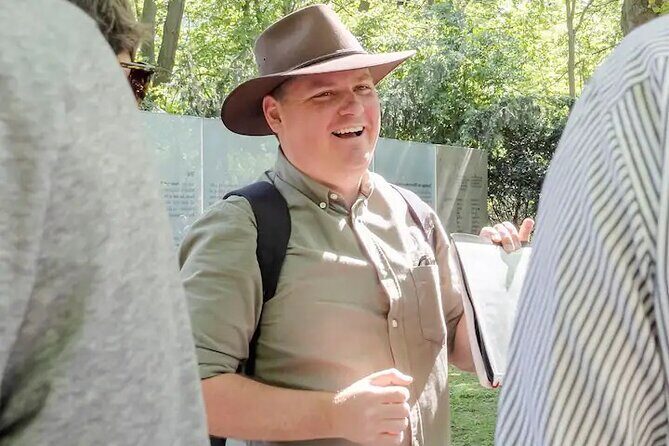
This tour isn’t just a list of sites. The stops are chosen to tell a specific arc: how Nazis built their power, how violence scaled up, and how the regime ended in destruction and defeat.
That “arc” shows up in the order. You begin with victims and ideology, then look at political power (where Nazis gained authority), then move toward the war’s brutality and the memorials that follow. Ending at Topographie des Terrors also makes sense: it anchors you in the machinery of terror rather than only the battlefield.
This framing is the real value for your brain. Without it, Berlin’s Nazi-era sites can feel like separate islands. With it, you start to see a connected system—how propaganda and policy created a world where persecution became normal, then became mass murder.
Stop 1: Memorial to the Sinti and Roma Victims of National Socialism
Your first stop is the Memorial to the Sinti and Roma Victims of National Socialism. This matters because it broadens the usual Holocaust focus. The tour explicitly brings in the Roma and Sinti victims of the Third Reich and explains the cruel social philosophies that later underpinned the Holocaust.
In practice, this is one of those pauses that changes the rest of the tour. It sets a tone: this story isn’t only about one group or one leader. It’s about the Nazi worldview—how it justified exclusion and then genocide.
The stop is listed as about 10 minutes, and admission is free. Even at that short window, the goal is not to rush your way through. Look at it like a starting point. If this is your first time learning about the Nazi persecution of Sinti and Roma, this first contrast will help the later memorials land harder.
Stops 2 and 3: Reichstag power and Soviet remembrance in Tiergarten
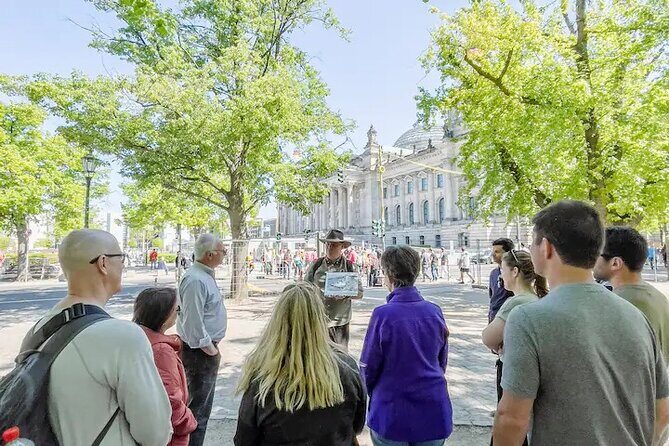
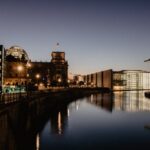
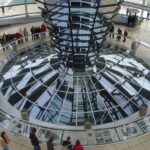
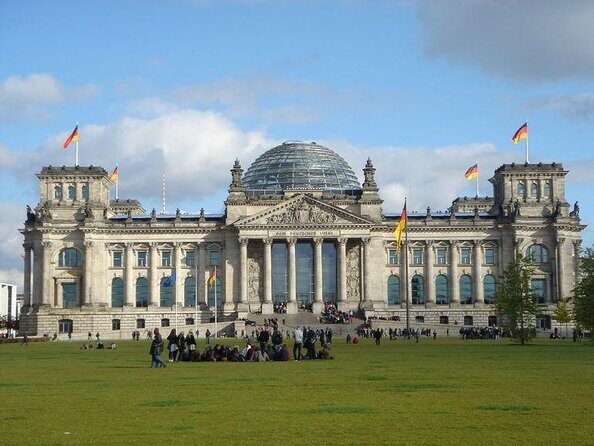
Next up is the Reichstag Building, where the guide connects Nazi political rise to how Hitler became Führer. You’ll spend about 15 minutes here with free admission.
This part is where many people start thinking differently. It’s easy to imagine fascism as only street-level violence. The Reichstag stop is a reminder that Nazi power was also institutional. The tour’s point is not to give you vague “bad guys won” vibes; it’s to show the mechanics of election to power and the shift toward dictatorship.
Then you move to the Soviet Memorial in Tiergarten. The guide frames Berlin’s final battles as some of WWII’s most brutal fighting and discusses how post-war remembrance took shape. Expect about 15 minutes, also with free admission.
This stop is not there to “balance” suffering. It’s there to show context: the regime’s downfall happened in real bodies and real destruction. When you later stand before Holocaust memorials and the remains of terror headquarters, that war context makes the timeline feel less abstract.
Stop 4: Holocaust Memorial for the Murdered Jews of Europe (and why you get to talk)
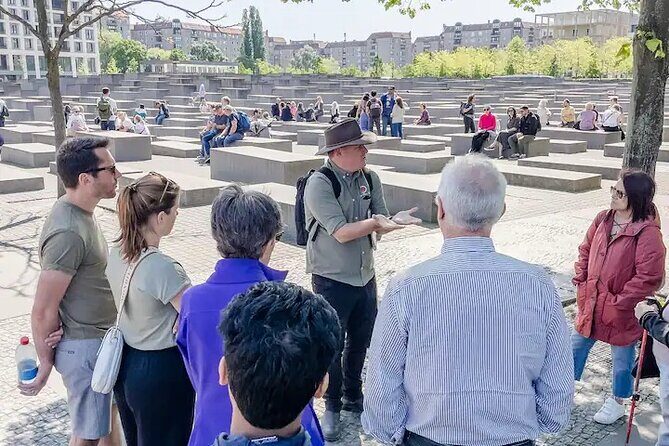
The tour then goes to the Memorial to the Murdered Jews of Europe. It’s scheduled for about 15 minutes, with free admission.
This is the largest ethnic group targeted by the Nazis, and the tour gives you room to reflect. Importantly, you’re not just sent to look at stone and move on. The description explicitly says there’s an opportunity to discuss the meaning of the memorial, and that Q&A style fits well with a small-group walk.
What I like about this setup is that it teaches you how to “read” a memorial without getting stuck in art-only interpretation. You’ll be guided toward the historical meaning while still being allowed to ask what you’re feeling or noticing.
Tip for you: don’t treat this as a quick stop for photos. If you’re the type who thinks memorials are best experienced silently, that’s fine—but bring one or two questions too. The guide can help you connect what you’re seeing with what the Nazis did and how remembrance works.



Stop 5: Monument to Homosexuals Persecuted Under the National Socialist Regime
This stop is short—about 5 minutes—but it’s a big deal. You’ll visit the Monument to Homosexuals Persecuted Under the National Socialist Regime.
Most “Hitler in Berlin” tours focus on a few headline sites. This one adds another targeted group, and that changes how you understand Nazi persecution as a whole system. Even in a brief visit, it signals that Nazi persecution was not narrow. It expanded across multiple identities.
Because the time is short, your payoff depends on your attention. If you show up ready to listen (and stand with the group rather than wandering off), you’ll get the meaning in a way that feels intentional, not tacked on.
Stop 6: Fuhrerbunker—Hitler’s final days, without turning it into spectacle
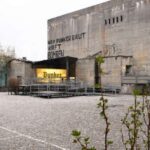
At Führerbunker, the tour takes you to the place where Hitler spent his final days of WWII. It’s scheduled for about 15 minutes, free admission.
This stop can be psychologically tricky. It’s tempting to turn it into a curiosity stop—factoids, bunker vibes, and dramatic history. The tour’s framing (rise and fall, victims and terror, then the end) helps prevent that. It keeps the focus on the collapse of a regime built on violence.
What makes this stop useful for you is the way it anchors timeline. When you’ve been walking through memorials and political power sites earlier, the bunker stop feels like the last chapter clicking into place. You start to see the full arc: ideology became policy, policy became terror, terror became war, and war ended the regime.
Stop 7: Johann Georg Elser Memorial—resistance beyond the battlefield

Next is the Johann Georg Elser Memorial. You’ll spend about 15 minutes, free admission, learning about Elser and his role in attempts to oppose the Nazi regime and assassinate Adolf Hitler.
This is one of the most empowering segments in a tour like this, because it adds human agency. You see resistance as something that can exist inside ordinary life—not only in armies or famous plots.
If you want a moment that feels less like you’re only observing tragedy, this is it. It doesn’t excuse what happened, and it doesn’t soften the horrors—but it gives you a fuller sense of how some people tried to fight back.
Stop 8: Aviation Ministry of Berlin—power made into offices
The Aviation Ministry of Berlin stop is about 5 minutes, and admission is listed as free. The tour notes that at the time of its construction it was the largest office building in Europe, built in 1936 to house the German Ministry of Aviation, headed by Hermann Göring.
This is a quick stop, but it’s a smart one. It helps you connect Nazi power to infrastructure. Not all “control” happens through uniforms. Sometimes it shows up as buildings, bureaucracy, and the everyday machinery that lets a regime scale up.
If you’re a visual learner, pay attention to how the tour uses these structures to explain the Nazi state’s priorities—especially war production and leadership networks.
Stop 9: Topography of Terror—Gestapo headquarters, plus a real break
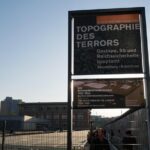
The final stop is Topographie of Terror, located at Niederkirchnerstraße 8. The tour description says you’ll visit the location where the Gestapo headquarters once stood. This part includes a 20-minute break, with a chance to get tea or coffee and use the restrooms.
That break is not a luxury. It’s a practical reset at the end of a heavy topic. You’ll be better able to absorb the final framing if your body gets a breather.
Topography also makes the ending feel grounded. Earlier stops covered ideology, political power, the war’s violence, and memorial meanings. This final one points directly at the terror apparatus behind it. It helps you understand that persecution wasn’t accidental or chaotic—it was organized.
For your next destination, the tour ends at Topographie, and the guide can suggest the best connection options. Use that. Berlin transit can be confusing when you’re tired.
Then & Now photos and historic maps: the secret sauce for making sense
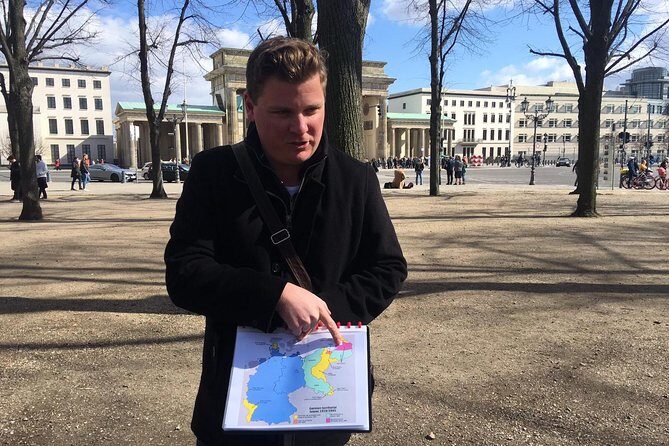
The tour includes Then & Now photographs and historic maps. That matters more than it sounds. Nazi-era Berlin isn’t always obvious to modern eyes. Buildings change. Streets get renamed. Memories of what used to be there don’t help if you can’t “see” the same space.
With photos and maps in your pocket, you can link what you’re standing on now to what used to be there. That’s how you turn a walking tour into real understanding.
It also helps you ask better questions during the route. When you know what used to stand where, your curiosity becomes sharper. You stop asking only what happened and start asking why that location mattered.
Small-group pacing: listening well matters as much as walking
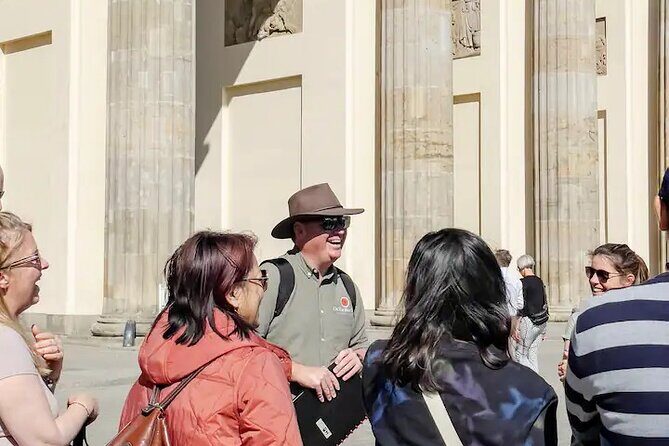
The tour is capped at 15 travelers, and that influences everything. It means fewer interruptions, easier Q&A, and a more manageable pace on crowd-heavy streets.
A couple of points worth taking seriously from past experiences: you’re covering a dense and emotional subject, so you’ll want to keep your ears open. One practical issue that can happen in outdoor walking tours is noise—wind, traffic, and crowd sound can make it harder to hear certain details. If you’re sensitive to sound, bring a good attitude toward close listening and stay nearer to the guide when possible.
Also, the guide may speak for long stretches. One review specifically mentioned the requirement to listen carefully because there’s a lot of information. That matches the tour style here: this is not a casual stroll where you pick up bits. It’s a guided story you follow from place to place.
Price and value: why $54.44 can feel fair (or not)
At $54.44 per person for about 2.5 hours, this tour is priced for a focused, guided experience rather than a museum-ticket day. You’re paying for the guide’s structure—especially the WWII academic background—and for access to a sequence of major Nazi-era sites within a short time window.
Several stops list free admission, so you’re not stacking extra entry costs on top. The value comes from interpretation: the guide doesn’t just point. The tour explains how the Nazi rise connects to what followed, and it includes memorials for groups many people know less about.
What could make it feel less fair for some people is the format: it’s a walking tour, and it moves quickly between heavy topics. If you want lots of sitting time, or if you’re hoping for a relaxed chat walk, this may feel like too much too fast.
But if you want one high-quality route that gives you context and a place to ask questions, it’s strong value for Berlin.
Who this tour suits best
This tour is a good fit if you:
- want a clear rise-and-fall narrative tied to specific places
- care about accuracy and context for WWII-era history
- like memorial visits that include time for meaning and discussion
- prefer small-group guidance over big crowds
It’s also a strong choice if you’re traveling with someone who’s seen Berlin’s famous sights but hasn’t connected the Nazi era to the city’s political and institutional side.
Should you book Hitler’s Berlin: the rise and fall (Small Group)?
If you want one organized way to understand Nazi Germany in the places where Berlin remembers it, I think this is a smart booking. You get a compact route, a small group, and a guided approach that treats the topic with care—starting with victim memorials and ending at the terror headquarters site.
I’d book it if you’re comfortable walking for a couple of hours in the weather and you want real interpretation, not just landmarks. I’d be cautious if you need frequent rest stops, struggle with listening outdoors, or prefer lighter, less emotionally heavy outings.
Bottom line: for Berlin history lovers, this is the kind of tour that helps the city’s darkest chapters stop feeling like random facts and start feeling like a connected story you can actually explain.
FAQ
How long is the Hitler’s Berlin (Small Group) tour?
It runs for about 2 hours 30 minutes.
Where does the tour start and where does it end?
It starts at Brandenburg Gate, Pariser Platz, 10117 Berlin, and ends at Topographie des Terrors, Niederkirchnerstraße 8, 10963 Berlin.
Is the tour offered in English?
Yes, it is offered in English.
What’s the group size?
It has a maximum of 15 travelers.
What should I bring or consider for the walk?
You should have moderate physical fitness and dress for the weather since it operates in all weather conditions. Comfy shoes are a smart idea.
Are any admissions included or free?
The listed stops include free admission tickets.
Is food or drinks included?
No. Food and drinks are not included, though there is a break at Topographie des Terrors where you can get tea or coffee and use restrooms.
If you want, tell me your Berlin dates and what else you plan to do that day, and I can suggest a clean before/after route around this ending point.