REVIEW · BERLIN
Berlin and National Socialism: Berlin under Nazism
Book on Viator →Operated by cultourberlin · Bookable on Viator
Nazism in Berlin is everywhere, even now. This tour is a structured way to read that dark layer of the city, moving from political power and state violence to memorials and museums that force you to look closely. You’ll cover major locations tied to WWII and the Nazi regime, with stops that are short enough to keep momentum and long enough to land the meaning.
I like how the tour focuses on one period, so the connections between buildings and events feel clearer instead of scattered. I also like the guiding style, which multiple guides described as attentive and didactic, using tools like photos and videos to help place you in the moment. You’ll get a Spanish-speaking guide, and with a group size capped at 25, it’s easier to ask questions without feeling lost in a crowd.
One thing to keep in mind: many stops are brief (often 5–25 minutes), so if you want deep time in every exhibit or building, you’ll likely want to follow up afterward on your own. Also, this is a heavy topic—memorials and the museum are meant to be serious, not casual.
In This Review
- Key things to know before you go
- A 4-hour Third Reich map through Berlin’s most consequential corners
- Price and value: what $25.54 really covers
- Logistics that matter: meeting at Berlin TV Tower, ending at the Jewish memorial
- Stop 1: Bundestag and the long road from ruins to parliament
- Stop 2: The Memorial to the Sinti and Roma Victims of National Socialism
- Stop 3: Soviet Memorial Tiergarten and the Battle of Berlin reality check
- Stop 4: Tempelhof Airport—early air power you can still picture
- Stop 5: Topography of Terror—where documentation and space work together
- Stop 6: Fuhrerbunker area—Hitler’s last-hours geography
- The guiding experience: why the names Julia, Júlia, Celia, and Helena come up
- What you’ll likely do next: the tour’s ending point is a gift
- Who should book this (and who might want another format)
- Should you book Berlin under Nazism?
- FAQ
- What is the duration of the tour?
- What language is the guide?
- Is there a group size limit?
- Are admission tickets included?
- Is an AB transport ticket included?
- Where does the tour start and end?
- What time does the tour begin?
- Do I need to buy tickets separately?
- Who can participate?
- Can I cancel and get a refund?
Key things to know before you go
- Third Reich focus that actually connects the dots across key WWII-era sites
- Included entry tickets for memorial and museum stops so you’re not juggling paperwork
- Spanish-speaking guidance with explanations praised for clarity and respect
- Small group size (max 25), helpful for questions and pacing
- A mix of outdoor stops and the Topography of Terror museum experience
- Ending at the Memorial to the Murdered Jews of Europe, a natural next step
A 4-hour Third Reich map through Berlin’s most consequential corners
Berlin can feel like a buffet of history. This tour is different: it’s a guided plan for one specific chapter—the Third Reich and its aftermath—so you don’t spend your day just guessing what you’re looking at.
The timing also works. At around 4 hours, you move between places that shaped Nazi power and wartime reality, then pivot toward remembrance. That pacing helps you keep the story straight: government, persecution, war, collapse, and how the city remembers.
If you’re the type who likes structure—start here, understand this, then walk to the next meaning—you’ll get a lot out of it. If you want a slow, reflective museum day, you’ll still be informed, but you may feel a little rushed.
You can also read our reviews of more tours and experiences in Berlin.

Price and value: what $25.54 really covers
At $25.54 per person, the headline cost looks good on its face. The better question is what you actually get for it.
You’re paying for a Spanish speaking guide plus the value of admission tickets being included for the stops that require them. Even where the schedule notes free entry for certain locations, you still get something that’s harder to price: a guided explanation that turns a building or memorial into context you can remember.
The tour also helps you avoid the usual time-waster on self-guided days: trying to figure out which places matter most for understanding Nazism. When a group is capped at 25 and you’re only out for about four hours, the cost starts to look like convenience with real substance.
Logistics that matter: meeting at Berlin TV Tower, ending at the Jewish memorial
The tour starts at Berlin TV Tower (Panoramastraße 1A) at 10:00 am. You’ll end at the Memorial to the Murdered Jews of Europe (Cora-Berliner-Straße 1), which is a smart design: the “lesson” finishes right where the memory is unmistakable and accessible.
You’ll want to plan for transit. The tour notes that an AB public transport ticket is not included, so if you rely on public transport, budget for that separately. The tour also uses a mobile ticket, which is handy if you’re already traveling light.
Stop 1: Bundestag and the long road from ruins to parliament
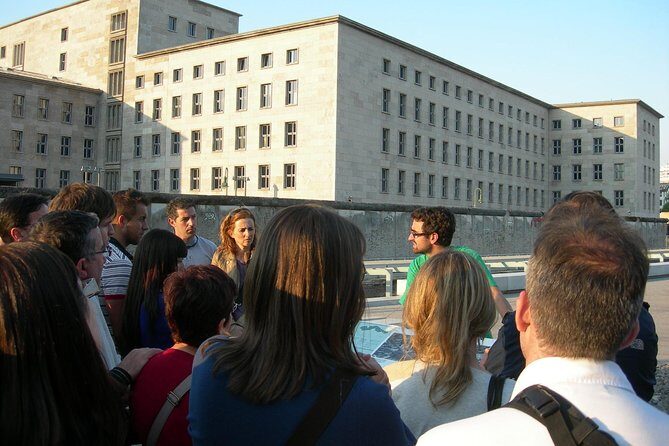
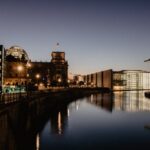
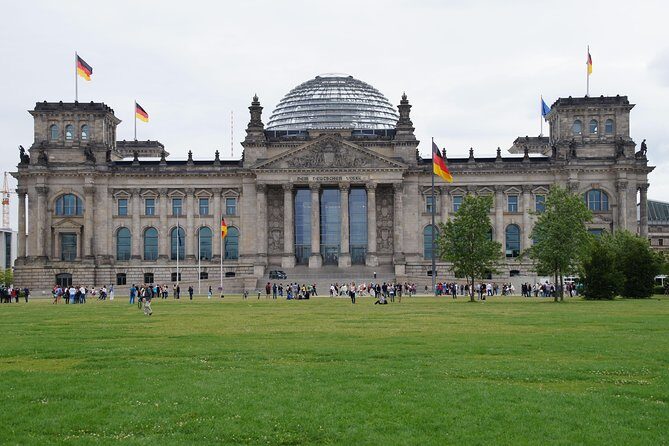
Your first major anchor is the Bundestag area. Even before you get into the political story, it’s worth paying attention to the physical one: the ruined building was protected from the elements and partially renovated in the 1960s, but full restoration didn’t happen until after German reunification on 3 October 1990.
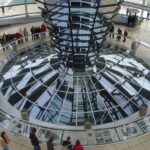
After that, reconstruction led by architect Norman Foster brought the site back into public life. The result opened as the modern Bundestag, meeting place of the German parliament, and it took effect in 1999.
What you should do at this stop: don’t just read plaques if you’re able to see the building and its surroundings. Let the idea land that Germany’s democratic institutions had to be rebuilt in the wake of collapse—and that today’s state sits next to remnants of a darker past.
Stop 2: The Memorial to the Sinti and Roma Victims of National Socialism
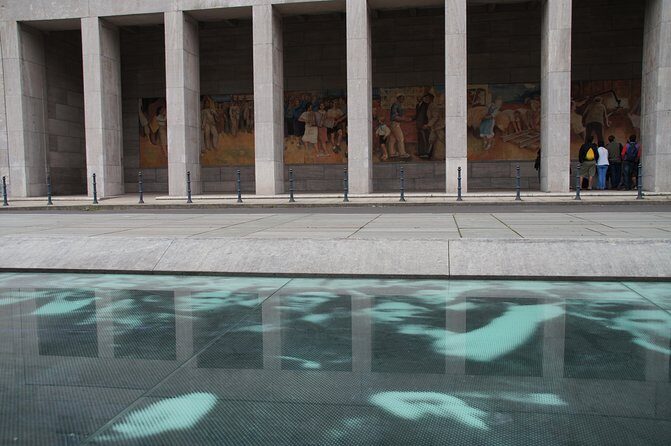
This stop is short—about 5 minutes—but it’s not filler. The Memorial to the Sinti and Roma Victims of National Socialism is dedicated to the memory of the 220,000 to 500,000 people murdered in Porajmos, within the framework of the Nazi genocide of the European Sinti and Roma peoples.
Two things make this memorial especially important. First, it expands what you might think of when you hear Nazi crimes; the Nazi genocide included more than the events most people initially picture. Second, a memorial stop in the middle of a “route learning” tour keeps the story from becoming just buildings and dates.
If you tend to rush, slow down here for a minute. Even though your schedule is tight, your attention doesn’t have to be.


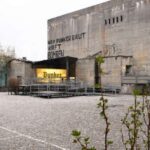

Stop 3: Soviet Memorial Tiergarten and the Battle of Berlin reality check
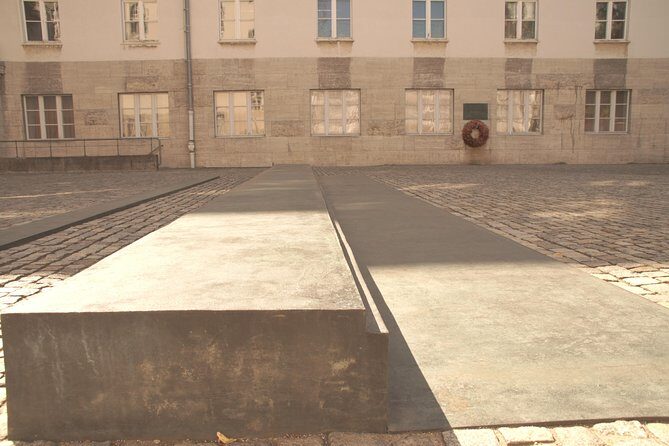
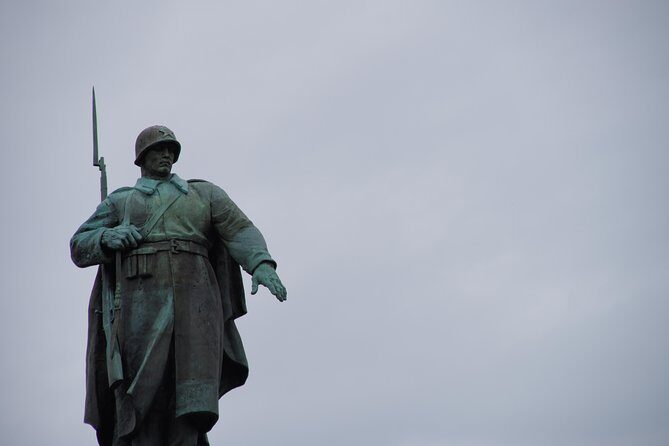
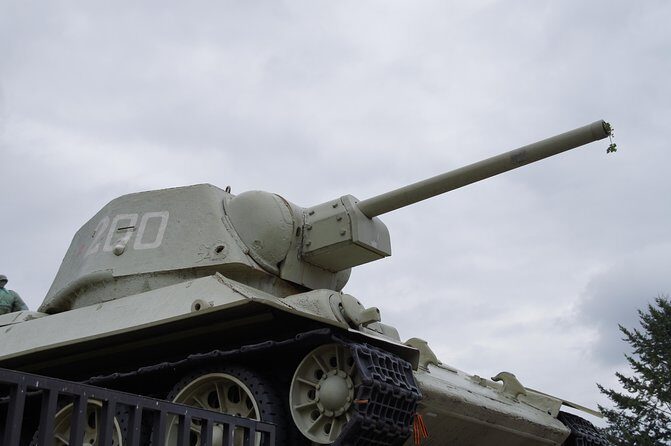
Next up is the Soviet Memorial Tiergarten, one of several war memorials erected by the Soviet Union to commemorate its war dead. The details here matter: it honors, in particular, the 80,000 soldiers of the Soviet Armed Forces who died during the Battle of Berlin in April and May of 1945.
This is a good place to calibrate your understanding of WWII. Nazi Germany is central to the tour theme, but Berlin’s story didn’t end when the regime fell—it ended with a brutal battle and immense losses on many sides.
What to notice: the memorial is not about German politics alone. It’s about war dead, and it’s placed in a landscape you’ll keep walking through, so the memory stays tied to everyday Berlin streets.
Stop 4: Tempelhof Airport—early air power you can still picture
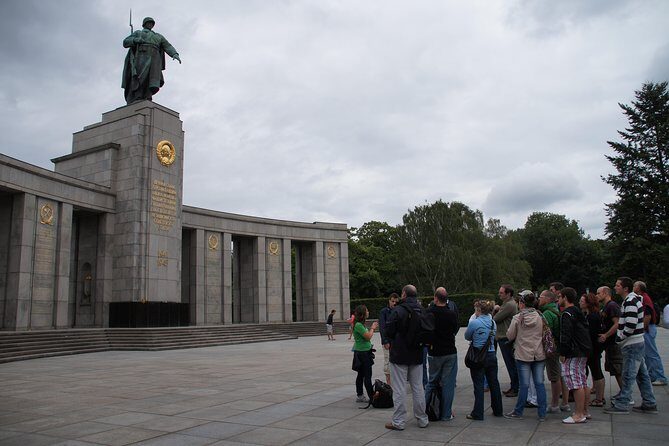
The tour pauses at Tempelhof. The facts you’re given here are about the airport’s role in the early 20th century: in 1926, Tempelhof had ten flights daily and was the largest airport in Europe.
Even though your tour title is Berlin under Nazism, this stop helps you see how the city had major infrastructure and modern systems long before and around that era. Airports are symbols of connectivity, movement, and modern state capacity. Those themes become easier to understand when you can anchor them in a real place.
How to make this stop count in your head: look at the setting and think about scale. Large transport hubs tend to become stage space when politics turns authoritarian—whether you’re talking about wartime logistics or state control.
Stop 5: Topography of Terror—where documentation and space work together
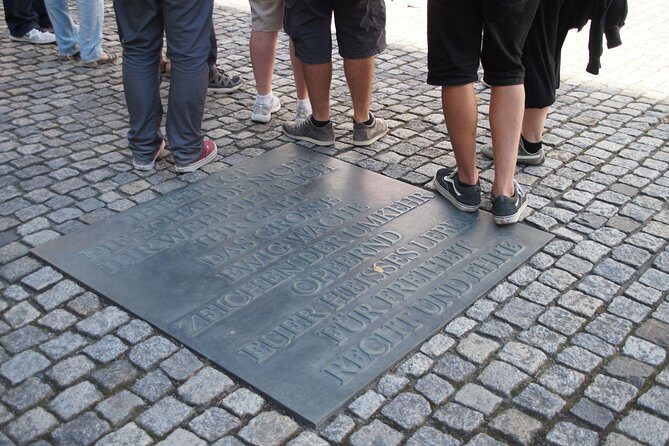
Then you reach the Topography of Terror, an indoor and outdoor history museum in Berlin. You’ll spend around 15 minutes here, and this is the stop that most helps your brain switch from “sites I’ve seen” to “information I can explain.”
This museum format—indoor plus outdoor—matters because it lets you connect what you read to what you stand near. You’re not just getting a lecture; you’re walking through a physical area tied to the Nazi terror apparatus.
Practical tip: if you only have 15 minutes, don’t try to read everything. Instead, pick one or two themes the guide points you toward, then follow those threads while you move.
Stop 6: Fuhrerbunker area—Hitler’s last-hours geography
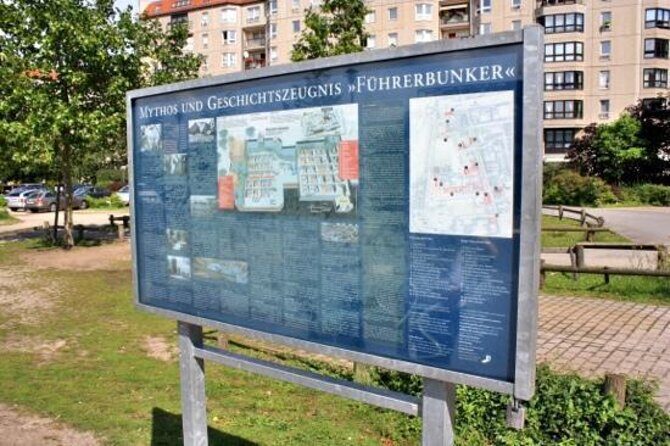
Your final historical anchor is the Fuhrerbunker area. This is where the tour guides you to the place associated with Hitler’s refuge during his last hours alive.
A stop like this can feel strange, because it’s part of history that’s both geographically specific and morally heavy. The key is not sensational details; it’s the idea of how power concentrated into a shrinking radius as defeat approached.
What you can do here: listen closely to the framing from your guide, then notice the sense of enclosure or location context. Even if the physical remnants you see today are limited, the point is to understand how the city’s story ended.
The guiding experience: why the names Julia, Júlia, Celia, and Helena come up
The strongest praise in the feedback centers on the guide. Names like Julia, Júlia, Celia, and Helena show up repeatedly, and the common theme is teaching that feels both respectful and practical.
One detail that stands out: guides are described as using photos and videos to help you place yourself mentally. That’s not just entertainment. It’s a method that helps you connect what you see in Berlin now to what was happening then.
You also get the benefit of answering questions as you walk. That matters on this theme, because your biggest confusion won’t be about dates—it’ll be about cause and context.
What you’ll likely do next: the tour’s ending point is a gift
Because the tour ends at the Memorial to the Murdered Jews of Europe, you’re positioned to keep the day meaningful. If you still have energy, staying in the area helps you keep your momentum: the guided story hands you a clear “after” moment.
Even if you don’t plan a full extra visit, just knowing you’ll end right there helps you structure your evening. This avoids the common travel problem where your tour ends far from anything you care about.
Who should book this (and who might want another format)
This tour is a great match if you want a guided way to understand German history and the Nazi period. It’s also a strong pick if you like covering multiple major sites in one go—without turning your day into a puzzle.
It may be less ideal if you need a slow pace for emotional processing. The stops are fairly short, and the theme is inherently weighty. You’ll learn a lot, but you won’t sit for long in any single exhibit unless you add time afterward.
Should you book Berlin under Nazism?
I’d book it if your goal is to get your bearings fast in Berlin’s WWII-era history. For about four hours, you get a guided route that links key locations, includes admission where needed, and uses teaching methods that help concepts stick. At $25.54, it’s also an efficient value if you’re trying to avoid piecing together tickets and timelines on your own.
I’d think twice if you want a long museum-style day with lots of reading time. In that case, you might still take this tour for the big picture, but plan extra time afterward to slow down.
Either way, wear comfortable shoes and come ready for a serious story. Berlin will do the rest.
FAQ
What is the duration of the tour?
The tour lasts about 4 hours.
What language is the guide?
The guide is Spanish speaking.
Is there a group size limit?
Yes. The tour has a maximum of 25 travelers.
Are admission tickets included?
Yes. Admission tickets are included for the stops that require them.
Is an AB transport ticket included?
No. An AB transport ticket is not included.
Where does the tour start and end?
It starts at Berlin TV Tower (Panoramastraße 1A) and ends at the Memorial to the Murdered Jews of Europe (Cora-Berliner-Straße 1).
What time does the tour begin?
The start time is 10:00 am.
Do I need to buy tickets separately?
The tour uses a mobile ticket, and admission tickets are included, but you may still need to handle public transport separately since the transit ticket is not included.
Who can participate?
The information says most travelers can participate.
Can I cancel and get a refund?
Yes. You can cancel for a full refund up to 24 hours in advance. Canceling later than that may not be refundable.