REVIEW · BERLIN
Berlin East Side Tour 2.5 hour cruise with commentary
Book on Viator →Operated by Reederei BWSG · Bookable on Viator
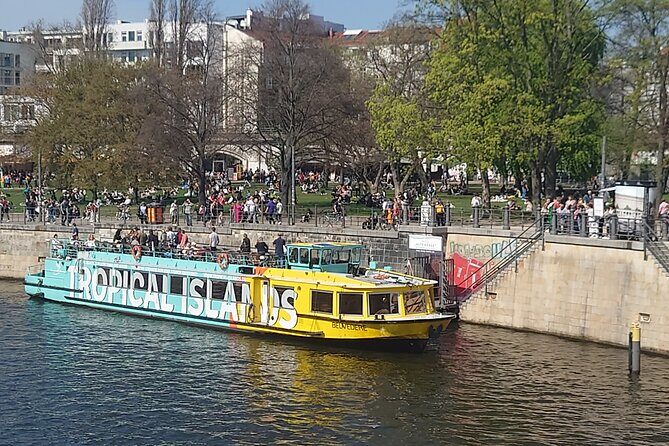
Spree cruises beat walking for speed. This 2.5-hour East Side route lets you glide past major sights with live English and German narration. It’s a smart way to see Berlin’s story without the constant cross-town hopping.
I love the way the cruise builds in contrasts: grand buildings on Museum Island and the Berlin Palace area, then hard-edged Wall-era details like the East Side Gallery. You also spend real time near the Mühlendammschleuse lock, which is way more interesting than it sounds.
One heads-up: the boat setup can feel tight, and some days it can get hot below. If you’re sensitive to motion, seat choice matters too.
In This Review
- Key highlights worth your attention
- Berlin from the Spree: why this route is a good use of time
- Getting on at Anlegestelle Alte Börse and picking your spot
- Museum Island to Humboldt Forum: the Berlin postcard phase
- Mühlendammschleuse lock: the practical engineering moment
- East Side Gallery: seeing the Wall as public art
- Molecule Man and the stretch toward Oberbaum Bridge
- Nikolaiviertel and the TV Tower: older Berlin plus a skyline marker
- Reichstag, Chancellery, and House of World Cultures from the government-district side
- Palace of Tears and Weidendammer Bridge: memory along the route
- Hearing the commentary in English: what to do about it
- Photos, speed, and why the 2.5 hours feel different
- Food and drinks: plan around what’s included
- Should you book this Berlin East Side cruise?
- FAQ
- Is the Berlin East Side Tour offered in English?
- How long is the cruise?
- How much does it cost?
- Is food included in the ticket?
- What is the meeting point for the tour?
- Is there a toilet on board?
Key highlights worth your attention
- Two languages on board: live commentary in English and German, so you can follow along without reading screens.
- Mühlendammschleuse lock time: you get an up-close sense of how Berlin’s waterways work, including a drop of 1.51 meters.
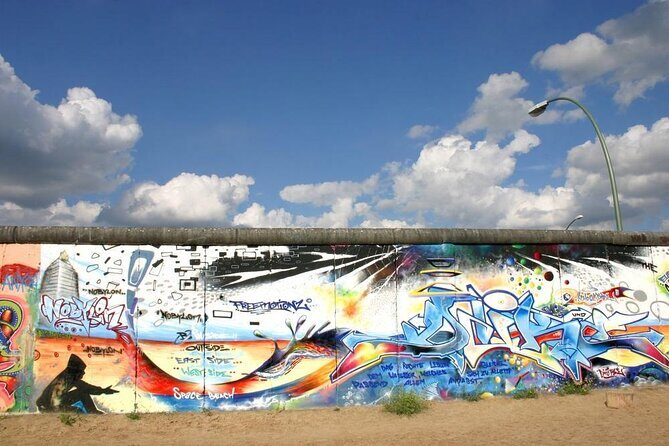
- East Side Gallery at full scale: a long stretch of Berlin Wall artwork by 118 artists from 21 countries.
- Wall-meets-modern views: you’ll pass official buildings, sculpture, and contemporary culture along the Spree.
- Best photo angles come from the waterline: bridges, domes, and façades look different from a boat.
- Not all seating feels the same: upper deck views are great, but hearing and temperature can vary.
Berlin from the Spree: why this route is a good use of time
This tour makes sense when you want two things at once: big-name Berlin and the places that explain how the city got split up and then stitched back together. At just around 2.5 hours, it stays focused. You’re not stuck for half a day on one neighborhood.
The cruise format is also practical. Berlin can be a lot on foot. From the water, you keep moving while your eyes sample a whole chain of landmarks. It’s especially helpful if it’s too hot, too rainy, or you just don’t want to do another marathon walk after museums.
And the commentary really matters here. Seeing buildings is one thing. Understanding why they’re there is what turns the ride into a memory you can actually use later.
You can also read our reviews of more boat tours in Berlin
Getting on at Anlegestelle Alte Börse and picking your spot
You meet at Anlegestelle Alte Börse, Burgstraße 27, 10178 Berlin. The listed start time is 2:45 pm, and the boat returns you to the same dock.
From what’s been reported, your experience depends a lot on where you sit. Some people have found the seats on certain sections uncomfortable and the arrangement tight. If you’re hoping to sit longer, I’d aim for the most stable, roomier seating you can get.
Also consider how you handle heat. There are reports of hot conditions below on warmer days, with limited ventilation. If Berlin’s sunny, the top deck can feel like the better trade-off—especially for views. But even there, hearing the narration can be trickier, so you may want to stay near the center for sound.
Museum Island to Humboldt Forum: the Berlin postcard phase
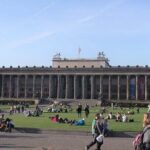
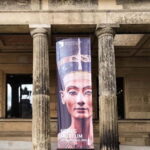
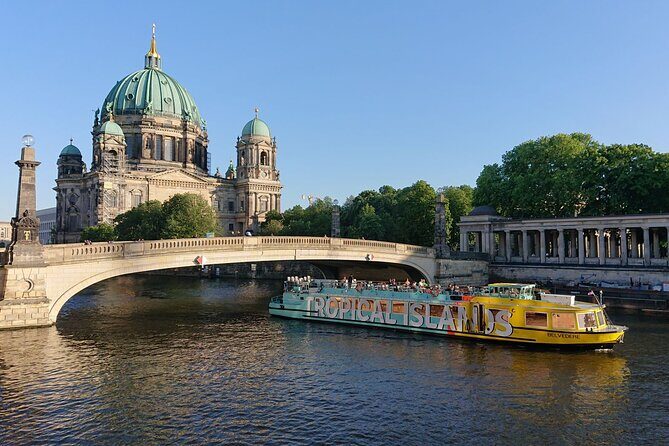
Early on, you roll past the Museum Island area, and it’s a strong start. The ensemble includes five major museums and is part of a UNESCO World Heritage listing as a whole. You’ll recognize the general feel fast: monumental Prussian-era planning, then modern museum life layered on top.
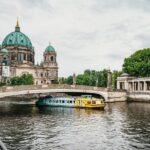
Near the Lustgarten, you also pass the Berlin Cathedral, formally the Oberpfarr- und Domkirche zu Berlin. It’s a Protestant church built between 1894 and 1905 in Neo-Renaissance and Neo-Baroque styles, and it’s known for being the largest Protestant church in Germany by area, plus an important dynastic burial site.
From there, the Humboldt Forum comes into view in the Berlin Palace. This is a universal museum with major parts like the Ethnological Museum and the Museum of Asian Art (Berlin State Museums). It also hosts programs connected to the Berlin City Museum and the Humboldt Laboratory of Humboldt University.
What I like about this segment is the pacing. You get architecture as context before you hit the heavier Wall material. The cruise gives you a visual “before and after” of Berlin: grand state symbols first, then Berlin’s 20th-century fractures.
Mühlendammschleuse lock: the practical engineering moment
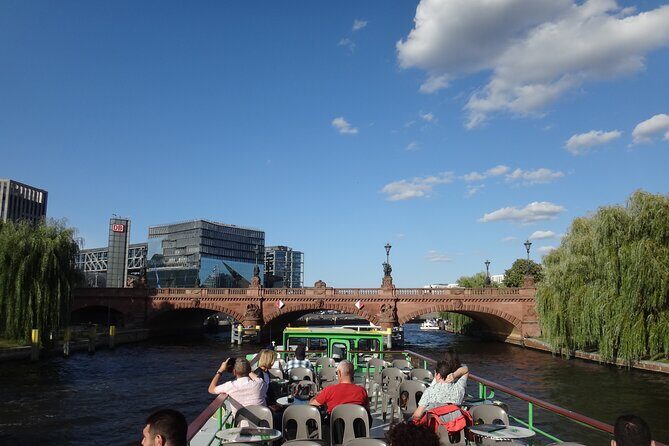
Then the tour slows into one of the most compelling places on the whole Spree stretch: the Mühlendammschleuse. It’s in Mitte, east of Mühlendamm near Fischerinsel, and it sits along the Spree-Oder waterway.
This matters because locks are where the city’s geography turns into daily function. You’re not just looking at pretty buildings anymore. You’re seeing how water transport shapes where Berlin grows and how movement actually happens.
Here’s the kind of detail you’ll remember: this lock was put into operation in 1942 and it overcomes a drop of 1.51 meters. That specific number helps. It turns the story from vague to real.
Some people also point out that the lock time is a key reason this cruise feels longer than the basic 1-hour options. Even if you’re not an engineering nerd, it gives the ride a natural break from pure sightseeing.
East Side Gallery: seeing the Wall as public art
Next comes the East Side Gallery, the open-air memorial on the longest surviving section of the Berlin Wall along Mühlenstraße by the Spree, between Ostbahnhof and Oberbaum Bridge.
This stretch is long—1316 meters—and in spring 1990, 118 artists from 21 countries painted it. The art reflects political changes from 1989/90, and the paintings were created on the side that had faced East Berlin.
A useful detail: due to later urban planning, the original wall art isn’t preserved in full. Replicas made in 2009 exist instead. That’s not just trivia—it helps you understand why you’re looking at something that’s both historic and “restored.”
The commentary also gives you the geography of the border. The East Side Gallery sits on the Hinterland Wall, and the real border here was described as the Kreuzberg bank of the Spree. If you’ve ever had trouble picturing what separation meant day-to-day, this is the moment the map in your head starts behaving.
Molecule Man and the stretch toward Oberbaum Bridge
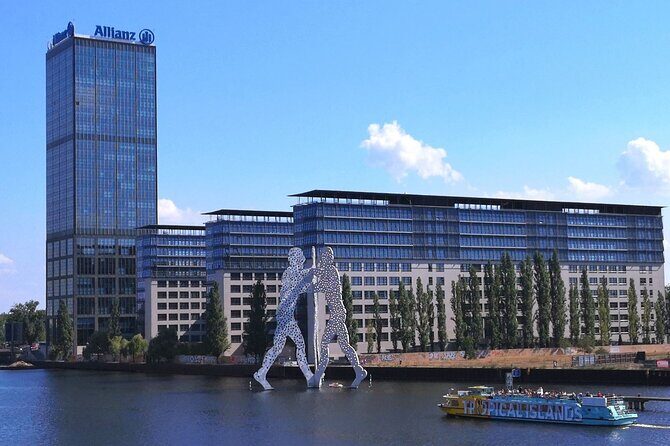
As you glide farther along, you pass the Molecule Man, a monumental sculpture by Jonathan Borofsky. It’s a three-person sculpture set up in May 1999 in the Spree between Elsenbrücke and Oberbaumbrücke, near where Kreuzberg, Alt-Treptow, and Friedrichshain meet.
This one is a great example of why the cruise works. From street level, you’d miss how the sculpture relates to bridges, traffic flow, and the river’s edge. From the water, the relationship snaps into focus fast.
You’ll also get the feel of Berlin’s historic crossings. The area has stories going back to wooden bridges and toll collection. At night, a thick trunk reinforced with iron nails was used to close passage, sometimes called the tree. There were also references to the Stralauer Tor as an entrance to Berlin, tied to shipping traffic flaps and royal planning decisions.
You don’t need to memorize names. Just pay attention to the theme: the river has always been both a boundary and a connection.
Nikolaiviertel and the TV Tower: older Berlin plus a skyline marker
At some point, you’ll pass through the Nikolaiviertel in Mitte. This neighborhood is described as the oldest settlement area in Berlin’s capital region. Much of it was destroyed in World War II, then rebuilt starting in 1980–1987 by architect Günter Stahn for the East Berlin magistrate for the city’s 750th anniversary.
It’s rebuilt on an almost medieval floor plan, centered around the reconstructed Nikolaikirche, with an ensemble of historic townhouses and prefabricated buildings adapted to fit.
Even from the river, it helps to spot that Berlin isn’t only about what stayed. It’s also about what the city chose to recreate, and how that recreation became part of modern tourism.
You’ll also catch the Berlin television tower, at 368 meters. Completed in 1969, it was once the second highest in the world. It’s also one of Germany’s most visited sights, with over a million visitors a year. From the water, it reads less like a postcard and more like a landmark you can orient yourself around.
Reichstag, Chancellery, and House of World Cultures from the government-district side
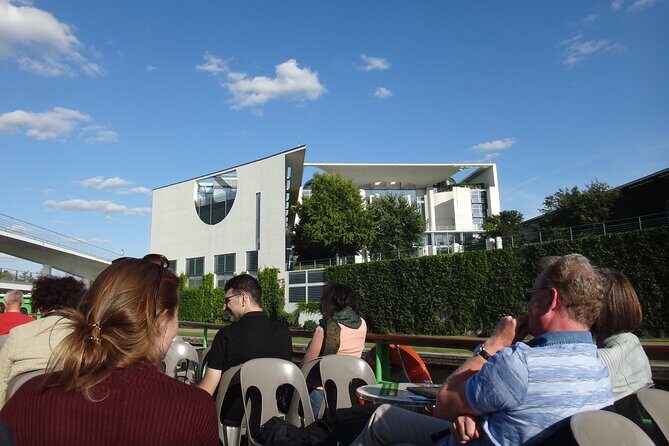
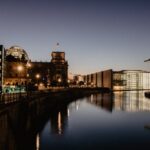
Later in the cruise, the vibe shifts again. You move into the Republic Square / Bundestag zone area, with views toward the Reichstag building. The Reichstag is now the seat of the German Bundestag, and it was originally built between 1884 and 1894 in Neo-Renaissance style.
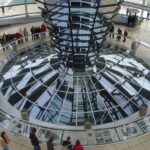
It was later badly damaged by the Reichstag fire in 1933 and World War II, then restored in a modernized form during the 1960s. In the 1990s, Norman Foster redesigned it for permanent parliamentary use, and the glass dome above the plenary hall is designed around an idea by Gottfried Böhm.
What you’ll likely appreciate from the water: how the dome and surrounding government buildings sit in the city. You’re not just looking at icons. You’re seeing how power is placed in a public landscape.
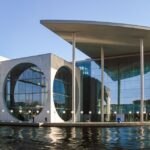
Nearby, the Federal Chancellery building appears as part of the “Bund des Bunds” grouping around Spreebogenpark. And further along, you may see the House of World Cultures (HKW), in the former congress hall on the Spree’s banks. It opened in March 1989, focusing on contemporary art and discourse, with a special emphasis on non-European cultures and societies. In Berlin slang, the building is also nicknamed the Pregnant Oyster.
These stops work as a theme: Berlin’s modern institutions and international conversation sit right next to the river that once marked separation.
Palace of Tears and Weidendammer Bridge: memory along the route
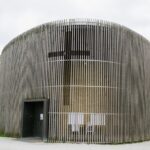
The cruise also passes the Palace of Tears, the colloquial name for the former departure hall at Bahnhof Friedrichstraße. This is where people went between East and West Berlin via train connections, including S-Bahn and U-Bahn into West Berlin and long-distance trains via West Berlin to the Federal Republic.
The name comes from a specific idea: East Germans were said to say goodbye to western visitors in tears, because East Germans themselves generally weren’t free to travel to the Federal Republic.
That context can hit hard, even from a boat window. It turns the river corridor into a corridor of real decisions and real limits, not just scenery.
Around this broader area, you’ll also see Weidendammer Bridge. It dates back to a 17th-century original at the same spot, making today’s bridge part of the old Berlin city center story. It’s listed since the 1970s, which helps you remember that Berlin preserves layers—not just buildings, but the spaces between them.
Hearing the commentary in English: what to do about it
This cruise includes live commentary in both English and German, but the order can vary. Some people have said German comes first, so if you’re waiting for English, you might feel like you’re missing the beginning until it switches.
Sound can also be an issue. A few reports mention that it’s harder to hear up top even when the views are best. If you care most about the English narration, consider sitting in the area where you can hear clearly, then use the moment-to-moment views for photos rather than trying to do everything at once.
My practical suggestion: if you want to understand the Wall and engineering stories, listen closely during the key segments (especially around the lock and the East Side Gallery stretch). The “why” is what you’ll carry with you later.
Photos, speed, and why the 2.5 hours feel different
This is not a stop-and-shop walking day. It’s a glide. You’ll get plenty of chances to photograph bridges, façades, sculptures, and skyline anchors, but you won’t have long to wander off.
There’s also a theme of pacing. Some guests felt the boat moved slower than other river cruises, while others called it relaxing. Either way, it’s still a sightseeing cruise, so expect a smooth rhythm rather than rapid-fire “look left, look right” stops.
One more tip: many of the best shots are from higher angles. If you’re comfortable outside, the top deck often gives better lines through the railings and over the shoreline. If you’re not, sit where you’re comfortable and just accept a slightly different framing.
Food and drinks: plan around what’s included
Your ticket includes the boat trip and the live commentary, plus there’s a bar on board where you can buy food and drinks at your own expense. The tour doesn’t include food in the price, so budget for it if you want a snack.
The upside is that you don’t have to stop for meals. The ride keeps going while you settle into the afternoon.
Should you book this Berlin East Side cruise?
I’d book it if you want a low-effort way to connect Berlin’s major landmarks with the Wall’s physical legacy. It’s a strong fit for a first-time day, or for any trip where you want water-based perspective without committing to a full museum day.
I’d think twice if you’re very sensitive to heat or tight seating, or if you strongly rely on hearing English clearly from the top deck. Also, if motion sickness is a known issue for you, plan your seat carefully so you’re facing the direction that works best for you.
If you’re trying to choose between this and a shorter option, this one earns its extra time by adding stronger river segments and more landmark variety—especially around the lock moment and the Wall artwork stretch.
FAQ
Is the Berlin East Side Tour offered in English?
Yes. The tour includes live commentary in English and German.
How long is the cruise?
It’s listed at about 2 hours 30 minutes.
How much does it cost?
The price is $36.04 per person.
Is food included in the ticket?
No. Food and drinks are available on board for purchase, but they are not included in the price.
What is the meeting point for the tour?
The meeting point is Anlegestelle Alte Börse at Burgstraße 27, 10178 Berlin, Germany.
Is there a toilet on board?
Yes, there is a toilet on board.