REVIEW · BERLIN
Third Reich Berlin Walking Tour with a French-Speaking Guide
Book on Viator →Operated by Vive Berlin Tours · Bookable on Viator
Berlin’s WWII history is in your footsteps. This Third Reich Berlin Walking Tour with a French-speaking guide connects major Nazi-era sites with the human stories around them, using city streets you can actually see and follow. I like the way the route is planned for walking, and I like that the guide brings the topic into focus with clear, structured explanations in French. You also get the kind of context that helps Berlin make sense beyond postcards.
Two stops in particular help you understand the full picture fast: the German Resistance Memorial at the Bendlerblock area, and the stops that trace Jewish life and persecution through the Jewish Quarter. The tour also builds toward the broader story around the Nazi apparatus, including the Topography of Terror area mentioned as a highlight, so you’re not stuck with names and dates only.
One consideration: this is a difficult, sensitive subject. The tour is factual and serious, and you’ll spend time in places tied to deportation and oppression, so it helps to come with the right mindset and some emotional flexibility.
In This Review
- Key points worth knowing before you go
- Why this French-guided Third Reich walking tour makes sense
- Price and what you’re actually buying for $31.99
- Meeting at Potsdamer Platz, ending by Hackescher Markt (and how to plan transit)
- Stop 1 at the German Resistance Memorial Center: Bendlerblock and Operation Valkyrie
- Stop 2: Anhalter Bahnhof and the start-point reality of deportations
- Stop 3: Stiftung Neue Synagoge Berlin – Centrum Judaicum
- Stop 4: Auguststrasse and how institutions changed during Nazi rule
- Stop 5: Grosse Hamburger Strasse—old cemetery and Sammellager
- Stop 6: Museum Blindenwerkstatt Otto Weidt—brooms, brushes, and human protection
- How the route ties big events to people (and why guides like Julie matter)
- Topography of Terror: seeing the Nazi machinery in place
- What to wear, how to pace yourself, and who this tour fits
- Should you book this Third Reich Berlin tour?
- FAQ
- FAQ
- Is this tour in French?
- How long is the tour?
- How much does it cost?
- Where does the tour start and end?
- What time does it start?
- What’s included in the price?
- What’s not included?
- Do I need to pay admission fees at the stops?
- How many people are in the group?
- Can I cancel for a full refund?
- Does the tour run in bad weather?
- Can I bring a service animal?
Key points worth knowing before you go
- French narration on a tight route that keeps the story clear while you walk
- Bendlerblock and Operation Valkyrie context at the German Resistance Memorial Center
- Jewish Quarter stops that go beyond monuments, including synagogue history and detention sites
- Otto Weidt’s museum focusing on protection and practical humanity during the war
- Free entry at the listed sites, so you can budget for transit and food only
- Small group feel with a maximum of 24 people and a 3-hour pace
Why this French-guided Third Reich walking tour makes sense
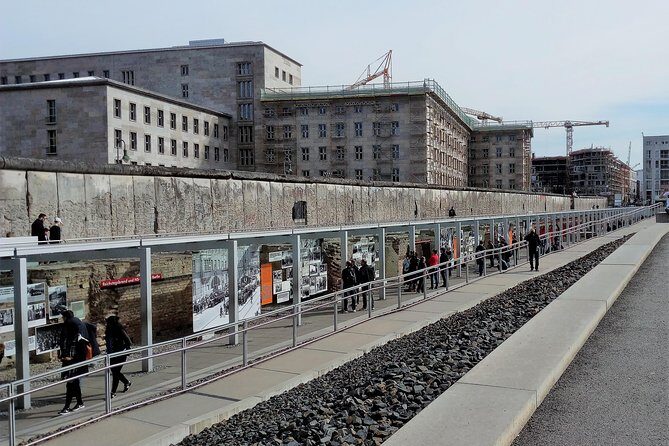
Berlin is one of those cities where history isn’t behind glass. It’s on street corners, inside memorial plaques, and in the stubborn geometry of old stations and neighborhoods. This tour leans into that. You walk central Berlin and you get a guided thread that ties places together instead of treating each stop as a separate fact box.
The language piece matters too. If you want the story in French (and your French is solid enough to follow details), you’ll get more than a basic overview. The guide’s explanations are the core of the value here, and that’s the part people consistently praise as lively and clear.
Finally, the tour doesn’t pretend this period is easy. Reviews highlight how the guide connects the larger historical events with personal destinies. That balance is exactly what helps when you’re looking at Nazi history in real places.
You can also read our reviews of more walking tours in Berlin


Price and what you’re actually buying for $31.99
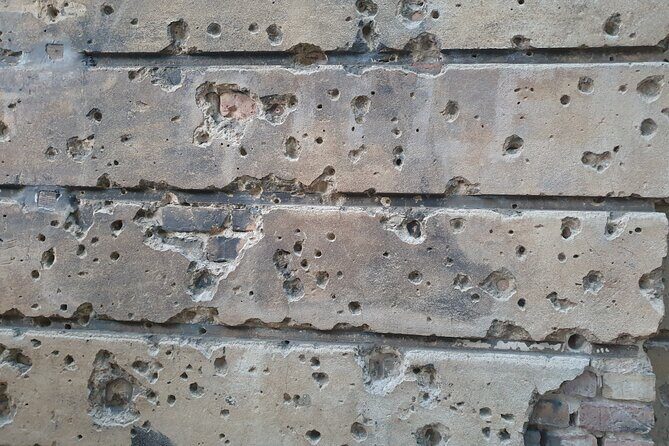
At $31.99 per person for about 3 hours, you’re paying for guided interpretation, not museum shopping. The tour includes local taxes and a professional local guide, and the stops listed come with free admission tickets. That combination can be a good deal in Berlin, where independent museum time can add up quickly.
Here’s the practical way to think about value:
- You’re covering multiple major locations in a single morning block (start at 10:00 am).
- You’re not paying extra for entrance at the specific listed sites.
- You’re paying for someone to connect the dots—especially important with a topic this complex.
The main extra cost to plan for is getting around and eating. Transportation to/from attractions isn’t included, and you’ll want a Berlin day ticket for zones AB if you’re using public transit.
Meeting at Potsdamer Platz, ending by Hackescher Markt (and how to plan transit)
The meeting point is Potsdamer Platz 10, and the tour ends at Hackescher Markt, right next to a train station (S-Bahn). That matters because it keeps your day flexible after the walk. You can connect onward to more sights, get lunch, or simply head home without getting stuck far from transit.
If you’re using public transport, plan on a Berlin day card for zones AB since transit isn’t included. Also keep your start time in mind: 10:00 am means you’ll want to arrive a few minutes early, especially if you need to orient yourself around Potsdamer Platz.
One more small logistics thing that can save stress: the tour uses a mobile ticket, and confirmation happens at booking time. So have your phone charged and don’t treat the morning like a scavenger hunt.
Stop 1 at the German Resistance Memorial Center: Bendlerblock and Operation Valkyrie
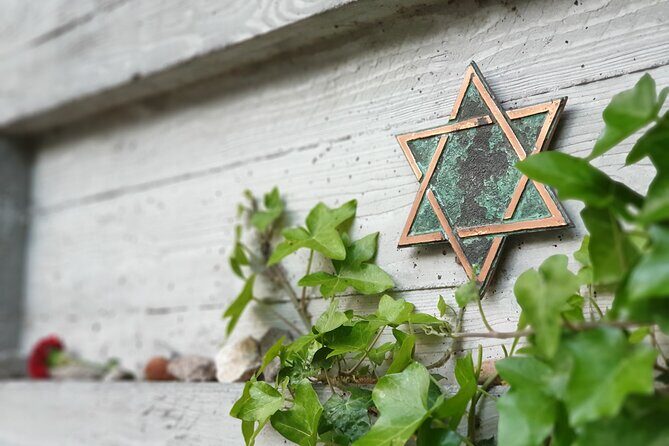
Your first major stop sets the tone in a powerful way. You’ll see a memorial to Varian Fry and then move on to the German Resistance Memorial at the Bendlerblock area.
Why this stop is special: it shifts the frame from the Nazi system to the Germans who opposed it. You’re not only learning about what Nazis did; you’re also learning about resistance—people who tried to stop the machine from inside Germany.
This is where Operation Valkyrie comes into the story. Bendlerblock is tied to the leadership side of that plot, and the memorial now commemorates Germans who opposed and fought against Nazism. It’s a reminder that history isn’t just bystanders and victims—there were active choices, and those choices carry their own moral weight.
Timing-wise, you get about 50 minutes here. That’s enough time to absorb the memorial space and listen carefully without feeling rushed.
Stop 2: Anhalter Bahnhof and the start-point reality of deportations
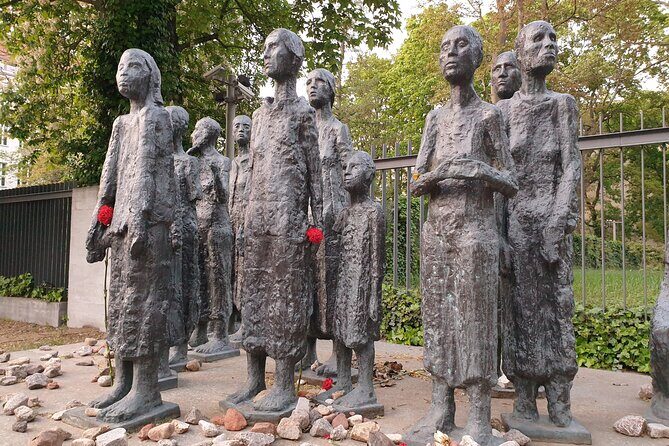
Next comes Anhalter Bahnhof, a station where part of the original structure remains. This place matters because it was one of the starting points for the deportations of Berlin’s Jews.
The station format hits differently than a document. You can stand where people began a process they could not control. The tour keeps the focus on that reality, and then it quickly moves you toward the Jewish Quarter.
This stop is short—about 10 minutes—but it’s designed for impact. It’s also a good bridge: you go from resistance and resistance memory, to the machinery of persecution.
You can also read our reviews of more guided tours in Berlin



Stop 3: Stiftung Neue Synagoge Berlin – Centrum Judaicum
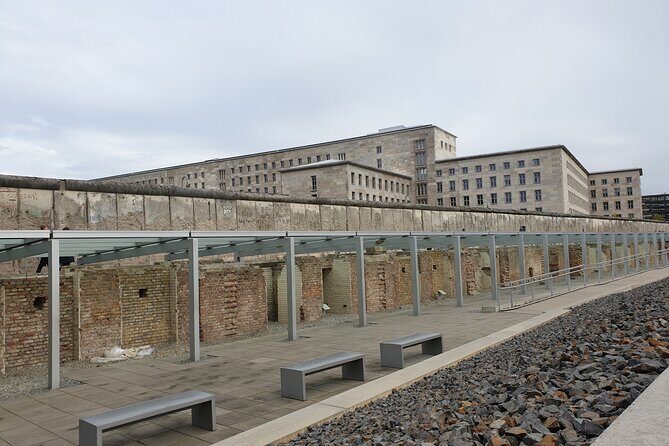
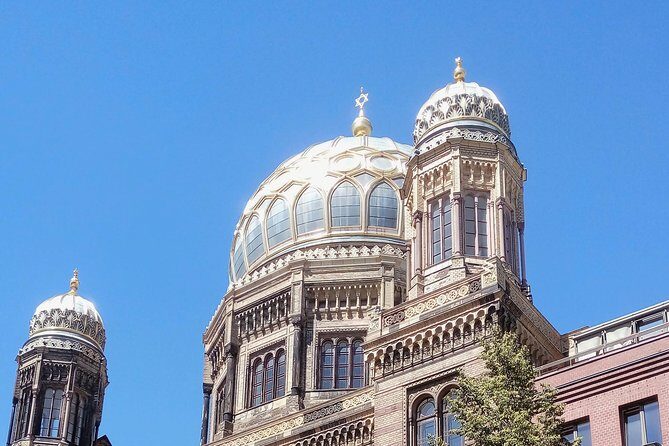
Now you shift from persecution infrastructure to Jewish community history. At Stiftung Neue Synagoge Berlin – Centrum Judaicum, the tour focuses on the Jewish community in the 19th and 20th century and the story connected to the synagogue.
This is one of the smartest parts of the route because it breaks the pattern of only seeing what was destroyed. The history here gives you a fuller sense of community life before the Nazi era swallowed everything.
You’ll have about 15 minutes at this stop. That’s brief, but enough time to anchor what you’ve learned so far: Jewish history in Berlin isn’t one chapter. It’s many chapters—some joyful, some brutal, and all connected.
Stop 4: Auguststrasse and how institutions changed during Nazi rule
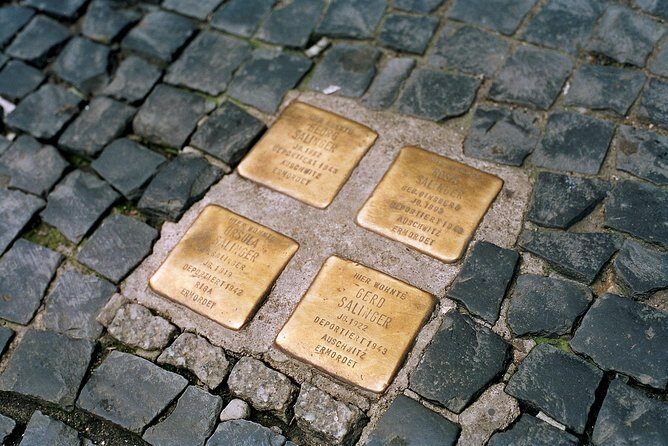
Auguststrasse is a street-level story stop. The guide talks about institutions that used to be on the street, including a school for Jewish girls and an orphanage during Nazi time.
This is the kind of detail that helps the narrative breathe. When you hear about schools and orphanages, the topic turns from abstract ideology into the day-to-day impact on children and families. It’s also where the tour’s explanation style matters. The best guides can make you understand the change over time—what existed, what was taken away, and what replaced it.
You’ll spend around 20 minutes here. That’s long enough to hear the context and short enough that you still feel the pace of walking Berlin rather than sitting through a lecture.
Stop 5: Grosse Hamburger Strasse—old cemetery and Sammellager
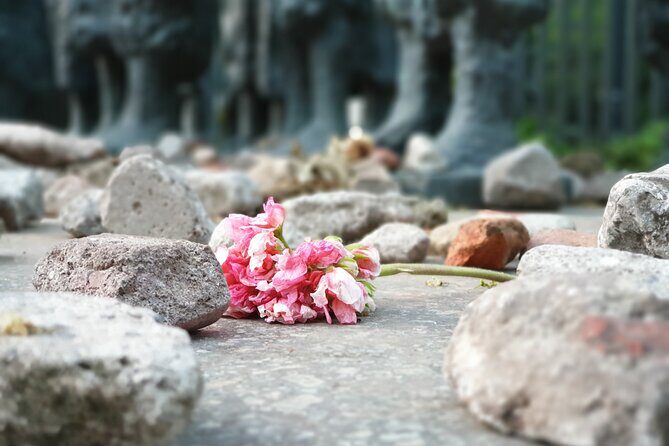
At Grosse Hamburger Strasse, you’ll see an old Jewish cemetery and also a Sammellager—a place where Jews were detained before deportation.
This stop hits on two realities at once:
- Memory: the cemetery is a physical link to lives that mattered and people who deserve remembrance.
- System: the Sammellager shows how persecution was organized, staged, and processed.
The time here is about 30 minutes, which is more than the typical street stop. That suggests the guide expects you to take this in slowly, not skim it.
When I think about choosing a historical walk like this, longer time at sites tied to detention and deportation is usually a good sign. You need a few extra minutes to let the place and story connect in your mind.
Stop 6: Museum Blindenwerkstatt Otto Weidt—brooms, brushes, and human protection
The tour ends with a story that’s both specific and surprisingly hopeful given the setting. Museum Blindenwerkstatt Otto Weidt tells the story of the workshop run by Otto Weidt, who employed mainly blind and deaf Jews during World War II. They produced brooms and brushes, and Weidt tried to protect the people working there.
This museum stop is about 20 minutes, and it’s structured around bravery and humanity—not in the Hollywood sense, but in the real sense of taking practical risks to help others.
It’s also a useful emotional counterweight inside a tour that otherwise contains heavy content. You’re still learning the truth of what happened. But you’re also hearing about people who used whatever leverage they had to reduce suffering.
How the route ties big events to people (and why guides like Julie matter)
The overall structure is what makes the tour feel coherent. You’re not just collecting stops. You’re moving through a story: resistance, then deportation infrastructure, then Jewish community history and the institutions tied to persecution, and finally a museum that shows day-to-day resistance in action.
That’s also why the guide performance stands out so often in feedback. One review praises a French-speaking guide named Julie for delivering a parcours and explanations that were lively and clear, helping the subject fit together with the city of Berlin. Another highlights how the tour manages to be both learned and pleasant, even though the theme is painful. That combination—clarity plus careful handling of personal destinies—is exactly what you want when you’re walking through Nazi history.
You get value from that style. Without it, Berlin’s memorials can blur into a series of plaques. With it, you start noticing how each place supports the next part of the narrative.
Topography of Terror: seeing the Nazi machinery in place
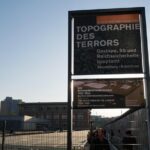
The tour includes Topography of Terror as a highlighted component. Even if you focus only on what you can physically see on the route, this part of Berlin tends to ground the story of the Nazi regime’s bureaucracy and power structures.
Because the tour is timed around walking and multiple stops, you should expect this to be integrated into the narrative rather than treated as a standalone day at a large museum. That’s not a bad thing. For many visitors, a guided walk is the fastest way to build orientation before you go deeper on your own.
If you want more time after the tour, you’ll likely know exactly where your curiosity went: resistance, detention systems, community history, or the broader landscape of terror.
What to wear, how to pace yourself, and who this tour fits
This is a group walking tour that works in all weather conditions. Dress for Berlin morning weather and bring layers. You’ll be walking central areas, including places that may involve stairs or uneven ground depending on the exact path between stops.
The tour lists a moderate physical fitness level requirement. In real life, that means it’s not an all-day hike, but you should be comfortable walking for three hours and standing at memorial sites long enough to hear explanations.
Also think about your emotional bandwidth. This is Nazi history with specific references to deportations, detention, and human suffering. The guide’s handling is part of what makes the experience meaningful, but you still need to be ready for a heavy topic.
Who it suits best:
- You want a French-guided story, not a self-guided audio walk.
- You prefer walking and visual orientation over reading alone.
- You’re curious about both resistance and persecution, including Jewish community history.
Who might want a different option:
- If you’re looking for a lighter, entertainment-style history walk, this won’t be that.
- If you don’t feel up to visiting places connected to deportations, you may want to choose a different theme.
Should you book this Third Reich Berlin tour?
I’d book it if you want a structured, guided walk that gives you context you can carry with you all week. The price-to-content ratio looks strong: a 3-hour tour with a professional guide, free admission at the listed sites, and a route that ends conveniently near Hackescher Markt.
It’s also a smart pick if you care about narrative quality. Reviews consistently emphasize clear explanations and the way the guide connects major history to personal destinies. With a theme this serious, that kind of communication isn’t a bonus. It’s the difference between a confusing checklist and a story you understand.
If you’re deciding last-minute, I’d lean toward booking sooner rather than later. The tour is commonly booked about 16 days in advance, so there’s a decent chance of selling out or tightening availability if you wait.
FAQ
FAQ
Is this tour in French?
Yes. The tour is described as being in French with a French-speaking guide.
How long is the tour?
It runs for about 3 hours.
How much does it cost?
The price is $31.99 per person.
Where does the tour start and end?
It starts at Potsdamer Platz 10, 10785 Berlin, Germany, and ends next to the station at Hackescher Markt, 10178 Berlin, Germany.
What time does it start?
The start time is 10:00 am.
What’s included in the price?
Local taxes and a professional local guide are included.
What’s not included?
Transportation to and from attractions is not included, and food and drinks are also not included.
Do I need to pay admission fees at the stops?
The listed stops show free admission tickets.
How many people are in the group?
The tour has a maximum of 24 travelers.
Can I cancel for a full refund?
Yes. Free cancellation is available up to 24 hours in advance of the experience for a full refund.
Does the tour run in bad weather?
Yes, it operates in all weather conditions, so dress appropriately.
Can I bring a service animal?
Service animals are allowed.
If you want, tell me your travel dates and whether you’re comfortable with French. I can help you map the rest of your day around Hackescher Markt so this tour fits cleanly with lunch and a couple of easy add-on sights.