REVIEW · BERLIN
Berlin: Experience the Alternative Kreuzberg on a Bike Tour
Book on Viator →Operated by FREE BERLIN Bike Tours · Bookable on Viator
Berlin has a second face, and you’ll ride it. This 3-hour bike tour swings from Nikolaiviertel into Kreuzberg and onward to the Wall’s art corridor, with stops that feel like real city life, not staged tourism. What I love most is the way your guide stitches big history to everyday details, and how you get insider context at places like Das Baumhaus and the East Side Gallery.
The only real drawback: it’s an on-bike-and-on-feet experience with frequent stops for stories, so you won’t move at a nonstop sightseeing pace.
In This Review
- Key things I think you’ll care about
- Alternative Kreuzberg by Bike: The Real Berlin, Not the Script
- Price and What You Actually Get for $42.33
- Where You Meet and How the Ride Works
- Nikolaiviertel to Kreuzberg: Starting Where the City Feels Official
- Engelbecken and Das Baumhaus: Peace Between Contrasts
- Wall-Adjacent Art and the YAAM Viewpoint Moment
- East Side Gallery and Oberbaumbrücke: The Wall as Art and Crossing Point
- Osthafen and the Waterfront Borderland Feeling
- Falckensteinstraße and Gorlitzer Park: Architecture With Attitude
- Liegnitzer Straße and the Car Loft Capital Twist
- Dolce Vita Waterfront, Turkish Markets, and a Boule Break
- Admiralbrücke Sunset Energy and Kottbusser Tor’s Contrast
- What Makes the Guides a Big Part of the Experience
- Who Should Book This Tour (and Who Might Skip It)
- Should You Book the Alternative Kreuzberg Bike Tour?
- FAQ
- How long is the Berlin alternative Kreuzberg bike tour?
- How much does the tour cost?
- Where does the tour start and end?
- Is the bike and helmet included?
- What language is the tour offered in?
- Is it family-friendly?
Key things I think you’ll care about
- A route built by your guide: the Free-Berlin concept means the exact stops can vary, so two tours may not feel identical.
- Helmet and bike are included, which makes it easy to show up and start rolling.
- Small groups (4–15) means better interaction, faster question-answering, and fewer bottlenecks at viewpoints.
- Wall-era sites plus today’s street culture, from preserved wall art to waterfront hangouts.
- Frequent short stops: you’ll pause often to listen, so dress for weather and plan to slow down.
Alternative Kreuzberg by Bike: The Real Berlin, Not the Script
This tour is built for people who want Berlin’s edges: the places where the city’s attitude comes through. You start in a more established-feeling area and then you gradually shift into neighborhoods that match what Berlin does best—mixing history with stubborn creativity.
Your guide sets the tone right away. Expect safety checks, clear directions, and a steady flow of stories that explain why these areas look and feel the way they do. It’s not just “here’s a landmark,” it’s “here’s what changed, and why people stayed.” That difference matters, because the city’s past can otherwise feel like a museum.
You can also read our reviews of more cycling tours in Berlin
Price and What You Actually Get for $42.33
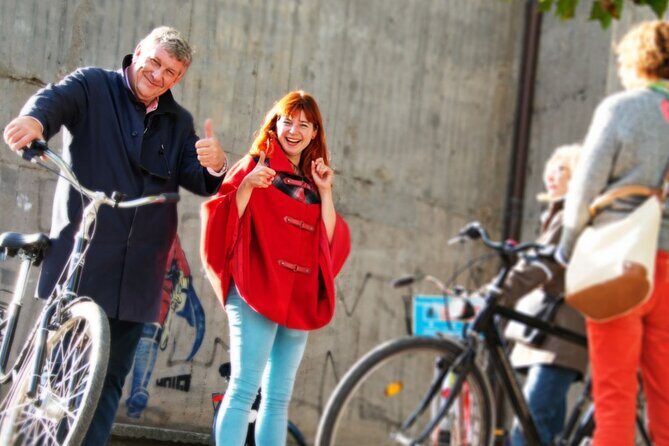
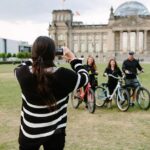
At about $42.33 per person for roughly 3 hours, this is priced like a “real activity,” not a casual walk-through. The big value is what’s included: the bicycle, a helmet, and a professional guide who plans a route around a theme (the alternative side of Berlin).
You’re also not stuck with a fixed, cookie-cutter itinerary. The Free-Berlin concept means each guide designs their own route, so you get some freshness. That’s especially useful in a city where many tours cover the same top hits—this one uses big icons, but it’s aiming for the lived-in context around them.
And no, you won’t get food/drinks automatically (unless something is specified). So if you want a snack or a drink, you’ll plan it around your stops or save it for after.
Where You Meet and How the Ride Works
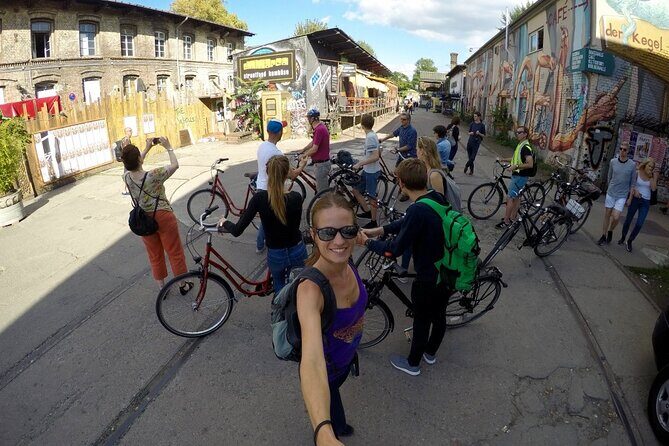
You’ll start and end at Free Berlin Bike Tours & Rental, Poststraße 11, 10178 Berlin. The scheduled start time listed is 2:24 pm, and the tour runs about 3 hours before returning back to the meeting point.
A few practical notes that make the experience smoother:
- You should dress for all weather, because the tour operates in any conditions.
- You’ll be cycling with frequent pauses, so you’re not going to “burn” through distance. The time is spent on viewpoints and explanations.
- The group size is capped at 15 (min. 4), so it’s never a huge herd.
Also, I love that this is truly family-friendly. Children are welcome, and infant seats can be provided on request. If you’re traveling with kids, this is a way to show them Berlin’s layers without losing them in a long indoor museum day.
Nikolaiviertel to Kreuzberg: Starting Where the City Feels Official
The tour kicks off in Nikolaiviertel. Even if you’re starting out in a part of Berlin that feels more established, it works as a contrast point. The guide uses this first stop to set up the theme: after this, you’ll spend more time in places that match the reality of big-city living.
From there, you roll into Kreuzberg, a district the guide frames as a melting pot full of stories. This is where you start hearing the kind of details that make Kreuzberg feel like a living neighborhood instead of a name on a map.
What to watch for: as the tour moves, notice how the architecture and street texture change. The route is teaching you how Berlin’s past and present sit on top of each other.
Possible drawback: the first part can feel more “orientation” than “counterculture,” depending on where you expect the tour to begin. If you came strictly for the alternative highlights, know that Kreuzberg’s story builds step by step.
Engelbecken and Das Baumhaus: Peace Between Contrasts
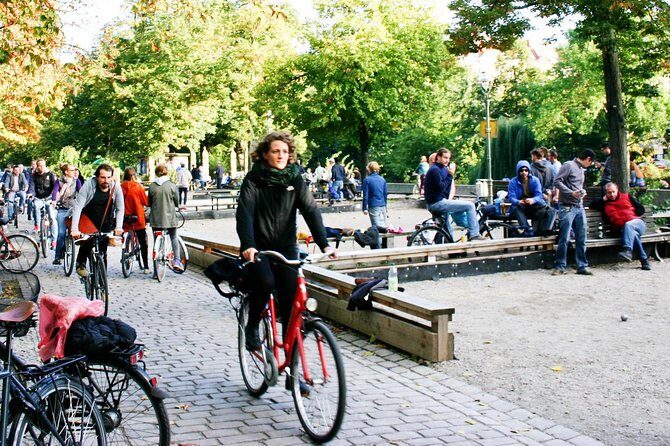
Next you hit Engelbecken, described as a pocket of peace between pre-fab buildings, older-style structures, and modern architecture. That mix is the whole Kreuzberg story in miniature. You get a moment where things quiet down, then the tour snaps you back into the bigger picture of how different eras coexist.
Then comes Das Baumhaus—the Treehouse by the Wall. The guide connects it to a guest-worker story and how that energy adapted to the Kreuzberg mentality. It’s presented as a kind of bold, territory-marking adaptation, tied closely to the Berlin wall story and the area’s attitude toward making space for yourself.
This stop is one of those places where you’ll understand the emotional weight behind the geography. You’re not just seeing a structure. You’re seeing how people used the wall’s presence—by living beside it, building with it, and pushing back against what the wall represented.
Wall-Adjacent Art and the YAAM Viewpoint Moment
After Das Baumhaus, the route moves through a place connected to an artists’ community shaped by multiple squattings. The point here isn’t a dry timeline; it’s the idea that Berlin’s alternative scene has long depended on people taking action when normal channels didn’t work.
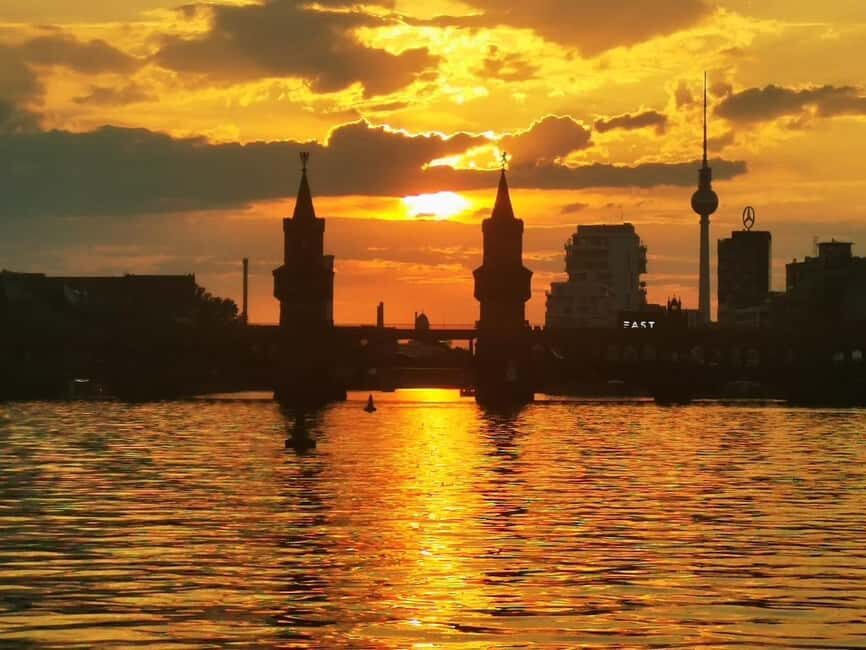
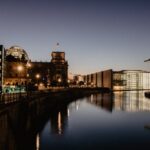
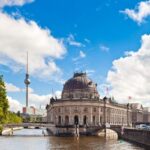
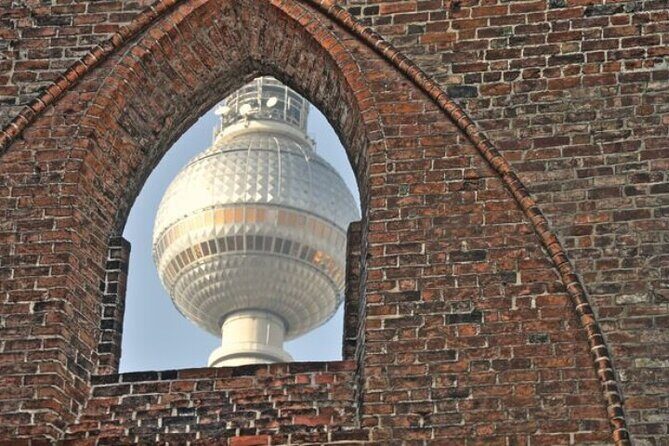
You also get a viewpoint tied to YAAM. The description is simple but powerful: the club view here can be even more fascinating than the club itself. From this angle, you can see the TV Tower, Holzmarkt, Oberbaumbridge, and the Spree. It’s a quick pause, but it changes your mental map of the area because the river and landmarks start clicking together.
East Side Gallery and Oberbaumbrücke: The Wall as Art and Crossing Point
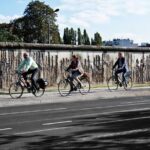
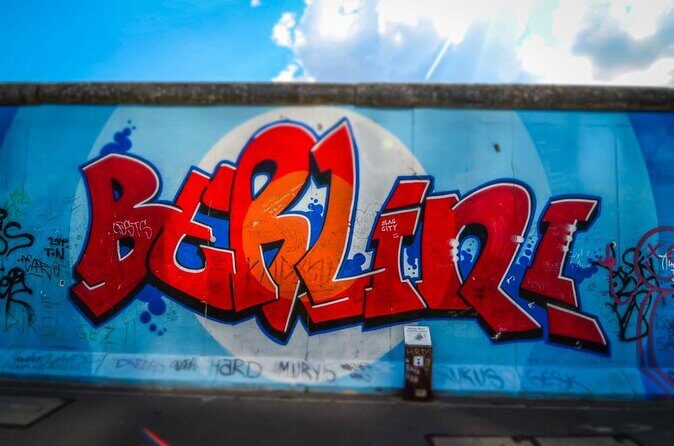
One of the most famous stops arrives next: East Side Gallery. You’re told it’s the longest remaining part of the Berlin Wall, packed with spectacular art, and it sits right in a redesigned business quarter now. That pairing is important. It explains why Wall locations don’t stay “frozen.” They get repurposed, reinterpreted, and re-watched.
Then you cross to Oberbaumbrücke. The guide frames this bridge as a landmark for crossing borders in any meaning. That’s more than wordplay. It’s a reminder that Berlin’s history isn’t only in buildings—it’s also in movement, in who gets to cross and when.
If you like history, this is where it stops being abstract. You see the wall, then you see a crossing, then you feel how the city reshapes itself around the idea of separation and connection.
Osthafen and the Waterfront Borderland Feeling
Next is Osthafen, described as a former restricted borderland that’s now a spot for young urban creatives. From this area, you can understand the GDR’s obsession with the Wall, borders, and the heavy restriction on freedom. The explanation hits best because you’re outside, looking at the space and the river setting rather than staring at a plaque.
The route also includes a stop featuring a unique sculpture that’s known for multiple interpretations, with the official one said to make the least sense. That kind of stop is great on a bike tour because it keeps the experience human. You’re invited to think, not just to memorize.
Falckensteinstraße and Gorlitzer Park: Architecture With Attitude
Then you cycle into Falckensteinstraße, described as a perfect example of Kreuzberg’s diversity of buildings, people, and history. The guide’s framing is that it’s big-city life, but with some escapism baked into the street feel. It’s the kind of street that makes you slow down just to observe.
After that comes Görlitzer Park, a former trainstation transformed into a park. The tour positions it as a symbol of the thin line between alternative life and anarchy. Even if you don’t fully buy that line, it’s a useful way to notice how Berlin repurposes infrastructure into public space—and how people claim space in return.
Liegnitzer Straße and the Car Loft Capital Twist
Here’s a stop that adds humor and contrast: Liegnitzer Straße. The description calls it completely inconspicuous, yet the peak of capitalism inside the melting pot. The reason? A car loft building where you can take your car up to your balcony.
That’s the kind of detail that makes a bike tour worthwhile. Your brain expects “alternative” to mean one consistent vibe. This stop shows the neighborhood’s contradictions instead. Kreuzberg can carry political grit, artistic history, and still host perfectly practical (and slightly surreal) modern living.
Dolce Vita Waterfront, Turkish Markets, and a Boule Break
Toward the middle-to-late part of the ride, you get to the waterfront area called Dolce Vita, including a Turkish market on Tuesdays and Fridays. The stop is described as a waterfront-style break that keeps things grounded in everyday Berlin culture.
Then the tour adds a moment to slow down in a bohemian neighborhood—playing boule is specifically mentioned. This is a good reset. After a run of history and architecture, you get a social, low-key pause where the city feels like it belongs to people, not only to history.
The guide also directly challenges the myth framing Kreuzberg as home to anarchists, slobs, and survival artists. The takeaway is that it’s more complicated than stereotypes—and that the tour’s real goal is to show the complete opposite of simplistic labels.
Admiralbrücke Sunset Energy and Kottbusser Tor’s Contrast
After the calmer waterfront moments, you reach Admiralbrücke. You get a choice here: start your night in a bar, or watch a summer sunset with hundreds of strangers. The phrase is come as you are. It captures Berlin’s ability to make a public viewpoint feel like a community moment without requiring an invitation.
Finally, the tour ends at Kottbusser Tor, where the vibe shifts sharply. You’re told to expect brutal 1970s architecture, a drug scene, and heavy traffic. This is the contrast stop—the place that reminds you Berlin’s alternative image sits next to everyday friction and real-world problems.
This ending works well because it leaves you with tension and nuance, not just warm feelings. And that’s the point: Berlin is not one mood. It’s a collage.
What Makes the Guides a Big Part of the Experience
One pattern shows up strongly in the way people talk about this tour: guides combine humor, safety, and personal stories. Names that come up include Rico, Rufus, Jake, Bjorn, Karl, and Vincent. Regardless of the name, the effect is consistent—your guide isn’t only explaining landmarks. They’re explaining motivations, the “why” behind neighborhoods, and how Berlin’s change has felt on the ground.
Also, guides seem comfortable answering questions and translating tough terms. So if you’re curious about slang, history vocabulary, or why people use certain phrases in Kreuzberg, you’ll have someone ready to make it click.
Quick practical tip: wear pants you don’t mind getting a little marked. One helpful remark from people who’ve taken the tour is that bike chains can leave dirt on tighter trousers.
Who Should Book This Tour (and Who Might Skip It)
This tour is a great fit if:
- you want Berlin beyond the core sights, with a focus on daily life and alternative culture
- you like history but hate lecture-style tours
- you’re comfortable riding a bike for a few hours with frequent short stops
- you want a tour that stays interactive thanks to the small group size
You might pass if:
- you prefer nonstop cycling with minimal talking
- you want a purely historical Wall tour with no neighborhood contrast
- you’re extremely sensitive to street-level scenes and traffic noise (Kottbusser Tor is part of the finale)
Should You Book the Alternative Kreuzberg Bike Tour?
Yes, if you want a bike tour that actually helps you read the city. The combination of Wall-adjacent stops, Kreuzberg neighborhood texture, Spree views, and a guide who connects details into a story makes this feel like a real way to get your bearings fast.
I’d book it early in your trip, too. After this, you’ll recognize landmarks and street patterns on your own, and you’ll feel more confident exploring Kreuzberg and Friedrichshain afterward.
FAQ
How long is the Berlin alternative Kreuzberg bike tour?
It lasts about 3 hours.
How much does the tour cost?
The price is $42.33 per person.
Where does the tour start and end?
It starts and ends at Free Berlin Bike Tours & Rental, Poststraße 11, 10178 Berlin, Germany.
Is the bike and helmet included?
Yes. The tour includes use of a bicycle and a helmet.
What language is the tour offered in?
The tour is offered in English and German, depending on the option you select.
Is it family-friendly?
Yes. Children are welcome, and infant seats can be provided on request. Children must be accompanied by an adult.