REVIEW · BERLIN
Berlin: Guided Palace Tour by the Insider
Book on GetYourGuide →Operated by Bernhards Berlin · Bookable on GetYourGuide
Berlin’s Palace story is usually told with brochures and photos. This tour treats it like a living document: from the bomb-damaged original, to communist demolition, to the GDR-era building, and finally to the reconstructed baroque façades you see today at Humboldt Forum. I especially like the insider framing (the guide was involved from the start of the modern project) and the architect-and-politics perspective, which keeps the explanations grounded in decisions, not just dates.
One thing to consider: this is not a museum ticket tour. You spend your time walking the site and learning the architecture and history, while the exhibitions inside Humboldt Forum and the Ethnological Museum, Asian Art Museum, and Berlin Museum are not included.
In This Review
- Key things to know before you go
- Why the Berlin Palace needs more than a photo stop
- Starting at Berlin Schlossplatz: getting your bearings fast
- From bomb damage to a 1951 demolition plan
- The GDR-era Palace of the Republic: politics made architectural
- Reconstructed baroque façades and the Humboldt Forum inside
- How the guide turns questions into learning (with a wink)
- What you get for the $53 price
- Who should book this Berlin Palace Insider Tour
- A quick word on expectations while you’re standing there
- Should you book the Berlin Palace Insider tour?
- FAQ
- How long is the Berlin Palace Guided Palace Tour by the Insider?
- Where do I meet the guide?
- What languages are offered?
- Is the tour focused on the Humboldt Forum exhibitions inside?
- What group size should I expect?
- Is the tour wheelchair accessible?
Key things to know before you go
- Insider involvement: the guide worked on the project from the beginning and later in public communications for the client/owner.
- Architecture plus politics: you’ll connect design choices to power, ideology, and public messaging.
- Site-focused route: you walk around Museumsinsel and the palace area for about 90 minutes.
- Multiple eras in one arc: WWII damage, 1951 demolition, the 1975 GDR building, and the post-1990 restart.
- Small group: limited to 10 participants, with lots of room for questions.
- Humboldt Forum orientation, not exhibitions: you’ll understand the reconstructed façades and what the cultural hub represents without doing the interior museum lineup.
Why the Berlin Palace needs more than a photo stop
If you’ve looked at Berlin’s Palace complex on a map, you’ve probably noticed the confusion people feel right away. It looks “finished,” yet the story behind it is fractured—war, ideology, demolition, and reconstruction all stacked in one spot.
That’s exactly why this tour works. The guide approaches the palace like an architect who also studied politics, so you don’t just learn what happened—you learn why people pushed for the choices they made. You come away seeing the palace as a map of Germany’s political moods over time, not only as a pretty façade.
And because the guide is an insider, the tone isn’t vague. You get explanations that sound like someone who spent years thinking through public impact, messaging, and design goals, not someone reading a script.
You can also read our reviews of more guided tours in Berlin
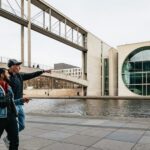
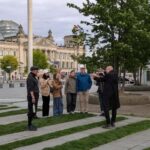

Starting at Berlin Schlossplatz: getting your bearings fast
You meet at Berlin Schlossplatz, at the U-Bahn station Museumsinsel (use the exit at the station). The guide brings a copy of the Palace Berlin Book, which gives you something to anchor your questions and curiosity to as you walk.
This first stretch is about orientation. From Museumsinsel, the palace site sits in a wider cultural landscape, and you’ll be helped to connect what you see outside with the major historical turning points that shaped the site. It’s a smart start because most people arrive seeing a single modern landmark—this tour teaches you to see the layers.
The pace is small-group friendly. With up to 10 people, you’re less likely to feel like you’re stuck behind a cluster of elbows, and you get more chances to ask follow-ups when something lands for you.
From bomb damage to a 1951 demolition plan
The story begins with the original palace’s fate during World War II. The building was bombed, but it wasn’t completely erased. That detail matters, because it means the next phase wasn’t just rebuilding from scratch—it was a deliberate reset.
Then comes the communist-era decision. In 1951, the palace was torn down by the new authorities, and the reason wasn’t subtle: they wanted a vast demonstration area. The guide’s style here is practical. Instead of treating demolition as a dramatic tragedy, you learn to see it as a political tool—space can be propaganda.
This part is valuable if you care about architecture as a language. You start to understand that in Berlin, buildings don’t just shelter people; they signal who controls public space.
The GDR-era Palace of the Republic: politics made architectural
After the demolition, the area didn’t sit empty for long. In 1975, the Palace of the GDR-Republic was built—another major statement, designed for the needs and image of the GDR.
What I like here is how the tour doesn’t treat the GDR building as an afterthought. You learn it as part of the same continuum: different regime, different message, different use of the symbolic center of the city. The guide helps you connect architecture to government priorities, from public visibility to function.
Then the narrative shifts again in 1990. The last GDR-Volkskammer closed the Palace of the Republic because of asbestos contamination. That’s one of those moments where you get a reminder that history isn’t only made by politics and conflict—health and building conditions matter too.
It also helps explain why the site’s modern future had to be planned with constraints that weren’t purely artistic.
Reconstructed baroque façades and the Humboldt Forum inside
At some point in the walk, you’ll feel the contrast: the baroque façades are now what most people see and photograph. But the tour helps you look past the “finished” look and back into the reconstruction logic.
From 2013 to 2020, the guide was involved with the project during the period when the reconstructed baroque façades took shape and when the cultural hub—the Humboldt Forum—became part of the story. That timeframe matters because it highlights how modern reconstruction isn’t one moment. It’s planning, communication, stakeholder alignment, and execution under public scrutiny.
You’ll get a full presentation of the reconstructed façades and what the Humboldt Forum represents as a cultural center in reunified Berlin. This is where the architecture-and-politics angle really earns its keep. You learn how a façade can carry debates about identity, memory, and what a nation chooses to display.
One practical note: the tour includes the Humboldt Forum area as part of your orientation and explanation, but it does not include the exhibitions inside Humboldt Forum or the other museums on the site. So if you’re hoping for a museum ticket itinerary, plan those separately.
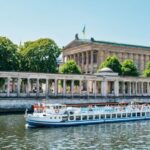


How the guide turns questions into learning (with a wink)
A good architecture tour can become a lecture. This one is more interactive, in part because it’s built around questions that people naturally have when they see a site like this.
The guide has the background to answer on two levels. If you ask about building logic—materials, style, reconstruction decisions—you’ll get clear answers. If you ask about the political intent behind the different eras, you’ll get the same clarity, because politics is in the foundation of the explanation.
The tone also seems to land well. Multiple bookings highlight that questions get answered competently and with a hint of humor. That matters, because Berlin Palace history can feel heavy if it’s delivered like a courtroom transcript. Here, it stays human.
Tip for you: come with one or two specific questions before you meet at Museumsinsel. For example, ask why later design changes were implemented in the way they were, or what the original patrons and later authorities aimed to achieve through the building language.
What you get for the $53 price
At $53 per person, this isn’t the cheapest way to see the palace area. But it’s also not priced like a generic “walk and learn the basics” tour.
You’re paying for three things that are hard to replicate on your own:
- Insider access to the modern project narrative (the guide worked on it from the beginning and later led public communications for the client/owner during the 2013–2020 stretch).
- A structured arc across eras, from WWII damage to communist demolition, then the GDR building, asbestos shutdown, and reconstruction choices.
- A small group format (limited to 10 participants), which makes real Q&A possible instead of being a one-direction presentation.
If your priority is detailed architectural and political context—why decisions were made, and how that shows up in what you see—this price starts to feel like good value. If your priority is spending time inside the Humboldt Forum museums, then you’ll likely feel under-served, because exhibitions are not included.
Who should book this Berlin Palace Insider Tour
This is a strong fit if you:
- like architecture that has a story behind it
- want context for Berlin’s political shifts, told through buildings
- enjoy asking questions and getting straight answers
- want a small-group walk that keeps moving but doesn’t rush you past key points
It may be less ideal if you’re mainly chasing museum galleries or art exhibitions inside Humboldt Forum and the on-site museums. This experience is designed around the site, the façades, and the historical narrative arc.
Also, it isn’t suitable for people over 95 years. And since it’s a guided walk around Museumsinsel, you’ll want comfortable shoes and comfortable clothes.
A quick word on expectations while you’re standing there
One reason this tour earns high marks is that it changes how you read the space. When you start, you might see a reconstructed landmark. By the end, you’re more likely to notice the “why” behind what you’re looking at: demolition intentions, GDR functions, health-related shutdowns, and the reconstructed baroque choices that shape public memory today.
You’ll also understand that reconstruction in reunified Germany was not just about copying a past look. It was about deciding what the city wants to communicate now, and how to make that message believable enough to stand in public view.
That shift in perspective is the real takeaway.
Should you book the Berlin Palace Insider tour?
If you want a 90-minute, small-group explanation that connects WWII damage, communist demolition, the GDR Palace of the Republic, asbestos shutdown, and the reconstructed baroque façades leading into Humboldt Forum, then yes, I think you should book it. The guide’s insider involvement and the architecture-plus-politics lens are exactly what make this more than a basic sightseeing walk.
Skip it only if you’re mainly looking for museum exhibition time inside Humboldt Forum and the associated museums. In that case, you’ll want a different plan for your ticketed indoor hours.
FAQ
How long is the Berlin Palace Guided Palace Tour by the Insider?
The tour lasts about 90 minutes.
Where do I meet the guide?
You meet at Berlin Schlossplatz, at the U-Bahn station Museumsinsel exit. The guide will have the Palace Berlin Book with them.
What languages are offered?
The live tour guide speaks German, English, and French.
Is the tour focused on the Humboldt Forum exhibitions inside?
No. The tour does not include the exhibitions inside Humboldt Forum, nor the Ethnological Museum, Asian Art Museum, or Berlin Museum.
What group size should I expect?
It’s a small group with a limit of 10 participants.
Is the tour wheelchair accessible?
Yes, the tour is wheelchair accessible.