REVIEW · BERLIN
Berlin: Sightseeing Tour in Classic Volkswagen T1 Samba Bus
Book on GetYourGuide →Operated by T1 Berlin · Bookable on GetYourGuide
A Berlin history lesson with 21 windows.
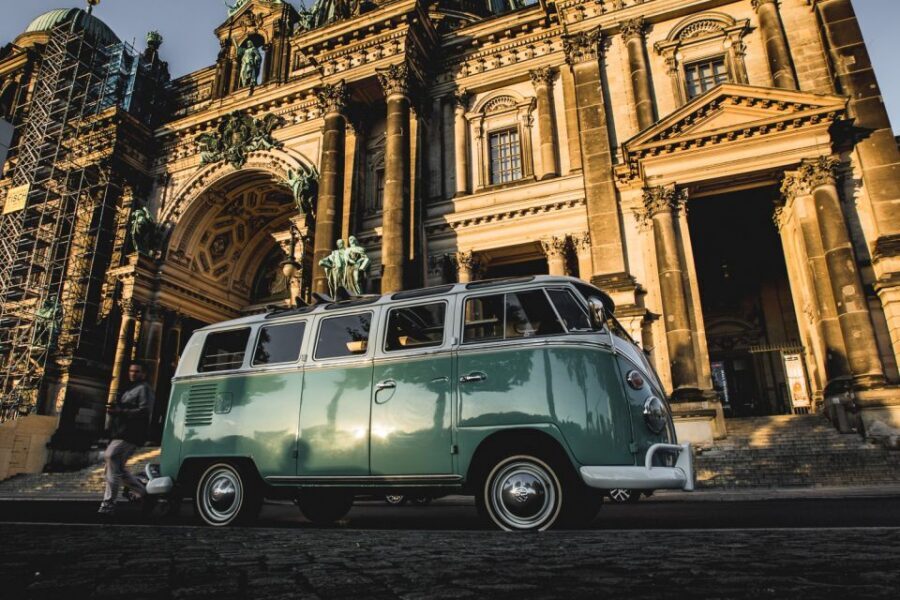
This tour turns the usual bus loop into something more fun: you ride in a restored 1965 VW T1 Samba while your guide points out how the city evolved, block by block, with live commentary and a photo booklet that helps you picture what used to be there.
I love that it’s a small group (up to 7), so the guide can actually explain details and answer questions instead of talking into the void. I also like the mix of eras you cover fast, from Berlin Cathedral to the Berlin Wall area, without it feeling like a rushed slideshow.
One thing to keep in mind: it’s only 2 hours, so most major landmarks are views from the bus, not time to go inside. If you want museum tickets or long stops, plan to build time for that later.
In This Review
- Quick take: what makes this tour special
- The restored VW T1 Samba: why the ride matters
- How the tour runs: live guide, photo booklet, and a fast-moving route
- Museum Island and Unter den Linden: the grand core you can grasp fast
- Brandenburg Gate to the Reichstag: the political Berlin window
- West Berlin landmarks: Zoo, Kurfürstendamm, KaDeWe, and the big boulevard feel
- The Cold War and divided Berlin: Wall area to Checkpoint Charlie
- Back toward the skyline: City Palace, TV Tower, and the final views
- Price and value: how $51 fits a 2-hour sightseeing plan
- Who should book this tour (and who should skip it)
- Should you book the VW T1 Samba Berlin sightseeing tour?
- FAQ
- Where does the tour start?
- How long is the Berlin VW T1 Samba sightseeing tour?
- What size is the group?
- Is the tour offered in English?
- Is the tour wheelchair accessible?
- What’s included in the price besides the ride?
Quick take: what makes this tour special
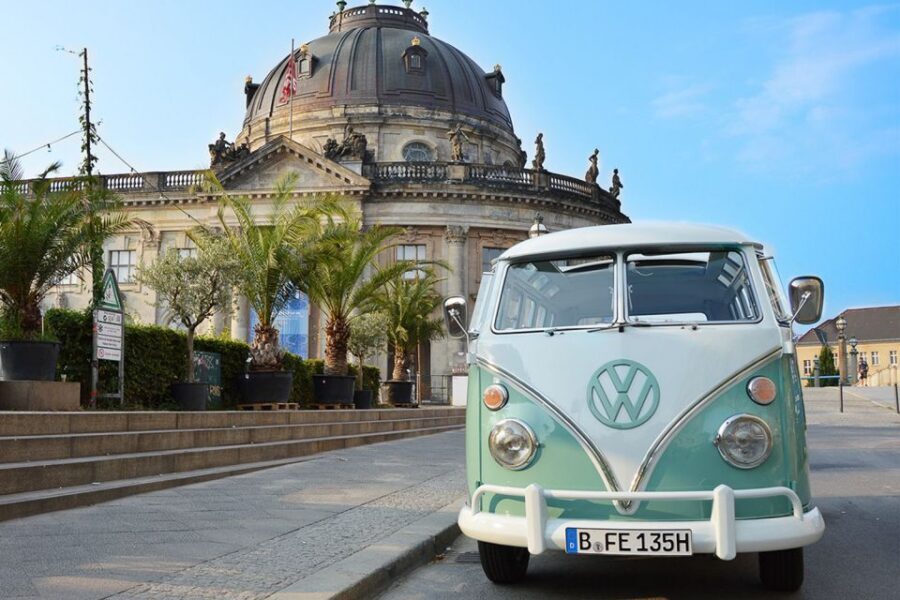
- A restored VW T1 Samba: the vehicle is part of the attraction, with great views from the windows
- 21-window storytelling: you get rolling context as you pass key buildings and squares
- Side-road routing: you don’t just sit in traffic on the biggest boulevards
- Analog photo booklet: helpful for spotting what changed over time
- A tightly packed highlights route: you’ll cover East and West landmarks in one run
- Heating when needed: a real comfort factor in winter
The restored VW T1 Samba: why the ride matters

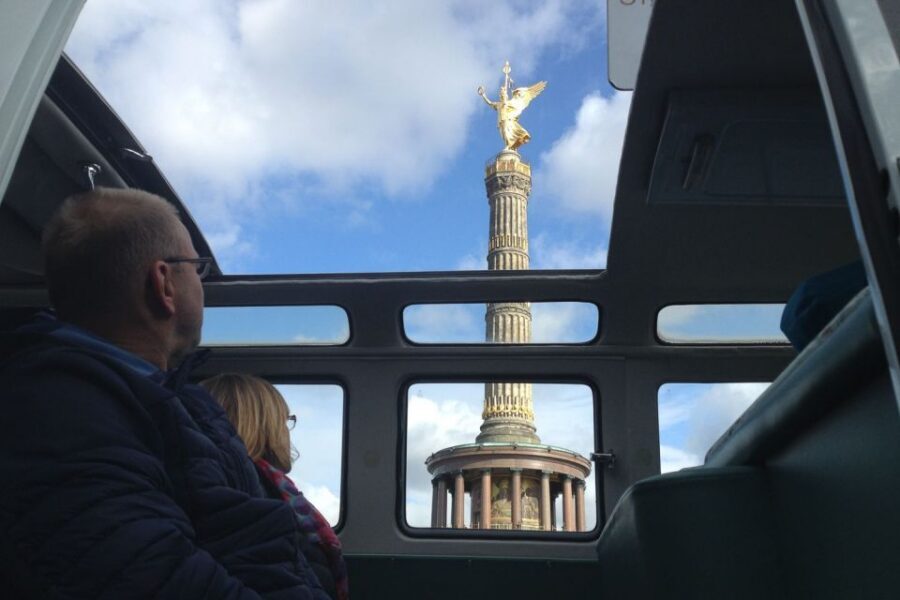
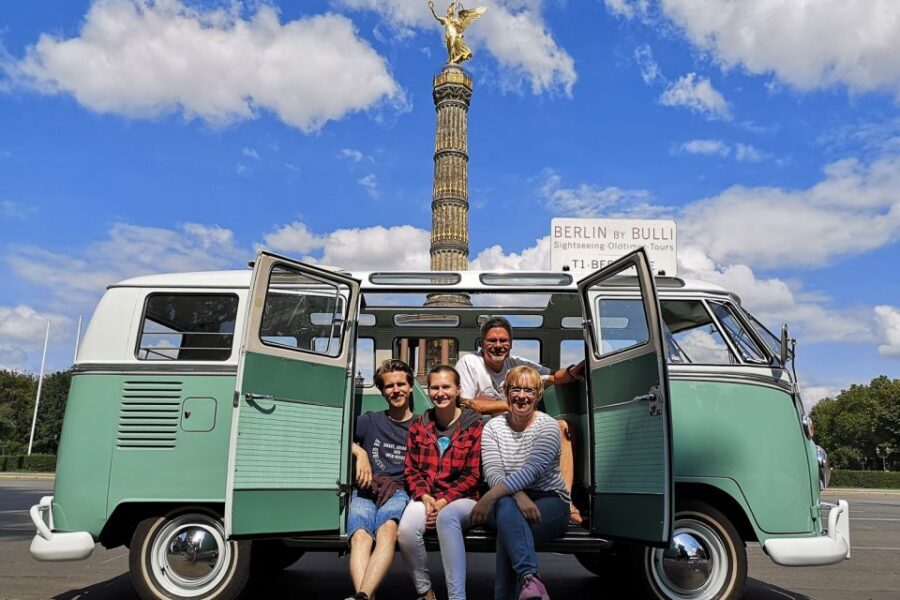
The big reason this tour feels different is the vehicle. The classic 1965 VW T1 Samba bus is built like a rolling time capsule: split-window vibes, vintage style, and a design that keeps you facing outward. That matters in a city like Berlin, where context is everything. You’re not only looking at landmarks—you’re getting guided interpretation while the streets and facades slide by.
And yes, it’s practical. With 21 windows, you can usually get a clear view no matter where you sit, which is a big deal on a short 2-hour itinerary. Plus, the bus comes with heating when necessary, which is handy because Berlin winters can be cold enough to make you regret every outdoor plan.
The other practical win: the bus is small enough to weave through side roads. That helps you see Berlin as it actually feels to walk it—narrow streets, local intersections, and less “tour-bus-only” angles.
You can also read our reviews of more tours and experiences in Berlin.
How the tour runs: live guide, photo booklet, and a fast-moving route
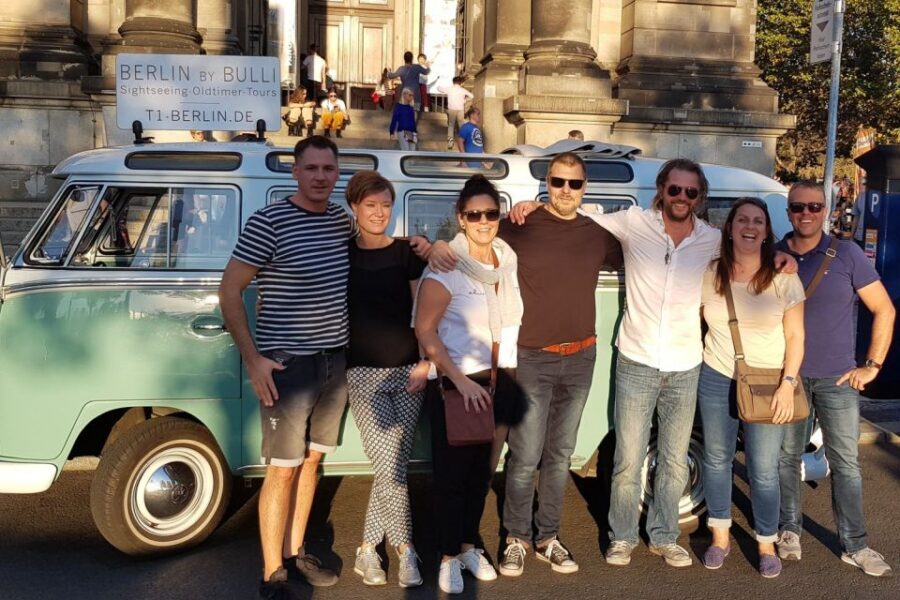
The rhythm is simple. You start at Berlin Cathedral, then you ride through the city with live commentary from your driver/guide. The guide talks while you move, so you get history in the same order you’re seeing places. It’s not just facts—it’s cause-and-effect: who built what, what changed, and why certain streets became important.
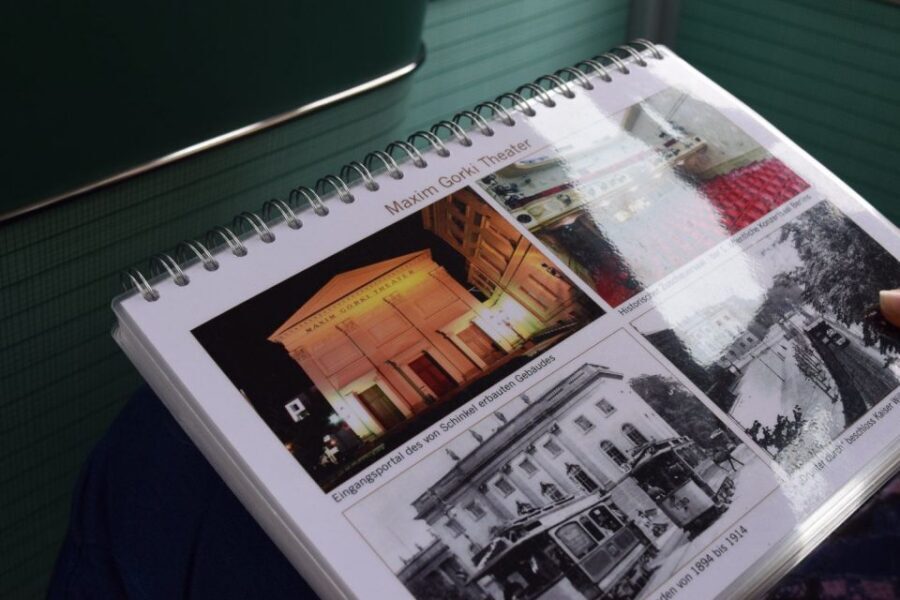
You’ll also use a photo booklet (described as an analog iPad). It’s tailored to the spots you’re passing, and the whole point is to show how the area looked in earlier days. That makes a difference at places where today’s Berlin can feel disconnected from the past. With the booklet, you can do a quick mental overlay: modern façade now, older scene then.
You should plan for a steady pace. It’s a highlights-and-context tour, not a slow walk. When traffic or crowds slow the car, you’re still learning, but you won’t have long, open-ended time at every stop.
Museum Island and Unter den Linden: the grand core you can grasp fast
This is the part of the tour that helps you understand why Berlin got so famous for big state buildings and museum-scale architecture. You start near Berlin Cathedral and roll through the governmental and ceremonial heart of the city.
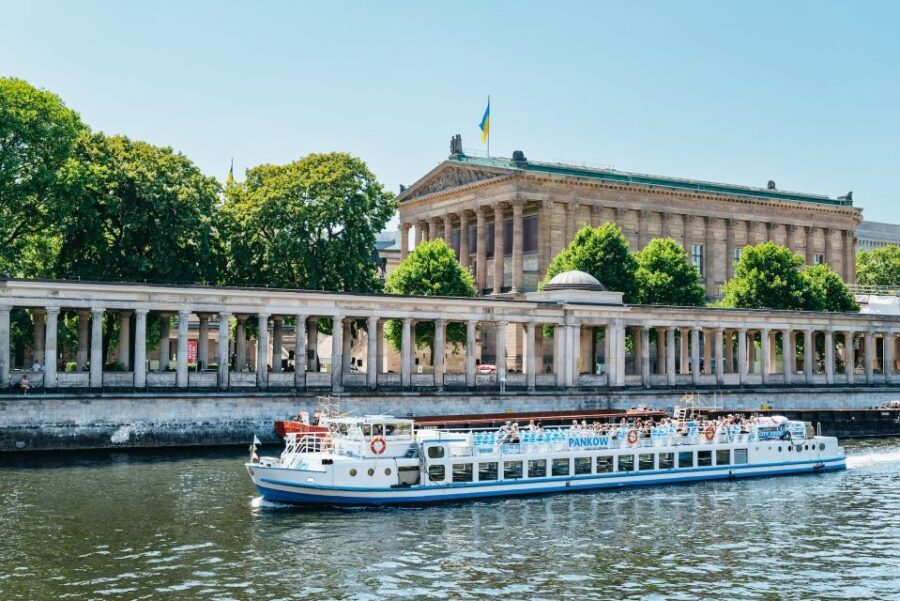
From there, you pass Lustgarten, then move along the museum cluster on the island: Alte Nationalgalerie, Neues Museum, Pergamon Museum, and Bode Museum. Even from the bus, this area reads as “Berlin the monument city.” The commentary helps you connect the buildings to the national story they’re tied to. If you’re the type who loves architecture but hates hunting down which era is which, this segment is a shortcut.
Next come more institutional stops that add texture beyond the famous museums: you pass German Historical Museum and Neue Wache, then continue toward royal and university landmarks like Crown Prince’s Palace and Humboldt University of Berlin. If you’ve heard Berlin described as a brainy city, this is where it starts to make sense.
You then glide through classic boulevard territory—Berlin State Opera, Bebelplatz, and Unter den Linden—and it’s one of the easiest ways to learn the city’s “main street logic.” The tour also takes you past Pariser Platz, setting you up for the jump toward the 20th-century political center.
One caution for this segment: the landmarks are big and photogenic, but you’re still moving. If you want perfect photos, be ready to snap quickly when your side of the bus aligns with a view.
Brandenburg Gate to the Reichstag: the political Berlin window
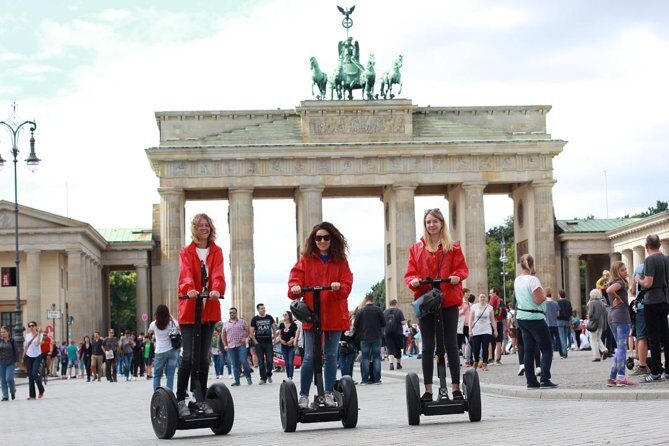
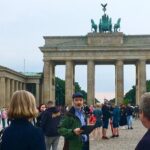
After the grand boulevard look, the tour pivots to the political landmarks that define modern Berlin. You pass Brandenburg Gate and then reach Reichstag, followed by the government district and the German Chancellery area. This is where the commentary can feel especially useful, because these buildings carry layers—imperial, war-time, division, and post-unification.
The tour also includes a drive past Berlin Hauptbahnhof and crosses key connections like Moltke Bridge. These aren’t “pretty postcard only” stops; they help explain how Berlin’s layout and transit routes tie different eras together.
As you continue, you’ll pass Kongresshalle and Bellevue Palace, plus the tall landmark zone around Victory Column (Siegessäule). This stretch is a good example of what the tour does well: it balances iconic stops with “supporting landmarks” that make the overall picture click.
If you’re sensitive to history fatigue, you might want to pace yourself mentally here. The story density is high. On the bus, it’s easy to take it all in at once—so take a breath at major transitions and let the guide’s timeline do the work.
West Berlin landmarks: Zoo, Kurfürstendamm, KaDeWe, and the big boulevard feel
Then the tour shifts to West Berlin energy. You head through the area around Scandinavian embassies and Zoologischer Garten, and the mood changes from ceremonial monumental to lively city boulevard.
You pass Theater des Westens and then travel along the shopping-and-boulevard corridor: Savignyplatz, Kurfürstendamm, Gedächtniskirche, and Tauentzienstraße. This isn’t only about seeing the famous streets—it’s about understanding how Berlin rebuilt and marketed itself across decades. The guide’s stories connect the places to that transformation.
One of the most fun stops to watch from the bus is KaDeWe—a landmark that signals “big-city West” in a single glance. After that, the tour continues into the embassy district, passes Berliner Philharmonie, and goes through Kulturforum.
Then you reach Potsdamer Platz, a key point for grasping how the city’s center reorganized itself after the split. The route through this area is a reminder that Berlin isn’t just memorials—it’s a functioning modern metropolis with major cultural and public spaces.
Tip: if it’s clear weather, this is a good stretch for photos because the avenues open up and you get more continuous sightlines from the bus windows.



The Cold War and divided Berlin: Wall area to Checkpoint Charlie
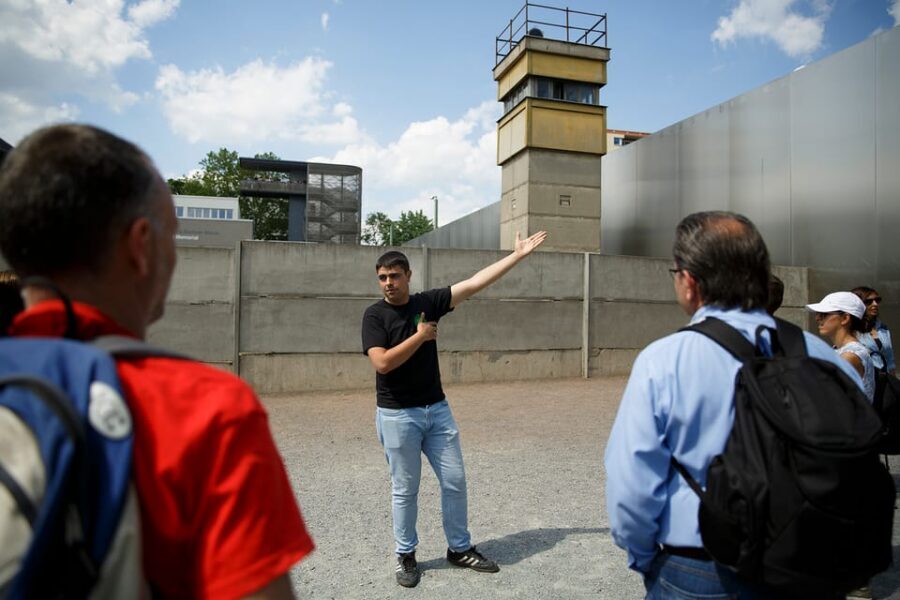
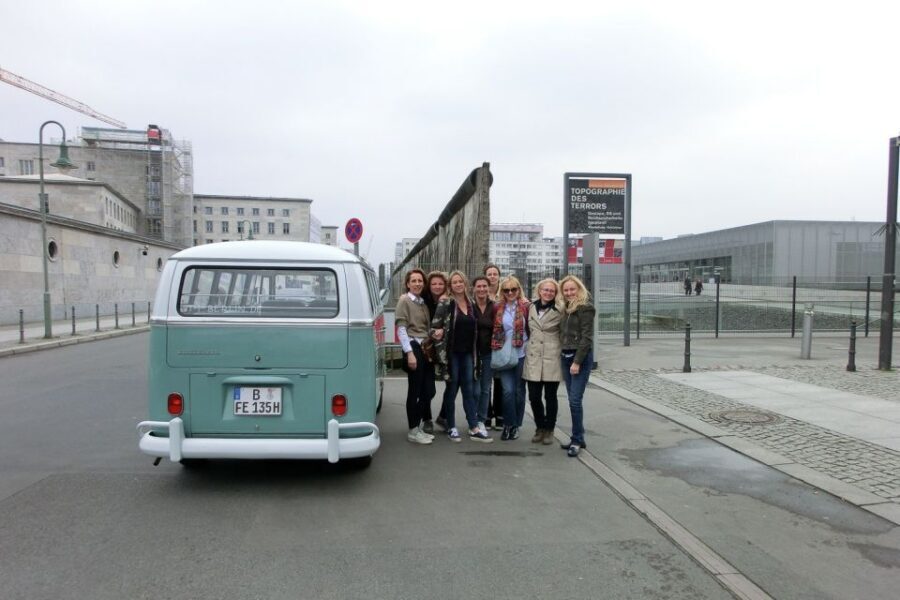
If your goal is to truly understand Berlin’s 20th-century turning points, this is the core segment. The tour brings you to Berlin Wall area viewing and then continues along streets linked to post-war conflict, surveillance, and border memory.
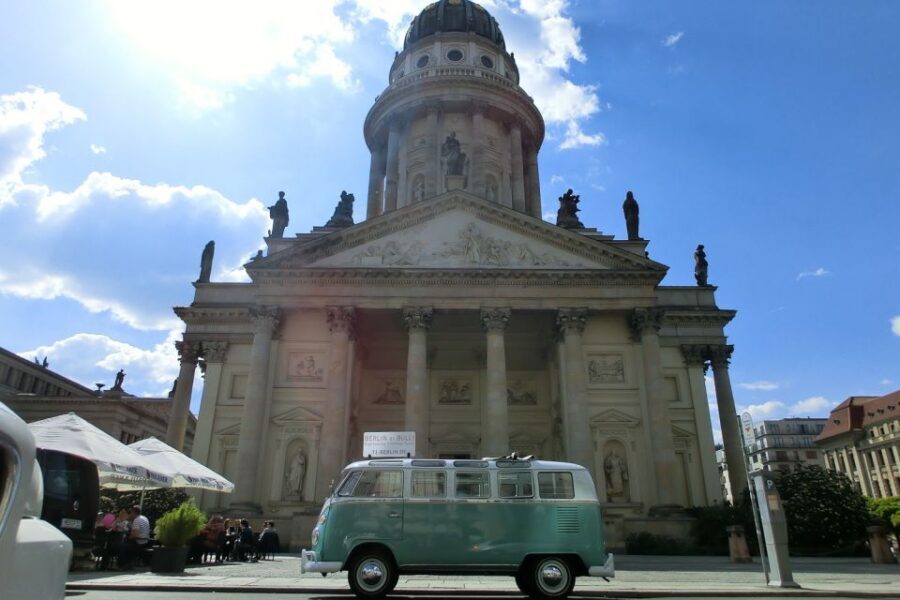
You pass Niederkirchner Straße and Anhalter Station, then reach major memorial ground like the Holocaust Memorial. From there, the route follows roads into the intense Cold War zone: Friedrichstraße, Checkpoint Charlie, and Gendarmenmarkt.
The itinerary also includes stops that are especially heavy but important—Führer Bunker and the Reich Chancellery area. You don’t need to be a history nerd to feel why these stops matter. The guide’s job here is to connect the dots so it doesn’t become a list of names.
A small practical note: because the theme is serious, keep your expectations realistic. You’re getting visual passing views, not a full museum-style experience. Still, for many people, the value comes from getting the narrative structure right—so later, when you explore on your own, you know what to look for.
Also, since the bus is moving, plan your photos with care. At memorial sites, don’t treat it like a sightseeing sprint. Let the commentary set the tone.
Back toward the skyline: City Palace, TV Tower, and the final views
After the Cold War zone, the tour loops back through central areas with landmarks that help you see present-day Berlin clearly. You pass Berlin City Palace and cross toward Jungfern Bridge, then continue along smaller but telling stops such as Galgenhaus.
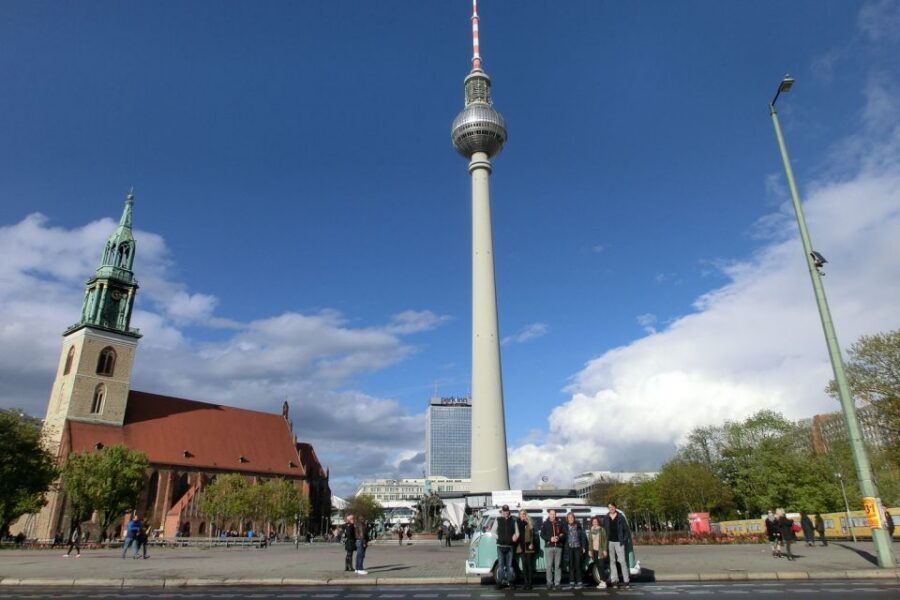
You also pass Rotes Rathaus, a classic symbol of civic power, and then head toward the skyline area with TV Tower (Fernsehturm). If you want an easy “Berlin final act” view, the TV Tower segment is a good one because the city opens up around it.
The route then includes Neptune Fountain (Neptunbrunnen) and finishes near St. Mary’s Church (Marienkirche) back at the starting area near Berlin Cathedral. That closing loop is useful: it helps you connect the starting museum/cathedral zone with the end skyline view, so your mental map of Berlin feels more complete.
Price and value: how $51 fits a 2-hour sightseeing plan
At $51 per person for 2 hours, the value comes from two places: small-group time and a guide-driven route. You’re not paying for a generic route with dead commentary. You’re paying for live context, a vintage vehicle, and a structured way to cover a lot of “must-know” sites in a short window.
This can be a smart spend if:
- you want a first-pass orientation tour early in your trip
- you’re trying to decide where to return for a longer stop
- you hate sorting out Berlin’s timeline on your own after a long flight
It’s also worth noting the bus is designed for comfort, and the presence of heating when needed is a real part of the value, especially in winter. The bus itself tends to get people talking the whole time—so even waiting for traffic feels less annoying.
If you’re the type who only likes tours when you can hop out and wander for a long time, this one may feel like less of a match. It’s built for moving views and narrative guidance.
Who should book this tour (and who should skip it)
This tour is a strong fit for:
- people who want Berlin’s big story in one run
- history-minded travelers who learn best when facts come in context
- couples, friends, and small groups who like the intimacy of up to 7 participants
- anyone who appreciates design and enjoys the novelty of a classic VW T1 Samba bus
A few practical “not for you” notes based on the stated limitations:
- it’s not suitable for people with epilepsy
- it’s not suitable for people with a cold
- it’s not suitable for people over 275 lbs (125 kg)
- intoxication isn’t allowed
- glass objects aren’t allowed
- non-folding wheelchairs aren’t allowed (wheelchair access is listed, so this is about specific chair type)
If you’re traveling with a lot of mobility gear, it’s worth thinking through the restrictions before you book.
Should you book the VW T1 Samba Berlin sightseeing tour?
I’d book it if you want an efficient way to get your bearings and understand Berlin’s layers—royal and imperial grandeur, modern political symbols, and the Cold War scars—without spending days piecing it together.
Skip it if your ideal Berlin day is long museum time, frequent stops, and slow wandering. This tour is for getting the big map in your head fast, then using that map to explore on foot afterward.
If you’re unsure when to go, a great strategy is to do it early. The sooner you learn the city’s layout and major landmarks, the easier it becomes to choose what to see next.
FAQ
Where does the tour start?
It starts at Berlin Cathedral.
How long is the Berlin VW T1 Samba sightseeing tour?
The tour is 2 hours.
What size is the group?
It’s a small group limited to 7 participants.
Is the tour offered in English?
Yes. The live commentary is available in English and German.
Is the tour wheelchair accessible?
Yes, it is listed as wheelchair accessible, but non-folding wheelchairs are not allowed.
What’s included in the price besides the ride?
The price includes transportation in the Volkswagen T1 Samba bus, a driver/guide with live commentary, a photo booklet, and heating when necessary.