REVIEW · BERLIN
Rude Bastards tour of Berlin (CYHIT)
Book on Viator →Operated by Rude Bastards Tour Berlin · Bookable on Viator
Berlin’s big turning points fit into one walk. This tour strings together places tied to the Nazi era, the Holocaust, and the Cold War, with guides who tell the story fast, funny, and (when it needs to be) serious. Names you may hear in the guide lineup include Kai, Alex, Arthur, Frey, Nichole, Anna, Jason, and Felix, and they’re repeatedly praised for making heavy material feel human.
What I love most is the way it hits major landmarks in a tight route, so you get your bearings fast. I also like the small-group feel, with just up to 10 people, plus a built-in break so you can reset halfway through. One possible drawback to consider: the tour is clearly built for adults who can handle off-color jokes and strong language, so it may not match your style if you want a quiet, museum-tone experience.
In This Review
- What you’re really buying for the price
- Key highlights at a glance
- The route makes sense: Potsdamer Platz to Bebelplatz on foot
- The guides: banter first, respect when it counts
- Tiergarten and the Soviet memorial: Berlin seen through power and aftermath
- Reichstag area to Brandenburg Gate: seeing the center of the German story
- The Holocaust Memorial stop: what to plan for at the Memorial to the Murdered Jews of Europe
- Führerbunker (Fuhrerbunker) area: the final months explained
- Checkpoint Charlie and the border story: from customs control to symbol
- The built environment after the war: Luftwaffe HQ, Jewish memory, and Berlin’s “in-between”
- Break time at the mall: why that pause is smart
- Gendarmenmarkt, Bebelplatz, and Museum Island: finishing with classic Berlin
- Value check: what $3.63 per person buys you in real terms
- Who should book this tour
- Should you book Rude Bastards tour of Berlin
- FAQ
- How long is the Rude Bastards tour of Berlin?
- Where does the tour start and end?
- Is the tour offered in English?
- How large is the group?
- Do I need an entrance ticket for all stops?
- What ticket do I receive?
- Is there a break during the tour?
- Is the tour suitable for adults only?
- Is public transportation nearby?
- What is the cancellation policy?
What you’re really buying for the price
The price is listed at $3.63 per person, and for that, you’re getting a long, guided orientation through central Berlin rather than a single-site visit. You also get a mobile ticket, and the tour runs in English, with most people able to join as long as you’re good with a decent amount of walking.
If you’re sensitive to rough banter, keep that in mind. But if you want a walk that explains Berlin’s hard chapters without turning into a textbook, this is a very good deal.
Key highlights at a glance
- Up to 10 people means less waiting and more space to ask questions
- A route packed with iconic stops from Potsdamer Platz to Bebelplatz
- Two free ticket points called out along the way: Brandenburg Gate and the Führerbunker area
- The Holocaust Memorial is not included in the tour’s admission, so plan for that
- Guides mix jokes with respect, using humor to keep you focused where other tours may drag
- A scheduled 20-minute break at a Berlin mall to keep energy up
You can also read our reviews of more tours and experiences in Berlin.


The route makes sense: Potsdamer Platz to Bebelplatz on foot
This tour starts at Potsdamer Platz and ends at Bebelplatz, on Unter den Linden. That matters because central Berlin is built for walking between major eras. You’re not doing a random shuffle between far-flung stops. Instead, you get a long but logical path that moves you from the city’s modern crossroads into the layered story of 20th-century Berlin.
You’ll see the kind of skyline changes that come from rebuilding. One moment you’re near government-facing architecture like the Reichstag area, and the next you’re walking through the zones that became symbolic borders. It’s the kind of route where your brain starts organizing Berlin by theme, not just by postcard location.
Expect roughly 3 hours 15 minutes of guided time, and a small break partway through. People describe it as straightforward walking, and Berlin is famously flat, so you’re not climbing stairs every ten minutes.
The guides: banter first, respect when it counts
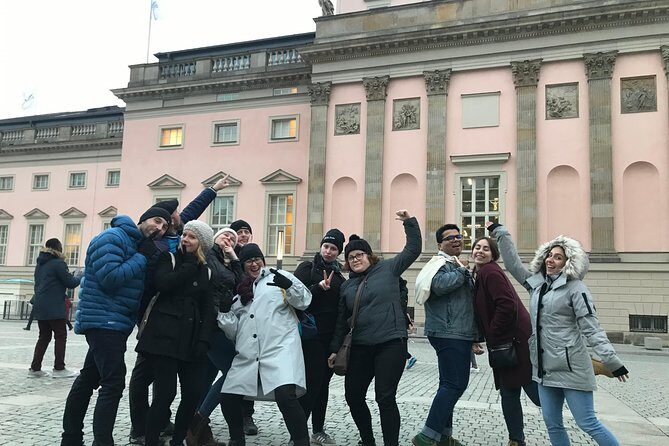
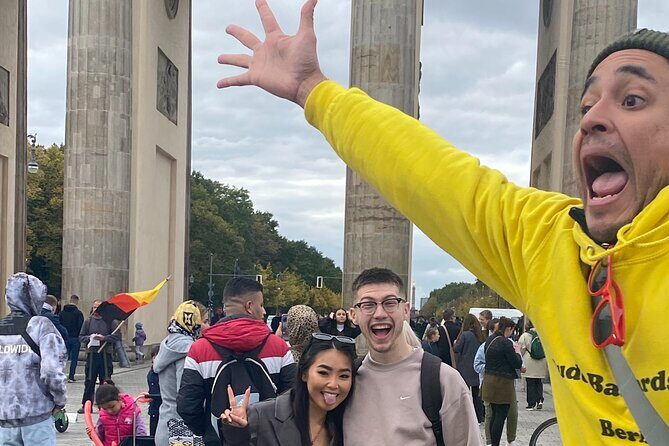
Rude Bastards is known for being irreverent, and that personality shows up in the walking style. Multiple guides are singled out for being funny without steamrolling the seriousness. In reviews, guides like Kai, Alex, Arthur, Nichole, Anna, Jason, and Felix are praised for keeping energy up, answering questions, and switching tone when the subject turns grim.
Here’s the practical way to think about it: this is not a silent, reverent tour. It uses jokes and a fast conversational rhythm to keep attention. When you hit memorial or war-related sites, the guidance becomes more careful and serious. You’ll likely feel like you’re hearing a city story from a sharp local friend, not sitting through a scripted monologue.
If you want humor and profanity in the mix, you should fit right in. If you want everything sanitized, you may feel like the tour’s style is “too much.”
Tiergarten and the Soviet memorial: Berlin seen through power and aftermath
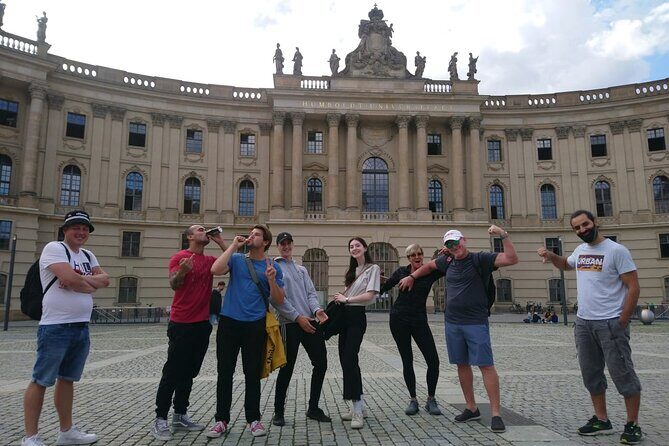
Early on, you move toward Berlin’s central green space, Tiergarten. It’s a useful starting point for this tour because it’s not just pretty parkland. In Berlin, nature sits beside political history, so walking through Tiergarten gives you a visual reset while the guide anchors you in the era being discussed.
Then you reach a WWII memorial tied to Soviet soldiers, described with statues, tanks, and an obelisk. That specific mix matters. Tanks and large sculpture turn the site from a simple plaque into a physical statement. It’s the kind of place where the guide’s job is to translate scale and symbolism, so you don’t just walk past impressive objects without understanding why they’re there.
A drawback here: because memorial grounds can feel emotionally heavy and because the tour keeps moving, you need to mentally switch gears on the fly. If you prefer slower contemplation, you may want to take a moment before and after the guided segment.
Reichstag area to Brandenburg Gate: seeing the center of the German story
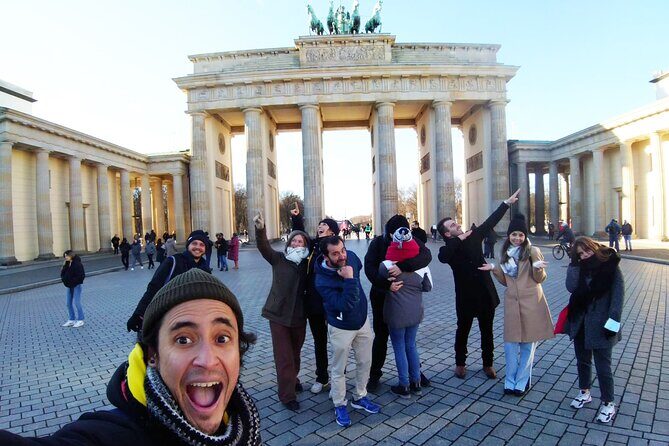
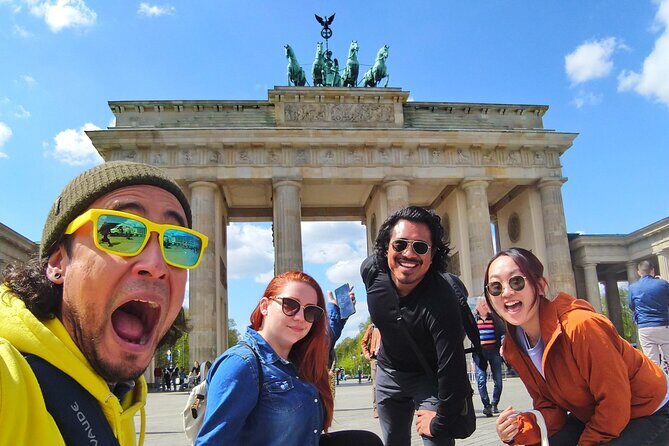
The route then brings you through the Reichstag and toward Brandenburg Gate. Brandenburg Gate is treated as a centerpiece for a reason: it’s a main landmark and historically important “entrance” to the city’s story. The tour includes a dedicated stop with 15 minutes at Brandenburg Gate, and the admission is listed as free.
What I like about placing this stop early is that it gives your day a reference point. After you’ve walked through Cold War and war themes, Brandenburg Gate can start to feel like more than architecture. It becomes a divider between eras, something you can compare to later sites on the route.
You’ll also get context tied to how Berlin changed hands and ideologies. Even if you’ve walked by Brandenburg Gate before, having someone connect it to the timeline makes it click.




The Holocaust Memorial stop: what to plan for at the Memorial to the Murdered Jews of Europe
Next is the Memorial to the Murdered Jews of Europe (often called the Holocaust Memorial). The tour includes 10 minutes here, with admission marked as not included.
That “not included” detail is more than paperwork. It’s a heads-up that you should expect extra steps or payment on site, depending on how entry works when you go. If you show up without planning, you can end up waiting while your group moves on.
What you’ll get in the guided time is a focus on what the space is asking you to think about, plus the historical framing that gives the memorial weight beyond its design. This is one of those stops where the guide’s tone is critical, and reviews note that some guides make room for serious conversation instead of just cracking jokes straight through.
If you want a reflective pace, treat the guided minutes as the starting point and plan to linger on your own afterward.
Führerbunker (Fuhrerbunker) area: the final months explained
Then comes the stop labeled Fuhrerbunker, where Hitler spent his final three months, with 10 minutes allotted and free admission listed. The point of this stop on a walking tour is simple: it gives you a concrete location for an era that’s often discussed in abstract terms.
You’re not touring a preserved bunker museum here in the details provided, so don’t expect a guided underground walkthrough based only on this information. Instead, think of it as a “where it happened” stop. The guide’s explanation is what turns the spot into understanding, linking it to the collapse of the Nazi regime and the chaos of Berlin’s final phase.
A consideration: this can be intense. If you’re easily overwhelmed by war-related sites, you may want to carry a little extra water and take five slow breaths before you move on.
Checkpoint Charlie and the border story: from customs control to symbol
One of the most important cultural learning moments on this kind of route is how Berlin’s borders shaped everyday life. This tour includes an old customs checkpoint between Soviet and American sectors, which is framed around what later became known as Checkpoint Charlie.
The value here is context. If you only know Checkpoint Charlie from photos, you miss the reality that it was an operational border point, not just a tourist photo spot. When your guide ties it to the larger Cold War power structure, the place stops feeling like a theme park and starts feeling like a hinge in history.
You also get adjacent sights while moving through this area. The tour route includes the Berlin Wall segment on the walk, plus nearby checkpoints and political markers. Together, these stops help you understand how physical barriers became political language.
The built environment after the war: Luftwaffe HQ, Jewish memory, and Berlin’s “in-between”
You’ll also pass by or reference locations like Luftwaffe HQ and the Jewish memorial earlier in the route. Even when you don’t go inside buildings, the exterior context helps you see how Nazi Germany’s infrastructure and the post-war reworking exist side by side.
This is where walking shines. From the sidewalk, you can notice scale differences and the way streets were laid out for earlier power centers. A guide can point those things out quickly so you’re not left wondering why one corner feels “more official” than another.
If you like architecture and want to connect it to politics, this part of the tour is a good fit. If your focus is only on the biggest photography targets, you might feel like the route is moving too fast through the supporting background. That’s just the tradeoff of a compact walk.
Break time at the mall: why that pause is smart
Mid-route, the tour includes a 20-minute break at a Berlin mall. It’s not a glamorous stop, but it’s a practical one. After a few hours of moving and listening, you want a reset for your legs and your attention.
In your own planning, think of this as your best moment to refill water, use restrooms, and regroup. If the weather is wet or cold (Berlin can be that way), this break also gives you shelter without breaking the tour’s rhythm too much.
Gendarmenmarkt, Bebelplatz, and Museum Island: finishing with classic Berlin
As the tour nears the end, it moves toward Gendarmenmarkt, Bebelplatz, and Museum Island. These are more “city postcard” stops than the war-and-border points, and that’s exactly why they work at the end.
You get the contrast you need: memorial sites and historic conflict points earlier in the day, then a calmer, more architectural finish. It’s a shift that helps your brain process the earlier heaviness instead of carrying it the whole walk to the finish line.
Bebelplatz and the Unter den Linden area also give you a strong end point. The tour finishes near there, so you can transition easily into independent time for lunch, museums, or just more wandering.
Value check: what $3.63 per person buys you in real terms
The listed price is $3.63 per person, which is strikingly low for a 3+ hour guided walking tour that covers major Berlin landmarks and multiple historical themes. Based on the structure of the day, the value comes from three places.
First, the tour is concentrated. You’re not spending half the day commuting between distant sites. Second, the group size is capped at 10 travelers, so the experience doesn’t depend on a large crowd. Third, the tour includes built-in time at several major points like Brandenburg Gate (free, 15 minutes) and the Führerbunker area (free, 10 minutes), plus the Holocaust Memorial stop (10 minutes, admission not included).
The main place where value can feel uneven is admissions. Only some stops are marked free. If you end up paying for the Holocaust Memorial entry on top of the tour price, your total spend goes up. Still, you’re paying for someone to connect the dots across the city in a short window, not for isolated sightseeing.
Who should book this tour
This tour is a strong match if you:
- Want a first-time Berlin orientation that links the city’s landmarks to WWII and Cold War events
- Like humor that stays within respectful boundaries when it matters
- Prefer a conversational pace over lectures
- Can handle adult-style language
It may be less ideal if you:
- Need a quiet, fully reverent tone for memorial sites
- Don’t want any profanity or off-color jokes in your tour experience
- Get overwhelmed easily by war-focused locations without extra downtime
Should you book Rude Bastards tour of Berlin
I’d book it if you want your Berlin introduction to be energetic, practical, and specific, not vague. The route covers a lot of ground in one sitting, and the small group size helps the guide keep momentum without leaving people behind. The combination of major icons like Brandenburg Gate and Checkpoint Charlie, plus major memory spaces like the Holocaust Memorial, makes this more than a “see the sights” walk.
Just go in with the right expectations. This isn’t a polished silence tour. It’s an irreverent street history tour with respect when it counts. If that sounds like your kind of Berlin, it’s an easy yes.
FAQ
How long is the Rude Bastards tour of Berlin?
It’s listed at about 3 hours 15 minutes.
Where does the tour start and end?
It starts at Potsdamer Platz 10, 10785 Berlin, Germany and ends at Bebelplatz, Unter den Linden, 10117 Berlin, Germany.
Is the tour offered in English?
Yes, it is offered in English.
How large is the group?
The tour has a maximum of 10 travelers.
Do I need an entrance ticket for all stops?
No. Brandenburg Gate and the Führerbunker area are listed as free. The Memorial to the Murdered Jews of Europe is listed as admission not included.
What ticket do I receive?
You get a mobile ticket.
Is there a break during the tour?
Yes. There’s a 20-minute break at a Berlin mall.
Is the tour suitable for adults only?
Yes. It’s for adults of 18 years of age and above.
Is public transportation nearby?
Yes, it’s near public transportation.
What is the cancellation policy?
Free cancellation is available up to 24 hours in advance for a full refund. If you cancel less than 24 hours before, the amount paid is not refunded.