REVIEW · BERLIN
Berlin Wall Self-Drive Trabi Tour
Book on Viator →Operated by East Car Tours GmbH & Co. KG · Bookable on Viator
Riding a Trabant through Cold War Berlin is surreal. I love the manual-shift challenge and the live radio narration that makes the route click fast, and you still get a souvenir Trabant driver’s license even if you ride. The one real drawback: Berlin traffic can feel busy in a tiny, basic car with no modern driver aids.
You meet at TrabiWorld, pick your car color on a first-come basis, then roll out in a small convoy with your guide leading the way. I like that you can either drive or take a ride, so you still get the full Berlin Wall story even if shifting gears isn’t your thing today.
One more thing to plan for: the cars are manual only, and anyone driving needs evidence of a driver’s license for non-automatic cars. If that’s not you, you’re fine—just choose the ride option and enjoy the city from the back seat.
In This Review
- Key points that matter before you go
- Meeting TrabiWorld and choosing your Trabant
- Manual shift reality check on Berlin streets
- The convoy setup and how the guide keeps you together
- Stop-by-stop: Cold War sights you’ll actually ride past
- From the central intersection to historic city power spots
- East Side Gallery murals and the Berlin Wall remnant
- TV Tower square, a former border crossing, and division memorials
- Souvenir souvenir time: the Trabant driver’s license
- Comfort, weight limits, and the real-world bits
- Price and value: why this costs about $119.48
- Who should book a Berlin Wall Trabi tour (and who should skip)
- FAQ
- FAQ
- Is the tour offered in English?
- How long is the Berlin Wall Self-Drive Trabi tour?
- Where do I meet the guide?
- Do I have to drive, or can I ride?
- Are the Trabant cars automatic?
- What souvenir do I get at the end?
- How many people are in each Trabant?
- Should you book this Trabi Wall tour?
Key points that matter before you go
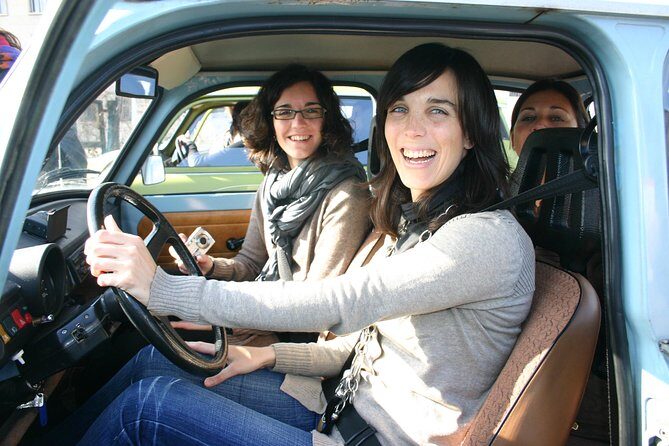
- Manual-only Trabant cars: you’ll shift a classic column-mounted stick, with Berlin streets doing the rest.
- You don’t miss the story: the guide talks to you over a radio system, not just from the front seat.
- Souvenir license included: you take home your own Trabant driver’s license even as a passenger.
- Berlin Wall highlights, not just a photo stop: the route includes key Cold War sites and finishes at the East Side Gallery mural stretch.
- Small groups: max 12 travelers, and only four people per vehicle, so it stays controlled.
- Traffic + exhaust are real factors: the car is open enough that you may notice exhaust when cars crowd together.
Meeting TrabiWorld and choosing your Trabant
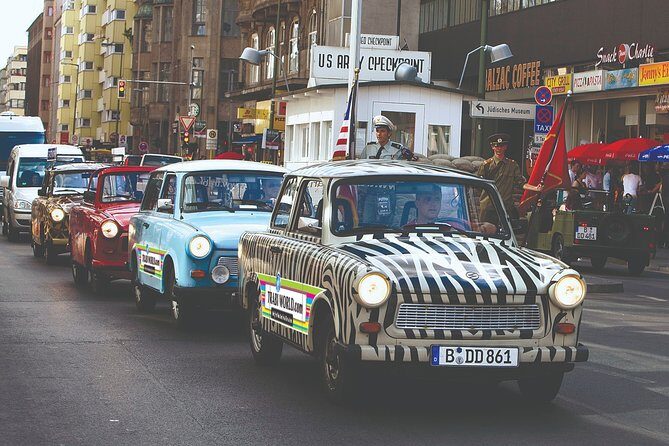
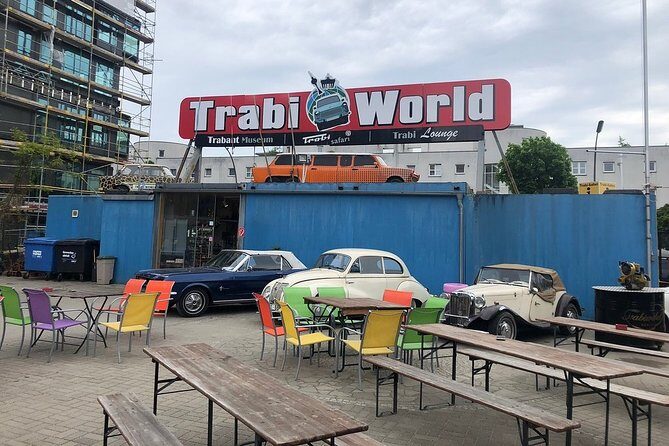
Your tour starts at TrabiWorld Berlin on Zimmerstraße (97–100, 10117 Berlin). The practical magic here is that you’re not just watching history—you’re climbing into a real East-German workhorse and steering it through modern Berlin.
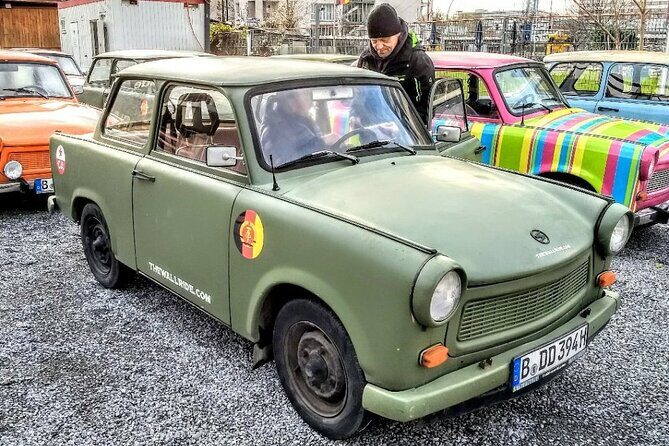
Check-in is straightforward. After you meet your guide, you go through a safety briefing and then select a colorful Trabant. Car colors are first come, first served, so don’t show up late if a specific color matters to you. Once you’re set, you’ll join the convoy and hit the road.
A nice detail: the cars are small on purpose. You can feel it in the tight dimensions and the basic driver setup. One review-style reality check you’ll appreciate: these are not “tour cars” with cushions and comforts. Expect an old-school feel—like a column-mounted gear stick and mirrors that don’t do modern perfection.
You can also read our reviews of more tours and experiences in Berlin.



Manual shift reality check on Berlin streets
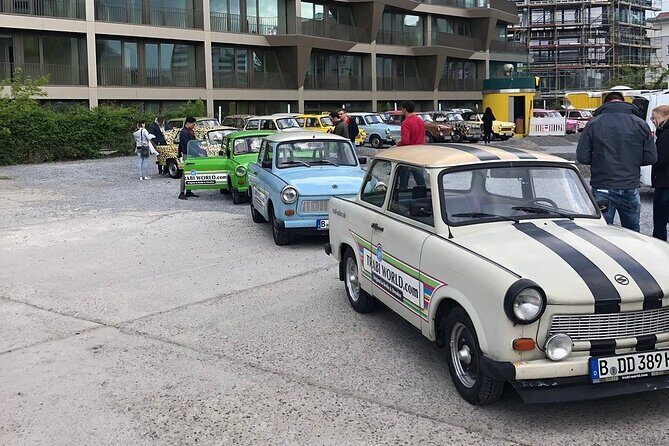
Let’s talk driving honestly, because this is the make-or-break feature. Every Trabant on this tour is manual shift only, no automatics. That means you need confidence with gears, at least enough to take off, stop, and keep moving with traffic.
If you’re used to driving stick, you’ll still feel the difference. There’s a reason people get a little nervous at first. Reviews point out the car’s light, basic feel: no power steering, and brakes that aren’t servo-assisted. That doesn’t make it unsafe—just different. It’s the kind of difference that takes a few minutes to adjust to.
Also, you’re driving in real Berlin traffic: cars, bikes, scooters, and pedestrians. This isn’t a quiet industrial loop. You’ll learn quickly that the goal isn’t to race anywhere. The goal is to keep your place in the convoy and make careful turns.
If you’re an anxious driver, you’ll be happier choosing the ride option. The tour is built so non-drivers still get the full guided experience. And if you start driving and decide you’d rather switch, the setup makes that possible during the tour.
The convoy setup and how the guide keeps you together
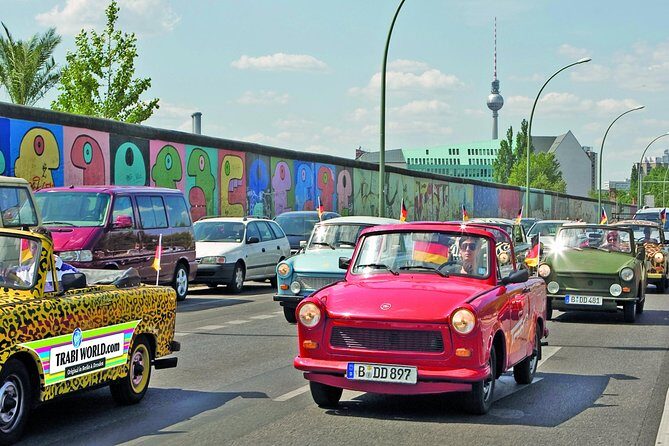
This is not a “drive around and hope” situation. Your guide leads the convoy and controls the rhythm of the group. You’ll get route guidance and history context while you’re moving, which matters because Berlin can be overwhelming if you’re only exploring on your own.
One of the most praised elements is the radio system. That means even if you’re in the back seat, you can hear the guide instead of guessing based on what you see. It also helps when traffic forces little gaps between cars. The guide can keep everyone pointed in the same direction and maintain the schedule.
You’ll likely meet a guide who gives history in a way that feels practical and story-driven. Names that have shown up in people’s experiences include Heinrich and Tomas. The common thread is clear narration and patient help—especially with drivers who need a moment to catch up.
Stop-by-stop: Cold War sights you’ll actually ride past
This tour is built around a “see it from the street” approach. Some stops are short, so think of them as quick hits that place you geographically, then let you return later on foot if you want to linger.
From the central intersection to historic city power spots
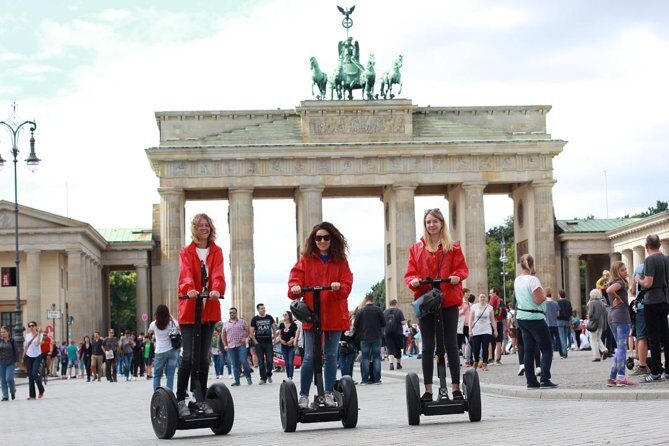
Early on, you’ll pass through a major public square and traffic intersection in the center of Berlin—the kind of place that helps you understand how Berlin’s modern street grid sits atop the city’s divided past.
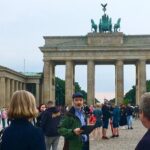
Then you’ll glide by an 18th-century neoclassical monument and the Red Town Hall from 1870. These aren’t random landmarks. They help you anchor what you’re seeing to real governance and civic life—then you layer the Cold War context over it.
A subtle drawback: because the cars are vintage and small, you won’t be pulling over for long photo sessions every time you see something tempting. Keep your phone ready, but don’t expect a leisurely stroll between every viewpoint.






East Side Gallery murals and the Berlin Wall remnant
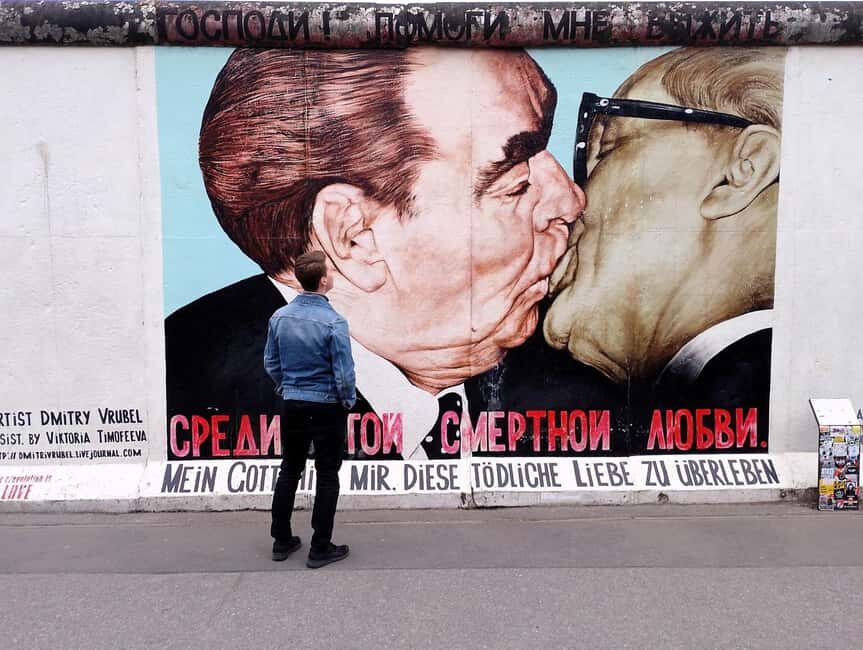
The highlight for many people is the East Side Gallery, an open-air mural collection painted directly on a remaining 1,316 m stretch of the Berlin Wall. This is where the tour becomes emotional and visual. Even if you’ve read about the Wall before, seeing it in person—and seeing art built onto it—lands differently.
The stop is brief, so come prepared with two goals:
- Get the big photos fast.
- Then zoom in mentally—mural themes are easier to catch when you’re not racing the clock.
If you care about architecture and urban history, this is where the tour justifies itself. You get the Wall context from the guide while you’re still in a “moving” mindset, so the place feels connected rather than isolated.
TV Tower square, a former border crossing, and division memorials
Along the route you’ll also pass by:
- a public square famous for the TV tower
- a former border cross point
- a central memorial site about German division, located in the middle of Berlin
These stops matter because they show the Wall wasn’t only a barrier—it was an urban system. The TV tower area helps you understand how Berlin’s skyline evolved during division. The former border crossing and central memorial give you the human scale: where people were checked, where the city’s flow was restricted, and where the division’s impact is remembered.
The main “watch out” here is time. The tour gives you a good orientation, not a full museum replacement. If you want extra time at the memorial or want to read every plaque, plan to extend your day after the drive.
Souvenir souvenir time: the Trabant driver’s license
One of the most charming features is the souvenir Trabant driver’s license. You get one to take home even if you aren’t the driver of your vehicle.
This is more than a gimmick. For a tour built around a small mechanical car and a tight route, the license gives you a tangible memory you can keep in your travel files. It also signals the spirit of the experience: it’s okay if you’re not a perfect driver. The point is the story and the ride.
Comfort, weight limits, and the real-world bits
This tour is small by design—max four passengers per Trabant and a weight limit listed at 350 kg per vehicle. That matters if you’re traveling with multiple adults or if anyone in your group has mobility gear or larger luggage. In practice, keep your setup light and expect a tight fit.
The “comfort” category is also about the car’s age. One helpful warning from real experiences: if the car ahead is close, you may notice exhaust in your area of the convoy, sometimes enough to be irritating. You can’t change Berlin traffic, but you can reduce discomfort by staying aware of spacing and ventilation in the car.
If you’re sensitive to noise or smells, dress with that in mind—bring a scarf or something simple to protect your throat if you’re prone to irritation.
Price and value: why this costs about $119.48
At $119.48 per person for roughly 2 hours 15 minutes (about a little over two hours), this tour isn’t trying to be cheap. It’s paying for three things at once:
- a live English-speaking guide
- transport by Trabant (a rare vehicle in a normal city day)
- a guided route that connects Cold War landmarks into one coherent loop
Compared with walking tours, the value is the physical experience. You’re seeing Berlin from a perspective that forces you to slow down and pay attention to turns, distances, and street geography. It’s easier to remember a city when you’ve navigated it—gently, carefully—in a tiny car.
Also, it’s in demand. The average booking window is about 25 days in advance, so if Berlin is busy in your travel month, don’t wait until the last day.
Who should book a Berlin Wall Trabi tour (and who should skip)
This is a great fit if you want a first-day Berlin orientation with a hands-on twist. It works well for people who like interactive experiences, photo moments, and a guided history refresher without feeling like you’re trapped in a classroom.
Choose it especially if:
- you like quirky, authentic vehicles
- you want Cold War landmarks tied to real street movement
- you’re fine with a short, efficient route rather than long stops
- you’re traveling with someone who might appreciate switching between driving and riding
Consider skipping or choosing the ride option if:
- you’re not comfortable with manual transmission
- you get stressed in dense traffic
- you need long quiet breaks at each site
FAQ
FAQ
Is the tour offered in English?
Yes. The tour is offered in English.
How long is the Berlin Wall Self-Drive Trabi tour?
It runs about 2 hours 15 minutes.
Where do I meet the guide?
You meet at TrabiWorld Berlin, Zimmerstraße 97–100, 10117 Berlin. The tour ends back at the same meeting point.
Do I have to drive, or can I ride?
You can do either. The experience is set up for a self-drive feel, but you can also ride with the guide leading the convoy.
Are the Trabant cars automatic?
No. The cars are manual shift only, and anyone driving needs evidence of a driver’s license suitable for non-automatic cars.
What souvenir do I get at the end?
You take home a souvenir Trabant driver’s license, even if you weren’t the driver.
How many people are in each Trabant?
Each Trabant allows a maximum of four passengers.
Should you book this Trabi Wall tour?
If you want Berlin Wall context plus a memorable, hands-on way to see the city, this is an easy yes. The best part is that you get more than a photo op: you get street-level orientation, a guide who talks clearly through the radio, and a fun souvenir that makes the whole thing feel real.
Just be honest about the driving piece. If you’re not comfortable with manual cars, pick the ride and enjoy the route instead of forcing it. If you are comfortable, you’ll likely come away with a quick confidence boost and a very different kind of Berlin story.