REVIEW · BERLIN
Berlin: BMW Motorrad Production – See How Bikes Are Built
Book on GetYourGuide →Operated by BMW iFACTORY EXPERIENCE · Bookable on GetYourGuide
A motorcycle factory tour feels like sci-fi. In Berlin, you’ll get a guided look at the BMW Motorrad production process in a modern logistics centre, plus the assembly halls where a bike can roll off every 75 seconds. I like the clear, structured pace, and I especially like seeing how the C-hook system shapes the way bikes are built.
One thing to plan around: this is not a full-on workshop experience. You won’t be taking photos inside, and you may find the mechanical details less hands-on than you hoped if you’re the type who wants to watch every machining step up close.
In This Review
- Key things to notice on the BMW Motorrad production tour
- Berlin motorcycle production at BMW Motorrad Welt: what you’re really seeing
- Price and timing: $19 for 100 to 130 minutes in Berlin
- Meeting at the BMW Motorrad Welt fireplace: small details that matter
- Inside the BMW Motorcycle Factory: logistics first, then the line
- The C-hook system: the unique Berlin assembly workflow
- Electromobility talk: what tomorrow might look like
- Headsets, waistcoats, and the guide factor (including Andreas)
- Rules that affect your visit: what you can and can’t bring
- Accessibility and who this tour suits best
- Should you book BMW Motorrad Production in Berlin?
- FAQ
- FAQ
- How long is the BMW Motorrad production tour?
- Where do I meet for the tour?
- Do I need to speak German or English?
- Is pickup available?
- What should I wear?
- Can I take photos inside the factory?
- Are food, drinks, or luggage allowed?
- Is this tour suitable for kids?
Key things to notice on the BMW Motorrad production tour
- A bike every 75 seconds: fast rhythm, explained in plain terms.
- Modern logistics centre: you’ll see how parts flow before they reach the line.
- C-hook system: Berlin’s assembly workflow has a signature method.
- Scale of output: up to 2,200 employees producing up to 800 bikes daily.
- Electromobility signals: you’ll get hints about what electrified riding may look like next.
Berlin motorcycle production at BMW Motorrad Welt: what you’re really seeing
BMW Motorrad’s Berlin operation isn’t a museum-style look at vintage bikes. This is live manufacturing culture in a lead-plant setting, built around speed, coordination, and repeatable quality. The big idea here is that you’re not just touring an assembly line. You’re touring the system that makes assembly possible—parts planning, logistics, and the exact workflow that keeps production moving.
If you’re a rider, you’ll likely enjoy the contrast. You ride a finished machine, but this tour shows how an excellent motorcycle is made by lots of small decisions happening in sync. And even if you’re not into bikes, it still reads like a serious behind-the-scenes engineering story.
BMW says the plant has produced motorcycles in Berlin since 1969, and it functions as a lead plant for international production. In other words, what you see isn’t some regional side project. It’s part of the global pipeline.
You can also read our reviews of more tours and experiences in Berlin.
Price and timing: $19 for 100 to 130 minutes in Berlin
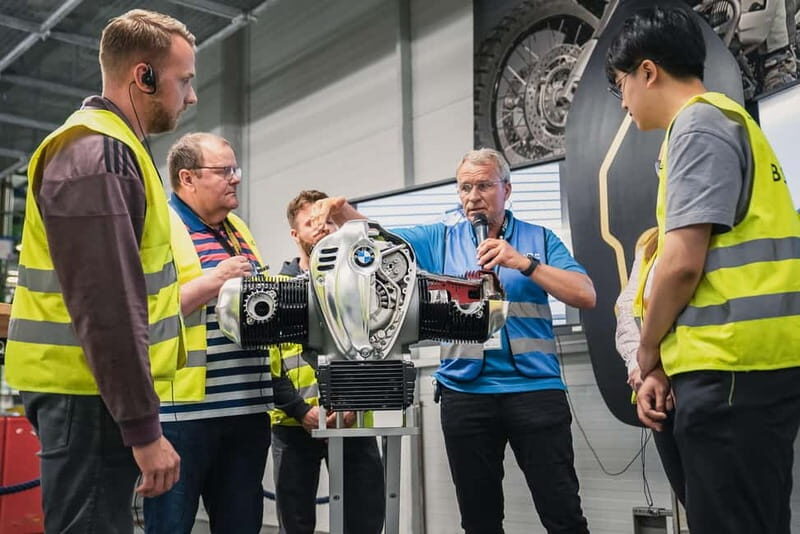
At about $19 per person (check live availability for exact start times), this is one of the more budget-friendly “big brand factory” experiences in Berlin. The reason the price feels fair is that you’re getting more than a hallway glance. You get guided access to a production setting that many visitors can’t freely enter.
Duration runs 100 to 130 minutes, so you’re looking at roughly an hour and a half to two hours. It’s long enough to cover the essentials—logistics, the assembly halls, and the key “how it works” explanations—without turning into a full half-day commitment.
This is also a good time-saver. You don’t have to hunt down multiple stops to understand how BMW builds. One organized visit covers the story from components flowing in to the bike coming together.
Meeting at the BMW Motorrad Welt fireplace: small details that matter
Your tour starts at the fireplace in the entrance area of BMW Motorrad Welt, and you’ll end back at the same meeting point. That matters more than you might think. It keeps the logistics simple—no awkward transit plans after the factory portion.
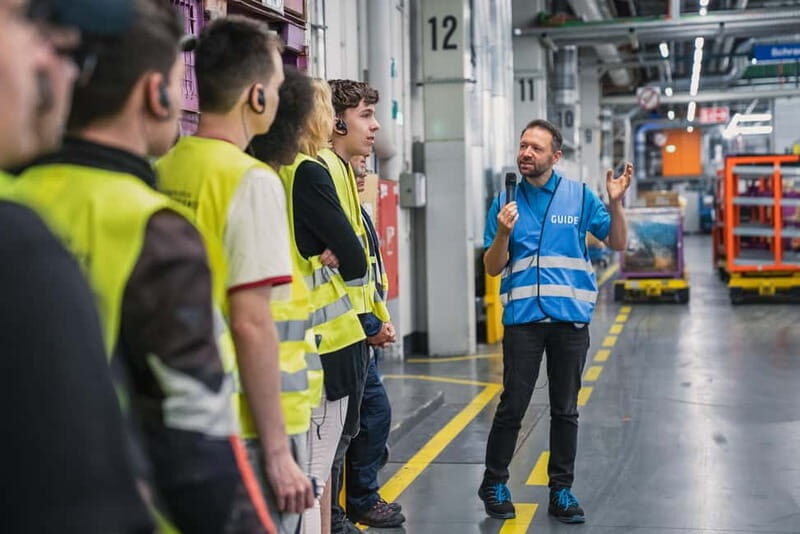
You also get to arrive with everything you need to feel prepared. The tour includes headsets, so you can hear the guide clearly even in a working environment. You’ll also be given a safety waistcoat. It’s not heavy or fussy, but it signals that this is a proper industrial space, not a casual visitor walk-through.
If you choose the optional pickup, you can be collected at any address in Berlin Mitte. You should be ready about 15 minutes before your stated pickup time. A driver will meet you in a car with your name and take you to the factory. If you hate waiting around, build in that buffer. Industrial tours run on tight timing.
Inside the BMW Motorcycle Factory: logistics first, then the line
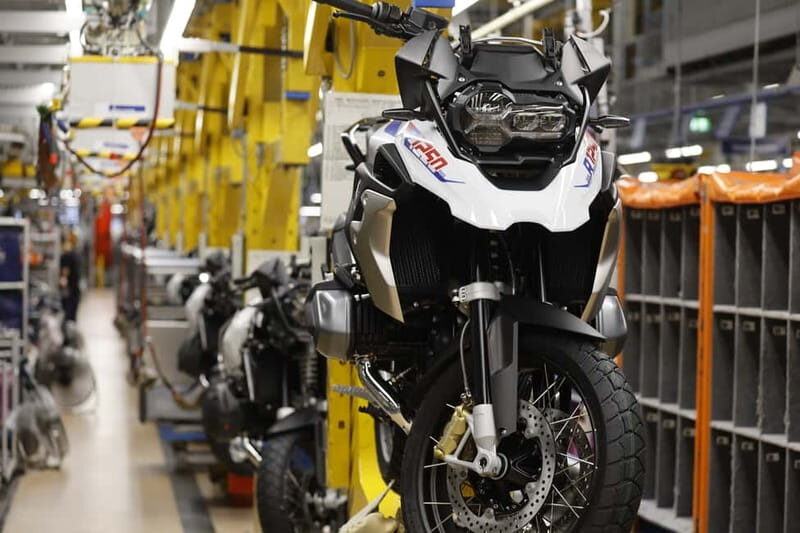
The guided portion takes you through the factory experience in a way that makes sense for your brain. First you get the big picture: how a modern plant keeps production moving. Then you see assembly-related areas where the workflow becomes visible.
The plant employs over 2,200 people, and BMW states it produces up to 800 bikes every day. That scale can be hard to picture until you see the flow of materials and the way workstations are organized. The tour helps you connect what you see to what it means: fewer bottlenecks, smoother transitions, and less wasted motion.
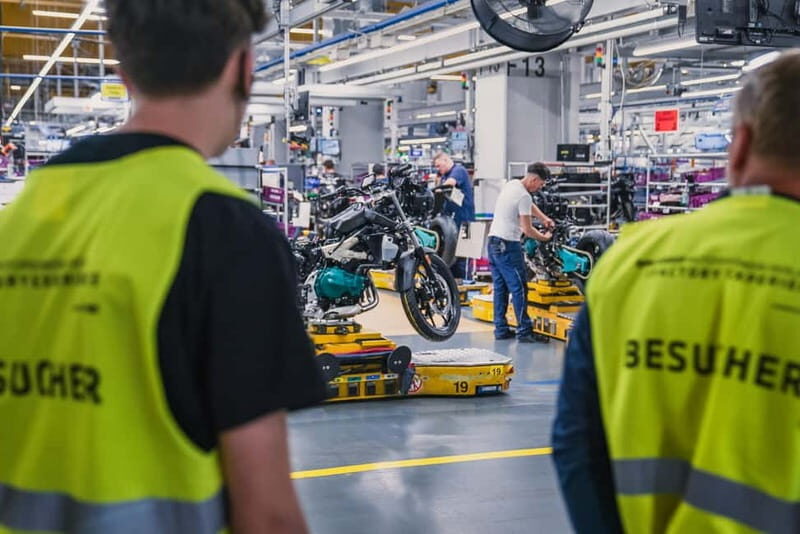
What I like about this approach is that it respects your time. Instead of bouncing around randomly, the guide builds a storyline: parts arrive, the system routes them, and assembly happens in a controlled rhythm. The claim that a bike rolls off the assembly line every 75 seconds helps you understand the tempo. It’s also a clue that the plant relies on smart process design, not just manual effort.
One potential drawback: factory tours like this can sometimes gloss over the deepest mechanical steps. If you were hoping for a more intense view of machining or component processing, you might wish there were more time dedicated to that level of detail. Still, you’ll come away with a real sense of how the factory functions as a system.
The C-hook system: the unique Berlin assembly workflow
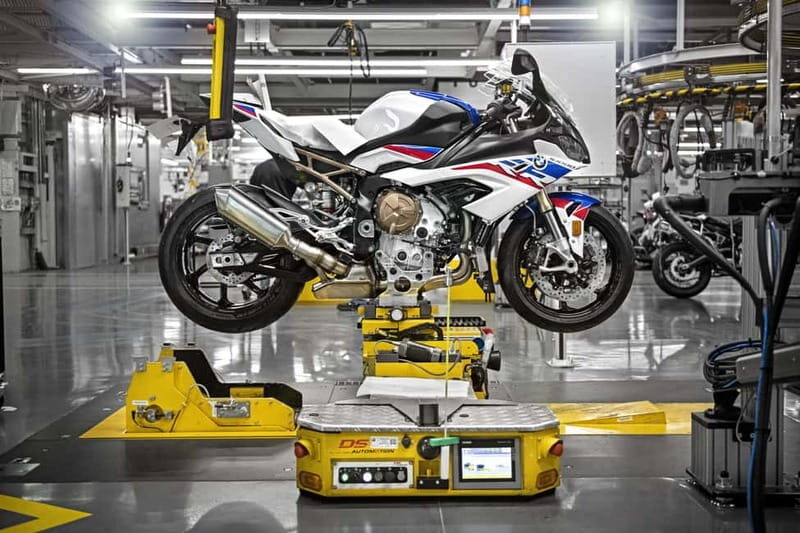
Here’s one feature worth paying attention to: BMW describes the intelligent C-hook system as making Berlin’s motorbike assembly unique. You won’t just hear the name and move on. The point of highlighting it is to show you that assembly isn’t only about people and workbenches. It’s also about specialized tools and repeatable automation that guide how parts are handled and positioned.
For you, this is the part that turns a generic factory tour into something specific to BMW and specific to Berlin. It’s also where the “modern logistics meets assembly” story clicks. When the system does its job, assembly stays consistent and fast. That means less variation, fewer delays, and a smoother production rhythm.
If you enjoy practical engineering—how process design reduces friction—this is a section you’ll likely remember. Even if you don’t know motorcycle terminology, the logic of the setup is easy to follow.

Electromobility talk: what tomorrow might look like
BMW’s Berlin plant doesn’t just focus on today’s build process. The tour includes discussion on what electromobility of tomorrow could look like. The key here is that this isn’t a vague marketing lecture. It’s framed as a direction for future motorcycle engineering, connected to how the plant thinks about production and innovation.
Even if you’re here for classic BMW combustion bikes, you’ll still get value. The electrification angle shows how BMW plans for changing powertrains, without pretending the factory will flip overnight. You’re hearing about transformation as a production challenge—supplies, systems, training, and manufacturing know-how.
If you’re curious about electric motorcycles, this portion helps you connect the dots between a concept you might see online and the realities of building things at scale.
Headsets, waistcoats, and the guide factor (including Andreas)
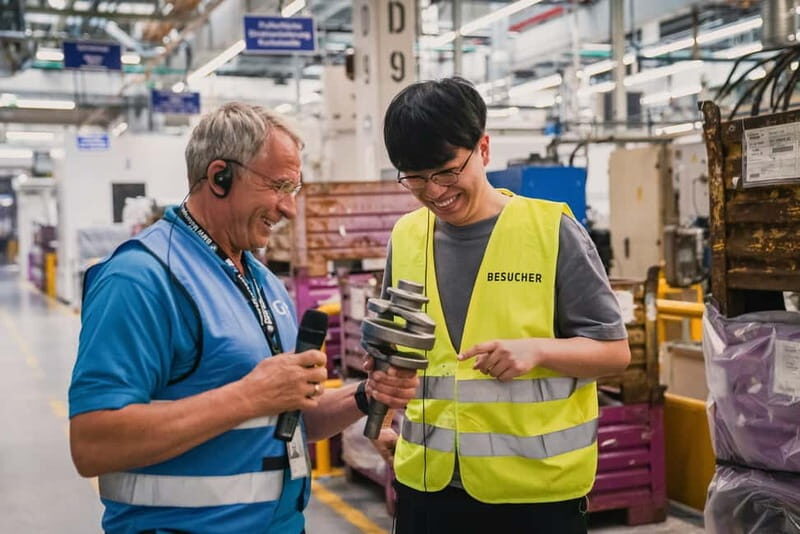
This experience is built around guided explanations, and that matters because industrial spaces are dense. You’ll have headsets to hear everything clearly, and that keeps the tour from becoming a confusing walk between machines.
The guide’s energy can make or break a factory visit. One example is a guide named Andreas, praised for product knowledge and enthusiasm, and for making manufacturing, logistics, and assembly feel exciting rather than sterile. That kind of guidance is gold when you’re standing inside a high-tech environment where details are easy to miss if nobody points them out.
If you prefer tours that are factual and animated—where you’re not stuck with canned explanations—this format usually fits the bill.
Rules that affect your visit: what you can and can’t bring
This tour is designed for a safe, controlled indoor environment. Plan your day around the constraints:
- Wear closed-toe shoes.
- Skip sandals or flip-flops.
- Don’t bring food and drinks.
- Don’t bring luggage or large bags.
- No photography inside the buildings.
Those rules aren’t just fussiness. In a production setting, they reduce distractions and improve safety. The downside is obvious: if you’re the type who likes to document every angle, you’ll have to accept that photos won’t be part of the experience inside.
Also worth noting: the tour runs rain or shine, so bring a jacket even if Berlin looks calm when you leave your hotel.
Accessibility and who this tour suits best
The tour buildings are wheelchair accessible, and the tour takes place in an environment that’s designed for movement through the spaces. If you have health or mobility impairments, you should contact the provider in advance so they can flag your needs. You can also mention it in a comment field when booking.
Age matters too. This tour is not suitable for children under 14, so it’s better framed as an adult-focused manufacturing experience.
Who it’s ideal for:
- People who like technology, engineering, and how systems are built.
- BMW riders or fans who want more than a static showroom view.
- Anyone who enjoys logistics stories—how parts and people coordinate under pressure.
Who might not love it:
- Visitors who want deep, hands-on mechanical teardown detail.
- People who strongly dislike guided tours with industrial rules like no photos.
Should you book BMW Motorrad Production in Berlin?
If you want a smart, efficient way to understand how modern motorcycles are produced, I’d say book it. The value is strong for the time and the money: you get headsets, safety gear, guided access to assembly areas, and a story that connects logistics to finished bikes. The C-hook system and the “bike every 75 seconds” pacing give you specifics, not just vague factory talk.
I’d only hesitate if your top priority is lots of close-up mechanical machining detail or if you’re determined to take photos inside. For everyone else, it’s a practical way to see Berlin industry up close—and to understand why a motorcycle plant can feel both highly technical and surprisingly human.
FAQ
FAQ
How long is the BMW Motorrad production tour?
The tour lasts about 100 to 130 minutes. Exact start times depend on availability.
Where do I meet for the tour?
Meet at the fireplace in the entrance area of BMW Motorrad Welt.
Do I need to speak German or English?
No. The live tour guide is available in English and German, and the included audio guide also covers English and German.
Is pickup available?
Pickup is optional. You can request pickup at any address in Berlin Mitte, and you should be ready about 15 minutes before the listed pickup time.
What should I wear?
Wear closed-toe shoes. Sandals and flip-flops aren’t allowed.
Can I take photos inside the factory?
No. Photography is not allowed inside the buildings.
Are food, drinks, or luggage allowed?
Food and drinks are not allowed, and you can’t bring luggage or large bags.
Is this tour suitable for kids?
It’s not suitable for children under 14.