REVIEW · BERLIN
Berlin: Sachsenhausen Concentration Camp Bus Tour in English
Book on GetYourGuide →Operated by Insider Tour Berlin · Bookable on GetYourGuide
Sachsenhausen hits fast. This 4-hour Berlin bus tour takes you straight to the Sachsenhausen Memorial with a guided walk that explains how the camp was planned, run, and used inside the Nazi system. I like that it’s focused and well paced, not a rushed drive-by, and I especially like the bus transfer from central Berlin, which saves you the hassle of figuring out trains and long local walks.
You’ll spend a chunk of time on foot inside the memorial areas, and the subject matter is heavy. If rain and cold weather are on the menu, you’ll still be walking—so come ready with proper shoes and layers, and don’t schedule anything tight afterward.
In This Review
- Key points before you go
- Sachsenhausen by bus: why this 4-hour format works
- Meeting at Friedrichstraße and getting out of Berlin fast
- The ride to Sachsenhausen: time for context on the drive
- Walking the memorial: what the guided 2 hours actually cover
- The hardest sites: crematoria, gas chamber, execution trench, infirmaries
- Infirmary barracks and medical experimentation: why this part matters
- How guides shape the experience (Ariel, JR, Lewis, Paul, Nickolai)
- Comfort tips for a serious day trip
- Value and price: is $49 a good deal?
- Who this Sachsenhausen bus tour is best for
- Should you book this bus tour to Sachsenhausen?
- FAQ
- Where does the tour meet in Berlin?
- How long is the tour?
- Does the tour include the guided visit inside Sachsenhausen?
- What language is the tour guide?
- Is transportation air-conditioned?
- What is included in the price?
- Are hotel pickup and drop-off included?
- Where does the tour end?
- What should I bring?
- Is alcohol allowed?
- Is free cancellation available?
Key points before you go
- Central Berlin pickup area keeps it easy to start your day
- Air-conditioned private vehicle plus a driver means no transit stress
- 2 hours with a licensed guide inside Sachsenhausen covers the major sites
- You’ll see high-impact areas like the crematoria, gas chamber, execution trench, and infirmary barracks
- A donation and camp map are included so you’re not scrambling for extras
- English (and Spanish) guide options help you match your comfort level
Sachsenhausen by bus: why this 4-hour format works
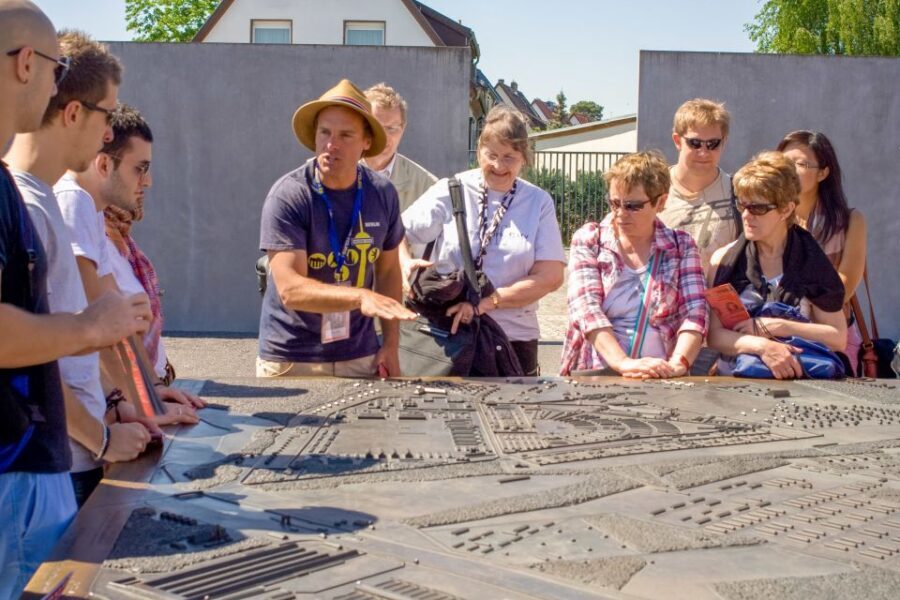
Sachsenhausen is not the kind of place where you want to improvise. The memorial is spread out, the walking adds up, and the history is intense—so the simplest win is having a guide who knows exactly where to take you and what to explain along the way.
This tour’s format helps you do the essential parts without turning your day into a logistics project. You get a drive out of Berlin, a guided visit at the memorial, and then a smooth return—so you can focus on learning, not transportation. At 4 hours total, it also fits well if you’re doing other major Berlin history stops the same week.
You can also read our reviews of more tours and experiences in Berlin.



Meeting at Friedrichstraße and getting out of Berlin fast
The meeting point is at Friedrichstraße train station, on the square between the Tränenpalast (Palace of Tears) and the station. Your guide will be holding a yellow umbrella and wearing a blue lanyard with a yellow name tag. That sounds small, but it matters: when everyone shows up at the same spot, you don’t waste time regrouping.
From there, the tour uses an air-conditioned vehicle with a driver. The bus ride takes about 50 minutes, and you’ll get commentary en route. That background piece is useful because it sets the “why” before you hit the “what.” In plain terms: you’ll arrive with context, not just a map and silence.
There’s also a route element that many people find memorable: the bus passes through Oranienburg, where inmates would have worked. It’s one of those small transitions that quietly connects the camp to the surrounding landscape of forced labor.
The ride to Sachsenhausen: time for context on the drive
The commentary on the way out isn’t just random facts. It’s meant to prep you for how the camp was organized and what that meant for prisoners’ daily reality. You’ll hear about Sachsenhausen as a camp system with planning built in for control and expansion—an approach that shaped everything inside the camp.
Guides often bring in the wider Nazi camp network so the site doesn’t feel like an isolated tragedy. That matters for how you process what you’ll see next. You don’t just walk past buildings; you understand why those buildings existed and how they supported the machinery of persecution.
Walking the memorial: what the guided 2 hours actually cover
Once you arrive, you get 2 hours of guided time at the Sachsenhausen Memorial. This is the heart of the tour, and it’s long enough for a real walk through key areas—without dragging so much that you lose focus.
Your guide will take you through the camp’s layout and explain how prisoners lived under brutal routine and administrative ruthlessness. You’ll move through areas designed for control, punishment, and exploitation, and you’ll also hear about survival and what happened to people once they were processed into the camp system.
The tour includes entry to the memorial, plus a map of the former camp. The map is not a souvenir here—it helps you keep your bearings while the guide moves you from one meaningful spot to the next.
The hardest sites: crematoria, gas chamber, execution trench, infirmaries
This tour does not shy away from the most painful parts of Sachsenhausen. If you’re looking for a “light” history stop, this isn’t it. But if you want clarity—what was done, where it happened, and how the camp operated—this guided route gives you the key places.
Here are the major areas you can expect to see during the visit:
- Tower A, where the words Arbeit Macht Frei remain on the entrance. Even if you know the phrase from elsewhere, seeing it here lands differently because of the context you’ll have just heard.
- The commandant’s house, a stark reminder that the camp wasn’t only violence in the abstract—it was run by people making decisions, organizing logistics, and enforcing policy.
- The gas chamber and crematoria, which are part of how the camp processed and killed people.
- The execution trench, another grim piece of the camp’s violence system.
- The infirmaries, where the tour focuses not only on suffering from conditions but also on what the camp medical setup enabled during the war.
One of the most emotionally heavy details the guide addresses is the scale: around 35,000 people were murdered or died of disease within the camp. That number is presented in context, not as a cold statistic.




Infirmary barracks and medical experimentation: why this part matters
A standout part of this tour is the focus on the infirmary barracks, where experimentation took place during the war. Many memorial visits focus mainly on punishment and labor. Here, you get the full picture of how the Nazis used the camp system for both forced work and human experimentation.
This isn’t just “another stop on a list.” It changes how you understand the camp’s purpose. Once you grasp that the camp was designed to extract value, erase humanity, and even weaponize medicine, the rest of the site clicks into place.
The guide also points you to places where prisoners were treated brutally, including the interior barracks spaces that show what daily life under confinement actually meant. You’ll understand the gap between how the camp claimed order and what it really delivered: humiliation, injury, and death.
How guides shape the experience (Ariel, JR, Lewis, Paul, Nickolai)
On a site like this, the guide’s tone and structure matter more than almost anything else. The best guides keep facts organized, answer questions clearly, and treat the subject with care.
Names that often come up in strong guide feedback include Ariel, JR, Lewis, Paul, and Nickolai. While you can’t pick who you’ll get, it helps to know the tour has a track record of using guides who can handle sensitive material with steady pacing and room for questions.
If you’re the type who learns best by asking questions, this is a good fit. The guide’s explanations are designed to connect the camp layout to the Nazi system behind it—so you’re not left guessing why certain areas exist.
Comfort tips for a serious day trip
A Sachsenhausen visit is part history lesson, part walking route, and part emotional weight. You’ll feel it in your body, so plan like you’re going on a long museum walk.
Bring:
- Comfortable shoes (non-negotiable)
- Weather-appropriate clothing
- A light snack and a drink (this tour reminds you to pack one)
You should also be ready for changing conditions. One reason the bus option is popular is that you’re not stuck doing long extra transit walks in weather before you even reach the memorial. Still, you’ll be outside and you’ll be on your feet.
Not allowed: alcohol and drugs. Keep it simple and respectful.
And please do yourself a favor: don’t schedule a “must see” sprint right after. Even if you’re ready intellectually, the emotional impact often shows up later.
Value and price: is $49 a good deal?
This tour costs $49 per person and runs for about 4 hours, depending on your start time. For that price, you’re getting more than just a bus ticket.
What you receive:
- A professional licensed guide
- Transportation in a private air-conditioned vehicle
- Sachsenhausen Memorial entry
- A €3 donation per person to the memorial
- A map of the former camp
- A driver
Is it worth it? For many people, yes—because you’re buying time and focus. The bus transfer is a big part of the value if you don’t want to manage trains, transfers, and a long walk to the site. And entry plus a guided walk saves you from cobbling together separate tickets and timing.
If you already love public transit and you’re comfortable building your own route, you could go independently. But if your goal is to understand what you’re seeing and you’d rather not waste half your day getting there, the package value makes sense.
Who this Sachsenhausen bus tour is best for
This is a strong choice if:
- you want central Berlin logistics handled for you
- you only have limited time and still want the major parts of Sachsenhausen
- you prefer a guide to explain how the camp worked, not just what the buildings are
- you’re planning other WWII or memorial visits and want a structured starting point
It may be less ideal if:
- you can’t handle a long, emotionally difficult history topic
- your walking ability is limited (the memorial portion is on foot)
- you prefer long, unhurried time at fewer locations rather than covering multiple high-impact areas
If you’re the kind of traveler who appreciates clear routes and good explanations, you’ll likely feel satisfied with what’s covered in the allotted time.
Should you book this bus tour to Sachsenhausen?
If you want a guided visit to Sachsenhausen without turning your day into a transit puzzle, I’d book it. The biggest reasons are simple: you get easy Berlin-to-memorial transport, you get memorial entry plus a guided 2-hour walk, and you’ll see the core sites that explain how the camp operated—from the camp entrance symbolism to the crematoria, gas chamber, execution trench, and infirmary experimentation areas.
Just go in with the right mindset. This place is not for casual sightseeing. Bring good shoes, pack a snack, and plan to leave time for your thoughts afterward.
If that sounds like your kind of meaningful day, this is a solid, good-value way to do it.
FAQ
Where does the tour meet in Berlin?
The tour meets outside Friedrichstraße train station, on the square between the Tränenpalast (Palace of Tears) and the station. Your guide holds a yellow umbrella.
How long is the tour?
The total duration is about 4 hours, including transportation and the guided memorial visit.
Does the tour include the guided visit inside Sachsenhausen?
Yes. You get a guided tour at the Sachsenhausen Memorial for about 2 hours.
What language is the tour guide?
The live tour guide is available in English and Spanish.
Is transportation air-conditioned?
Yes. The tour includes transportation by a private air-conditioned vehicle, with a driver.
What is included in the price?
Included are the professional licensed guide, memorial entry, transportation, a €3 donation per person to the memorial, and a map of the former concentration camp.
Are hotel pickup and drop-off included?
Hotel pickup and drop-off are not included. Pickup is only mentioned for private options, where the guide would pick you up about 5 minutes before the tour begins.
Where does the tour end?
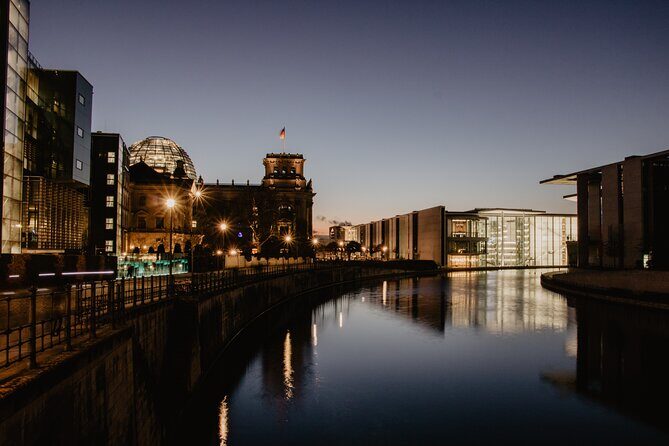
The tour ends back at the meeting point. It also notes drop-off locations in Berlin, including Reichstagufer 17.
What should I bring?
Bring comfortable walking shoes, and a camera if you want one. The tour also suggests bringing a light snack and drink.
Is alcohol allowed?
No. Alcohol and drugs are not allowed.
Is free cancellation available?
Yes. Free cancellation is offered up to 24 hours in advance for a full refund.