REVIEW · BERLIN
BERLIN FULL in 3.5h (Guide + Headphones)
Book on Viator →Operated by coloridoberlin · Bookable on Viator
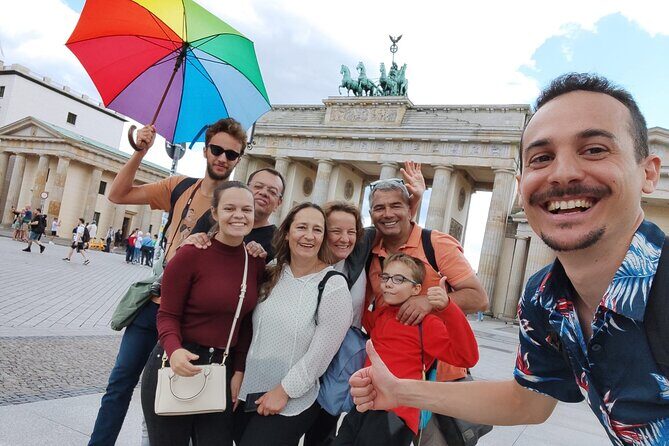
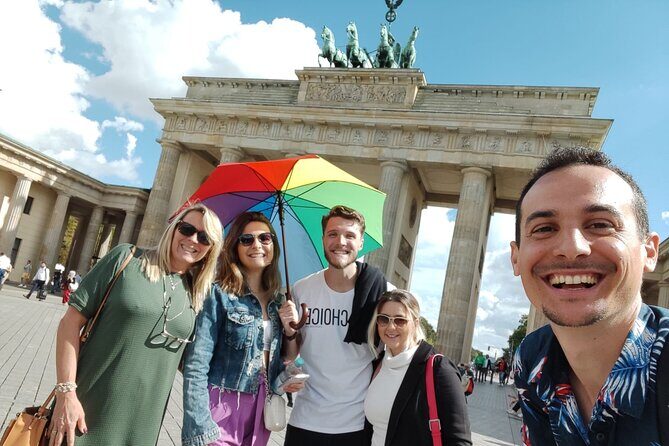
Berlin has a way of telling stories fast. This 3.5-hour walk strings together medieval Berlin, Cold War scars, and today’s capital energy, with a guide who keeps it moving and clear. Headphones are included, so you can hear the narration even when the square gets busy, and you’ll meet at Azem Bistro where your guide will be easy to spot with a multicolored umbrella.
What I like most is the mix: you get big landmarks like Alexanderplatz and Museum Island, then the tour pivots hard into the Wall era and its aftermath—without turning into a lecture. I also really appreciate the interactive, friendly feel credited to the guide, Pablo, who makes the history understandable instead of distant.
One consideration: this is a high-stop route, so you get short time slices at each place. With roughly 5 to 20 minutes per stop, it’s not built for deep lingering—especially if you want to read every plaque or take a long detour for photos. The good news is the structure helps you see a lot in one morning, and the “good weather required” rule means you should plan on it running as described.
In This Review
- Key points at a glance
- How This 3.5-Hour Berlin Route Actually Works
- Humboldt Forum: A Quick Stop With Big Architectural Shifts
- Alexanderplatz and Museum Island: Orientation in Two Iconic Zones
- Unter den Linden to Neue Wache: Power, Loss, and a Story You Can Feel
- Nikolaiviertel and Bebelplatz: Medieval Streets and a Grim Memory
- Checkpoint Charlie, Gendarmenmarkt, and the Wall Memorial in One Flow
- Nazi-Era Buildings, Fuhrerbunker Theories, and the Holocaust Memorial
- Reichstag and Brandenburg Gate: Glass Dome and a Rebuilt City
- Price and Value: What $23.76 Buys You
- When This Tour Shines (and When It Might Not)
- Should You Book This Tour?
- FAQ
- How long is the Berlin Full tour?
- Where do we meet, and when does it start?
- Is a mobile ticket used?
- Are headphones included?
- How much does the tour cost?
- What are the stops like—do we spend time inside places?
- What’s the maximum group size?
- Does the tour require good weather?
- Is it free to cancel?
Key points at a glance
- Headphones included so you can keep up with stories on the move
- Pace is tight but focused, with quick orientation at major landmarks
- History goes from medieval to Cold War in a single route
- Major emotional sites included, like the Holocaust Memorial
- Group size stays reasonable, with a max of 50 travelers
- Free entry noted at the stops on the route, including Humboldt Forum
How This 3.5-Hour Berlin Route Actually Works
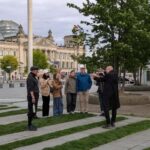
This tour is designed like a guided sprint through central Berlin, running about 3 hours 15 minutes. It starts at 10:00 am at Azem Bistro (Rathausstraße 17, 10178 Berlin). You’ll spot the guide by the multicolored umbrella, which is a small detail that saves time on a busy street.
A practical win: you don’t need to worry about downloading paper tickets. You get a mobile ticket, and you’ll use it for the tour. Also, because the tour includes headphones, you can walk at street pace while still hearing the explanation clearly—useful when you’re passing through open squares and crowded monuments.
The route is built around a simple idea: you’ll walk from “Berlin’s beginnings” to “Berlin today,” with stops that map the city’s turning points. But it’s still just one morning, so treat it as a way to get your bearings fast and learn what to revisit later.
You can also read our reviews of more guided tours in Berlin


Humboldt Forum: A Quick Stop With Big Architectural Shifts
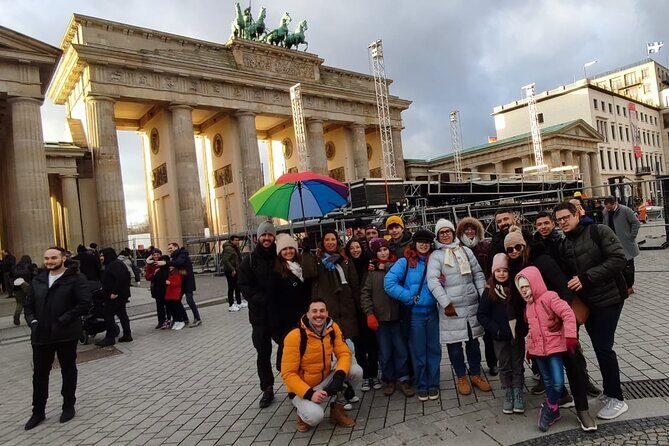
The tour kicks off at the Humboldt Forum. You’ll spend about 10 minutes there, and the plan includes time to visit its interior before you move on.
What makes this stop worthwhile isn’t just the building itself—it’s how the guide frames it. The description points to an architectural mix and the many changes the site has gone through over time. That’s exactly what I look for in a “highlights” tour: not just a pretty exterior, but a reason to pay attention right away.
If you’re the type who likes to understand why a place looks the way it does, this is a strong opener. And because the tour lists the stop as free admission, you’re not stuck at a “nice to see” site that becomes expensive to explore.
Alexanderplatz and Museum Island: Orientation in Two Iconic Zones
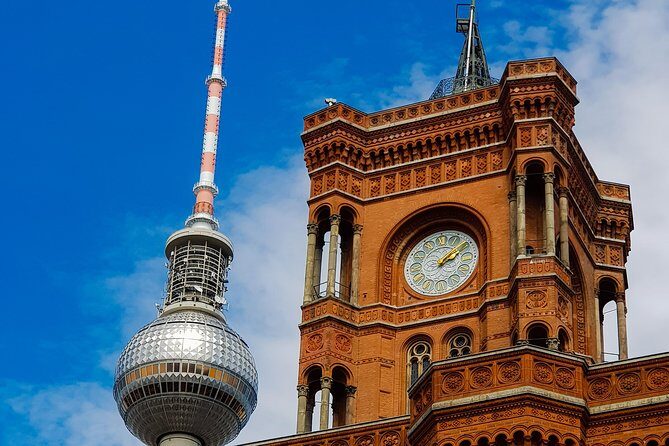
Next comes Alexanderplatz, a landmark square that sits in a larger web of monuments around the Spree River. You’ll get about 10 minutes, which is enough time to understand the square’s role and how it connects to other central sights.
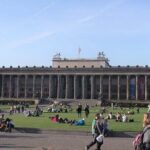
Then you move to Museum Island for another 10 minutes. The tour keeps it simple: history meets setting. Museum Island is described as a place where history comes alive next to the Berliner Dom and surrounded by the Spree. Even in a short stop, that’s a good pairing, because the location itself helps you picture the city’s layers.
One thing to note about stops like this: they can feel “obvious” because they’re famous. The value here is that the guide uses the short time to point you toward what matters—so when you later choose a museum or a viewpoint on your own, you’re not starting from zero.
Unter den Linden to Neue Wache: Power, Loss, and a Story You Can Feel
From Museum Island, the route shifts to Unter den Linden, described as the oldest promenade in Berlin. The walk connects major anchor points—from the Brandenburg Gate to Schlossbrücke and Berlin Cathedral—so even a brief stop gives you a sense of Berlin’s main ceremonial corridor.
The stop includes Neue Wache and the royal-residences area, with time again around 10 minutes. This is one of the places the tour doesn’t treat as “just another monument.” The Neue Wache stop is explained as a memorial to the victims of war and dictatorship. The guide also talks about the Prussian artist behind the work—and yes, the description notes it can give you goosebumps.
That reaction matters. A good “highlights” guide knows when to slow the story down. Here, it’s not about horror for shock value; it’s about helping you understand how Berlin marks trauma in public space.
Nikolaiviertel and Bebelplatz: Medieval Streets and a Grim Memory
Now the tour moves into atmosphere. Nikolaiviertel is positioned as Berlin’s oldest area, with medieval character and narrow alleys and businesses. You’ll spend about 20 minutes, which is longer than many stops—so you’ll have a bit more time to look around and absorb the mood.
Then it goes to Bebelplatz, another 10-minute stop. This square is framed by institutions like Humboldt University, an old library, and the Berlin State Opera. The major story here is the book-burning history—sad, reflective, and meant to connect to the present. If you’re visiting Berlin with a mind for how societies try to control ideas, this is a strong pause.
One caution for this section: places with a “medieval vibe” can tempt you to wander a few steps off-route for photos. Keep an eye on time so you don’t miss the next transfer. The tour is structured for learning-on-the-go, not roaming for hours.




Checkpoint Charlie, Gendarmenmarkt, and the Wall Memorial in One Flow
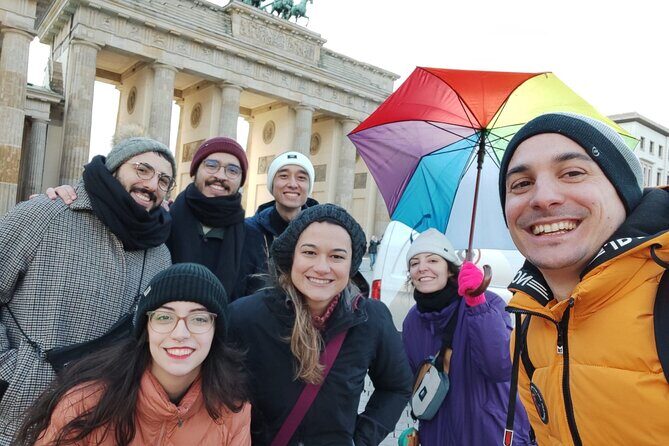
The route includes Checkpoint Charlie for about 15 minutes. The explanation focuses on the most famous border crossing of the Wall and also on who “Charlie” was—plus details that you might otherwise skip if you just look at the photo ops.
Then you swing to Gendarmenmarkt for about 10 minutes, a famous Berlin square flanked by the Französischer Dom and Deutscher Dom, plus the Konzerthaus. This is a nice contrast stop. After the heavy border-crossing storytelling, the architecture and symmetry give your mind a reset.
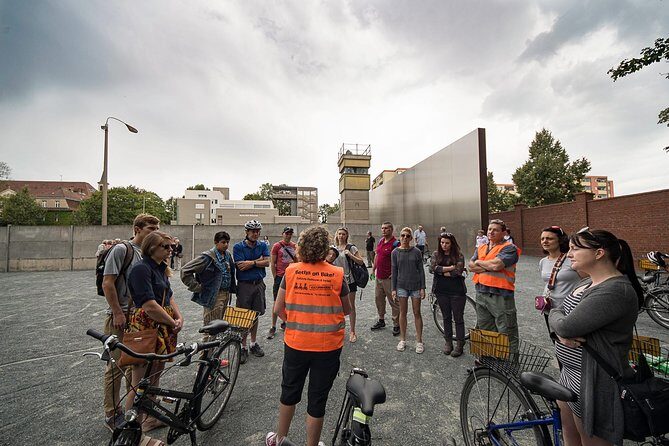
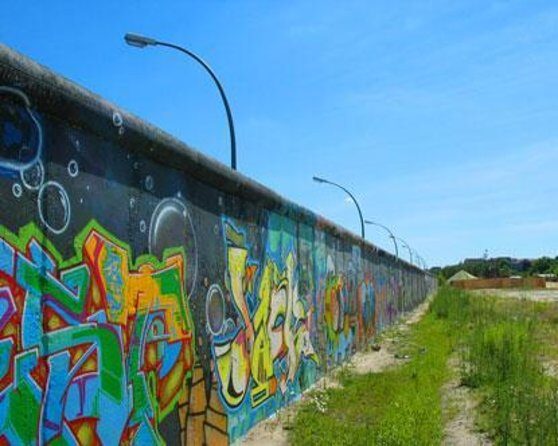
Next is the Memorial of the Berlin Wall. The stop is again around 15 minutes, and it’s described as a must-see, with stories that capture both pain and the triumph of 1989. Importantly, the tour ties in related history: Luftwaffe, Hitler’s armed forces, and the underground bunker. You’re not only looking at a wall trace; you’re hearing how different pieces connect.
This is one of those parts of the tour where headphones really pay off. With memorial sites, the surrounding noise can be intense, and you’ll want the guide’s pacing to land.
Nazi-Era Buildings, Fuhrerbunker Theories, and the Holocaust Memorial
After the Wall memorial, the tour moves into some of the hardest material in Berlin.
One stop is the Bundesministerium der Finanzen (described with the label Luftwaffe), noted as one of the Nazi-era buildings that remains intact despite the war. The description says it has a reason, which the guide will explain. Even without going deep in a single minute, this type of stop helps you see how history can survive in plain sight.
Then there’s the Fuhrerbunker stop (listed as Hitler’s bunker). You’ll get about 5 minutes here, but it’s built around a specific set of questions: where Hitler theoretically died, why it’s theoretical, and the theories—plus which one is described as the most prevalent. Short stop, heavy theme.
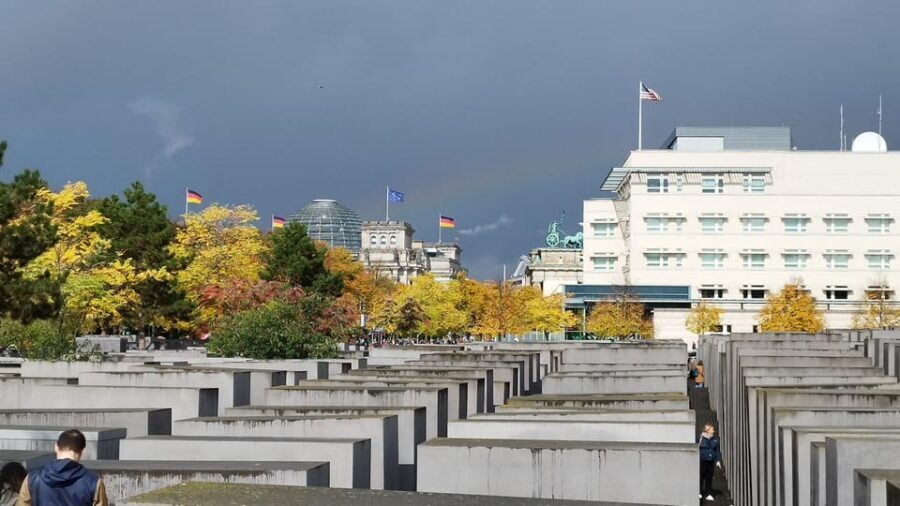
The emotional center is the Holocaust Memorial – Memorial to the Murdered Jews of Europe. You’ll spend about 10 minutes, and the tour frames it as a moment each visitor lives in their own way based on beliefs and understanding. That approach matters. The memorial is already powerful; the guide’s job is to give you context without trying to force a single reaction.
My practical advice here: keep your expectations realistic. Ten minutes at the memorial is not meant to “finish” it. It’s meant to help you understand what you’re looking at and why the place carries weight.
Reichstag and Brandenburg Gate: Glass Dome and a Rebuilt City
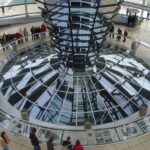
The itinerary includes Reichstag with mention of the seat of the German Parliament and the glass dome designed by Norman Foster. This is another stop where the tour is likely using the place as a story anchor, not promising you long time inside.
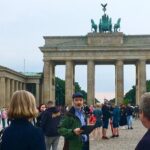
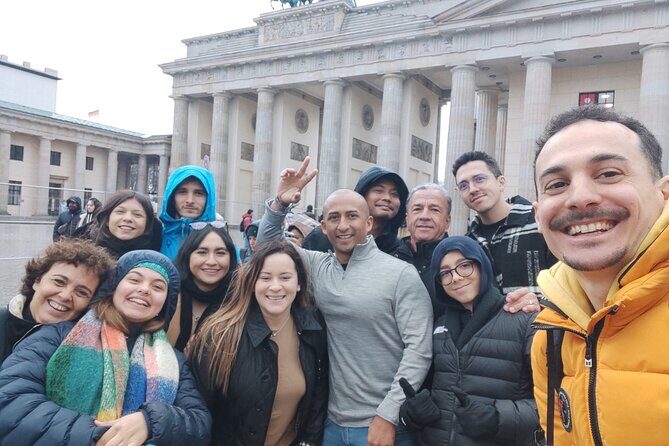
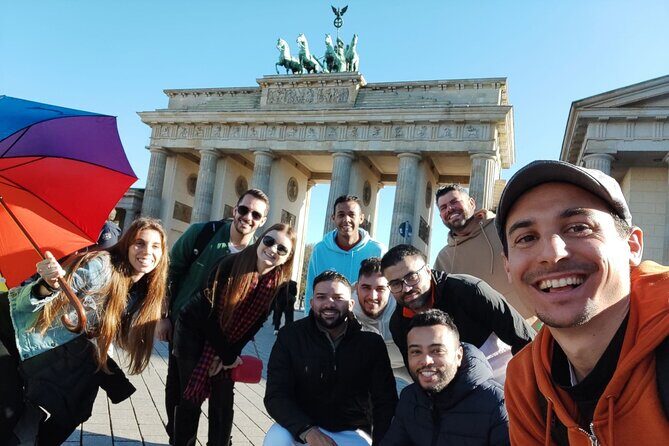
Finally, you reach the Brandenburg Gate. It’s described as an icon and former gateway to Berlin, now the epicenter of demonstrations and social or sporting events. The tour also emphasizes what Berlin did after destruction—how it rebuilt itself from ashes.
You’ll wrap at Pariser Platz 1A, 10117 Berlin, which is a great finish point because you’re right near the postcard icons and easy connections for the rest of your day.
Price and Value: What $23.76 Buys You
The price is $23.76 per person for roughly 3.5 hours, including headphones and a guide. That matters, because headphones are not always included on basic walking tours—and here they’re built into the experience.
The route also lists free admission for the stops (you’ll see “Admission Ticket Free” alongside the main stops like Humboldt Forum and several others). Even if you don’t spend long in each place, that removes a layer of uncertainty about what’s free vs. paid once you arrive.
Finally, value is also about time. Central Berlin can be confusing if you’re just wandering. This tour gives you a guided map through the core sights, with explanations tied to major eras: medieval origins, then modern capital life, then Cold War and the Holocaust memorial context.
When This Tour Shines (and When It Might Not)
This is a great fit if you want to:
- Cover a lot of ground quickly without planning each hop
- Get context for the big names: Alexanderplatz, Museum Island, Checkpoint Charlie, the Wall memorial, and Brandenburg Gate
- Prefer a guided story that uses headphones so you can keep walking
It may not be ideal if you want:
- Long museum time or deep reading at every stop
- A slow pace where you can linger for an hour at one location
- A day that depends on staying flexible with weather, since the experience requires good weather
If you’re visiting Berlin for a first time and you feel overwhelmed by the number of famous sites, this tour is built for that moment. It helps you build a mental framework so your later choices feel easier.
Should You Book This Tour?
If you want a fast, well-structured overview that hits both the postcard landmarks and the heavy history, I’d say this one is worth booking. The combination of headphones, a recognizable guide like Pablo, and a route that stays packed but organized makes it a strong use of a half day in central Berlin.
The only reason to skip is if you already know you want a slower, more reflective day at fewer sites. But if your goal is to see Berlin’s key places and understand what they mean, this tour gives you that foundation efficiently.
FAQ
How long is the Berlin Full tour?
It runs for about 3 hours 15 minutes.
Where do we meet, and when does it start?
You meet at Azem Bistro, Rathausstraße 17, 10178 Berlin and the start time is 10:00 am.
Is a mobile ticket used?
Yes. The tour uses a mobile ticket.
Are headphones included?
Yes. The tour includes headphones so you can hear the guide’s explanations while walking.
How much does the tour cost?
The price is $23.76 per person.
What are the stops like—do we spend time inside places?
The itinerary includes visits and time at each stop (for example, Humboldt Forum includes time after visiting its interior). Most stops are short, and the time is listed per stop.
What’s the maximum group size?
The tour has a maximum of 50 travelers.
Does the tour require good weather?
Yes. It requires good weather. If it’s canceled due to poor weather, you’ll be offered a different date or a full refund.
Is it free to cancel?
Yes. Free cancellation is available. You can cancel up to 24 hours in advance for a full refund. If you cancel less than 24 hours before the start time, the amount paid is not refunded.