REVIEW · BERLIN
Berlin: The Wall Ride Guided Trabi Tour
Book on GetYourGuide →Operated by Trabiworld Trabi-Safari · Bookable on GetYourGuide
Berlin looks different when you’re behind the wheel. This Trabi tour turns the Cold War into something you can actually feel as you roll past wall-era landmarks. I love the sheer novelty of self-driving a classic Trabant through modern Berlin, and I also like how the route focuses on the wall’s big emotional sites instead of doing generic photo stops.
The best part is the viewpoint: you’re low-slung, slow-ish, and very noticeable, so the city makes sense in motion. One caution: you spend a lot of the time concentrating on driving, so you won’t get a textbook lecture—expect action first and history second.
In This Review
- Key things to notice
- Why a self-drive Trabant is the best Berlin Wall view
- Meet at TrabiWorld: the fast path to your drive license
- Inside the convoy: how the tour keeps you on track
- East Side Gallery: street art, speed, and the feeling of a wall
- The death strip: what you’re really seeing as the road narrows
- Crossing through Checkpoint Charlie: why paperwork mattered
- How good is the driving? Training, manuals, and road feel
- The car quirks: when weather hits and audio is tricky
- TrabiWorld and the museum: extending the story after the streets
- Price and value: is $116 worth it?
- Who this tour suits best (and who might not)
- Booking check: should you ride the Wall Ride Trabi Tour?
- FAQ
- FAQ
- Do I need a driver’s license to take the tour?
- How long is the Berlin Wall Ride Guided Trabi Tour?
- Where do I meet for the tour?
- Do I drive the Trabant myself?
- What languages are available during the tour?
- Is the tour wheelchair accessible?
- What are the vehicle limits per Trabant?
- Is insurance included, and is there a deductible?
- Is entry to the sights included?
- Can I get a refund if plans change?
- What should I bring besides my driver’s license?
Key things to notice
- Self-drive Trabant setup: You drive your own car as part of a convoy, not as a passenger on a bus.
- Live radio guide system: You get commentary while the guide stays with the group in front.
- Major Cold War stops: East Side Gallery, the death strip area, and Checkpoint Charlie.
- Cobblestones and traffic reality: Some roads can feel bumpy; the back seat may be less fun depending on your ride position.
- Weather can affect small things: If conditions get rough, expect the car’s working comforts (like radio/wipers) to be less reliable.
- Optional museum follow-up: You can round out the story at the Trabi Museum in the same area.
Why a self-drive Trabant is the best Berlin Wall view
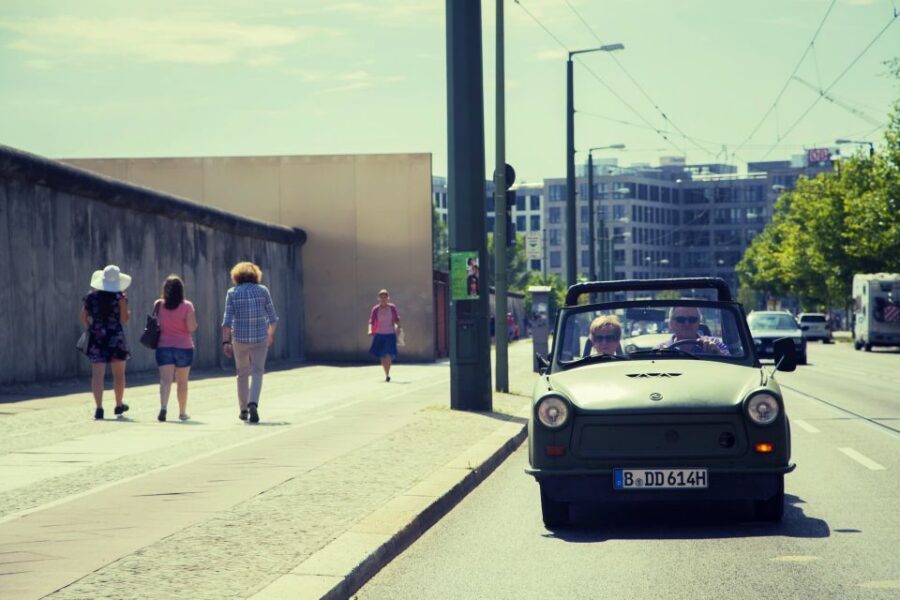
If you want Berlin history that stays in your bones, this kind of tour delivers. The Berlin Wall isn’t just something to stand next to. When you ride through the corridor where it once defined movement, you understand the scale in a way that photos can’t do alone.
I also like that you’re not stuck watching. This is a hands-on experience. You get to drive a Trabant—an icon of everyday life in the former East—and then point it toward the places where politics turned streets into borders. That contrast makes the story click.
The route’s focus is another reason it works. Instead of random landmarks, the tour concentrates on the wall’s hotspots, including East Side Gallery and Checkpoint Charlie. You end up seeing how Berlin went from separation to a shared city, with reminders of both eras side by side.
You can also read our reviews of more guided tours in Berlin



Meet at TrabiWorld: the fast path to your drive license
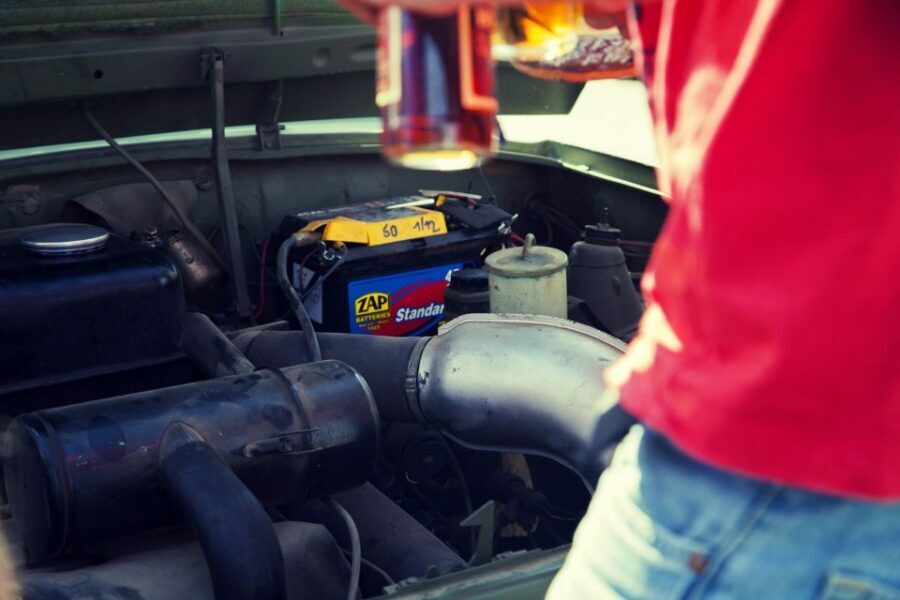
You’ll start at TrabiWorld in Berlin-Mitte, at Zimmerstrasse 97 (on the corner of Wilhelmstrasse). It’s right by public transit, with the U6 to Kochstrasse listed as the nearby stop.
Before you roll, you’ll need the basics: a valid driver’s license and the right driving eligibility. The tour requires you to be at least 18, and it specifies a driving class of 2 resp B (as listed). They also note unaffected fitness to drive, which matters because you’re operating a car on city streets.
They keep things structured inside each Trabant too. Each participant needs a ticket for the seats they occupy, and children can have a free ticket. You should also plan for a small, strict headcount: each car allows a maximum of 4 people or 330 kilograms total. And if you’re more than one driver in your group, drivers can swap during the tour.
One small but helpful detail: you’ll receive a souvenir Trabi drivers license. It sounds silly until you’re holding it while steering a car that looks like it belongs in a museum but is moving through real streets.
Inside the convoy: how the tour keeps you on track
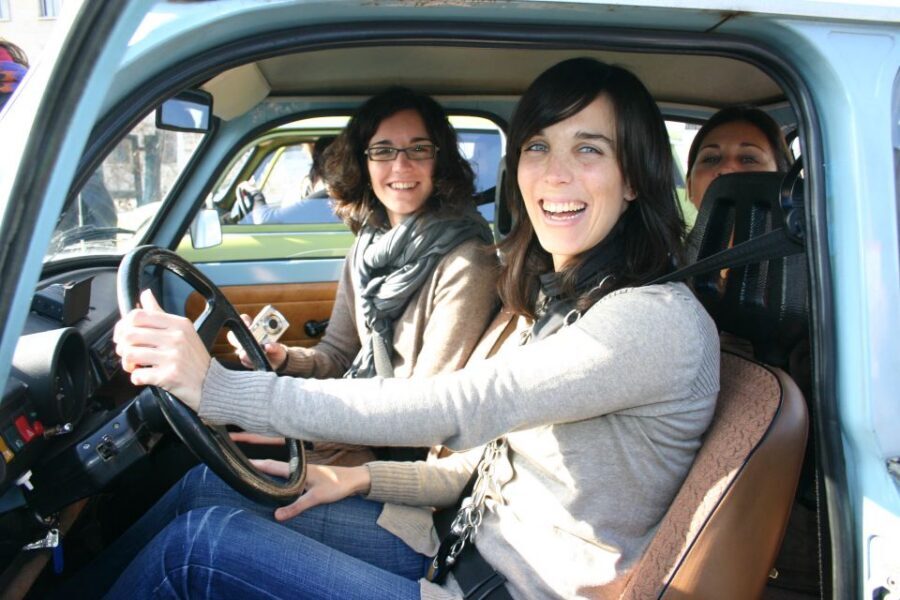
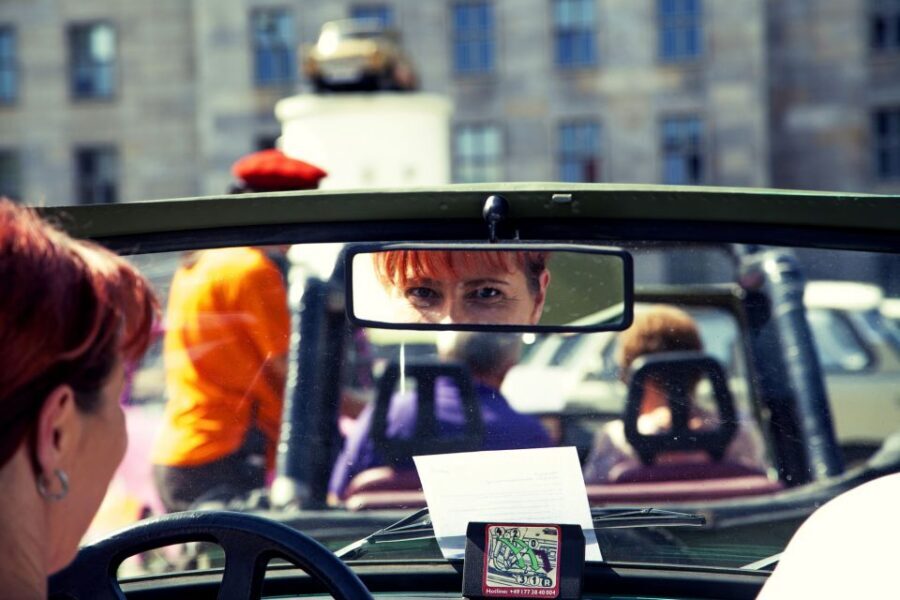
This tour runs as a convoy of several Trabants. A guide leads the group in front of you, and you follow along. That matters because Berlin can be a lot when you’re juggling driving, traffic, and navigation. The convoy approach reduces stress and keeps you from worrying about where to turn next.
You’ll also hear live commentary. The tour includes live radio commentary, plus an audio guide in English and German. That’s your two-layer support: a human voice guiding the narrative while the audio can give you extra context.
Here’s the reality check: one of the clearest themes from riders is that driving takes most of your attention, and that’s not a bad thing. It’s part of the fun. If you’re hoping for a relaxed, fully explained history walk, you may feel like you’re splitting your focus. But if you like learning in motion—and you’re happy to catch the highlights as you go—you’ll probably love the format.
East Side Gallery: street art, speed, and the feeling of a wall

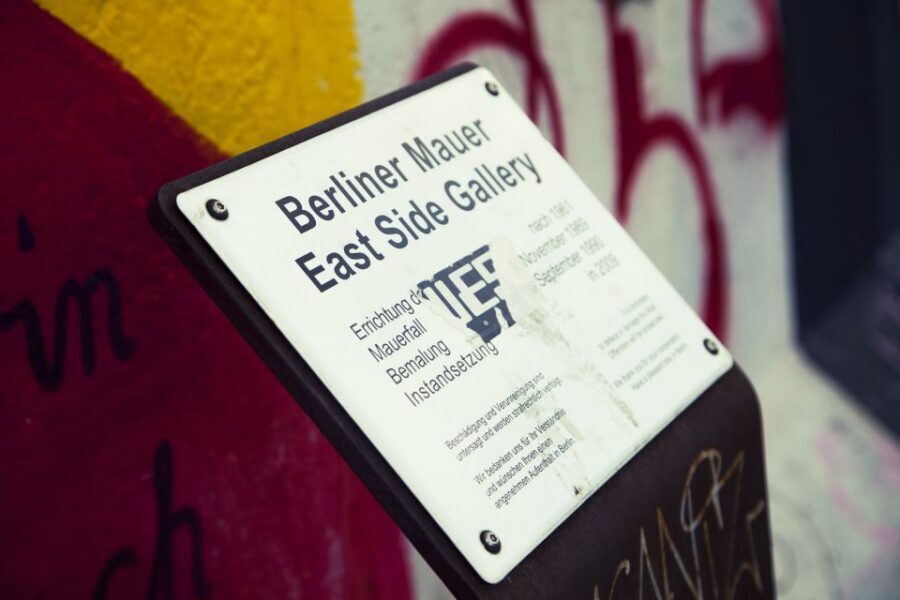
East Side Gallery is one of the most famous wall stretches, and it’s a smart anchor for the tour. You’re not just seeing a relic. You’re passing a section that has become part monument, part public canvas. Even from a car, the location gives you an immediate sense of how long this border was—and how normal life once had to fit around it.
Driving past it creates a different kind of perspective. From the sidewalk, you can pause, zoom in, and read details slowly. From behind the wheel, you experience it as a moving boundary: the wall slides by, the city keeps going, and you feel the scale of the separation in a more visceral way.
It’s also the kind of stop where the tour’s “today and then” approach makes sense. You’ll see a piece of the Cold War that’s now integrated into Berlin’s identity. That’s part of why this experience works after the Wall fell: the history didn’t disappear. It just got layered onto a city that kept rebuilding around it.
The death strip: what you’re really seeing as the road narrows
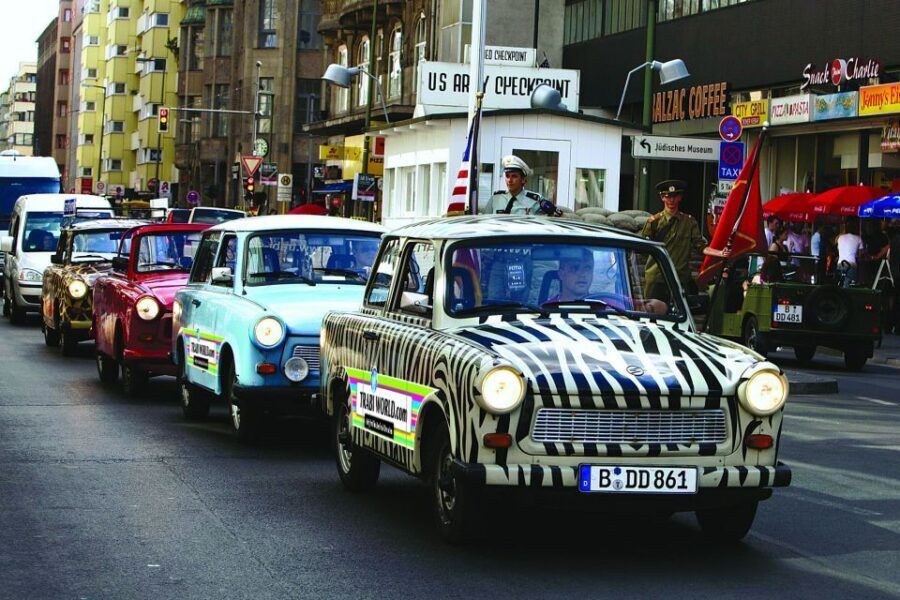
The tour explicitly includes the death strip. You might know the term already, but seeing the concept from the street is the point. Historically, the area between borders was designed to make escape extremely difficult, with harsh consequences for anyone trying to cross. On this tour, you’re guided through that reality through the places where the border logic once controlled movement.
What I’d focus on is how it changes your understanding. When you stand in front of a wall, it’s easy to treat it like a fixed object. When you’re moving near the space where control was enforced, you can better grasp how geography became a tool—how distance, access, and visibility mattered.
Be ready for the vibe to feel intense, even though you’re in a playful, unusual car. That tonal shift is why the route is so memorable. It’s not “fun history.” It’s fun delivery of heavy context.






Crossing through Checkpoint Charlie: why paperwork mattered
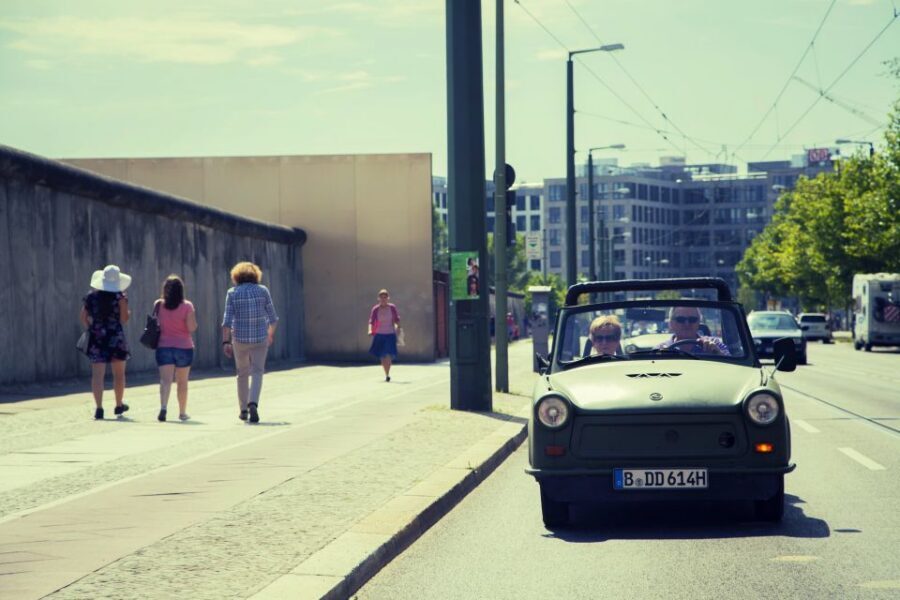
Checkpoint Charlie is one of the most recognizable Cold War symbols. The tour takes you through it, and it specifically references the passport checks that took place there daily for almost 30 years.
That’s the detail that turns a famous spot into a real-life system. People often remember checkpoints as dramatic scenes. But the daily routine is what made borders feel permanent. Frequent checks meant a constant reminder: you weren’t just crossing geography; you were crossing rules.
On a tour like this, you don’t linger like a museum visit. You pass through and keep moving. That can be a drawback if you want time to read every sign. Still, it’s also why it works. You see Checkpoint Charlie as part of the city’s fabric, not as an isolated exhibit. Berlin has changed dramatically around it, and experiencing that contrast while you’re in motion adds weight.
How good is the driving? Training, manuals, and road feel
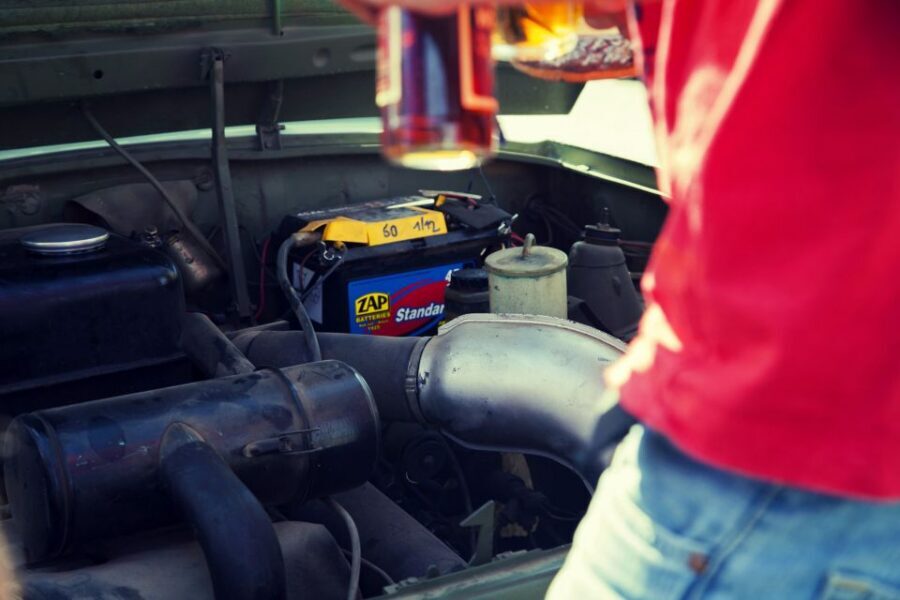
You’ll drive a Trabant yourself, and that’s a big part of why this tour feels different from a standard sightseeing ride. If you’re used to modern cars, you might find the driving sensation charming and slightly chaotic at first.
The good news: the tour includes training. One rider who said they hadn’t driven a manual car before reported that they got thorough training and managed to maneuver through Berlin. That tells me the staff doesn’t just hand you keys and hope for the best. They set you up so you can actually enjoy the route.
Road texture matters too. Cobblestones can show up, and at least one rider described the sensation as like being in a blender. That’s not a safety warning from the tour data—it’s a rider’s reality check about comfort. If you have a sensitive back, you may want to plan your seat choice carefully.
Seat choice is also a factor. One review noted that being in the back can be less fun than being up front. You’ll still experience the tour, but the “driver + front seat = best view + best car energy” idea is real. You’ll likely see more, and you’ll hear the guide more clearly closer to the front.
The car quirks: when weather hits and audio is tricky
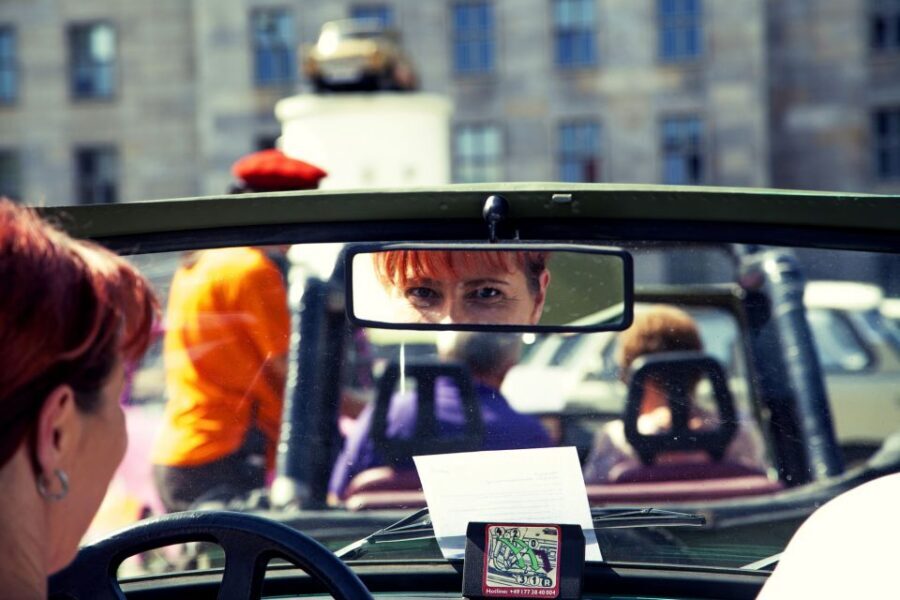
A Trabant is a character. You might get everything working perfectly, or you might get a small reminder that old tech plus Berlin weather can be unpredictable.
One rider described an issue near the end of the tour where the radio stopped and the wipers stopped working a few minutes before finishing. They still loved the experience, saying it seemed more weather-related than anything else.
Audio clarity is another practical point. One rider said it was very hard to hear in the car and asked whether an app or online solution could improve it. So if you’re picky about audio, don’t assume you’ll catch every word perfectly at every moment. The route is still the main event, and the guide’s live presence helps fill gaps.
TrabiWorld and the museum: extending the story after the streets
After the ride, the tour suggests you visit the Trabi Museum at Trabi World to refresh your knowledge of the vehicle. This is a nice add-on if you want the cultural context behind the car, not only the Cold War storyline.
It also gives you a clean way to end the experience. Instead of rushing from site to site, you return to the same base area and can connect what you just did—driving a Trabant—back to what the Trabant meant.
Price and value: is $116 worth it?
At $116 per person for about 135 minutes, this isn’t a budget activity. But it does offer value in the way it’s structured: you’re not just paying for a route. You’re paying for a driver-in-a-vehicle experience with insurance included and mileage/petrol covered.
The tour includes liability and comprehensive insurance, but it also lists a 650€ excess in case of damage. That’s a normal protection structure for car-based tours, but it’s worth understanding so you don’t get surprised if anything happens. You should drive carefully, especially on cobbles and in tighter city moments.
What you’re getting at this price:
- A private Trabant that you drive yourself (not shared with random passengers beyond your ticket group)
- A guide coordinating the convoy plus live radio commentary
- Mileage and petrol included
- A souvenir Trabi drivers license
- Audio guide support in English and German
If your travel style is mostly “see and move on,” you might consider it pricey. But if you want a Berlin Wall experience that’s interactive and memorable, the price starts to make sense fast.
Who this tour suits best (and who might not)
This is a great fit if you enjoy hands-on travel and you want Berlin’s Cold War era delivered through a moving, modern-city lens. It’s also a strong option for people who want a unique activity that creates instant photos because you’ll be in a car that practically begs for attention.
It’s especially good for:
- Couples, friends, and small groups who want to drive together (and potentially swap drivers)
- History-minded travelers who like stories but don’t need a lecture
- People who appreciate quirky, authentic-feeling transport
It may not be ideal if:
- You want long stops to read every interpretive panel
- You’re hard on audio details and need constant crystal-clear narration
- You dislike bumpy surfaces and aren’t comfortable with city driving (training helps, but it’s still driving)
If you’re coming from a place where you expect a calm bus ride, this will feel more active. That’s the point.
Booking check: should you ride the Wall Ride Trabi Tour?
I’d book it if you want Berlin history with motion, sound, and a real sense of “this is where the city was controlled.” The route hits multiple iconic wall-era sites, and the self-drive format makes the experience stick.
I’d think twice if you need lots of quiet reflection, you’re very sensitive to audio volume, or you’re worried about comfort on cobblestones. But if you can handle a little road vibration and you’re excited to drive, this is one of the more memorable ways to understand the Wall era—because you experience it as a street-level journey, not a distant museum topic.
FAQ
FAQ
Do I need a driver’s license to take the tour?
Yes. The tour requires you to bring your driver’s license, and it also lists age and driving class requirements (18+, class 2 resp B).
How long is the Berlin Wall Ride Guided Trabi Tour?
The tour duration is 135 minutes.
Where do I meet for the tour?
Meet at TrabiWorld, Zimmerstrasse 97 (corner of Wilhelmstrasse), 10117 Berlin-Mitte. U6 to Kochstrasse is the nearby stop.
Do I drive the Trabant myself?
Yes. The tour includes a private Trabi that you drive yourself, while the guide travels in front of the convoy.
What languages are available during the tour?
The live guide is available in English and German. Audio guide support is also listed for German and English.
Is the tour wheelchair accessible?
Yes, it’s listed as wheelchair accessible.
What are the vehicle limits per Trabant?
Each Trabant allows a maximum of 4 people or 330 kilograms total. Drivers can change during the tour.
Is insurance included, and is there a deductible?
Insurance is included, and the tour lists a 650€ excess in case of damage.
Is entry to the sights included?
No. Entry to the sights is not included.
Can I get a refund if plans change?
Yes. Free cancellation is listed, with full refunds up to 24 hours in advance.
What should I bring besides my driver’s license?
Based on the provided information, your driver’s license is the key requirement to bring.