REVIEW · BERLIN
Berlin: Tickets to the Computer Games Museum
Book on GetYourGuide →Operated by Computerspielemuseum · Bookable on GetYourGuide
Video game time travel starts here. Berlin’s Computer Games Museum turns game history into something you can touch—literally—across hundreds of exhibits and hands-on stations. I especially like the way the museum mixes famous milestones (think Pong-level legends) with interactive pieces that let you try the tech, not just read about it. Another win is the sheer spread of eras, with machines from classic home consoles to handhelds.
The museum’s big promise is over 300 exhibits across computer gaming’s timeline, plus both a permanent exhibition and a special exhibition. I’d also call out the “try it yourself” approach: you’ll see legendary systems and then get to play on them through multiple interactive installations. One thing to plan for: the arcade and popular stations can get crowded and noisy, and the building is full of kids having fun at full volume.
In This Review
- Key Things You’ll Notice Inside
- Why This Museum Exists (And Why It Works)
- Permanent Exhibition: Pong-Level Legends and Playable Installations
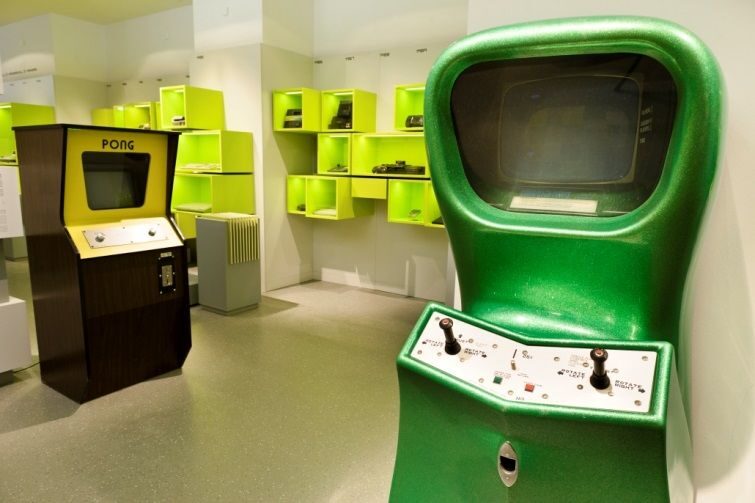
- Pong and the early arcade vibe
- Interactive “wow” stations
- 52 game milestones across decades
- Wall of Hardware: Consoles and Handhelds in a Physical Timeline
- The Arcade Corner and Coin-Op Classics You’ll Want to Hunt For
- 3D and Handheld Moments: How the Museum Brings You Forward
- Special Exhibition: A Second Flavor to Your Ticket
- How to Plan Your Visit So You Don’t Feel Rushed
- Meeting point and location
- Price and Value: Is $22 a Smart Deal?
- Who This Museum Is Best For (And Who Might Want to Think Twice)
- Should You Book a Ticket for the Computer Games Museum?
- FAQ
- How long is the Computer Games Museum ticket valid?
- How much does it cost?
- What does the ticket include?
- Do I need a guide as part of the ticket?
- Where is the meeting point?
- Is wheelchair access available?
- Can I reserve and pay later?
- Is free cancellation available?
Key Things You’ll Notice Inside
- Hands-on from day one: many exhibits are designed for playing, not just looking
- A timeline you can test: old hardware and newer gaming ideas sit side by side
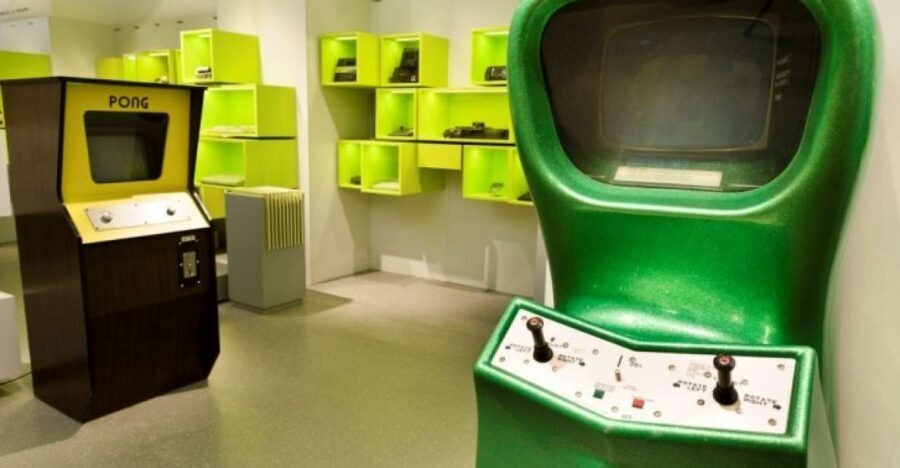
- Iconic stations: Pong, coin-op cabinets like Donkey Kong and Space Invaders, and bold interactive games
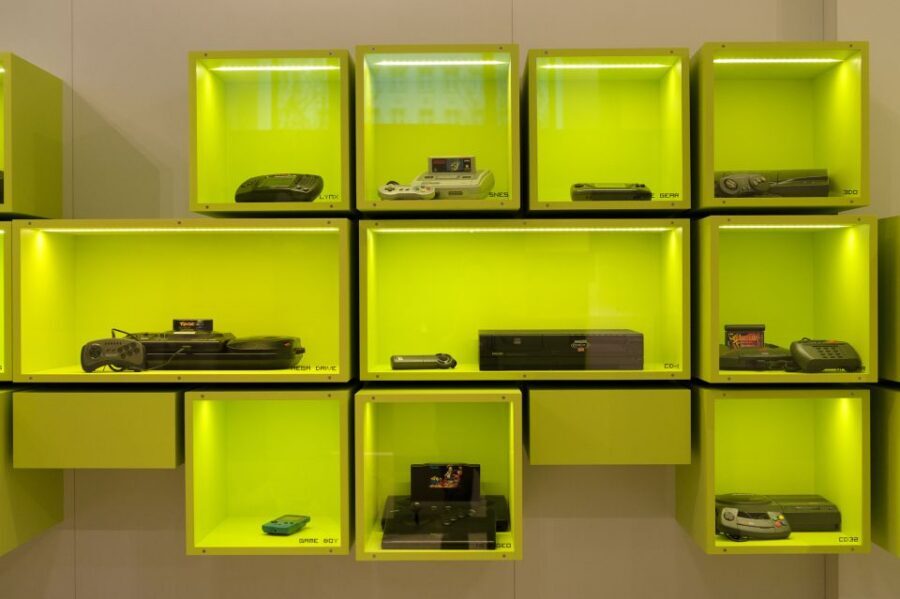
- Hardware Wall focus: Commodore, Game & Watch, PlayStation, and more
- 3D game experiences: 3D television and handheld 3DS-style play options
- Milestone highlights: familiar names like Pacman, Bomb Jack, and GTA IV-style touchpoints
Why This Museum Exists (And Why It Works)
The Computer Games Museum in Berlin is built on a simple idea: games are culture, and culture is meant to be experienced. Instead of staging a silent gallery where you only look, it treats gaming artifacts—consoles, computers, arcade machines, controllers, and game systems—as interactive works of art. That changes how you move through the museum.
You don’t just pass through rooms. You stop. You play. You compare eras with your own hands. One moment you’re staring at a classic arcade setup; the next moment you’re learning what it feels like when early controls are slow, simple, and strangely hard. It’s a different way to understand technological progress: not as a textbook, but as a sequence of “try it” moments.
Even if you’re not a hardcore gamer, you’ll recognize the landmarks. The museum leans heavily on famous names and machines, but it keeps pointing you back to how games evolved—through hardware choices, controller design, and new ways of displaying action on screen. That’s why this feels more like a hands-on history lesson than a themed arcade.
You can also read our reviews of more tours and experiences in Berlin



Permanent Exhibition: Pong-Level Legends and Playable Installations
Your ticket covers the permanent exhibition, and it’s where the museum’s core story comes into focus. You’ll get the sweep of roughly 70 years of computer gaming, with more than 300 exhibits total. That sounds broad, and it is. The key is that the museum doesn’t ask you to see everything perfectly—it gives you multiple entry points so you can follow what grabs you.
Pong and the early arcade vibe
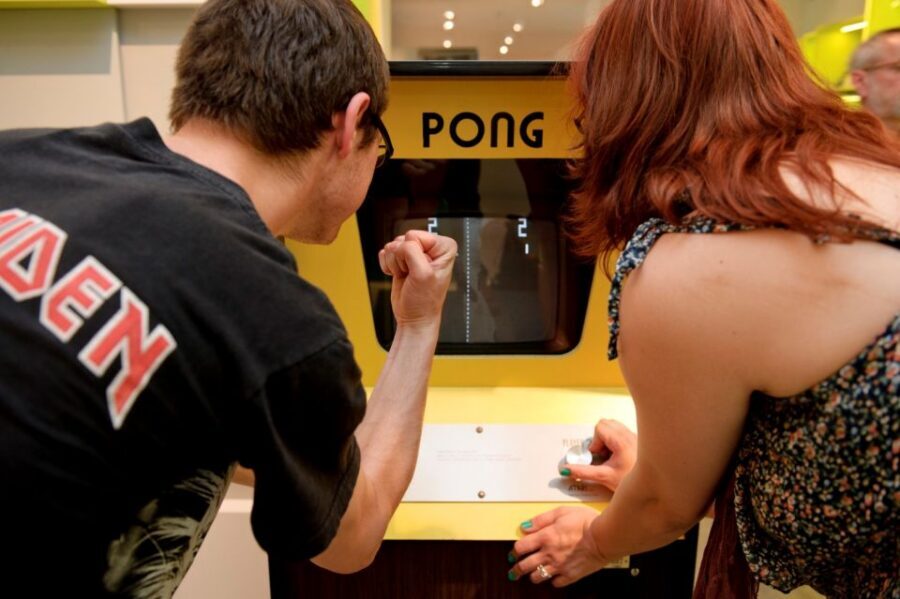
The museum highlights legendary machines such as the Pong arcade machine. This matters because Pong isn’t just a famous name. It’s a snapshot of how games started: simple rules, clear goals, and a direct connection between your input and what happens on screen. Seeing it in a museum is one thing. Playing around with that style is another. It helps you understand why later games could get more complex without losing the basic thrill.
Interactive “wow” stations
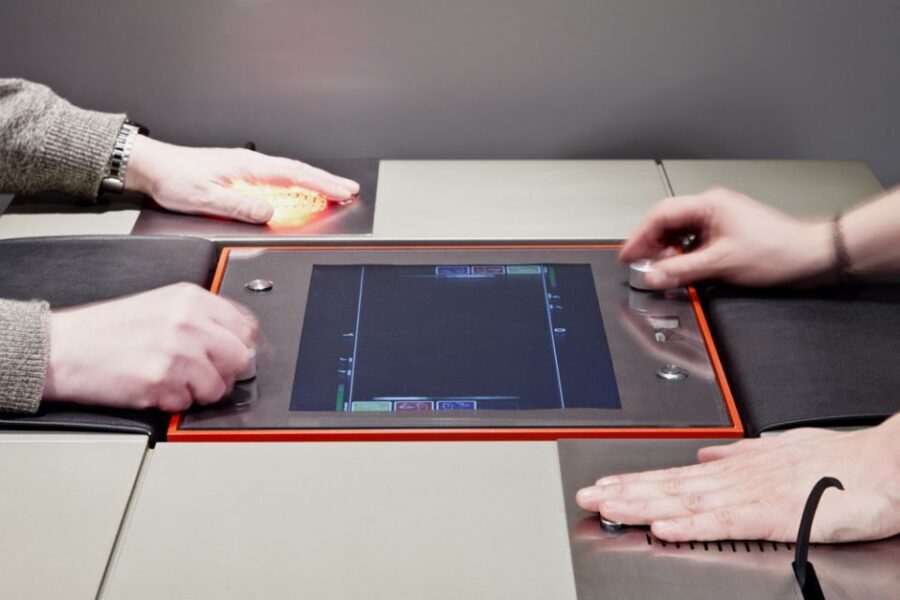
The museum is packed with installations that aim for that kid-at-heart feeling. You’ll run into bold stations like PainStation (where “prove your courage” is not just a tagline) and fun controller-driven pieces such as the Giant Controller and other oversized input experiments. There’s also Nimrod listed among the legendary items you can expect to encounter.
These interactive works are often what people remember because they’re not passive. You press, aim, react, and learn the game’s logic in real time. If you grew up with consoles, it’s the most satisfying kind of nostalgia: not just seeing the object, but getting to interact with it the way it was meant to be used.
52 game milestones across decades
Another layer in the permanent exhibition is the set of 52 highlights tied to famous games. Names mentioned include Pacman, Bomb Jack, and Grand Theft Auto IV. That range is useful. It helps you connect the dots from arcade-era mechanics to later design and storytelling directions.
You can use this section as your “anchors.” Spend time where you feel your attention snap into place—then let the surrounding exhibits fill in the gaps around those anchor games.
You can also read our reviews of more museum experiences in Berlin






Wall of Hardware: Consoles and Handhelds in a Physical Timeline
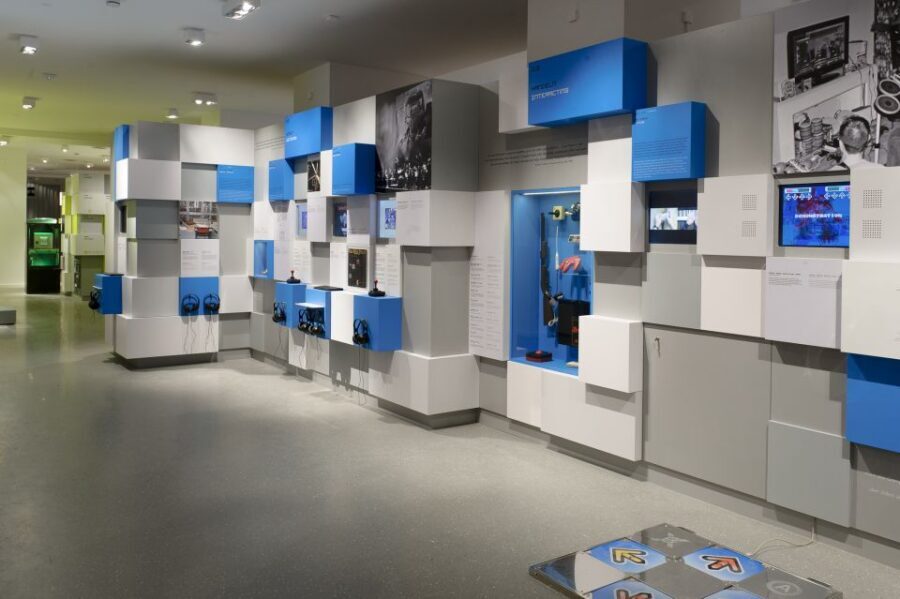
One of the museum’s smartest moves is the Wall of Hardware. Instead of treating gaming hardware like a pile of relics, this section gives you generations you can visually compare and mentally sort.
You’ll see favorites from different eras, including Commodore, Game & Watch, and PlayStation. Even if you don’t know all the models, you’ll understand the evolution: the shape of devices, the feel of controllers, the way screens display action, and how interfaces got more detailed over time.
This is a great area for “explain-it-to-me” curiosity. When you’re standing in front of older systems, you start asking practical questions, like:
- What did people actually use to control games back then?
- How did the tech limit what games could show?
- When did certain styles of interfaces become common?
The museum turns those questions into a walk you can actually do, not just think about.
The Arcade Corner and Coin-Op Classics You’ll Want to Hunt For
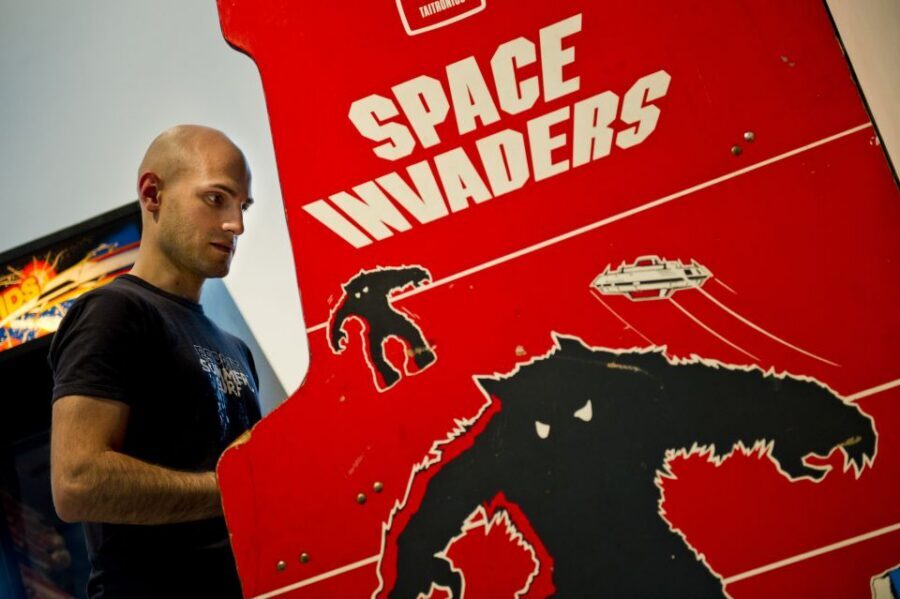
Near the Wall of Hardware, the museum includes a small amusement arcade with coin-operated machines. The big payoff here is that you can play classic arcade games in a setup that feels like the real thing.
Two specific coin-op examples called out are Donkey Kong and Space Invaders. If you like arcade culture, this corner is where you’ll start trading turns with whoever you came with, because everyone wants a first go.
One practical caution: the arcade is small and popular. If you’re aiming to play a specific machine, give yourself time and patience. The experience is better when you treat the arcade like a short quest rather than a single scheduled stop.
Also, plan for sound and energy. The museum is hands-on, and the arcade stations in particular can get loud when people are trying to beat scores.
3D and Handheld Moments: How the Museum Brings You Forward
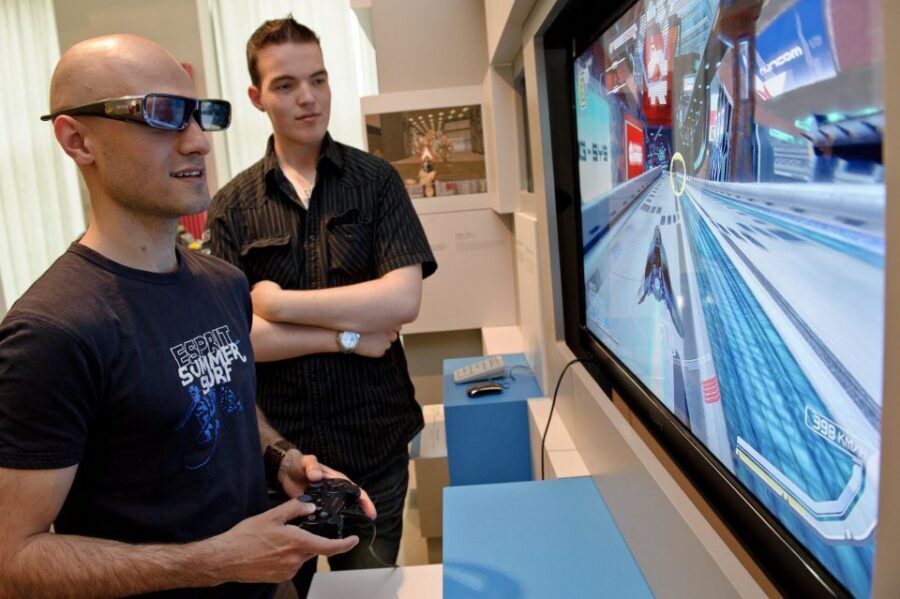
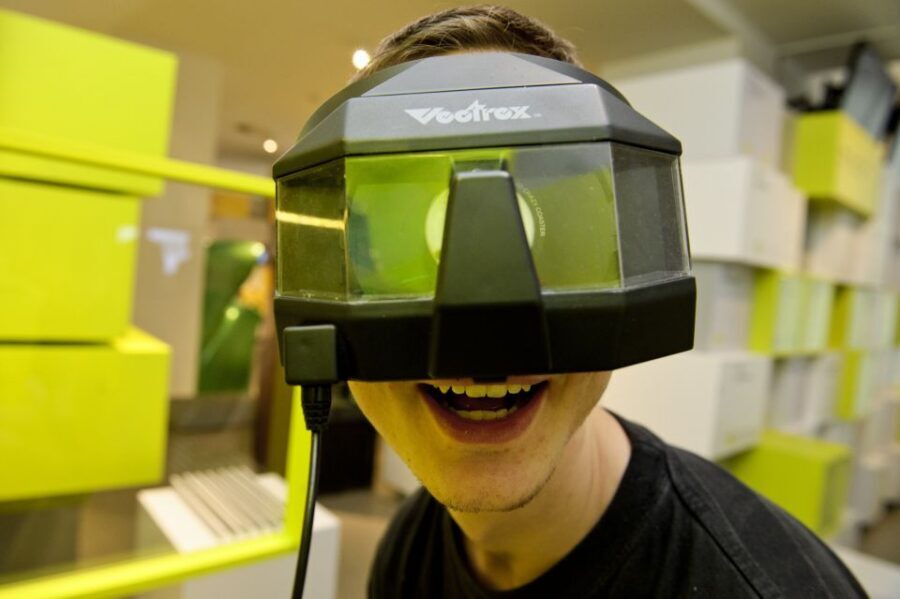
The permanent exhibition also includes experiences that bring the story into more modern territory. You’ll find the museum’s 3D game options, including a 3D television. There’s also mention of handheld-style play with the 3DS.
This part matters because it changes the museum’s feel. Early gaming is about input and basic visuals. 3D gaming introduces motion, perspective, and a different way your brain tracks what’s happening on screen. When you try a 3D station yourself, you get a quick reality check: graphics aren’t the only difference. Control style and spatial awareness change too.
If you’re visiting with mixed ages or mixed tastes, this is a good “peace treaty” zone. Older arcade fans often enjoy the novelty of the 3D rooms, and younger visitors may be drawn more to current-feeling formats like handheld and 3D setups.
Special Exhibition: A Second Flavor to Your Ticket
Your ticket doesn’t only cover the permanent setup. It also includes special exhibitions. That’s where the museum can add something different from the core timeline.
The museum’s overall framework stays consistent—computer gaming history, milestone exhibits, and interactive play—but special exhibitions are a chance for the museum to spotlight a theme, a newer development, or a different angle on gaming culture. It’s also one of the best reasons to choose a full-day visit instead of trying to sprint through in an hour.
If you like variety, plan to spend at least some of your time on that second exhibition area. Even when you’re a “main timeline” person, you’ll usually find something in the special wing that reframes what you thought you knew.
How to Plan Your Visit So You Don’t Feel Rushed
The ticket is valid for 1 day, so you can choose a pace that fits you. The most common mistake is trying to watch everything instead of playing the parts that make the museum feel alive.
Here’s how I’d plan it to get the best mix of history and fun:
- Start with the anchor zones
Go to the areas that help you build the timeline fast—like the Wall of Hardware and the milestone highlights. This helps you understand what you’re seeing as you move forward.
- Then do the hands-on stations in bursts
Pick a few interactive pieces you truly care about—Pong-style stations, the coin-op arcade, and the high-attention installations like PainStation. Do them in short sessions so you don’t burn out before you reach everything.
- Save time for the 3D/handheld corner
The 3D stations feel like a different museum mood. I’d treat them like a mid-to-late visit break, not an early task.
- Finish with the special exhibition
By the end, you’ll have better context for whatever theme it presents.
Meeting point and location
Plan to meet at Computer Games Museum Berlin, Karl-Marx-Allee 93a, 10243 Berlin. Since transfers aren’t included, give yourself enough time to reach the museum calmly rather than late and stressed. You’ll want a relaxed arrival so the first playable stations don’t feel like a race.
Price and Value: Is $22 a Smart Deal?
At about $22 per person for a full day that includes both the permanent exhibition and special exhibitions, this is strong value for a museum experience. Why?
- You get built-in entertainment: the museum isn’t only displays. You’re invited to play.
- There’s enough variety for more than one interest: retro consoles, arcade cabinets, interactive big-controller games, and 3D experiences.
- The time window is flexible in practice: since it’s a one-day ticket, you can slow down if something grabs you.
If you’re the type who loves hands-on exhibits and doesn’t mind spending real time at stations, this price feels very reasonable. If your ideal museum day is mostly quiet reading and minimal interaction, you might find the arcade and interactive zones a little overwhelming. But even then, the hardware timeline and playable classics give you plenty to engage with.
Who This Museum Is Best For (And Who Might Want to Think Twice)
This museum is ideal for:
- Game fans who want a physical timeline of consoles and classic titles
- Families looking for a day that combines history with active play
- People curious about tech evolution in a way that doesn’t feel like homework
- Nostalgia-driven visitors who want to reconnect with older arcade and console eras
It may be less ideal if:
- You hate crowded, noisy spaces (the arcade can be a bottleneck)
- You dislike interactive exhibits and prefer strictly observational museums
- You’re expecting a big museum campus with lots of room to spread out (the arcade is described as small and popular)
Should You Book a Ticket for the Computer Games Museum?
Yes—if you want a museum that turns gaming history into hands-on play. The ticket covers the permanent exhibition plus a special exhibition, and the museum is built around interaction, from classic arcade machines like Donkey Kong and Space Invaders to major playable milestones and 3D experiences.
Before you book, do one quick reality check: set expectations that this is a playful, high-energy museum. If you’re going during a busy time, the most popular stations can mean waiting and loud fun. If that’s your style, this is a very satisfying Berlin stop with real value for a one-day plan.
FAQ
How long is the Computer Games Museum ticket valid?
The ticket is valid for 1 day.
How much does it cost?
It costs about $22 per person.
What does the ticket include?
It includes tickets for the permanent exhibition and the special exhibitions.
Do I need a guide as part of the ticket?
No. A guide is not included.
Where is the meeting point?
Computer Games Museum Berlin, Karl-Marx-Allee 93a, 10243 Berlin.
Is wheelchair access available?
Yes, the museum is wheelchair accessible.
Can I reserve and pay later?
Yes. The offer includes reserve now & pay later.
Is free cancellation available?
Yes. Free cancellation is available up to 24 hours in advance for a full refund.
If you tell me when you’re visiting Berlin and who’s going (age range matters here), I can suggest the best way to pace your one-day visit around the playable stations you’re most likely to want.