REVIEW · BERLIN
Berlin Trabi Museum: Day Ticket
Book on GetYourGuide →Operated by Trabiworld Trabi-Safari · Bookable on GetYourGuide
A tiny car museum with a big personality? The Trabi Museum at Checkpoint Charlie packs in 14 different Trabants and tells the story through real vehicles, not just posters. You’ll also spend time in the lightshow theater with short films, then wander a miniature GDR world.
I especially like how the displays cover different stages of the famous peoples car’s life, plus unusual uses like camping Trabis and even military versions. One thing to keep in mind: it’s not a huge museum, so if you want hours of roaming, you may finish sooner than you expect.
In This Review
- Key Things You’ll Notice Right Away
- Checkpoint Charlie’s Trabi Museum: What You’re Really Buying With One Day
- The 14 Vehicles: A Speed Run Through Trabant Design Changes
- Why this section is worth your time
- The main drawback
- Camping Trabis and Military Trucks: How the Car Fit GDR Life
- A practical tip
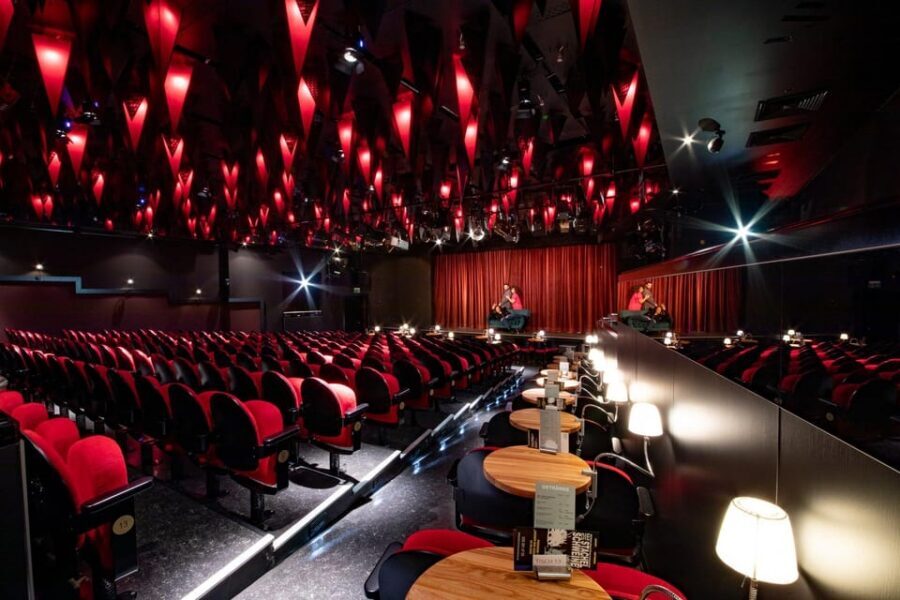
- The Lightshow Theater: Short Films Then the Miniature GDR World
- What I like about this pairing
- A note on expectations
- Optional Trabi Safari: Getting Behind the Wheel (If You Want the Hands-On Part)
- Who should add the safari
- Price Check: Is $10 Good Value for This Day Ticket?
- How to Plan Your Time at the Museum
- Small-logistics advice
- Languages, Access, and the Feel of the Experience
- Should You Book This Trabi Museum Day Ticket?
- FAQ
- Where is the meeting point for the Trabi Museum day ticket?
- What is included with the day ticket?
- How long is the ticket valid?
- How much does it cost?
- What languages are available for the host or greeter?
- Is it wheelchair accessible?
- Is there a skip-the-line benefit?
- Can I cancel after booking?
Key Things You’ll Notice Right Away
- 14 Trabants on display gives you variety fast
- Checkpoint Charlie location makes it easy to pair with other Berlin history stops
- Vehicle development timeline shows how the same car changed over time
- Camping and military Trabis explain how people used Trabant life in the GDR
- Lightshow theater films give context before you start walking the displays
- Optional Trabi Safari lets you go beyond looking at cars
Checkpoint Charlie’s Trabi Museum: What You’re Really Buying With One Day
For $10 per person, you’re getting a very focused day ticket to one of the more unusual history stops in Berlin. This is the first Trabi Museum in Berlin, and it sits at Checkpoint Charlie—so you’re not traveling across town just to see cars. You’re layering car culture onto Cold War history in a spot that’s already famous for the story it represents.
The ticket is also built for flexibility. It’s valid for one day, and you can check availability for starting times. That matters because you can plan this around your other Berlin priorities instead of treating it like a rigid appointment.
And here’s the real value: the museum doesn’t just say Trabant was the peoples car. It shows you how it evolved and how it was used—by civilians in normal life, by campers, and by the state in less normal ways.
If you’re short on time, this place works. If you’re long on time, it still works, but you should go in with the right expectations.
You can also read our reviews of more tours and experiences in Berlin



The 14 Vehicles: A Speed Run Through Trabant Design Changes
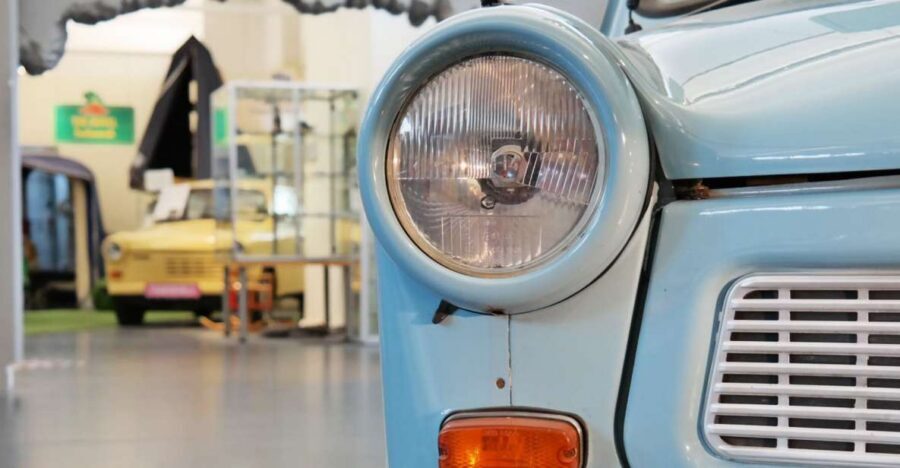
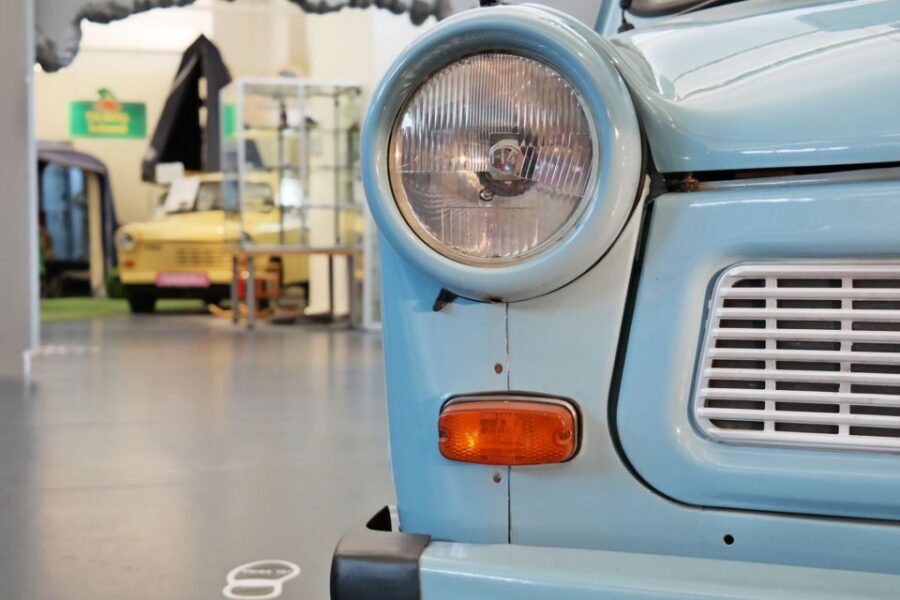
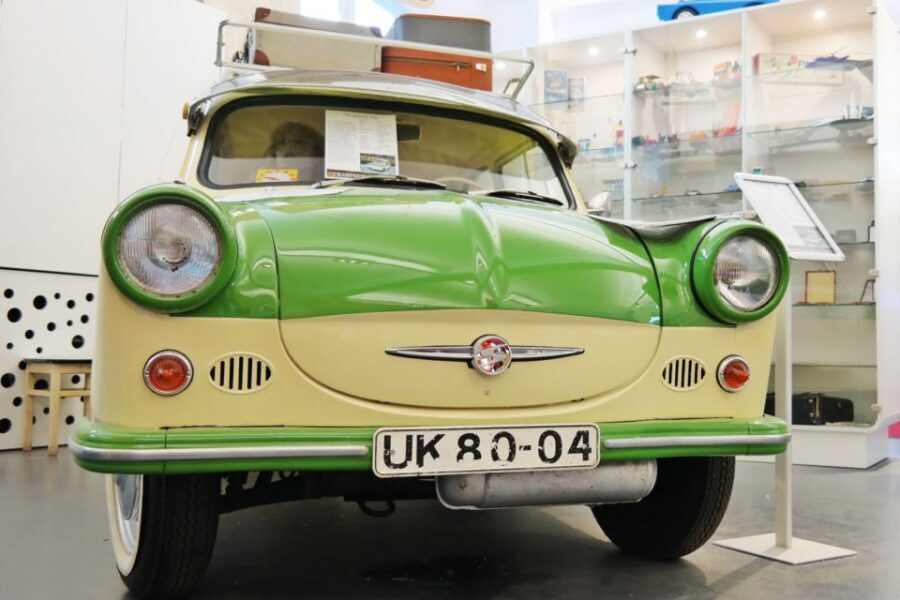
The core of the experience is the collection itself—14 different vehicles. This is where you’ll learn the names and details you usually miss when you just see a Trabi on the street: the Trabant’s production story beginning in 1958, and its reputation as a famous two-stroke car of the former GDR.
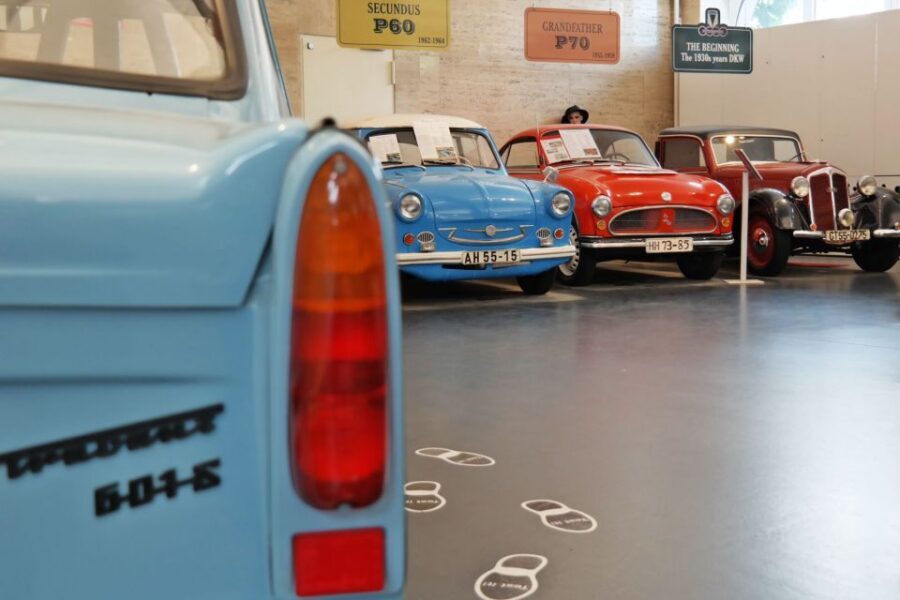
You’ll see different stages of development. That means you can spot how the design changed as time moved on, instead of treating the Trabi as one fixed icon. It’s a practical way to understand technology under constraint. When you’re only shown one model year, it’s easy to assume nothing changed. Here, you see change.
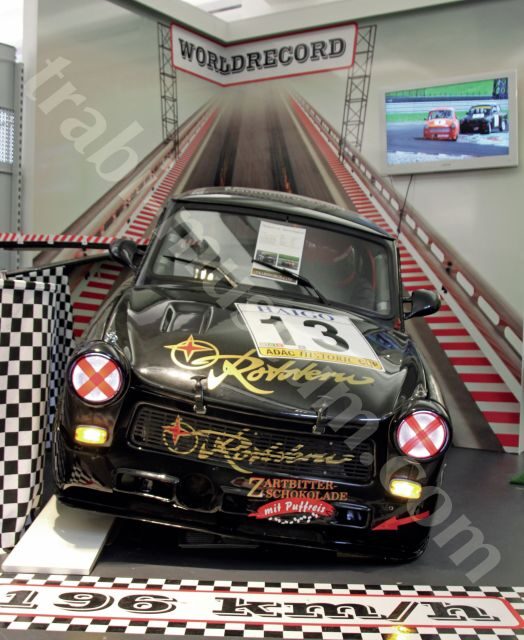
Look closely at the rarities, too. The collection includes the Trabant P70 with a wooden undercarriage, and it also highlights some performance extremes, including the fastest Trabi in the mix. These aren’t just oddities for photos. They help you understand what people tried to do—make something run, make it last, and make it fit real life.
Why this section is worth your time
A car museum can turn into a showroom. This one is more like a guided tour through problem-solving. The variety in vehicles and uses makes the history feel concrete.
The main drawback
Because the collection is compact, you’ll want to slow down for the details that matter to you. Don’t rush like you’re speed-scrolling through a gallery. If you do, you’ll miss the points that make this more than a quick stop.
Camping Trabis and Military Trucks: How the Car Fit GDR Life
One of the best things here is that the displays don’t keep the Trabant trapped in the role of charming street icon. You’ll see different uses, including camping Trabis and military vehicles.
That shift matters. It tells you the car wasn’t only for commuting and weekend fun. It also served the needs of an organized system—sometimes for travel, sometimes for specialized work. Seeing those versions helps you understand why the Trabi became such a visible part of everyday GDR identity.
This is also where the museum feels especially good for visitors who like context. You’re not just learning facts about engines and parts. You’re learning how a specific vehicle ecosystem worked under the rules of its time.
You can also read our reviews of more museum experiences in Berlin






A practical tip
If you’re the type who reads every label, you’ll have a great time here. If you’re not, still pause at the unusual displays—camping and military—because they give you the biggest takeaway per minute.
The Lightshow Theater: Short Films Then the Miniature GDR World
After the cars, the pacing changes. You’ll take a seat in the lightshow theater for short films about the Trabant. This is a nice transition because it gives you the story beats before (or as) you look at the physical exhibits.
Then you can visit the miniature GDR world. This is a clever way to grasp the bigger picture without needing a textbook. Miniatures also help you connect the car to the environment it came from—roads, settings, and the feel of the place.
What I like about this pairing
Cars are visual, but history is a timeline. The films help glue the timeline together, and the miniature world gives you something you can orient to fast. Together, they make the museum feel more like a whole experience, not just a lineup of cars.
A note on expectations
This isn’t a massive cinema complex. It’s a theater for short content, so plan for a brief but memorable stop rather than settling in for a long documentary session.
Optional Trabi Safari: Getting Behind the Wheel (If You Want the Hands-On Part)
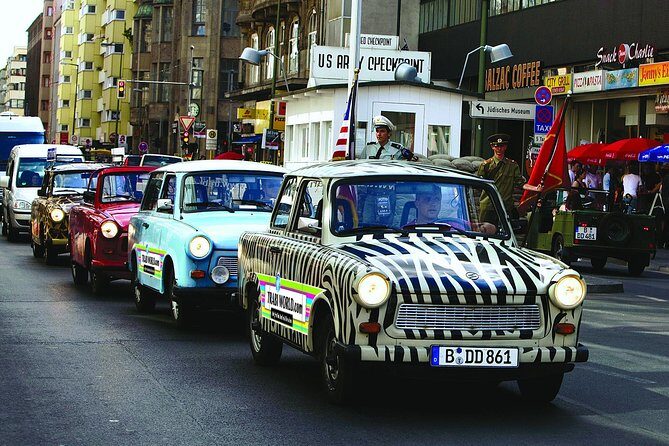
One of the most fun-sounding parts is that you can even get behind the wheel of a Trabi and go on a Trabi Safari. The routes are described as flexible, with options like going through the East or West and along the former wall, depending on what’s available.
Here’s the key practical point: the museum ticket you’re buying includes entry to the Trabi Museum, not a guarantee that the safari is automatically bundled into that same experience. The text suggests you can do it, but it doesn’t confirm it’s included in the basic day ticket. So if the driving part is your top priority, treat it as an add-on and check what’s offered on arrival.
Who should add the safari
If you love the idea of turning history into a small adventure, this is the part that can make the day feel way more personal. If you’re mostly there for the collection and films, you can skip that and still get full value.
Price Check: Is $10 Good Value for This Day Ticket?
At $10 per person, the price feels fair because the museum experience is tightly focused: a curated set of vehicles, a film theater, and a miniature world. You’re not paying for a half-day bus tour, multiple neighborhoods, or a big, spread-out program.
Is it perfect value? It depends on what you want.
- If you want a short, quirky, very Berlin-located stop with real vehicles and Cold War context, it’s strong value.
- If you expect a huge museum with hours of rotating exhibits, you might feel you paid for something that’s more compact than you imagined.
Your best move: use this as a purposeful stop. Pair it with Checkpoint Charlie-area sights and then go do something else with the rest of your day.
How to Plan Your Time at the Museum
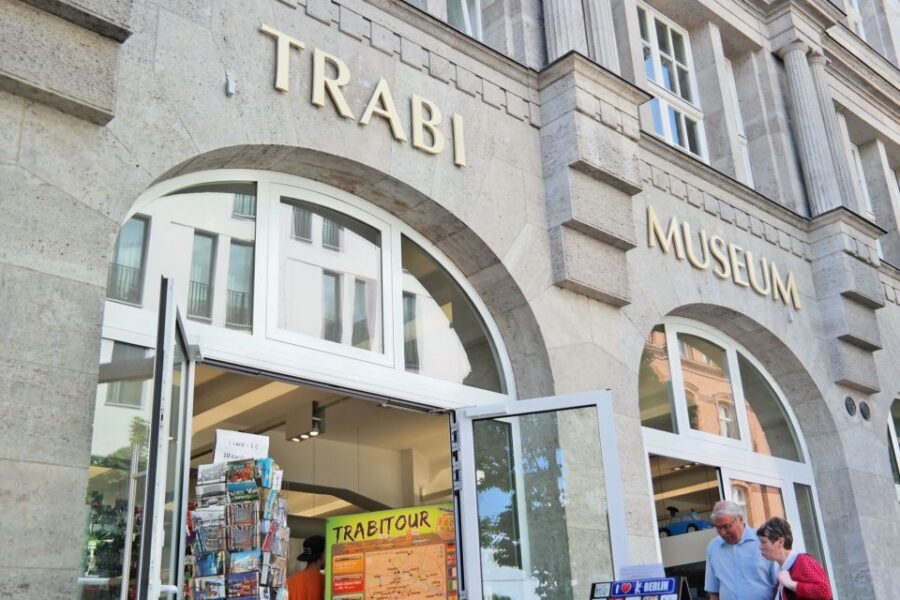
The meeting point is Zimmerstraße 14-15, 10969 Berlin. If the door is closed, cross the street and look for TrabiWorld on the left at Zimmerstr. 97-100.
Since the ticket is valid one day and the experience is arranged around starting times, I’d treat this like a flexible slot. Give yourself time to:
1) walk the vehicle displays slowly enough to catch the rarities,
2) take a seat for the lightshow theater film, and
3) leave room for the miniature GDR world.
Small-logistics advice
Go in ready to move at a museum pace, not a city-attraction pace. This is a place where you’ll do best if you stay present and read the labels where they explain the differences between the models.
Languages, Access, and the Feel of the Experience
The hosts speak English and German, which is a comfort if you’re traveling without fluent German. The experience is also listed as wheelchair accessible, so you shouldn’t have to worry about getting blocked by stairs as part of the basic visit.
The overall feel is practical and hands-on in the sense that you’re surrounded by real machines. Even if you’re not a car person, the context and variety help you connect the dots quickly.
Should You Book This Trabi Museum Day Ticket?
Book it if:
- you want a compact, quirky stop at a famous Berlin history site,
- you like cars but also want the why behind them (development stages and real uses),
- the idea of short films plus a miniature world sounds fun and not too long-winded.
Skip or reconsider if:
- you expect a massive museum you can spend most of the day inside,
- you want lots of different rooms and rotating exhibits rather than a focused collection.
If you’re building a Berlin day with Checkpoint Charlie and you want something unusual that still stays grounded in real history, this ticket makes a lot of sense. And if you’re the kind of person who likes to end the day with one memorable photo and one real takeaway, the Trabant lineup is a strong bet.
FAQ
Where is the meeting point for the Trabi Museum day ticket?
The meeting point is at Zimmerstraße 14-15, 10969 Berlin. If the door is closed, cross the street and find TrabiWorld on the left at Zimmerstr. 97-100.
What is included with the day ticket?
The ticket includes entry to the Trabi Museum.
How long is the ticket valid?
The ticket is valid for 1 day.
How much does it cost?
It costs $10 per person.
What languages are available for the host or greeter?
English and German.
Is it wheelchair accessible?
Yes, the experience is listed as wheelchair accessible.
Is there a skip-the-line benefit?
Yes, skip the ticket line is included.
Can I cancel after booking?
Free cancellation is available up to 24 hours in advance for a full refund.