REVIEW · BERLIN
East Berlin Food & History Tour with Eating Europe
Book on Viator →Operated by Eating Europe Food Tours Berlin · Bookable on Viator
Food, beer, and a side of history. This East Berlin Food & History Tour through Friedrichshain strings together included tastings with real-life stories about the people who shaped the neighborhood, not just the buildings. I like how the meals go global while still grounding you in local Berlin street-food culture. I also like the built-in craft beer that keeps the pace relaxed as you walk. One drawback: if you want a tour that sticks only to classic German dishes, this one will feel more international than you might expect.
You’re walking for about 3 hours 30 minutes with a small group (maximum 12), and the guide leads the whole show in English. You start at Haroun near the Neue Bahnhofstraße area and end by Mühlenstraße, so you cover a good chunk of East Berlin without needing to hop around with transit.
At $107.68 per person, the best value is that you’re not just buying snacks once—you’re getting a multi-stop route where tastings are part of the price, plus additional context from the street to the Wall. It also helps that the tour uses a mobile ticket, and many stops include admission that’s covered.
In This Review
- Key takeaways before you go
- East Berlin food is really an immigration story
- Getting started at Haroun and working up an appetite
- Boxi Spätshop and Berliner Kindl: where beer starts to matter
- Döner at Haroun: street food with Turkish roots
- NYOM Restaurant and TyTy Tacos: Vietnamese flavor in neon lighting
- RAW-Gelände: from rail repair yard to alternative culture hub
- Warschauer Straße currywurst: the Berlin street-food icon
- Schnitzel Burger and Berliner Pilsner: end-of-East-Berlin conversation
- East Side Gallery: murals across the Wall’s longest surviving stretch
- Aleppo Supper Club: Syrian mezze to close the savory arc
- The remaining squat house stop: politics, concerts, and education
- Price and value: what you’re really paying for
- What type of traveler should book this
- Should you book this East Berlin Food & History Tour?
- FAQ
- How long is the East Berlin Food & History Tour?
- What does the tour cost?
- Is the tour offered in English?
- Are the tastings included in the price?
- Is craft beer included?
- How big is the group?
- Where do you meet and where does the tour end?
- Can the tour accommodate dietary needs?
- Can children join?
- Is hotel pickup included?
Key takeaways before you go
- No extra-pay tastings. The tastings are included, so you can focus on eating and asking questions.
- Craft beer is part of the route. You’ll get beer at stops where it fits the local story.
- A tight group makes it conversational. Max 12 people means you’re not shouting over strangers.
- East Berlin is more than the Wall. You’ll connect food to immigration, everyday life, and political change.
- You’ll hit big icons and small corners. From East Side Gallery to street-level eateries and alternative culture spaces.
- Dietary needs are often workable. They aim to accommodate things like vegetarian and gluten-free, but severe allergies aren’t a fit.
East Berlin food is really an immigration story
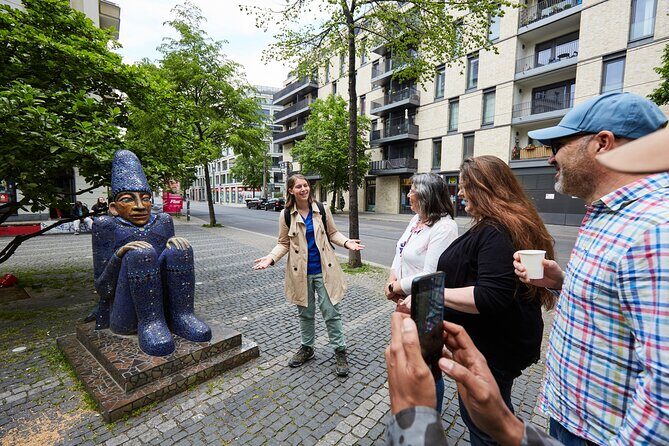
Berlin food in general is shaped by movement—people arriving, people adapting, and recipes settling into daily life. This tour focuses hard on East Berlin, especially the neighborhood energy around Friedrichshain, and the result is that you taste more than dishes. You taste how communities built a food culture that still feels distinctly Berlin.
What I like about this approach is that it doesn’t treat history like a museum label. You get the “why” behind foods you’ve likely heard of—like currywurst—while also meeting the other half of the story: Turkish, Syrian/Levantine, and Vietnamese influences that became normal parts of the city’s street-food world.
You can also read our reviews of more food & drink experiences in Berlin


Getting started at Haroun and working up an appetite
The tour begins at Haroun (Neue Bahnhofstraße 28, 10245 Berlin). Expect a proper start: you’ll gather with your guide, get oriented, and settle into the walking rhythm. The whole experience is paced around short stops for tastings and short stretches to the next area, so you’ll feel like you’re seeing the city in real time rather than cramming everything into one long sit-down.
A practical tip: come hungry. People often suggest skipping breakfast for this kind of route, and the reason is simple—once tastings start stacking up, you don’t want to be fighting your appetite.
Also, you’ll be in good shape if you like asking questions. The format rewards curiosity. If you’re the type who wants details about how a dish arrived or why a place matters, this tour style fits you well.
Boxi Spätshop and Berliner Kindl: where beer starts to matter
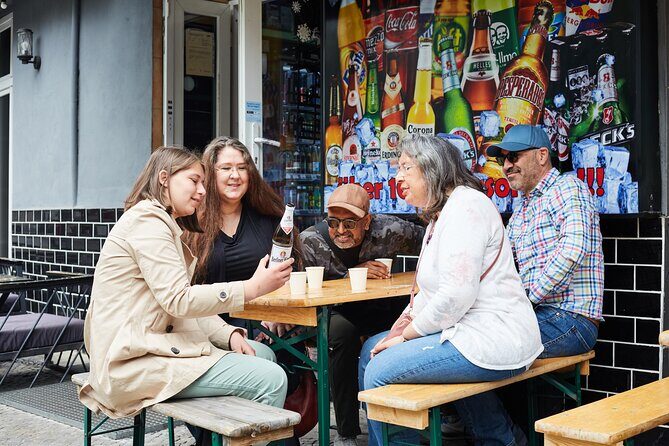
The first food-and-drink stop is at a small liquor shop called Boxi Spätshop on Boxhagener Straße (Boxhagener Strasse 76). The idea here is charmingly simple: start with a local beer, then attach a story to it.
You’ll try Berliner Kindl (Light). Since this is the opening stop, it’s doing two jobs at once: warming up your taste buds and establishing a Berlin baseline. Beer is also a smart bridge into the rest of the tour. It keeps the experience sociable and makes the history feel like something you’re walking through, not reading off a screen.
Potential drawback for some people: if you don’t drink beer, this part may feel less flexible. The good news is that you’re walking the whole time and not stuck in one location.
Döner at Haroun: street food with Turkish roots
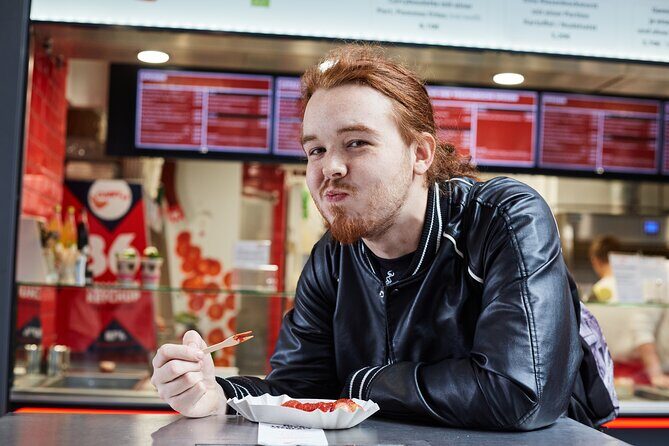
Next you move to Haroun for a Shawarma Döner eatery stop, a place that fits the tour theme perfectly. Döner has become one of Berlin’s most familiar street foods, but this stop frames it as part of a larger immigrant story—how Turkish and Middle Eastern communities shaped what you see on the street.
You’ll get a taste here, and the guide connects it to Berlin’s wider street-food evolution. That’s what makes this stop more interesting than just eating fast food: you learn how “normal” street meals often carry layers of migration, work, and adaptation.
If you’re sensitive to spice, ask early about what’s in your portion. The tour does accommodate dietary needs, but standard street-food customization isn’t something you should assume will be automatic at every bite.
NYOM Restaurant and TyTy Tacos: Vietnamese flavor in neon lighting
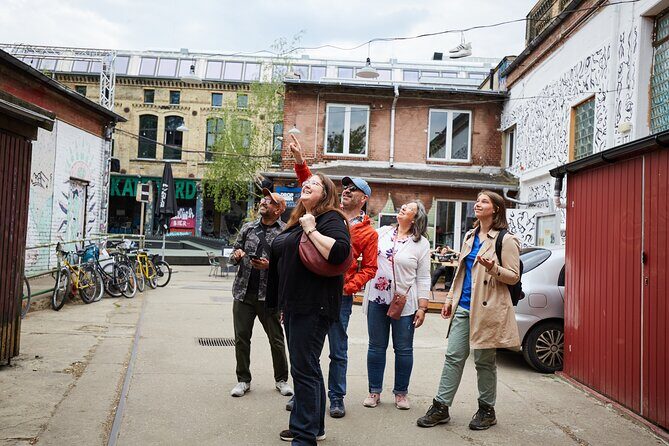
The tour then heads to NYOM Restaurant, a neon-lit Vietnamese spot where you try TyTy Tacos. This is where the route starts to feel fun and fast—food that’s not just German-by-default, but the kind of street-style creative eating you only notice once you’re in the neighborhoods where it belongs.
The key value here isn’t just tasting tacos. It’s seeing how Berlin’s food scene blends categories: street food, immigrant culinary traditions, and local creativity. You come away with a sharper understanding of why Berlin doesn’t treat ethnic food as an exotic side quest. It’s part of daily life.
This is also one of the stops that’s easiest to enjoy even if you’re picky. It’s not a sit-down course menu; it’s practical, grab-and-go energy.
You can also read our reviews of more tours and experiences in Berlin

RAW-Gelände: from rail repair yard to alternative culture hub
RAW-Gelände is one of those Berlin spaces that makes you rethink what a city “should” be. This long-running site has had multiple lives—an imperial rail repair yard, a Soviet factory, and later a Deutsche Bahn warehouse. Today it functions as a cultural and creative zone, with art galleries, indie record companies, night clubs, beer gardens, and even an indoor bouldering hall and a major indoor skate park.
On the tour, you spend a short stop time here. That brevity matters: you don’t get stuck in a long walking maze. Instead, the guide uses the space as a living map of East Berlin’s shifts—industry to post-industrial repurposing, and then to alternative culture.
A useful consideration: RAW-Gelände is more “hang out and explore” than “sit and listen.” If you prefer quiet, structured attractions, you may want to mentally switch gears here and let the space do some of the storytelling.
Warschauer Straße currywurst: the Berlin street-food icon
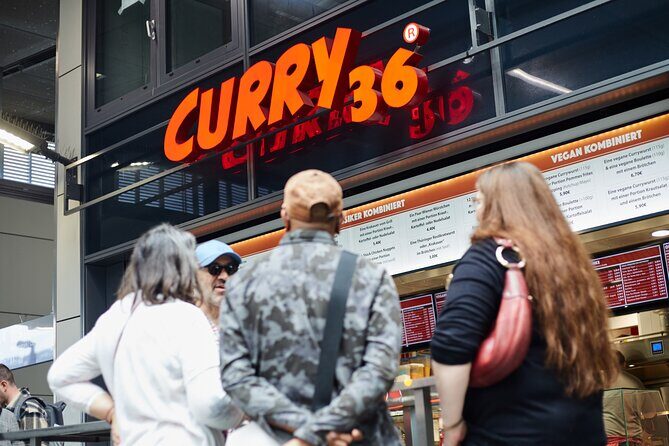
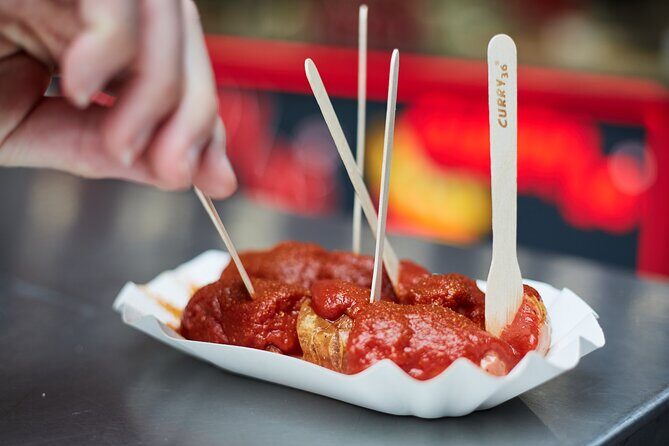
Then it’s back to the classic Berlin street-food moment: currywurst on Warschauer Straße. You’ll try what’s described as one of the best and most famous versions in Berlin, and the guide explains how the iconic dish was created.
Currywurst is one of those foods that tourists often treat as a single bite and forget. This tour tries to prevent that. You hear the origin story, plus the reason it became an everyday East Berlin staple—fast, filling, and easy to find when life moves quickly.
This stop is included, and it’s one of the most “you have to try it” parts of the route. If you’re not a fan of thick sauces or ketchup-style sweetness, you can still sample carefully. But if you like street food, it’s hard to beat the combination of history talk and a warm, satisfying bite.
Schnitzel Burger and Berliner Pilsner: end-of-East-Berlin conversation
The tour continues on Warschauer Straße with the final meal-and-drink moment: a Schnitzel Burger plus a Berliner Pilsner beer. It’s a compact restaurant/club setting, and the guide uses that last food stop to connect daily life in East Berlin to the events leading to the fall of the Berlin Wall.
That pairing works because you’re eating something East Berlin adjacent—street-style comfort food—while learning how political change didn’t happen in a vacuum. It happened while people went to work, ate, argued, listened, and waited for the world to shift.
If you’re visiting Berlin and you only do one “food plus history” tour, this is the route style you’ll want. It gives you a human-scale way to understand the Wall era without drowning you in facts.
East Side Gallery: murals across the Wall’s longest surviving stretch
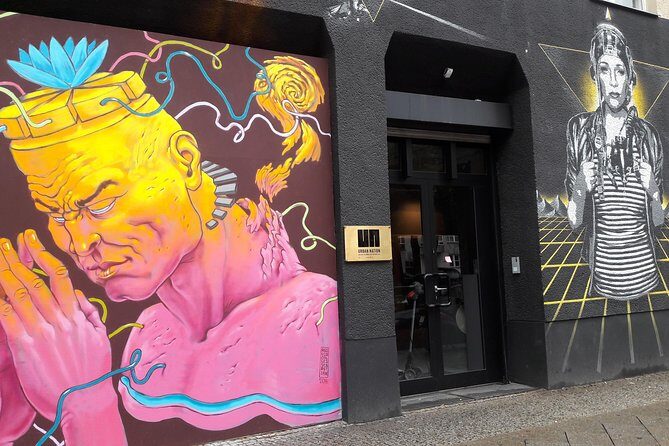
Next comes the Wall art stop: East Side Gallery. This open-air stretch centers on the longest surviving segment of the Berlin Wall, measuring just over 1.3 miles from end to end. Each segment is painted with colorful, often politically themed murals, and many have been in place for over twenty years.
This isn’t a quick photo stop just for the postcard. The guide’s job is to connect the murals to memory and to the politics that shaped daily life before the Wall fell. If you’re the type who reads meaning into street art, you’ll likely linger a bit here.
Practical tip: wear comfy shoes. This part is outside, and while the tour time at the gallery isn’t long, East Side Gallery can still feel like a place you’ll want to look closely.
Aleppo Supper Club: Syrian mezze to close the savory arc
After the Wall murals, you move to Aleppo Supper Club, where you try a traditional mezze dish with Syrian and Levante flavors. This is a smart closing choice because it adds warmth and variety after the German street-food focus.
Mezze is ideal for a walking tour day because it feels social, shareable, and snack-like even when it’s part of a planned stop. You also get another layer of the tour’s main theme: immigrant food becoming part of Berlin’s normal rhythm.
If you’re vegetarian, mezze often works well—just check what’s included in your portion. The tour notes they aim to accommodate dietary needs where possible.
The remaining squat house stop: politics, concerts, and education
One more stop rounds out the experience at one of the last remaining Berlin squat houses, known for hosting political and educational events and activities, along with live concerts, for nearly a decade.
This stop adds an extra angle to the day: not just the Wall and not just restaurants, but the kind of community spaces where ideas get tested and expressed. Berlin squat history can sound abstract until you see it as a real, functioning place that served multiple roles—cultural, social, and political.
If you like Berlin for its offbeat side, you’ll probably appreciate this ending. It also makes the day feel less like a “tour box” and more like a walk through systems—food, culture, and power—working together.
Price and value: what you’re really paying for
$107.68 might sound like a lot for a food walk, until you look at what’s bundled. You’re paying for a multi-stop route that includes tastings and admission across several locations, plus craft beer included at parts of the schedule. There’s also a local English-speaking guide and Food & the City insider tips.
Most importantly, the group size limit (maximum 12) changes the feel. When it’s not a huge crowd, you get time to ask questions and hear the stories behind the meals without feeling rushed.
Is it still worth it if you only want one or two foods? Probably not. But if you’re open to trying unfamiliar dishes—especially when the tour connects them to Berlin’s immigrant neighborhoods—this is a high-value way to cover ground in a short time.
What type of traveler should book this
You’ll probably love this if you:
- want East Berlin context that ties directly to what you eat
- like street food and don’t mind the route being more snack-forward than restaurant-forward
- enjoy a walking pace where the guide talks just enough, then lets you taste
- care about how immigration and politics shaped everyday life in Berlin
You might reconsider if you:
- want a tour focused mainly on classic German dishes
- have severe food allergies (the tour says it isn’t suitable for life-threatening allergies)
- want a totally alcohol-free experience (craft beer is included at stops)
Should you book this East Berlin Food & History Tour?
Yes, if your goal is simple: eat well while understanding why East Berlin tastes the way it does. The included tastings, craft beer moments, and the Wall-linked cultural stops create a day that feels like Berlin rather than a checklist.
Book it especially if you’re visiting for a short trip and want to get out of the most obvious tourist paths. Start hungry, come ready to ask questions, and you’ll leave with a stronger sense of East Berlin as a living neighborhood—one where currywurst, döner, mezze, and beer all belong to the same story.
FAQ
How long is the East Berlin Food & History Tour?
It’s about 3 hours 30 minutes.
What does the tour cost?
It costs $107.68 per person.
Is the tour offered in English?
Yes, the tour is offered in English.
Are the tastings included in the price?
Yes. The tastings mentioned are included, though offerings and tour stops may vary by day or season.
Is craft beer included?
Craft beer is included as part of the tour.
How big is the group?
The tour has a maximum of 12 travelers.
Where do you meet and where does the tour end?
You start at Haroun, Neue Bahnhofstraße 28, 10245 Berlin, and the tour ends at Mühlenstraße 78, 10243 Berlin.
Can the tour accommodate dietary needs?
They try to accommodate vegetarians, gluten-free guests, and other dietary needs if you email or note it at booking. The experience isn’t suitable for guests with severe or life-threatening food allergies.
Can children join?
Children under 4 don’t need a ticket and can join for free, but food isn’t included. Paid tickets with food included are available for ages 4 and up.
Is hotel pickup included?
No, hotel pickup and drop-off aren’t included.