REVIEW · BERLIN
East Meets West: Berlin Food Culture & Street Art
Book on Viator →Operated by Fork & Walk - Food Tours Berlin · Bookable on Viator
Berlin does street food and street art together.
This tour strings them side by side with neighborhood history, from East Side Gallery politics to Kreuzberg’s food scene. I like that it’s a small group (max 8), so the guide can actually stop, explain, and answer questions without rushing. I also like the East-to-West balance: you’re not just eating, you’re seeing how Berlin’s past shows up on sidewalks, walls, and in what people order.
What I especially like here is the food mix. You’ll get local classics and also immigrant-food flavors, including Turkish street-style, modern Ukrainian comfort food, and vegan donuts—plus beverages and a Berliner Pilsner. The other big plus is the way history gets woven into the walking: Nazi-era and Communist-era context is part of the story, not a separate lecture.
One consideration: if you’re chasing big-ticket sightseeing, this route is lighter on major monuments and heavier on tastings, murals, and neighborhood texture. You’ll walk at a steady pace, and some stops are short because the goal is to keep your stomach and your eyes both busy.
In This Review
- Key things I’d circle before you go
- A Food-and-Art Route From Friedrichshain to Kreuzberg
- Getting Your Bearings in Friedrichshain
- East Side Gallery: The Berlin Wall Where You Can See the Story
- Kreuzberg’s Past and Present: Where Food Trends Live
- Scheers Schnitzel: Eating a Berlin Institution
- Street Art Berlin: Murals With East and West in the Same Frame
- Slava Berlin and Leylak: Ukrainian Comfort and Anatolian Street Food
- Ketels Curry: The Currywurst Story You Might Miss on Your Own
- Markthalle Neun: The 1900s Market Hall Still Feeding the City
- Brammibal’s Donuts: Vegan Sweetness at Maybachufer
- Price and Portion Reality: Is It Worth $169.38?
- Who This Tour Suits Best (and Who Might Want Another Option)
- Should You Book This Berlin Food Culture and Street Art Tour?
- FAQ
- What’s the tour duration?
- Where does the tour start and where does it end?
- What time does the tour begin?
- What’s included in the price?
- Are vegetarian options available?
- How many people are in the group?
- Is a BVG transport ticket included?
Key things I’d circle before you go
- A tight group (max 8) means more Q&A and less standing around.
- Food across cultures: German schnitzel and currywurst, Ukrainian soul food, Turkish street food, plus vegan donuts.
- East Side Gallery includes the real Wall section where street art is the point.
- Markthalle Neun brings you into a historic market hall still used like a food hub.
- Street art stops focus on how East and West storylines show up on murals.
- Plan to eat breakfast-light. This tour is designed to leave you full.
A Food-and-Art Route From Friedrichshain to Kreuzberg
This is a 3.5-hour walking food tour in Berlin’s east-meets-west pocket, starting in Friedrichshain and ending at U Kottbusser Tor. You meet at Industriepalast Hostel on Warschauer Str., then head through the kind of neighborhoods where you can hear the city thinking—cafés, kiosks, galleries, and food shops all mixed together.
The start time is 12:00 pm, so it works great if you want a late lunch plan instead of a full day of tours. The pace is described as moderate walking, and you’ll want comfortable shoes. If the weather is damp (common enough in Berlin), pack a rain jacket or poncho.
One practical note that matters: the tour includes 6 tastings plus beverages, and there’s local Berliner Pilsner beer included. So you’re paying for a guided “how to eat Berlin” route—not just a couple snacks. If you’re vegetarian, a vegetarian option is available if you request it when booking.
You can also read our reviews of more food & drink experiences in Berlin


Getting Your Bearings in Friedrichshain
You start in Friedrichshain, a neighborhood tied to revolutionary East Berliners. The vibe here is part history, part modern creativity. It’s a fitting launch point because the tour’s theme is literal: Berlin’s story is written in layers, and street-level food culture is one of the easiest ways to read those layers.
This first stop is short, but it sets the tone. The guide uses the streets around you to frame what you’ll see later—especially how different political eras shaped where people lived, what they could access, and what they built in the gaps.
If you like city tours that start with context (instead of jumping straight to food), this opening works. If you’re more of a jump-in-and-go person, don’t worry: you’re soon moving toward tastings and murals rather than spending the whole morning listening.
East Side Gallery: The Berlin Wall Where You Can See the Story
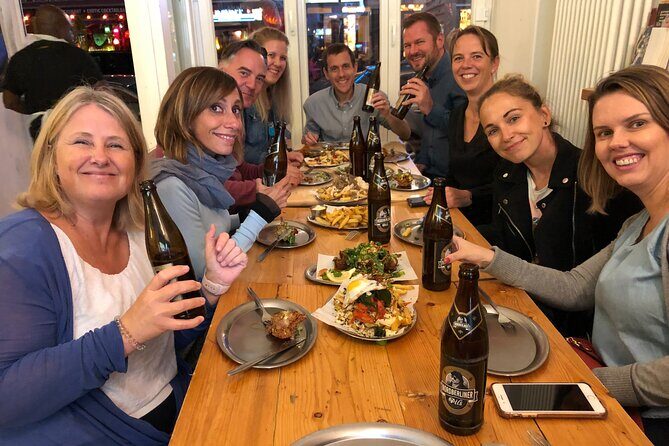
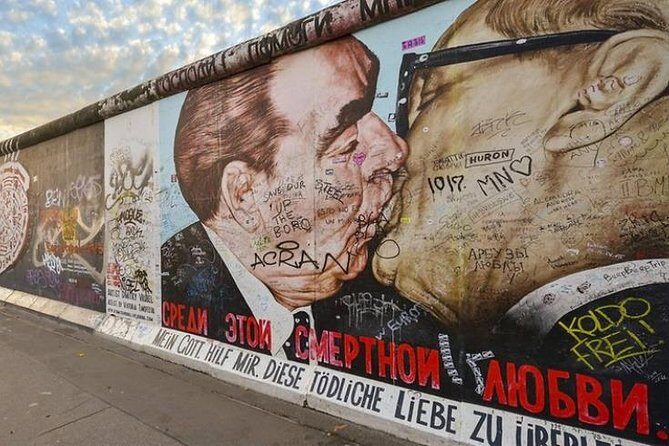
Next up is the East Side Gallery, the former Berlin Wall stretch turned open-air canvas. This stop is about the intersection of politics and art: you’ll explore political street art along the Wall’s longest still-standing stretch, including a section you can reach and touch.
This is one of the best places on the route if you care about how street art functions as public memory. Here it’s not just decoration. It’s commentary—paint laid over hard history.
A drawback to consider: the Wall segment itself is a defined area, so don’t expect a long, roaming monument-style experience. You’re there for meaning and visuals, not for an extended museum stop. Still, you’ll get a concentrated hit of Berlin identity in a small space.
Kreuzberg’s Past and Present: Where Food Trends Live
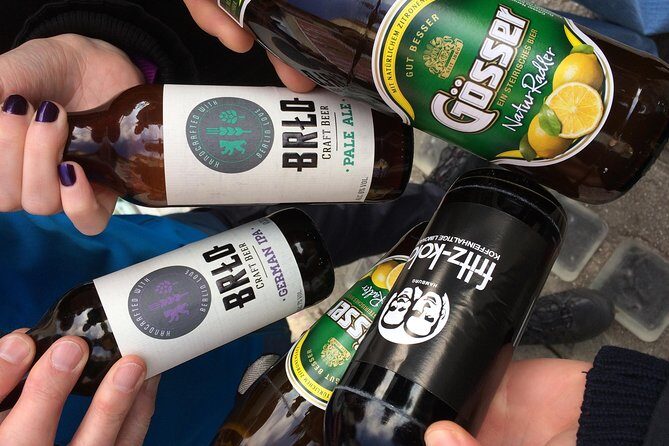
After the Wall art, the tour crosses into Kreuzberg, formerly West Berlin. Kreuzberg is where the tour really turns into the “eat like a local” part of the story: culinary trends, funky bars, and a busy urban scene all show up alongside the neighborhood’s historical meaning.
This is also where Berlin’s multicultural side becomes more than trivia. One of the tour’s strongest themes is that migration reshaped local food. You’ll see that right away through the choices around you and the kinds of dishes you’re guided to.
The time you spend here is longer than at some earlier points, and that matters. It gives the guide room to connect street-level smells and flavors to the big picture: what Berlin has been, and what it keeps becoming.
Scheers Schnitzel: Eating a Berlin Institution
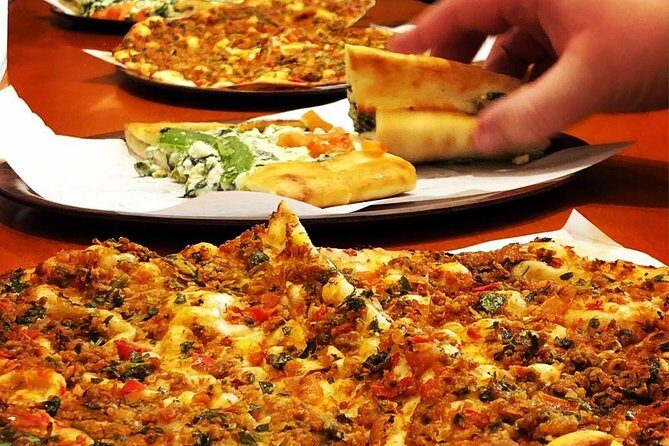
Schnitzel in Berlin isn’t just a meal—it’s a marker. The stop at Scheers Schnitzel is built around the idea that some dishes are local shorthand: you taste them and suddenly Berlin makes more sense.
Expect a classic Berlin-style schnitzel stop within the tour’s flow—short and to the point, like the city itself when it wants you to get on with it. The practical advantage is that it anchors the tour’s food variety with something unmistakably German before you move into other cultural directions.
If you’re the type who likes to start with a known flavor, then branch out, this fits well. If you avoid meat, you’ll want to rely on the vegetarian option request ahead of time.
You can also read our reviews of more tours and experiences in Berlin

Street Art Berlin: Murals With East and West in the Same Frame
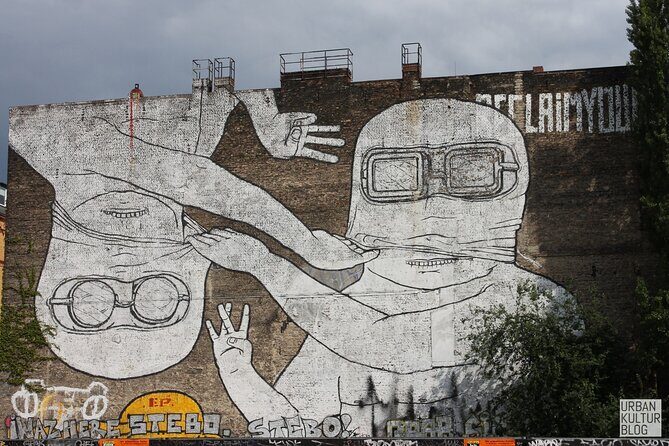
Then you hit Street Art Berlin, described as a street-art mecca in Europe. This is where the tour shifts from “history lesson” energy to “how do people talk back?” energy.
You’ll uncover one of the world-famous street art murals and learn stories about the neighborhood’s past—stories tied to Nazi Germany and the presence of SS soldiers who once wandered these streets. That link between art and history is the whole point: murals are a way people rewrite what happened, what it means, and what they refuse to let fade.
A practical note: street art stops are short by design. You’re not doing a museum walk-through. You’re standing in front of a mural, taking in the details, and moving on to the next flavor stop before the day gets too long.
Slava Berlin and Leylak: Ukrainian Comfort and Anatolian Street Food
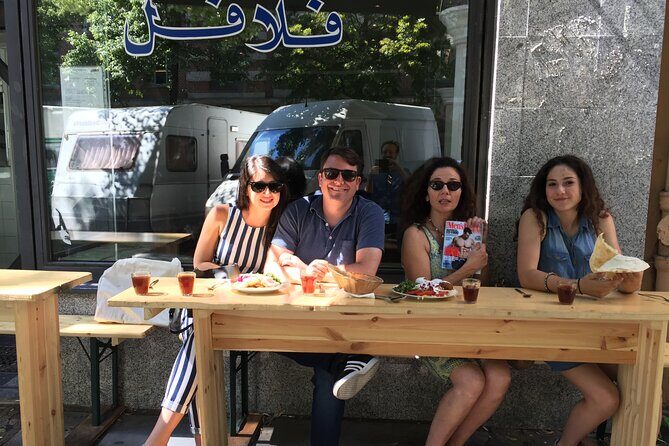
From there, the tour leans into immigrant-food storytelling with two stops that contrast in a good way.
Slava Berlin! Ukrainian Soulfood & Nalivanki is an immigrant women-led restaurant where you taste the modern Ukrainian story in Berlin. The focus is on comfort food and cultural continuity—what people cook when they’re carrying memory with them.
Then you head to Leylak, where Turkish influence in Kreuzberg is treated as foundational rather than decorative. The tour frames it plainly: Berlin holds the largest Turkish population outside of Turkey, and Kreuzberg’s multicultural community grew strongly through Turkish presence over the 80s and 90s. Here, you’re guided to the heart of Anatolian street-food flavors.
This pair works well for your taste buds. You go from Ukrainian soul-food comfort into Turkish street food, and you feel the difference in spice, texture, and how each cuisine builds flavor. If you love discovering how neighborhoods become food cultures, this is a high point.
Ketels Curry: The Currywurst Story You Might Miss on Your Own
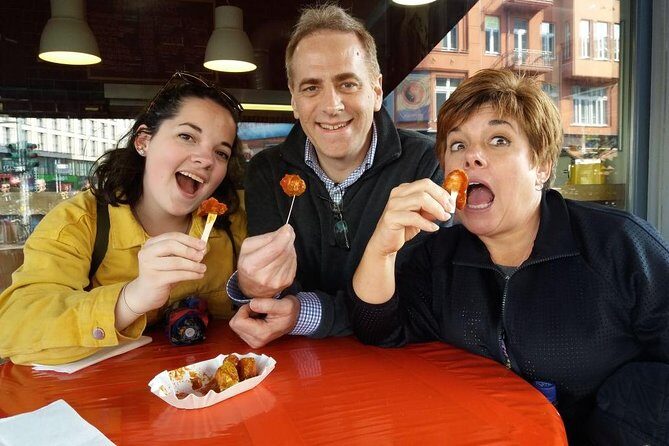
Next is Ketels Curry, tied to the infamous currywurst story—one that changed Berlin’s culinary face. The best part of this stop isn’t just the taste. It’s the context: you learn that the story is hidden, and many Berliners aren’t even aware of details behind it.
This is a classic example of why a guided food tour can beat a DIY route. Yes, you could walk around and grab currywurst. But you’d miss the “why this became Berlin” explanation that turns a snack into a local reference point.
If you’re a first-time Berlin visitor, this stop helps you understand what Berlin considers worth arguing about. And if you’re a repeat visitor, it gives you a reason to try currywurst again with new eyes.
Markthalle Neun: The 1900s Market Hall Still Feeding the City
One of the most memorable stops is Markthalle Neun, a refurbished market hall with a 1900s origin story. The tour describes it as a space that survived WW2 destruction and avoided the worst of commercialization pressures that can wipe out local character.
More importantly, Markthalle Neun functions like a real food hub. The event calendar regularly brings together fine food and beverage people from Berlin and beyond, tying the market to producers and keeping it connected to the city’s food culture rather than acting like a tourist prop.
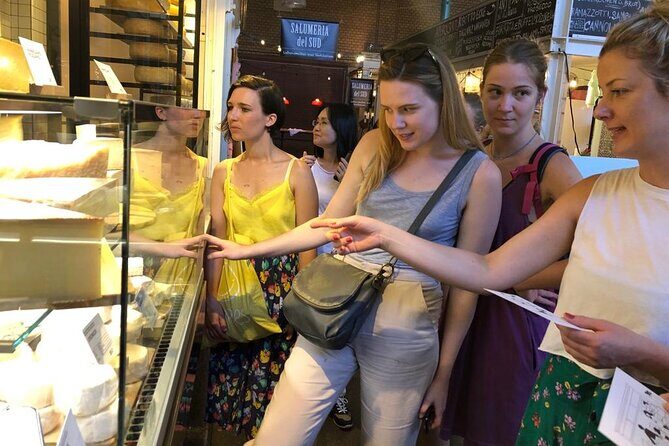
This is a good moment to slow down. You’re not just sprinting from dish to dish—you’re landing in a place where multiple producers and styles coexist. If you like markets as a travel tool (they’re where you learn what’s actually popular), you’ll appreciate this stop.
Brammibal’s Donuts: Vegan Sweetness at Maybachufer
To close the route, you get Brammibal’s Donuts (Maybachufer), with a focus on vegan donuts. The tour frames this as a Berlin strength: the city treats vegan food as normal, not a niche.
This is a satisfying landing point after savory stops. Don’t worry—you’re not stuck with only sugar. The tour has beverages and tastings throughout the route, so this feels like a finish, not a punishment.
If you’re skeptical about vegan desserts, go anyway. Berlin-style donuts aren’t trying to impress you with health logic; they’re trying to impress you with texture and flavor. Even if you don’t go vegan at home, this stop is still a fun way to understand the city’s food creativity.
Price and Portion Reality: Is It Worth $169.38?
At $169.38 per person for about 3 hours 30 minutes, the value hinges on what you get inside the walking time. You’re paying for:
- 6 local tastings
- beverages
- Berliner Pilsner beer
- a local guide for history + culture context
- a small group size (max 8)
That adds up to more than “just food samples.” The price is basically buying you a guided shortcut to places you’d probably miss or mis-time on your own, plus the explanation that connects dishes to neighborhoods and historical shifts.
The portions also seem designed for people who skipped breakfast. People note that you’ll have enough to skip dinner after the tour, which lines up with the number of tastings. My advice: eat lightly before you go and save your appetite for what comes next. If you show up stuffed, you’ll feel rushed through what should be enjoyable.
The one thing I’d keep in mind is that the tour is not a long museum-and-views day. If you want lots of major sights, you may feel like you packed in snacks and street art. If you want Berlin the way locals talk about Berlin—through food, walls, and neighborhoods—this tour fits the bill.
Who This Tour Suits Best (and Who Might Want Another Option)
This is best for:
- first-time visitors who want a Berlin “best of the streets” mix without planning
- people who like street art with context, not just photo ops
- anyone who enjoys multicultural food stories, especially Turkish and Ukrainian flavors in Kreuzberg
- travelers who appreciate a small-group pace with time to ask questions
You might want to think twice if:
- you want a checklist of famous monuments and long stop-and-stare sightseeing
- you’re very sensitive to walking (it’s moderate, but it’s still a walking tour)
- you need a very specific diet and haven’t requested the vegetarian option or dietary needs ahead of time
One more small detail: the tour starts near public transport and ends at U Kottbusser Tor (U8 and U1). That makes it easy to continue your day afterward.
Should You Book This Berlin Food Culture and Street Art Tour?
Yes, if your idea of a great Berlin day is simple: walk, eat, look at walls, and learn why the city looks the way it does. The biggest wins are the balance—German classics beside Turkish and Ukrainian dishes—and the fact that street art isn’t treated as separate from history. In particular, the guide quality seems to matter a lot, with names like Lee, Elena, Tiago, and Will repeatedly coming up for strong history-and-food storytelling.
I’d book it if you can enjoy short, focused stops and you’re hungry enough to commit to the tastings. If you’re chasing long sightseeing segments and big-name attractions, you may find the pacing too food- and mural-centered.
FAQ
What’s the tour duration?
It’s listed as about 3 hours 30 minutes.
Where does the tour start and where does it end?
It starts at Industriepalast Hostel, Warschauer Str. 43, 10243 Berlin and ends at U Kottbusser Tor, 10999 Berlin (near the U8 and U1 lines).
What time does the tour begin?
The start time is 12:00 pm.
What’s included in the price?
You get 6 local tastings, beverages, food tasting, and a local Berliner Pilsner beer, plus the local guide.
Are vegetarian options available?
Yes. A vegetarian option is available, and you should advise your dietary needs at booking.
How many people are in the group?
The tour has a maximum of 8 travelers.
Is a BVG transport ticket included?
No. A BVG transport ticket is not included.