REVIEW · BERLIN
Explore The Berlin Wall: Cold War Berlin and Behind the Berlin Wall
Book on Viator →Operated by Birchys Berlin Tours · Bookable on Viator
Berlin can feel like a museum. This tour makes the Berlin Wall feel real, fast—without wasting time hunting for the next fragment. I especially like the small-group pace that keeps things moving between major wall landmarks, and the way the guide connects the sites to survival and escape stories you won’t get from a quick stop on your own.
One thing to keep in mind: it’s a history-focused route with several outdoor stops, so dress for wind and cold and plan on some steady walking.
Key details I’d plan around
- One long wall memorial plus a full cross-section helps you understand the wall’s structure in a single stop.
- Checkpoint Charlie is brief but packed with Cold War face-offs and escape attempts.
- Topography of Terror’s surviving wall fragment ties directly to the former Luftwaffe area and an escape story.
- A rare GDR watch tower is included, and you may be able to climb if conditions allow.
- Potsdamer Platz shows the transformation from death-strip geography to modern business and entertainment.
In This Review
- Cold War Berlin in One Easy Route
- Small Group, English Guide, and a Plan That Actually Fits 3 Hours
- Stop 1: Memorial of the Berlin Wall and the Death-Strip You Can See
- Stop 2: Checkpoint Charlie in a Quick, High-Meaning Stop
- Stop 3: Topography of Terror’s Wall Fragment and the Escape Link
- Stop 4: GDR Watch Tower and the View That Changes Everything
- Stop 5: Potsdamer Platz and the Death-Strip’s Modern Transformation
- Guides Who Make the Wall Feel Like People, Not Just Structures
- Price and Value: Is $32.67 Worth It?
- What to Bring, and How to Get More From Every Stop
- Should You Book This Berlin Wall Tour?
- FAQ
- How long is the Berlin Wall tour?
- What time does the tour start, and where does it meet?
- How many stops are included?
- Is admission included for the stops?
- What language is the tour offered in?
- Is this a walking tour?
- What’s the group size limit?
- Do I need a printed ticket?
- Are service animals allowed?
- Is there a free cancellation option?
Cold War Berlin in One Easy Route
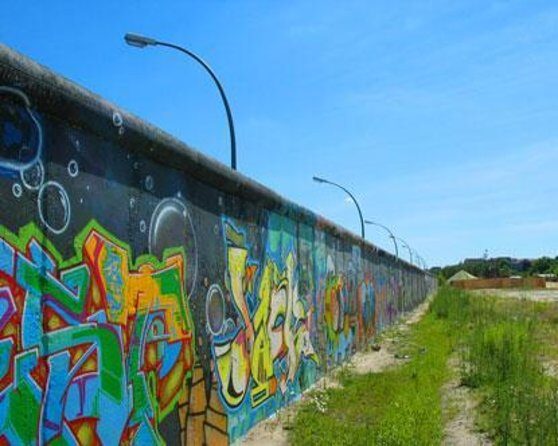
If you only have a morning (or one afternoon) and you want the Berlin Wall story without turning it into a scavenger hunt, this tour is built for you. It strings together several key wall-related sites in central Berlin, so you can compare what’s left behind with what replaced it after reunification.
What I like most is the way the route is designed to reduce wasted time. Instead of mapping out “where the wall used to be” and then spending energy figuring out the next location, you get a planned sequence. And because the tour is in English and capped at a small group size, you’re not stuck listening over a crowd.
Another plus: the guides aren’t just reciting dates. The strongest version of this tour turns the wall into people—people who tried, people who were caught, and people who survived. Several guides tied to this experience have a reputation for answering follow-up questions, which matters a lot when you’re trying to understand why the Cold War looked the way it did on the ground.
Small Group, English Guide, and a Plan That Actually Fits 3 Hours
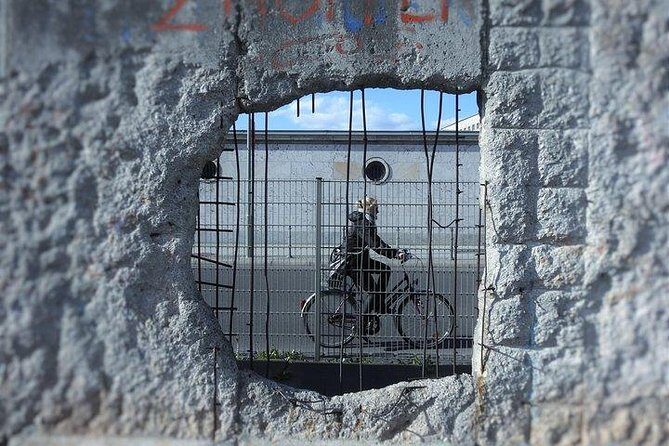
This experience runs about 3 hours, starting at 10:00 am from Birchys Berlin Tours at Ebertstraße 24, 10117 Berlin. It ends back at the meeting point, which is handy when you’re planning the rest of your day.
Group size matters more here than you might expect. With a max group size stated at 15 travelers (and some departures noting up to 21), you’re in the range where the guide can keep an eye on the group and actually talk through the details at each stop. That’s especially useful at wall sites, where the questions usually start fast: How did it work? What did people risk? How did the escape routes change over time?
You’ll also get a mobile ticket, and you can present a paper or electronic voucher. If you like having everything accessible on your phone, that’s a real convenience. And since it’s offered in English, you won’t lose nuance if your German is basic.
You can also read our reviews of more tours and experiences in Berlin.


Stop 1: Memorial of the Berlin Wall and the Death-Strip You Can See
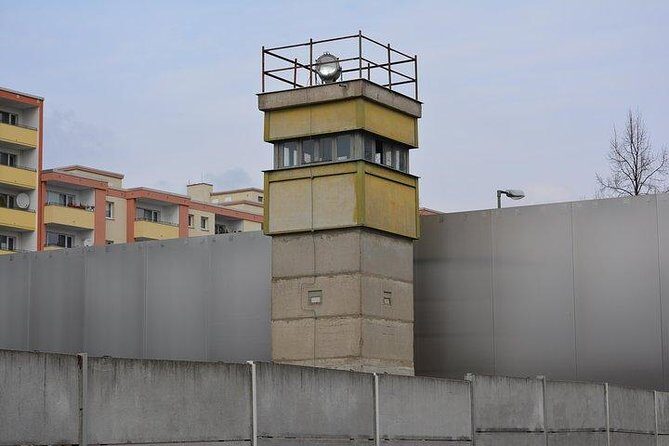
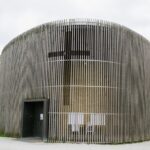
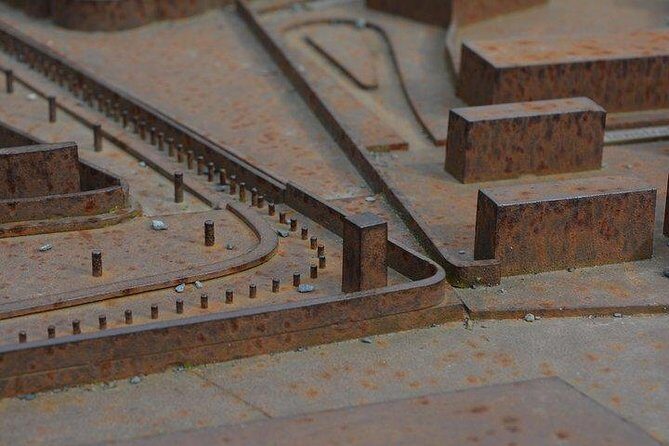
The tour starts at the Memorial of the Berlin Wall. It’s one of the most important wall-related sites because it isn’t just symbolic. The memorial stretches over 1 kilometer, and it includes the only preserved complete cross-section of the Berlin Wall and the Death-Strip.
That cross-section is the kind of thing you can’t fully understand from photos alone. Seeing the wall structure laid out physically—and knowing this was part of a controlled system—helps your brain shift from “wall as barrier” to “wall as machinery.” It makes the Cold War feel technical, methodical, and cruel in a very specific way.
This stop also hits emotionally. This is where you get stories about tragic loss and daring escape during Communist rule. Even if you already know the basic timeline, the wall memorial forces you to picture what the space between East and West actually meant for a person trying to get out.
Time on site is about 1 hour 20 minutes, and that’s a sweet spot. Long enough to understand the layout and hear the context, but not so long that it drains your attention before the next stops.
What to watch for here
- Look closely at the preserved cross-section. It’s designed to teach the geometry of the control system.
- Ask the guide to explain what the Death-Strip was for in daily human terms, not just political terms.
Stop 2: Checkpoint Charlie in a Quick, High-Meaning Stop
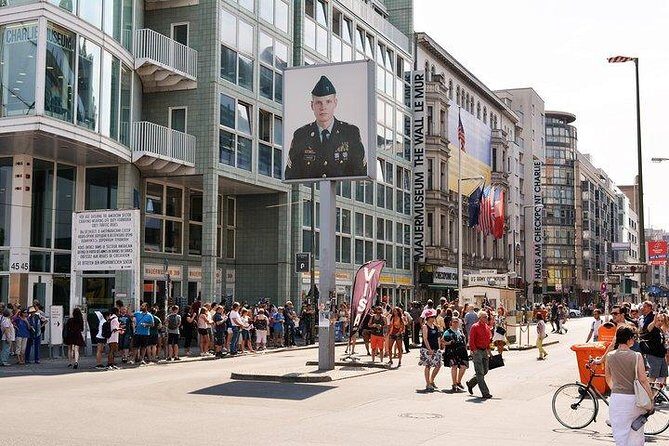
Next up is Checkpoint Charlie, the famous crossing point you’ve probably seen in films and photos. On the surface, it can feel like a quick photo stop. In this tour, it’s more than that.
You get to connect Checkpoint Charlie to failed and successful escape attempts—because this wasn’t just a checkpoint for paperwork. It was a stage for Cold War pressure, misinformation, and sudden opportunities.
You also hear about the American and Soviet face-off in autumn 1961. That detail matters because it shows how close the Cold War came to escalation while still playing out through human movement, border control, and negotiation tactics.
The stop is short—about 15 minutes—but it works because you’re not spending your day circling the same area. You’re getting the meaning fast, then moving on to less famous fragments where the story feels even more grounded.
Drawback to consider: If you’re the type who likes to linger and read every panel, this is the stop where you may wish you had more time. The tour keeps it focused, and you’ll feel the difference.
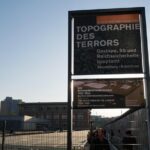
Stop 3: Topography of Terror’s Wall Fragment and the Escape Link
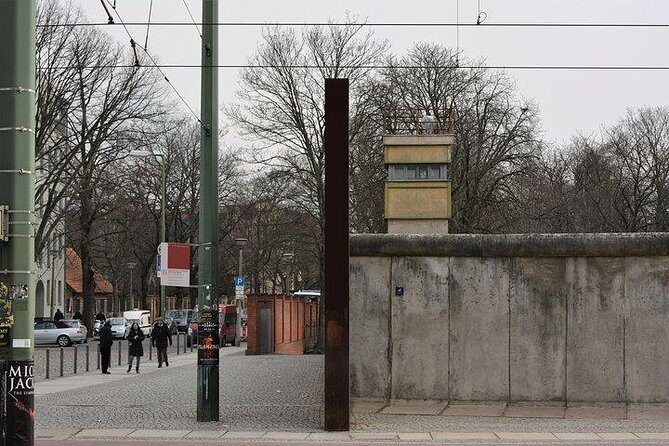
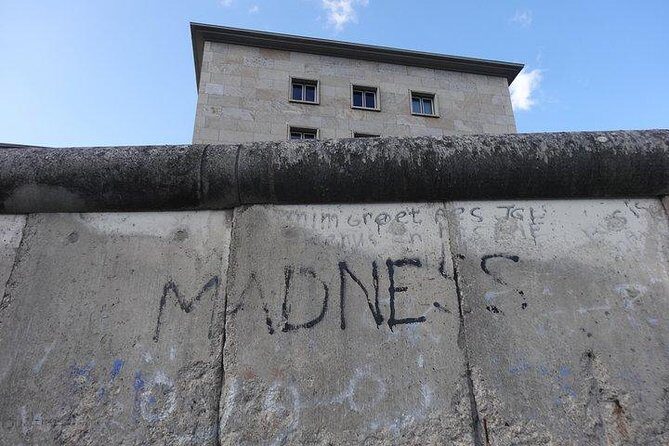
The third stop is Topography of Terror on Niederkirchnerstraße. Here’s the standout fact: it’s the only surviving fragment of the wall in this part of Berlin.
That single surviving section is powerful because it creates a contrast. Berlin has changed dramatically since the Cold War, but this fragment remains as evidence of the past layout and the pressure surrounding it.
This location also has an important surrounding story. The wall fragment sits right next to the former Luftwaffe headquarters, which was later used during the East German period as the House of Ministries. That kind of reuse is one reason this stop feels unusually dense: the area that once supported Nazi-era power structures later became part of East Germany’s government space.
And then you get an escape angle here too—this is described as the site of one of the more incredible escapes into West Berlin. That connection helps the fragment do more than symbolize. It becomes a point in a real escape narrative.
The time is about 10 minutes, which is brief. But because it’s focused on a rare physical remnant, that short window can still be meaningful—especially if you’re already warmed up from the wall memorial.
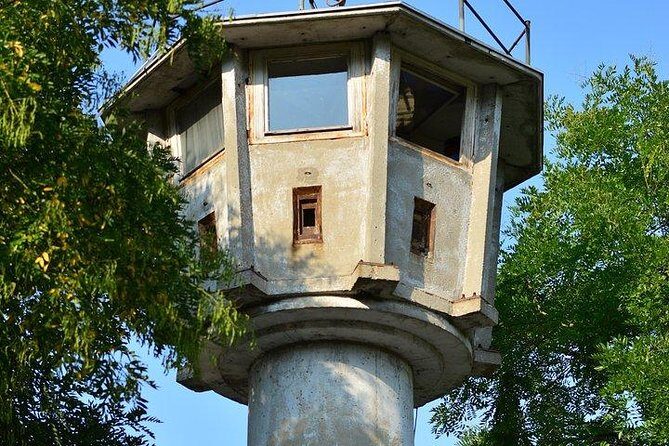
Stop 4: GDR Watch Tower and the View That Changes Everything
Now you shift from wall sections to the control system around them. The tour includes a GDR watch tower, specifically the last of the BT-variant watchtowers that used to surround West Berlin.
This is one of the more memorable stops for a simple reason: it gives you the perspective of the watchers, not the escapees. It turns the wall from a line on a map into a managed perimeter with eyes on it.
There’s also an authenticity note here. The tower’s survival is credited to a private initiative. That’s worth appreciating because it’s a reminder that history doesn’t only survive through governments. Sometimes it survives because regular people decided it mattered.
You’ll spend about 15 minutes here, and admission is included. You may also have the chance to ascend the tower if conditions and timing allow. If you can go up, you’ll instantly understand why the wall system relied on visibility and intimidation. It’s hard to overstate how much that angle helps.
Small consideration: If you don’t climb, you still get the historical context at the base. But going up (when possible) is where the stop really clicks.




Stop 5: Potsdamer Platz and the Death-Strip’s Modern Transformation
The last stop is Potsdamer Platz, a place that’s become a hub for business and entertainment. This is exactly what makes it so interesting on a wall-focused tour.
You see how a desolate piece of land—within and bounding the death-strip area—developed into the rebuilt, re-unified Berlin you recognize today. Standing here after the prior stops, it hits differently. You’re not just seeing a modern city. You’re seeing the geography of the Cold War erased and replaced.
This stop is short too—about 10 minutes—but it’s a great final chapter. The tour closes with a visual punch: you learn what was controlled, then you watch how the city reclaimed the ground.
Guides Who Make the Wall Feel Like People, Not Just Structures
The biggest factor in how good this tour feels is the guide. Multiple guides associated with this experience are described as strong communicators with a deep grasp of the Cold War’s tricky context and how it played out in Berlin.
I also like that the guide style isn’t rigid. One reason people rate this tour so high is that they can ask extra questions and get thoughtful answers. That matters with the Berlin Wall, because the basic story is never the full story. You’ll usually want to know how policies changed over time, why certain routes were attempted, and what daily life looked like on each side.
A few guide names come up repeatedly in guest comments—Ciaran, Eugen, Paul, Steve, and Aurel G. Hearing stories from people who can reference real details (like connecting what you see today to what they saw years ago, including older photos) makes the tour stick. It’s the difference between reading history and understanding it.
And yes, some guides are also practical. One guest mentioned help with train tickets. So if you have questions about getting around after the tour, don’t be shy.
Price and Value: Is $32.67 Worth It?
At $32.67 per person, the price lands in the “this is easy to justify” zone for a 3-hour, multi-stop history experience. You’re paying for three things: time saved, guided context, and site-by-site interpretation.
Here’s the value breakdown that matters to you:
- You’re covering five major stops tied to the wall story without spending your morning figuring out routing.
- Several stops have free admission tickets attached to the experience, which helps keep your costs predictable.
- The included stop (the watch tower) means you’re not juggling extra entry fees for the one site that’s a bit more complex.
If you were to do this on your own, you’d likely spend time deciding which fragments are worth visiting, then reading panels alone while trying to connect them into a coherent story. For many people, that’s the real cost of “DIY.” This tour solves that with a structured sequence and a guide who can connect the dots.
What to Bring, and How to Get More From Every Stop
Since the route includes multiple outdoor elements and you’re standing and looking at remnants, do the boring stuff well:
- Wear layers and shoes you trust for walking.
- Bring water and a snack. Snacks and bottled water aren’t included.
- If you’re cold-sensitive, consider a hat and gloves. Berlin mornings can bite.
During the memorial and watch tower stops, slow down. You’ll get more out of the tour if you actually look at the structure details and then ask questions based on what you notice. The guide’s strength is explaining how the system worked, but your attention turns that explanation into understanding.
Also, if you take transit after, it’s worth asking your guide for quick orientation. Because if they’re willing to help with practical questions like train tickets, you’ll save time and stress later.
Should You Book This Berlin Wall Tour?
I think you should book this if you want a wall-focused experience that stays organized, moves efficiently between the best remaining wall-related sites, and gives you context on escape attempts and survival under Communist rule. It’s also a strong choice if you’re a WWII and Cold War history fan, because the route touches both the broader Cold War framing and specific Berlin-era power structures.
I’d skip it (or at least adjust expectations) if you want a slow museum-style day with lots of independent reading. The stops are timed and the route is efficient. You’ll learn a lot, but you won’t linger for hours at each site.
For most first-timers, this tour is one of the easiest ways to turn Berlin’s wall geography into a story you can carry around in your head—and into photos where the meaning is clear, not just the location.
FAQ
How long is the Berlin Wall tour?
It lasts about 3 hours.
What time does the tour start, and where does it meet?
The tour starts at 10:00 am at Birchys Berlin Tours, Ebertstraße 24, 10117 Berlin, Germany.
How many stops are included?
There are five stops: Memorial of the Berlin Wall, Checkpoint Charlie, Topography of Terror, GDR Watch Tower, and Potsdamer Platz.
Is admission included for the stops?
Admission is free for the Memorial of the Berlin Wall, Checkpoint Charlie, and Topography of Terror, while admission is included for the GDR Watch Tower. Potsdamer Platz is listed as free.
What language is the tour offered in?
It’s offered in English.
Is this a walking tour?
The experience involves moving between several sites, and it’s described as covering a lot of ground, so plan for walking.
What’s the group size limit?
It’s listed with a maximum of 15 travelers, and it also notes a maximum of 21 travelers depending on the departure.
Do I need a printed ticket?
No. You can use a mobile ticket and you can present either a paper or electronic voucher.
Are service animals allowed?
Yes, service animals are allowed.
Is there a free cancellation option?
Yes. You can cancel up to 24 hours in advance for a full refund. If you cancel less than 24 hours before the start time, the amount you paid won’t be refunded.