REVIEW · BERLIN
Potsdam, City of Emperors Walking Tour
Book on Viator →Operated by SANDEMANs Tours - Berlin · Bookable on Viator
One city, four generations of power, and lots to see. This Potsdam walking tour strings together royal palaces, baroque streets, and the Cold War moment at the Bridge of Spies, then ties it all to the WWII peace negotiations that shaped Europe’s future. Sanssouci Palace is the finish point, and the day is built for efficient sightseeing without feeling rushed.
I especially love how you get a clear story arc: Potsdam starts as a garrison city in the Prussian era and later becomes home to kings and even the Kaiser. I also like the small-group feel (max 30) plus real guide energy—guides such as Sophia, Rodrigo, Susan, Alice, and Rochelle are praised for making the history feel close and understandable.
One possible drawback: you’ll rely on public transit for the Berlin–Potsdam train leg and several local rides, and Sanssouci entrance isn’t included (plus the palace is closed on Mondays), so your day needs a little planning.
In This Review
- Key takeaways before you go
- Getting to Potsdam from Berlin: meeting point, train reality, and timing
- The royal city story: how Potsdam connects Prussia, the Kaiser, and 1945
- Stop 1 at Joachimsthaler Straße: setting up your day in Berlin
- Glienicke Bridge and the Bridge of Spies moment
- Bassinplatz: UNESCO Potsdam grounds and why this area matters
- Babelsberg Castle: where film meets royal residence
- Cecilienhof Palace and Neuer Garten: WWII peace-talks with a living-room scale
- Brandenburg Gate in Potsdam: the four-generation growth story
- Sanssouci Palace finish: tickets, lines, and how to time your exploration
- Lunch break and pacing: what the 5–6 km walking really feels like
- Group size: why small groups can still get big
- Price and value: is $80 worth it for what you actually get?
- Who should book this Potsdam City of Emperors tour?
- Should you book it?
- FAQ
- How long is the Potsdam City of Emperors Walking Tour?
- Where do I meet the guide in Berlin?
- Do I need to buy public transport tickets to get to Potsdam?
- Is Sanssouci Palace ticket included?
- Which stops are included for admission?
- How much walking should I expect?
- Can I get a full refund if I cancel?
Key takeaways before you go
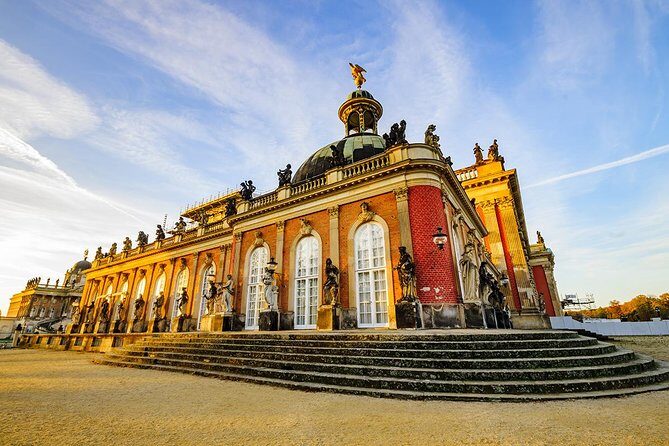
- A royal storyline you can follow on foot: Prussian kings, Kaiser-era power, then the post-WWII negotiations.
- Bridge of Spies in the flesh: a short guided stop with Cold War context that makes the location click fast.
- UNESCO Potsdam highlights: you spend time around the city’s most significant historic grounds.
- Real palace scale: Babelsberg Castle and Cecilienhof are more than photo stops.
- Sanssouci ends the tour: your guide shares ticket advice to help you avoid the worst of the line.
- Moderate walking + multiple rides: comfy shoes matter, and you’ll move around beyond just a straight stroll.
Getting to Potsdam from Berlin: meeting point, train reality, and timing
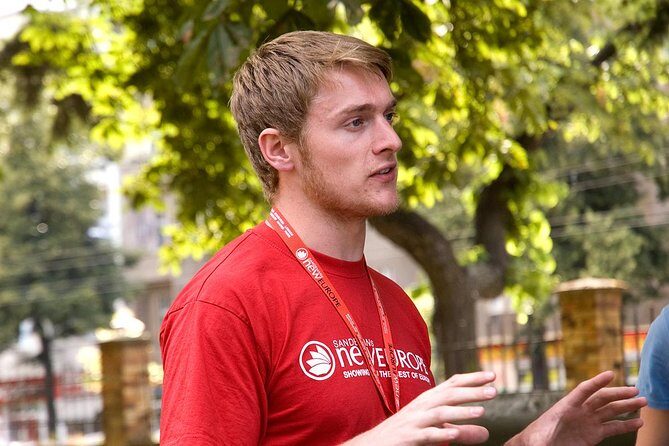
The tour starts in Berlin’s west-central area, meeting at Joachimsthaler Str. 1-4 in front of Starbucks near Zoologischer Garten station. The start time is 10:00 am, which is nice because you’re not fighting a late-day rush into Potsdam.
Here’s the key logistics point: you travel using Berlin public transport, and your transit ticket is at your cost. The tour suggests an ABC ticket (single trip) for €3.40, bought before you join. This matters because the day includes a mix of walking plus short bus/tram connections, so budget time (and a little patience) for German transit schedules.
The upside? Your guide keeps the schedule moving. The tour is built around sensible blocks—roughly 30 to 45 minutes per main stop—so you’re not stuck waiting around while everyone else catches up.
You can also read our reviews of more walking tours in Berlin



The royal city story: how Potsdam connects Prussia, the Kaiser, and 1945
This experience is really about seeing Potsdam as a set of historical scenes that connect. Your guide frames the city as more than pretty architecture. Potsdam begins as a garrison city for the Prussian Empire, then becomes a place where German kings—and later the Kaiser—project power through residences and formal spaces.
As you move from one landmark to the next, you’re essentially following a timeline. You’ll hear how Potsdam’s royal identity was built over generations, and then how that same stage became part of the larger European story that led to WWII and its end.
If you like history that has a physical address, this tour works. You’re not just told what happened. You’re standing near the kind of buildings and locations where decisions got made, and your guide ties it back to the people who lived and governed there.
Stop 1 at Joachimsthaler Straße: setting up your day in Berlin
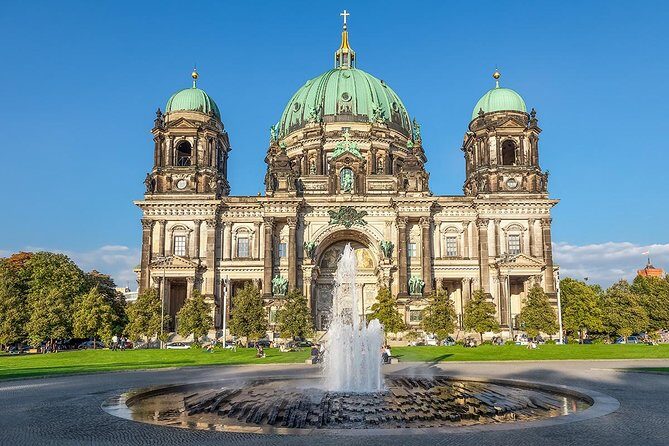
Your first stop is a quick start point at Joachimsthaler Straße (45 minutes listed for the first segment, admission free). This is where you get organized, meet your guide, and get briefed on the day’s flow before you head out.
What I like about this kind of opener is simple: you’re already in the right mindset. Once you’re headed toward the train, you’ll be able to pay attention to the guide’s early context—because the earlier you understand what Potsdam represents (Prussian roots, royal planning, and later wartime aftermath), the more satisfying each stop becomes.
Glienicke Bridge and the Bridge of Spies moment
After you arrive in Potsdam, you walk to the Glienicke Bridge, with about 30 minutes in this area (included). This is one of the tour’s most cinematic stops. The point isn’t just that it’s famous—it’s that the location carries Cold War tension in a very tangible way.
From a practical standpoint, this is a smart stop length: long enough for context and photos, short enough that you don’t lose momentum. Expect your guide to connect what you’re seeing to the intrigue associated with the bridge, so the story lands while you’re standing there.
If you’ve seen films or heard pop-culture versions of the Bridge of Spies, this is where you separate entertainment from place. Even if you only know the name, you’ll leave with a clearer sense of why the site mattered.
Bassinplatz: UNESCO Potsdam grounds and why this area matters
Next comes Bassinplatz, reached via a short bus ride, with around 30 minutes and admission included. This area is presented as the largest UNESCO World Heritage site connected to Potsdam.
Why that’s valuable: UNESCO status usually means the buildings and layouts aren’t just individually pretty; they’re part of a planned whole. Here, the goal is to help you connect the dots between baroque streetscapes, the broader estate planning around the palaces, and the way royal power showed up in street-level design.
This is also a useful mental reset stop. After Glienicke’s Cold War vibe, Bassinplatz brings you back to royal city planning and monumental design. It’s a change of pace, and it helps you keep the whole day from feeling like one constant stream of palace façades.
You can also read our reviews of more city tours in Berlin


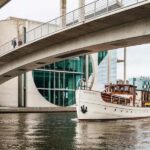
Babelsberg Castle: where film meets royal residence
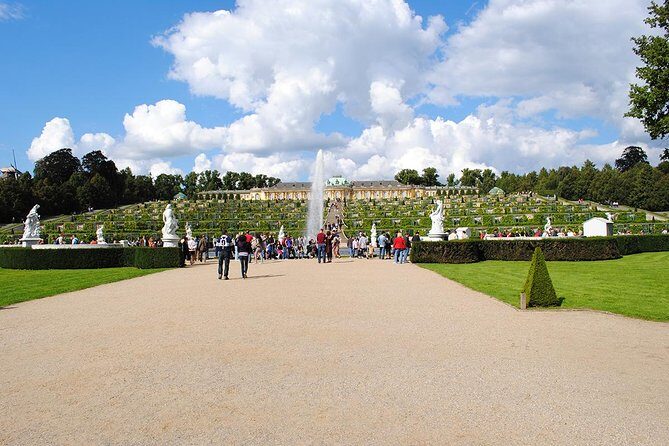
At Babelsberg Castle, the tour includes a tram ride and about 30 minutes on site, but admission isn’t included. This stop is interesting because it connects two worlds: the formal royal residence history and the fact that the area is now home to film studios.
This is a good “contrast” stop in the day. If you’ve been thinking of palaces as static history, Babelsberg adds a modern twist. The guided story helps you understand what makes Potsdam a lasting stage—first for kings and emperors, then for later cultural life.
One practical consideration: because admission isn’t included, you’ll want to decide on the spot how much you care about interior access. If your priority is exterior views and the guided context, you’re still set up well. If you want to go inside, check what’s practical on your specific day and timing.
Cecilienhof Palace and Neuer Garten: WWII peace-talks with a living-room scale
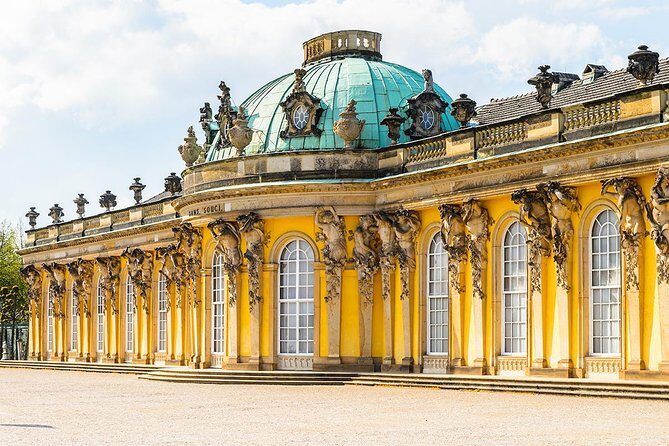
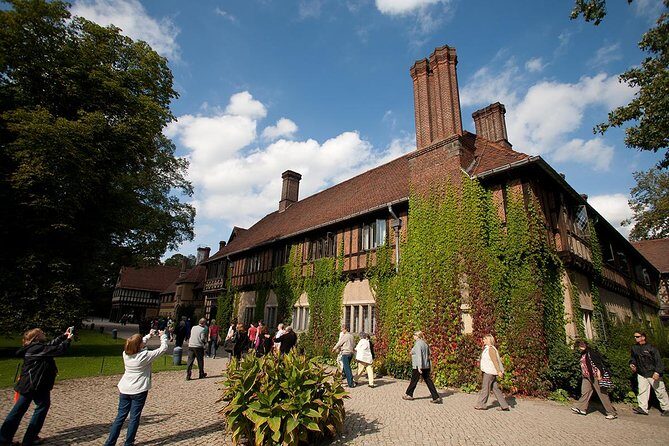
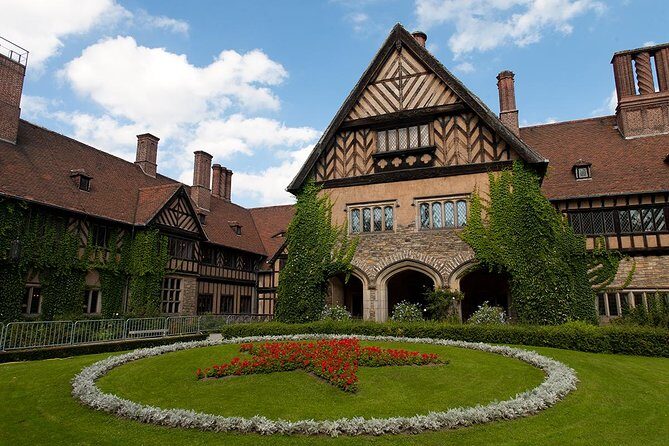
Then you move to Schloss Cecilienhof, paired with time to see Neuer Garten (New Garden). Like Babelsberg, this segment includes time with the palace setting but lists admission not included. You’ll also hear how the German Crown Prince lived there before the royal family abdicated at the end of WWII.
This is the stop where Potsdam’s WWII significance becomes personal. Cecilienhof is tied to the negotiations that helped end World War II, so you’re looking at a site that’s remembered for its role in ending the war—not just for its architecture.
What makes this stop work is the angle your guide brings: you’re not only seeing a palace. You’re seeing a place with domestic scale where major decisions played out. Even when you only view parts of the grounds, the context helps you picture how negotiations can happen in spaces built for everyday royal life.
Brandenburg Gate in Potsdam: the four-generation growth story
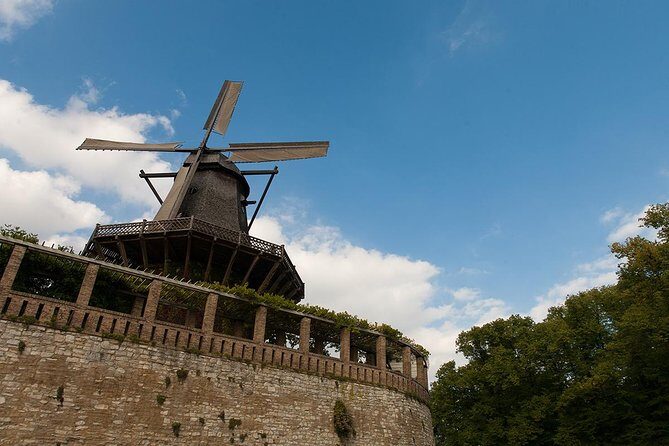
The next segment includes a stop at Brandenburg Gate in Potsdam, about 30 minutes and listed as admission included. The guide uses this location to connect Potsdam’s growth to the efforts of four generations of kings, then moves you through the two World Wars and toward 1945.
This is a great “threading the needle” stop. When a day covers multiple eras, it’s easy to lose the connecting logic. Here, the guide pulls the story together in a way that makes it easier to understand why Potsdam feels different in each part of the timeline.
Also, this stop helps if you’re traveling with people who want photos as well as meaning. The architecture does both, and the guided narration gives the photos context.
Sanssouci Palace finish: tickets, lines, and how to time your exploration
The tour ends at Schloss Sanssouci (Sanssouci Palace), with about 30 minutes on site during the tour. Sanssouci entrance is not included, and the guide shares tips so you can get the best-priced tickets and help avoid long lines.
Two practical things to know:
First, Sanssouci is closed on Mondays. If your Berlin trip runs into Monday, plan around that or consider a different day.
Second, because the tour ends at Sanssouci, you have flexibility after your guided portion. You can stay and explore Potsdam more on your own, or return to central Berlin by train with the guide at the end.
If you’re trying to squeeze the most out of the stop, arrive mentally ready for the ticket question. Your guide’s ticket advice is one of the most useful parts of the day, because it affects how much time you actually spend inside versus waiting.
Lunch break and pacing: what the 5–6 km walking really feels like
The tour includes a lunch break, but food and drinks aren’t included. So treat lunch as a chance to grab something quick nearby and keep moving. This matters because you don’t have a huge free day buffer—your guide keeps the schedule in motion.
As for the walking: the tour covers about 5–6 km and you should have moderate physical fitness. That doesn’t mean hard hiking, but it does mean you’ll be on your feet for long enough that comfortable shoes are non-negotiable.
One helpful detail from the tour’s notes: the itinerary can vary a bit depending on what your guide thinks best for the group. That means some days may feel a touch more walking-heavy or more ride-heavy.
Group size: why small groups can still get big
The tour is marketed as a small-group experience with a maximum of 30 travelers. That cap is good news, and when the turnout is smaller, the tour can feel very personal.
Still, it’s smart to expect that group size may swing. If your priority is hearing every detail clearly, arrive early in the day and keep a spot near the front of the walking pack when possible. In a group that’s on the bigger side of the limit, it can be harder to hear and keep pace.
Price and value: is $80 worth it for what you actually get?
At $80, this tour isn’t a budget “see everything for pennies” option, but it also isn’t overpriced for what’s included.
Here’s the realistic value math:
- Included: a local guide, lunch break, and admission/entry for specific stops (Glienicke Bridge, Bassinplatz, and Brandenburg Gate are listed as included).
- Not included: transit to/from Potsdam (ABC ticket), food and drinks, and key entrances like Sanssouci Palace (listed at €12), plus admissions for Babelsberg Castle and Cecilienhof.
So you’re paying for the guide’s storytelling, the route planning, and the time saved through smart sequencing. For me, the value lands best if you care about historical context enough to justify skipping some self-guided guesswork.
If you’re the type who wants only the palace interiors, you’ll still need to budget extra for entrances. But if you want the big-picture narrative and the major highlights in one organized day, $80 starts to make sense quickly.
Who should book this Potsdam City of Emperors tour?
This tour is a good match if you want:
- a guided timeline of Prussian and Kaiser-era Potsdam
- landmarks that connect to the WWII peace negotiations
- a day trip structure that keeps you from building transit routes and museum ticket plans on your own
- a moderate walking schedule you can handle comfortably
It may be less ideal if you want a totally free-form day with no transit dependence, or if interior palace access is your top priority—because several entrances are listed as not included.
Should you book it?
I’d book this tour if you’re looking for a well-paced, story-led way to experience Potsdam without spending your mental energy on logistics. The best part is that the guide ties the city’s royal architecture to the political turning points that happened there, including the post-WWII negotiations tied to Cecilienhof and the atmosphere around the Bridge of Spies.
Before you commit, double-check two things: Monday closures at Sanssouci, and the fact that you’ll pay for public transport and at least one main entrance. If that fits your plan, you’ll likely find this a satisfying, efficient day from Berlin.
FAQ
How long is the Potsdam City of Emperors Walking Tour?
The tour runs for about 5 hours 30 minutes (listed as approximate) and includes multiple stops across Potsdam with walking and short transit rides.
Where do I meet the guide in Berlin?
You meet at Joachimsthaler Str. 1-4, 10623 Berlin in front of Starbucks near Zoologischer Garten station. Start time is 10:00 am.
Do I need to buy public transport tickets to get to Potsdam?
Yes. Transportation to/from Potsdam isn’t included, and you should purchase an ABC travel ticket before joining. The tour notes a single trip ABC ticket for €3.40.
Is Sanssouci Palace ticket included?
No. Sanssouci Palace entrance isn’t included, and the tour lists €12 for admission. Your guide provides tips on ticketing and skipping long lines.
Which stops are included for admission?
The tour lists admission as included for Glienicke Bridge, Bassinplatz, and the Brandenburg Gate (Potsdam) stop. Admission is not included for Babelsberg Castle, Schloss Cecilienhof, and Sanssouci Palace.
How much walking should I expect?
The tour covers roughly 5–6 km on foot. It’s recommended for travelers with moderate physical fitness and comfortable shoes are important.
Can I get a full refund if I cancel?
Yes. The tour allows free cancellation up to 24 hours in advance for a full refund. Canceling less than 24 hours before start time is not refunded.