REVIEW · BERLIN
Kreuzberg Tour – Kriminell und kuschelig
Book on Viator →Operated by Adventure World Tours · Bookable on Viator
Kreuzberg tells stories on every corner. This 2-hour walk is a practical way to understand Berlin’s shifting neighborhoods, starting at Kotti and moving through the streets that shaped modern Kreuzberg. I like that the tour is built for an easy walking rhythm with a motivated guide, and you finish with ideas for what to do next in the city. One thing to consider: it’s a public group walk, so you’ll need to keep up for the full duration.
What I really like is the focus on history that you can see as you walk. You’ll hear how Kreuzberg started as a working-class neighborhood in the mid-1800s, and you’ll connect those details to real street settings like Oranienstraße.
Second, I like the pace and format. The tour runs about two hours, with a route that’s meant to feel unhurried rather than rushed, plus you get clear guidance so you don’t spend the time figuring out where to go.
The main drawback is simple: if you have major walking problems, this won’t be your best fit. It’s not a sit-down tour, and staying with the guide matters.
In This Review
- Key highlights to look for
- Starting at Kotti: Getting oriented in Kreuzberg quickly
- Working-class Berlin on Oranienstraße: the backyard reality
- Kreuzberg’s politics, left-wing roots, and what that means now
- The walk itself: parks, avenues, and backstreets
- The guide factor: stories, humor, and a good pace
- Meeting point to ending point: where you’ll start and stop
- Price and value: is $27.27 worth it for two hours?
- Group size and walking pace: how to decide if it fits you
- Turn the walk into a smart Berlin plan
- Should you book Kreuzberg Tour – Kriminell und kuschelig?
- FAQ
- How long is the Kreuzberg guided tour?
- Where does the tour start and end?
- What is the price per person?
- Do I need to print a ticket?
- What is the group size limit?
- Is the tour suitable for everyone with mobility needs?
- Is there a minimum age?
- Can I get a refund if I cancel?
Key highlights to look for

- Kotti as your starting point for quick orientation in Kreuzberg
- Oranienstraße and the backyard life idea, turned into a walk you can picture
- A guide who explains without sprinting, so the route stays easy to follow
- Two hours on foot, with time to absorb stories rather than check boxes
- Small group feel with a cap of 25, which helps the talk stay human
Starting at Kotti: Getting oriented in Kreuzberg quickly
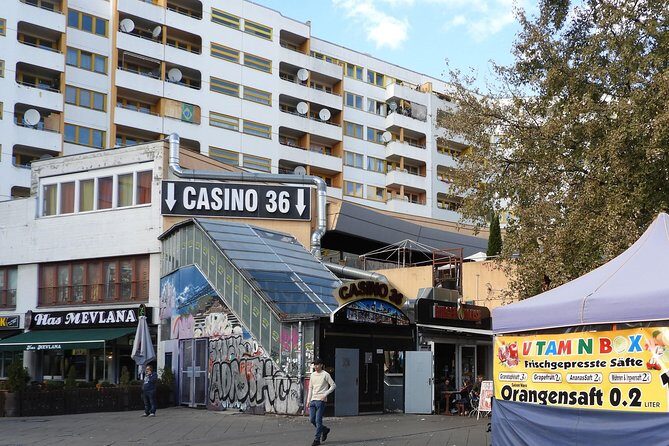
Most first-time Berlin visitors can handle a big city. The trick is making sure you understand what you’re seeing while you’re still fresh and curious. This tour starts at Kotti, one of Kreuzberg’s central meeting points, so you get that framing early.
You don’t just get a vague “here’s Kreuzberg” talk. You get a short intro meant to set the tone: where Kreuzberg came from, how its people lived, and how the neighborhood’s politics and culture shaped what you’ll notice today. It’s a good move, because otherwise you’ll be looking at streets without a map of meaning.
And because it’s a walking group, the orientation is practical. You hear the story, then you move. That matters in Berlin, where a neighborhood’s “why” isn’t always obvious at street level.
You can also read our reviews of more tours and experiences in Berlin.



Working-class Berlin on Oranienstraße: the backyard reality
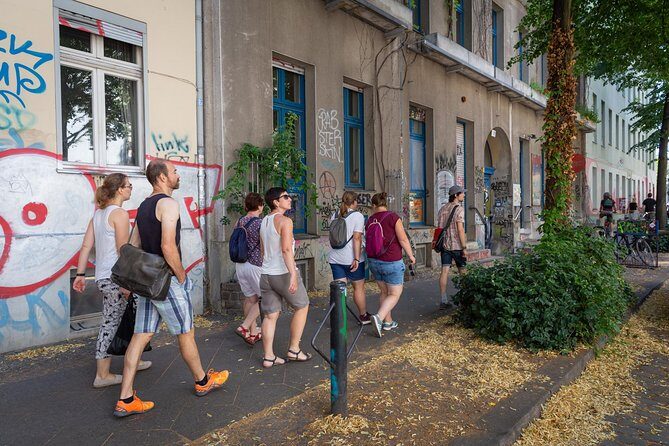
One of the tour’s strongest themes is turning history into something you can picture. The route doesn’t float above the neighborhood; it anchors you to specific areas like Oranienstraße and the kind of residential setups that defined Kreuzberg in the 19th century.
Here’s the kind of context you’ll be hearing about: Kreuzberg developed as a working-class district, with large building complexes and many cramped living arrangements. The tour points you toward the idea of those “backyards” on higher floors—think fifth or sixth back areas—where the living conditions were tight and fresh air was hard to come by.
You also get a striking detail that helps the story land: many workers didn’t rent an entire apartment or even a full room in the modern sense. Instead, the tour discusses the idea of spending about eight hours on a mattress—functional, short, and built around work schedules.
If you care about real social history, this is the part that tends to click. You aren’t reading a plaque and moving on. You’re being asked to imagine what daily life felt like in those spaces. That’s why it works as a walking tour: you’re using the neighborhood’s shape as a mental prop.
A fair note: this section is heavy on historical context. If you’re hoping for lots of light, funny “quick facts” only, you’ll still enjoy the route, but the emphasis is clearly on how Kreuzberg’s past shaped the present.
Kreuzberg’s politics, left-wing roots, and what that means now
The tour doesn’t treat Kreuzberg as a single-era place. It connects the working-class beginnings to political identity. You’ll hear that many working-class residents had radical left-wing views, and the guide ties that into how the neighborhood developed.
That’s useful because it helps you interpret what you see after the walking story ends. Berlin has plenty of districts where the past is packaged as scenery. Kreuzberg is different. The neighborhood carries political energy in how people talk, organize, and claim space.
On the street, you’ll likely notice things that feel cultural rather than purely touristic—language, local mood, and the mix of old and newer life. Even without naming every single symbol along the way, the tour gives you a lens. You leave with more than directions. You leave with a sense of why the neighborhood feels the way it does.
The walk itself: parks, avenues, and backstreets
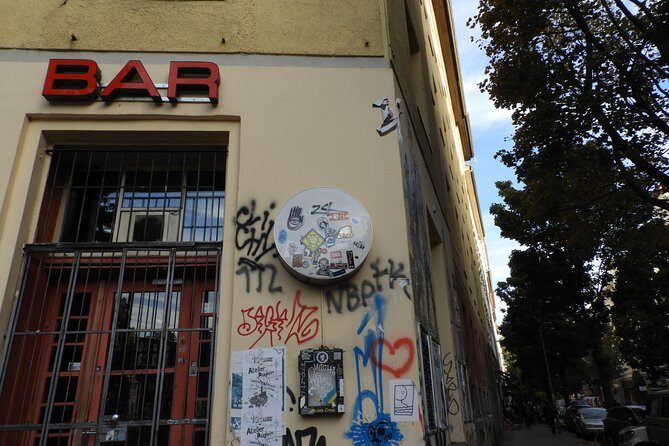
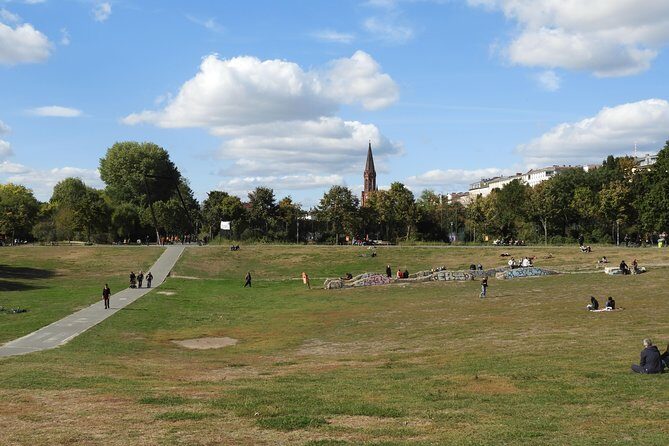
Beyond the specific named points like Kotti and Oranienstraße, the tour is designed as a guided walk through Kreuzberg’s everyday geometry. The overview hints at parks, iconic avenues, and backstreets, which is exactly what you want if your goal is to see Kreuzberg like a local rather than like a checklist.
That route mix matters:
- Parks give you breathing room and help you reset while still staying in the neighborhood story.
- Iconic avenues help you understand the scale and “public face” of Kreuzberg.
- Backstreets show what makes the area feel lived-in, not staged.
The practical value is that your feet do the work. You’re not stuck waiting for transport between points. You’re learning while moving, which keeps the energy up for the full two hours.
One more thing: the tour format is meant to keep you on track. You don’t need to worry about crossing the city with a map app in hand. The guide’s route takes care of that, which is a relief when you’re also trying to pay attention.
The guide factor: stories, humor, and a good pace
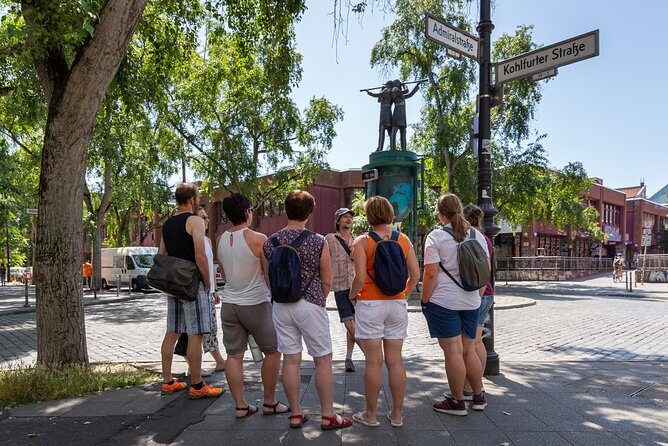
A walking tour can rise or fall on the guide. Here, the recurring praise is about how the explanation is delivered: clear history, a steady rhythm, and stories told in a way that feels both interesting and human.
One guide name that shows up is Sammy, who’s described as very informed and able to tell stories with humor and engagement. That kind of guide style matters because Kreuzberg’s past can get abstract fast. When it’s explained well, the neighborhood’s political and social changes start to feel connected instead of like separate facts.
What I’d watch for, based on that feedback pattern, is that the best tours keep a pace that lets you listen and look at the same time. This one is built around a two-hour runtime, and the structure aims to avoid “faster, faster” storytelling. That’s a big deal if you want to remember things later.






Meeting point to ending point: where you’ll start and stop
You’ll start at Reichenberger Str. 174, 10999 Berlin. That’s close enough to transit that you can arrive without stress.
The tour ends at Curfew Bar, Falckensteinstraße 47, 10997 Berlin. Ending at a bar is more than a random location; it gives you a natural place to pause, regroup, and decide what to do next—food, a drink, or just a chance to sit down for a minute after the walking.
If you hate the feeling of finishing a tour and immediately needing to figure out your next plan, this ending setup helps. Even if you don’t plan to enter the bar, the area becomes your “navigation reset.”
Price and value: is $27.27 worth it for two hours?
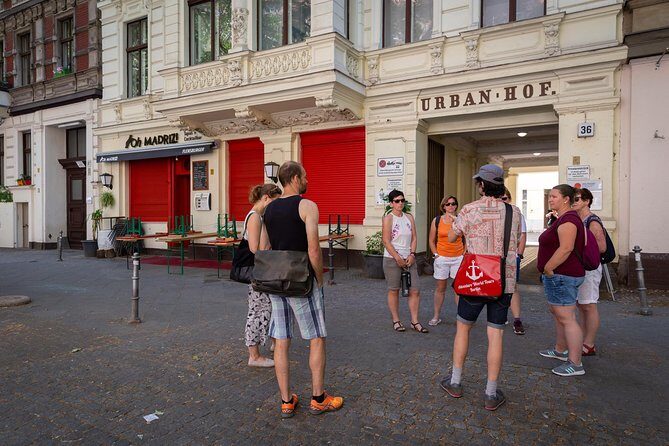
At $27.27 per person, you’re paying for a guide-led walking experience in a compact window: about two hours.
That price makes sense when you focus on what you actually receive:
- a motivated guide,
- detailed background information,
- and a route that keeps you moving through Kreuzberg without you doing the route research.
If you were going to spend that time trying to figure out what to see on your own, you’d spend energy on directions and lose some of the story context. This tour trades that effort for interpretation. For a neighborhood like Kreuzberg, that’s not a small thing. Without the history lens, you might see plenty of street life but miss the “why.”
Also, the tour uses a mobile ticket, which is convenient for day-of logistics. You avoid extra paperwork and just show up ready to walk.
One timing note that can help you plan: it’s often booked around 13 days in advance on average. So if you’re traveling during a busy stretch and you want a specific day, it’s smarter to book earlier rather than hoping for last-minute availability.
Group size and walking pace: how to decide if it fits you
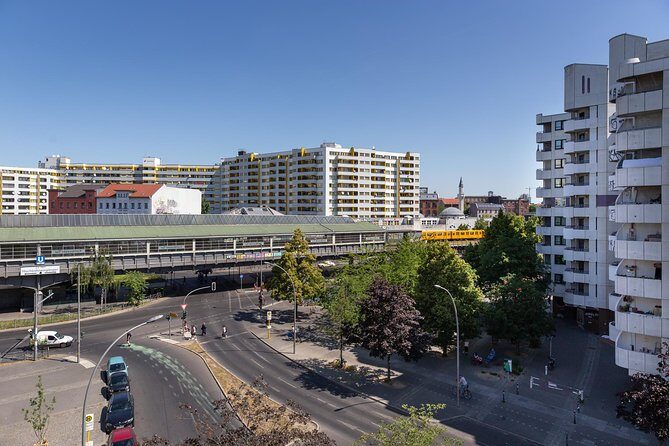
This is a public group tour with a maximum of 25 travelers. That’s not tiny, but it’s also not so huge that you feel swallowed by the group. In a story-heavy walking tour, that balance matters.
The other key rule is physical. The tour isn’t recommended if you have major walking issues because you have to keep up with the guide. Two hours on foot doesn’t sound dramatic on paper, but Berlin streets add up fast—uneven sidewalks, waiting at crossings, and stops for the explanation.
So, who fits best?
- People who like history connected to the street, not just museum dates
- First-timers who want a fast orientation in Kreuzberg
- Anyone who enjoys political and social context in plain language
Who might think twice:
- If walking is limited, or you can’t maintain pace for two hours
- If you prefer private tours where you can pause frequently
Turn the walk into a smart Berlin plan
The tour’s promise isn’t only to show Kreuzberg. It’s also to give you recommendations for the rest of your trip. That matters because Berlin is full of choices, and you don’t want to burn your best energy on random picks.
After you finish near Curfew Bar, you’ll be in a good position to use what you learned. For example, you’ll understand why Kreuzberg’s identity isn’t only about nightlife or street scenes—it’s about social history, working-class roots, and political change. That knowledge helps you choose what fits your taste: culture, food, or just deeper neighborhood wandering with better questions in mind.
If you’re staying in Berlin only a short time, this is a solid use of one afternoon or morning slot. It gives you a neighborhood “story spine,” so the rest of your sightseeing has something to attach to.
Should you book Kreuzberg Tour – Kriminell und kuschelig?
I’d book it if you want a guided, two-hour walking view of Kreuzberg that explains how the neighborhood got its shape—starting at Kotti and touching areas like Oranienstraße. The standout strength here is the way the guide connects working-class life and political identity to what you’re walking past, with a pace that aims to stay relaxed.
Skip it if walking is a challenge or if you’re looking for a mostly light, low-context tour. This one takes its subject seriously, and it’s meant for people who enjoy history as you move.
If you can do a steady walk and you want practical local insight without having to plan every stop yourself, this is a good value bet for Berlin.
FAQ
How long is the Kreuzberg guided tour?
It’s about 2 hours.
Where does the tour start and end?
Start: Reichenberger Str. 174, 10999 Berlin. End: Curfew Bar, Falckensteinstraße 47, 10997 Berlin.
What is the price per person?
The price is $27.27 per person.
Do I need to print a ticket?
No. It uses a mobile ticket.
What is the group size limit?
The tour has a maximum of 25 travelers.
Is the tour suitable for everyone with mobility needs?
It’s not recommended for travelers with major walking problems, since it’s a public walking tour and you need to keep up with the guide.
Is there a minimum age?
Yes. The minimum age is 18.
Can I get a refund if I cancel?
Yes, with free cancellation up to 24 hours in advance for a full refund.