You’ll walk past history with its stories unhidden. This small-group Berlin tour stitches together Jewish life, Nazi persecution, and acts of resistance across major wartime landmarks, with context you can carry the rest of your trip. You’ll move on foot through central neighborhoods where the past is still visible in streets, buildings, and memorials.
I especially like the human focus on people who tried to save lives or resist—think Otto Weidt and the women of Rosenstraße. I also like the planning support built in: then-and-now maps and photographs help you connect what you’re seeing today to what stood there during the Nazi years, and guides such as Scott, Benjamin, Johan, Jochen, and Jörg bring the details into clear, steady focus.
One thing to consider: this is a walking tour with lots of standing, so comfortable shoes matter, and you’ll want to pace yourself.
In This Review
- Key things to know before you go
- Why Berlin’s resistance stories matter (and why the tour is worth your time)
- Starting at the Neue Synagogue: Centrum Judaicum’s layered survival
- A school where Jewish life was erased: Jüdisches Gymnasium Moses Mendelssohn
- Jewish cemetery destruction and a memorial for victims: what happened to a sacred place
- Otto Weidt’s workshop: survival through bribery, falsified documents, and nerve
- Rosenstraße: when public protest pressured the regime
- Lustgarten: protest space turned Nazi stage
- Zeughaus and the assassination plot: when resistance entered the officer class
- Neue Wache: a central memorial in a busy city
- Bebelplatz’s book burning: propaganda starts with what gets silenced
- Trains to Life – Trains to Death: Kindertransport and deportation in one sculpture
- Pacing and the walking reality: what 2 hours 30 minutes feels like
- Price and value: what $48.01 really buys in Berlin
- Who this tour is best for (and who should rethink)
- Should you book this Berlin resistance walk?
- FAQ
- What language is this tour offered in?
- How long is the tour?
- What’s the price per person?
- Is this a small group?
- Do I need an admission ticket for the stops?
- Where does the tour start and end?
- Is food included?
- Can I use a mobile ticket?
- Is the tour accessible, and are service animals allowed?
- What weather conditions affect the tour?
- What’s the cancellation policy?
Key things to know before you go
- Small group (max 15) means more interaction and easier question time.
- English-language tour with a mobile ticket, so you can keep things simple on the day.
- “Then & now” photos and maps help you locate events without losing the thread.
- Many stops are free to enter, so your money goes to the guide and time—not ticket fees.
- Resistance stories take center stage, but you’ll still see how persecution unfolded.
- Plan for standing during the memorial portions, even though the tour is marked as accessible.
Why Berlin’s resistance stories matter (and why the tour is worth your time)
Berlin can be overwhelming. You see monuments, names, dates, and huge institutions—often all at once. What makes this tour different is the angle: it keeps asking how people responded, resisted, or tried to protect others, even when the system was designed to crush them.
That perspective changes how you remember what you’re seeing. Instead of treating sites like museum labels, you get a chain of cause and effect. A synagogue isn’t only a building—it becomes a measure of thriving community life, then confiscation, then destruction, then rebuilding. A school isn’t only an address—it becomes a transit point, where confinement replaced education. A “memorial walk” becomes a story you can track.
And because it’s about resistance, you won’t leave just with sadness. You’ll also leave with a clearer sense of courage—sometimes quiet, sometimes risky, sometimes collective.
You can also read our reviews of more tours and experiences in Berlin.

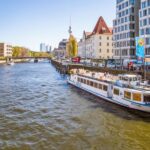
Starting at the Neue Synagogue: Centrum Judaicum’s layered survival
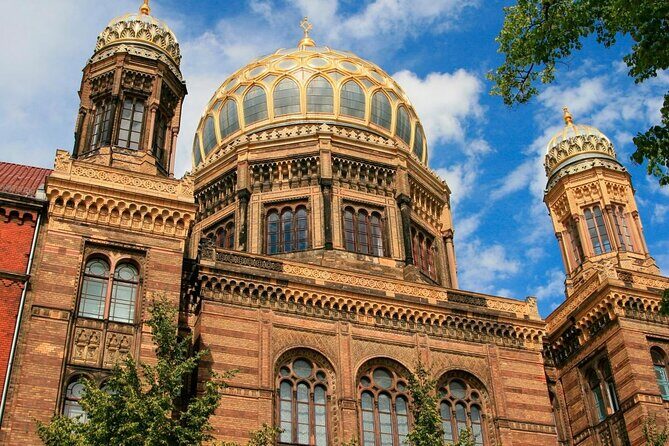
You start at the Neue Synagoge Berlin (Stiftung Neue Synagoge Berlin – Centrum Judaicum), built in 1866 and once the largest and grandest synagogue in Berlin. The point of that first stop is strong: this wasn’t a tiny, marginal community. It represented a city with a large Jewish population—about 160,000 Berlin Jews at its peak—living through culture, worship, and civic life.
Then the tour moves through the hard turns. The synagogue was saved from vandalism during Kristallnacht, but it was later confiscated and used by the Army to store military uniforms. In 1943, Allied bombing severely damaged the building. After the main hall was torn down in 1958, it was partly rebuilt in 1988 and officially reopened in 1995.
Today, the building houses the Centrum Judaicum foundation, focused on preserving Jewish memory and tradition. I like this start because it sets a baseline: you’re not only learning about Nazi crimes. You’re also learning about what was lost—then rebuilt—after the war.
Practical note: this stop includes free admission, and it’s brief (about 10 minutes). You’re setting context, not “doing a museum.”
A school where Jewish life was erased: Jüdisches Gymnasium Moses Mendelssohn
Next, you visit the site of Jüdisches Gymnasium Moses Mendelssohn, founded in 1779. The story here is almost shocking in its contrast. It was the first Jewish school in Germany without fees, and even though it was a Jewish institution, it was open to all faiths and promoted liberal Jewishness. The school also accepted female students in 1931.
By late 1941, deportations to the newly conquered territories in the East were accelerating—and Jewish schools were banned. Then in 1942, the SS turned the building into a transit camp under the Reich Main Security Office. Windows were barred, and Jews were crammed inside to await deportation.
This stop is small in time but heavy in meaning. It helps you see how persecution didn’t just target individuals; it targeted the basic structure of daily life—school, work, community routine. And it explains why “education” and “erasure” were linked under the regime.
Jewish cemetery destruction and a memorial for victims: what happened to a sacred place
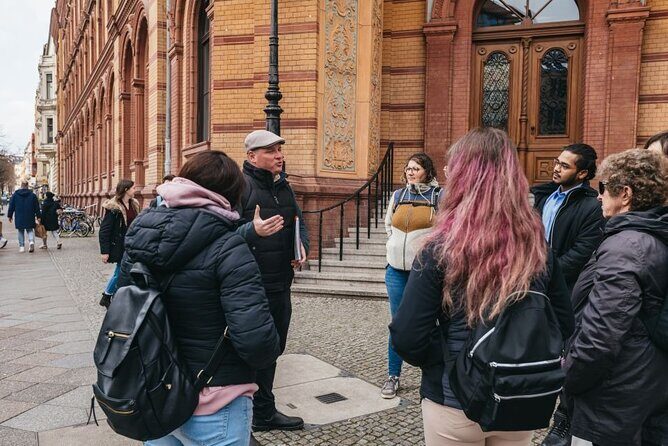
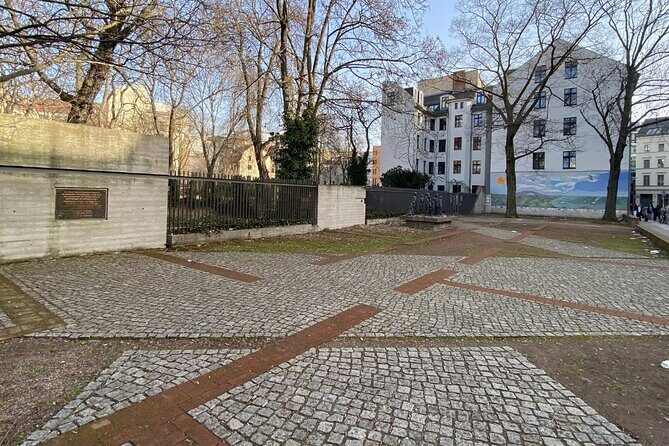
You then reach the Jewish cemetery and Holocaust memorial, where roughly 12,000 Jewish community members were buried between 1672 and 1827. That long timeline matters: cemeteries hold memory across generations, and losing a cemetery isn’t only physical damage—it’s an assault on remembrance.
In 1943, the Gestapo ordered the SS to destroy the cemetery: gravestones were smashed, remains were thrown away, and the site was desecrated. Burials resumed in April 1945, with mass graves holding almost 2,500 German soldiers and Berlin civilians killed during the fighting or executed by the SS after hanging white flags from their windows.
This is one of the tour’s most important “slow-down” moments. It’s not only about the Jewish community; it’s also about what war and tyranny did to civilians and even to some German soldiers who fell into resistance-adjacent situations.
Entry is free, and the stop is designed to be about 15 minutes—enough time to read the site with care without rushing.
Otto Weidt’s workshop: survival through bribery, falsified documents, and nerve
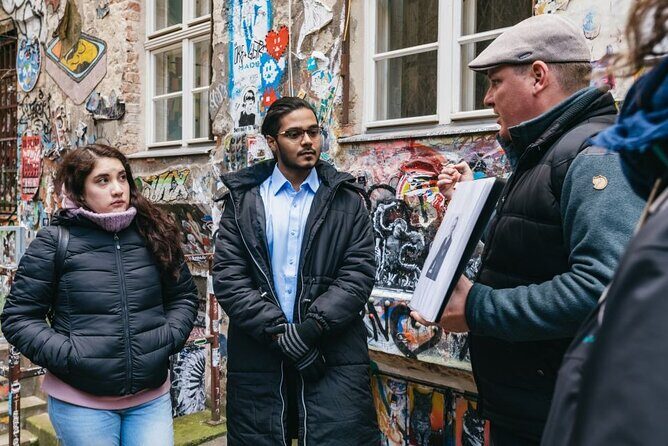
One of the most compelling stops comes at Museum Blindenwerkstatt Otto Weidt, tucked into a hidden courtyard. This is where the tour’s resistance theme sharpens.
Otto Weidt, supported by his wife Else, employed more than 30 blind and deaf Jewish workers from 1940 to 1945. As Nazi pressure increased, Weidt tried to shield his employees from persecution and deportation. He bribed Gestapo officers, falsified documents, and even traveled to Auschwitz to help break out one of his employees.
That last detail changes the emotional temperature of the tour. It’s not only “he tried.” It’s “he acted,” and he acted at terrifying personal risk. This stop also gives you a different kind of resistance: protection inside the machinery of cruelty, using whatever tools were available—even illegal ones.
The stop is brief (about 10 minutes), and admission is free. But the impact tends to last longer than the time you spend there.



Rosenstraße: when public protest pressured the regime
At Denkmal Rosenstraße, you confront a story of protest that doesn’t fit the usual script of total silence.
On February 27, 1943, the Gestapo, Waffen-SS, and Berlin Police arrested about 2,000 Jewish men who were married to non-Jewish German women. The women left behind—hundreds of them—gathered and protested. There were threats of being shot if they didn’t disperse. They scattered briefly, then returned in larger numbers to keep protesting.
As pressure mounted, Goebbels authorized the prisoners’ release. For a tour focused on resistance, this is one of the clearest examples of how public action could force a change—even under a regime that had planned for fear to do the job.
This stop is short (about 10 minutes), but it’s powerful. It also helps you understand something practical about resistance: collective pressure matters, and timing matters.
Lustgarten: protest space turned Nazi stage
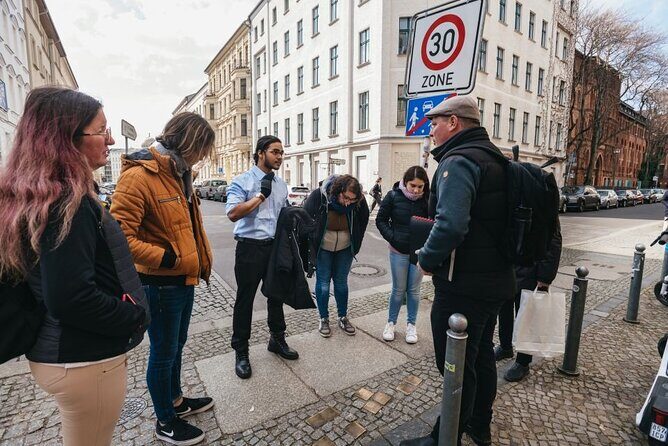
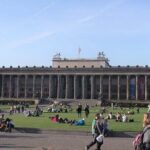
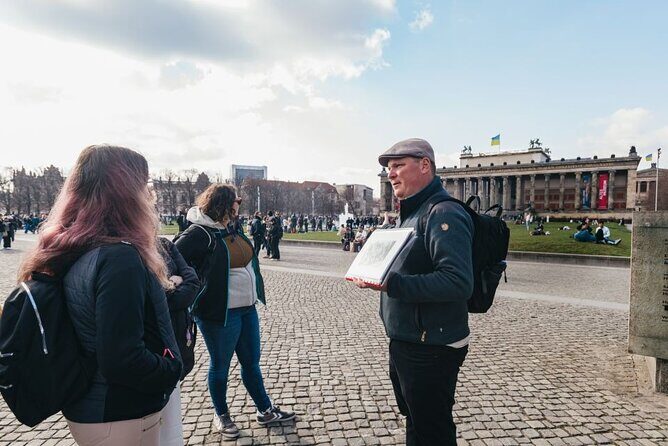
The Lustgarten is a public square framed by the Berlin Cathedral, the Altes Museum, and the Zeughaus. Before the Nazis, it was a favored place for speeches and protests. The tour points out that one week after Hitler became Chancellor, about 200,000 Berliners protested the new government here.
Then Nazi control tightened. Restrictions on the right to protest brought fines and arrests. By 1934, the square was paved over for Nazi propaganda rallies, swearing-in ceremonies, and military parades.
This stop is a reminder that space can be repurposed. A city doesn’t only contain ideology—it can be engineered into ideology. Standing in the same area where protests once happened makes that point more real than a diagram ever will.
Zeughaus and the assassination plot: when resistance entered the officer class
The Zeughaus is one of Berlin’s most striking buildings along Unter den Linden. Constructed in 1730 as an artillery arsenal, it later became part of wartime display culture.
On March 21, 1943, it was used to exhibit captured Soviet weapons. The tour spotlights Major General Rudolf Christoph Freiherr von Gersdorff, a member of the Wehrmacht resistance, who led the exhibit. He had a plan to blow himself up along with Adolf Hitler using two concealed British clams mines—after repeated failed assassination attempts.
This stop keeps you alert because the story isn’t just “resistance happened.” It shows resistance taking institutional forms, including within the military structure. The tour doesn’t rush the moment; it connects the plotting to the setting.
Admission is free, and the stop is about 10 minutes.
Neue Wache: a central memorial in a busy city
Neue Wache is a moving monument in the middle of city life. The tour frames it as Germany’s central memorial for the victims of war and tyranny. In other words, it’s not only about one group or one timeline. It’s an attempt to hold a wider category of loss in one place.
The tradeoff of a central location is also part of the experience: people move around you, traffic continues, daily life continues. That contrast can make the memorial feel more urgent, and it can also be slightly uncomfortable—like the country is asking you to remember while life goes on.
This stop is brief (about 10 minutes) but it gives your brain a place to land between more story-heavy sites.
Bebelplatz’s book burning: propaganda starts with what gets silenced
At Bebelplatz, adjacent to Humboldt University, the tour covers the Nazi book burning on May 10, 1933. Students from the Nazi German Student Union and their professors gathered in a nationwide action against the un-German spirit and burned upward of 25,000 volumes.
This stop matters because it explains how tyranny often begins with culture. Once you remove ideas, you reshape what people are allowed to think, read, and discuss. The act of burning books is dramatic, but the real work is quieter: controlling language and limiting imagination.
The stop takes around 10 minutes, with free admission. It’s the kind of site you’ll likely remember later when you see how museums and schools handle sensitive history today.
Trains to Life – Trains to Death: Kindertransport and deportation in one sculpture
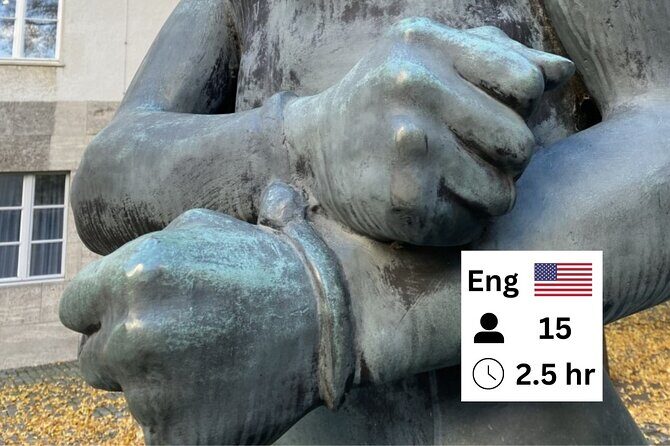
The tour ends with Trains to Life – Trains to Death, a near life-size sculpture. The monument shows two groups of Jewish children with contrasting fates during the Nazi era. Their gazes point in opposing directions, representing those who were saved through the Kindertransport to England and those who suffered deportation to concentration camps.
Designed by sculptor Frank Meisle, the tour adds a personal thread: Meisle himself was among the children rescued on the Kindertransporte traveling in 1939 from here to England.
If you want one image to carry out of the tour, this is often it. It turns an ocean of facts into a single visual contrast—life preserved through rescue versus life destroyed through deportation.
Free and about 10 minutes, it’s a fitting close for a walk that started with a synagogue’s survival and moved toward a nation’s memory work.
Pacing and the walking reality: what 2 hours 30 minutes feels like
This tour runs about 2 hours 30 minutes, and the schedule is designed to keep you moving between sites rather than spending long stretches inside buildings. That’s good for most people because Berlin’s center is walkable and the concentration of meaningful places is high.
The downside is straightforward: you’ll stand at memorials and monuments. The tour is marked accessible, which helps, but you should still come with realistic expectations. If you’re easily tired by standing, you may want to plan a lighter day afterward.
The benefit is that the route is built for flow. The story doesn’t feel like a classroom lecture. It feels like you’re following a trail, with breaks for reading and short pauses to absorb what you’ve just learned.
Price and value: what $48.01 really buys in Berlin
At $48.01 per person for roughly 2.5 hours, the value depends on one thing: you’re paying for the guide’s storytelling and structure, not for logistics or extra activities.
Here’s where the math improves:
- It’s a small-group tour (up to 15), which usually means better attention.
- Many stops list admission ticket free, so you’re not stacking entry fees.
- You get then-and-now photos and maps, which help you read the city instead of just moving through it.
- You get a mobile ticket and an English-speaking guide.
In Berlin, you can spend more time and money on tours that repeat the same broad overview. This one focuses on specific resistance threads across a compact area, which can make your ticket feel more “used” and less “generic.”
Who this tour is best for (and who should rethink)
This is a strong fit if you want:
- A Holocaust-focused walking experience that keeps returning to resistance and rescue
- Clear context at major sites across central Berlin
- A smaller group setting where you can ask questions
It’s also a good choice if you’re the kind of traveler who likes to connect names and events to street-level locations.
You might rethink it if you:
- Struggle with standing for long stretches
- Want a purely museum-style experience with mostly seated time
But if you can manage your footing and stamina, this is one of the more focused ways to understand Berlin’s wartime memory—without losing your way.
Should you book this Berlin resistance walk?
Yes, if your goal is to understand Berlin’s Holocaust story through specific acts of resistance, survival, and collective protest, rather than through only broad political milestones. The combination of free-entry stops, strong memorial sites, and guide-led explanations tends to make the $48.01 feel fair.
Also, bring an open mind. Some moments here are hard, and the tour doesn’t turn them into a “sad sightseeing list.” It uses the sites to show how people tried to resist, how systems attacked daily life, and how memory gets rebuilt.
If you book, wear comfortable shoes, and give yourself a quiet hour afterward. You’ll want a little time to let the details settle.
FAQ
What language is this tour offered in?
It’s offered in English.
How long is the tour?
It lasts about 2 hours 30 minutes.
What’s the price per person?
The price is $48.01 per person.
Is this a small group?
Yes. The tour has a maximum of 15 travelers.
Do I need an admission ticket for the stops?
The listed stops show admission as free, so you typically won’t need to buy entry tickets for those specific locations.
Where does the tour start and end?
It starts at Oranienburger Str. 36, 10117 Berlin, Germany. It ends at S+U Friedrichstraße (near FriedrichstraßeGeorgenstraße 14/17, 10117 Berlin, Germany).
Is food included?
No. Food and drinks are not included.
Can I use a mobile ticket?
Yes, the tour includes a mobile ticket.
Is the tour accessible, and are service animals allowed?
The tour is marked as accessible, and service animals are allowed.
What weather conditions affect the tour?
The experience requires good weather. If it’s canceled due to poor weather, you’ll be offered another date or a full refund.
What’s the cancellation policy?
You can cancel for free. You must cancel at least 24 hours in advance for a full refund. If you cancel less than 24 hours before, the amount paid won’t be refunded.