REVIEW · BERLIN
Private Guide Up to Group 6 – ONE Rickshaw, (E)Bikes, E-Scooters
Book on Viator →Operated by Berlin-Rickshaw / Berlin-Excursions · Bookable on Viator
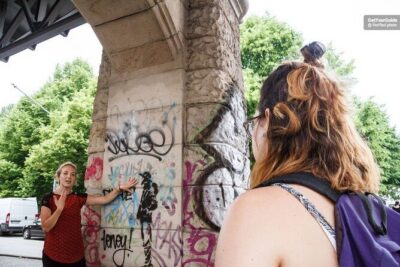
Berlin feels personal when you glide by on wheels. This private guide tour lets your group pick from e-bikes, regular bikes, e-scooters, or a rickshaw, and you still pause together for the same stories at each main stop.
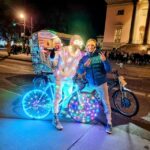
I like the guide style a lot—funny, flexible, and built for questions. In a well-reviewed example, the guide Levi is praised for a personal approach, humor, and even Dutch, plus small extras like water and pretzels for kids. One consideration: with about 3 hours, the time at each landmark is short, so you’ll get smart highlights rather than long museum sessions.
In This Review
- Key points to know before you ride
- A 3-hour private ride: rickshaw, e-bikes, scooters, and one shared route
- Starting at Fernsehturm: orientation from Berlin’s tallest view
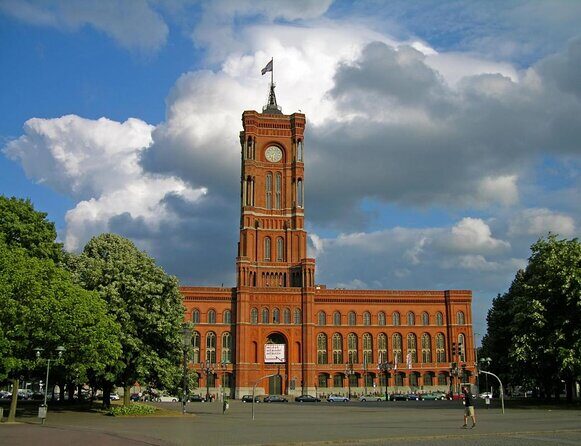
- Rotes Rathaus and Stadtschloss: politics and palace drama in short form
- Museum Island and Unter den Linden: the classics you can actually connect
- Bebelplatz to Gendarmenmarkt: ideas, intolerance, and music-hall beauty
- Checkpoint Charlie to Topography of Terror: Cold War to Nazi crimes
- Führerbunker and the Holocaust Memorial: places that feel heavy
- Brandenburg Gate: the finish line for photos and meaning
- Price and value for a group up to 6
- Should you book this Berlin rickshaw-and-bikes tour?
- FAQ
- How long is the tour?
- Is this a private tour?
- What group size does this tour support?
- What vehicles can we choose?
- Where does the tour start?
- Does the tour use a mobile ticket?
- Is WiFi and water included?
- Is lunch included?
- Will we stop for photos?
- Is the rickshaw a good option for less mobile guests?
Key points to know before you ride
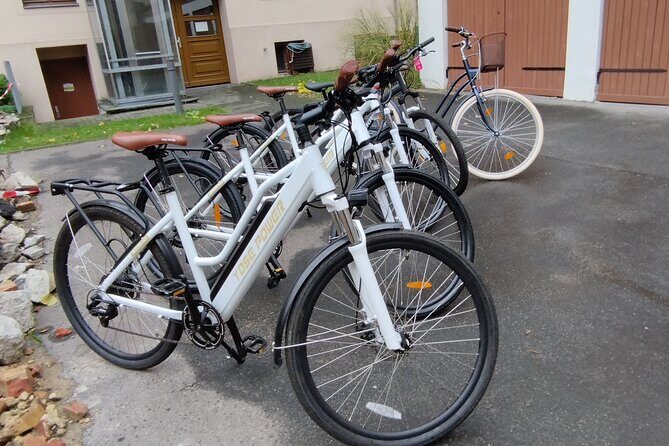
- Vehicle choice that keeps the group together: bikes, e-bikes, e-scooters, or a rickshaw, with shared stops and the same info
- Photo-friendly pacing: you can stop for memorable pictures, and you can get close to monuments without needing to step out
- Great start-point orientation: the tour kicks off at Fernsehturm so you get your bearings early
- A thoughtful mix of iconic and hard history: from Brandenburg Gate to the Holocaust Memorial and sites tied to Nazi persecution
- Helpful for less mobile guests: the rickshaw option is designed for people who struggle with longer walks
A 3-hour private ride: rickshaw, e-bikes, scooters, and one shared route
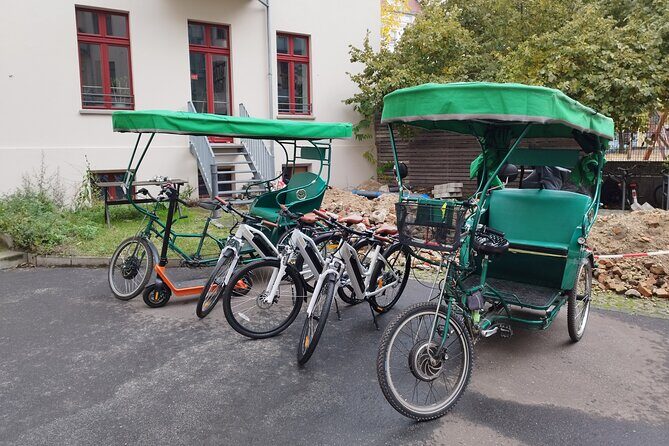
This is a private tour for up to 6 people, and the vehicle choice is the heart of it. You can spread across e-bikes, regular bikes, e-scooters, or a rickshaw and still keep the group moving as one unit. At the stops, you don’t split into separate lecture rooms. You stop, listen, and get the same explanations before rolling on.
That matters, especially in Berlin, where landmarks can feel close on a map but take time between light-rail stops, busy intersections, and long blocks. With wheels in motion, the tour compresses a lot of Berlin into one easy arc—without you having to plan the order yourself.
Two practical perks also help the ride feel smooth. There’s bottled water included, and WiFi plus an air-conditioned vehicle are listed as part of the experience. Whether you use the AC vehicle for transfers or as part of the flow, the idea is comfort between stops, not just “look and move.”
You can also read our reviews of more guided tours in Berlin
Starting at Fernsehturm: orientation from Berlin’s tallest view
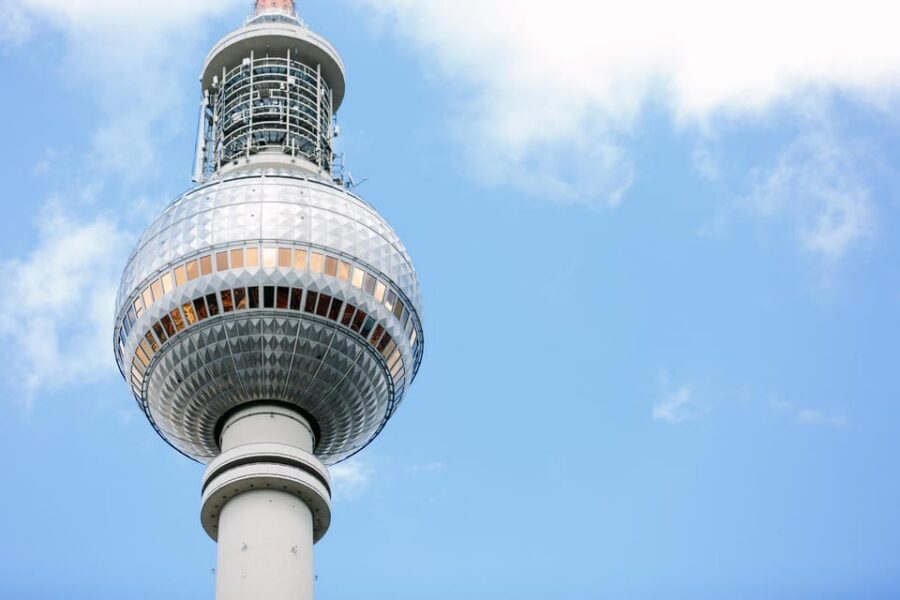
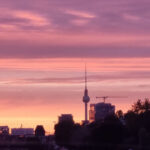
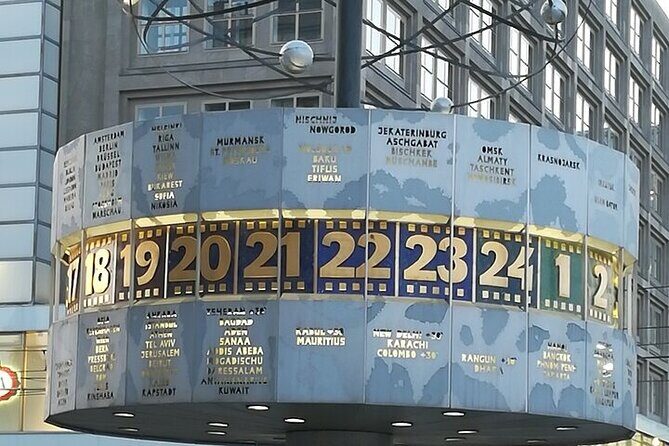
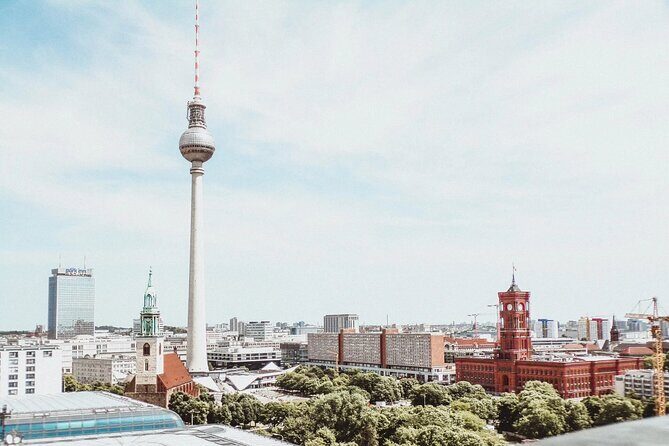
You begin at the Berlin TV Tower, Fernsehturm Berlin, by Alexanderplatz. It’s not just a fancy meeting spot. This tower is about 368 meters tall, with a distinctive spherical top. For views, the observation level sits around 203 meters, and the deck is set up for a wide 360-degree look at the city.
Starting here is a smart move. From up high, Berlin’s shape makes more sense. You can spot where the big “straight lines” and major districts sit, which makes the ground-level story later feel easier to follow. It also gives you a quick visual anchor before the tour heads into the more detailed history stops.
One note: the tour time is limited, so treat the TV Tower stop as orientation and photos, not a long stay in the observation deck experience. You’ll likely get enough time to take it all in and start connecting the dots.
Rotes Rathaus and Stadtschloss: politics and palace drama in short form
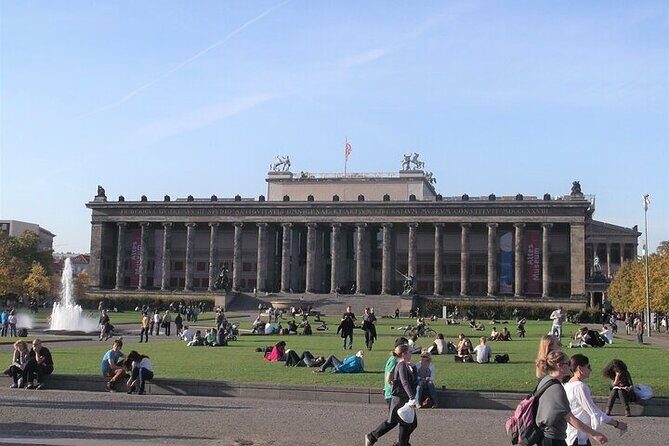
Next up is Berlin’s City Hall area, the Rotes Rathaus. It’s presented as the central hub of political activity and administration—so you get a sense of how the city governs itself today, not just how it looked in the past. Even if you’re not a politics person, this stop works because it gives Berlin’s power structure some human scale.
Then you hit Stadtschloss Berlin, also called the Berlin City Palace. The story here is intense but explained in a way that fits a short stop. It was built in the 15th century as a royal residence, tied to the rise and fall of the Hohenzollern dynasty. It was destroyed during WWII, and after the Berlin Wall fell, there was a real debate about whether to rebuild it. The end result is the Humboldt Forum concept: a restored Baroque façade paired with modern interiors for cultural use.
If you only know Berlin as a wall and a skyline, this stop gives you another layer. It’s about rebuilding identity—what you bring back, what you replace, and what message architecture sends.
Museum Island and Unter den Linden: the classics you can actually connect
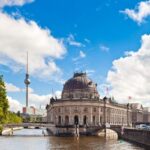
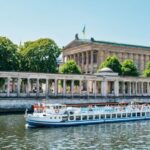
You’ll spend time at Museum Island, a UNESCO World Heritage site. The main point of this stop is not to cram in a museum. It’s to understand why Berlin treats art and artifacts like public memory. Museum Island is described as a cluster of major museums and historic treasures, a place where creativity and history sit side by side.
Then you move along Unter den Linden, the famous boulevard that collects architectural styles along one long perspective. You’ll hear about the mix—Baroque, Neoclassical, and modernist—plus landmark names like the Brandenburg Gate, the Berlin State Library, and the Kronprinzenpalais.
Here’s why this section is useful: it’s where Berlin starts to feel like a connected story instead of a set of separate sights. When you see Unter den Linden after hearing the palace and museum island context, the boulevard becomes more than a photo line. It becomes a timeline on foot.
Bebelplatz to Gendarmenmarkt: ideas, intolerance, and music-hall beauty
Bebelplatz is one of the tour’s emotional pivots. This square is linked to the Nazi-era book burnings in May 1933, when thousands gathered to incinerate books labeled un-German. Today, there’s a memorial by Micha Ullman: a glass plate in the ground that reveals empty bookshelves below.
It’s a short stop, but it lands hard because it forces a question: what happens when society decides certain ideas don’t belong? The memorial is quiet, and that’s part of the power.
From there, the tour heads to Gendarmenmarkt, famous for its neoclassical grandeur. You’ll see three iconic buildings:
- Konzerthaus: a concert hall tied to world-class performances
- French Cathedral: built by Huguenot refugees, symbolizing tolerance and diversity
- German Cathedral: completing the trio, with history and a museum inside
This stretch is great for balance. After a heavy stop at Bebelplatz, Gendarmenmarkt lets you breathe—then reminds you that culture and tolerance didn’t just happen. They were built by communities who brought skills, faith, and art with them.
You can also read our reviews of more private tours in Berlin

Checkpoint Charlie to Topography of Terror: Cold War to Nazi crimes
Checkpoint Charlie is next, and it’s presented as an iconic Cold War symbol of division and reunification. It was one of the best-known border crossings between East and West Berlin, and it gained its name from the NATO phonetic alphabet’s third letter. Expect the story to focus on tense moments between American and Soviet forces.
Today, there’s a replica guardhouse staffed by actors in U.S. military police uniforms, plus a museum connection known as the Mauermuseum. Even with the actor element, the emphasis stays on why this place mattered.
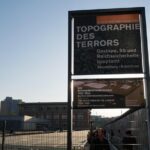
Then comes Topography of Terror, on the historic ground of Nazi Gestapo and SS headquarters. This museum is described as a blunt account of atrocities, with exhibits, documents, and remnants of original buildings. It’s the kind of stop where you don’t need to be a history scholar to feel the moral weight.
In a tour that covers many sites, Topography of Terror is the one that turns your “Berlin sightseeing” mode into “Berlin understanding” mode.
Führerbunker and the Holocaust Memorial: places that feel heavy
Berlin doesn’t hide its darkest chapters, and this route doesn’t either. You stop at the area tied to the Führerbunker, where Adolf Hitler spent the final months of WWII. The bunker was built beneath the garden of the Reich Chancellery, but the site today has no visible trace because much of it was removed after the war. The location is described as near a parking lot around the intersection of In den Ministergärten and Gertrud-Kolmar-Straße, with a key point: it was taken away to prevent it becoming a neo-Nazi pilgrimage site.
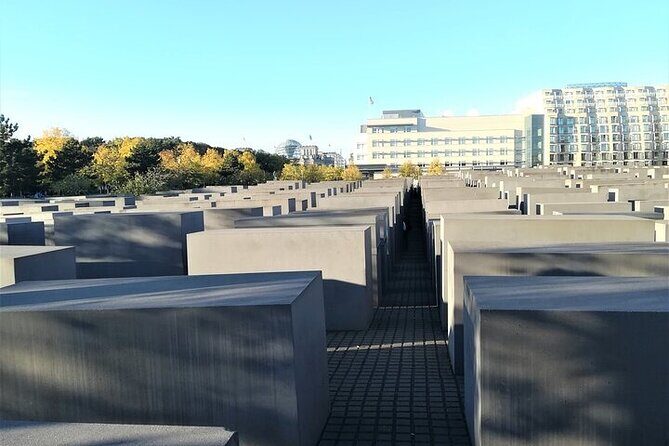
After that, you reach the Memorial to the Murdered Jews of Europe, also known as the Holocaust Memorial. The design is meant to unsettle. The memorial uses 2,711 concrete slabs of varying heights arranged on a sloping field, creating disorientation as you walk through. As you move deeper, the ground slopes downward and you can feel more isolated from the city outside.
This isn’t a quick, “smile for the camera” place. The slabs are uniform gray on purpose, pointing to the dehumanization and anonymity of victims. Your guide’s job here is to slow the pace just enough that you actually process what you’re seeing.
Brandenburg Gate: the finish line for photos and meaning
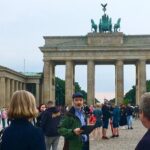
You wrap with Brandenburg Gate, Berlin’s most iconic landmark. It’s a neoclassical triumphal arch designed by Carl Gotthard Langhans, completed in 1791. It was commissioned by King Frederick William II of Prussia as a symbol of peace and marked the start of the grand boulevard Unter den Linden.
This is a strong ending because the gate is both famous and full of baggage—over 200 years of political shifts, reunification moments, and symbolic reinvention. When you’ve just come from the Holocaust Memorial and the sites tied to Nazi terror, Brandenburg Gate hits differently. It doesn’t just look impressive. It becomes a marker of what survived and what changed.
Take your final photos here, but also take a minute to compare the gate you see now to the stories you heard on the way. That contrast is usually what people remember long after the camera roll stops.
Price and value for a group up to 6
The price is $465.43 per group for up to 6 people, for an experience that runs about 3 hours. The value math is simple:
- If you fill all 6 spots, you’re at roughly $78 per person
- If you ride as a smaller group, the per-person cost goes up, so you’ll feel it more
What you’re paying for isn’t just transportation. You’re paying for a private guide plus vehicle flexibility, with included comfort touches like WiFi and bottled water. You also get access to a route that hits major landmarks efficiently, without you having to juggle tickets, planning routes, and transit timing.
Not included is lunch. If you want a true full-day Berlin experience, you’ll likely need to add time and a meal before or after. But as a 3-hour orientation plus story run, this price structure can make sense—especially for friends, families, or work groups that want one shared itinerary.
One more value note: the rickshaw option is designed for less mobile guests, and the tour’s approach to stopping anywhere for pictures can turn “we can’t walk far” into “we can still see a lot.” That flexibility is often worth more than people expect.
Should you book this Berlin rickshaw-and-bikes tour?
Book it if you want Berlin in a format that feels personal and practical: short stops, strong explanations, and vehicle options that keep your group together. It’s a good match for families (the guide approach can be kid-friendly, with examples of extra care like water and pretzels) and for small groups that prefer a guide who answers questions instead of rushing past them.
Skip it if your top priority is slow museum time or long indoor visits. The schedule is built around movement and highlights, so it’s not a replacement for deep ticketed museum days.
If your group includes someone who struggles with longer walking distances, this tour’s rickshaw setup is a major plus. And if you like your Berlin stories to range from TV Tower views to hard history sites like Topography of Terror and the Holocaust Memorial, this route gives you that mix without making you do the planning.
FAQ
How long is the tour?
It’s about 3 hours.
Is this a private tour?
Yes. Only your group participates.
What group size does this tour support?
It’s priced for a group of up to 6 people.
What vehicles can we choose?
You can choose from e-bikes, regular bikes, e-scooters, or a rickshaw.
Where does the tour start?
The start location is Weinbergsweg 6, 10119 Berlin, Germany.
Does the tour use a mobile ticket?
Yes, it includes a mobile ticket.
Is WiFi and water included?
Yes. WiFi on board and bottled water are included, along with an air-conditioned vehicle listed as part of the experience.
Is lunch included?
No. Lunch is not included.
Will we stop for photos?
Yes. You can stop anywhere you want for memorable pictures, and you can get close to monuments even without stepping out.
Is the rickshaw a good option for less mobile guests?
Yes. It’s described as ideal for less mobile guests, where you enter in a few steps, and you can still approach monuments closely.