REVIEW · BERLIN
Private Taxi Tour of Berlin East and West and Neighbourhood approx. 4-6h
Book on Viator →Operated by Gunter Bauer GAT-Productions · Bookable on Viator
Berlin’s East and West story is easy to digest. This private taxi tour threads you past major landmarks fast, with real context on why they matter. You get short photo-and-walk stops plus the kind of on-the-road explanation that helps the city click.
I especially like two things. First, it’s a smart way to see the big-ticket sites on both sides without burning half a day on transfers. Second, Gunter (Gunter Bauer) shares clear, stop-by-stop background, and he can take photos for you at the sights so you don’t end the day with 400 pictures and zero of you.
One consideration: the plan can be intense. If you have a long must-see list, you’ll want to say it early—traffic and vehicle size can affect how much time you get at each stop.
In This Review
- Key things you’ll notice on this tour
- Private Taxi Tour of Berlin East and West: the “see it all” logic
- Pickup, timing, and how the day stays “4 to 6 hours”
- Reichstag to Brandenburg Gate: symbols of power, rebuilt and re-used
- Unter den Linden and the Cold War spine: borders, governments, and escape attempts
- Parliament buildings and memorial spaces: how Berlin teaches without lectures
- Gendarmenmarkt and the Jewish landmarks: beauty with painful context
- Hackesche Höfe to Humboldt Forum: courtyards and the baroque comeback
- Nikolaiviertel and the Spree-side atmosphere: old Berlin, carefully rebuilt
- West Berlin arc: Ku’damm, KaDeWe, and the memorial church contrast
- Kulturforum and Mies van der Rohe: modern architecture with purpose
- Sony Center and modern Potsdamer Platz: the city rebuilt again
- Abgeordnetenhaus, Topography of Terror, and the Wall’s last honest fragments
- East Side Gallery, Oberbaumbrücke, and Kreuzberg’s long shadows
- Price and value: what $179.82 per person buys you
- Should you book this Berlin East-West taxi tour?
- FAQ
- How long is the private taxi tour?
- Is the tour private, and is it offered in English?
- Is pickup included?
- What’s included in the price?
- Do you get time to step out at sights?
- Are child seats available?
- Can I cancel for a full refund?
Key things you’ll notice on this tour
- Private taxi comfort for 4–6 hours, including parking fees and onboard Wi-Fi
- East–West sequencing that makes the Cold War feel chronological, not random
- Rebuilt-to-reunified landmarks, like the Reichstag/Bundestag area and Humboldt Forum
- Real Wall remnants, from Topography of Terror-adjacent stretches to the last Wall fragments near the city center
- Museum stops without the museum-day commitment, many sights are exterior or quick-access viewpoints
- Photo-friendly stops at key points, with the option to get extra walking time if schedules allow
Private Taxi Tour of Berlin East and West: the “see it all” logic
Berlin is too spread out to enjoy if you’re relying only on hopping between stations and then guessing what to prioritize. This tour uses a taxi as a time machine. You’re not rushing through the city blindly—you’re driven from concentration point to concentration point, with just enough stops to let each place land.
You’ll also get the benefit of Berlin’s layout. The city is a patchwork of eras: Prussian grand building plans, Nazi-era scars, Cold War borders, and reunified reconstructions. Seeing it in a single loop makes those layers easier to read. One stop naturally points to the next.
And since it’s private, the pace can fit you better than a standard group tour. If you can’t walk far, you still get the highlights. If you love architecture, you’ll appreciate the focus on façades, building purposes, and what was rebuilt vs. what was erased.
You can also read our reviews of more private tours in Berlin


Pickup, timing, and how the day stays “4 to 6 hours”
This is designed as a short, focused Berlin “big story” afternoon. Pickup is included within the S-Bahn ring—about a 5 km area around the Brandenburg Gate. If you’re starting outside that zone (including beyond the airport area), pickup can cost extra based on the Berlin taxi tariff.
The schedule depends on traffic and weather—Berlin traffic can change fast. That’s why some stops are labeled as optional depending on how the day is going. If something matters a lot to you, I’d treat it as a priority item and say it early.
What makes the timing work is that the stops aren’t all full museum visits. Many are quick pull-offs for views, monuments, and exterior architecture. Others include brief walking areas so you can get close enough to understand scale and symbolism.
Reichstag to Brandenburg Gate: symbols of power, rebuilt and re-used
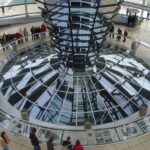
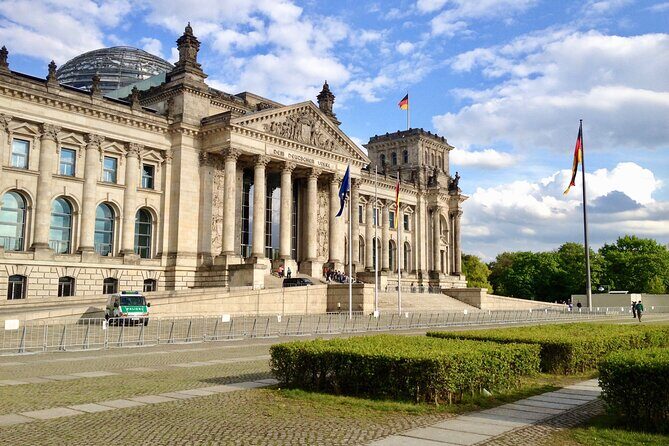
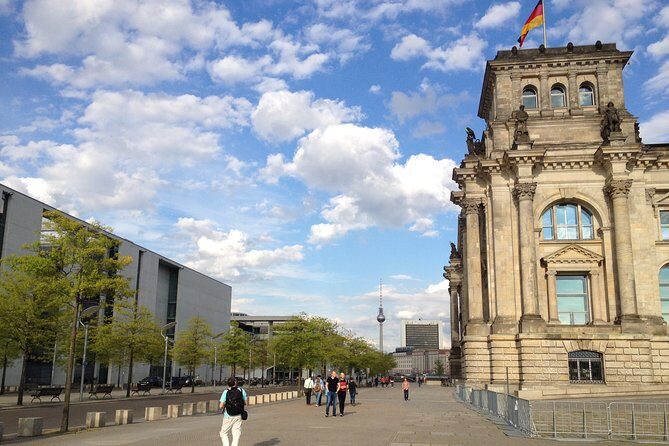
The tour often starts with the Reichstag area story and the way Berlin turned a damaged symbol into a modern seat of government. You’ll get the background behind the building’s decades of political friction—how it sat in a complicated zone and how the Reichstag dome became part of the new Berlin identity.
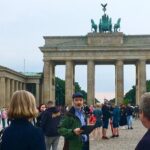
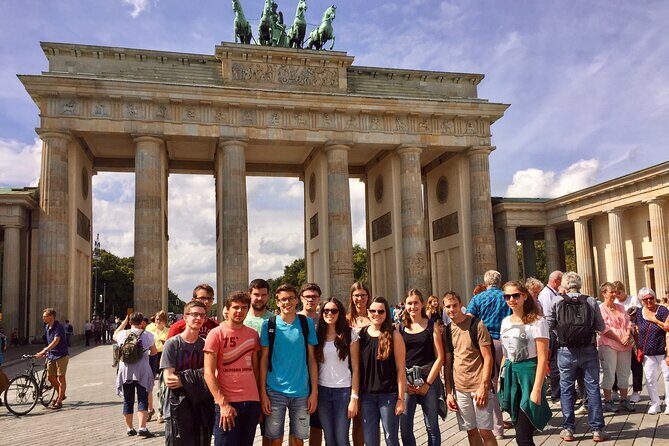
Then you move to the Brandenburg Gate, the city’s famous “parlor room” address—right in the center of the action, but also historically isolated. What makes this stop more than a photo is the context: the gate wasn’t always a walk-up landmark. During the division, the surrounding access rules and border layout changed how people experienced the site.
One detail I like: the tour connects symbolism to layout. You’ll hear how the gate’s “isolation” made it a kind of political stage, not just a monument. After that, you’re ready for the next leg: the modern reconstruction era that filled the surrounding spaces with embassies, institutions, and rebuilt streets.
Unter den Linden and the Cold War spine: borders, governments, and escape attempts
From the Brandenburg Gate area, you’ll move along the “main character” boulevard: Unter den Linden. The guide explains why the street is more than pretty—this corridor links palaces, universities, the State Opera, and the civic identity Berlin tried to project.
You’ll also see government buildings that look official because they are official: large structures built to serve the machinery of power. You’ll get the perspective of journalists stationed to watch proceedings, offices designed around authority, and the way the architecture itself communicates who’s in charge.
Then the tour pivots back to the border story—places tied to escape attempts and early deaths after the Wall went up. You’ll hear about Günter Litfin’s escape attempt and the grim meaning of specific border-water locations, plus nearby memorial reminders of what happened. This section works well because it’s not only about the Wall. It’s about how the Cold War shaped everyday geography.
Practical note: if you want the full Wall-adjacent museum treatment, some of those add-ons can be limited by time. The tour mentions you can omit parts like the recreated Stasi-related area (Palace of Tears) depending on traffic and timing.
Parliament buildings and memorial spaces: how Berlin teaches without lectures
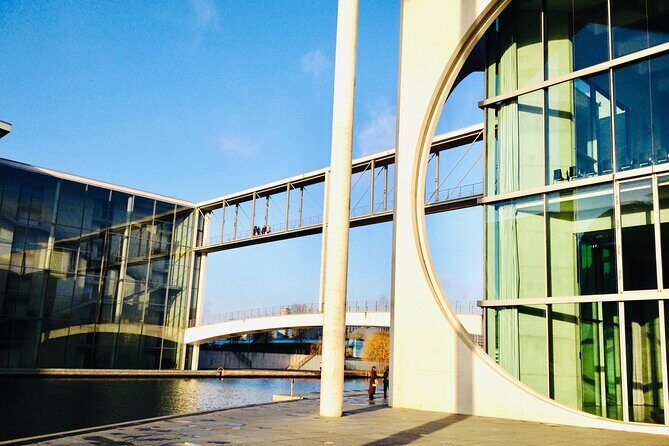
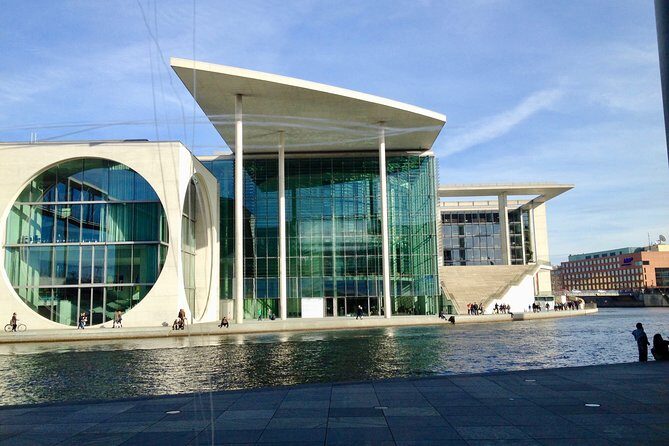
A big strength here is that you get architecture paired with function. You’ll pass the “engine of parliament” feeling of the long legislative complex, where committee work happens rather than just speeches. You’ll also hear why Berlin made it visible—there’s a point to glass and openness when a city wants to represent a new political era.
Then you’ll hit memorial spaces that carry Nazi-era and war-tied meanings. One stop centers on the memorial at the Neue Wache area, explained as a place of mourning for victims of war and tyranny. It’s not just a monument moment. The tour frames it as a public ritual space—wreaths after memorial days, and a symbol that acknowledges multiple kinds of suffering.
This is where the taxi format shines. You can see the memorial, understand what it represents, and move on without losing your whole day inside.

Gendarmenmarkt and the Jewish landmarks: beauty with painful context
Gendarmenmarkt is one of Berlin’s most photogenic squares, and the tour uses that beauty well. You’ll see the German and French cathedral buildings and hear the story of Frederick II’s design choices—why they resemble cathedrals but function as meetinghouses with cathedral-like towers.
Then you’ll transition into Jewish Berlin landmarks. The tour passes a guarded synagogue site with Moorish-style elements and a golden dome presence on the exterior. The interior was destroyed in the war, but an exhibition in the building helps explain Jewish life in Berlin—plus why security measures exist at this location today.
This section is valuable because it avoids treating Berlin’s story as one straight line. It adds a second axis: not just borders and regimes, but also communities, rights, and the way the city tried (and failed) to preserve cultural life through the 19th and 20th centuries.
Hackesche Höfe to Humboldt Forum: courtyards and the baroque comeback
If you like Berlin’s “texture,” you’ll enjoy the stop at Die Hackeschen Höfe. The tour explains how these courtyards were built as an early 1900s showcase—mixing work and living, with workshops/printing/creative spaces around green atria. After division damage and warehouse-era use, they were among the first restored, and the place still feels like a lived-in neighborhood core rather than a staged attraction.
Next comes the Humboldt Forum area. This stop is all about the contrast between what was missing for decades (a parking lot) and what returned after reunification: the reconstructed Berlin Palace outside, plus reconstruction work in the courtyard. The tour also notes that the Humboldt Forum opened around 2021/2022 and that a roof terrace is a highlight.
One review-based practical tip I’d take seriously: if you’re hoping for rooftop or observation access, check your weekday. Tuesday was mentioned as a day when an observation component wasn’t open, so plan your top view on a different day when you can.
Nikolaiviertel and the Spree-side atmosphere: old Berlin, carefully rebuilt
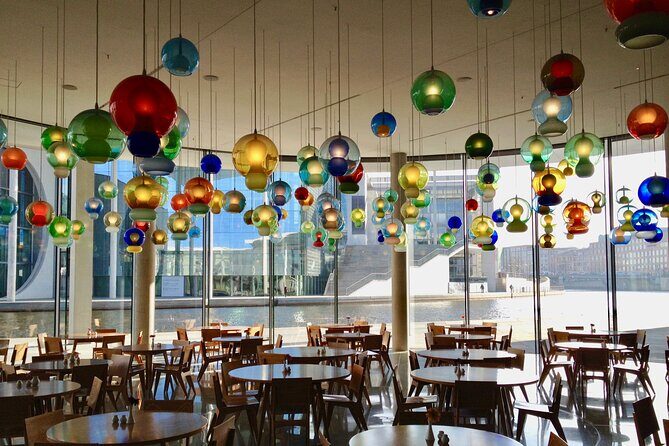
For “old Berlin” energy without committing to a full historical district stroll, the tour routes you toward Nikolaiviertel. The guide explains how the area was reconstructed in the 1980s using the right visual cues: it’s designed to feel like older Berlin even though the rebuilding involved limited remaining structures and large-scale reconstruction plans.
You’ll also meet the Nikolaikirche story and the idea of the area as a kind of time-warp street scene—complete with Biedermeier-era touches like the Knoblauchhaus and nearby memorial-statue details. The Spree views are part of the pull. You get to experience the neighborhood feel while still staying inside a taxi day.
West Berlin arc: Ku’damm, KaDeWe, and the memorial church contrast
As the tour crosses into West Berlin highlights, you’ll likely pass along the Ku’damm corridor and the Tauentzien stretch. Here the focus becomes the city’s shopping and entertainment identity—historic grand boulevard energy mixed with modern brand storefronts and flagship retail.
A standout stop in this west leg is KaDeWe. The tour frames it as a classic Berlin food-and-luxury level destination, including its large gourmet floor. It’s a practical “when you want a treat, this is the place” stop—especially if your day includes so much walking and standing in other areas.
You’ll also see the Kaiser Wilhelm Memorial Church, and the guide explains why the war-damaged tower is preserved. The church’s modern replacement style around the preserved portal is part of Berlin’s post-war visual language, where memory and rebuilding sit side by side.
Kulturforum and Mies van der Rohe: modern architecture with purpose
Berlin’s West-side museums aren’t only about paintings. In this tour, the Kulturforum gets explained as a planned cultural half of the city, not a random scatter.
You’ll pass the cluster around the New National Gallery and the surrounding major institutions. A highlight here is the National Gallery by Ludwig Mies van der Rohe, including the famous metal roof design on an interior space that doesn’t rely on traditional walls the way you might expect.
The tour’s explanation helps you read the space: it’s a building where exhibition design and architecture interact closely. You’ll also hear how opinions in Darmstadt mattered during the approval process—one of those behind-the-scenes anecdotes that makes architecture feel human.
Sony Center and modern Potsdamer Platz: the city rebuilt again
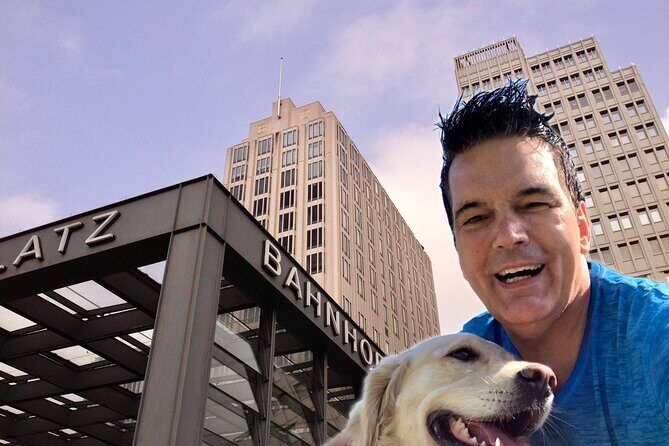
Potsdamer Platz is often described in terms of modern Berlin, and the Sony Center stop puts that into visual form. The guide explains the roof’s dramatic span and the architectural ambition of the space—glass, steel, and that futuristic feel meant to lift a formerly depressed area.
There’s also a very Berlin detail that makes this stop memorable: part of the old Hotel Esplanade wing survived and was moved in a careful process so it could live inside the new complex. That’s not just trivia. It’s Berlin’s habit of re-sorting remnants of the past into new shapes.
If you’re the kind of traveler who loves modern design, this is one of the stops that gives you both the story and the silhouette.
Abgeordnetenhaus, Topography of Terror, and the Wall’s last honest fragments
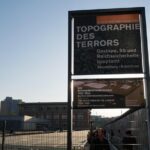
The tour’s emotional core tends to arrive through Topography of Terror and nearby Wall trace sites. You’ll see areas tied to Nazi security organs’ operations and the way an open-air documentation setup can show traces of the past without turning it into a theme park.
Then the route includes another layer: preserved Wall remnants close to the city center, including the highly perforated Wall section at Niederkirchnerstraße. The explanation focuses on how the East rulers felt protected there and why certain border patterns differed from other Wall zones.
From there, you may reach Checkpoint Charlie. The tour explains its Allied checkpoint logic and why the area became a global Cold War symbol. It also notes that what you see there now is partially replica-focused, while original structures are held in museums.
This section is powerful because it’s grounded in exact places, not abstract history. You’ll understand the border not just as a line, but as a system of checkpoints, surveillance, and deadly consequences.
East Side Gallery, Oberbaumbrücke, and Kreuzberg’s long shadows
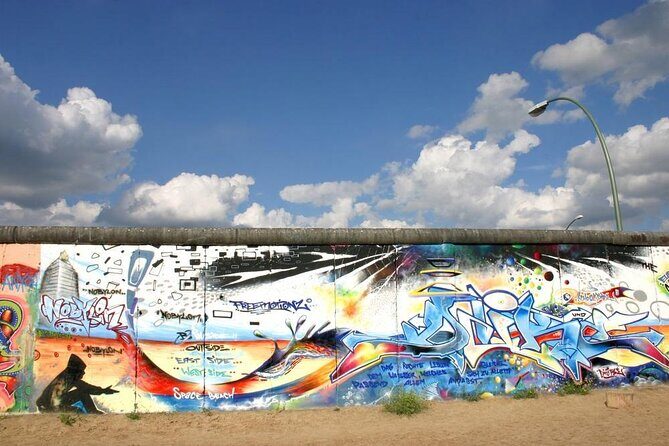
Near the end, the tour often heads toward the East Side Gallery, known for the long stretch of Wall covered in post-reunification artwork. You’ll hear that this isn’t a simple “front wall” story—there’s a more complex border setup along the river, including hinterland walls and access constraints that shaped what could be preserved and painted.
Then you’ll cross the Oberbaumbrücke, with the medieval towers and the coats of arms that once marked a customs boundary. The guide explains how the Spree crossing was more than a bridge—it was a boundary point between zones, with ships and night access rules historically involved.
Finally, the tour touches Kreuzberg’s development story, including what was planned in the 1960s versus what exists today. You’ll also hear how Stalin-Allee-era worker-palace blocks became controversial, including the 1953 uprising context, and how renovated long building stretches turned into a monumental “mile” of their own.
Price and value: what $179.82 per person buys you
At $179.82 per person for about 4–6 hours, the main value is not just transportation. You’re paying for a private loop that blends driving + interpretation + tightly managed stops.
This can beat DIY in a few cases:
- You have limited time and want the East/West arc to feel connected, not pieced together.
- You want to minimize sitting on buses/trains between far-apart story locations.
- You like explanations that connect architecture to political history.
It also helps that the price bundle covers key costs: taxi ride and city tour (VAT included), parking fees, and the car itself (air-conditioned, Wi-Fi onboard). You’re not thinking about every logistics step mid-day.
Should you book this Berlin East-West taxi tour?
I’d book it if you’re a first-timer or you only have a short window and you want the city’s major chapters stitched together: Reichstag-era rebuilding, Wall geography, major squares, and modern symbols like Sony Center. It’s also a solid pick if you don’t want a walking-only day—this format lets you see a lot without standing in lines for hours.
Skip it (or at least adjust expectations) if you’re the type who wants long museum time, because the day is built around fast stop-and-story pacing. And if you’re traveling as a group of four, confirm vehicle size before you go, since some groups mentioned the vehicle felt tight for the number of people.
If you want the easiest first afternoon in Berlin, this is a good way to get your bearings fast—and it sets you up to choose where to return on your own later.
FAQ
How long is the private taxi tour?
The tour runs about 4 to 6 hours.
Is the tour private, and is it offered in English?
Yes, it’s private for only your group, and it’s offered in English.
Is pickup included?
Pickup is included within the S-Bahn ring, about 5 km around the Brandenburg Gate. Pickup outside the S-Bahn ring or from BER airport can cost extra.
What’s included in the price?
In addition to the private taxi transport, it includes an air-conditioned vehicle, parking fees, Wi-Fi onboard, and both the taxi ride and the city tour (VAT included). A mobile ticket is also provided, and group discounts are listed as available.
Do you get time to step out at sights?
The tour includes multiple short sightseeing stops with time to see key landmarks up close. Some parts can be omitted depending on traffic and time, and additional time can be booked on site for certain locations.
Are child seats available?
Yes. A child seat is available for toddlers from six months to three years, plus a booster seat for older children. A baby seat can be brought on request (MaxiCosy).
Can I cancel for a full refund?
Yes, it’s free cancellation. You can cancel up to 24 hours in advance for a full refund.