REVIEW · BERLIN
Private taxi tour to Potsdam and Sanssouci 6-8h
Book on Viator →Operated by Gunter Bauer GAT-Productions · Bookable on Viator
Potsdam feels like history with great timing. This private taxi tour links Sanssouci and the wider Potsdam highlights with smooth pacing and story-rich stops.
I love the setup: Berlin pickup that gets you out of the city fast, plus a guide who works at your pace. I also love the architectural angle, from Frederick the Great’s palace choices to the way later kings turned gardens into themed stages.
One consideration: the schedule packs a lot in 6 to 8 hours, and some palace interiors cost extra unless you choose the Sanssouci+ admission option.
In This Review
- Key things to know before you go
- A private taxi day through Potsdam’s palace world
- Price and value: what you’re paying for at $179.01
- Gunter Bauer’s style: lots of architecture, plus practical flow
- The Sanssouci entrance: Egypt fantasy, with a wink at power
- Sanssouci Palace: Frederick the Great’s rococo “one-man world”
- The Historic Windmill: why a dispute can preserve a landmark
- Orangery and winegrower structures: plants in winter, drama on ridges
- The tea-house China: Mode Chinoise and gilded fantasy furniture
- Weinbergterrassen: hidden vines, forced seasons, and the big fountain view
- Friedenskirche: Italy’s look, Potsdam’s quiet gravitas
- Sanssouci Park’s main event: 2 km of garden and palace choreography
- The other garden theaters: Friendship Temple and the small castles
- New Palace and the 600-room fantasy scale
- The mosque-style building: modern power hidden under romantic design
- Grotto cravings and Potsdam’s gates: more than palaces
- Dutch Quarter: Holland vibes plus an easy café break
- Potsdam’s central rebuild and a city church you should plan to see
- Cecilienhof Palace: where the Potsdam Conference happened
- The Russian village, Amber Room lore, and a flexible add-on
- Spy-bridge vibes on the way back: Glienicke Bridge
- Planning tips: how to get the best day without overdoing it
- Should you book this Potsdam taxi tour?
Key things to know before you go
- Private taxi comfort: air-conditioned ride, with parking handled for you
- A guide who explains styles: rococo, Italian-influenced designs, and Prussian court logic
- Park time that feels practical: you get real walking time where it matters most
- Photo-friendly stops: the guide takes photos and shares them with your group afterward
- Ticket choices affect the day: Sanssouci interiors may require the Sanssouci+ option
- Time for side interests: you can sometimes add a personal detour, like the Russian village
A private taxi day through Potsdam’s palace world
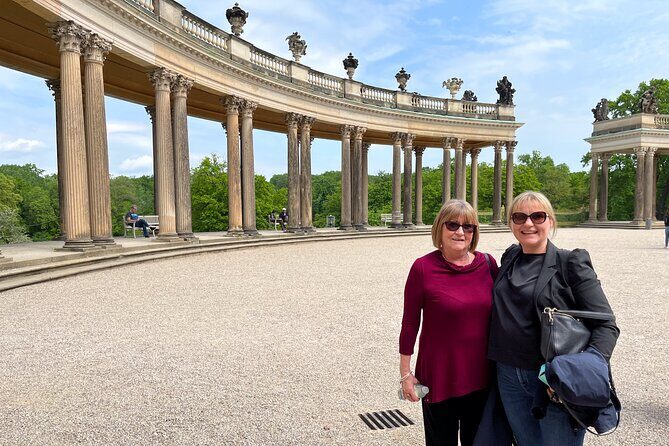
A day trip to Potsdam can turn into a logistics puzzle. This one sidesteps that with a private taxi tour format: you get picked up in Berlin and driven out with a steady flow of stops, instead of you wrestling with transfers and schedules.
The payoff is that Potsdam is not just one sight. It’s a chain reaction: Sanssouci’s vineyard palace leads to garden structures, which lead to other royal residences, and then into the rebuilt city center. When you can keep moving without fuss, the day makes sense.
You also get an English-guided experience. That matters here, because Potsdam is full of details that you’d otherwise miss: why a building looks like it belongs somewhere else, why an entrance has a weird “fantasy” feel, and how politics shaped the architecture.
You can also read our reviews of more private tours in Berlin


Price and value: what you’re paying for at $179.01
At $179.01 per person for a 6 to 8 hour private taxi tour, the real question is what you’re buying. You’re not paying for a bus and a generic walk. You’re paying for:
- Door-to-door pickup in Berlin (hotel or accommodation)
- An air-conditioned vehicle and included parking
- A guided city tour with the taxi ride included by tariff
- A schedule that hits big priorities without wasting half the day traveling
That value gets even better if you’re going with a small group or you prefer private time. Potsdam can be crowded at the wrong moments. Having your own pace helps you stop where the light is good and where you want to linger.
Where it gets tricky is tickets. The big palace interiors can require an extra admission option. Your included choice is basically this: if you book Sanssouci+ (all castle tours), you cover more interior access. If you don’t, you may find some rooms and museums are extra while the outdoor park elements remain easier to enjoy.
Snacks are not included, so plan on buying something during breaks.
Gunter Bauer’s style: lots of architecture, plus practical flow
The star of this kind of day trip is the guide. In this case, Gunter Bauer runs a format that many people describe as nonstop in the best way: clear, fast explanations of what you’re seeing, plus safety and smooth driving between sites.
What I like about this approach for you is the combination of architecture + storytelling. You’re not just getting dates. You’re learning what the buildings were for, who they were for, and what each era tried to impress people with.
You also benefit from photo handling. The guide takes pictures of your group at key locations and sends them afterward. That saves you from the awkward scramble of switching phones and asking strangers.
And yes, he adjusts. If your interests aren’t the standard checklist, there’s room to shift. People have asked for extra time in specific areas, like the Russian village side of Potsdam, and the guide works that into the day when possible.
The Sanssouci entrance: Egypt fantasy, with a wink at power
The day kicks off around Sanssouci Park with an entrance that plays games with meaning. One spot includes an obelisk-style portal that looks almost like something you’d expect in Egypt. The twist is that it’s a fantasy made for Europe, complete with fake hieroglyph-style ornamentation that you can’t really read.
That kind of detail is exactly why this tour format works. You’re not just walking from one attraction to the next. You’re learning how rulers used spectacle as communication.
It’s also a quick lesson in Prussian thinking: the court wanted eye-catching forms, but it also wanted practical solutions hidden underneath. You’ll hear that theme again and again at Sanssouci.
Sanssouci Palace: Frederick the Great’s rococo “one-man world”
Next up is Sanssouci Palace, Frederick the Great’s dream castle on a small vineyard. This isn’t a huge palace where you wander for hours without direction. It’s described as having just eight rooms, and they connect directly to the garden.
That small scale is one of the best reasons to see it. You don’t need a full day of museum energy to get the feeling. You get the palace vibe, and then you move outward into the park where the real drama is.
You’ll also pick up the social rules behind the design. This palace wasn’t meant for everyone. Only the king, his dogs, and select male visitors like Voltaire were the typical crowd. The way people are grouped here tells you something about Frederick’s ideal of power and control.
A practical note: palace ticketing may be extra unless you choose Sanssouci+. Even when admission isn’t included, the outside views and garden stops still deliver a lot.





The Historic Windmill: why a dispute can preserve a landmark
Not everything at Sanssouci is courtly elegance. The historic windmill still exists because its owner fought for it in a legal dispute and won at least in the first instance.
This stop has two values for you. First, it adds realism. Royal gardens didn’t just run on culture. They also relied on practical industry like grinding grain. Second, it gives you a view over the park.
It’s short, but it’s memorable. If you like seeing where daily life threads through royal planning, this is a good moment.
Orangery and winegrower structures: plants in winter, drama on ridges
The Orangery stop is partly about what the plants need and partly about how kings staged the skyline.
Orchards and exotic plants had to be protected during winter, so the orangery served that purpose. At the same time, the ridge design created an eye-catcher—another reminder that function and show were mixed on purpose.
Nearby, you’ll also hear about the idea of a place built for winegrowers in the vineyards, later made to look more special. The design choice includes Chinese-style pagoda influence and the “Mode Chinoise” mood that appears again in the garden structures.
If you get tired of palaces-as-paintings, this is a relief. You’re seeing the machinery of how a garden actually worked.
The tea-house China: Mode Chinoise and gilded fantasy furniture
One of the standout themes in Sanssouci Park is China-inspired design. The Chinese tea house is not treated like a simple pavilion. It’s described as a gem-like setting for Mode Chinoise, with precious furniture and delicate Chinese porcelain, plus lots of gold.
That matters because it changes how you look at it. You stop thinking of it as décor and start thinking of it as a court-approved performance of taste.
This stop also gives you a break from constant walking. Even if you just spend a short time inside, it helps reset your brain. Then you’re ready to tackle the views and the bigger garden layout again.
Weinbergterrassen: hidden vines, forced seasons, and the big fountain view
If there’s a postcard view that anchors Sanssouci, it’s Weinbergterrassen. This is the garden and terrace zone designed to show Frederick’s vision from an ideal angle.
Historically, the idea here was serious: Potsdam was too far north for normal wine growing. The solution was clever. Vines were hidden behind glass to help create a warmer micro-season in colder parts of the year.
This is the kind of story you’ll love because it’s not just aesthetic. It connects climate, technology, and the ruler’s desire for his own vineyard identity. It also explains why the place feels so engineered even though it looks like a graceful garden.
For the fountain, there’s also an engineering detour. A separate lake was created higher up and disguised with a ruin-like mountain concept. The fountain system wasn’t fully completed during Frederick’s lifetime, so you get that subtle sense of a project shaped by real timelines.
Friedenskirche: Italy’s look, Potsdam’s quiet gravitas
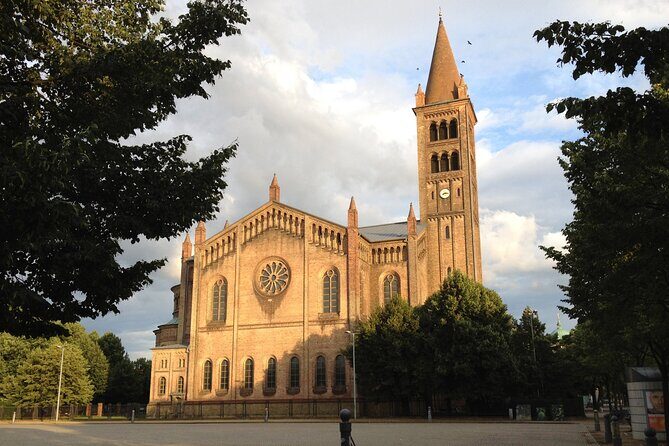
Next comes the Friedenskirche, connected to King Friedrich-Wilhelm IV’s strong Italian influence. The bell tower is described as Italian in style, with a campanile feel, and it sits apart from the main building.
What I like about this stop is how it slows the day down. There’s an emphasis on reflection: the tower is designed to mirror in the small pond, giving you that calm visual payoff.
It’s also a final resting-place story. The ruler found his burial far from Berlin’s Hohenzollern burial setting in the Berlin Cathedral. That contrast helps you understand why Potsdam mattered as a separate world, not just a day excursion.
Sanssouci Park’s main event: 2 km of garden and palace choreography
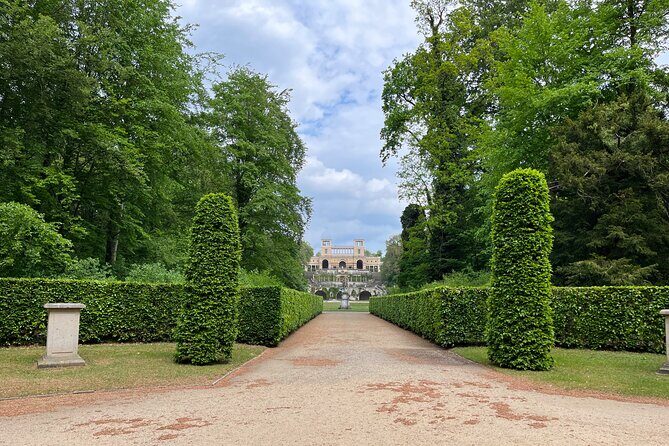
The core of the day is Sanssouci Park itself. Here, the palace isn’t isolated. The park connects the vineyard palace to the larger water fountain area and onward toward the New Palace.
You’re given time to walk the park’s paths and hit key garden attractions. The pace feels like a guided walk, not a rushed stamp-through.
This is where you notice that Potsdam is planned like a sequence. Small castles, Roman baths, and tea-house structures appear as deliberate “stops” in a longer visual route.
One of my favorite reasons to do this with a guide is that you’re less likely to treat the park as random scenery. You start reading it as a map of royal tastes.
The other garden theaters: Friendship Temple and the small castles
Beyond the famous palace zone, Sanssouci Park contains smaller architectural moments that were meant for pleasure walks. In period language, these were pleasure gardens—mini destinations inside the larger whole.
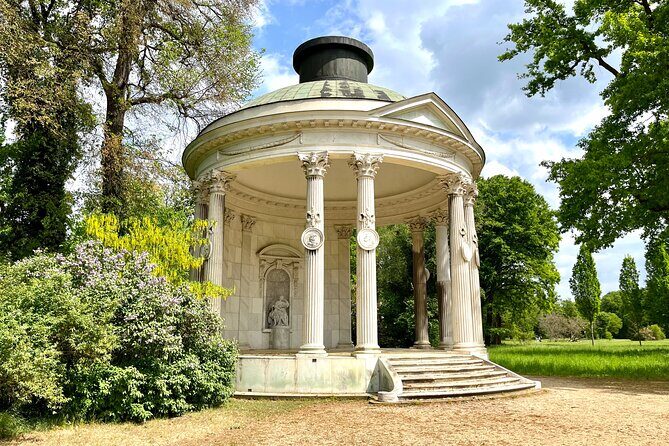
You’ll likely stop at the Friendship Temple, described as intimate enough to feel like a small tete-a-tete rather than a big ceremonial space.
There’s also the theme of “to each his place,” especially for heirs. When crown princes and princesses needed residences, they didn’t always build from scratch. Sometimes they expanded or converted existing houses to match the taste of the expected ruler.
If you like design details, there’s mention of an oriental tent embedded in a living room style for one example, and a garden setup with fir trees tied to a crown princess’s feelings toward her home region. Those emotional notes help you see the buildings as more than style.
New Palace and the 600-room fantasy scale
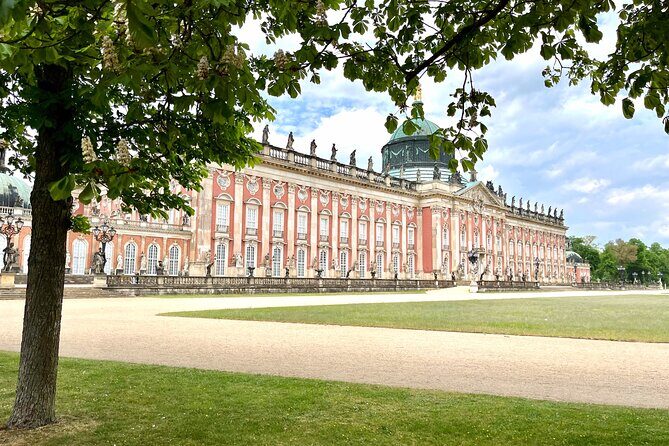
Later, you’ll move toward the New Palace, a big counterpoint to Frederick’s smaller eight-room palace.
The New Palace is described as having around 600 rooms and acting like a royal holiday home for relatives during visits. This is still royal life, but it’s royal life at scale. You get reception rooms, music rooms, bedrooms, and writing rooms, plus practical planning for staff.
A useful detail here is how kitchens were handled. The “common” buildings held kitchens and servants, and food could arrive cold. That’s not just trivia. It shows you how social hierarchy shaped the actual building layout.
You’ll also see the arcades connected to the servants’ quarters and palace guard buildings, making the complex feel like a functional machine, not only a pretty facade.
The mosque-style building: modern power hidden under romantic design
One of the more intriguing New Palace-adjacent stories involves modern technology hidden in romantic disguise.
A building is described as taking on an oriental look, shaped like a mosque with a minaret that works as a chimney for a steam turbine. That turbine still produces electricity today.
For you, that matters because it breaks the “palaces = old world only” assumption. Potsdam’s royal project didn’t ignore technology. It just wrapped it in style.
This is a great stop if you like seeing how eras overlap rather than switching neatly from one to another.
Grotto cravings and Potsdam’s gates: more than palaces
A proper pleasure garden in the region includes grotto-like structures, and you’ll hear about how romantic tastes created caves as fashionable features in the 18th and 19th centuries. They were mostly useless in a practical sense, but they were popular because they added variety and shade.
From there, the day broadens toward Potsdam’s gates and urban texture. Potsdam has a Brandenburg Gate in classicism style (smaller than Berlin’s more famous one), plus the Nauen Gate, described as imposing and Romanesque in medieval style. These stops help you shift from garden scale to city scale without needing extra transport.
Dutch Quarter: Holland vibes plus an easy café break
The Dutch Quarter is one of those areas that makes a Potsdam tour feel less like a single-theme marathon.
This district was shaped by the Great Elector bringing in Dutch canal builders from exile. The housing style is traditional Dutch, with red clinker buildings that create an impression of being in Holland.
It’s also a practical break zone. Small shops, bars, and cafes make it easy to pause, reset, and get food. A good time for this is when your legs start asking for mercy.
If you want a souvenir or a snack and don’t want to choose blindly, this is where you’ll find options.
Potsdam’s central rebuild and a city church you should plan to see
Near Potsdam’s main street and old center, you’ll notice how the city’s historic core was blown up and later carefully rebuilt. That’s part of Potsdam’s modern story: war damage followed by decades of socialist planning, then restoration of key buildings.
You’ll also hear about major church sites that disappeared from the cityscape and were later recreated with patrons supporting the reconstruction effort.
This section can feel more emotional than the palace stops, because it’s about rebuilding identity. If you’re into architecture and civic history, you’ll enjoy it.
If you’re purely here for Sanssouci and want to keep energy for that, you can still get a clear sense of Potsdam’s story without overcommitting.
Cecilienhof Palace: where the Potsdam Conference happened
A key late stop is Cecilienhof Palace, described as the youngest of Prussian palaces.
It was built for the Crown Prince and his wife Cecilie, with the marriage happening in 1913 just before World War I. Even though it was modern for its time (central heating and bathrooms), the exterior follows the idea of an English country house.
Most visitors focus on the 1945 Potsdam Conference site. It was where Stalin, Truman, and Churchill met, and the conference room remains furnished as it was then, along with outdoor areas connected to the event.
This is one of those places where you’ll feel the weight even if you aren’t a politics nerd. It also adds balance to a day that otherwise revolves around royal pageantry.
The Russian village, Amber Room lore, and a flexible add-on
Some versions of this private day can include a detour to the Russian village side of Potsdam (Alexandrowka). The guide can also adjust for a lunch request there, such as a restaurant meal.
That area connects to another famous story in the region: Amber Room lore. You’ll hear how an amber room was gifted from Berlin to Tsar Alexander, and how it became part of wedding celebration singing tales tied to those involved.
I’m bringing this up because it’s a good example of what makes the private format valuable. You can keep the “big classic Potsdam” focus, or you can bend the day toward a specific interest.
Spy-bridge vibes on the way back: Glienicke Bridge
On the route, you may stop at Glienicke Bridge, known as a border crossing for decades. It was closed for about 40 years as the line between West Berlin and the GDR.
The story involves covert spy exchanges between the US and Soviet Union, and the bridge became a film backdrop because the scenario captured imaginations.
This kind of stop works well as a breathing moment. It’s not another palace room. It’s a place where you can stand, look around, and connect the dots between Berlin’s Cold War story and Potsdam’s royal past.
Planning tips: how to get the best day without overdoing it
Potsdam gardens can involve mostly unpaved paths, so wear good walking shoes. Save the sandals for later.
Build your expectations around the schedule. You’ll likely cover both Sanssouci Park and multiple palace-city highlights in one day. That means you won’t experience every interior museum in full depth unless you choose the admission option that covers more entries.
Also, since pickup and timing are key, it helps to have your cell phone ready for SMS/WhatsApp communication before you step outside.
Finally: if you’re a slow walker or you want extra time in one interior space, ask the guide early. A private day is only private if you use that flexibility.
Should you book this Potsdam taxi tour?
Book it if you want a private, English-guided day that makes Potsdam easy to understand fast. This tour format is ideal when you care about architecture, garden design, and historical context, and you’d rather spend your time looking than figuring out transit.
Skip or rethink if you hate tight pacing, or if you only want a single site with maximum time inside. You may also want to carefully consider the Sanssouci+ admission option depending on how many interior rooms you truly want.
If you’re unsure, here’s my simple decision rule: if Sanssouci Park is your main reason to go, you’ll still get plenty even when some interiors cost extra. If you want the interiors to be central, choose the admission option that matches that plan.
In a city built on royal storytelling and garden sequences, a private taxi day with Gunter Bauer’s style is one of the most sensible ways to do Potsdam in limited time.