REVIEW · BERLIN
The Old Berlin Tour: Travel Through Time With a Historian
Book on Viator →Operated by Stewart Sean Devin · Bookable on Viator
Berlin rewards people who slow down.
This Old Berlin walking tour connects medieval Berlin to the Berlin Wall era in a way that actually sticks, guided in English by professional historian Sean Stewart. I especially like the tight structure (short stops, easy pace) and the way Sean helps you read the city instead of just collecting landmarks. The one trade-off: it’s weather-dependent, so on rainy days you’ll want a backup plan.
What makes this tour worth your time is the focus. Sean Stewart’s approach is practical and story-based, with lots of attention to courtyards, old street patterns, and the contradictions that made Berlin Berlin. You’ll walk at an easy rhythm, with free stops and no food pressure. The main consideration is that it’s only about two hours, so if you want serious time in museums, you’ll still need to add those separately.
In This Review
- Key highlights to look for on this Old Berlin tour
- How this 2-hour route turns Berlin into a timeline you can use
- Meet your guide: what Sean Stewart’s style does for your Berlin day
- Price and value: why $23 can make sense in Berlin
- Where you start and how to plan your day (without the headache)
- Stop 1: Alexanderplatz and the lesson of vanished streets
- Stop 2: Franziskaner Klosterkirche and the power of a ruined medieval core
- Stop 3: St. Mary’s Church as a medieval anchor
- Stop 4: Nikolaiviertel and how reconstruction teaches history
- The finish near Berlin Cathedral: closing the timeline with a strong landmark
- Who this tour is for (and who might want something else)
- Small details that matter on a walking tour like this
- Should you book The Old Berlin Tour?
- FAQ
- How long is The Old Berlin Tour?
- What does the tour cost?
- Is there an admission fee for the stops?
- Where does the tour start?
- Where does the tour end?
- What time does the tour begin?
- Is food or drinks included?
- How big is the group?
- Is the ticket mobile?
- What happens if the weather is bad?
- Is there free cancellation?
Key highlights to look for on this Old Berlin tour
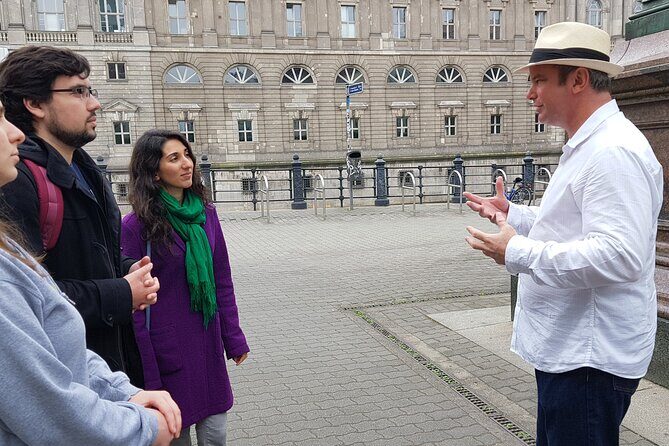
- A historian guide named Sean Stewart who teaches you how to interpret what you see
- Small group size (max 8) so questions don’t get swallowed
- Easy pace with short stops (about 15 minutes each) built for orientation
- Alexanderplatz and medieval Berlin in one route, including vanished streets and buildings
- Nikolaiviertel’s reconstructed medieval vibe, used as a living lesson
- Ends near Berlin Cathedral so you finish with a strong visual “chapter” marker
How this 2-hour route turns Berlin into a timeline you can use
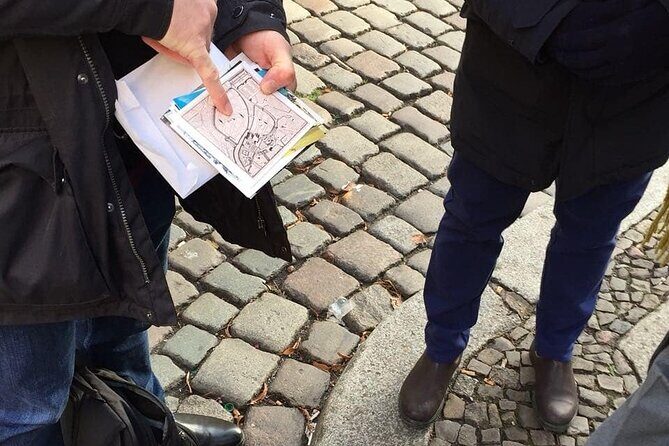
Berlin can feel like it’s made of layers thrown on top of each other—medieval bits beside modern architecture, and long-gone streets suddenly implied by a street corner. That’s exactly why this tour works. You’re walking in the “heart of imperial Berlin” area, but the stories keep snapping you back to earlier periods so you understand what changed and why.
The format is also smart for real life. It’s roughly 2 hours, with about 15 minutes per stop. That means you’re not stuck for long stretches listening while standing still, and you’re not sprinting between places either. For orientation, it’s a sweet spot: enough time to feel the pattern, not so much time that you’re exhausted before the rest of the day.
You’ll also notice the tour isn’t about stuffing your brain with trivia. The best part is how Sean Stewart frames each stop as evidence. In other words: you don’t just hear what used to be there—you learn how to see clues of what replaced it.
You can also read our reviews of more tours and experiences in Berlin.



Meet your guide: what Sean Stewart’s style does for your Berlin day
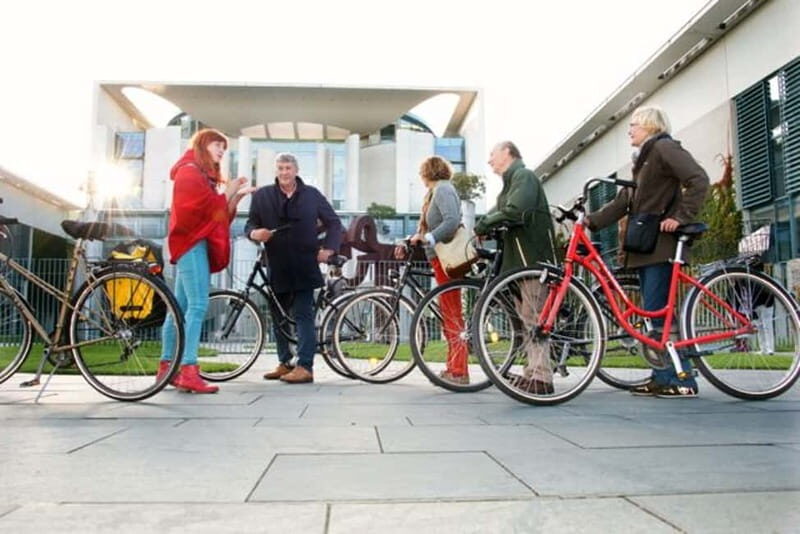
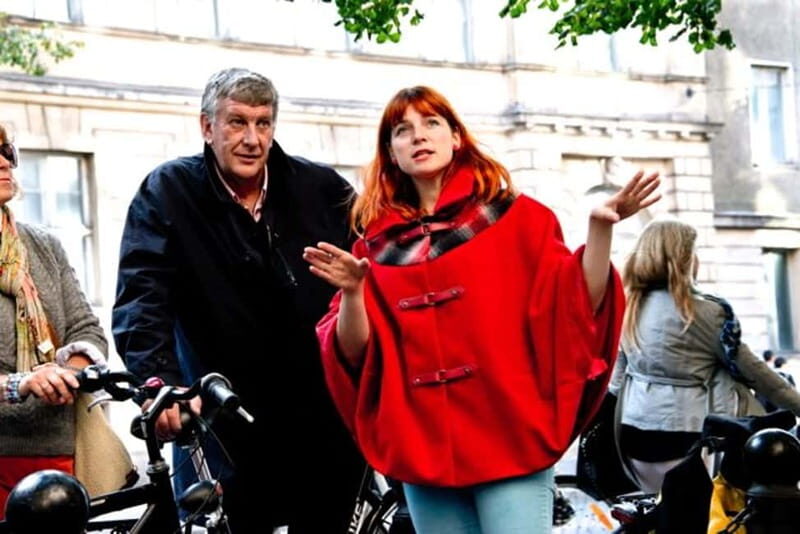
Sean Stewart is the real draw here. The guide’s approach isn’t a “photo-stop marathon.” Instead, Sean helps you understand what you’re looking at and why it matters. In practical terms, that means fewer pointless picture moments and more “wait, that detail means something” moments.
From the way the tour is described, Sean also tailors the walk to your starting point. Before the route really gets going, the guide checks what you already know and what you want to see. If you’ve visited Berlin before, that matters because you won’t just be repeated through the same headline stops. If it’s your first time, it still helps you because you’re not handed a flood of names with no structure.
And there’s a specific Berlin angle that comes through: the city is described as having the logic of shifting pieces on a board—politically, architecturally, and socially. That kind of framing helps you remember the story, not just the scenery.
Price and value: why $23 can make sense in Berlin
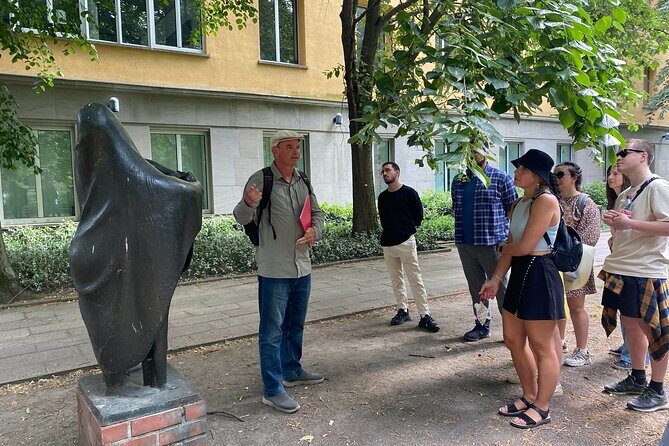
At $23, this is a value-heavy option for Berlin. The cost is low enough that you can treat it like a foundation layer—something that improves everything else you do afterward. A walking tour at this price point is also a practical hedge: you get context quickly, and you can decide later whether a museum or deeper self-guided exploration is worth your time.
The tour includes a professional historian (Sean Stewart) rather than just a standard sightseeing guide. That shifts the value. You’re not paying for directions and photo points; you’re paying for interpretation—turning stones, churches, and street layouts into a readable story.
The trade-off is time. Two hours won’t replace museums or longer study. But if your goal is to understand Berlin instead of just passing through it, this kind of tour gives you a payoff that lasts.
Where you start and how to plan your day (without the headache)
You start at Espresso House, Alea 101, Rathausstraße 6, 10178 Berlin, with a 11:00 am start time. The walk ends at Berlin Cathedral, at Am Lustgarten, 10178 Berlin.
This routing is convenient because it ends in a prime “keep wandering” area. Finishing near Berlin Cathedral often means you can smoothly continue the day through central sights without needing a complicated transit plan immediately after the tour.
Logistics are also friendly. You’ll get a mobile ticket, the tour is near public transportation, and it allows service animals. The group is kept small—up to 8 travelers—which matters more than people think on a standing-and-walking itinerary.
One quick practical note: the experience requires good weather. If it’s scheduled for a period of rain, keep an eye on the forecast and wear shoes you trust on wet sidewalks.
Stop 1: Alexanderplatz and the lesson of vanished streets
Alexanderplatz is where the tour gets its “time machine” momentum. You visit the site of vanished streets and buildings, which sounds abstract until someone points out how Berlin’s street patterns can change while the city still feels familiar.
Why this stop works: it trains your eyes. You start noticing that what you see today is not the first layer. Berlin has repeatedly rebuilt itself, and the result is that history isn’t only in statues and museums—it’s also in the urban layout.
This is also a good start point because Alexanderplatz is a major hub. Even if you’re a little late or tired, you can still anchor yourself quickly. Expect about 15 minutes here, and focus on the “what’s missing” concept more than the “what’s there.”




Stop 2: Franziskaner Klosterkirche and the power of a ruined medieval core
Next comes the Franziskaner Klosterkirche, described as Berlin’s only medieval romantic ruin. The key word for your mindset is ruin. This isn’t a fully restored fairy-tale church. You’re seeing something shaped by loss and survival.
Why you’ll likely enjoy this stop: ruins give you a different kind of understanding. You can’t rely on perfect surfaces to tell the story. Instead, you learn to interpret fragments and what their existence implies about the past.
There’s also a natural contrast here. You start in a modern-feeling square (Alexanderplatz), then shift to a medieval religious space that’s been left in partial form. That jump reinforces how radically the city’s timeline has moved.
Plan on about 15 minutes, free to enter at this stop, and come ready to look slowly.
Stop 3: St. Mary’s Church as a medieval anchor
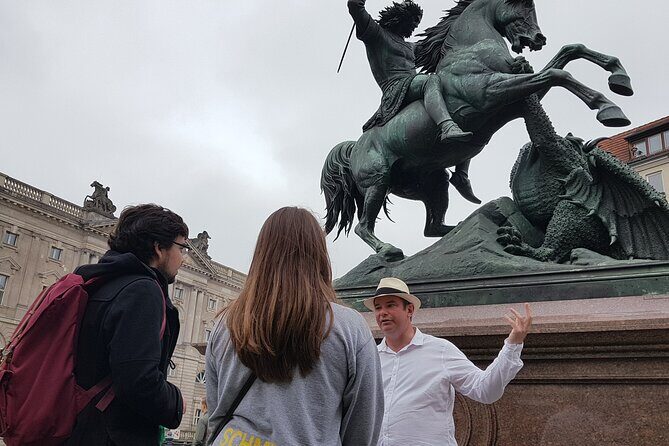
From there you visit St. Mary’s Church, an important church from medieval times. This stop acts like a counterweight to the ruin at the previous stop: you’re shown a continuity marker—something tied closely to the medieval period.
If you’re the type who likes architecture but gets overwhelmed by dates, this is a helpful moment. You can use the church as a reference point while the guide explains how Berlin moved forward and backward through time. Think of it as your “anchor” in the story.
Like the other early stops, it’s about 15 minutes, with no admission fee indicated for the stop.
Stop 4: Nikolaiviertel and how reconstruction teaches history
Then you get to Nikolaiviertel, described as Berlin’s reconstructed medieval Disneyland. That label might sound snarky, but it’s actually useful. Reconstruction has its own honesty: it shows what later generations chose to preserve, imitate, or rebuild.
This is a great stop if you want to understand how cities create memory. Nikolaiviertel helps you ask a key question: not just what happened in the past, but what people in later eras wanted the past to look like.
You’ll spend about 15 minutes here as well, and it’s free at the stop. The payoff is in the conversation—how reconstruction can be both educational and selective. It’s a reminder that history you experience today is often filtered through someone’s choices.
The finish near Berlin Cathedral: closing the timeline with a strong landmark
Even though the itinerary lists specific stops along the way, the route ultimately leads you to Berlin Cathedral near Am Lustgarten. Finishing there is practical and thematic. It gives you a clear end point, and it also helps you connect the medieval story threads back into the larger, more modern-looking city center.
For your own planning, this ending location is convenient. If you want to keep going after the tour, you can use Berlin Cathedral and the surrounding central area as a launchpad for further wandering.
Who this tour is for (and who might want something else)
This tour is a strong fit if you:
- Want context fast before you pick museums or neighborhoods
- Prefer a story-based walk over a long indoor day
- Like history but don’t want history dumped on you like homework
- Enjoy small-group experiences where you can ask questions
It may feel less ideal if you:
- Want lots of time at one single site (this is short-stop pacing)
- Expect food to be included (it’s not)
- Need indoor backup on a rainy day (the experience requires good weather)
If you’re planning a “first Berlin day” or a “middle-of-trip reset,” this kind of route is ideal. It gives you mental scaffolding so the rest of the city stops looking random.
Small details that matter on a walking tour like this
A few parts of the experience design make it easier to enjoy:
- Short stop times (about 15 minutes each) keep the pace human
- Max 8 travelers helps the group stay manageable
- Free admission at stops means you’re paying for the guide, not entry fees
- English-speaking guide makes the stories accessible without guesswork
- Mobile ticket keeps things simple on your phone
Also, because the tour is built around interpretation, it’s worth showing up ready to pay attention to street layout, courtyards, and architectural hints. Berlin history isn’t always obvious at street level—this walk trains you to spot it.
Should you book The Old Berlin Tour?
Book it if you want a practical history walk that helps you see Berlin as a timeline of changes, not a random collection of landmarks. The combination of a small group, an English-speaking historian guide (Sean Stewart), and a low price makes it a smart way to upgrade your whole Berlin day.
Skip it only if your priority is long museum time, you hate walking, or the forecast looks shaky. Otherwise, this is exactly the kind of tour that helps you return from a trip with more than photos—you get understanding.
FAQ
How long is The Old Berlin Tour?
The tour is about 2 hours.
What does the tour cost?
It costs $23.
Is there an admission fee for the stops?
No. The stops listed show admission ticket free.
Where does the tour start?
It starts at Espresso House, Alea 101, Rathausstraße 6, 10178 Berlin, Germany.
Where does the tour end?
It ends at Berlin Cathedral, Am Lustgarten, 10178 Berlin, Germany.
What time does the tour begin?
The start time is 11:00 am.
Is food or drinks included?
No. Food and drinks are not included.
How big is the group?
The tour has a maximum of 8 travelers.
Is the ticket mobile?
Yes, it includes a mobile ticket.
What happens if the weather is bad?
The tour requires good weather. If it’s canceled due to poor weather, you’ll be offered a different date or a full refund.
Is there free cancellation?
Yes. You can cancel up to 24 hours in advance for a full refund, and cancellations within 24 hours are not refunded.