REVIEW · BERLIN
Visita en español al campo de concentración Sachsenhausen
Book on Viator →Operated by CULTURE AND TOURING TOURS · Bookable on Viator
Auschwitz isn’t the only name you’ll learn. This Spanish-language Sachsenhausen visit turns history into real places.
What I like most is the Spanish guide for clear explanations, and the fact you see many key sections of the camp rather than a quick highlight walk. It’s heavy, so plan your headspace before you go.
This is also well-paced for a group day trip, with a structure that helps you follow the story on site. I also appreciate that the tour includes the guided entry and key areas like the execution area, barracks, and the more unexpected buildings such as the casino and headquarters.
One thing to consider: the tour runs on a tight schedule, and if you’re the type who wants to linger, you may feel the time pressure. (A few past visitors mentioned that strict timing can feel stressful, especially if you’re traveling with kids.)
In This Review
- Key things to know before you go
- Sachsenhausen in Spanish: why the language choice matters
- From Berlin to the Memorial: meeting point, time, and what to plan
- What you actually see: entry, barracks, kitchen, and the execution area
- Casino and headquarters: the chilling contrast you’re meant to notice
- The guide experience: names you may hear and the style you want
- Pacing on a serious day: what to expect physically and mentally
- Price and value: what $34.58 buys you
- Who this tour is best for
- Should you book this Sachsenhausen Spanish tour?
- FAQ
- Is the tour conducted in Spanish?
- How long does the tour last and when does it start?
- Where do I meet the group?
- Do I need a transport card?
- What’s included in the price?
- How big is the group and does it run in bad weather?
Key things to know before you go
- Spanish-language guidance that keeps the history understandable without translation headaches
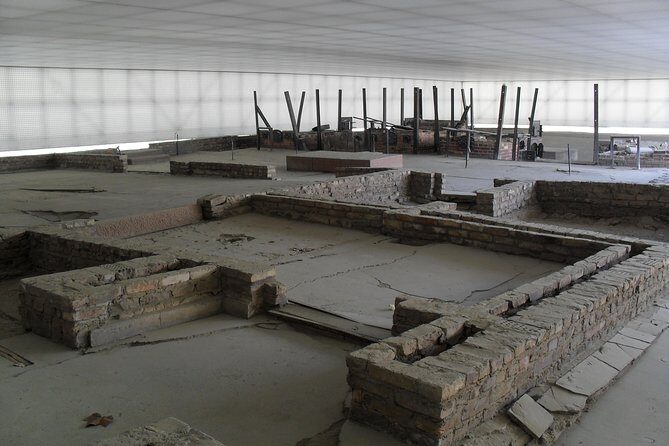
- A full camp walk covering major points like entry areas, barracks, and the execution area
- You’ll see buildings with chilling roles too, including the casino and headquarters
- Smallish group size (maximum 30) makes it easier to ask questions
- Round-trip from Berlin helps you avoid the hassle of figuring out logistics yourself
- All-weather operation, so dress for the day you get
Sachsenhausen in Spanish: why the language choice matters
This tour is built for Spanish speakers, and that changes everything here. When you’re standing in front of something this intense, you don’t want to rely on vague interpretations or skim past details. A good guide can translate the feeling of the place into specific context, and you can actually follow the logic of what you’re seeing.
What I especially like is that the storytelling isn’t just dates and labels. Guides here are praised for explaining with real care and a strong sense of respect for the site. You’ll hear how the system worked and what daily life looked like from the prisoners’ perspective, not in a cold way, but in a way that helps you grasp the scale of what happened.
If you’ve visited historical sites before with English-only narration, you already know the frustration: you’re halfway listening because you’re mentally filling in translation gaps. On this one, you can keep your attention on the ground under your feet.
Also, the tone matters. Several named guides from past groups—like Alberto, Vicent, Ivan, Micaela, Francisco, Jorge, and Eduardo—were repeatedly described as patient and strong on history, with explanations that answered questions instead of rushing you along.
You can also read our reviews of more tours and experiences in Berlin.

From Berlin to the Memorial: meeting point, time, and what to plan
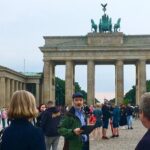
The day starts in central Berlin. Your start location is Pariser Platz 4, 10117 Berlin, with a start time of 9:00 am. The visit ends at the Sachsenhausen Memorial & Museum, Str. d. Nationen 22, 16515 Oranienburg.
The total experience runs about 5 hours. That matters because it sets expectations: you’ll get a guided, structured visit, not a slow, independent wandering day. This is usually a good trade-off for most people, especially if you don’t want to deal with transport planning on your own.
Two logistics notes that you’ll want to take seriously:
- You need to bring your ABC transport card, since it’s not included.
- You’ll have a mobile ticket, so double-check you can access it on the day (battery life helps).
The group size is capped at 30 travelers. That isn’t tiny, but it’s small enough that the guide can manage movement and keep you on track without it turning into a school bus stampede.
Finally, this tour runs in all weather conditions. So if Berlin gives you rain, wind, or cold, you’ll still walk. Dress for that reality. Good walking shoes are not optional.
What you actually see: entry, barracks, kitchen, and the execution area
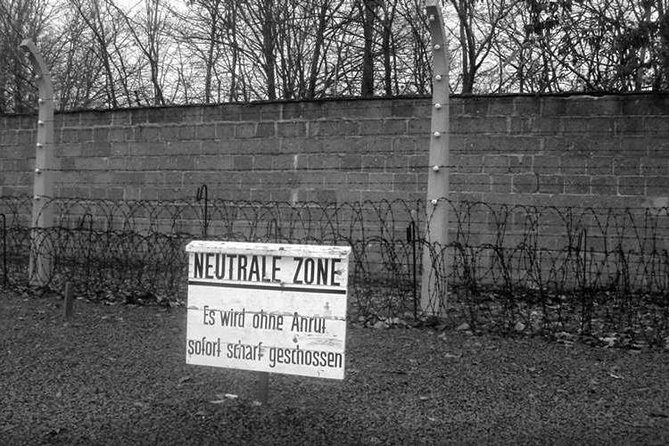
The tour focuses on a guided walk through the camp’s surviving areas, both interior and exterior. You’ll cover a long list of key points, and that’s part of the value: you’re not just looking at one section and calling it done.
Expect to pass through or stop at places connected to:
- the armory
- the entry area
- the casino
- the command headquarters
- Tower A
- the execution area
- barracks
- the kitchen
- and other relevant spaces connected to camp life
Here’s why that matters for your understanding. A concentration camp isn’t only a single “moment.” It’s a system. When you see the entry, the living areas like the barracks, the kitchen spaces, and then the execution area, the pattern becomes visible. The guide helps you connect the dots so you understand how control, routine, punishment, and propaganda shaped life inside.
The barracks and the kitchen areas tend to hit hardest because they make the situation feel physical. Even if you know the history already, standing in the structures changes the scale in your mind. You’re forced to slow down, even if the clock is trying to move you along.
The execution area adds another kind of weight. It’s not about shocking you for effect. It’s about showing you that the camp’s violence wasn’t abstract. It had a place. A route. A schedule.
Casino and headquarters: the chilling contrast you’re meant to notice
Not every camp tour includes the “unexpected” buildings. This one does: you’ll visit places like the casino and headquarters as part of the full picture.
That contrast can be hard to process. It can also be the point. When guides explain what those spaces meant inside the Nazi machinery, you start to understand the psychological cruelty: the idea that normal forms of order and even leisure could exist in the same structure as forced suffering.
Guides described in past groups as Francisco, Jorge, and Eduardo were praised for connecting those details to how the system ran day to day. That kind of explanation matters because otherwise, the casino might feel like an odd stop. With a strong guide, it becomes a clue to how perpetrators organized life and identity around their power.
The headquarters and Tower A stops also matter because they help you picture control and visibility. You’re not only looking at remnants. You’re building an understanding of how the camp was watched and managed.
If you’re the kind of traveler who enjoys history that doesn’t stay theoretical, this is a good match.
The guide experience: names you may hear and the style you want
In tours like this, the guide can make the difference between a tour that feels respectful and one that feels rushed or mechanical. This experience is repeatedly praised for guides who:
- explain clearly in Spanish
- keep answers coming when questions show up
- manage the timing without losing the story
- maintain a respectful tone for the site
Past guides mentioned by name include Alberto, Vicent, Ivan, Micaela, Francisco, Jorge, and Eduardo. Again, you shouldn’t expect a specific person on your date. But you can take the pattern as a strong signal: the operator invests in guides who can teach without turning the topic into a performance.
One practical note from earlier visitor feedback: the tour can feel time-structured. If you’re someone who stops to absorb every sentence on every wall, you might wish the schedule was a bit looser. The good news is that a lot of the tour impact still comes from the walk itself and the guide’s explanations—so even if you feel the pace, you won’t feel like you saw nothing.



Pacing on a serious day: what to expect physically and mentally
This is about learning and witnessing, not ticking boxes. Still, your body has to do the work.
You’re outdoors in parts of the route, and the experience operates in all weather. Plan for:
- cold days (bring layers)
- wet days (shoes that handle rain)
- longer standing moments around key areas
Also, the tour is about 5 hours total. That means you’ll want to eat beforehand. Food and drinks aren’t included (except for any specific value-added offers your guide mentions), so don’t show up hungry and expect to buy something during the most intense parts of the day.
Mentally, give yourself permission to take breaks inside your own head. There’s no magic way to “feel ready” for a camp like Sachsenhausen. The best move is simple: arrive early, keep your schedule calm, and let the guide’s structure help you follow the story without falling behind.
Price and value: what $34.58 buys you
At $34.58 per person, this is not a budget splurge and not a premium private experience either. For the money, you’re paying for two main things: guided interpretation and entry access tied to the visit.
Here’s what’s included:
- a professional guide
- a local guide
- the admission ticket for the memorial and museum portion you visit during the tour
- round-trip transport from Berlin (which is part of why this works as an easy day trip)
What’s not included:
- food and drinks (other than any value-added offers your guidebook mentions)
- the ABC transport card, which you must bring already purchased
You can think of the value like this: transport logistics plus a Spanish-speaking guide plus a guided museum visit can easily cost more when booked separately. This package keeps it simple. The only real “extra cost” pressure point is the transit card and your own food.
So if your goal is to understand what you’re seeing with language support and a guided flow, the price feels fair. If your goal is maximum freedom to wander at your own pace, then a guided format might feel more restrictive than you want.
Who this tour is best for
This is a strong choice if:
- you want the experience explained in Spanish
- you prefer a structured route through major camp areas
- you like asking questions and getting direct answers
- you’re visiting Berlin and want a day trip that doesn’t require you to plan every step
It’s also a good option for history-minded travelers who want more than surface-level facts. The guides are praised for adding context that goes beyond documentary talking points.
If you already feel comfortable with German history material and you prefer independent exploration, you might not need a guide. But for most visitors, a respectful guide is the difference between seeing places and actually understanding what they represent.
Should you book this Sachsenhausen Spanish tour?
I think it’s worth booking if you want a guided, language-supported visit that covers the camp in a structured way. The Spanish narration is the big win, and the route includes key areas like the execution area, barracks, kitchen, plus the casino and headquarters, which helps you understand the system as a whole rather than a single stop.
Skip it only if you strongly dislike tight pacing or you need lots of unstructured time to process on your own. Also, be honest with yourself: this is not a cheerful museum day. It’s a place built to keep memory alive, and your experience will be emotionally heavy no matter how good the guide is.
If you decide to go, do one simple thing that makes the day smoother: plan your clothing and shoes for weather, bring your ABC card, and arrive at Pariser Platz 4 on time so you can start the day focused, not scrambling.
FAQ
Is the tour conducted in Spanish?
Yes. The experience is designed specifically for Spanish speakers, with a guide who explains the history and what you’re seeing in Spanish.
How long does the tour last and when does it start?
The duration is approximately 5 hours, and the start time is 9:00 am.
Where do I meet the group?
You meet at Pariser Platz 4, 10117 Berlin, Germany.
Do I need a transport card?
Yes. You must bring your ABC transport card, since it is not included.
What’s included in the price?
The tour includes a professional guide, a local guide, and an admission ticket for the memorial and museum portion you visit.
How big is the group and does it run in bad weather?
The tour has a maximum of 30 travelers and operates in all weather conditions, so dress appropriately.