REVIEW · BERLIN
Berlin Battlefield Tour – Operation Berlin 1945 (Small Group)
Book on Viator →Operated by On the Front Tours · Bookable on Viator
Berlin in 1945 can feel close. This small-group walk through central Berlin turns famous buildings into a real battle map under your feet—this is Operation Berlin 1945 in plain sight.
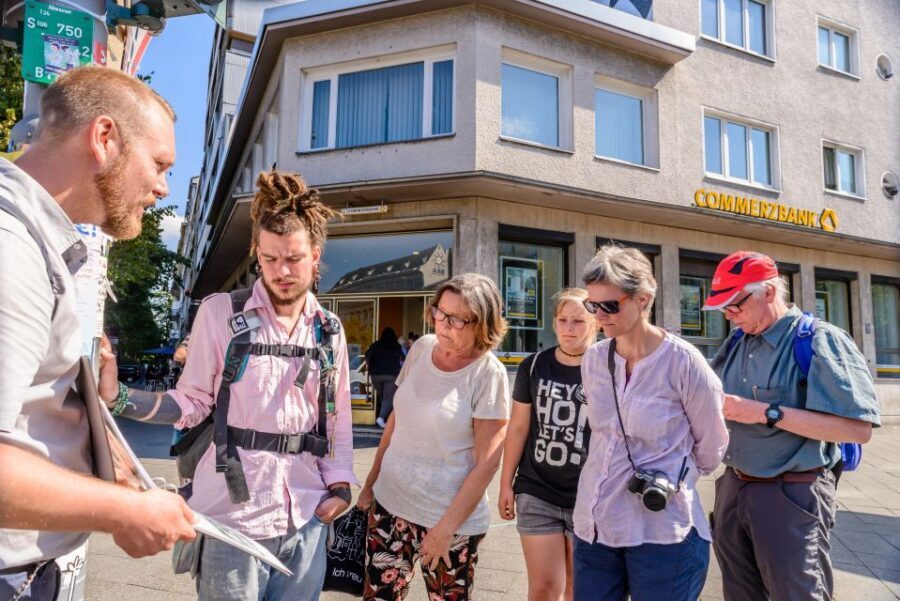
I love how the tour keeps you moving while still making the story easy to follow, with short, focused stops tied to the next phase of the fighting. I also like that you get practical help for the conditions, including bottled water and rain ponchos if you need them.
One thing to consider: a lot of the experience happens outdoors along bridges and open areas, so you’ll want decent walking shoes and you should be ready for weather.
In This Review
- Key highlights to look forward to
- Getting oriented at Berlin’s Hauptbahnhof meeting point
- Moltke Bridge: where the fighting used ornate stone as a backdrop
- The former Interior Ministry, the “Himmler House,” and point-blank damage
- Platz der Republik and the “no man’s land” 300 meters
- Walking toward the Reichstag: final days and the banner moment
- Weidendammer Bridge: one of the last intact crossings over the Spree
- Why this kind of battle walk is better than only reading or museum time
- Price, time, and small-group value in Berlin terms
- Who should book this Berlin Battlefield Tour
- Should you book Operation Berlin 1945?
- FAQ
- How much does the Berlin Battlefield Tour cost?
- How long is the tour?
- Is the tour offered in English?
- How large is the group?
- Where does the tour start and where does it end?
- Is the tour ticket mobile?
- Are water and rain ponchos provided?
- What is the public transport situation at the end point?
- Does the tour require good weather?
- Is there free cancellation?
Key highlights to look forward to
- Small group (max 15): more room for questions and back-and-forth with your guide
- Battlefront orientation: you’ll track the Soviet 3rd Shock Army’s axis of advance and what defenders faced
- Landmarks with a brutal context: Moltke Bridge, the “Himmler House,” the Reichstag area, and Weidendammer Bridge
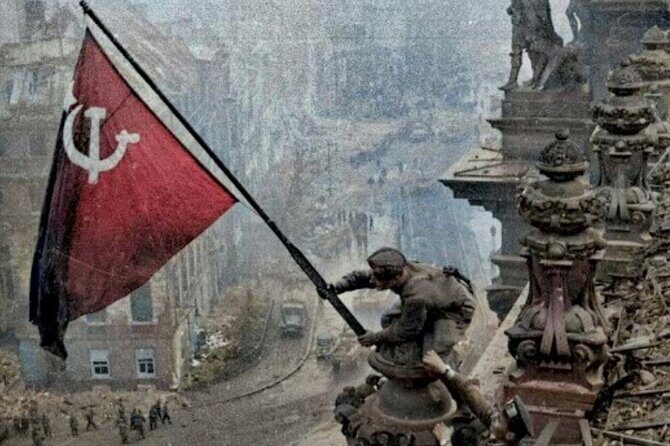
- Reichstag roof moment: the banner story tied to Sergeants Yegorov and Kantariya
- Weather-ready touches: bottled water and rain ponchos provided if needed
Getting oriented at Berlin’s Hauptbahnhof meeting point
The tour starts at Berlin Central Station, at Ella-Trebe-Straße 9, on the southern side of the modern Hauptbahnhof. If you’re arriving by train, this is a smart pick—getting started is simple, and the area is easy to navigate even if you haven’t spent much time in Berlin yet.
Before you head toward the first battlefield location, you’ll get a short orientation—about ten minutes—so the rest of the walk has a framework. That matters. Battlefields can be overwhelming, because every street corner looks like it has a story. A good intro helps you understand what you’re about to see and why the guide is aiming you at specific points.
I especially like that you don’t waste time with a long, lecture-style start. You get oriented fast, then you’re walking toward one of the city’s most dramatic approach lines.
If you’re the kind of person who likes asking questions, this early setup also helps you know what to listen for as you move.
You can also read our reviews of more tours and experiences in Berlin.


Moltke Bridge: where the fighting used ornate stone as a backdrop
Next comes Moltke Bridge, a red sandstone structure that still looks dignified today—until your guide reframes it as a place where brutal fighting played out. The bridge is more than a photo stop here. You’re taught to read it like terrain.
One of the most useful things I picked up is how the guide helps you orient yourself relative to the Soviet 3rd Shock Army’s axis of advance. That changes the way you look at the city. Instead of thinking, I’m standing here, you start thinking, What direction was the assault coming from, and what would defenders see and control?
The guide also focuses on the “real problems” on both sides—how hard it is to push forward in a heavily contested urban fight, and why defenders had ways to slow attacks. Even with only a short time at the bridge, you come away with a clearer sense of what made this area dangerous.
Practical note: bridges and ramps can be windy and cold in bad weather. The tour is short here, but you’ll still feel the elements.
The former Interior Ministry, the “Himmler House,” and point-blank damage
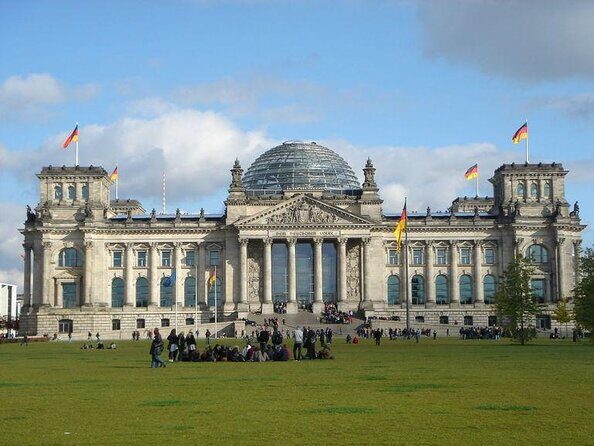
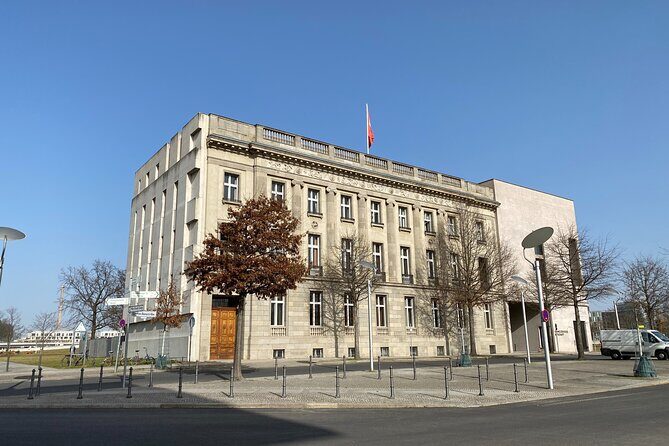
After crossing Moltke Bridge, you move to the then Interior Ministry, nicknamed the “Himmler House” in the old diplomatic quarter. The building’s name comes from the historical association people use to refer to it, but the tour keeps it grounded in what happened there during the closing days.
Here’s what makes this stop hit: your guide explains the kind of fighting that happened after a Soviet artillery barrage at point blank range. That phrase—point blank—doesn’t stay abstract. It’s a reminder that this wasn’t “somewhere far away.” It was devastating and immediate.
You’ll talk about the room-to-room nature of the struggle. That’s important because urban warfare doesn’t follow the neat patterns you see in textbooks. Buildings become mazes. Lines blur. Control can switch quickly depending on doors, stairwells, and choke points.
The practical value for you: even if you aren’t a hardcore military history fan, this stop gives you mental tools to understand what it means when people describe house fighting. It turns the battle into something you can picture.
Downside? This is a compact stop, so if you want every detail of the building’s history beyond the battle context, you may still want to pair the tour with extra reading or a self-guided museum visit later.
Platz der Republik and the “no man’s land” 300 meters
From there, you head into the area described as no man’s land, standing on the former Königsplatz. This is where the tour starts to feel especially visual. Instead of just naming events, you’re encouraged to take stock of distances and what would have been required to cross.
You’re asked to think about the 300m moon scape that the 207th and 150th rifle divisions would have faced—distance you can estimate with your own eyes. That one detail does a lot of work. It helps you grasp the scale of the danger: even a short run becomes a long, exposed push when the ground is under fire.
I like the way your guide frames this as a challenge for both sides. The Soviets had to advance under extreme pressure. The German defenders had to hold positions and keep those crossings costly. It’s a simple equation, but it explains why this battle took such a heavy toll.
If you’re traveling with kids or family members who don’t like long explanations, this stop might be a good anchor point because the distance is concrete. You can point, look, and visualize.
Just remember: open areas can be colder than you expect, and this is a standing-and-thinking moment, not a museum hallway break.
Walking toward the Reichstag: final days and the banner moment
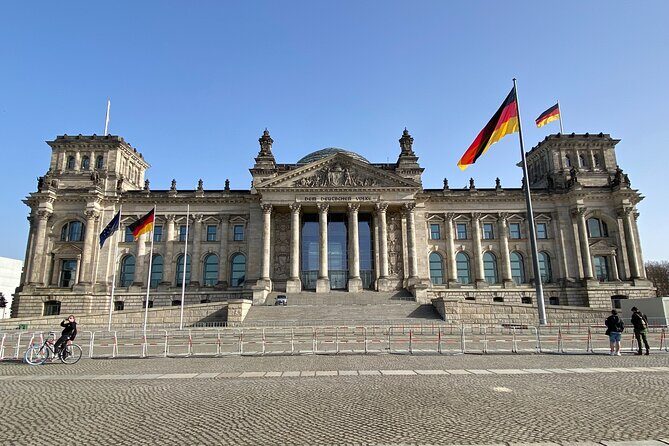
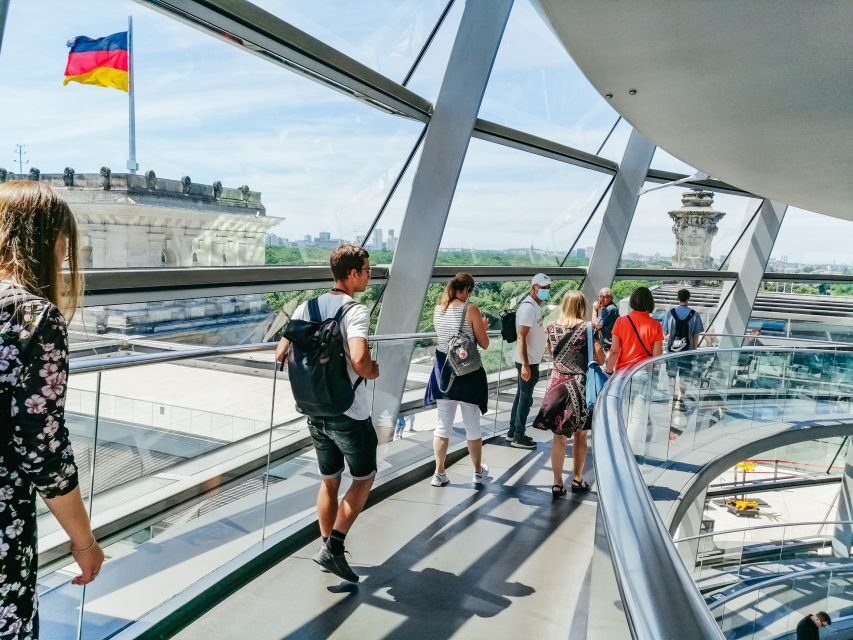
The walk then turns toward the Reichstag building. Your guide discusses Hitler’s final moments in the Führer bunker, which was only a few hundred meters away. That proximity is startling. The tour doesn’t treat it like a distant historical rumor; it sets you close enough to feel the closeness of the end.
As you approach the Reichstag, the story lands on two named figures: Sergeant Yegorov and Sergeant Kantariya. You’ll hear how they raised special banner No.5 on the roof, signifying the end of the battle’s chapter in that moment.
This part of the tour is powerful because it turns a headline event into a human scene: people moving, signaling, and marking a shift. The guide’s tone stays serious, and the focus stays on what the banner represented rather than turning it into spectacle.
What you’ll likely appreciate as a visitor is that your guide ties the banner story to the surrounding geography. You’re not just listening to who did what—you’re seeing where it happened and why that mattered in the final days.
Possible drawback: if you’ve already spent a lot of time at the Reichstag earlier in your Berlin trip, you might feel the stop is brief. But for most people, it’s a strong “battlefront context” add-on that makes the Reichstag feel less like an iconic building and more like a conclusion to a siege.




Weidendammer Bridge: one of the last intact crossings over the Spree
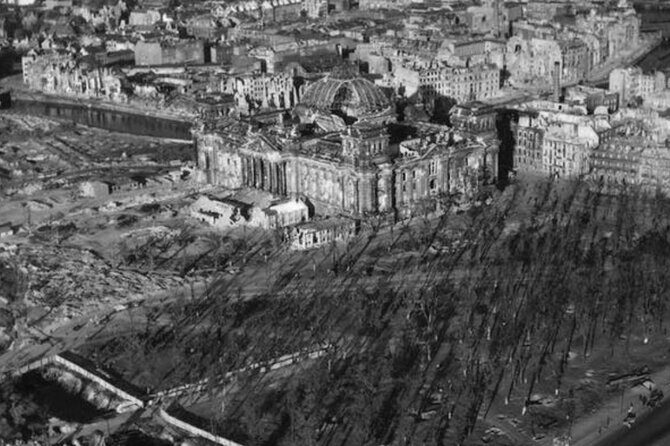
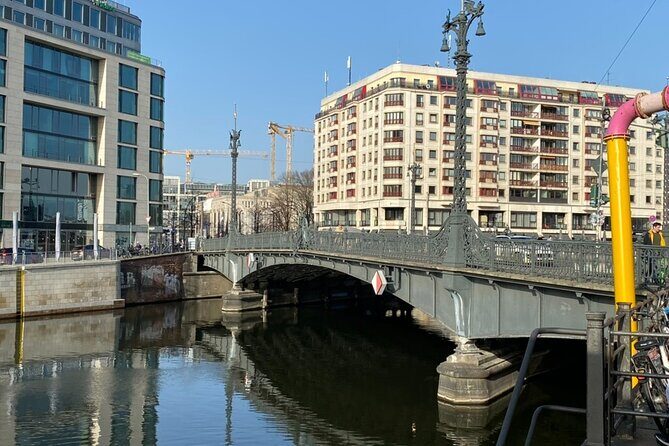
The final stop is Weidendammer Bridge, ending near S+U Friedrichstraße (about 50m away). That makes the finish easy to handle because you’re not stuck far from transit when the tour ends.
Historically, the bridge was one of the few bridges still intact over the Spree during the last days. Your guide connects it to the night of May 1st, 1945, when it was the scene of terrible carnage after a breakout attempt from the Führerbunker.
This stop works because it mixes geography with timing. The story is anchored in a specific night and purpose: the breakout. Instead of treating the battle as a series of separate moments, your guide presents it as a shrinking window—fewer options, fewer routes, and more desperate decisions.
I found this ending especially effective. After walking through the approach lines and the Reichstag roof moment, you finish with the idea of escape and failure—what it would mean to try to leave a collapsing command center during a final night.
It’s also a useful way to end: bridges give you a natural frame for thinking about movement, direction, and what happens when routes are blocked.
Why this kind of battle walk is better than only reading or museum time
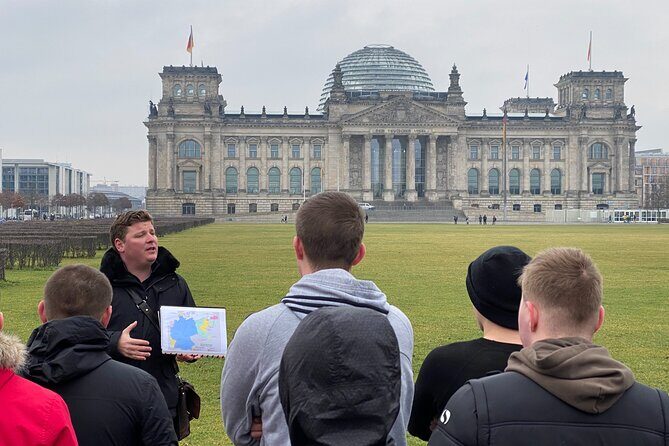
A normal museum visit can give you dates and photos, but this tour does something different: it teaches your eyes. You start noticing the importance of approach routes, distances, and why certain positions mattered more than others.
The guide’s explanations about the Soviet 3rd Shock Army’s advance, the defenders’ challenges, and the building-by-building fighting style give you context that helps your brain organize the battle. It’s not just a list of what happened. It’s a guide to how the battle flowed.
I also like the small group size, because it keeps the pace honest. When you’re with a max of 15 people, questions don’t get swallowed by a crowd. Your guide can answer in a way that fits what you actually want to know, whether that’s about the route, the named figures like Yegorov and Kantariya, or what “room to room” really implies in practice.
There’s also something quietly practical about the format. You get bottled water, and if it’s raining you’ll have ponchos. That reduces the friction of the day, so you can focus on what you’re seeing instead of worrying about getting soaked.
Price, time, and small-group value in Berlin terms
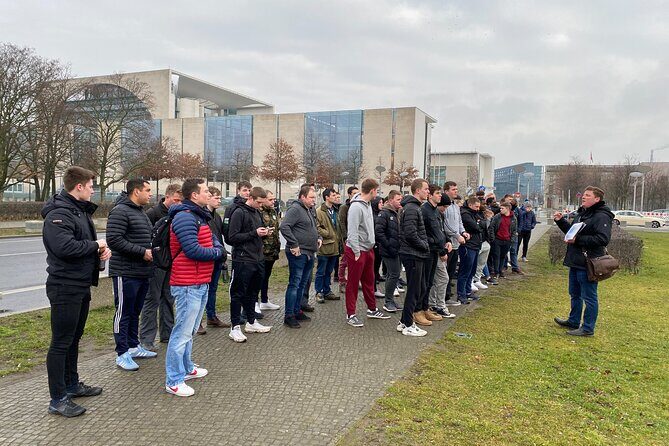
The price is $54.01 per person for about 2 hours 30 minutes. On paper, that might sound like a short chunk of time. In practice, that duration is a strength: it’s long enough to build a coherent narrative, but not so long that you spend the whole day standing around.
Where the value really shows is in the combination of factors you get for the money:
- A guided battle-focused route across multiple key sites
- A maximum of 15 people, which helps questions stay part of the experience
- English instruction, so you’re not relying on translations
- Mobile ticket, so you can travel light
Also, this tour tends to get booked early (on average about 27 days in advance). That’s a hint the format works. If you’re planning a Berlin trip in a busy season, I’d treat that as a reminder to lock in your date rather than waiting for perfect weather guesses.
Is it cheap? It’s not the lowest-cost activity in Berlin. But if you’ve ever felt museum fatigue from standing in front of one display after another, this is an activity that uses your walking legs to make the story stick.
Who should book this Berlin Battlefield Tour
You’ll probably love this tour if you:
- enjoy military and World War II history that connects to geography
- like hearing named stories (like Sergeants Yegorov and Kantariya) placed in the real setting
- prefer small-group experiences where you can ask questions
- want a different angle on famous Berlin landmarks like the Reichstag
You might hesitate if you:
- want mostly indoor time or you hate walking between sites
- dislike weather-dependent outdoor activities (the tour requires good weather)
- need very leisurely pacing, since it’s structured around several stops and short segments
For families, it can work well when kids are curious and you keep the attention on specific, visual details like distances and bridge crossings. For serious history buffs, it’s a compact way to “see the battle” without spending your whole day in separate venues.
Should you book Operation Berlin 1945?
If your goal is to understand how the Battle of Berlin unfolded across real ground, I think this tour is a strong pick. You get a guided route with major landmarks, a clear storyline about advance routes and fighting style, and practical comfort like water and ponchos.
I’d book it if you want to walk away with more than just facts—you want a mental map of the final weeks. Just be honest with yourself about one thing: it’s mostly outdoors, so dress for the weather and wear shoes you trust.
FAQ
How much does the Berlin Battlefield Tour cost?
It’s listed at $54.01 per person.
How long is the tour?
The tour lasts about 2 hours 30 minutes.
Is the tour offered in English?
Yes, it’s offered in English.
How large is the group?
The tour has a maximum of 15 travelers.
Where does the tour start and where does it end?
It starts at Ella-Trebe-Straße 9, 10557 Berlin, Germany and ends at Weidendammer Brücke, 10117 Berlin, Germany.
Is the tour ticket mobile?
Yes, it includes a mobile ticket.
Are water and rain ponchos provided?
Bottled water and rain ponchos are provided if needed.
What is the public transport situation at the end point?
Weidendammer Brücke is located about 50m from the S+U Friedrichstrasse train station.
Does the tour require good weather?
Yes, it requires good weather. If it’s canceled due to poor weather, you’ll be offered a different date or a full refund.
Is there free cancellation?
You can cancel for a full refund if you cancel at least 24 hours before the experience’s start time. Cancellation within 24 hours is not refunded.