REVIEW · BERLIN
Berlin: Cold War Era History Guided Bike Tour
Book on GetYourGuide →Operated by Berlin on Bike BoB Fahrradtouren GmbH · Bookable on GetYourGuide
Bike through the Wall’s leftovers. You cover Cold War landmarks on two wheels, including Berlin Wall fragments, Checkpoint Charlie, and the Brandenburg Gate—without the stop-and-start feeling of a museum day. Cold War history becomes something you can actually see from street level, not just read on a plaque.
I especially like two things: the ride hits major Berlin Wall and border-related locations (like Bernauerstraße and Bornholmerstraße) and the guides bring strong storytelling, with names like Paul T, Oleg, Lauren, Geoff, and Anha showing up in real tour feedback for being fun, patient, and clear. You also get the practical comfort setup—helmets and gloves on request, plus extras like sunscreen, trouser clips, and rain ponchos when needed.
One possible drawback: it’s still a bike tour, so the route is not for everyone. If you’re not comfortable cycling around Berlin traffic or you’re traveling with kids (it’s not suitable for children under 8), this may feel like more work than you want—especially over the full 15 km range.
In This Review
- Key Points at a Glance
- Cold War History That You Can Actually Ride Past
- Starting at Kulturbrauerei: A 19th-Century Meet-Up With Real Local Flavor
- How the Bike Setup Makes a 15 km Tour Feel Manageable
- Pedaling the Former Border: Mauerpark, Bernauerstraße, and Escape Stories
- Brandenburg Gate: Why the Icon Feels Different on a Bike
- Checkpoint Charlie and Watchtower Views: Cold War Symbols Up Close
- A Mid-Ride Break That Helps You Stay Present
- Price and Value: Why $35 Can Make Sense for a City Like Berlin
- Languages, Group Style, and Who This Ride Fits Best
- Practical Tips Before You Go
- Should You Book This Berlin Cold War Bike Tour?
- FAQ
- How long is the Berlin Cold War Era History Guided Bike Tour?
- How far do you ride during the tour?
- Where does the tour start?
- What’s included with the ticket?
- Are there any language options for the guide?
- Is the tour suitable for children?
Key Points at a Glance
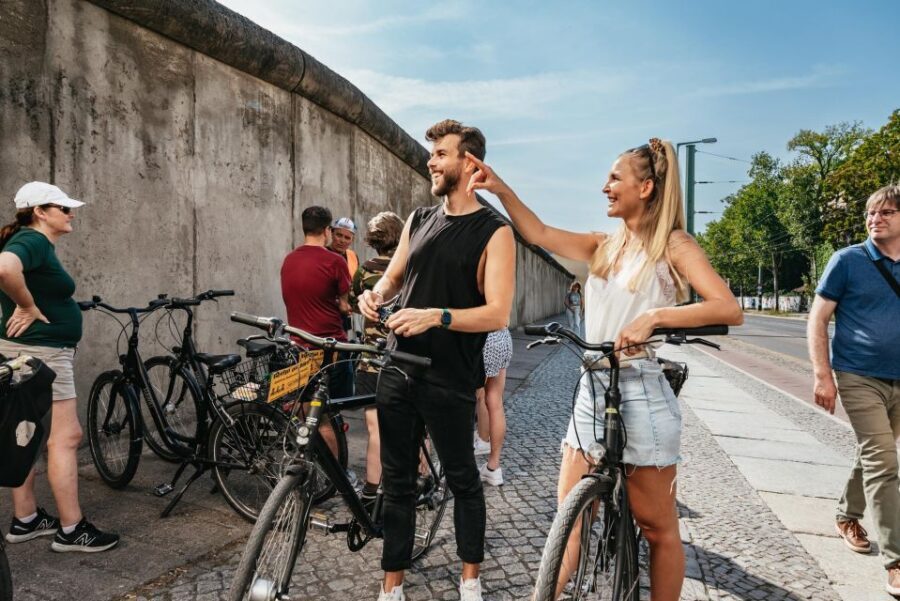
- A curated Wall-to-Gate route with border sites, Cold War symbols, and major East-West landmarks
- Great guide energy—multiple guide names stand out for being story-driven, approachable, and thorough
- About 3–3.5 hours and roughly 15 km at a relaxed pace, which fits a half-day plan
- Comfort add-ons: helmets and gloves (on request), trouser clips, sunscreen, and rain ponchos
- Easy-to-find start near Eberswalder Straße (3 stops from Alexanderplatz on the U2)
- Prenzlauer Berg start at Kulturbrauerei, a 19th-century brewery complex that sets the tone well
Cold War History That You Can Actually Ride Past
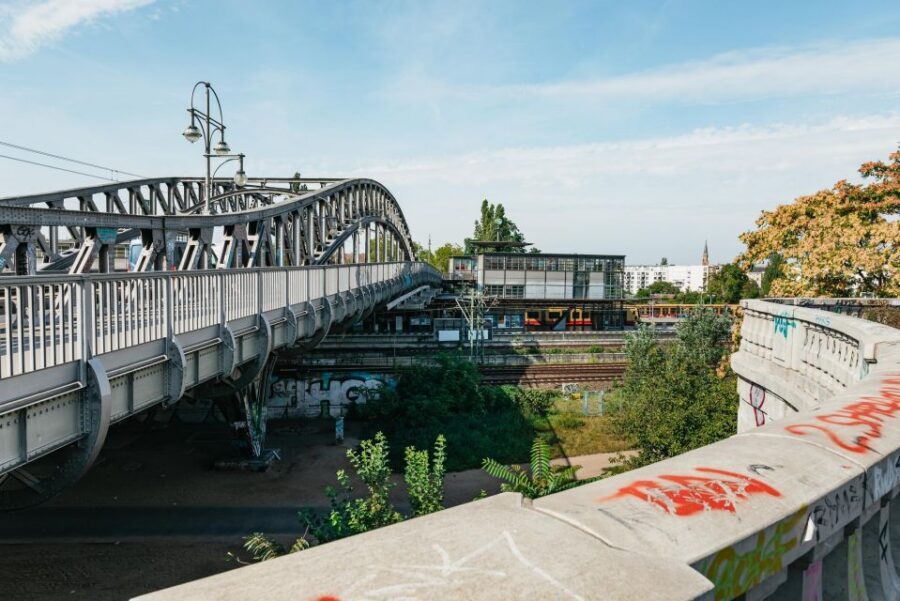
This tour works because Berlin’s Cold War story isn’t hidden in one building. You see it in the shape of neighborhoods, the location of former border crossings, and the way certain landmarks still “carry” meaning in the cityscape. Riding makes the learning physical: you pedal along the former border and then you slow down near the sites where escape attempts played out.
The biggest win is the mix of famous and lesser-seen elements. Yes, you get the obvious photo stops like the Brandenburg Gate and Checkpoint Charlie. But the tour also focuses on border context and how the wall affected everyday lives in Berlin. You’re not just collecting sights—you’re building a timeline while you ride.
And you’ll likely appreciate the tone. One review highlights a more neutral perspective on the Cold War, and that matters here. This isn’t a one-sided lecture; it’s about understanding what the wall meant and how it ended, including the fact it fell overnight after almost 30 years.
You can also read our reviews of more cycling tours in Berlin
Starting at Kulturbrauerei: A 19th-Century Meet-Up With Real Local Flavor

You begin at the Berlin on Bike depot inside the Kulturbrauerei complex in Prenzlauer Berg. This matters more than you might think. Starting in a historical brewery area helps you ease into Berlin’s character before you hit the more intense Cold War sites.
Kulturbrauerei is a 19th-century brewery space, and it gives you a pleasant “before the story” moment—less like a bus tour lineup, more like you’re meeting your group in a place locals would recognize. It’s also a smart neighborhood choice for cyclists: Prenzlauer Berg has lots of street connectivity, which helps keep the ride fluid.
If you’re thinking about logistics, this start is convenient. The nearest metro station is Eberswalder Straße, just three stops from Alexanderplatz on the U2 line. From there you walk to the Kulturbrauerei complex, follow yellow signs to the bike depot, and you’re ready to roll.
How the Bike Setup Makes a 15 km Tour Feel Manageable
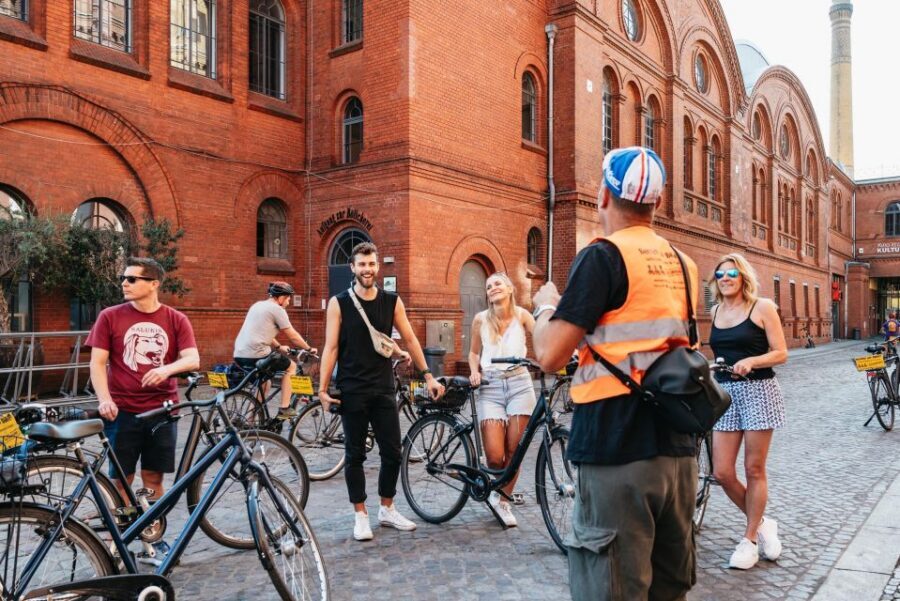
Even if you’re a confident cyclist, comfort choices matter. This tour includes a bicycle and a guide, plus practical gear: a bicycle helmet and gloves are available on request, and you also get sunscreen. There are trouser clips to help keep clothing from getting tangled, and rain ponchos are available if the weather turns.
You can also select from a large fleet. That’s important because bike fit affects how tiring a ride feels. If you’re tall, small, or between sizes, take a few seconds to test the saddle height and handlebar reach before you depart.
One practical tip pulled from real tour experience: if you’re choosing a bike, pay attention to the brake type. One person suggests avoiding a coaster-brake bike unless you already know how it behaves. That’s good advice. Not because it’s “wrong,” but because brake feel changes your confidence—especially if you’re trying to relax and listen to your guide.
Pedaling the Former Border: Mauerpark, Bernauerstraße, and Escape Stories
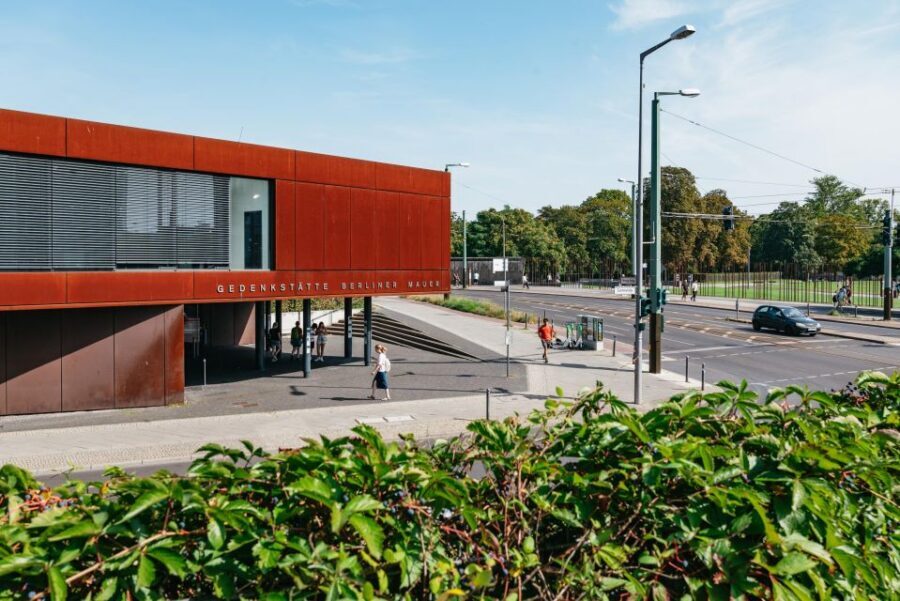
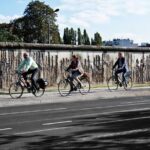
After you start in Prenzlauer Berg, the ride focuses on the former border area. You’ll go through the kind of Berlin streets that make the wall feel close—Mauerpark comes up in the route, then you move toward Bernauerstraße and other border-linked stops.
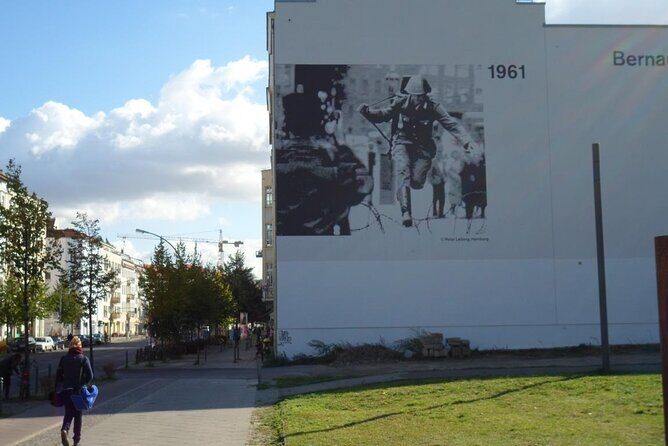
Bernauerstraße is where the wall story becomes vivid, because your guide can explain how the border controlled movement and where attempts happened. The route also mentions Bornholmerstraße, one of the border crossings connected to dramatic escape efforts. When a guide ties these places to specific escape attempts—both successful and tragic—it turns “a line on a map” into something human.
This is where cycling shines. You can stop, look, and then keep going without losing the flow. You’re not stuck standing still for long stretches, and you’re not crammed into a single location. You get to watch the city shift from site to site as your understanding grows.
Brandenburg Gate: Why the Icon Feels Different on a Bike
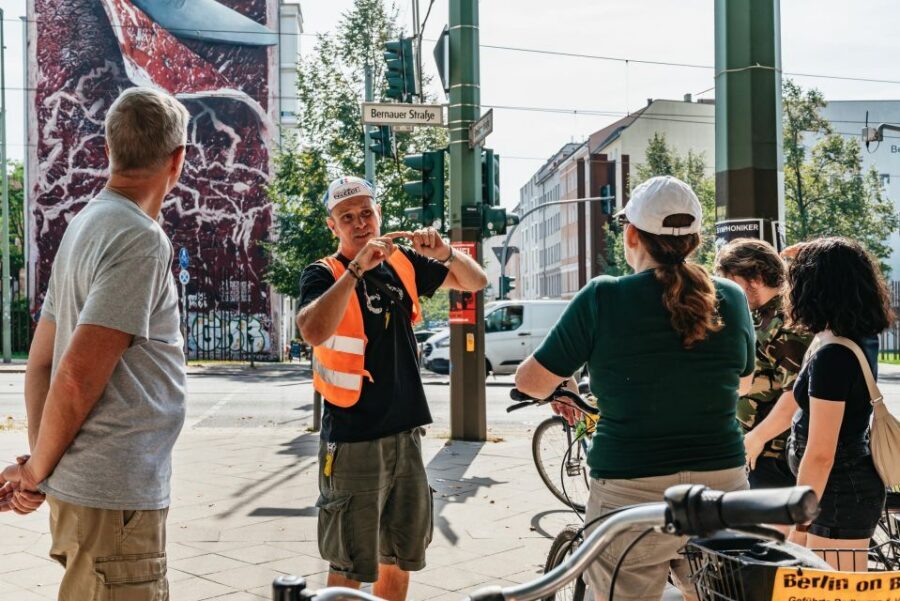
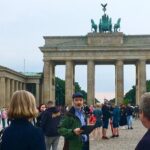
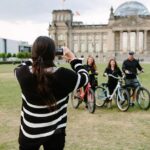
Eventually you pedal toward the historic Brandenburg Gate, and your guide explains its 18th-century origins. That context is worth it, because people often treat the Brandenburg Gate as only a Cold War icon. Here, you get the wider story: it’s an older symbol that later became part of the East-West visual language.
Approaching it by bike also changes the experience. Instead of arriving after a long walk, you reach the gate with momentum. You’ve also built up meaning from earlier stops, so the Gate doesn’t feel like a standalone postcard. It feels like the endpoint of the story arc you’ve been riding through.
A relaxed pace matters here. The tour covers around 15 kilometers, but the rhythm is designed to give you time to absorb details and ask questions. If you like history but you also want to feel active, this pacing is a good match.
You can also read our reviews of more guided tours in Berlin

Checkpoint Charlie and Watchtower Views: Cold War Symbols Up Close
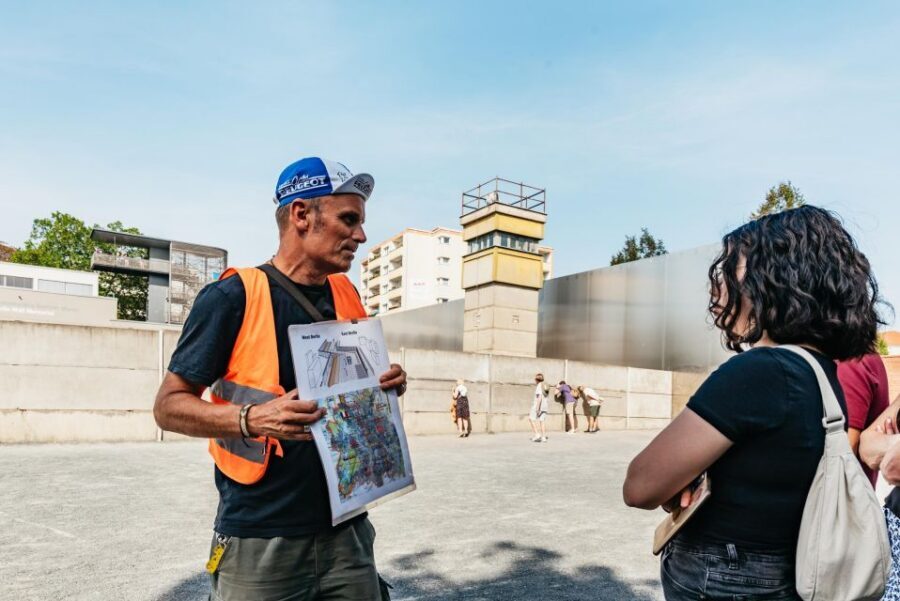
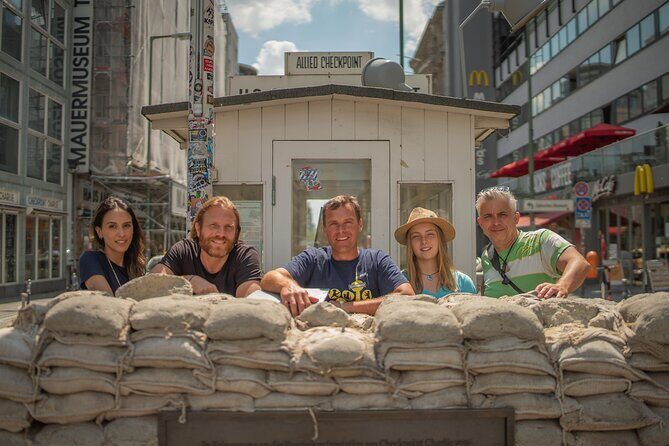
No Berlin Cold War route is complete without symbols like Checkpoint Charlie. This tour includes it, plus another major visual element: one of the last watch towers.
When your guide points out Cold War symbols, the real value is interpretation. Checkpoint Charlie is famous, but it can feel like a set piece if you’re only looking at it. On this ride, you’re shown the broader system—how borders were monitored, how crossings were controlled, and why the wall mattered day after day.
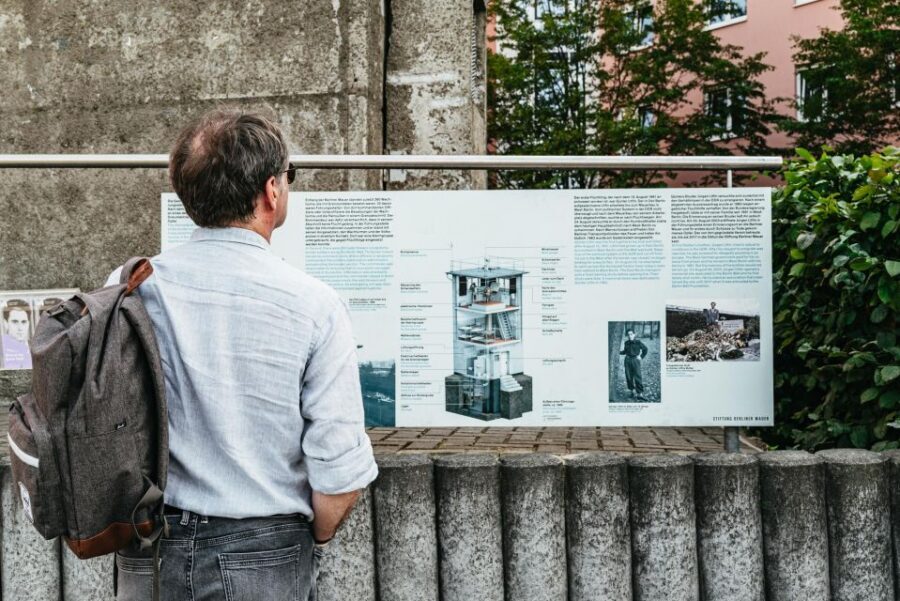
The watchtower element adds texture. Your guide’s stories about escape attempts—again, including both success and tragedy—give you a sense of how watched the border area was. You’re not just seeing architecture or signage; you’re understanding surveillance as a lived reality.
A Mid-Ride Break That Helps You Stay Present
It’s easy to underestimate how much a short break improves a history tour. One real experience note mentions a rest stop in the middle for coffee, sandwiches, and restrooms. That kind of stop is useful because it keeps the group energy up and lets you refocus before the ride continues.
Even if you skip the snacks, you’ll feel the benefit. The tour is designed to be relaxed, but you’re still covering real distance. A breather helps you keep listening rather than counting minutes.
Price and Value: Why $35 Can Make Sense for a City Like Berlin
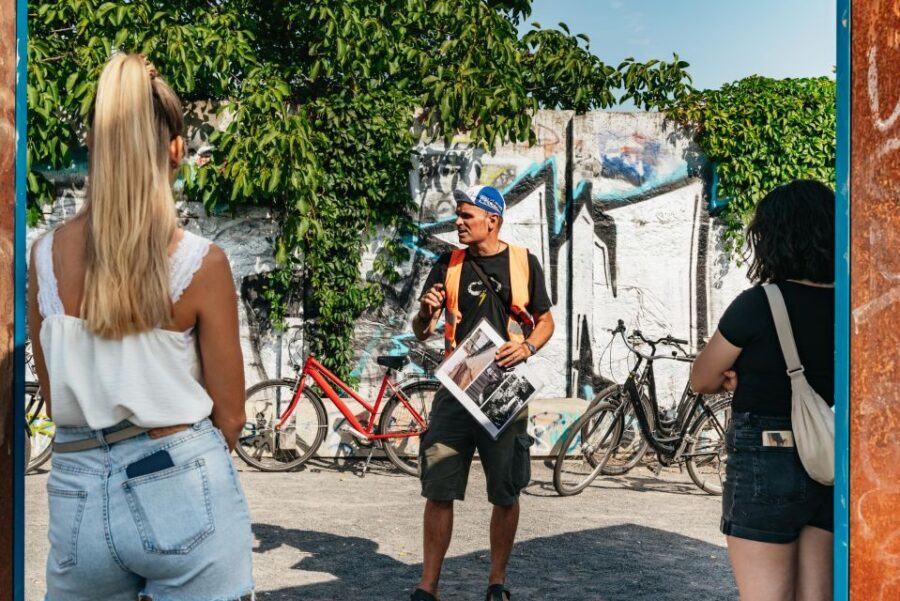
At $35 per person for about 3 to 3.5 hours and roughly 15 kilometers, this bike tour can be strong value if you want guided context without paying museum-style prices for just one stop. You’re getting:
- A guide (and not just someone reciting facts—people highlighted storytelling and humor)
- A bicycle
- Safety and comfort basics (helmet and gloves on request, sunscreen, trouser clips, rain ponchos)
- Access to a “ride between sites” format, which is faster than walking and more personal than a bus
Where the value really shows is the coverage. You’re not only hitting the big names. You’re also connecting border sites and escape-attempt stories into one coherent route.
If you already know Berlin well and prefer to go at your own pace, you might skip a guided tour. But if you want a sensible route that threads the Cold War story together, the price-to-time ratio is reasonable.
Languages, Group Style, and Who This Ride Fits Best
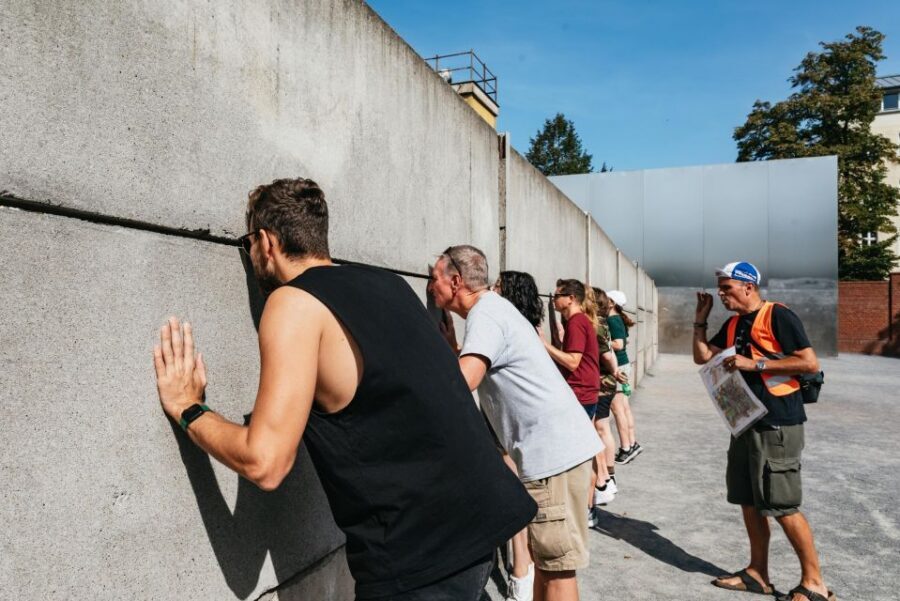
The live guides work in French, German, English, and Dutch. That language range is helpful if you’re traveling with mixed groups or you want clarity without forcing translation tools.
Group type includes private groups. A private format can be ideal if you want more questions and a slightly more tailored pace. If you’re not traveling privately, you still benefit from a guide who keeps the group together safely and adjusts when needed—one experience notes the guide helped manage timing when people arrived late.
This tour fits best if:
- You want to understand the Berlin Wall beyond photos
- You’re comfortable biking and want an active day plan
- You like clear, story-driven guides who explain context
It’s not suitable for children under 8. Also, alcohol and drugs aren’t allowed, which keeps the ride focused.
Practical Tips Before You Go
Bring comfortable shoes and comfortable clothes. Even on a relaxed pace, you’ll be moving for hours, and Berlin weather can swing quickly.
If rain is possible, take advantage of the ponchos provided in bad weather. And since you’ll be learning as you ride, pack your attention: the best moments come when you pause at key sites and let the guide connect what you’re seeing to what happened there.
If you’re picky about bikes, spend those first minutes choosing a setup that feels right to you. A good fit makes the whole tour feel lighter.
Should You Book This Berlin Cold War Bike Tour?
I’d book it if you want a guided route that connects the dots—Wall fragments, border crossings like Bornholmerstraße and the Bernauerstraße area, Checkpoint Charlie, a watchtower stop, plus the Brandenburg Gate—with the added advantage of covering ground efficiently on a bike.
I’d think twice if you’re uncomfortable cycling in city streets, you’re traveling with kids under 8, or you only care about one or two famous landmarks. In that case, you might prefer a simpler, shorter outing.
For most first-timers who want real context and a fun half-day rhythm, this is a strong choice.
FAQ
How long is the Berlin Cold War Era History Guided Bike Tour?
It runs about 3 to 3.5 hours. Starting times depend on availability.
How far do you ride during the tour?
You’ll cover approximately 15 kilometers at a relaxed pace.
Where does the tour start?
Meet at the Berlin on Bike depot in the Kulturbrauerei complex. The nearest metro station is Eberswalder Straße, about three stops from Alexanderplatz on the U2 line.
What’s included with the ticket?
Your ticket includes a bicycle and a guide. Helmet and gloves are available on request, and you also get sunscreen, trouser clips, and rain ponchos if the weather is bad.
Are there any language options for the guide?
Yes. The live guide is available in French, German, English, and Dutch.
Is the tour suitable for children?
It is not suitable for children under 8 years old.