REVIEW · BERLIN
Berlin Uncensored: A History of Sex & Freedom
Book on Viator →Operated by BerlinGuide.de · Bookable on Viator
Sex in Berlin has a story, not a stereotype.
What makes this tour different is the way it treats sex as history and science, not just gossip. You’ll walk past sites tied to nudism (FKK), early sex research, LGBTQ persecution, and postwar splits—so Berlin’s changing rules about bodies and desire make sense as a timeline. I especially like that the guide is Jeff, a sociologist and certified sex educator, and that the format is built for questions with a group capped at 10. One watch-out: this is for adults only (minimum age 18), and some topics are heavy—so you’ll want a headspace for frank, respectful discussion.
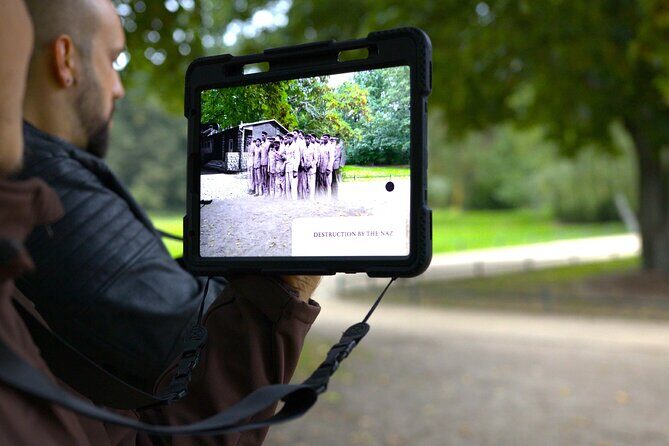
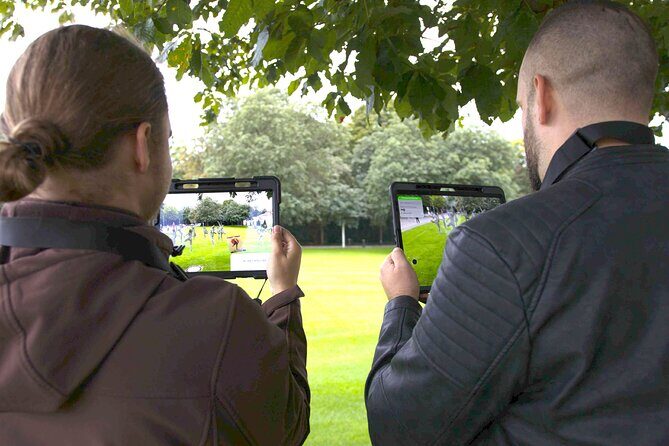
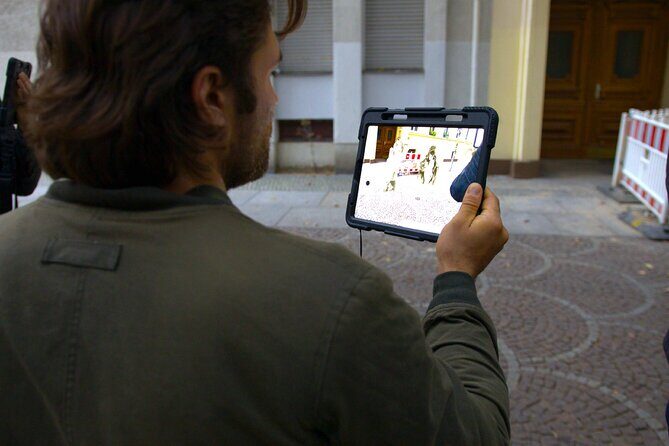
I also like the hands-on learning tools: augmented reality and a steady stream of video and archival materials to bring key moments into focus. That helps when you’re dealing with things like the rise and destruction of Magnus Hirschfeld’s Institute for Sexual Science, Nazi crackdowns, and later sexual revolutions on both sides of the Wall. The only drawback is that the AR and visuals can feel a bit extra at times, especially if you prefer a totally street-level walking experience with fewer screens.
In This Review
- Key reasons this tour works
- Berlin’s “sex history” isn’t a side quest
- Meeting point and how to plan your afternoon walk
- Stop 1 at Nollendorfplatz: nudism (FKK) and body freedom
- Stop 2 at Magnus-Apotheke: Hirschfeld’s institute and sex science
- Stop 3 at the LGBTQ memorial: Nazi persecution and the pink triangle
- Stop 4 around Kurfürstenstraße: prostitution, nightlife, and underground kink
- Stop 5 at Schwerinstraße 9: lesbian spaces, Toppkeller, and queer songs
- Stop 6 tied to Christopher Isherwood: Berlin as a writing magnet
- Stop 7: Denns BioMarkt and the Eldorado Club era
- Stop 8 at the Stele gegen das Vergessen: the Wall, condoms, and AIDS-era life-saving politics
- Stop 9 back at Nollendorfplatz: modern nightlife and sex-positive festivals
- What you get beyond the walking: AR, Mixies, and archival visuals
- Price and value: $82.90 for a focused, small-group guide
- Who should book—and who might rethink it
- Should you book Berlin Uncensored?
- FAQ
- Is the tour suitable for minors?
- How long is the tour?
- What language is the tour offered in?
- How large is the group?
- What’s included in the ticket price?
- Where does the tour start?
Key reasons this tour works
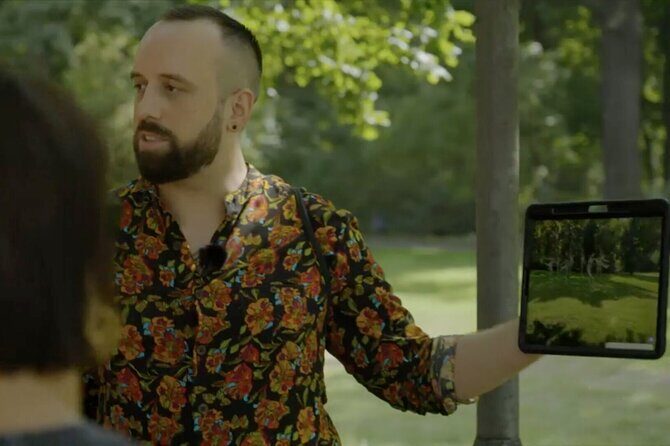
- Jeff leads with a sociologist’s lens, tying personal freedoms to politics, culture, and public health
- Small group (max 10) means you can actually ask questions and keep up
- AR + 200+ archival photos/videos help you connect sites to events without guesswork
- Stops are specific and varied: nudism, sexology, persecution memorial, queer nightlife, and postwar Berlin
- Trauma-informed, respectful approach keeps the tone responsible while staying candid
Berlin’s “sex history” isn’t a side quest
Berlin can be loud, proud, and nightlife-forward today. This tour helps you see that energy as the end point of long arguments—about bodies, morality, medicine, and power. Even if you already know Berlin for clubs and queer culture, you’ll likely walk away with a clearer timeline: how openness formed, how it was targeted, and how it changed again after the Second World War.
The structure matters. You’re not just stopping for photos and moving on. You’re getting a guided narrative through places that still hold meaning, including the LGBTQ memorial. And because the group is intentionally small and question-friendly, you can steer your curiosity—whether you care more about sex science, LGBTQ history, or how Nazi ideology targeted “difference.”
Also, this is not a lecture you have to endure in silence. The guide is trained as a sex educator, so you’re not left to connect dots alone. If you’re the kind of traveler who likes context before you go out at night, this tour fits your style.
You can also read our reviews of more historical tours in Berlin

Meeting point and how to plan your afternoon walk
You’ll start at 2:00 pm at Alnatura Super Natur Markt, Else-Lasker-Schüler-Straße 18, 10783 Berlin. The good news is the end point is back at the meeting area, so you don’t have to figure out a new route when you’re done.
The tour runs about 3 hours 30 minutes, which is a nice slot for a change of pace from pure museum time. You’re out walking and learning, but not trapped for an entire day. And since it’s offered in English with a mobile ticket, you can keep it simple on arrival.
One practical point: the experience requires good weather. If Berlin decides to throw heavy rain or a storm at you, the tour is cancelled and you get a full refund. So if you can, keep your evening flexible and have a backup plan for late-day indoor time.
Stop 1 at Nollendorfplatz: nudism (FKK) and body freedom
The walk begins at Nollendorfplatz, with Jeff welcoming the group and setting the tone. This first segment is about Berlin’s long history with nudism and what FKK culture meant—both socially and physically, starting from the 19th century and stretching to today.
Why this matters for understanding Berlin: nudism in Berlin isn’t presented as a quirky “only in Berlin” thing. It’s treated as part of a larger argument about the body—how people should relate to it in public, what freedom should look like, and how certain “natural” ideals gained followers over time. You’ll also learn why FKK remains part of life at the city’s lakes and parks.
This is a lighter entry point compared with later stops, but don’t treat it as fluff. It frames the key theme of the tour: Berlin’s sexual culture has always been tied to broader ideas of liberty and social change.
Stop 2 at Magnus-Apotheke: Hirschfeld’s institute and sex science
Next you move to Magnus-Apotheke, and the story shifts from cultural practice to scientific work. Berlin was home to the world’s first Institute for Sexual Science, founded by Magnus Hirschfeld. The tour connects that institute to discoveries around desire, relationships, contraception, and gender identity.
You’ll also hear about specific breakthroughs often overlooked in mainstream history. The tour highlights research connected to the invention of the rubber condom and early studies related to Viagra precursors, alongside advances in sexual health more broadly. That’s a strong reality check for anyone who thinks sex science is modern or purely clinical.
The most painful part of this stop is the destruction of the institute in 1933 by the Nazis. The tour emphasizes what was erased and what could have changed the world sooner—especially given that early gender-affirmation surgeries were carried out for figures like Dora Richter, Lili Elbe, and Karl M. Baer.
If you’re someone who likes to understand how society changes through institutions, this stop is a major anchor. It also sets up the rest of the walk by showing how ideology can target knowledge itself.
Stop 3 at the LGBTQ memorial: Nazi persecution and the pink triangle
At the Monument to Homosexuals Persecuted Under National Socialist Regime, the tour turns toward state violence and forced conformity. You’ll learn how the Nazi regime censored sex, shut down erotic venues, and outlawed sexual diversity.
This stop is also tied to a specific Nazi crackdown event: the Night of the Long Knives, including the execution of Ernst Röhm, a high-ranking Nazi figure known to be homosexual. From there, the tour expands beyond LGBTQ history to show how the regime attacked sex workers and people labeled as degenerate.
The memorial connection is especially important. Many victims were sent to concentration camps, marked with pink triangles—later reclaimed by LGBTQIA+ rights movements. That gives the symbol a double meaning: the brutality of what happened, and the resilience of what came after.
This is the kind of stop where you want to slow down. The tour’s tone is designed to handle the subject responsibly, and since Jeff is a certified sex educator, the discussion stays grounded rather than sensational.
Stop 4 around Kurfürstenstraße: prostitution, nightlife, and underground kink
Now the walk gets more urban and street-level. At Kurfürstenstraße, the tour looks at Berlin’s pre-Nazi nightlife reputation, including areas where prostitution was openly practiced and where fetish and kink culture existed long before it became mainstream.
This segment doesn’t try to turn sex into spectacle. Instead, it shows how Berlin operated with an unusual level of tolerance—before it was violently shut down. It helps you understand why Berlin later became a magnet for nightlife communities, including LGBTQ spaces and alternative subcultures.
A drawback to flag: if you’re hoping for a purely historical academic walk, this section may feel more story-driven and atmosphere-focused. But if you want the human side—how people actually lived their desires—this is one of the most vivid parts.
Stop 5 at Schwerinstraße 9: lesbian spaces, Toppkeller, and queer songs
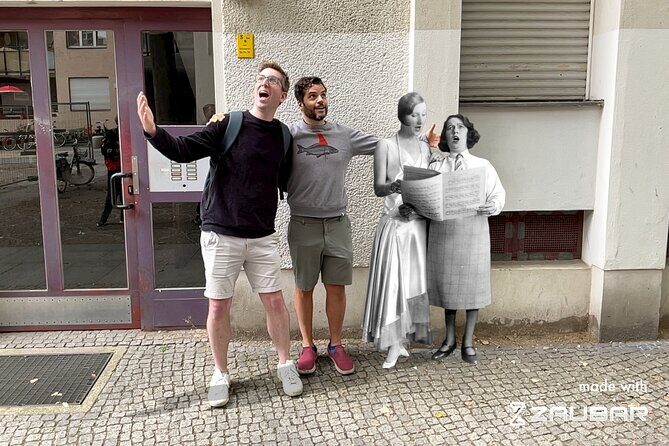
Schwerinstraße 9 is where the tour zooms into lesbian community life in the early 20th century. You’ll visit locations tied to that subculture, including the famous Toppkeller, described as a meeting place for women who defied societal norms.
You’ll also hear how music and nightlife connected to queer identity. The tour brings in stories linked to Claire Waldoff, a cabaret singer associated with lesbian identity, and references the Lavender Song to show how performance shaped community language and belonging.
The segment also touches Josephine Baker. Her time in Berlin is presented as both adored and racially complicated, which matters because it prevents queer history from being treated as one-note. Berlin’s culture could make room for some forms of freedom while still practicing discrimination.
If you’re interested in nightlife history that isn’t only about gay men or only about clubs, this stop delivers. It shows how multiple queer communities formed different routes to visibility and safety.
Stop 6 tied to Christopher Isherwood: Berlin as a writing magnet
Next comes a residential building associated with Christopher Isherwood. This is about how Berlin’s 1920s and early 1930s atmosphere pulled gay men from across Europe, and how one writer captured that world in memoir and later adaptations.
You’ll walk through areas where Isherwood lived and socialized, and the guide connects his writing to the broader feeling of Berlin as a beacon—one that existed before the Nazi rise to power changed everything.
This stop works well if you like literature as a historical lens. It also helps you connect the earlier club and community stories to the idea that Berlin’s sexual openness became exportable—at least in imagination and writing—long before modern media made it global.
Stop 7: Denns BioMarkt and the Eldorado Club era
At Denns BioMarkt, the tour brings you to nightlife history tied to the Eldorado Club, a well-known meeting place in 1920s Berlin. The tour frames it as a spot where drag performers, sexually open individuals, and even high-ranking Nazi officials were reportedly part of the scene—right up until crackdowns on so-called degeneracy.
There’s a specific link to Ernst Röhm again, which helps reinforce how complicated and contradictory pre-1933 Berlin culture could be: openness could exist alongside the political forces that would later destroy it.
You’ll also hear an anecdote about Vogue, which visited and named a drag queen the most beautiful woman in Berlin. Even if you treat it as a single media moment, it illustrates how Berlin’s nightlife reputation traveled beyond its streets.
This is another story-heavy stop, but it lands because it’s concrete. You aren’t just hearing generalities about the “Roaring Twenties.” You’re hearing about named venues and named people tied to real locations.
Stop 8 at the Stele gegen das Vergessen: the Wall, condoms, and AIDS-era life-saving politics
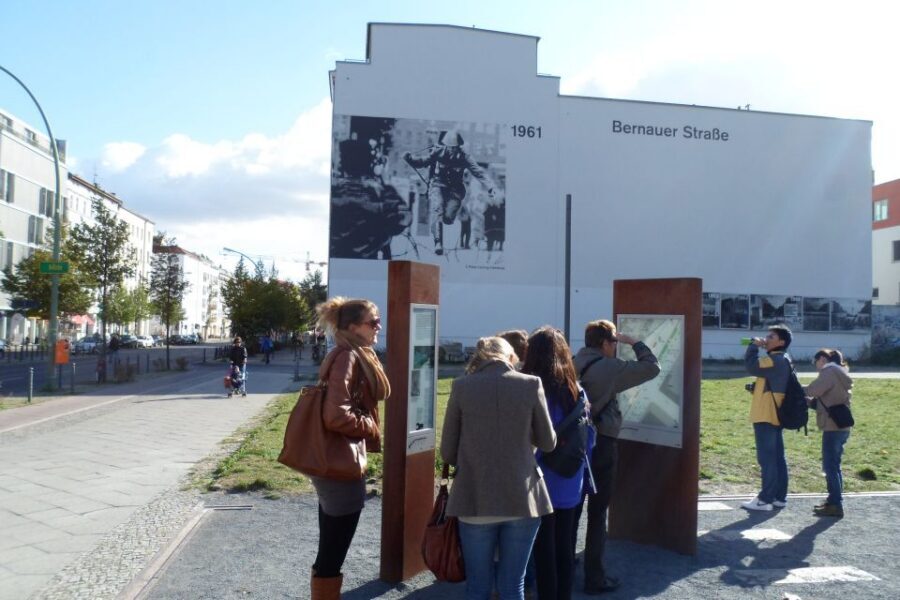
After WWII, Berlin was divided—and the tour shows that this division included sex and culture. At the Internationale Stele GEGEN DAS VERGESSEN, you’ll learn about contrasting approaches between East and West.
In West Berlin, the sexual revolution took hold: more open attitudes toward relationships, pornography, and alternative lifestyles. In East Berlin, freedom was restricted in many ways, but public nudism (FKK) became incredibly popular. The tour also mentions the Wall being referred to as the condom of the GDR, connecting the political boundary with public health and sexual behavior.
Then the focus moves to the Aids crisis and how a conservative politician saved thousands of lives. That detail is important because it complicates the usual story where “conservative” always equals repression. In this case, the tour emphasizes harm reduction and the role political choices can play in saving lives.
If you’re trying to understand why Berlin has a reputation for being sex-positive, this stop helps. It shows that openness and caution didn’t come from one ideology alone; they came from different systems dealing with real human needs.
Stop 9 back at Nollendorfplatz: modern nightlife and sex-positive festivals
The final stop returns to Nollendorfplatz and shifts to present-day Berlin. You’ll hear how Berlin became one of the most sexually open cities in the world, with a nightlife scene that grew on both history and today’s community energy.
The tour covers Berghain, including its strict no-photo policy, and mentions other clubs like KitKat Club, Insomnia, and Lab.Oratory. The emphasis here is on how electronic music and sexual exploration fit together as part of Berlin’s modern culture.
It also touches Folsom Europe, described as the largest fetish festival in the world, which brings thousands of visitors to Berlin each year. This connects the earlier stories about kink culture to today’s organized events and international crowds.
You’ll leave with ideas you can actually use. Even if you don’t go clubbing that night, the tour’s insider tips on modern sex-positive nightlife and events help you plan how to find your kind of scene once you know the context.
What you get beyond the walking: AR, Mixies, and archival visuals
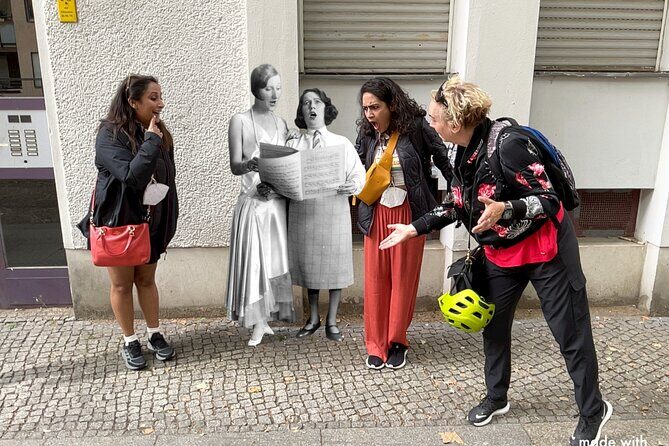
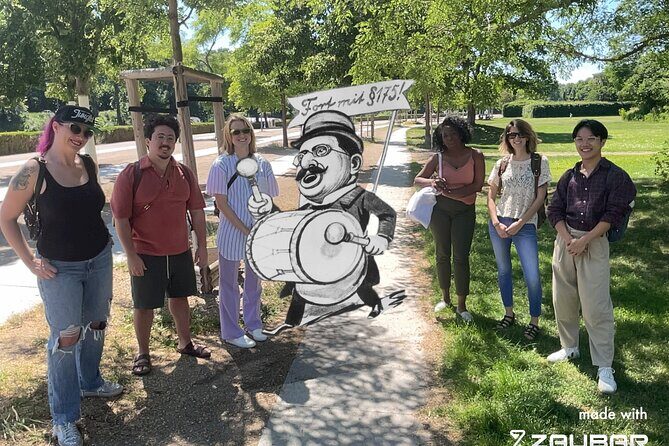
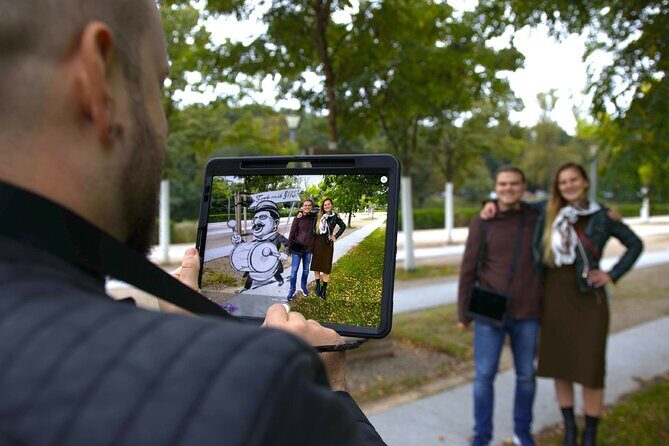
The inclusions are a big reason this doesn’t feel like just another themed stroll. You get augmented reality (AR) elements to bring history to life, plus Mixies for take-home photos with AR effects. There are also 200+ rare historical photos, videos, and archival materials, which is a lot to support a 3.5-hour tour.
What that means for you as a reader and decision-maker: you’re not relying solely on verbal descriptions. When the guide talks about erased institutions, Nazi censorship, or postwar cultural splits, the visuals help you picture the past more clearly.
One nuance from how the experience feels in practice: AR and video can sometimes feel like it’s doing more than necessary. Still, when it lines up with what Jeff is explaining, it helps you understand what you’re seeing in real space.
If you’re traveling with friends and want memories that aren’t just phone snapshots, Mixies makes sense. If you hate screen time on walks, this may be more engaging than you’d expect—but it’s also part of why the tour teaches so much in a short window.
Price and value: $82.90 for a focused, small-group guide
At $82.90 per person for about 3 hours 30 minutes, this isn’t the cheapest Berlin walking tour. But it’s also not trying to be mass-market. A group capped at 10 changes the math: you get more speaking time with Jeff, more chances to ask questions, and less chance of your attention slipping during heavy topics.
The price also covers real learning support: AR, Mixies photos, and a heavy load of historical media (200+ items). You’re paying for guided interpretation from a trained sociologist and sex educator, not just route guidance.
Is it a value pick? Yes, especially if you care about context behind Berlin’s sex culture. If you mainly want casual nightlife tips and don’t want history to get serious, you might feel it’s more structured than you planned.
Who should book—and who might rethink it
You’ll probably love this tour if you:
- want sex history tied to politics, culture, and public health
- like guides who handle sensitive topics clearly and responsibly
- enjoy LGBTQ history that includes persecution, community life, and modern outcomes
- want small-group interaction and time for questions
You might want to reconsider if you:
- prefer purely light entertainment over frank discussions of persecution and censorship
- dislike any AR or visual components on walking tours
- want a tour without an education component at all
This is also clearly an adult experience (minimum age 18). If you’re traveling as a couple, a solo curiosity-seeker, or a small group of friends who want something different from standard sights, it’s a strong fit.
Should you book Berlin Uncensored?
I think you should book it if your goal is understanding Berlin beyond the stereotype. The mix of sexology science (Hirschfeld), the Nazi backlash and memorial context, and the postwar story through the Wall gives the tour a real backbone. Add Jeff’s background as a sociologist and certified sex educator, plus the small group size and question time, and you get a rare combination: candid content with a responsible teaching approach.
If you’re only in Berlin for a first-timer highlight run, you might skip it. But if you want to know why Berlin’s sex culture can be both public and political—why it has rules, breaks them, and keeps evolving—this tour is one of the most direct ways to get there.
FAQ
Is the tour suitable for minors?
No. The minimum age is 18.
How long is the tour?
It’s about 3 hours 30 minutes.
What language is the tour offered in?
The tour is offered in English.
How large is the group?
It has a maximum of 10 travelers.
What’s included in the ticket price?
You get a guided walking tour led by a sociologist and certified sex educator, AR elements, Mixies AR photos, and 200+ rare historical photos, videos, and archival materials, plus insider tips on Berlin’s modern sex-positive nightlife and events.
Where does the tour start?
The tour starts at Alnatura Super Natur Markt, Else-Lasker-Schüler-Straße 18, 10783 Berlin, and it ends back at the meeting point.