REVIEW · BERLIN
Daily First Rickshaw promotion in Combi Vehicle public Group 90€
Book on Viator →Operated by Berlin-Rickshaw / Berlin-Excursions · Bookable on Viator
A rickshaw in Berlin turns walking into easy mode. This 4-hour small-group ride lets me slow down at major sights—TV Tower views, Museum Island, Cold War landmarks—without getting crushed by crowds. I love the comfort factor (blanket and roof support when the weather flips), and I love the photo-friendly stops where you can stay close to the monuments. One thing to consider: you’re on a route that prioritizes big highlights, so if you want lots of museum time, you’ll still need a separate visit.
The guide-led pacing is the heart of the experience. You get an experienced tour guide who keeps the story clear and the ride safe, and you even get onboard WiFi plus water and alcoholic beverages. In at least one rain-heavy experience, the guide pulled over and kept things fun instead of rushing. Your main trade-off is time: each stop is brief, so it helps to decide in advance what matters most to you.
If you’re paying about $216.74 per group (up to 2), value comes from doing a lot in one go while sitting comfortably. For a couple, that’s roughly $108 per person for a guided highlight loop—often a better deal than piecing together multiple timed tickets and transit when you’re short on daylight.
In This Review
- Key things that make this Berlin rickshaw tour worth it
- Why Berlin by rickshaw beats the usual slog
- Price and value: what $216.74 buys for up to two
- Meeting point, timing, and how the ride feels in motion
- Stop 1: Berliner Fernsehturm and the Alexanderplatz start you can frame easily
- Stop 2: Museum Island’s quick hit (with free entry time)
- Stop 3: Bebelplatz—architecture, institutions, and the book-burning reminder
- Stop 4: Gendarmenmarkt—where the buildings speak multiple languages
- Stop 5: Checkpoint Charlie and the Cold War time capsule feeling
- Stop 6: Topography of Terror—facts presented where the air feels heavy
- Stop 7: Potsdamer Platz—post-reunification growth in a modern city map
- Stop 8: The Holocaust Memorial—quiet space with a strong message
- Stop 9: Brandenburg Gate and the government district connections
- How flexible photo stops and proximity really work
- Who should book this Berlin rickshaw ride
- A word on the guide: Levi and the “make it fun” factor
- Should you book this 4-hour Berlin rickshaw tour?
- FAQ
- How long is the Berlin rickshaw tour?
- What’s the group size limit for this tour?
- What language is the tour offered in?
- Where does the tour start and end?
- What’s included in the tour price?
- Are museum or monument admission tickets included?
- Is this tour okay for less mobile travelers?
- What if it rains?
Key things that make this Berlin rickshaw tour worth it
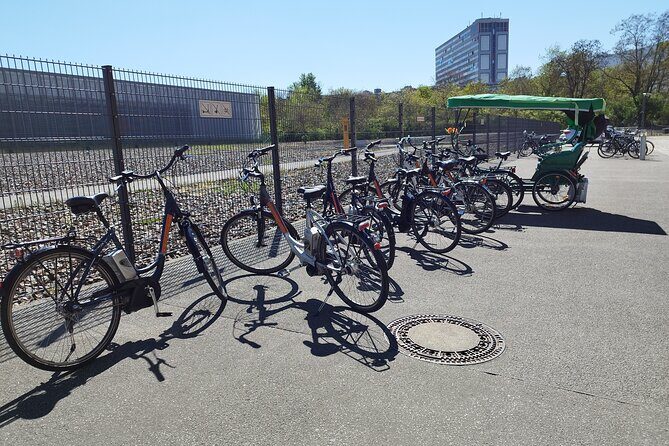
- Small group, big comfort: up to 2 people, plus a guide in the rickshaw loop.
- Photo stops on your schedule: stop anywhere for pictures, often without fully getting out.
- Major landmarks in one run: TV Tower, Museum Island, Bebelplatz, Gendarmenmarkt, Checkpoint Charlie, more.
- Rain-ready ride: roof on board and a blanket when Berlin weather misbehaves.
- You stay informed, not just transported: the guide explains what you’re seeing as you go.
Why Berlin by rickshaw beats the usual slog
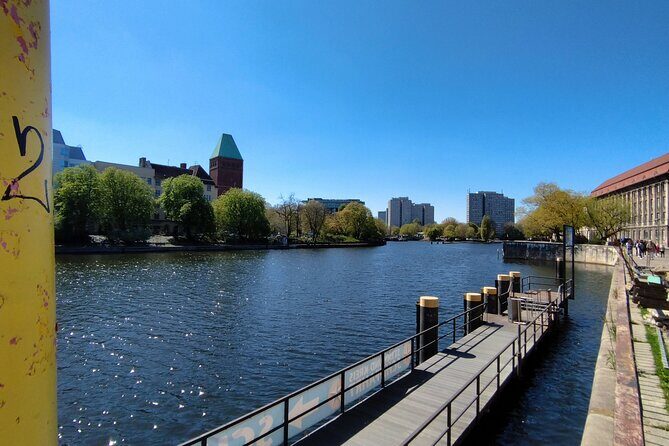
Berlin is huge, and sightseeing often turns into a stop-and-start march. This rickshaw format cuts the walking and keeps your attention on the sights instead of the logistics. You ride between key areas, then pause for a short window to look, take photos, and reset.
What I like most is the rhythm: you’re not stuck in one long viewing line, and you’re not constantly searching for the next stop. The guide handles the movement through the city while you sit back, relax, and keep your bearings fast.
And yes, the “we can stop for pictures” part matters more than it sounds. Being able to pull over for a quick shot at the right angle is the difference between generic photos and ones that actually look like Berlin.
You can also read our reviews of more tours and experiences in Berlin.
Price and value: what $216.74 buys for up to two
This tour is priced at $216.74 per group for up to 2 people, lasting about 4 hours. In real terms, the value is in three places:
- Time saved. You cover a lot of ground without standing in transit with a tired body.
- Comfort added. You’re seated for the between-stop transfers.
- Guided context included. You get stories tied to what you’re seeing, not just names on a sign.
There’s also a promotional note: a daily first rickshaw promotion in a Combi Vehicle public group for 90€. If budget is your top driver and you’re flexible on shared-group logistics, that can be a great cheaper doorway into the experience. For this specific tour price, though, you’re paying for a small group and a classic guided highlight loop.
Meeting point, timing, and how the ride feels in motion
The tour starts and ends at the same place: Weinbergsweg 6, 10119 Berlin. That’s a small detail, but it helps. You’re not chasing a different drop-off point after 4 hours.
The group size is capped at 2 travelers, which keeps things calmer and easier for the guide to tailor pacing. The tour is offered in English, and you’ll receive a mobile ticket.
On board, the experience includes:
- WiFi
- Bottled water
- Alcoholic beverages (yes, included)
You’ll also get practical comfort support. One review mentioned the rickshaw roof plus a blanket keeping guests warm during rain. That’s the kind of thoughtful detail that turns an “oh no, it’s raining” day into just another Berlin day.
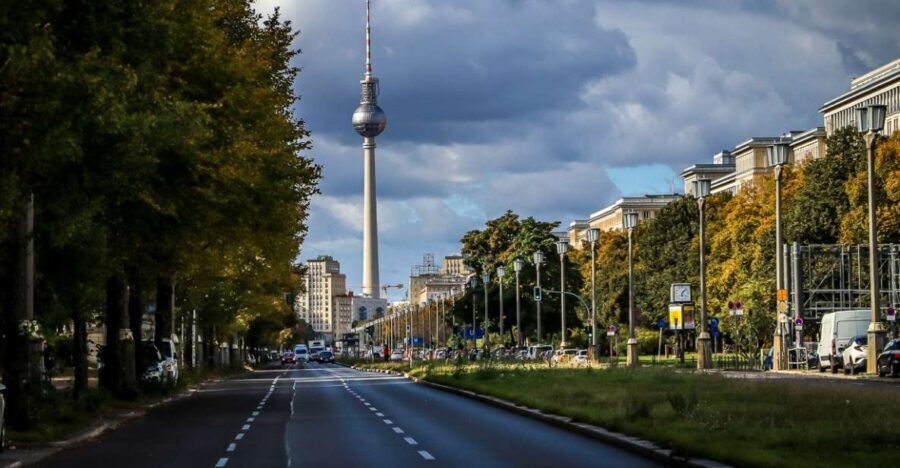
Stop 1: Berliner Fernsehturm and the Alexanderplatz start you can frame easily
Your route begins at Berliner Fernsehturm, Berlin’s tall TV tower at 365 meters. The timing is short—about 5 minutes—so this is more about orientation and quick photos than a long stop.
Why this start works:
- It sets the skyline tone immediately. You’re in the right visual zone for understanding how Berlin’s layers fit together.
- You’re anchored in Alexanderplatz. That makes the rest of the route feel like a planned loop rather than random hopping.
One important note: admission ticket is not included for this stop. If you want to go up, plan to budget separately. If you’re happy with exterior views and photos from near the tower, you’ll be fine without buying anything.
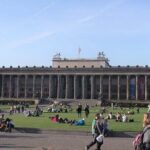
Stop 2: Museum Island’s quick hit (with free entry time)
Next is Museum Island, a UNESCO World Heritage museum complex. You get about 15 minutes, and the admission is listed as free for this stop.
Museum Island is huge in reputation, so the practical move here is to treat it like a “see the setting” moment. You’ll have time around iconic sights like:
- Berlin Cathedral
- City Palace
- Altes Museum
- Bode Museum
- Neues Museum
A good way to use your time: pick one or two buildings you want in your photos and then let the rest be context. The guide’s job is to connect what you’re looking at to why it matters, so you don’t need to memorize museum names while you’re jostling for a good angle.

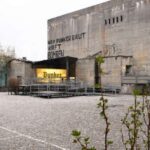

Stop 3: Bebelplatz—architecture, institutions, and the book-burning reminder
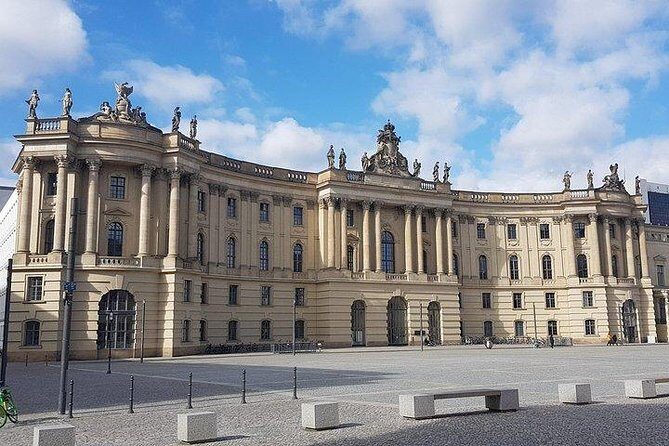
At Bebelplatz, the stop goes beyond a pretty square. You’ll also hear about the surrounding Forum Fridericianum complex, including major institutions such as the State Opera, Humboldt University, the State Library, and St. Hedwig’s Cathedral.
Then the story turns heavier. Bebelplatz is described as a painful reminder of Nazi oppression: on May 10, 1933, the Nazis staged a book-burning ceremony there. It’s a short stop—around 10 minutes—but it hits hard because it shows how ideas, violence, and power intersect.
Admission is listed as free, so the cost part is easy. The mental part takes a bit longer. If you’re the type who likes to process as you walk, slow down for a minute and let the meaning land.
Stop 4: Gendarmenmarkt—where the buildings speak multiple languages
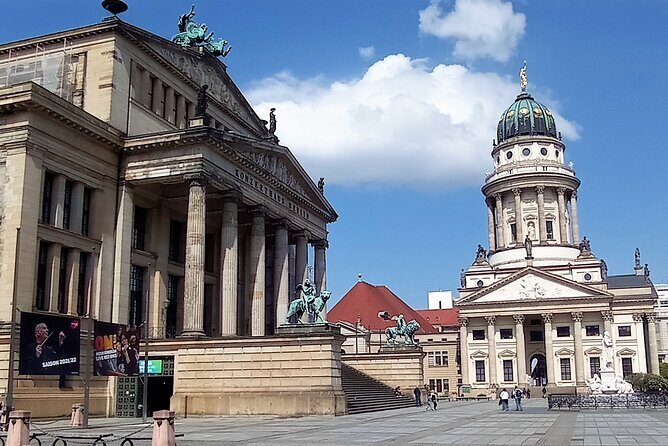
Gendarmenmarkt is one of Berlin’s most photogenic squares. You’ll have about 10 minutes here, and admission is free.
What you’ll see right away:
- A central Royal Concert Hall building
- The German Cathedral on one side
- The French Cathedral on the other
- Plus statues and monuments around the square
This is one of those stops where the “quick photo” strategy works well. You’ll likely want a wide shot first, then move for tighter angles of the façades. The guide can point out details so you notice differences you’d miss if you were just scanning for landmarks.
Stop 5: Checkpoint Charlie and the Cold War time capsule feeling
Then you reach Checkpoint Charlie, a major symbol of the Cold War. The stop is about 5 minutes, and admission is free.
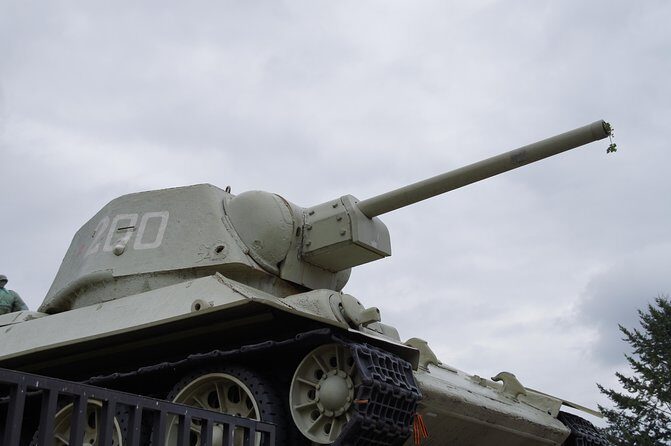
You’ll be reminded of what the Berlin Wall meant for families and friends—28 years of division—with the wall finally coming down in 1989. The key element here is how the area feels like a snapshot: original border-related pieces and the “crossing” concept stick in your brain.
Practical advice: take your photos, but also pause. This isn’t just a picture spot. It’s one of Berlin’s places where your mind automatically fills in the history.
Stop 6: Topography of Terror—facts presented where the air feels heavy
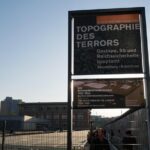
After Checkpoint Charlie, you head to Topography of Terror. This is described as a documentation center focused on atrocities during the Nazi era, with education as the main purpose. The stop is about 10 minutes, and admission is listed as free.
Right nearby is the Martin-Gropius-Bau exhibition center, which has hosted well-known international exhibitions (the info provided mentions artists like Ai Weiwei and David Bowie in an exhibition context).
A careful way to enjoy this stop: don’t try to absorb everything in 10 minutes. Instead, use it as a factual anchor for the rest of the day. When you later see memorials, you’ll understand the why behind the design and the message.
Stop 7: Potsdamer Platz—post-reunification growth in a modern city map
Next is Potsdamer Platz, a symbol of Germany’s changes after reunification. The tour notes that it turned into a massive construction area after years of damage and disrepair, then became known for modern buildings like the Sony Center.
You’ll spend about 10 minutes, and admission is free.
This stop helps balance the emotional weight of earlier sites. You get a visual reminder that Berlin didn’t just preserve history—it rebuilt, rebranded, and redeveloped. If you’re trying to understand Berlin as a living city, this is a helpful contrast moment.
Stop 8: The Holocaust Memorial—quiet space with a strong message
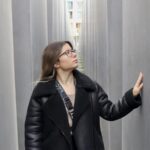
The Memorial to the Murdered Jews of Europe (often called the Holocaust Memorial) is next. You get about 10 minutes, and admission is free.
The info provided is direct: the memorial opened in 2005 and commemorates the murder of more than six million Jews under National Socialism. It’s positioned as a reminder of how fragile freedom can be.
This stop works best when you stop trying to “see the whole thing.” Instead:
- Choose a direction.
- Walk slowly for a few minutes.
- Take a single photo if you want, then put your phone away.
You’ll feel it more that way, and you’ll remember it longer.
Stop 9: Brandenburg Gate and the government district connections
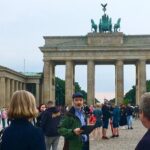
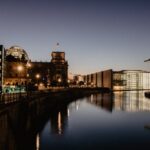
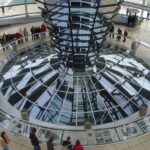
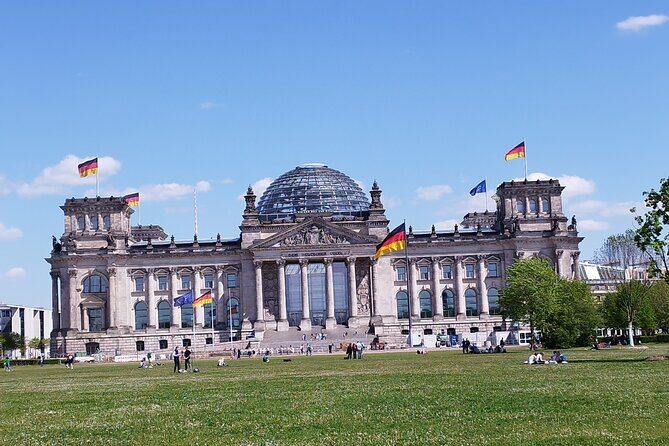
Finally, you reach Brandenburg Gate and the surrounding area connected to the government district (including the Reichstag/Bundestag and Chancellery). The stop is about 10 minutes, and admission is listed as free.
The route also mentions the Memorial to the Murdered Sinti and Roma along the way. That detail matters because it broadens the story of remembrance beyond one memorial site.
Brandenburg Gate is the big finale because it’s the Berlin postcard everyone recognizes. But the real value is that you’re not seeing it alone. You’re arriving with context from Cold War division, Nazi persecution, and memorial meaning.
So the gate feels less like a photo prop and more like a full stop on the day’s arc.
How flexible photo stops and proximity really work
This is one of the most practical parts of the experience. The guide can stop anywhere you’d like for pictures, and the provided info says you can often come very close to monuments—even touching them—without needing to step far out of the rickshaw.
That flexibility can save your energy in two ways:
- You don’t waste time walking to perfect vantage points.
- You don’t feel forced to rush the moment you get one.
If you’re a photographer, this is where the ride turns from transport into “shooting with a plan.” Tell your guide what you want—wide landmark shots, street-level angles, or memorial portraits—and use the short stop windows efficiently.
Who should book this Berlin rickshaw ride
This tour makes extra sense if:
- You want major sights without a full day of walking.
- You’re traveling as a couple or pair (max 2 travelers).
- You want an English-speaking guide who keeps things moving and clear.
- You’re less mobile but still want to get close to monuments—this is noted as ideal for less mobile guests, with getting into the rickshaw requiring only a few steps.
It’s also a strong choice for first-time Berlin visitors because the route touches multiple eras: imperial-era squares, Cold War divides, and modern memorial work.
You might choose something else if you want long museum time. This tour is built for highlights with short stops, not deep ticketed exploring at each venue.
A word on the guide: Levi and the “make it fun” factor
One guide name is specifically mentioned: Levi. The feedback points to him as adaptable, friendly, and able to include sights that don’t always show up on the standard pre-set circuits.
Another detail that comes up in the feedback: when the weather turned, the guide handled it with a calm plan—pulling over and keeping explanations going, with comfort support from the rickshaw setup.
For you, that translates to a simple expectation: you’ll get guidance that stays upbeat and practical, not a robotic script read while the group waits for the engine to start.
Should you book this 4-hour Berlin rickshaw tour?
If you want the classic Berlin highlight run but hate the grind of walking between distant stops, I’d say this is a smart booking. The comfort makes a real difference, and the small group size means you’re not stuck being herded.
Book it if you:
- Like big landmarks with a guided storyline
- Want flexibility for photos
- Value comfort over rushing around on foot
Skip it if you:
- Want deep museum time inside multiple venues in one day
- Prefer self-guided strolling with no set route or structured pacing
For most people doing Berlin with limited time, this rickshaw route is a practical, memorable way to see the city’s major chapters without burning your legs before the evening plans.
FAQ
How long is the Berlin rickshaw tour?
It runs for about 4 hours.
What’s the group size limit for this tour?
The tour has a maximum of 2 travelers.
What language is the tour offered in?
The tour is offered in English.
Where does the tour start and end?
It starts at Weinbergsweg 6, 10119 Berlin and ends back at the same meeting point.
What’s included in the tour price?
The price includes an experienced tour guide, WiFi on board, bottled water, and alcoholic beverages, along with the rickshaw ride.
Are museum or monument admission tickets included?
At least one stop notes admission is not included (the Berliner Fernsehturm). Other listed stops are marked as free.
Is this tour okay for less mobile travelers?
Yes. It’s described as ideal for less mobile guests, with entering the rickshaw requiring only a few steps.
What if it rains?
Comfort measures are mentioned, including a roof on the rickshaw and a blanket provided in rain.