REVIEW · BERLIN
Love and War in Berlin: Self-Guided Story Puzzle Walk
Book on Viator →Operated by Questo · Bookable on Viator
Berlin turns squares into storyboards. This self-guided puzzle walk takes you through central Mitte with WWII-focused stops you can explore at your own tempo. I like that it’s genuinely self-paced, so you can pause for coffee or step back to study a façade before solving the next clue. I also like how the route stitches big historical moments into a walk you actually enjoy doing—Urania at Alexanderplatz, the book burnings at Bebelplatz, and Berlin’s major memorial ground.
One possible drawback: the puzzles rely on finding exact answers around each stop, so a couple questions may take extra looking—or you may feel like you need the wording just right before moving on. If you’re walking in busy holiday-season crowds, you can also expect the route to be slower around festive areas like the Weihnachtsmarkt zones, so build in a little buffer.
In This Review
- Key highlights worth your time
- Why this Love and War story-puzzle walk fits Berlin
- Price and time: a $6 hour that won’t wreck your schedule
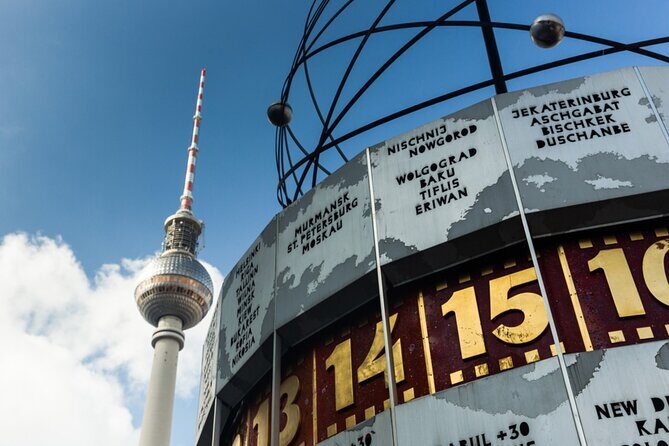
- Your starting point at Alexanderplatz and the Urania World Clock
- Rathaus, Neptune Fountain, and the look of historic Berlin
- Marx-Engels-Forum and the way ideology shows up in public parks
- Lustgarten on Museum Island: crowds, power, and the changed meaning of ground
- Neue Wache: Prussian neoclassicism meets the memory of liberation
- Bebelplatz: the Nazi book burnings you can’t shrug off
- Gendarmenmarkt and the layers between churches and theatre
- Hamburg’s state representation: politics as everyday programming
- The Memorial to the Murdered Jews of Europe and Peter Eisenman’s 2005 design
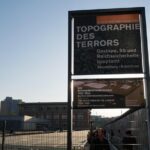
- The hidden heavy lift: Hitler’s former war bunker site
- How the puzzles work: offline, mobile ticket, and crowd control
- Route pacing tips so you actually enjoy it
- Who this self-guided Berlin puzzle walk suits best
- Should you book Love and War in Berlin?
- FAQ
- How long is the Love and War in Berlin self-guided story puzzle walk?
- What does it cost?
- Can I start at any time of day?
- Do I need an internet connection to play?
- Is this experience offered in English?
- Is there a physical tour guide with you?
- Where do I start and where does it end?
- What major sites are included on the route?
- Is it private or group-based?
- Are service animals allowed?
Key highlights worth your time
- Self-paced start and stop: start any hour and resume later, without coordinating with a human guide
- WWII landmarks, but on foot: you’ll pass recognizable sites tied to the Nazi era and Berlin’s war memory
- Urania World Clock at Alexanderplatz: a useful orientation point that also sets the tone for the puzzle hunt
- Bebelplatz book burning site: you’ll learn what happened at this address of propaganda and censorship
- Memorial to the Murdered Jews of Europe: you’ll reach Peter Eisenman’s 2005 memorial through the same story-driven flow
- Offline play: you don’t need internet connection to solve the walk game
Why this Love and War story-puzzle walk fits Berlin
Berlin is best when you let the city guide you—one street, one square, one building at a time. This format does that. Instead of following a scripted monologue, you follow a story you solve with your eyes, and the history is anchored to places you can stand in front of.
The title hints at a contrast: affection and violence, personal life and political brutality. Even if you don’t know Berlin’s 20th-century story yet, the walk helps you piece it together in a natural order. You’re not just checking boxes; you’re building context as you move from landmark to landmark.
The other thing I appreciate is the practicality. This is a private experience for just your group, with no in-person guide. That means you don’t have to wait for anyone. It also tends to feel easier to manage if you’re traveling with someone who likes to linger (or if you’re the one who wants to speed up).
You can also read our reviews of more guided tours in Berlin


Price and time: a $6 hour that won’t wreck your schedule
At $6.00 per person, this is the kind of add-on that makes sense even on a tight day. What you’re paying for isn’t a vehicle ride or a fancy production—it’s the puzzle structure and a route that strings together major sites in central Berlin.
The total time is about 1 hour (approx.), but that’s a flexible estimate. The experience is designed so you can take breaks and resume later, which matters in Berlin where you might step into a museum next door, duck into shade, or stop to read a plaque more carefully.
Also, English is available, and you can start at any hour. So if your sightseeing day already has a timed theater ticket or a museum reservation, you can still fit this in without stress. The route is built for walking, not for waiting.
Your starting point at Alexanderplatz and the Urania World Clock
You’ll kick off at Alexanderpl. 1 in the Mitte area. That’s a smart choice because Alexanderplatz is a real hub, and it sets you up with easy transit access for the day.
The first challenge centers on the Urania World Clock (also called the World Clock). It’s a turret-style clock in the public square, and the whole idea is that you can read the time for 148 major cities by interpreting the markings around its metal rotunda.
Why this works in a puzzle walk: it forces you to look around instead of rushing onward. You’re learning how to read the visual “language” of the place—exactly the skill the rest of the walk uses. If you’ve ever felt like Berlin museums are too information-dense, this is a gentler on-ramp.
Practical tip: give yourself a moment to orient your eyes. The clock is clear from a distance, but the details are what the game wants you to notice.
Rathaus, Neptune Fountain, and the look of historic Berlin
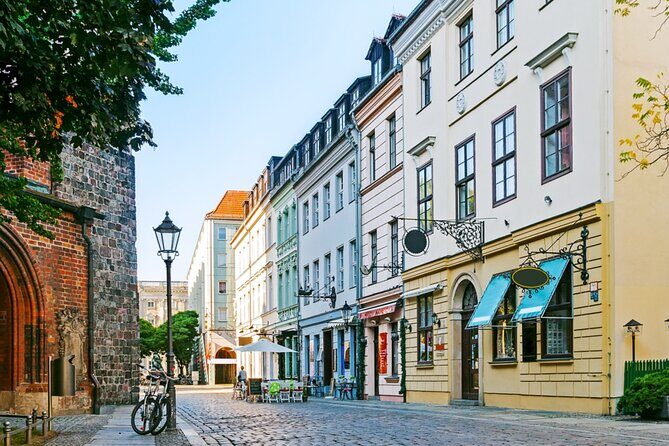
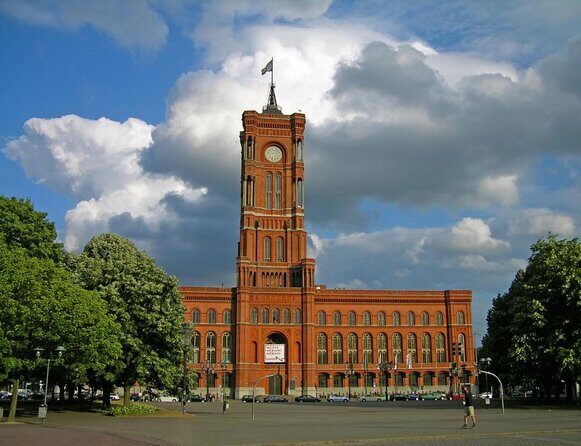
From Alexanderplatz you move into a stretch where classic Berlin architecture does the heavy lifting. The next major stop is the Berlin Rathaus, built between 1861 and 1869 under Hermann Friedrich Waesemann. It follows a Northern Italy High Renaissance style, and the design references other European town halls—while the tower’s vibe nods toward the cathedral tower of Notre-Dame de Laon in France.
This is one of those places where your brain goes: I’ve seen it in photos, but I’ve never actually studied the parts. The puzzle pushes you to do that. You’ll be looking around for an answer that unlocks your next move.
Then you’ll reach Neptunbrunnen, the Neptune Fountain. Built in 1891 and designed by Reinhold Begas, it puts the Roman god Neptune at the center. It’s the kind of stop that balances heavy historical mood with a more civic, everyday energy—except Berlin is never fully “just pretty,” because the story always returns.
The Neptune Fountain is also free to visit, so it’s an easy breathing spot if you’re trying to keep the walk from feeling like one long concentration marathon.
Marx-Engels-Forum and the way ideology shows up in public parks
Next on the route is the Marx-Engels-Forum, a public park in Mitte named for Karl Marx and Friedrich Engels, authors of The Communist Manifesto (1848). The park was created by authorities of the former GDR in 1986.
This stop does something valuable: it shows that Berlin’s history isn’t only WWII and Nazi-era ruins. You’re also seeing the later chapter of German state-building and the way regimes used public space to signal beliefs.
The puzzle mechanics keep you engaged at a park site. Even if your first instinct is to relax, you’ll likely end up noticing statues, layout, and placement—things that matter for how the area communicates political identity.
Possible drawback: parks can feel visually subtle compared to a cathedral or a museum façade. If you’re the type who wants clear “what to look at” directions, take an extra minute before you solve the clue.
You can also read our reviews of more tours and experiences in Berlin




Lustgarten on Museum Island: crowds, power, and the changed meaning of ground
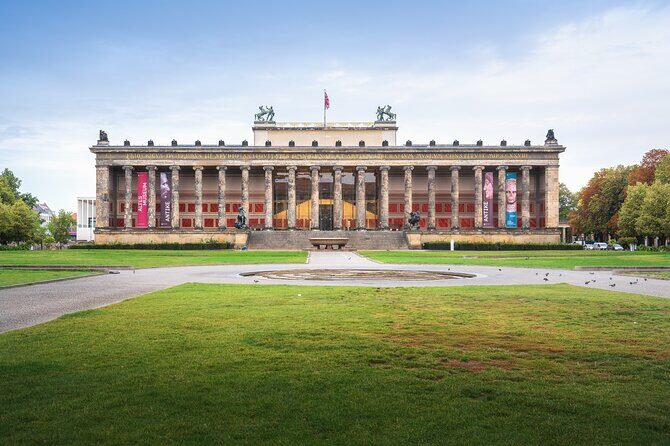
You’ll continue toward Lustgarten, a park on Museum Island near the site of the former Berliner Stadtschloss (Berlin City Palace). Historically, this garden/parade space served multiple roles: parade ground, location for mass rallies, and later a public park.
This is one of the most interesting shifts in meaning on the route. The same ground can host very different kinds of gatherings across decades. And Berlin makes that shift feel personal because you’re physically moving through the space where those events once took place.
In a story puzzle format, Lustgarten gives you room to slow down. You’re not trapped indoors. You’re watching how the site is used now, then remembering it wasn’t always used that way.
Neue Wache: Prussian neoclassicism meets the memory of liberation
On Unter den Linden, you’ll hit Neue Wache. It’s a listed building that dates to 1816–1818, planned by Karl Friedrich Schinkel. It originally served as a guardhouse for the Royal Palace and a memorial to the Liberation Wars.
Architecturally, it’s considered a major work of Prussian neoclassical architecture, which means it’s restrained and intentional rather than grand and flashy. The puzzle here matters because it nudges you to notice details you might otherwise ignore—shapes, positioning, and the tone the building sets for remembrance.
This stop balances the walk’s emotional weight. After ideologically loaded sites, Neue Wache provides a different kind of political language: the careful framing of war memory through architecture and memorial design.
Bebelplatz: the Nazi book burnings you can’t shrug off
Then you reach Bebelplatz, known for the infamous Nazi book burning ceremony on 10 May 1933 in many university cities. The walk’s context is important here: the book burnings were initiated and hosted by the nationalist German Student Association, which the information frames as taking a march on the National Socialist German Students’ League.
That detail matters because it shows how persecution and propaganda didn’t just appear from nowhere. It was organized, public, and executed through institutions that claimed legitimacy.
This stop is one where your puzzle energy might slow down naturally. You’ll look around to find the next clue, but you’ll also likely pause to absorb what this place stands for.
If you’re visiting Berlin for WWII history, this is not a detour. It’s one of the clearest symbols of censorship and intimidation in public space.
Gendarmenmarkt and the layers between churches and theatre
Next comes Gendarmenmarkt, a square with a name tied to the “Gens d’armes” cuirassier regiment. The area’s stables were demolished by Friedrich II, and the square’s story pivots from military use to cultural architecture.
Between the two churches, a new theatre was built—now known as the Konzerthaus Berlin. That mix of church presence and theatre presence gives the square a “public life” feeling. It’s a reminder that Berlin’s streets weren’t only about power and war; they were also about civic identity and entertainment.
In the puzzle, you’re still hunting for answers, but the mood shifts. You’ll likely enjoy this part because the square is very readable at a human scale: you can look, turn, compare, and find your way forward without feeling like you’re “doing homework.”
Hamburg’s state representation: politics as everyday programming
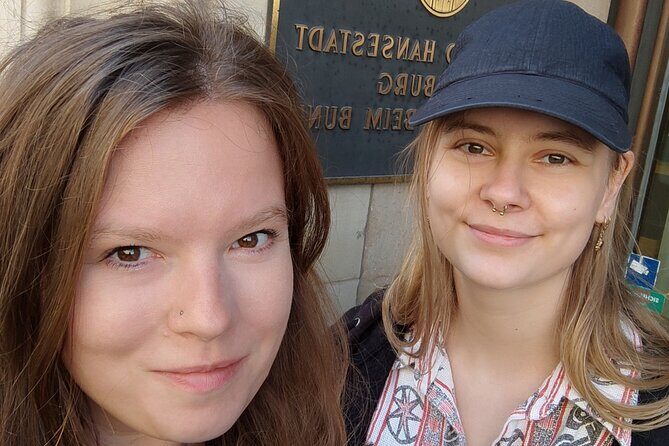
You’ll then pass the state representation of the Free and Hanseatic City of Hamburg in Berlin, located in a classicist town house on Jägerstraße. The description is very practical about what happens here: everyday life for state-level government functions, including events and discussions.
The information given is specific: over 500 events and encounters take place each year, and Hamburg makes politics in the capital and participates in federal legislation through the Federal Council.
This stop feels like a breather from memorial gravity. It’s also a useful “now Berlin” anchor—proof that the city’s political system didn’t end with WWII. The story continues into how the government runs today.
From a puzzle-walk perspective, this is also a smart placement. You’re less likely to feel museum-fatigued because the environment is active.
The Memorial to the Murdered Jews of Europe and Peter Eisenman’s 2005 design
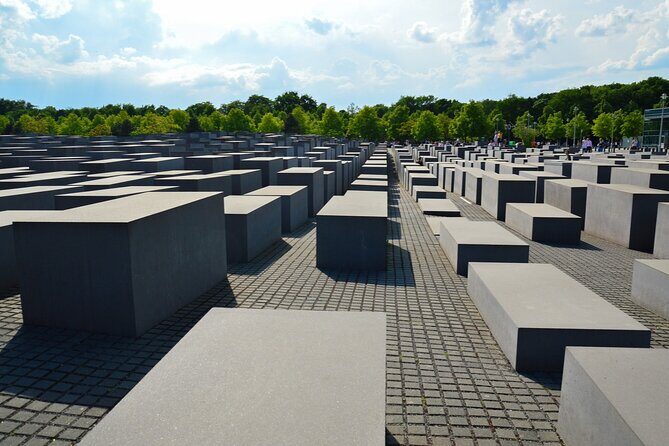
Finally, you’ll reach the Memorial to the Murdered Jews of Europe, the central memorial site established by the German parliament after lengthy debates. A design competition was won by New York architect Peter Eisenman, and it opened ceremonially in 2005.
This is one of the biggest memory landmarks in modern Berlin. The puzzle here keeps you moving, but the scale and purpose of the memorial tend to slow many people down anyway. Even as a puzzle participant, you’ll likely stand for a bit longer than you expected.
This is also where the title theme becomes clearer without needing extra narrative. Love and War aren’t abstract. The memorial puts the horror of WWII-era persecution into a physical place that asks you to notice, remember, and act with care.
The hidden heavy lift: Hitler’s former war bunker site
One of the walk highlights is a visit to the site of Hitler’s former war bunker. That’s the kind of stop where the air changes, even if you’re not surrounded by ruins.
Because the walk is puzzle-based and self-guided, you can spend the exact amount of time you need before moving on. That’s useful here: some people want a quick look and then to move; others want to linger with the weight of the place.
Consideration: plan this as your emotional peak. If you’re sensitive to heavy historical topics, you’ll probably want to take the slowest pace around the bunker site.
How the puzzles work: offline, mobile ticket, and crowd control
This is offered as a city game style experience. You use a mobile ticket and you can play offline, meaning you do not need an internet connection to do the walk game.
That matters more than it sounds. Berlin has spotty connectivity in some areas, and “I’ll just look it up” can ruin the pacing. Here, the design nudges you to use your senses and the information around you.
It’s also billed as private with no human contact—meaning you avoid the classic group-tour friction. No waiting for the slowest member of the group. No side conversations that pull attention away from the clues.
And yes, the puzzles vary in difficulty. One part may feel straightforward, and another may require very precise searching. That lines up with a common puzzle-walk reality: sometimes the clue wants wording that matches what’s on the sign or what’s carved into the building.
Route pacing tips so you actually enjoy it
A one-hour walk can still feel long if you go too fast. Here’s how to make it feel smooth:
- Start with a relaxed first 10 minutes. At Alexanderplatz and the Rathaus area, you’ll naturally learn the pattern.
- If you hit a hard clue, don’t burn time. Take a short break, look broadly, then try again.
- If you’re walking near festive seasons, expect slower foot traffic around markets. Build a little buffer so you don’t feel rushed at the tougher stops.
Also, comfy shoes help. This is a walking route through central Berlin squares, boulevards, and memorial space.
Who this self-guided Berlin puzzle walk suits best
I think this works best for you if you want WWII context without a bus tour pace. It’s also great for people who learn by spotting details—plaques, architectural cues, and site clues—because the game is designed around looking around.
It’s a good choice if you’re the type who likes to start whenever works for your day. Since you can take breaks and resume, you can pair it with a museum visit nearby or just use it as your “spine” for a Berlin center stroll.
It’s also a solid option if you’re traveling with someone who prefers not to be tethered to a group schedule.
Should you book Love and War in Berlin?
Book it if you want a low-cost, structured way to get big-picture WWII and Berlin memory context in a short time. The route includes heavy-weight stops like Bebelplatz and the Memorial to the Murdered Jews of Europe, and it does it in a way that keeps you engaged instead of passively reading.
Skip it if you strongly prefer a traditional guided talk, with explanations delivered in plain language. This is still self-guided; you’ll be doing more searching and solving yourself.
If you’re on the fence, here’s my best tie-breaker: if the idea of learning by walking and solving sounds fun, you’ll likely enjoy this. If puzzles frustrate you, you may find the exact-answer moments more annoying than rewarding.
FAQ
How long is the Love and War in Berlin self-guided story puzzle walk?
It’s listed as about 1 hour (approx.).
What does it cost?
The price is $6.00 per person.
Can I start at any time of day?
You can start at any hour. It’s also described as available Monday through Sunday from 5:00 AM to 9:00 PM.
Do I need an internet connection to play?
No. You can play offline and do not need an internet connection to play the city game.
Is this experience offered in English?
Yes, it’s offered in English.
Is there a physical tour guide with you?
No. This is a private experience with no human contact, and a physical tour guide is not included.
Where do I start and where does it end?
Start: Alexanderpl. 1, 10178 Berlin, Germany. End: Cora-Berliner-Straße 1, 10117 Berlin, Germany.
What major sites are included on the route?
The walk includes stops at places like the Urania World Clock at Alexanderplatz, Berlin Rathaus, Neptunbrunnen, Marx-Engels-Forum, Lustgarten, Neue Wache, Bebelplatz, Gendarmenmarkt, the Hamburg state representation in Berlin, and the Memorial to the Murdered Jews of Europe. It also highlights the site of Hitler’s former war bunker.
Is it private or group-based?
It’s private. Only your group participates.
Are service animals allowed?
Yes, service animals are allowed.