REVIEW · BERLIN
Night magic city tour in Berlin
Book on Viator →Operated by Farolero - Night magic city tour · Bookable on Viator
Berlin gets stories after dark.
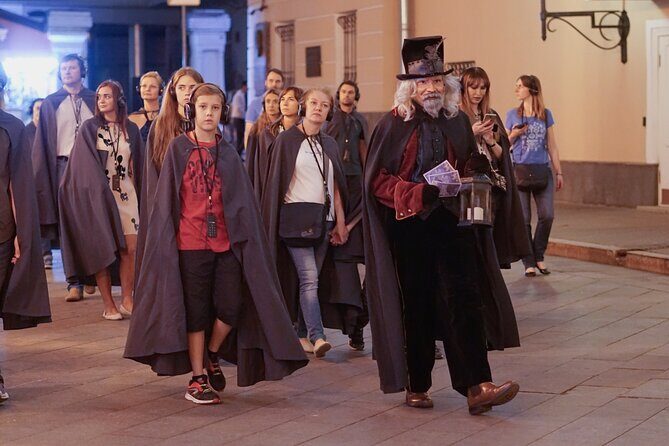
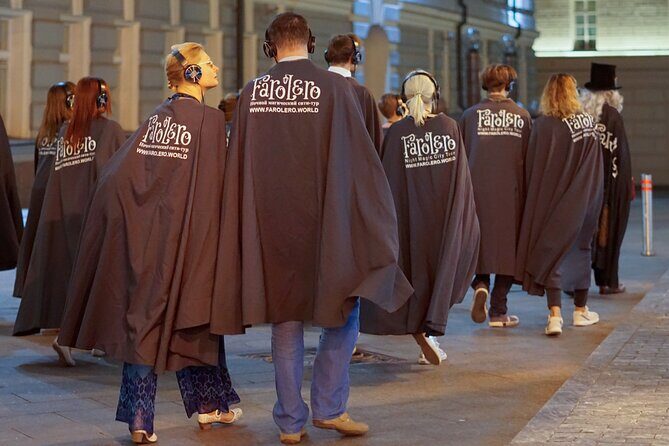
This 1.5-hour night city tour (Farolero – Night magic city tour) uses an audio-guide style with actors and visual effects, so the streets feel like a living set, not just a slideshow. I especially like the way the team threads history into small moments you can actually see while walking.
You’ll also get a fun, close-up look at Nikolaiviertel and Berlin’s oldest church, St. Nikolai (Nikolaikirche), in the middle of the city instead of far outside your route. The one real consideration: the tour requires good weather, and if conditions are poor you may be offered another date or a full refund.
In This Review
- Key highlights you’ll notice right away
- Starting point: St. Marienkirche to Ephraims Spreeufer
- What the 90 minutes gives you
- Why this feels different: Farolero’s audio, actors, and visual effects
- The night magic comes from the way the streets are used
- You might get playful touches
- Neptune Fountain (1891): Prussia’s rivers in sculpture form
- Why it works on a night tour
- Rotes Rathaus: Berlin’s power center, in red clinker brick
- What to pay attention to
- Ampelmännchen: the pedestrian symbol that tells a Germany story
- A good photo stop, if you’re ready
- Nikolaiviertel: the reconstructed old heart of Berlin
- Why reconstruction matters here
- St. Nikolai-Kirche (Nikolaikirche): Berlin’s oldest church
- What you’re learning as you stand there
- Humboldt Forum: non-European art on Museum Island
- Why this belongs on a night magic tour
- Mühlendamm (Mill Dam): where the city’s water story started
- The practical take
- Price and value: is $46.99 worth 90 minutes at night?
- Timing, weather, and practical walking tips
- What to bring
- Who this tour suits best
- Should you book Farolero’s Night magic city tour?
- FAQ
- How long is the Night magic city tour in Berlin?
- What is the price per person?
- Is the tour offered in English?
- Do I receive a mobile ticket?
- Where do I meet, and where does the tour end?
- How large is the group?
- Which sights are included on the route?
- Does it run in any weather?
- When will I get confirmation, and what is the cancellation window?
Key highlights you’ll notice right away
- Audio-guide style + live actors + visual effects that keep the vibe playful and focused
- Nikolaiviertel as the reconstructed medieval heart of Berlin, about five minutes from Alexanderplatz
- Ampelmännchen explained with the East vs West Germany difference you can spot on pedestrian signals
- Prussia river symbolism at Neptune Fountain (1891), including Elbe, Rhine, Vistula, and Oder
- Museum Island’s Humboldt Forum as a bridge between rebuilt palace facades and modern museum space
- A small-group feel, capped at 20 travelers, for questions and interaction
Starting point: St. Marienkirche to Ephraims Spreeufer
This tour is built for a night stroll through central Berlin, with a clear start and finish. You begin at St. Marienkirche (Karl-Liebknecht-Str. 8, 10178 Berlin), and you end at Ephraims (Spreeufer 1, 10178 Berlin).
The best part about that arrangement is how it matches the sights on the route: you start in the Mitte area, then work your way toward the Nikolaiviertel/Nikolaikirche zone and eventually toward the Spree and Museum Island area. If you’re staying near Alexanderplatz or you plan to see Museum Island anyway, this makes a lot of sense as a focused night option.
You can also read our reviews of more city tours in Berlin
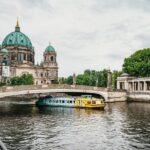
What the 90 minutes gives you
At about 1 hour 30 minutes, you won’t feel dragged through endless blocks. It’s long enough for a real arc, but short enough that you can still layer in dinner or a late drink after.
And because the group size maxes at 20, it tends to feel manageable rather than crowded. For an experience that leans on interaction (not just listening), that matters.
Why this feels different: Farolero’s audio, actors, and visual effects
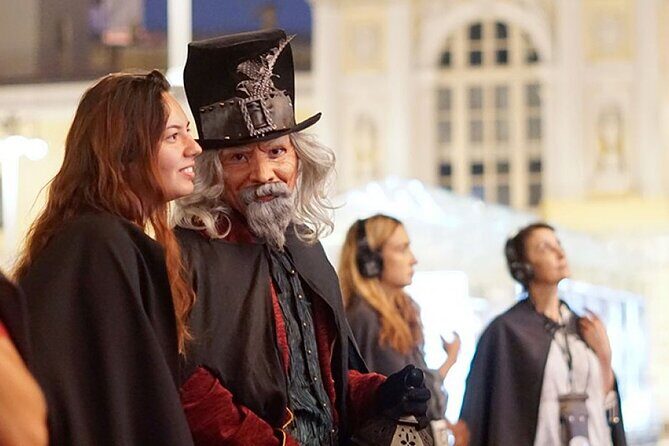
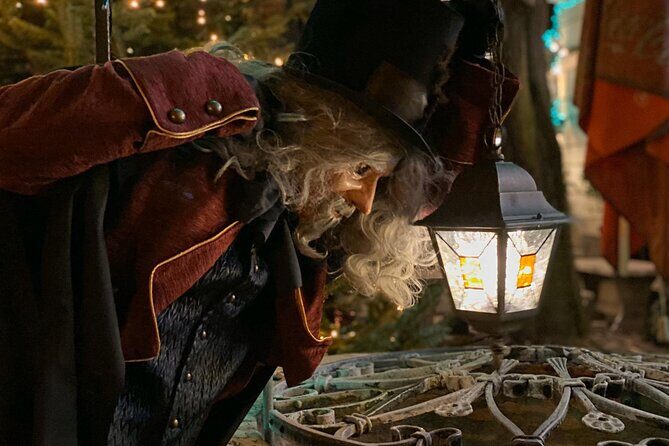
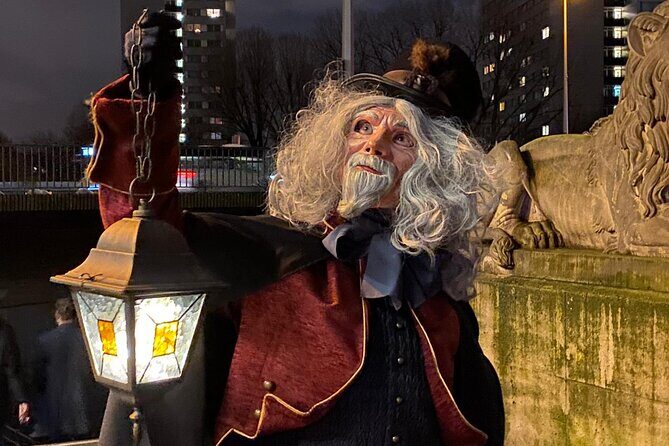
A normal walking tour gives you facts. This one tries to add performance to the facts, and you can feel the intent in the structure. The big winner here is the combination of audio-guide delivery with actors and visual effects that helps the story “sit” in the right place.
One review called out how the mix of audio guidance plus performers, along with visual effects, creates a sort of escape from the everyday street noise. That’s exactly what you’re hoping for on a night tour: you want to hear and understand, not just compete with traffic and other groups.
The night magic comes from the way the streets are used
You’re not just looking at buildings. You’re walking through a sequence of symbolic places—water, governance, street signals, the old town center, and the museum island. Each stop has a built-in visual hook, and the story around it explains what you’re seeing.
For example, when you talk about the fountain’s river allegories, you’re not reading a sign. You’re standing there in front of the sculptures and learning what each figure represents. That’s the kind of “wait, I get it now” payoff you want on a paid guided experience.
You might get playful touches
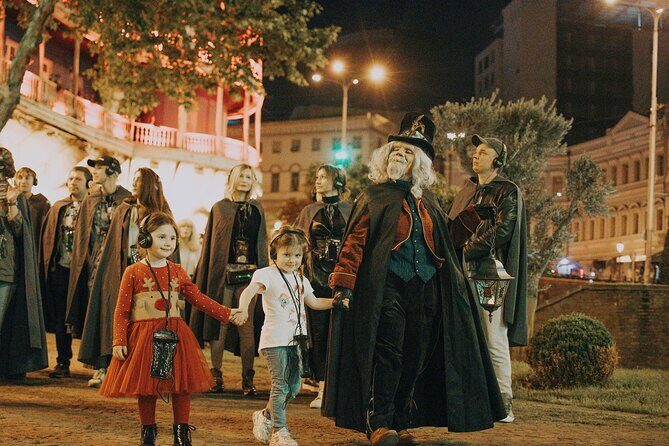
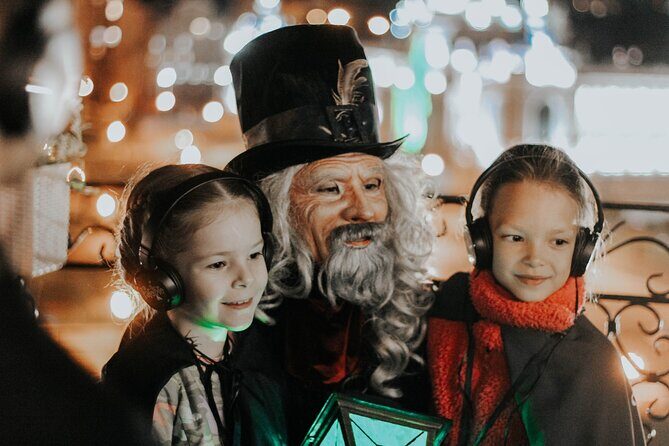
In the best moments, the team adds warmth and light theatrics. Some departures include participants being welcomed warmly and even dressed for the experience before the walk continues. If you like interactive tours, that’s a green flag.
Not every element may land the same way for every group, but the style is consistent: history with personality, and the feeling that you’re part of the evening, not just a body in the background.
You can also read our reviews of more evening experiences in Berlin
Neptune Fountain (1891): Prussia’s rivers in sculpture form
One of the first stops is the Neptune Fountain in Berlin, built in 1891 and designed by Reinhold Begas. Neptune is centered at the top of the story, but the real attention-grabber is the ring of four women around him.
They represent the four main rivers of Prussia at the time the fountain was constructed:
- Elbe (shown with fruits and ears of corn)
- Rhine (fishnet and grapes)
- Vistula (wooden blocks, symbols of forestry)
- Oder (goats and animal skins)
This is a great stop because it turns geography into symbolism. You learn not only what the figures are supposed to mean, but why those rivers mattered. Even more interesting: the names are tied to today’s borders and national maps. The Vistula is now entirely in Poland, while the Oder forms part of the Germany–Poland border.
Why it works on a night tour
At night, you’re more likely to look upward and around. That’s perfect here, because the fountain is a composition. You’ll understand the scene faster when your guide points out the allegories in place.
Practical tip: if photography is important to you, bring a steady hand or a simple setup. Small details like the river symbols won’t all be equally readable in low light, so quick guidance from your leader helps you decide what’s worth a photo.
Rotes Rathaus: Berlin’s power center, in red clinker brick
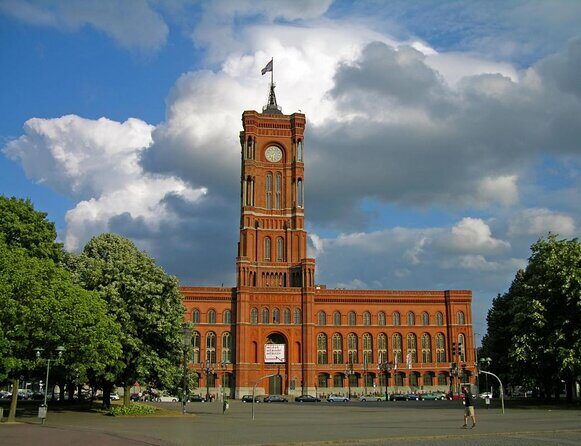
Next comes Rotes Rathaus (Red City Hall), located in the Mitte district near Alexanderplatz on Rathausstraße. This isn’t just a pretty facade moment. It’s the town hall and the home to the governing mayor and Berlin’s government (the Senate of Berlin).
The building’s name is rooted in materials and design: it’s called Rotes Rathaus because of the red clinker bricks used in the facade look. That’s a simple detail, but it helps you read the building quickly and remember it later.
What to pay attention to
You’ll get more out of this stop if you treat it like a “place where decisions happen,” not just a viewpoint. Ask yourself what a city’s government looks like when it chooses form and color to project authority.
If you’re in Berlin for the first time, this is also a useful anchor point for understanding how the Mitte area ties government, public life, and major squares together.
Ampelmännchen: the pedestrian symbol that tells a Germany story
Then you’ll meet a smaller icon with a big political backstory: Ampelmännchen, the little traffic-light man shown on German pedestrian signals.
The tour explains that before reunification in 1990, the two German states used different versions. West Germany used a more generic human figure, while East Germany’s version was generally “male,” including a hat.
This stop is short, but it’s clever. It shows how even everyday objects carry history, and it gives you something you’ll notice again after the tour. You’ll walk away with a new eye for the city’s signals.
A good photo stop, if you’re ready
Even if you’re not a “photo person,” this is one you might want to capture because it’s distinctive. And if you happen to see an Ampelmännchen signal at street level later that night, you’ll recognize it instantly with context.
Nikolaiviertel: the reconstructed old heart of Berlin
The walk moves into Nikolaiviertel (Nicholas’ Quarter), part of Alt-Berlin. This historic heart area was founded roughly around 1200, and it works with the nearby Cölln area to form a reconstructed center for the German capital’s earlier story.
You’re in Mitte, and the area is about five minutes away from Alexanderplatz, which is part of why it’s so workable for a night tour. You’re not traveling far—you’re getting dense history in a walkable zone.
Why reconstruction matters here
“Reconstructed” can sound fake. But in Berlin, it often means you can walk through a clearer interpretation of what an older city center was designed to feel like. Nikolaiviertel gives you that sense of older Berlin, complete with restored medieval-style building character.
On a night tour, this kind of setting helps the performance elements make more sense. Your brain connects the story to the built environment faster.
St. Nikolai-Kirche (Nikolaikirche): Berlin’s oldest church
At the center of the quarter is St. Nikolai-Kirche (Nikolaikirche), described as the oldest church in Berlin. The church was built between 1220 and 1230. That timing is what makes it powerful: it isn’t just “old-looking,” it’s truly among the earliest surviving religious landmarks in the city.
The surrounding area—bounded by Spandauer Straße, Rathausstraße, the River Spree, and Mühlendamm—is known as the Nikolaiviertel. The church also sits in a restored medieval block environment where some buildings are real restorations and some are modern imitations.
What you’re learning as you stand there
In practice, this stop helps you understand why Berlin’s city center isn’t all about modern reunification-era architecture. You get a sense of depth: older foundations, older spiritual life, older rhythms of settlement.
Even if you’re tired, pause here. This is one of the places where a night tour feels worth the effort, because you can’t “speed read” your way to meaning. You need a few minutes of stillness to take it in.
Humboldt Forum: non-European art on Museum Island
After the medieval heart, the tour heads toward Humboldt Forum, located on Museum Island. This museum focuses on non-European art and is named for Prussian scholars Wilhelm and Alexander von Humboldt.
What makes Humboldt Forum especially interesting in the context of this tour is its physical mix:
- It combines three rebuilt baroque facades of the former Royal Palace.
- It has a contemporary exterior looking toward the Spree.
- Inside, there’s a modern interior designed by Franco Stella.
It’s sometimes described as a German equivalent to the British Museum, mainly because Berlin chose to treat this as a public cultural house for collections from beyond Europe. The museum also hosts temporary exhibitions and public events.
Why this belongs on a night magic tour
Night tours often overuse big monuments. Here, the pivot to Humboldt Forum gives you a different kind of awe—more intellectual than massive.
Also, the contrast is smart: you go from 1200s church time to a museum that’s literally about collecting, presenting, and re-framing cultural stories.
Mühlendamm (Mill Dam): where the city’s water story started
The route includes Mühlendamm (Mill Dam), a major thoroughfare in central Mitte. The name comes from watermills at the site, and the area has older roots than you might expect. A historic causeway was first laid out around 1200, becoming the nucleus of later late medieval city foundation.
The street runs from the older Cölln and Fischerinsel quarters to Molkenmarkt square, crossing the Spree via the Mühlendammbrücke (Mill Dam Bridge).
The practical take
If you want to understand Berlin as a city shaped by water—rivers, crossings, and the placement of communities—Mühlendamm is a useful final “logic stop.” It ties your earlier discussions about Neptune’s fountain rivers and the Spree-side museum location into one larger theme: Berlin grew where water made movement and work possible.
And by the time you’re walking near the Spree at the end point, the route feels like it’s finishing in the right place instead of just ending at an arbitrary corner.
Price and value: is $46.99 worth 90 minutes at night?
The price is $46.99 per person for about 1 hour 30 minutes, and the tour is offered in English. That’s not the cheapest category of walking tour, but it’s also not priced like a premium private experience.
Here’s where the value comes from:
- The structure feels like a staged experience, not just narration. That audio + actor + visual effects combination costs money to produce and indicates you’re paying for more than a guide talking over street noise.
- The small group size (maximum 20) helps keep it interactive, so you’re not lost in a huge crowd.
- The route includes major Berlin “read points”: Neptune Fountain symbolism, Rotes Rathaus governance, a recognizable national icon in Ampelmännchen, and then the Nikolaiviertel + Nikolaikirche old core plus Museum Island’s Humboldt Forum.
If you like tours where you’re entertained as well as informed, the price is easier to justify. If you want only classic sightseeing facts from a single lecturer, you might feel like you’re paying extra for performance elements you didn’t ask for.
Timing, weather, and practical walking tips
This experience requires good weather. That matters more than usual because the tour is outdoors and the “night magic” effect likely depends on you being comfortable enough to stay outside for the full loop.
If your visit lines up with rain or cold snaps, keep a flexible mindset. The provider states that if the tour is canceled due to poor weather, you’ll be offered a different date or a full refund.
What to bring
I’d plan for Berlin nights by dressing in layers. Even in mild seasons, evenings around central sights can feel cool, and you’ll want to stay comfortable long enough to enjoy the stops.
For footwear, choose something you’re comfortable walking in. This is a guided walking format, and you’ll move between tight, central-city areas.
Who this tour suits best
This is a strong pick if you want:
- A guided Berlin night that feels like a story, not only a lecture
- Stops with visible symbolism (fountains, municipal architecture, pedestrian signals)
- A mix of older Berlin (Nikolaiviertel and Nikolaikirche) and modern cultural framing (Humboldt Forum)
It’s also a good option if you’re traveling with a partner and you like shared moments where the guide includes the group. The format supports interaction without needing museum ticket planning.
The experience notes that most people can participate, so if you’re generally mobile and comfortable walking at night, it should be a fit.
Should you book Farolero’s Night magic city tour?
Book it if you like guided experiences with a theatrical edge and you want Berlin’s center explained through what you can see up close. The $46.99 price becomes easier to accept when you consider the production style—audio delivery, actors, and visual effects—plus the thoughtful route that connects Prussian symbolism, German reunification-era street iconography, and two very different “time layers” of the city.
Skip it or think twice if you hate performances and want only straightforward, quiet sightseeing. And if weather is questionable on your travel dates, be ready for possible rescheduling or a refund.
If you’re aiming for a night that helps Berlin feel understandable and memorable, this one has the right ingredients.
FAQ
How long is the Night magic city tour in Berlin?
It runs for about 1 hour 30 minutes.
What is the price per person?
The price is $46.99 per person.
Is the tour offered in English?
Yes, it’s offered in English.
Do I receive a mobile ticket?
Yes, the tour includes a mobile ticket.
Where do I meet, and where does the tour end?
You start at St. Marienkirche, Karl-Liebknecht-Str. 8, 10178 Berlin, and the tour ends at Ephraims, Spreeufer 1, 10178 Berlin.
How large is the group?
The tour has a maximum of 20 travelers.
Which sights are included on the route?
Key stops include the Neptune Fountain, Rotes Rathaus, Ampelmännchen, Nikolaiviertel, St. Nikolai-Kirche (Nikolaikirche), Humboldt Forum, and Mühlendamm.
Does it run in any weather?
It requires good weather. If it’s canceled due to poor weather, you’ll be offered a different date or a full refund.
When will I get confirmation, and what is the cancellation window?
You’ll receive confirmation at booking time unless you book within 2 days of travel, in which case confirmation comes within 48 hours subject to availability. Cancellation is free up to 24 hours in advance for a full refund.