REVIEW · BERLIN
Private Taxi Tour through Berlin East and West and Kiez 4-6h
Book on GetYourGuide →Operated by GAT-Productions · Bookable on GetYourGuide
Berlin’s border story, told street by street.
What makes this tour work is the mix of East and West highlights plus real context from a licensed guide who also drives the taxi. You get a comfortable SUV ride (leather seats, AC, Wi‑Fi) that lets you see far more than most walking tours, then hop out for short walks near the big landmarks like Brandenburg Gate and Checkpoint Charlie. The one thing to keep in mind: with 2.5 to 5 hours and lots of stops, it’s a fast-moving sampler—if you want long museum time at each place, you’ll need to do that separately.
I like that you’re not stuck in one neighborhood. The route is built to follow Berlin’s changing identity: Prussian and imperial power, wartime destruction, the Berlin Wall and the “death strip,” then reunification and today’s capital energy. And yes, you’ll get a standout view from the Humboldt Forum rooftop, which adds a wow factor without wasting your day in transit.
There’s also a practical comfort angle that matters in Berlin: you don’t wait outside, you ride higher for better sightlines, and from the outside you’re not clearly visible—handy when streets get crowded. Just pack for wind and quick stops outdoors, especially on the rooftop, and plan a small water bottle since food and drinks aren’t included.
In This Review
- Key things to know before you go
- Berlin in comfort: the taxi SUV setup that actually makes sense
- The big story of Berlin, timed for a half-day
- West Berlin by car: from Kurfürstendamm to the Bendlerblock area
- Wall-line geography: Potsdamer Platz, Holocaust Memorial steles, and Brandenburg Gate
- Checkpoint Charlie and the “Mitte” reality check
- Museum Island and the Humboldt Forum rooftop: Prussia to the present
- Alexanderplatz to East Side Gallery: the Kiez section where Berlin feels real
- Reichstag, Holocaust Memorial, and the government triangle without the commute hassle
- Timing, walking, and what to wear (so the rooftop doesn’t catch you)
- Price and value: why $124 per person can work better than it seems
- Who this private Berlin taxi tour is for
- Should you book this Berlin East-West taxi tour?
- FAQ
- How long is the private taxi tour in Berlin?
- What is included in the price?
- Where does pickup happen?
- Is airport pickup available?
- What vehicle do we ride in?
- What languages is the live guide available in?
- Is Humboldt Forum rooftop access included?
- Is the tour wheelchair accessible?
- Do we need to bring water or snacks?
Key things to know before you go
- East and West in one loop: you’ll cross Berlin’s major historical zones instead of doing only Mitte or only the western ring.
- Taxi-driver comfort: ride in a luxury SUV with AC, Wi‑Fi, and a higher seating position for photos and spotting landmarks.
- Short guided walks, not a full hike: you’ll step out in key spots for Wall-line context and close-up photos.
- Humboldt Forum rooftop included: the ticket is part of the price, and the view is the payoff.
- Real Berlin street history: the route is built around how the city evolved from empires to Cold War to reunified government.
- Private group pace: it’s not a group-bus script; your guide can adjust within the planned flow.
Berlin in comfort: the taxi SUV setup that actually makes sense
This is a private tour designed around how Berlin feels day-to-day: big distances, frequent construction, and neighborhoods that change fast. You’re picked up from your address inside the S‑Bahn ring (the city circle rail) with no extra fee, and the guide coordinates arrival by text message so you don’t stand around outside.
The vehicle is the kind of upgrade that quietly changes the whole day. You sit higher than a normal car, which helps for landmark spotting through streets and along broad boulevards. From the outside, you aren’t obviously visible, which keeps the ride calm even when you’re passing busy squares.
Wi‑Fi on board is included, and you also get parking fees covered. That means you’re not constantly losing time to traffic rules or searching for a place to stop for photos. If you’re traveling with kids, grandparents, or anyone who doesn’t want to spend hours walking, this “ride most of the time, walk briefly” style is a good fit.
You can also read our reviews of more private tours in Berlin



The big story of Berlin, timed for a half-day
Berlin can feel like three cities stitched together: the old imperial core, the brutal 20th-century break, and the reunited capital reassembling itself piece by piece. This tour is built to carry you through that arc without burying you in dates.
Expect the guide to connect buildings and street layouts to what happened here: the city’s growth before the modern era, the catastrophic World War destruction (the center was heavily damaged), then the postwar split into sectors. From there, the Cold War logic takes over—followed by the peaceful revolution of 1989 and the political shift into a unified capital.
The smart part is how the stops are arranged like chapters. West Berlin landmarks show a different political and economic style, then the route moves you toward the Wall-era geography and the hard edges of separation. Finally, you land back in today’s Berlin—young culture, government buildings, and neighborhoods that feel lived-in, not staged.
West Berlin by car: from Kurfürstendamm to the Bendlerblock area
The western stretch is where you get your first quick read on Berlin’s mood. You start near Hotel am Steinplatz, Autograph Collection, which is a good jumping-off point for a photo stop and orientation.
Then it’s down Kurfürstendamm, Berlin’s classic shopping and boulevard artery, where you can spot the city’s more “open and grand” side. A pass by the Kaiser Wilhelm Memorial Church gives you a major visual anchor—this church area is one of the clearest symbols of war scars turned into memory.
You’ll also see the modern retail-culture cluster at Europa-Center and KaDeWe (Berlin’s famous department store area). Even if you don’t go inside, these stops tell you how West Berlin built around consumer life and public space.
As you move along, the tour keeps threading the city fabric: Nollendorfplatz, a pass by Sheraton Berlin Grand Hotel Esplanade, then into the memorial-minded areas around Bendlerblock and the Gedenkstätte Deutscher Widerstand. This is an important shift—suddenly the tour isn’t just architecture and shopping; it’s about what people did inside a dictatorship.
The big “wow” cultural moment in the west section is a pass by the Neue Nationalgalerie and Berliner Philharmonie. Even from the street, these buildings communicate Berlin’s claim to serious arts—opera houses and concert halls aren’t an afterthought here.
Wall-line geography: Potsdamer Platz, Holocaust Memorial steles, and Brandenburg Gate
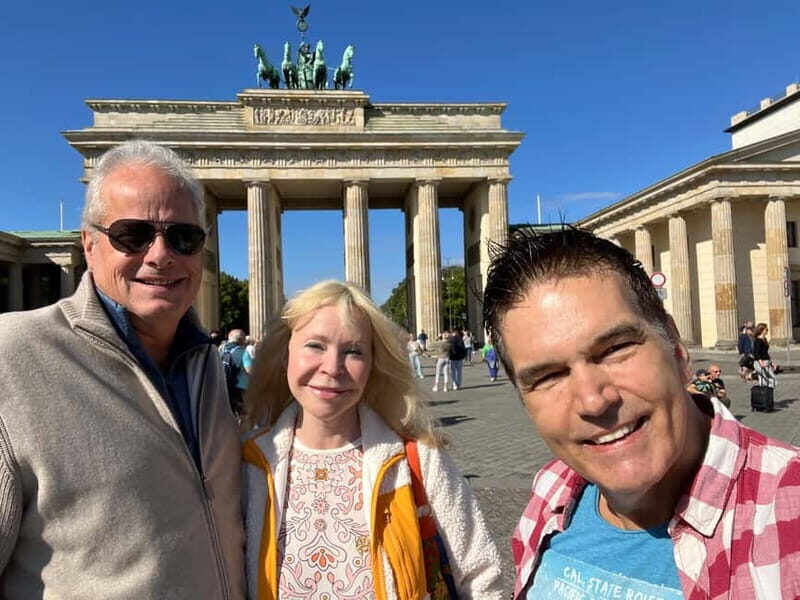
This is the section where the route turns from “Berlin highlights” into “Berlin mechanics.” Sony Center sets the tone for post-1990 redevelopment—this area was reshaped after the Cold War era. Then Potsdamer Platz lands you right near the historical line between East and West.
The key context is the “death zone” concept. Here, the boundary wasn’t subtle. You’re also shown why this space mattered: many pre-war structures were gone, and the area became a wide corridor separating the fronts of the Wall and barriers behind it. In other words, it’s not just a dramatic viewpoint today—it’s a site with a controlled, engineered silence.
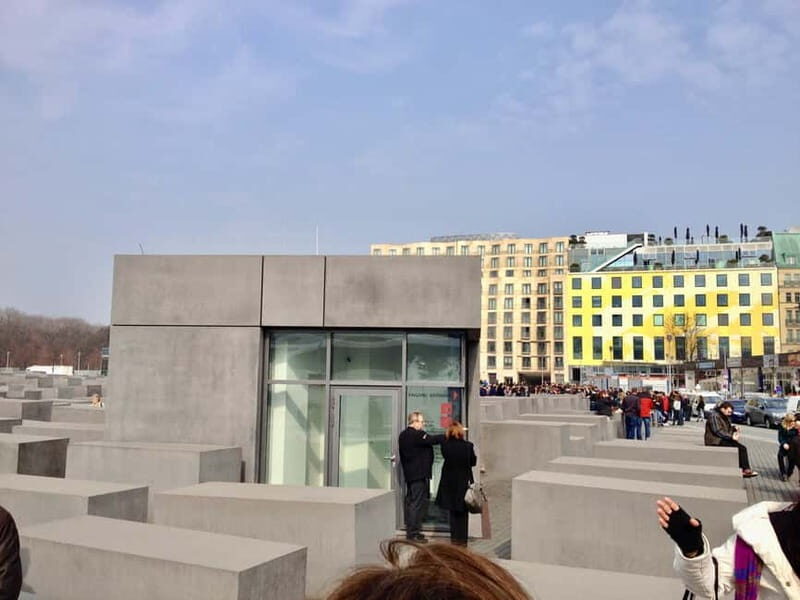
From there, the route moves north toward Brandenburg Gate with a major memory stop along the way: the 2711 steles of the Holocaust Memorial for the six million murdered Jews of Europe. The guide uses this stop to ground the day in the darkest chapter tied to Berlin’s 20th-century collapse.
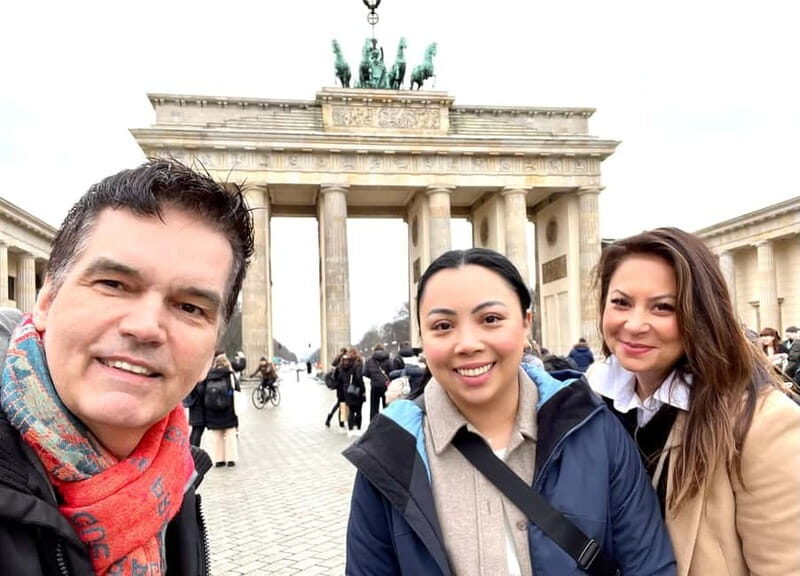
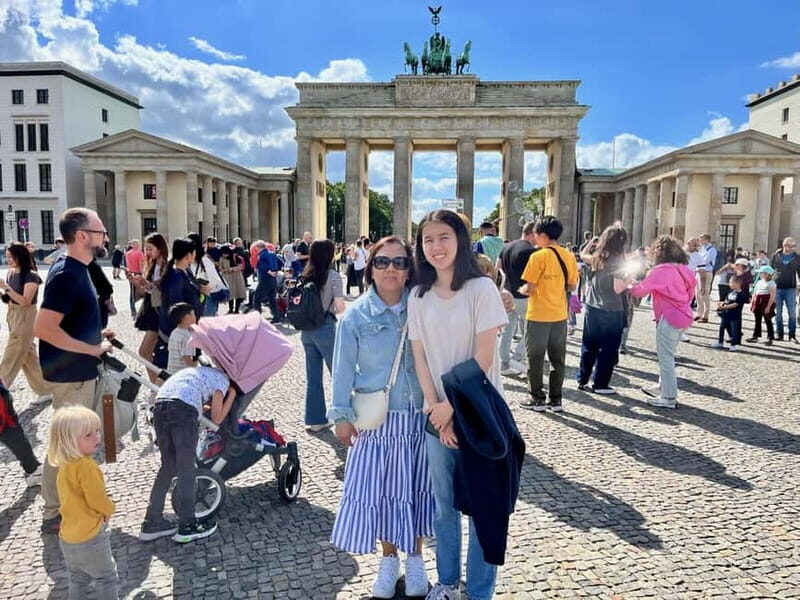
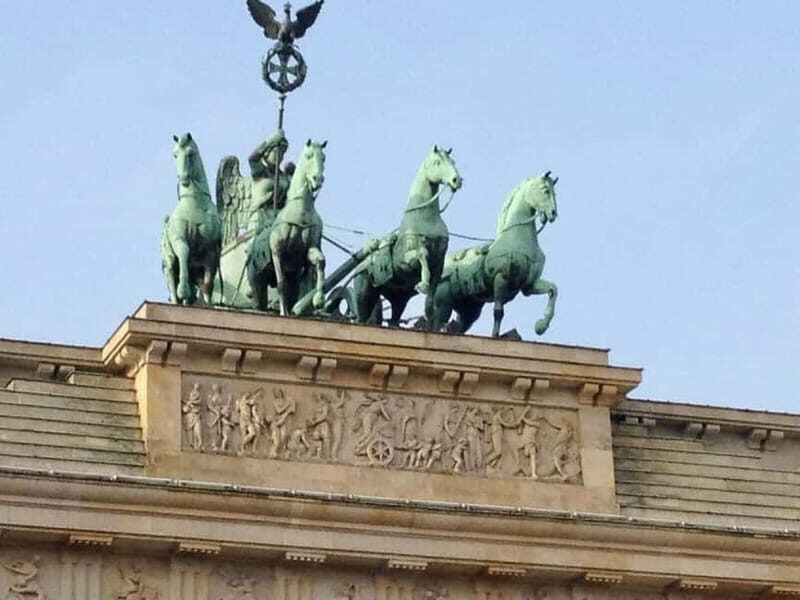
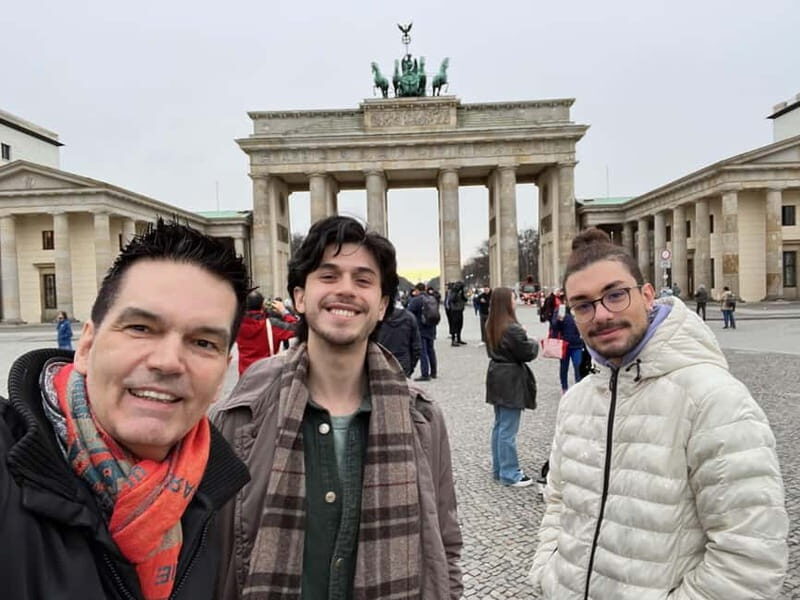
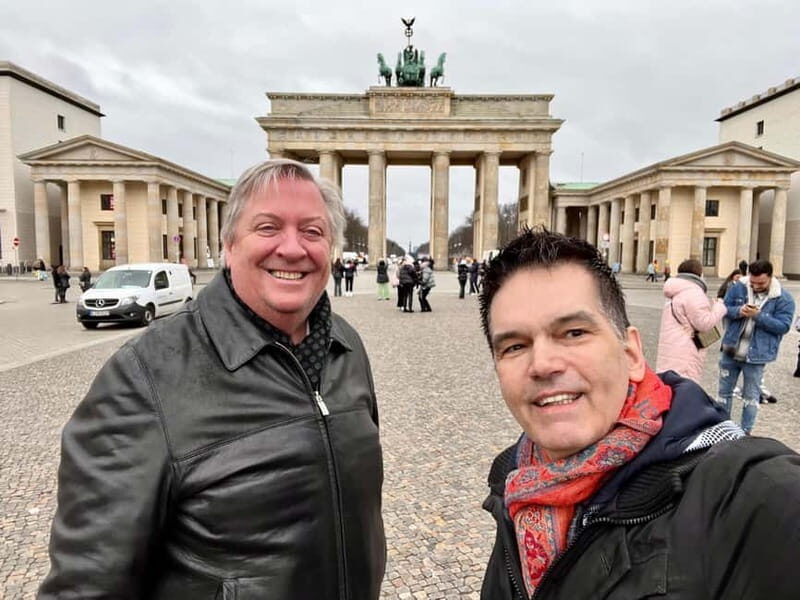
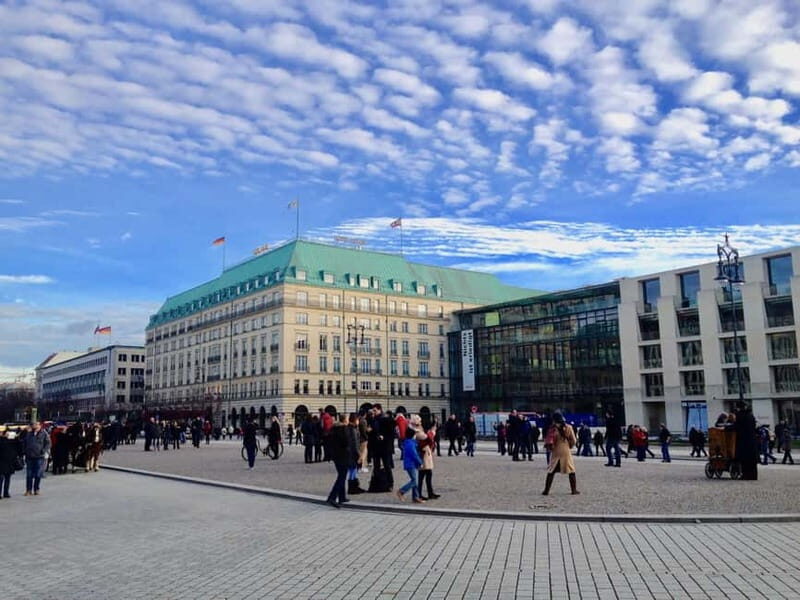
Then you’re close to Brandenburg Gate itself with a photo stop and a guided walk segment. It’s also positioned as a return to older Berlin geography—this gate has a longer identity than the Wall-era story. That dual framing helps you see why the same spot became a symbol in different eras.
Checkpoint Charlie and the “Mitte” reality check
You’ll also hit the concentrated history zone of central Berlin: Abgeordnetenhaus (photo stop), Martin-Gropius-Bau (photo stop), then the landmark-focused area around Topography of Terror.
Expect a photo stop plus a guided walk segment. This is one of those Berlin places where the terrain and the walls of the history center make the Cold War and Nazi-era crimes feel physically close, not abstract.
Next is Checkpoint Charlie, with a photo stop and another guided walk segment. You get close enough to understand why people still treat this corner as a symbol, and the guide connects it back to the idea of movement control and propaganda-era borders.
Then the tour threads into nearby old-town character: Ribbeck House and Neuer Marstall (passes), Nikolaiviertel (photo stop). The route keeps offering micro-locations where architecture hints at what Berlin wanted to look like when it rebuilt.
You also get civic-center energy with Rotes Rathaus and a pass by TV Tower. A photo stop at Hackesche Höfe adds a different texture—courtyards and backstreet charm that feels like real city life rather than only monument tourism.



Museum Island and the Humboldt Forum rooftop: Prussia to the present
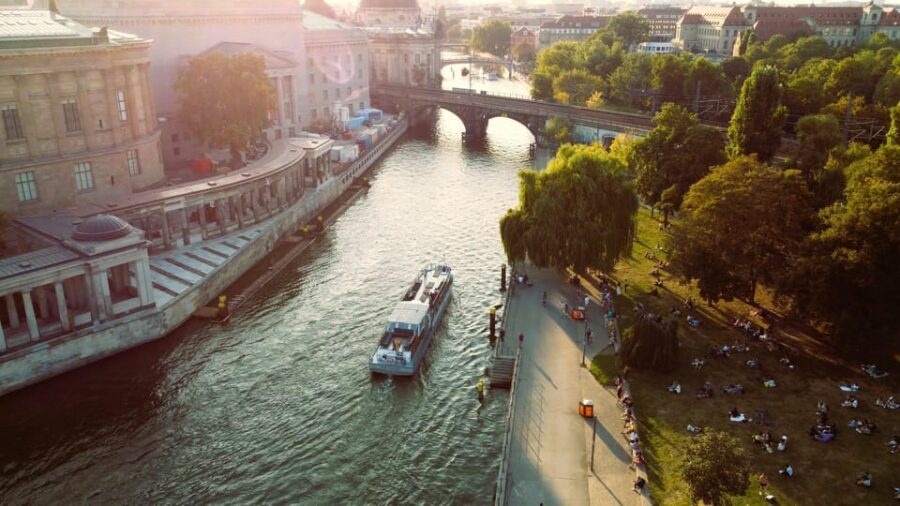
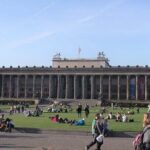
At Museum Island, Berlin goes full postcard, but the tour keeps it grounded in political meaning. You’ll pass by Bode Museum, Pergamon Museum, Neues Museum, and Alte Nationalgalerie in sequence. Even when you don’t step inside, the run of museum façades tells a story: Berlin wanted culture as a power symbol.
Then you’ll reach Berlin Cathedral and Lustgarten, with photo stops and passes that help you see how the city centered itself around church and state. A brief pass by the German Historical Museum keeps the historical theme locked.
From there, you move through the cathedral-area footpaths toward Humboldt Forum. The highlight here is that you get the Humboldt Forum rooftop visit with its entry ticket included. Plan for wind—this is a rooftop, and Berlin can be brisk even when the rest of the day feels mild.
On the way, you’ll also see Neue Wache, Humboldt University of Berlin, and the statue area around Reiterstandbild König Friedrich II von Preußen. The guide uses these as stepping stones for explaining how Berlin’s power structure shaped everything from planning to public buildings.
You then continue past more classic core spots like Old City Hall, Klosterruine, and Haus des Lehrers, and the day’s direction shifts again as you move toward the eastern neighborhoods.
Alexanderplatz to East Side Gallery: the Kiez section where Berlin feels real
Once the tour heads east, the vibe changes from government-spotlights to neighborhood texture. Alexanderplatz appears next, followed by a pass by Karl-Marx-Allee—an immediate visual reminder that East Berlin built monumental boulevards with its own logic.
Then come culture and film-history references like Kino International, plus the legendary-feeling stops around Café Moskau. Even if you’ve seen images of these places, the “ride past” format lets you understand their relationship to surrounding streets.
You’ll pass Ostbahnhof, then get to the signature Wall-era art moment: East Side Gallery. Here you get a visit and guided walk segment. This is a strong choice for first-timers because the gallery converts history into something you can walk through—painted narratives on a Wall surface that helped define separation.
Next is Oberbaumbrücke for scenic views on the way, then back toward lively streets like Oranienstraße. A pass by SO36 adds to the music-and-nightlife atmosphere that makes Berlin what it is today.
You’ll also see business and media markers such as the Axel Springer Skyscraper and the governmental legal side at Bundesministerium der Justiz. The route then turns back toward the theater-and-architecture center: French Cathedral, Gendarmenmarkt, and Deutscher Dom.
Reichstag, Holocaust Memorial, and the government triangle without the commute hassle
Even with all the Wall sites, Berlin’s power buildings still matter in the story. You’ll pass Hitler’s Bunker (Führerbunker) as a photo stop, then return to the Holocaust memory theme near the Holocaust Memorial.
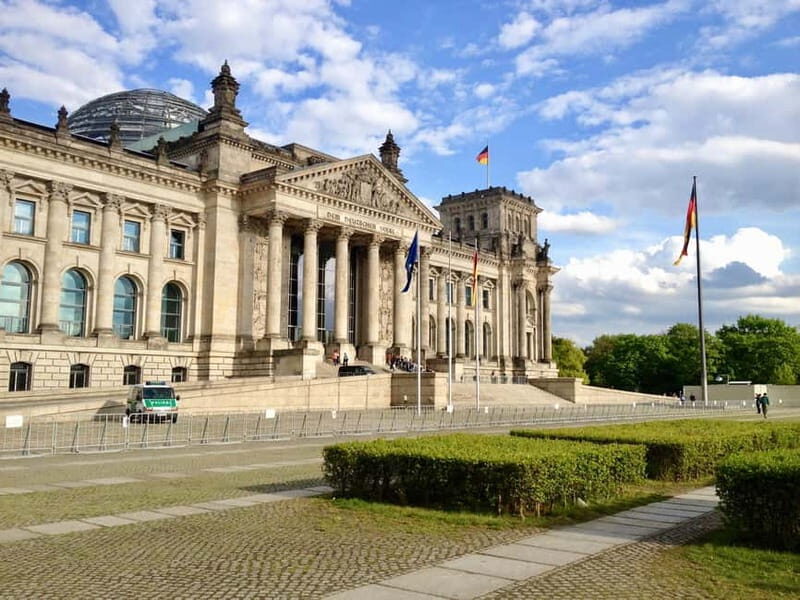
The route continues with a pass by Reichstag, and you’ll also see Paul-Löbe-House and the German Chancellery. These are the buildings where Berlin’s reunified identity becomes visible. The guide’s job is to connect the modern government layout to what came before it.
Then it’s onward to major transport and city scale: Berlin Hauptbahnhof and a sweep through Moabit. You’ll also see Bellevue Palace, and then a long, scenic pass through Tiergarten and along Landwehrkanal. This park-and-water section matters because it breaks the intensity of the history stops with breathing room.
The tour keeps going past the zoo area too: Berlin Zoo and Zoologischer Garten Station, with views and passes that give you a sense of how busy and modern this part of town feels.
Finally, you loop back through central-west landmarks like Steinplatz, and you end where you started: back at Berlin for the drop-off.
Timing, walking, and what to wear (so the rooftop doesn’t catch you)
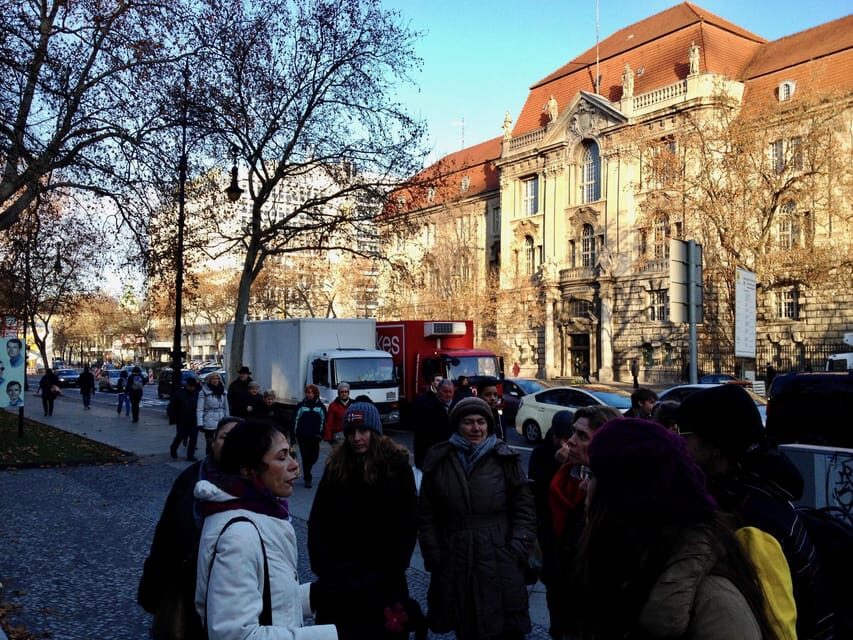
This tour mixes two modes: long driving windows and short walk-outs. Many stops are simply pass-by photo moments, while select sites include short guided walks (you’ll notice time blocks around 5 minutes, 10 minutes, and even around 20 minutes for the Humboldt Forum rooftop visit area).
So dress like Berlin could change its mind about weather. Bring a jacket—wind is the common complaint for rooftop time. Pack a small umbrella if skies look unsure, and bring water since food and drinks aren’t included.
If you’re hoping to linger at any one museum or inside any building, don’t count on that here. You’re getting the map-and-story version, not the full ticketed museum day.
Price and value: why $124 per person can work better than it seems
At about $124 per person for 2.5 to 5 hours, the value depends on what you compare it to.
If you were piecing it together yourself, you’d likely pay for:
- multiple short taxi rides across long distances,
- a guide (or audio guide plus a lot of navigation time),
- and potentially rooftop admission or other entry fees.
Here, you’re bundling private transport, parking, and a guide who does both the driving and the historical narration. You also get the Humboldt Forum rooftop ticket included, which is a real, concrete add-on rather than a vague bonus.
You’re also paying for time efficiency. In Berlin, time is the hidden cost—traffic, detours, and the energy drain from walking between far-apart sites. This tour’s format is built to reduce that friction, especially if you’re traveling with older family members or kids who get tired fast.
Who this private Berlin taxi tour is for
This is a smart match if you:
- want East and West Berlin in one half-day without a car rental,
- like history explained through streets and architecture (not just museum rooms),
- want comfort more than long-distance walking,
- and appreciate a private setting where the pace can feel tailored.
It’s also good for grandparents and multigenerational groups. The route includes major sights that kids can still find interesting because the guide keeps the story short, clear, and connected to what you can see outside the window.
Should you book this Berlin East-West taxi tour?
Book it if you want a first-pass grasp of Berlin’s biggest turning points, and you’d rather ride comfortably than chase transit connections all day. The rooftop visit at the Humboldt Forum and the close-up Wall-era landmarks are strong reasons on their own.
Skip it if you’re the kind of traveler who needs long, quiet time inside museums and churches. This tour is a structured highlights-and-context plan. If you want depth at one site, plan to return later.
If your goal is to get your bearings fast—then understand the city’s break and rebuild without feeling lost—this tour is a solid buy.
FAQ
How long is the private taxi tour in Berlin?
The duration runs about 2.5 to 5 hours, depending on the starting time available.
What is included in the price?
Pickup and drop-off within the S-Bahn ring area, private transportation in a luxury SUV with air conditioning, parking fees, Wi‑Fi on board, and the Humboldt Forum rooftop entry ticket are included.
Where does pickup happen?
Pickup is included within Berlin’s S-Bahn-Ring (city circle ring) from your hotel or private accommodation.
Is airport pickup available?
Airport pickup is possible, but it’s listed as an extra fee of about 50 euros.
What vehicle do we ride in?
You ride in a luxury SUV with leather seats, air conditioning, and a higher seating position for better views.
What languages is the live guide available in?
The live guide is available in German and English.
Is Humboldt Forum rooftop access included?
Yes. The tour includes the entry ticket to the Humboldt Forum rooftop.
Is the tour wheelchair accessible?
The tour is listed as wheelchair accessible, with the note that the wheelchair should be foldable or small enough to enter the car.
Do we need to bring water or snacks?
Food and drinks aren’t included, so it’s a good idea to bring a small bottle of water.