REVIEW · BERLIN
Scavenger Hunt from Maranja Adventure Club
Book on Viator →Operated by Maranja Adventure Club · Bookable on Viator
Berlin gets solved one riddle at a time. This outdoor scavenger hunt in central Berlin mixes an escape-game feel with real sightseeing, all guided by a tablet you hold as you walk. You meet the game master at Litfaß-Platz, get your first items, and start working step by step through the city.
I love the tablet companion: it doesn’t just give directions, it also checks your answers. One review even called out AR elements that added some wow-factor, and that matches what you’ll be doing as you solve codes in motion.
I also like the human touch. When you get stuck, you can message the game master, and Marcus was described as friendly and patient. The clues don’t feel like trivia traps, so you can contribute even if you are not a Berlin expert.
One thing to consider: this is a 3 km, outdoors-heavy puzzle walk, so weather and heat matter. At the same time, the price can feel steep compared with cheaper puzzle providers, so do the math based on your group size and how much you like interactive activities.
In This Review
- Key things to know before you go
- How the puzzle hunt actually works: tablet checks, codes, and team problem-solving
- Where you start: Litfaß-Platz and the rhythm of a 2-hour outdoor game
- Berliner Dom: your first puzzle checkpoint and why it sets the tone
- Alte Nationalgalerie: mixing sights and problem-solving without slowing you down
- Humboldt University: where the clues feel fair and rewarding
- St. Hedwig Cathedral: finishing strong with a final wrap-up
- AR elements on the tablet: what that means for your experience
- Price and value: $125.10 per group up to 3 people
- Who should book this Berlin scavenger hunt (and who might skip it)
- Cancellation and weather: plan for the outdoors
- Should you book the Maranja Adventure Club scavenger hunt?
- FAQ
- How long is the Maranja scavenger hunt in Berlin?
- What does it cost, and how big is the group?
- What language is the experience offered in?
- Is there a tablet during the game?
- Where do we meet, and where does it end?
- Is it private or shared with other groups?
- Do we need to know Berlin before we go?
- What happens if the weather is bad or I need to cancel?
Key things to know before you go

- AR-guided tablet that helps you navigate and verify puzzle solutions as you go
- Live game master support through the tablet if you hit a snag
- Team-first puzzles designed to be solved step by step, not as a solo scavenger race
- Central Berlin landmarks stitched together into one smooth walking route
- About 2 hours of outdoors entertainment with a ~3 km route
- Private format for just your group, with English offered
How the puzzle hunt actually works: tablet checks, codes, and team problem-solving

This is not a one-and-done walking tour. The experience is built like a game you play together, with each stop acting like a checkpoint. You start at Litfaß-Platz (10178 Berlin), and the game master hands you the first items plus the tablet.
The tablet guides your next move and keeps you in the action. As you reach each puzzle, you combine what you were given with what’s around you in the streets and buildings. Then you enter a code, and the device tells you whether it’s correct—so you keep moving instead of guessing your way down the wrong path.
What makes this format work well is the feedback loop. If you are stuck, the tablet is also your direct line to the game master. In practice, that means you are not left to flounder for long stretches, and you do not feel singled out for getting it wrong. Marcus was specifically praised for being patient, which matters a lot in group games where one person tends to carry the mental load.
One more detail you’ll appreciate: the puzzles are set up so you do not need to know a ton about Berlin history beforehand. You still get cultural and architecture-style context while you play, but you can jump in fast as long as you are observant.
You can also read our reviews of more tours and experiences in Berlin.



Where you start: Litfaß-Platz and the rhythm of a 2-hour outdoor game
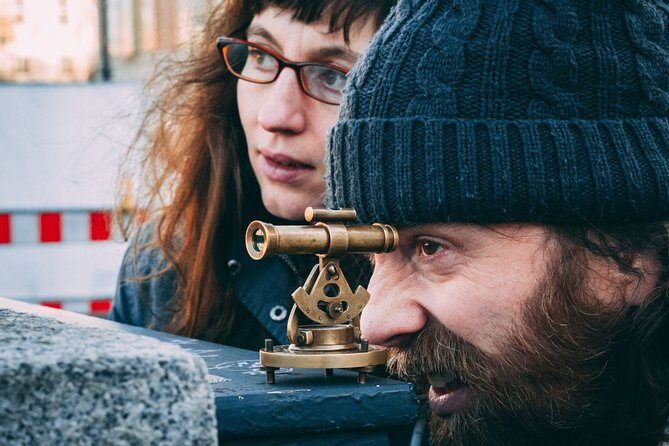
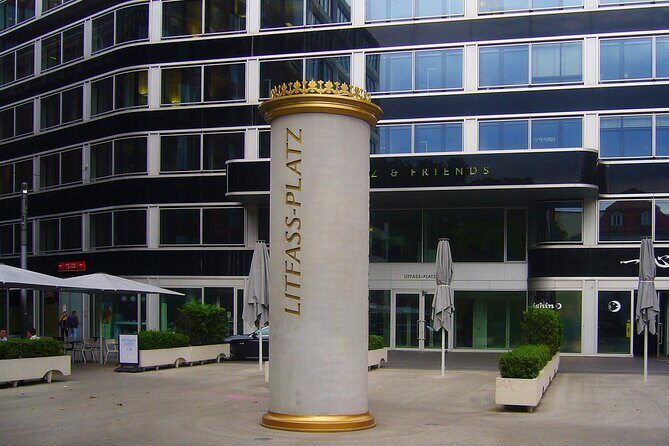
The start point is Litfaß-Platz (10178 Berlin), and the activity ends back there. That matters because you do not have to plan an awkward end-of-day transit rescue. Most people will find it straightforward to get there and get home, since the experience is described as near public transportation.
Timing is also friendly. Expect about 2 hours, which is long enough to feel like an actual adventure but short enough that it does not swallow your whole afternoon. The route is around 3 km, and it stays outdoors the whole time, so it’s more like a brisk guided stroll with mission moments than a bus-and-stop sightseeing day.
Plan for movement. Even if your group is mixed—kids, teens, adults, or older relatives—you’ll be walking continuously. One review described a group ranging from ages 68 to 11, which tells you the pace can work when everyone is engaged with the clues.
Berliner Dom: your first puzzle checkpoint and why it sets the tone
Your first major stop is Berliner Dom. This is a good way to begin because you start with a landmark people recognize (even if you do not know the details). It helps your group calibrate quickly: you learn how to interact with the items, how the tablet expects you to think, and how the code-checking works.
At this stage, the goal is not to win instantly. It’s to get your team thinking in the same direction. The clues are designed to be specific enough to be solvable, but not so narrow that there’s only one obvious answer. That sweet spot is part of the fun—when you finally solve something, it feels earned.
Also, early on you get the vibe that you are meant to look closely. Even if you’ve visited Berlin before, you’re seeing the area through a game lens, which can make familiar streets feel new.
Alte Nationalgalerie: mixing sights and problem-solving without slowing you down

Next you head to Alte Nationalgalerie. This stop tends to work well because it gives you a change of pace: you’re still in “puzzle mode,” but the scenery keeps your attention on the built environment. The game structure keeps you moving; you aren’t stuck doing one long riddle that drains the energy.
This is where the team dynamic really kicks in. The puzzle style pushes you to split roles naturally. One person might handle reading the tablet prompts, another might scan surroundings, and someone else might test combinations until the code works. If your group likes escape rooms, you’ll recognize that collaborative feel.
One practical tip: when you get stuck, stop the group from going in circles. Use the tablet to message the game master if needed. That direct line exists for a reason, and it keeps the momentum going instead of turning the experience into an argument.
Humboldt University: where the clues feel fair and rewarding
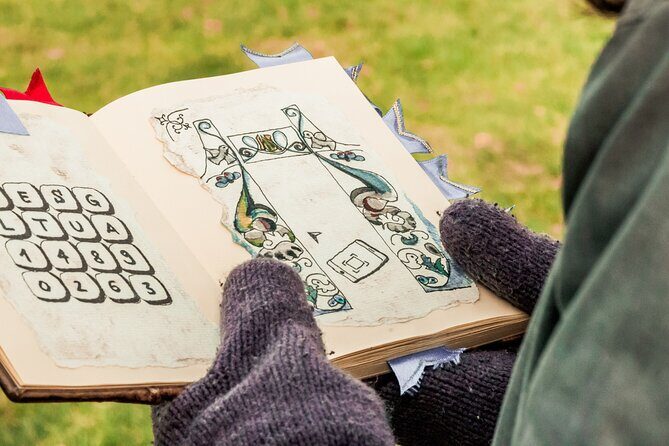
Then you reach Humboldt Universität. By this point, your group has usually figured out how the puzzle author expects you to connect items with what you see around you. That’s when the experience tends to feel most satisfying: the riddles keep pushing you, but they also start clicking.
A key theme from the experience is that the clues leave room to think. That’s better than puzzles that give too much away. It’s also why the difficulty can feel challenging but not frustrating. You’re doing real work, and the reward comes when the tablet confirms you’ve got it right.
Even if you’ve lived in Berlin for years, this kind of game can still refresh your perspective. One review highlighted that it’s nice to be reminded that beautiful areas and interesting viewpoints exist right in the middle of city life. This stop-and-check rhythm reinforces that kind of noticing.






St. Hedwig Cathedral: finishing strong with a final wrap-up
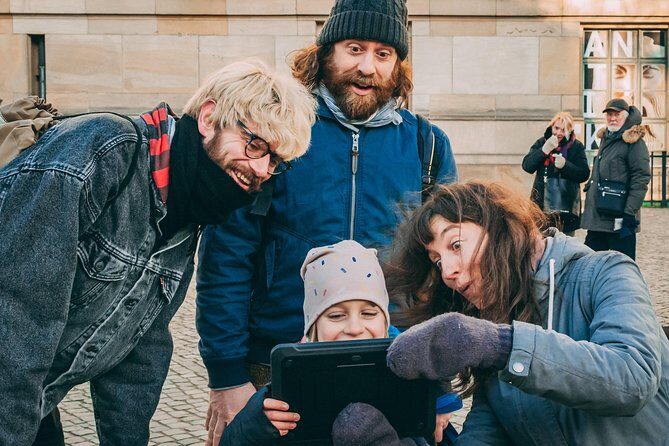
Your last listed landmark is Cathedral of St. Hedwig (Domgemeinde St. Hedwig). This is a strong finish because it feels like you’ve looped through a set of major city points while still doing something active and mentally engaging.
Once the final puzzle is done, you get a summary of your expedition. It’s a nice touch because it closes the loop on the game aspect, and it also helps your group process what you actually solved and why it made sense. Then you say goodbye to the game master with the general sense that time flew by.
If you’re trying to plan your evening, this is an advantage. You get the payoff without having to stay out for a full half-day, and you return to the same meeting area so your logistics stay clean.
AR elements on the tablet: what that means for your experience
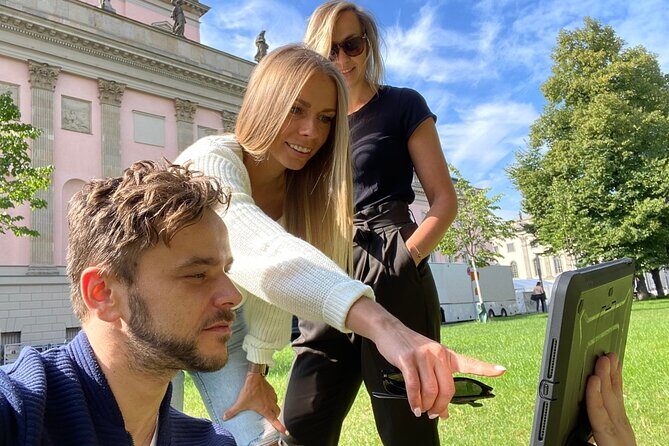
The tablet is more than a map. In one review, AR elements were described as super cool, and that lines up with the overall design: the tablet is meant to keep you engaged while you move through the city.
This matters because it reduces the most common problem with outdoor scavenger hunts: you can end up with a phone-in-hand chore instead of an interactive game. Here, the tablet is part of the mechanics—showing you where to go, supporting the puzzle flow, and confirming when your code is correct.
If you like interactive tech, you’ll likely enjoy the novelty. If you don’t, you still benefit from the practical side: it gives clear guidance and helps prevent the experience from becoming guesswork.
Price and value: $125.10 per group up to 3 people
The price is $125.10 per group (up to 3). That pricing structure is important because this is a private activity, meaning you’re not splitting cost with strangers. If you’re traveling as a duo, your per-person cost rises; if you can fill all three spots, the math looks much better.
Is it worth it? In my view, it depends on your travel style:
- If you enjoy escape-game energy, team puzzles, and walking, you’ll likely feel like you got a full experience for your money.
- If you just want passive sightseeing, you might feel it’s pricey for a walking loop.
- If you’re comparing strictly on cost, there are likely cheaper alternatives—one review called out that the price sits on the upper end versus other German providers.
A good way to decide is to think about opportunity cost. Paying a bit more for something that keeps everyone active for about two hours can be a smart swap for another indoor activity, especially when it’s central and easy to access.
Who should book this Berlin scavenger hunt (and who might skip it)
This works best for groups that enjoy doing something together instead of only looking. It’s a strong pick for:
- multi-age groups who can collaborate rather than compete
- friends who like riddles and casual problem-solving
- couples who want a shared activity with a real city backdrop
It’s also a solid option if you are not super familiar with Berlin. You don’t have to be a scholar; you just need to pay attention and work as a team.
I’d consider skipping if:
- your group cannot handle about 3 km of outdoor walking
- you’re visiting during very bad weather or extreme heat
- you prefer traditional museums and guided narration over puzzles
Cancellation and weather: plan for the outdoors
Because it’s outdoors all the way, good weather is required. If conditions are poor enough for cancellation, you’ll be offered a different date or a full refund. That flexibility is helpful, because puzzle-walking is much more pleasant when you’re not battling rain or cold.
Should you book the Maranja Adventure Club scavenger hunt?
Book it if you want a practical, game-based way to see Berlin while keeping everyone mentally engaged. I like that the tablet checks answers, that you can contact the game master directly, and that the puzzles feel solvable without needing deep prior knowledge.
Skip it if your plan is built around quiet sightseeing or you know you won’t enjoy interactive challenges. And if you’re price-sensitive, do the per-person calculation first—because it’s per group rather than per person.
If your group enjoys puzzles, bring good walking shoes and a calm team mindset. Then you’ll likely end the two hours grinning like the game master just handed you a mission, not homework.
FAQ
How long is the Maranja scavenger hunt in Berlin?
It lasts about 2 hours.
What does it cost, and how big is the group?
The price is $125.10 per group, for groups of up to 3.
What language is the experience offered in?
The scavenger hunt is offered in English.
Is there a tablet during the game?
Yes. You receive a tablet to guide you through the puzzles and route.
Where do we meet, and where does it end?
You meet at Litfaß-Platz, 10178 Berlin, Germany, and the activity ends back at the same meeting point.
Is it private or shared with other groups?
It’s a private activity, so only your group participates.
Do we need to know Berlin before we go?
No. You can start right in even if you’re not familiar with Berlin, as long as you’re observant and willing to solve the clues together.
What happens if the weather is bad or I need to cancel?
It requires good weather. If it’s canceled due to poor weather, you’ll be offered a different date or a full refund. You can cancel for a full refund up to 24 hours before the start time.