REVIEW · BERLIN
The Best Private Berlin Tour with a Car, Tour Guide and Pick up
Book on Viator →Operated by Vexperio · Bookable on Viator
Berlin hits hardest when someone narrates it. This private car-and-guide tour strings together major Berlin landmarks with tight explanations and real-world timing.
I really like the round-trip transfers and private vehicle. You get to hop between stops without fighting stations, stairs, or tight connections.
The one thing to watch is the packed survey pace: several stops are brief, and the Reichstag visit doesn’t include any ticketed entry—so you’ll want to prioritize what matters to you.
In This Review
- Key highlights to expect
- Why a private car-and-guide beats winging it in Berlin
- Pick your length: 2 to 6 hours changes everything
- Brandenburg Gate to Reichstag: icons, but with the backstory attached
- Holocaust Memorial and Checkpoint Charlie: empathy meets a Cold War timeline
- Topography of Terror and Fuhrerbunker: how the war’s machinery becomes real
- Museum Island and Bebelplatz: Berlin’s thinking city and the politics of words
- The royal mile drive and Gendarmenmarkt: the city you want to return to
- What you’re really paying for: smooth coordination and story-driven pacing
- Price and value: when this tour makes the most sense
- Should you book this Berlin highlights by car tour?
- FAQ
- What’s included in the private Berlin tour?
- Is this tour mostly walking or mostly driving?
- Do I need to pay entrance fees for stops on this tour?
- How long is the tour?
- Is the tour private or shared?
- Can I cancel for a full refund?
Key highlights to expect
- Private car + pickup so the day stays calm, not chaotic
- Free-to-enter memorials and sites on the main stops (with one clear exception)
- A focused route through WWII to Cold War Berlin, in straightforward time order
- Customizable feel, with guides praised for pacing you instead of rushing you
- A smooth mix of walking and driving that works for multi-generational groups
Why a private car-and-guide beats winging it in Berlin
Berlin is big, and the history is dense. A private car tour is one of the easiest ways to get your bearings fast, because you’re not losing half your time decoding transit.
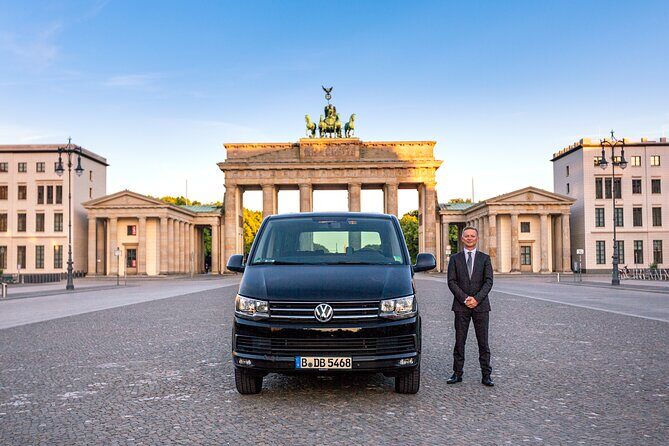
What I like most is the combination of a local guide and a professional driver. Your guide can stay on the story while the driver handles the turns, curbside stops, and getting you to the next photo spot without drama.
You’ll also avoid the common trip-killer: “We’ll just walk there.” With stops spread across central Berlin, the car keeps your schedule realistic.
You can also read our reviews of more guided tours in Berlin


Pick your length: 2 to 6 hours changes everything
This tour comes in different lengths, roughly 2 to 6 hours. In the shorter options, you’ll get a highlight circuit; in the longer one, you can slow down slightly and take in more nuance at each location.
A practical way to choose: if it’s your first day and you want maximum orientation, go longer. If you only have a morning or afternoon and want the essentials—especially the WWII and Cold War storyline—shorter can work well.
Either way, expect a “see a lot, stop often” format. The stop times are mostly around 10–15 minutes, which is perfect for an overview, but not for deep museum time.
Brandenburg Gate to Reichstag: icons, but with the backstory attached
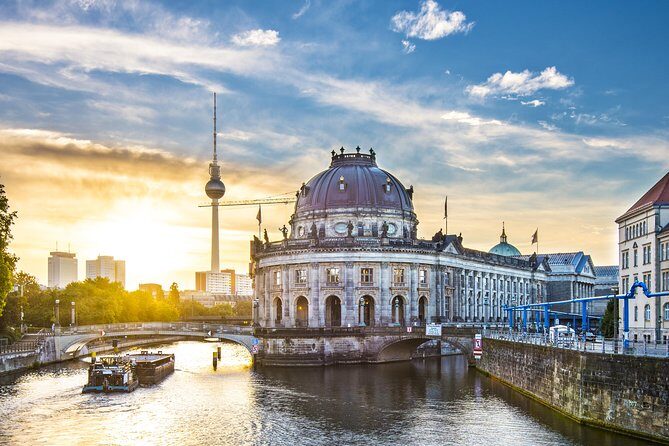
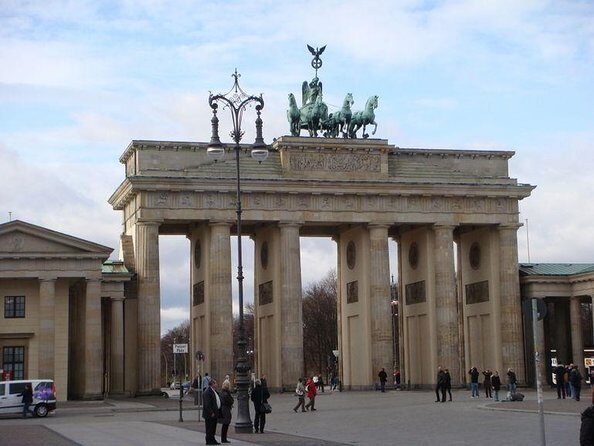
You start at Brandenburg Gate, Berlin’s most famous monument. It’s a quick stop, but the point is to understand why it became a cultural symbol, not just something you photograph and move on.
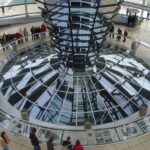
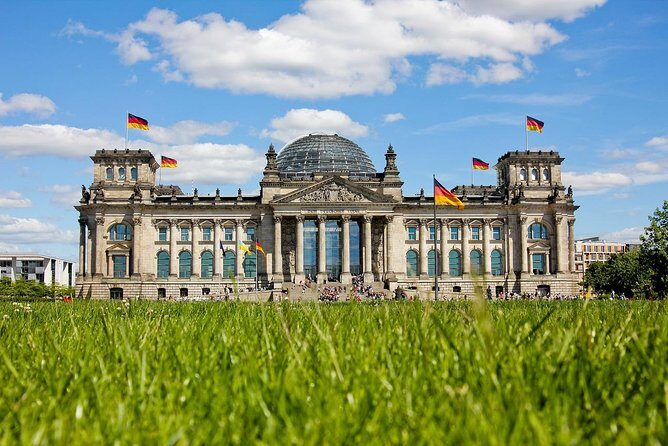
Next is the Reichstag Building. It’s tied to Germany’s modern democracy—especially since it was damaged after Hitler’s rise to power. The key practical note: admission tickets are not included, so any ticketed access (if you want it) is on you to handle separately.
If you like your history linear and clear, this opening pairing does a good job. You get an iconic landmark first, then you shift from monument to the institutions behind the country’s political life.
Holocaust Memorial and Checkpoint Charlie: empathy meets a Cold War timeline
The Memorial to the Murdered Jews of Europe is one of those places where you can feel time slow down. You move through the field of concrete stellae with a guide framing what the space represents and why it matters.
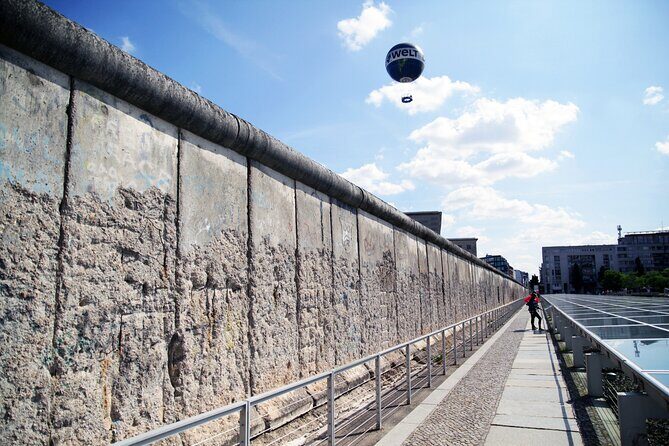
Then you shift gears to Checkpoint Charlie, the famous frontline of Cold War standoffs. It’s a short visit, but the contrast is powerful: genocide memorials on one side, spy-versus-spy tensions on the other.
I like how the route keeps the timeline understandable. The guide helps you connect events without making it feel like a trivia quiz.
This is also where a great guide earns their pay. In past tours, guides such as Jose have been singled out for giving precise context—dates, names, and locations—while keeping the tone respectful. That matters at places like this.
Topography of Terror and Fuhrerbunker: how the war’s machinery becomes real
After Checkpoint Charlie, the route moves into the dark machinery of the Nazi era at Topography of Terror. The focus is on the former headquarters tied to the SS and Gestapo, plus the exposed remains connected to repression.
Then you visit Fuhrerbunker, the site associated with where history’s most notorious criminal took his own life at the end of WWII. It’s a brief stop, but it lands the final act of the war in a physical place.
Two reasons this pair works well for many people:
1) You see the system (Topography of Terror), not just the aftermath.
2) You then see the endpoint (Fuhrerbunker), which helps your mental map connect events and geography.
One consideration: this portion can feel heavy if you want a lighter, modern-Berlin focus. If that’s your priority, tell your guide upfront and ask for a bit more balance.
You can also read our reviews of more private tours in Berlin





Museum Island and Bebelplatz: Berlin’s thinking city and the politics of words
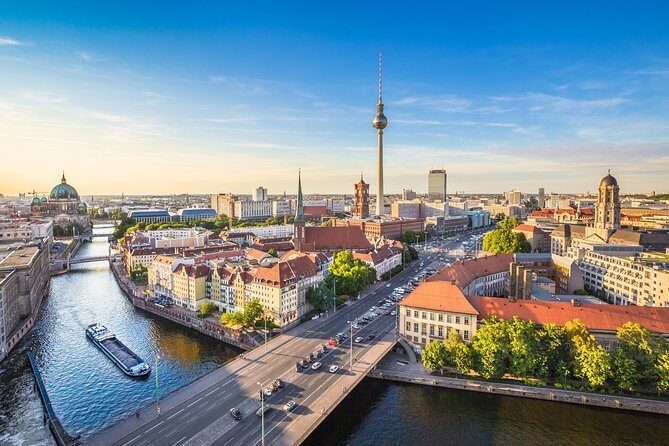
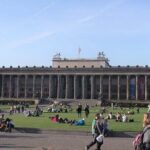
Next is Museum Island, a UNESCO-listed area known for its grand institutional buildings. You’ll see the Old Museum, the Berlin City Palace, the Berlin Cathedral, and nearby landmarks tied to imperial splendor.
It’s easy to treat Museum Island as just architecture—until the next stop, Bebelplatz, changes the mood. This is where the Nazi book burning took place on 10 May 1933, tied to Frederick the Great-era buildings like the former Prussian Royal Opera House and St. Hedwig’s Cathedral.
If you care about how power uses culture, this is a strong pairing. It’s not only what governments did, but how they tried to control what people read, believed, and argued about.
You also get a nice rhythm: big visual spaces, then a sharply specific historical event. The guide’s job here is to keep the connection clear.
The royal mile drive and Gendarmenmarkt: the city you want to return to
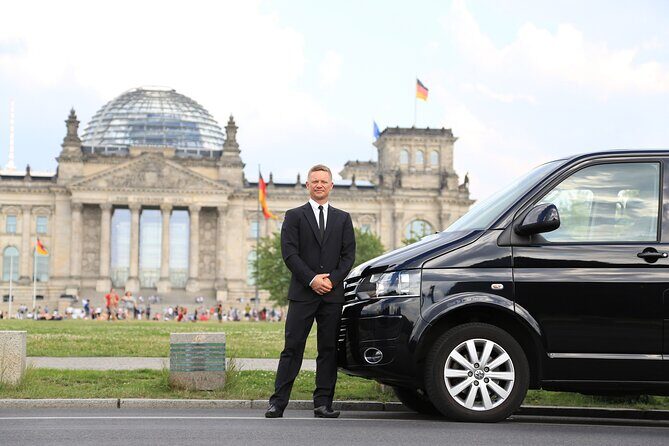
Between the major memorial and history stops, you also get a car segment along Berlin’s “royal mile” style historical boulevard. This is where the vehicle earns its keep: you cover a longer stretch without losing your day to transit.
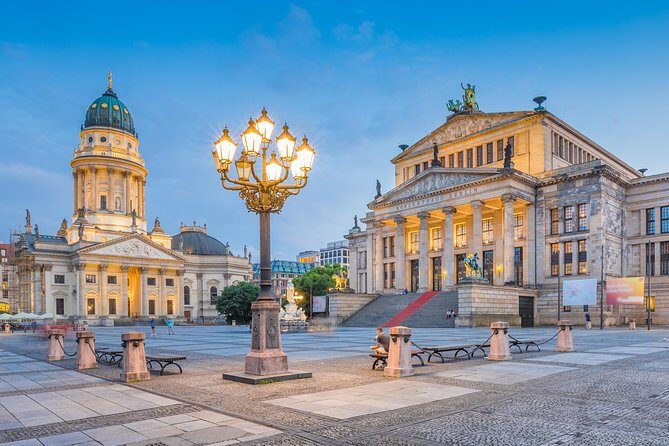
Then you end at Gendarmenmarkt, a square many people consider one of Berlin’s most beautiful. The guide points out key buildings, including the French and German Domes and the Concert House.
A practical bonus: this stop gives you a palate cleanser after the heavy WWII and Cold War material. It’s a more relaxed moment, with architecture you can actually enjoy with your full attention.
And if you have a sweet tooth, you might be able to add a final chocolate stop depending on your guide and what you’ve chosen for your day. One tour ended at Rausch Schokoladenhaus, and it’s an example of how some guides build memorable extras without derailing the main schedule.
What you’re really paying for: smooth coordination and story-driven pacing
The price is $106.93 per person, and the value is in what’s wrapped together: a professional guide plus a private vehicle and driver.
For a Berlin history day, that combination can be cheaper than it looks—especially for families or small groups. One-way transit headaches add up fast when you’re trying to cover multiple distant central sites in a limited window. Here, you get round-trip movement handled for you.
The tour also earns high marks for pace. Many guides are described as punctual and careful not to rush. There’s also a consistent theme in the comments: guides use explanations in a clear, engaging way, sometimes with photo support to show how places looked in different eras.
A detail I’d treat as important: guides often adjust your timing based on what you want more of. If you’re traveling with kids, seniors, or a group that needs frequent breaks, this mix of walking plus car time can make the day actually enjoyable.
Price and value: when this tour makes the most sense
At $106.93 per person, this isn’t a “budget stroll.” It’s a pay-for-convenience-and-quality kind of day.
You’ll likely feel the best value if:
- You only have one short window to see the biggest historical landmarks
- You want a private format rather than joining a large group
- You prefer your history delivered with clear order and context, not just signage
- Your group includes people who don’t want to spend the day sprinting between stations
If you’re the type who already knows Berlin well and you’re happy navigating on your own, then you might not need a private car. But for first-timers—or anyone who wants a structured WW2/Cold War storyline—this is one of the most efficient ways to spend a day.
Should you book this Berlin highlights by car tour?
I think you should book it if you want an organized, low-stress Berlin history day with major stops packed into a realistic route. The big wins are the pickup/transfer comfort, the free-to-enter memorials and key sites, and the chance to get explanations tailored to your pace.
You might skip it if you strongly prefer a lighter, modern-only Berlin theme, because this route spends real time on WWII and the Cold War. Also, if Reichstag ticketed access is a must for you, plan for extra cost and timing since admission isn’t included.
One more practical tip: if you want the day to end with something personal (like a food or chocolate stop), ask your guide early. Some guides have been praised for building those moments in without losing the overall flow.
FAQ
What’s included in the private Berlin tour?
You get a professional, local guide and a private vehicle with a professional driver. Pickup is offered, and the tour uses a mobile ticket.
Is this tour mostly walking or mostly driving?
It’s a mix of both. You’ll do guided walks at several key stops, and you’ll use the private vehicle for longer distances between places.
Do I need to pay entrance fees for stops on this tour?
Most major stops are free, and the tour states that none of the entrance fees are required for the tour. The Reichstag Building stop specifically notes that admission tickets are not included.
How long is the tour?
It runs about 2 to 6 hours. You can choose a tour length that fits your schedule.
Is the tour private or shared?
This is a private tour/activity, so only your group participates.
Can I cancel for a full refund?
Yes. You can cancel up to 24 hours in advance for a full refund.
—
If you want, tell me your travel dates and whether this is for first-timers or a family group, and I’ll suggest the best tour length and what to prioritize on a day like this.