REVIEW · BERLIN
Welcome/Farewell SightseeingTaxi Tour +Transfer from/to the airport
Book on Viator →Operated by Gunter Bauer GAT-Productions · Bookable on Viator
Berlin makes more sense with a taxi guide. This Berlin sightseeing taxi tour (with an airport transfer option) is built for getting your bearings fast, then learning the why behind the landmarks you’re seeing from your seat or a quick curbside stop.
I especially like the practical, picture-friendly pace. At major points you can step out, get your photos, and still stay on schedule. And I like that the guide, Gunter Bauer of GAT-Productions, doesn’t just point at buildings. He ties them to Berlin’s turning points, from Napoleonic-era myths around the Brandenburg Gate to the Cold War scars you can still read in the city layout.
One consideration: with a duration listed as roughly 1 to 3 hours, you’ll want to be clear with your guide about how much time you want to spend at fewer stops versus a wider sweep. The value is in the flexibility, but that also means it’s not a long, slow walking museum day.
In This Review
- Key Highlights at a Glance
- Berlin Taxi Touring That Actually Gets You Oriented
- Welcome or Farewell: the “Don’t Make Me Think” Benefit
- Price and Value: What You’re Really Paying For
- Brandenburg Gate to Pariser Platz: Reunion Symbols, War Gaps, and Rebuilt Space
- A Quick Reality Check
- Reichstag, the Chancellery Area, and How Parliament Actually Works
- Berlin Wall Memory: Friedrichstraße, the Death-Strip Story, and the Stelae
- When You Should Slow Down Here
- Gendarmenmarkt to Unter den Linden: Theatrical Cathedrals and the Book-Burning Square
- Museum Island, the Humboldt Forum, and Berlin Cathedral Options
- Hackescher Markt, Hackesche Höfe, and the Old-But-Not-That-Old Feeling
- Jewish Life on Hamburger Straße and the Alexanderplatz East Berlin Rebuild
- Red City Hall and Nikolaiviertel: Reconstruction That Looks Like It Found Old Berlin
- Spree Crossings, HausVogteiPlatz, and Where You Notice the Details
- Should You Book This Berlin Taxi Tour?
- FAQ
- How long is the tour?
- Does this tour include an airport transfer?
- Where do pickups happen for the welcome tour?
- Where do pickups happen for the farewell tour?
- Is the tour offered in English?
- What’s included in the price?
- Are snacks included?
- Is this a private tour?
- Can kids be accommodated in the vehicle?
- What’s the cancellation policy?
Key Highlights at a Glance
- Airport-to-city transfer included with pickup from BER and a smooth handshake on arrival
- English-guided history delivered while you’re moving, so you waste less time in transit
- Major symbols plus real context, from Brandenburg Gate to the Berlin Wall-era “death strip” story
- Taxi comfort with WiFi and parking fees handled, so you don’t think about logistics
- Guided photo moments at key stops, not just facts from the curb
- Museum Island and Humboldt Forum options with real “worth the stop” viewpoints
Berlin Taxi Touring That Actually Gets You Oriented
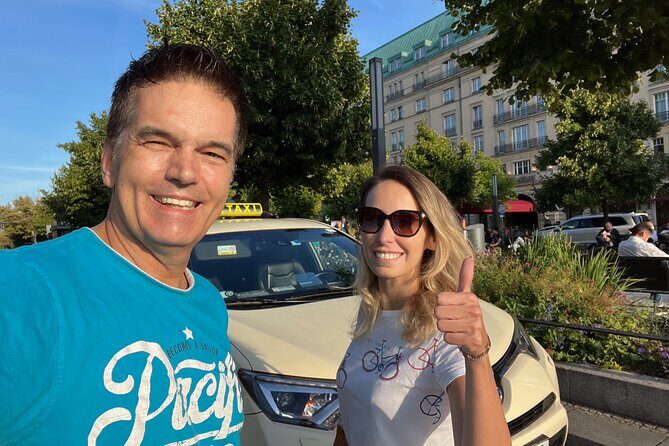
Berlin can feel like a patchwork: grand boulevards here, brutal gaps there, and then suddenly you’re staring at a palace courtyard that feels like it landed from another century. This tour works because it uses a car like a tool. You’re not stuck in a bus window watching the city blur by. You’re in an air-conditioned vehicle, with WiFi on board, and your guide can pivot the story to where you are right now.
That matters on a first visit. When I’m tired, what I need is pattern-recognition. Taxi touring helps you see the city’s logic: where power was clustered, where borders sliced neighborhoods, and how “reunification” changed what Berlin chose to rebuild versus what it let remain as memory.
You also get a simple comfort equation: your parking is included, so you’re not doing the stressful part of Berlin sightseeing where you hunt for the right curb and then lose time circling.
You can also read our reviews of more tours and experiences in Berlin

Welcome or Farewell: the “Don’t Make Me Think” Benefit
This experience comes in two modes: a welcome tour tied to BER Airport, or a farewell tour tied to pickup from your hotel or accommodation. For many people, that alone makes it worth it. Berlin arrival days can be a mix of jet lag, luggage, and signage that takes practice.
For the airport welcome: you’re picked up directly from BER after you land. The pickup instructions are detailed, including a quick SMS/WhatsApp follow-up after you arrive and after you have your suitcases at the baggage carousel. The guide waits about 5 minutes from the free waiting spot and meets you in the correct lane area (not the general taxi queue). It’s the kind of setup that reduces the usual airport chaos.
For the farewell: you’ll also coordinate via SMS/WhatsApp, and you come out to the street only after the guide messages you. Again, it’s about minimizing confusion when you’re packing up and trying to keep a departure timeline.
Price and Value: What You’re Really Paying For

At $171.52 per person, this can look like “only” a taxi tour at first glance. But the value is more than the vehicle ride.
Here’s what’s built into the experience:
- Pickup from your desired location in Berlin (hotel/apartment)
- Transfer from/to BER airport included (for the welcome/farewell version)
- WiFi on board and an air-conditioned vehicle
- Parking fees included
- Taxi ride and the city tour included with taxes handled (the description notes both taxi tariff VAT and city tour VAT)
So you’re paying for three things at once: logistics handled, comfort handled, and interpretation handled. That’s why it’s often easier to justify than a tour that costs less but forces you to manage timing and transit.
Also, the listing includes group discounts and a mobile ticket, which can make the cost feel more reasonable if you’re traveling with friends.
Brandenburg Gate to Pariser Platz: Reunion Symbols, War Gaps, and Rebuilt Space
The tour’s storytelling often peaks at the Brandenburg Gate area because it’s a compressed Berlin lesson. You start with a landmark that began as a gate, but it kept changing roles as Europe’s power shifted.
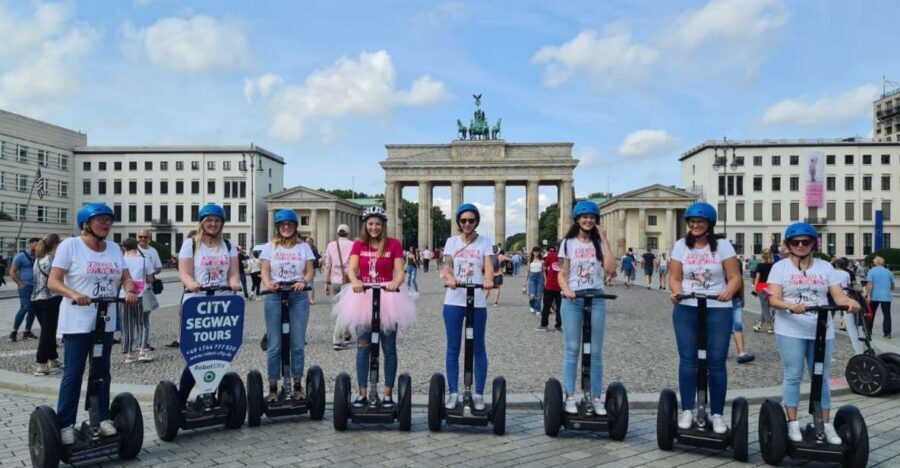
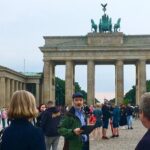
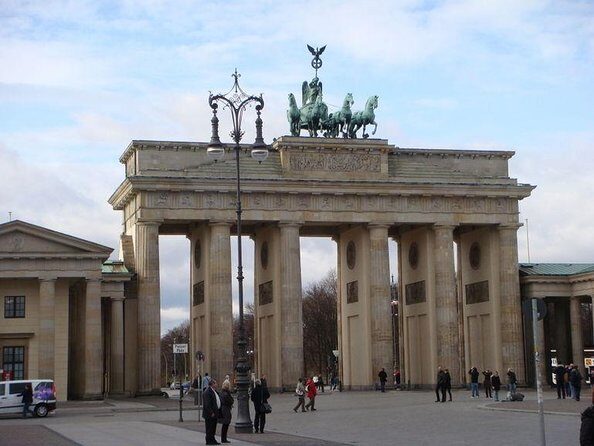
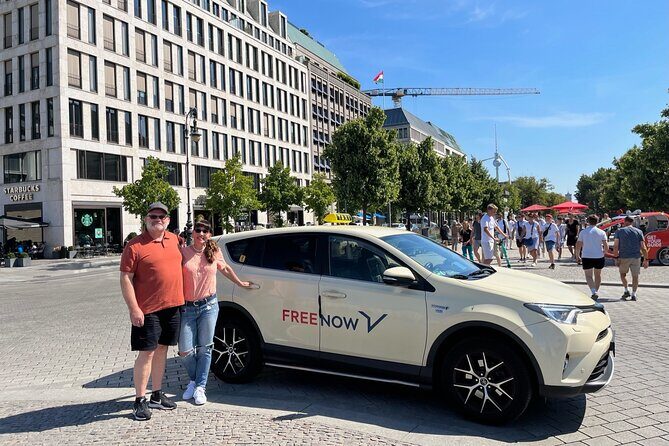
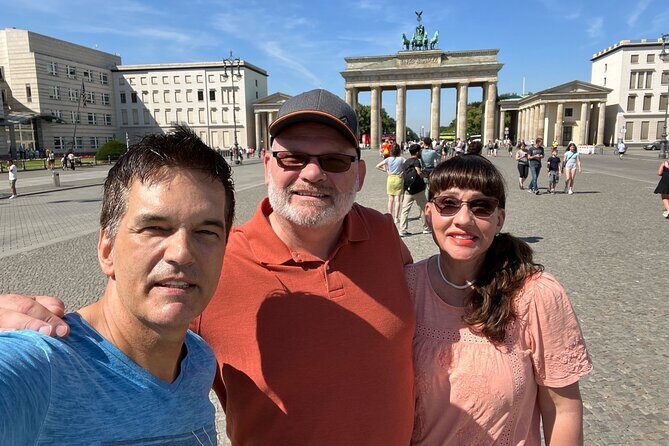
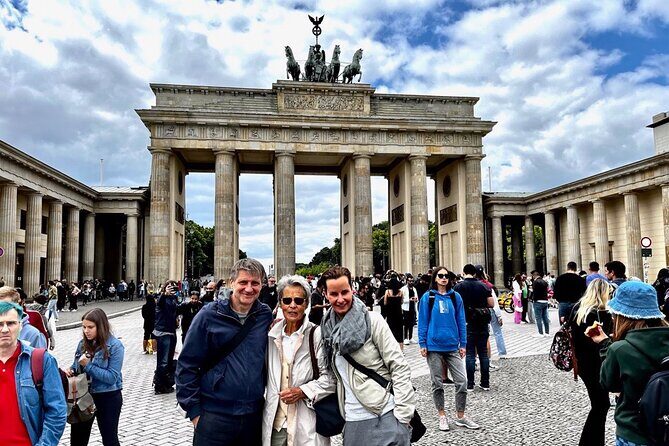
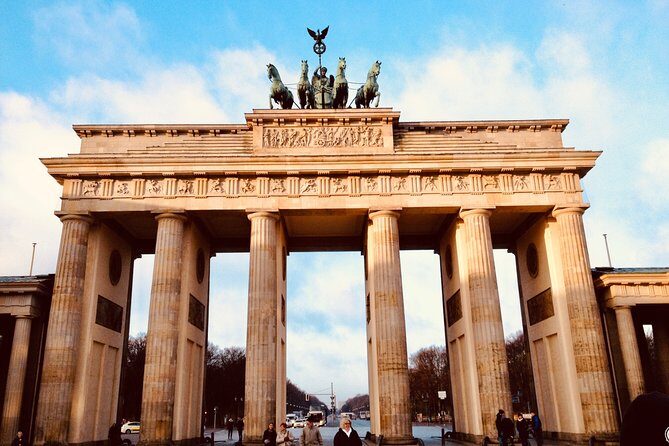
At the Brandenburg Gate, you get the classic symbolic arc: Napoleon’s Quadriga was transported to Paris, then returned after the Allied victory in a triumphal procession, and later the monument’s meaning tightened again after the fall of the Wall. The guide also explains what happened to the “war-torn environment” and how, during the division of the city, the gate became separated by fences and barriers and stood alone, inaccessible from the west.
Then the tour moves to Pariser Platz, which you can think of as Berlin’s good-room entrance. What makes it interesting isn’t just the buildings around it. It’s the fact that the area was heavily destroyed, leaving the Brandenburg Gate as the main survivor. After the Wall fell, Berlin chose to rebuild the space with modernization in the construction approach, keeping the original volume ideas while replacing what was lost.
You’ll also hear why this place matters diplomatically: embassies and cultural institutions sit around Pariser Platz again, including the Liebermann Haus and the Akademie der Künste, plus the French and American embassy presence (as part of the restored ensemble).
A Quick Reality Check
With stops clustered here, I’d recommend having your camera ready early. These sights are photo magnets, and the guide’s style is to create quick photo opportunities at the points you care about, not just to narrate while you stand there fiddling with your phone.




Reichstag, the Chancellery Area, and How Parliament Actually Works
Berlin’s political architecture can look like pure monument cosplay. This tour helps you read it like a system.
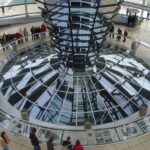
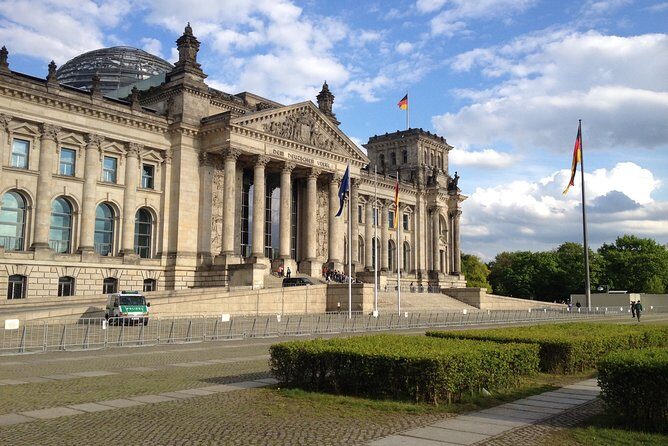
You’ll see the historic parliamentary landmark area, including the Reichstag building and its dome. The guide explains how the dome represents the post-reunification era, and how the redesign included glass work after the original concept sounded more like a roof for a practical purpose. The story also mentions the famous Christo wrapping action, which many people recognize visually but don’t always understand as part of the modern-era identity shift.
Then you move through the broader parliament complex logic. The tour includes the “engine room” idea: the building where committee work happens, where parliamentary decisions are processed and refined, while final speeches take place in the main parliamentary hall.
You’ll also get the view of the German chancellor’s office building area, described with specific interior details: the chancellor’s office is located in the top left corner, and there’s an official apartment in the rotunda level above that she does not use. The guide points out that the setup, including the bathroom and bedroom separation across the street, is not exactly practical. That human-detail approach makes the architecture feel less abstract.
Berlin Wall Memory: Friedrichstraße, the Death-Strip Story, and the Stelae
If you want Cold War Berlin without the confusion, this section is where the tour earns trust.
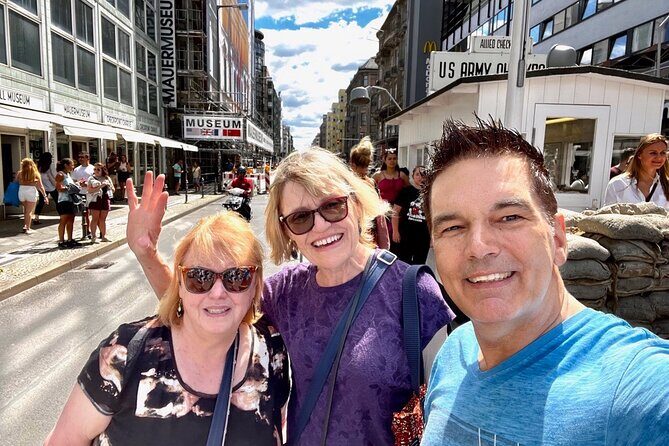
Near Friedrichstraße station, the guide explains how the station functioned as one of the rare crossing points between East and West during the Wall era. It even connects to the story of trains like the Paris–Moscow Express, and the reality that crossings often meant serious consequences. You hear about barriers and customs checkpoints inside the station and the Stasi observation walks in the area. The tour ties this to the nearby Palace of Tears concept, where many East Berliners faced goodbyes that were often permanent or at least felt that way.
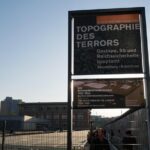
Then the narrative expands beyond the Wall’s immediate border to the consequences for Berlin’s street life. You go to an area that was effectively a wasteland when the Wall stood in its place—and it’s hard to imagine what used to roar here. The guide describes how a huge portion of buildings was destroyed in the war, then later demolished to create the 80-meter “death strip.” Later, the modern redevelopment brought in entertainment and commerce, including spaces linked to film culture and shopping.
After that, the tour moves to a modern memorial that hits harder in a different way: the Holocaust Memorial, the one with 2711 stelae by architect Peter Eisenmann. The guide explains the design effect as confusion and insecurity—how people faced impossible questions under Nazi persecution: what comes next, whether they must emigrate, what they can take, and ultimately the horrifying answer embedded in the recruitment order idea. You’ll also hear that more information exists in the basement, which matters because the stelae alone can feel abstract until you know what to look for.
When You Should Slow Down Here
This is the point where I’d tell you to take your time if you can. Even if the tour is time-limited, this memorial and the Wall-area context are the ones where you’ll benefit most from a pause and a calmer pace.
Gendarmenmarkt to Unter den Linden: Theatrical Cathedrals and the Book-Burning Square
Berlin has a talent for making religious-feeling architecture without the religious institution behind it, and this tour leans into that.
At Gendarmenmarkt, you see the two “cathedrals” that are actually theater-and-parish-house style landmarks: the German and French cathedral names get used widely, but the building function isn’t a bishop’s seat. The guide explains that the left side includes a museum for Germany’s parliamentary history, while the right side still holds services by a reformed congregation with French-language Sundays. Behind it is a small Huguenot museum tied to refugees who were allowed to build their church here.
From there, the tour steps into the broader Forum Fridericianum area—described through several linked institutions like the royal court library, St. Hedwig Cathedral, the state opera, and Humboldt University surroundings. This area also includes a stark memory detail: on May 10, 1933, books deemed unsuitable by the Nazis were burned here. The guide points out design elements like a glass window in the floor that reveals an empty library impression, which makes the loss feel physical rather than just historical.
Then you continue along Unter den Linden’s story. Here, the guide explains how what people think is just a pretty boulevard is also a historical corridor connecting palace grounds, the Brandenburg Gate area, and Tiergarten. It’s lined with linden trees, and the guide notes the early planning disagreement between walnut and linden, with linden winning in what you see now.
You’ll also hear about the Neue Wache area and its memorial sculpture by Käthe Kollwitz. Instead of the old “eternal flame” idea people associate with memorial spots, it’s now represented by a pieta-style sculpture, positioned as a place of mourning for victims of war and terror.
Museum Island, the Humboldt Forum, and Berlin Cathedral Options
This part is for your inner “architecture nerd” and your outer “I need something beautiful that still has meaning” self.
The tour includes Stadtschloss Berlin, rebuilt as the Humboldt Forum, opening in 2021–22. The guide explains why the site mattered: the original Berlin Palace of electors and kings stood here for centuries, burned during the war, and remained a silhouette for years. Afterward, the East Berlin authorities blew it up for months despite criticism abroad. What you see now is presented as a reconstruction based on detailed photographic documentation. If you can only choose one area to feel Berlin’s rebuild story in one place, this is a strong candidate.
The guide flags the roof terrace view as a highlight, typically at the end of tours. That’s the kind of moment where you stop thinking about history like a timeline and start feeling it as a cityscape you can navigate.
From there, you might also get options around Berlin Cathedral, including a tour of its church spaces, the burial place of the Hohenzollern, and possibly ascent to the dome. The guide’s take is very Berlin: the building can look older than it is, yet it holds so much beauty inside. The point he makes is that Berlin’s history is compressed into a shorter timeline than some other European cities, which is exactly why rebuilding efforts can feel intense and ongoing.
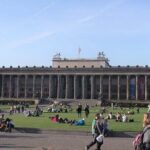
Finally, you reach Museum Island, described as a UNESCO-protected peninsula with five world-famous museums. The tour includes the “temple-like” architecture idea behind the Old Museum and later expansions. You’ll hear about the New Museum and its link to ancient Egypt, the Old National Gallery as an artistic anchor for paintings, the Bode Museum, and the Pergamon Museum. Even if you don’t go inside every museum, this stop helps you understand why people plan their Berlin trip around this one patch of the Spree.
Hackescher Markt, Hackesche Höfe, and the Old-But-Not-That-Old Feeling
A surprise in Berlin is how quickly “big city” turns into “small street life.” This tour hits that mood around Hackescher Markt and Hackesche Höfe.
The guide explains that this is one of the favorites for downtown tours because it preserves an older Berlin scale, even if it’s not medieval-old. The city’s age gives you perspective: Berlin is around 800 years old, but this area’s preserved ensemble is mainly rooted in the 19th century. Still, it feels like old Berlin because it’s a pocket of building scale and street complexity you don’t always get in the more monumental zones.
The story includes the hard part: the older Berlin neighborhoods were heavily destroyed in the war or later torn down. What remained was restored after reunification and repurposed for residential and commercial use. Studios and factories still show up in the mix, which helps the area feel like a lived neighborhood rather than a theme park.
Jewish Life on Hamburger Straße and the Alexanderplatz East Berlin Rebuild
If your Berlin visit includes the modern “East vs West” story, you’ll like the way the tour handles it without reducing it to slogans.
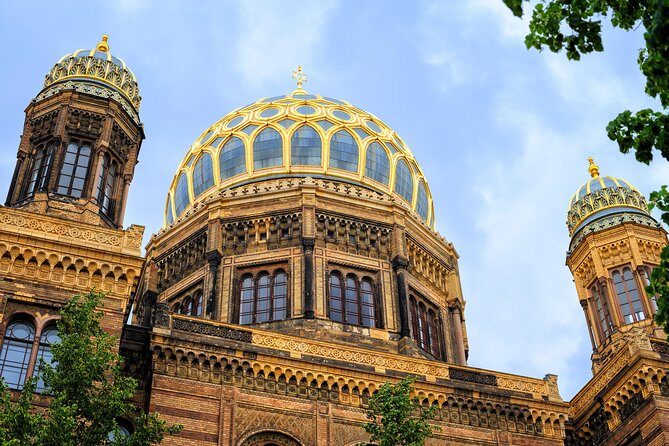
Along Hamburger Straße (also described as part of Straße der Toleranz), the guide maps a small area tied to Jewish community life alongside Protestant congregations and a Catholic hospital presence. You also hear about an old synagogue replacement story: in the 1860s, a new Moorish-style synagogue with a golden dome was planned, and the guide notes that the 3000-member hall was a victim of bombs. You’ll also be pointed toward an older Jewish burial site connected to the Mendelssohn family.
Later, you move toward Alexanderplatz, with the guide describing the socialist redesign idea. The tour name-checks the buildings people associate with the area’s GDR-era identity: the house of tourism, the through house of electrical engineering, the house of the teacher, plus the world clock concept. The guide’s framing makes the square’s big-space planning feel like a political statement, not just a random traffic hub.
Red City Hall and Nikolaiviertel: Reconstruction That Looks Like It Found Old Berlin
Two areas can confuse visitors: places that look old but were rebuilt, and places that feel old even if they’re newer than you assume. This tour addresses both.
At the Red City Hall (Rotes Rathaus), you’ll hear why it’s “red” in the literal sense and what happened to its roles during the city division. It’s also a free-visit type stop with rooms described by the guide, including one with plaster casts of well-known statues. The guide also points out how a second town house with a dome was built diagonally behind when the original building became too small.
Then you move to Nikolai church area and Nikolaiviertel, where the tour leans into reconstruction. The guide explains that in the 1980s, even while the area was still under GDR conditions, it was reconstructed to look like older Berlin. The detail that matters here is that originally only three houses existed, and the Nikolaikirche had just its walls without roof and tower during that earlier state. Yet the reconstruction aimed for an older look, and by the time you walk there, it feels like old Berlin’s stage set turned real.
You also get mentions of the garlic house (furnished in a Biedermeier style) and a small museum tie-in with the Nikolai church today. The guide also connects nearby streets and views to the Spree, so it feels like a neighborhood you could wander—if your time allows.
Spree Crossings, HausVogteiPlatz, and Where You Notice the Details
One of the reasons I like a taxi tour is that it can take you to spots you’d miss if you only followed walking routes. This segment includes a few.
You get a view and explanation around the Spree crossing and lock area. The guide explains it used to be the oldest crossing point with two sides serving different communities. Over time it included river-dam handling and mills, and then later moved toward a lock system that was built in the 19th century, then replaced by a modern double chamber lock in the 1930s.
Then there’s HausVogteiPlatz, which the guide calls out as hidden and often overlooked. It’s named after an old Vogtei facility, and in the 19th century it developed into a center for Jewish clothing tailoring because people were forbidden to do tailor-made work elsewhere under penalty rules. Even today, the guide notes, mirrors exist as art objects that remind you of the tailoring past. The surrounding rebuilt residential areas are described as restored or rebuilt “small slice houses,” mini palaces designed differently.
These details aren’t just trivia. They help you understand why Berlin neighborhoods feel layered: old uses, new identities, and carefully rebuilt structures.
Should You Book This Berlin Taxi Tour?
Book it if you want a Berlin overview that doesn’t cost you a whole day. This is best when:
- You’re arriving (or leaving) through BER and want a smooth transfer plus sightseeing
- You like short stops with context, not long museum queues
- You want your guide to connect major landmarks into one story about reunification, war, and rebuilding
- You value comfort and coordination: A/C, WiFi, parking handled, and pickup from where you actually are
Skip or reconsider if you’re hoping for a full-on, hours-long walking tour where you’ll go deep into every museum. This experience is designed for smart movement and well-timed viewing, with options to spend more time only where you choose.
If you like learning through places and pictures, this is a solid way to get it faster. And if you’re lucky, you’ll end up with enough guidance to plan the rest of your Berlin days without feeling like you’re guessing.
FAQ
How long is the tour?
The duration is listed as approximately 1 to 3 hours.
Does this tour include an airport transfer?
Yes. Transfer from/to BER airport is included for the welcome/farewell style service.
Where do pickups happen for the welcome tour?
The welcome tour pickup is from BER Airport. You’ll need to share your flight number and arrival time, and you’re instructed to send an SMS/WhatsApp after landing and after you have your suitcases.
Where do pickups happen for the farewell tour?
The farewell tour pickup is from your hotel or accommodation. You’re asked to coordinate by SMS/WhatsApp and to step out onto the street only after the guide sends the message.
Is the tour offered in English?
Yes, it’s offered in English.
What’s included in the price?
Included items are an air-conditioned vehicle, parking fees, WiFi on board, pickup from your location in the city, and the BER transfer. The description also states that both the taxi ride according to the tariff and the city tour taxes are included.
Are snacks included?
No. Snacks are listed as not included.
Is this a private tour?
Yes. It’s described as private, with only your group participating.
Can kids be accommodated in the vehicle?
A baby car seat (MaxiCosy) is available on request. Stroller handling depends on how the frame and cradle fold to fit the vehicle space.
What’s the cancellation policy?
Free cancellation is offered. You can cancel up to 24 hours in advance for a full refund. If you cancel less than 24 hours before, the amount paid is not refunded.