REVIEW · BERLIN
Berlin: Historical Sights & Berlin Wall Tour with a Berliner
Book on GetYourGuide →Operated by You In Berlin · Bookable on GetYourGuide
Berlin’s border used to split families. This walk makes the Cold War feel close-up, with key stops like Brandenburg Gate and the Wall plus real escape stories. You’ll also end at Checkpoint Charlie, where the area’s tension gets explained in plain, human terms.
I like the small-group size because it keeps questions from getting lost. I also like that guide Carlo brings personal West Berlin perspective, not just dates from a textbook.
One thing to consider: it’s a 2-hour walking tour, so plan on moving steadily and wearing shoes you trust on uneven sidewalks.
In This Review
- Key things to know before you go
- Why Brandenburg Gate is the perfect starting line
- Walking the former East-West line along Berliner Mauerweg
- Reichstag and Hotel Adlon: seeing government and prestige from the street
- Checkpoint Charlie: the allied border and the 1961 near-miss
- The guide factor: Carlo’s personal angle makes it stick
- Price and value: is $43 for 2 hours worth it?
- Timing, weather, and how to dress for this kind of day
- Who should book this tour, and who might skip it
- Should you book this Berliner tour?
- FAQ
- How long is the tour?
- Where do I meet the guide?
- What sights are included?
- What language is the live guide?
- What is the group size?
- Is the tour wheelchair accessible?
- Does the tour run in all weather?
- What is the price?
- Is there free cancellation?
- Can I reserve without paying today?
Key things to know before you go
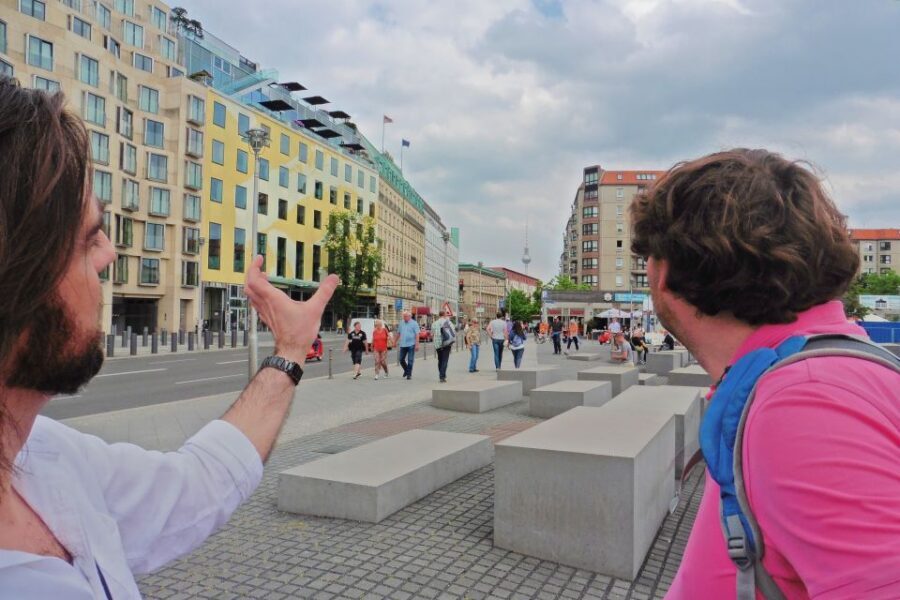
- Small group (up to 10) means you can ask questions and get direct answers
- Start at Brandenburger Tor station (exit B) for an easy, landmark-based meeting point
- Walk sections tied to the Berliner Mauerweg and see Wall remnants up close
- Checkpoint Charlie photo stop plus the story of a 1961 altercation
- Carlo’s perspective adds personal context and often extra tips for museums and cafes
Why Brandenburg Gate is the perfect starting line
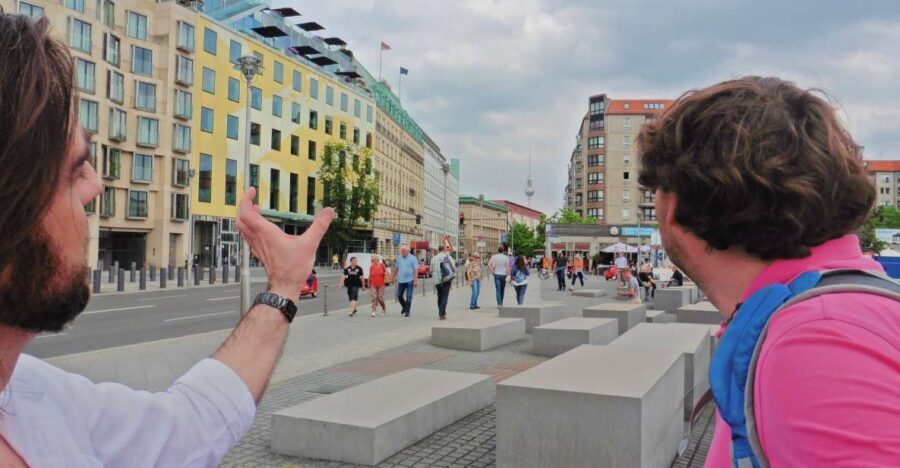
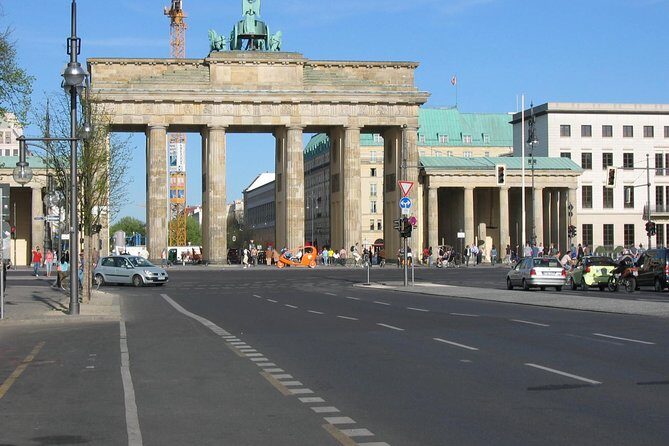
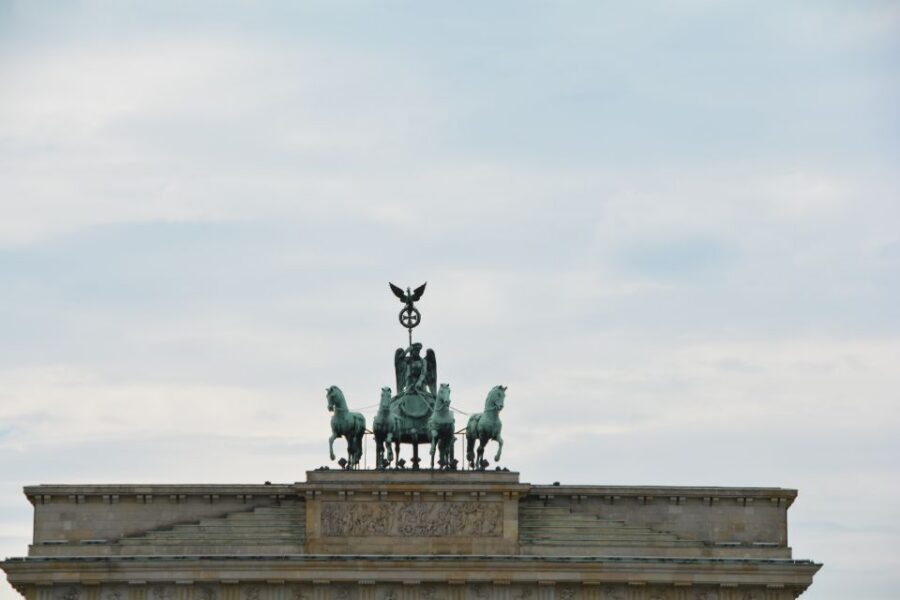
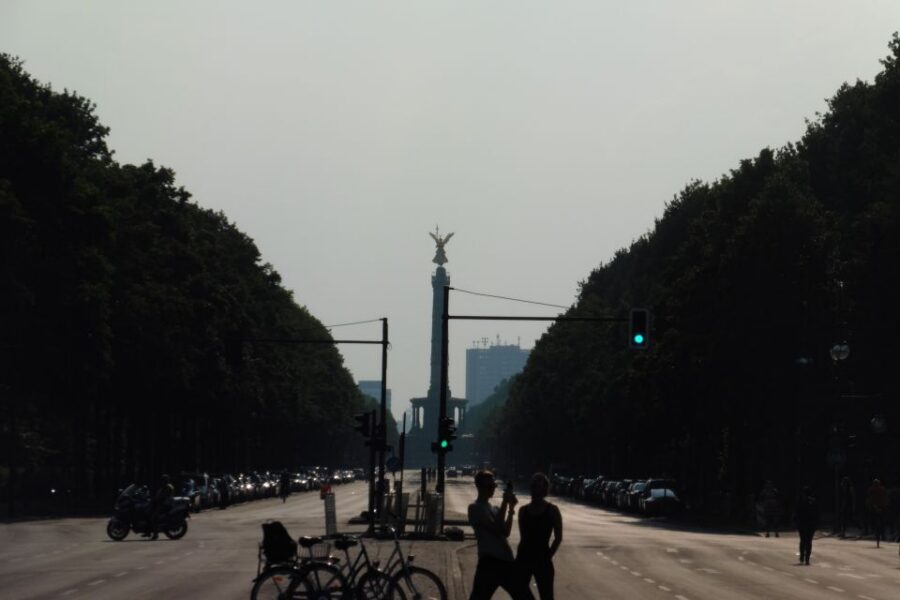
Most Berlin tours start with a landmark. This one starts with a landmark that sets the tone for everything that follows. You meet near the Brandenburg Gate at the S+U Bhf. Brandenburger Tor, exit B, in the direction of Pariser Platz and Straße des 17. Juni. That’s a smart move, because it places you right on the famous axis of Berlin’s power and politics.
Your guide frames the Gate as a symbol that reunited Germany. But the key detail is what happened before reunification: the Gate was isolated for 28 years. Hearing that in place matters. Up close, you can see why it became a magnet for hope on one side and resentment on the other. It’s not just a photo spot. It’s a piece of architecture that tells you how a city can be divided without moving a single building.
And since the tour is only two hours, you don’t waste time on “background” that you can read later. You get the main idea fast: Berlin wasn’t only Cold War politics. It was daily life under pressure, with walls and checkpoints turning streets into borders.
You can also read our reviews of more historical tours in Berlin


Walking the former East-West line along Berliner Mauerweg
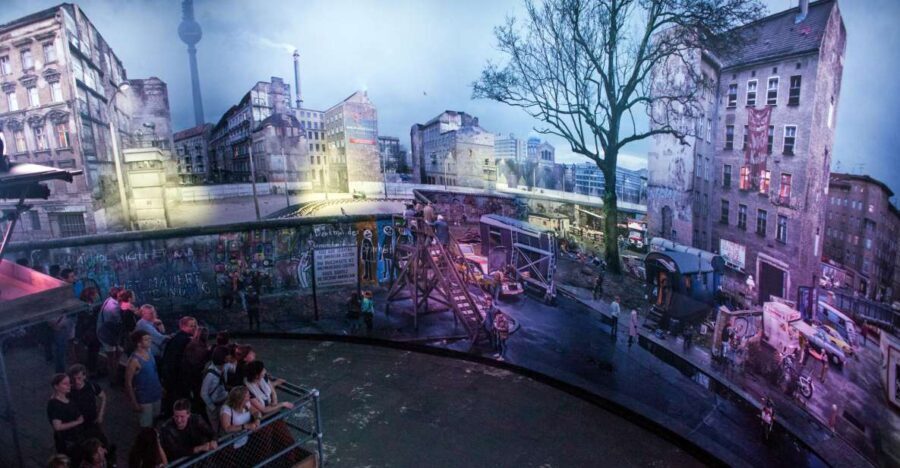
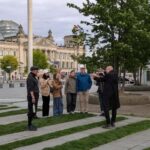
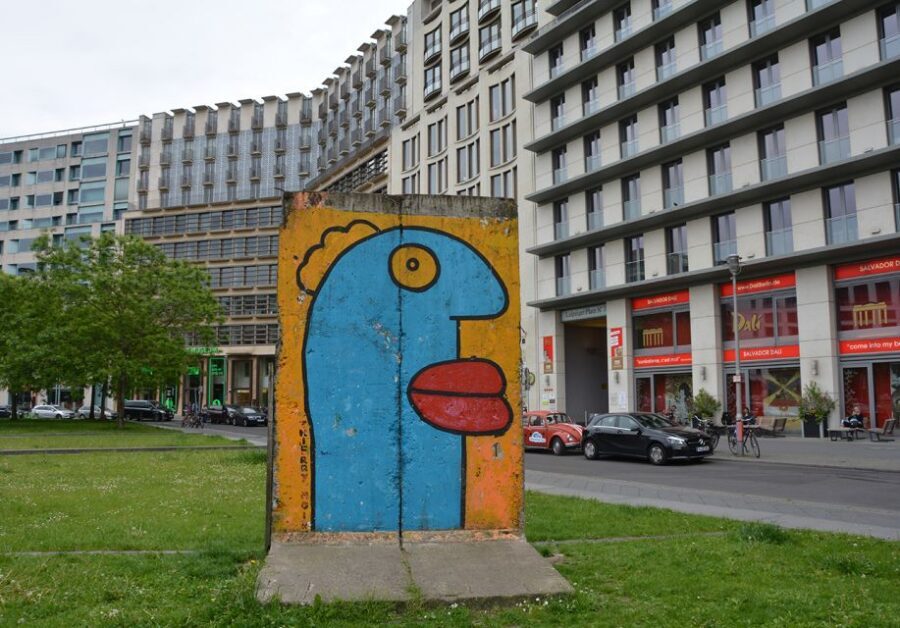
From the Gate, the tour shifts toward the former boundary between East and West Berlin. This is where the city changes its mood. You’ll walk along sections connected to the Berliner Mauerweg and you’ll get to marvel at the remaining Wall. Even when it’s only partial, the Wall’s presence still has weight. It’s hard to keep it abstract once you’re standing beside what’s left.
Your guide ties the physical route to human stories. The emotional center here is the escape history from East Berlin. You’ll hear gripping accounts of people trying to get across, along with the risks that came with those attempts. It’s the kind of storytelling that makes the Cold War feel less like a distant era and more like a lived reality—because it was about families, fear, and chance.
You’ll also get some useful language for understanding Berlin’s reputation during the Cold War. Berlin earned the nickname front city, meaning it was right at the edge of huge tensions. And in a way, it was an island of freedom—West Berlin offered Western freedoms while being surrounded by East Germany. That contradiction is part of what makes Berlin so fascinating. The city is both deeply scarred and oddly resilient.
One practical tip: because you’re walking, not driving, you’ll see the spaces between monuments. That spacing is where the history lands. You’ll start to notice how borders can reshape neighborhoods, not just governments.
Reichstag and Hotel Adlon: seeing government and prestige from the street
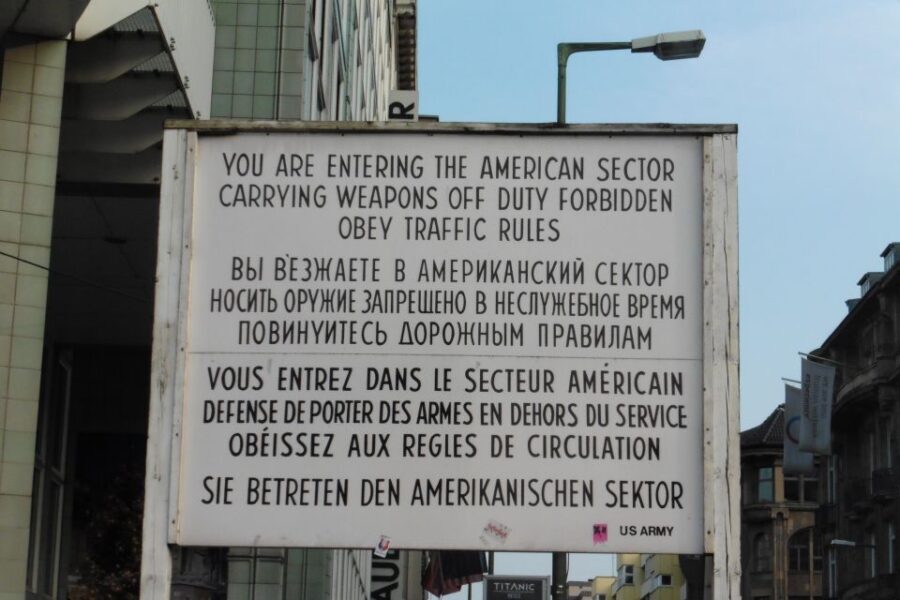
Along the route, you’ll also pause your attention on two major “signals” of modern Berlin: the Reichstag and the Hotel Adlon Kempinski Berlin. These stops work because they remind you what came after the Wall era.
The Reichstag matters because it’s the seat of Germany’s parliament. Even without going inside, it helps to see how the city re-centered itself after reunification. During the Cold War, Berlin’s borders could dominate your sense of place. After reunification, institutions like the Reichstag became symbols of national return. Your guide’s job is to connect those dots without turning the tour into a lecture.
Then there’s the Hotel Adlon Kempinski Berlin, a landmark address near the Brandenburg Gate area. You don’t need a hotel brochure to get the point. It sits in a part of Berlin where international attention has long focused, and it’s a reminder that Berlin wasn’t isolated. It was watched closely, negotiated hard, and turned into a stage where major powers tried to look in control.
If you’re the kind of traveler who likes seeing how political power shows up in real spaces, these stops are worth the brief attention. If you’re mainly here for the Wall itself, you might treat them as context stops, not the main event.
Either way, they help you understand the arc of the tour: division, pressure, then a new civic identity.
Checkpoint Charlie: the allied border and the 1961 near-miss
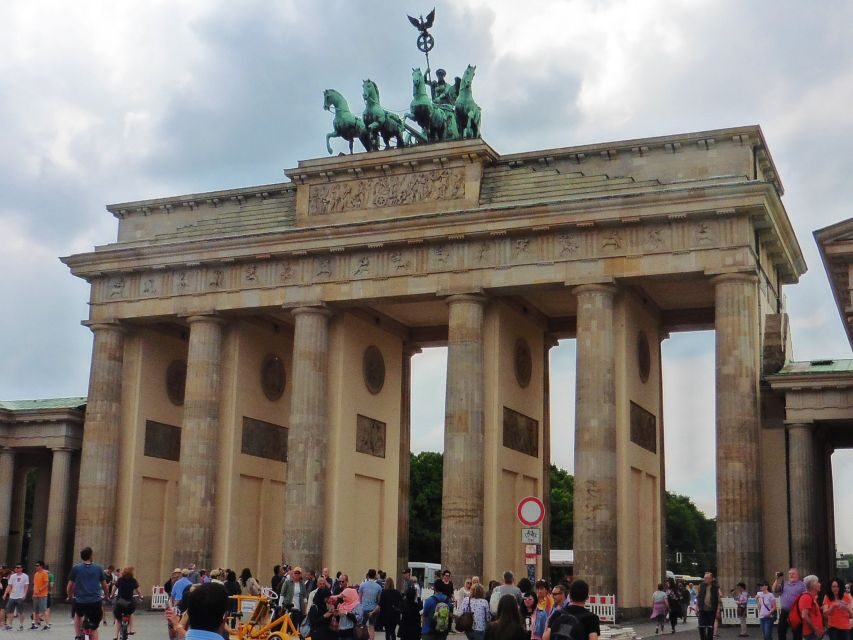
Checkpoint Charlie is the emotional closer, and it’s handled well. You’ll arrive at the famous allied border that crossed from West to East Berlin during partition. That allied role is important. It explains why this place became more than a street crossing. It was a stage for power—and for moments where words and uniforms nearly turned into something far worse.
You’ll take a photo at Checkpoint Charlie, but the value is what comes right after the camera moment. Your guide tells a fascinating story about an altercation in 1961, one that almost ignited World War 3. That’s a big claim, and the tour earns the tension by tying it to the reality of that era: when two systems face each other at close range, small incidents can balloon.
This is also where the tour’s themes click together. Earlier you heard about escapes from East Berlin. Here you see the border system in its official, allied form. Together, they show two sides of the same coin: people trying to get out, and officials trying to keep the line intact.
And because the tour finishes here, you’re not rushing to make the last stop. You can linger, re-check your photos, and orient yourself for what to do next—whether that’s walking onward into the surrounding area or heading back to your hotel.
The guide factor: Carlo’s personal angle makes it stick
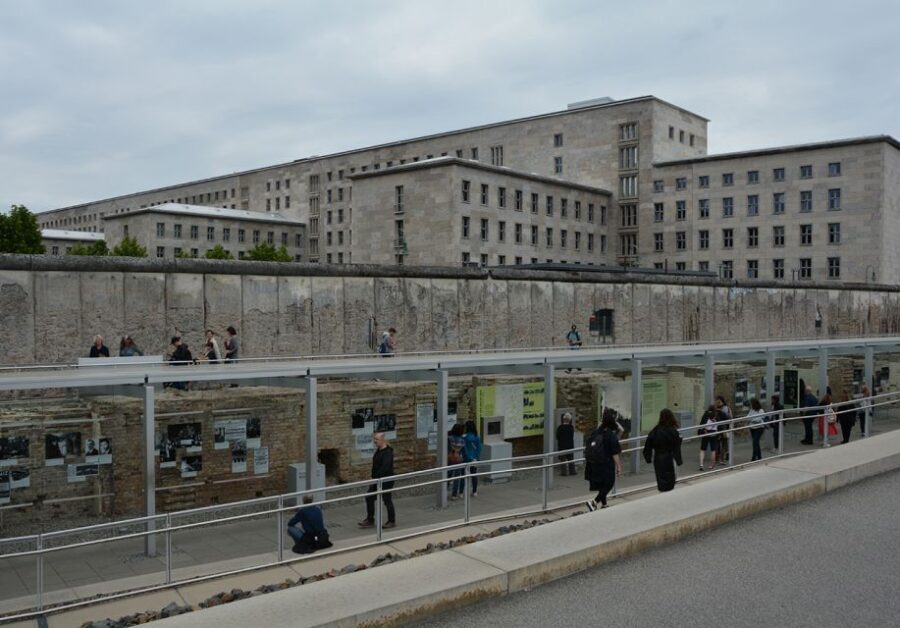
The biggest difference between a “sights-only” walk and this one is the human layer added by the guide. Carlo’s storytelling comes from lived context, not just classroom knowledge. Multiple accounts highlight that he can share private experiences of Berlin’s history, including what it was like growing up in West Berlin.
That personal angle changes how you listen. When you hear about the Wall from someone who understands the emotional atmosphere of the city, the facts land harder. You also get a more flexible conversation. People felt comfortable asking questions, and Carlo answered them. He also shared extra tips for museums and cafes, which can be genuinely helpful after a historical tour.
In other words, you’re not just collecting sights. You’re building context you can use while you explore the rest of Berlin on your own.
One practical note: the live tour guide language is German. If your German is basic, you’ll still likely follow the landmarks and story flow, but the best experience comes when you can catch the key details. If you want everything to be crystal clear, consider whether German is comfortable for you.




Price and value: is $43 for 2 hours worth it?
At $43 per person for a 2-hour small-group walk, this sits in the “good value” category for Berlin. You’re paying for three things that matter more than the price tag: a real guide, a tight route through major sites, and story-driven interpretation that saves you the work of piecing history together later.
Let’s be blunt. If you try to self-tour this route on your own, you can see the Gate and Checkpoint Charlie. But you won’t naturally get the escape stories, the explanation of the Gate’s 28-year isolation, or the framed Cold War logic behind terms like front city and island of freedom. A guide turns those into meaning.
The small group size—limited to 10 participants—also helps the value. You’re not stuck watching from the back while someone else asks the only question that could clear up confusion. You can actually get answers.
So I’d call it a fair price if you want structure and interpretation in a short time. If you’re the type who enjoys slow, independent exploration with no guided narrative, you might find you prefer a self-paced route instead.
Timing, weather, and how to dress for this kind of day
This tour runs in all weather conditions and on all public holidays. That’s Berlin reality. You’ll get out and walk no matter what the sky does, so dress like you mean it.
Because it’s a walking-focused experience, you’ll want clothing that handles wind and sudden drizzle, plus shoes that won’t punish you after a couple of hours. Also, since it includes multiple city stops, be ready for the normal urban pace: short crossings, tight spacing near monuments, and the stop-and-listen rhythm that guides use.
If you’re thinking of pairing this with a museum day, you’ll probably feel best doing it earlier in your timeline. You get the narrative spine of modern Berlin first, then the museums make more sense afterward.
Who should book this tour, and who might skip it
This is a strong fit if:
- You’re a first-time Berlin visitor who wants the Cold War story in a short walk
- You care about the Wall, but you also want the human side—especially escape stories
- You like guided context that helps you understand what you’re seeing, not just where it is
- You prefer small-group conversations
You might skip it if:
- You want lots of inside-the-building time or long breaks at museums
- You don’t handle historical tension well and would rather keep things lighter
- You want to move at your own speed with minimal talking
Should you book this Berliner tour?
If you have two hours and you want the Berlin Wall story explained clearly, this one earns a yes. The route hits major anchors—Brandenburg Gate, Wall remnants tied to the Berliner Mauerweg, the Reichstag area, and Checkpoint Charlie—and the guide’s personal perspective (Carlo) is the part that makes it memorable.
Book it if you want structure, emotion, and meaning in one compact walk. If you’re already fluent in Cold War detail and you’d rather wander without guidance, a self-guided route might suit you better.
Either way, you’ll leave with a sharper sense of why Berlin became a place of both fear and freedom.
FAQ
How long is the tour?
It lasts 2 hours.
Where do I meet the guide?
Meet at the exit of the metro station S+U Bhf. Brandenburger Tor, exit B, in the direction of Pariser Platz/Straße des 17. Juni. Look for the Get Your Guide flag with the tour guide.
What sights are included?
You’ll see Brandenburg Gate, walk along sections connected to the Berliner Mauerweg and the Berlin Wall, view the Reichstag and Hotel Adlon Kempinski Berlin, and end at Checkpoint Charlie.
What language is the live guide?
The live tour guide language is German.
What is the group size?
It’s a small group limited to 10 participants.
Is the tour wheelchair accessible?
Yes, it is listed as wheelchair accessible.
Does the tour run in all weather?
Yes. It takes place in all weather conditions and on all public holidays.
What is the price?
The price is $43 per person.
Is there free cancellation?
Yes. You can cancel up to 24 hours in advance for a full refund.
Can I reserve without paying today?
Yes. It offers reserve now & pay later, so you can book your spot and pay nothing today.