REVIEW · BERLIN
Berlin: Small Group Bike Tour Through City Center
Book on GetYourGuide →Operated by BBT-Sightseeing & More · Bookable on GetYourGuide
Berlin moves fast when you ride it.
This small-group bike tour is a smart way to see Berlin’s key sights without getting tangled in transit or doing the whole day on foot. I especially like the way the route starts at Bornholmer Straße (linked to the Berlin Wall’s fall) and then threads through big political and historic landmarks, ending with a fun look at newer Berlin. One thing to plan for: it runs in all weather, so you’ll need to be comfortable pedaling in rain or sun.
You’re also in good hands with a live German guide who helps you connect what you see—border-crossing history, major institutions, and major monuments—into one rideable story. The one possible drawback is simple: you’re cycling for about 3.5 hours, so if you’re not into steady time on a bike, this may feel like too much saddle time.
In This Review
- Key highlights worth penciling in
- Entering Berlin at Bornholmer Straße: where the story starts
- The New Synagogue and Old Post Headquarters: contrast in the middle of Mitte
- From Hauptbahnhof to Charité: Berlin’s working heart, not just postcard views
- The Government Quarter and Reichstag: symbols you can feel from street level
- Brandenburg Gate and the Holocaust Memorial: two different weights on the same route
- Alexanderplatz: big city energy plus very specific East Berlin details
- Prenzlauer Berg finish: a newer Berlin mood after the classics
- The 3.5-hour ride: why this format is good value at $39
- What’s included, what to bring, and what you should avoid
- Weather reality: riding in all weathers
- Who should book this Berlin bike tour
- Should you book it?
- FAQ
- How long is the Berlin bike tour?
- What does the $39 price include?
- What language is the live guide?
- Where do we meet, and where does the tour end?
- What should I bring with me?
- Is the tour affected by weather?
- Can I bring luggage or large bags?
Key highlights worth penciling in
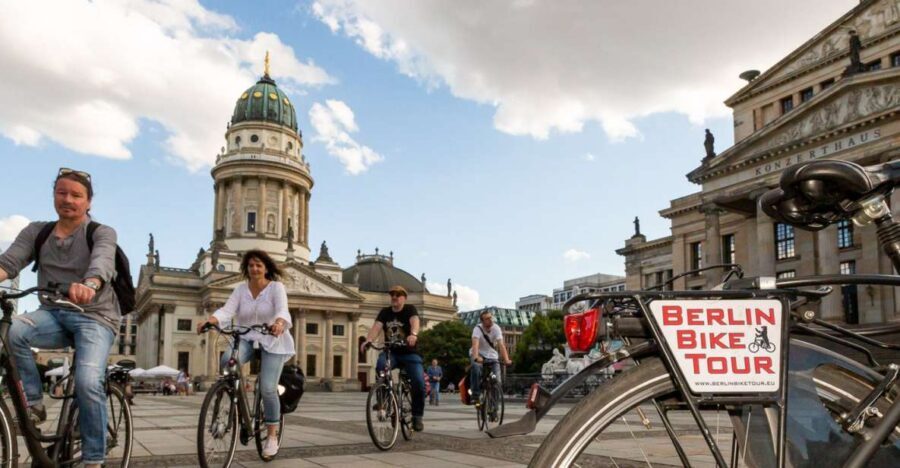
- Bornholmer Straße border-crossing moment: the ride starts at the day the Berlin Wall fell.
- New Synagogue and Old Post Headquarters: two standout stops that add visual contrast to the history-heavy route.
- Government Quarter and Reichstag: big symbols of a united Berlin, seen from the street.
- Tiergarten to Brandenburg Gate: central Berlin’s “main stage” route, with plenty of landmarks along the way.
- Alexanderplatz details you can’t unsee: Red Town Hall, TV Tower, Neptune Fountain, and the East German World Clock.
- Prenzlauer Berg finish: a newer, hipper-feeling area to round off the tour.
Entering Berlin at Bornholmer Straße: where the story starts
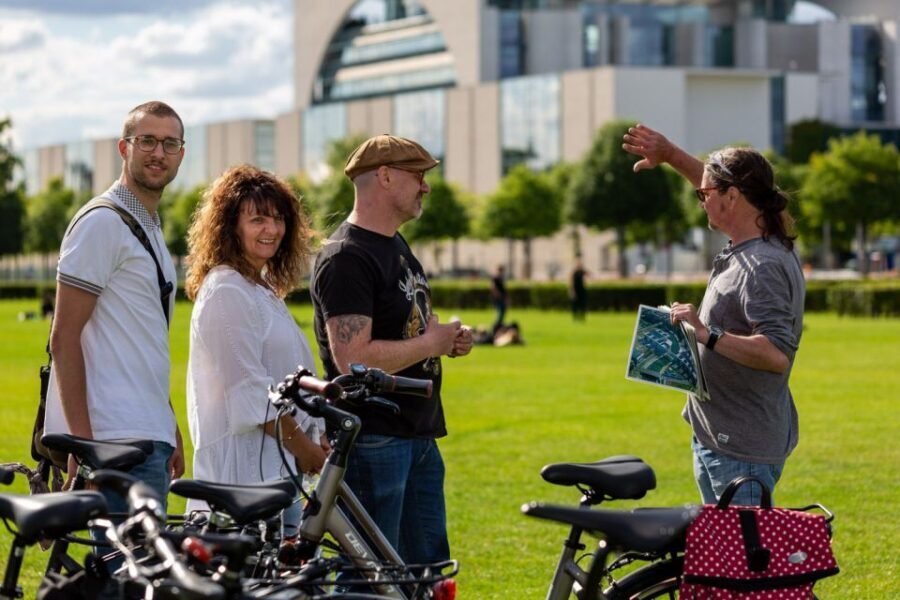
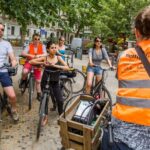
The best part of this tour is that it begins in the right place. You meet at 75 Bornholmer Straße in Mitte, and you’re there early enough (arrive about 20 minutes before) to get comfortable, fit your bike, and start with the group in one calm sweep.
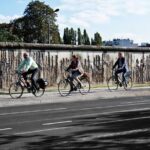
Bornholmer Straße is more than an address here. It’s highlighted as a former border-crossing point tied to the day the Berlin Wall fell. That matters because Berlin can feel like a set of individual attractions. Starting at a historically charged spot gives you a timeline anchor, so later stops—government buildings, memorials, and symbols of unity—hit harder.
Practical tip: this is a ride with meaning, not just sightseeing. If you like understanding how cities changed, you’ll appreciate that the guide frames what you’re seeing instead of treating it like a checklist.
You can also read our reviews of more cycling tours in Berlin
The New Synagogue and Old Post Headquarters: contrast in the middle of Mitte
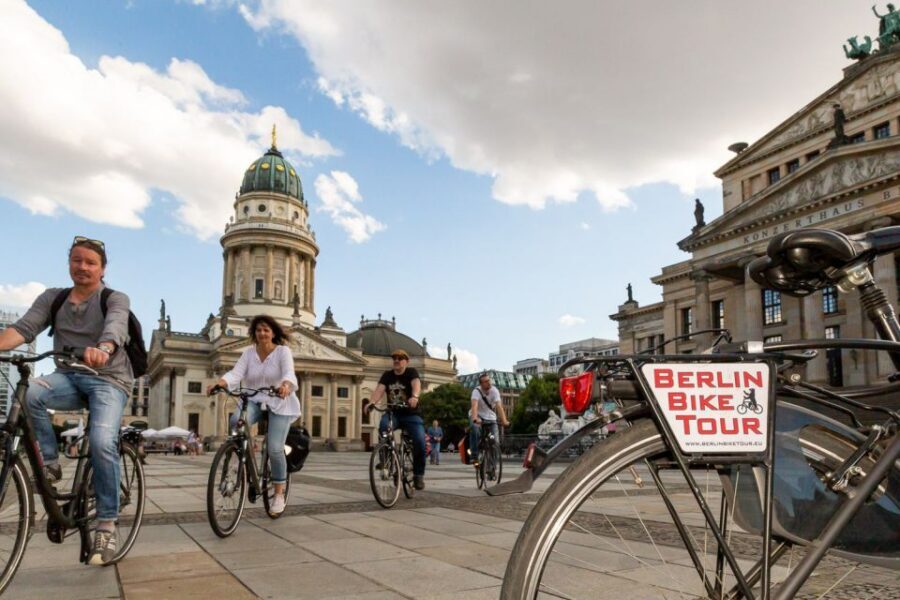
From the opening historical point, the route moves into sights that add a different flavor to the day. Two of the early highlights are the Old Post Headquarters and the New Synagogue.
I like these stops because they remind you Berlin isn’t only about politics and monuments. Even within central Berlin, you get architecture and community landmarks that feel rooted and specific. If your travel style is the kind that enjoys noticing building details, you’ll likely enjoy this part because it breaks up the emotional heaviness that can come later.
Also, this is the kind of stop where a live guide helps. On foot, it’s easy to speed past impressive facades. On a bike, you get moving context—what’s around it, why it’s part of the center of the city, and how it connects to the larger route.
From Hauptbahnhof to Charité: Berlin’s working heart, not just postcard views
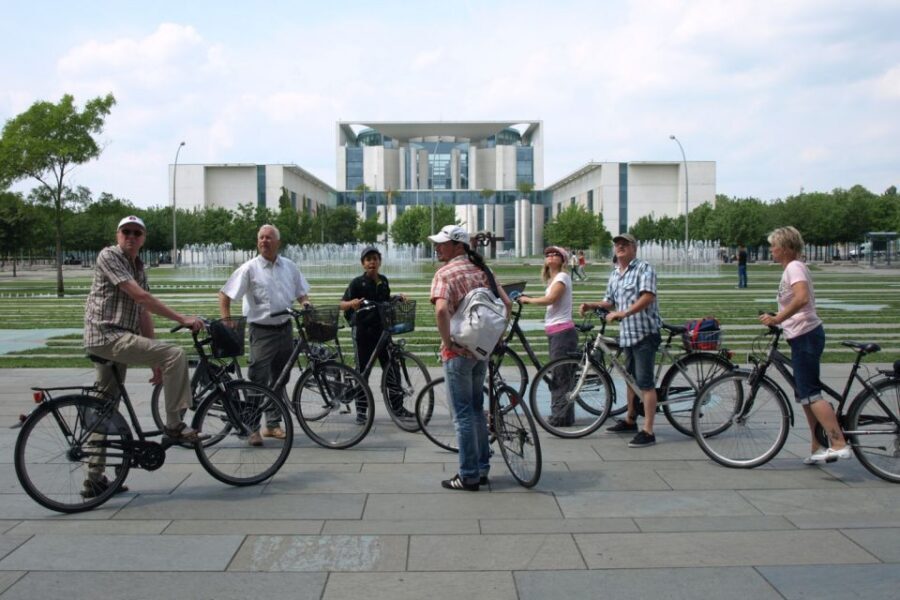
Mid-tour you’ll pass major city infrastructure and institutions: Hauptbahnhof and the Charité are both called out as stops.
This is where the bike format really pays off. Berlin’s central areas can feel huge if you’re walking. By cycling through the city core, you get the sense of how the city functions today—big transit, major medical and research presence, and the everyday movement of people around monumental spaces.
For you, that means the tour doesn’t only live in the past. You get a city-of-today perspective too. And even if you don’t know much about Charité ahead of time, seeing it as part of a route that later reaches the Government Quarter gives you a fuller picture: Berlin is both symbolic and operational.
The Government Quarter and Reichstag: symbols you can feel from street level
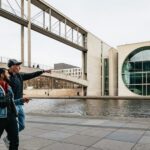
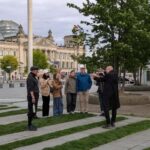
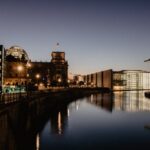
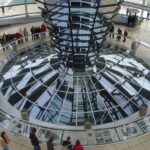
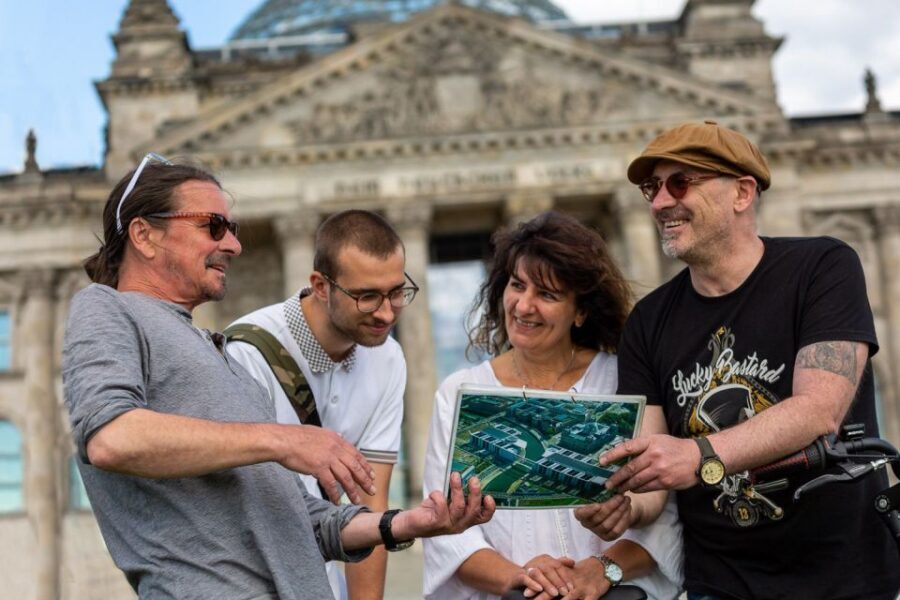
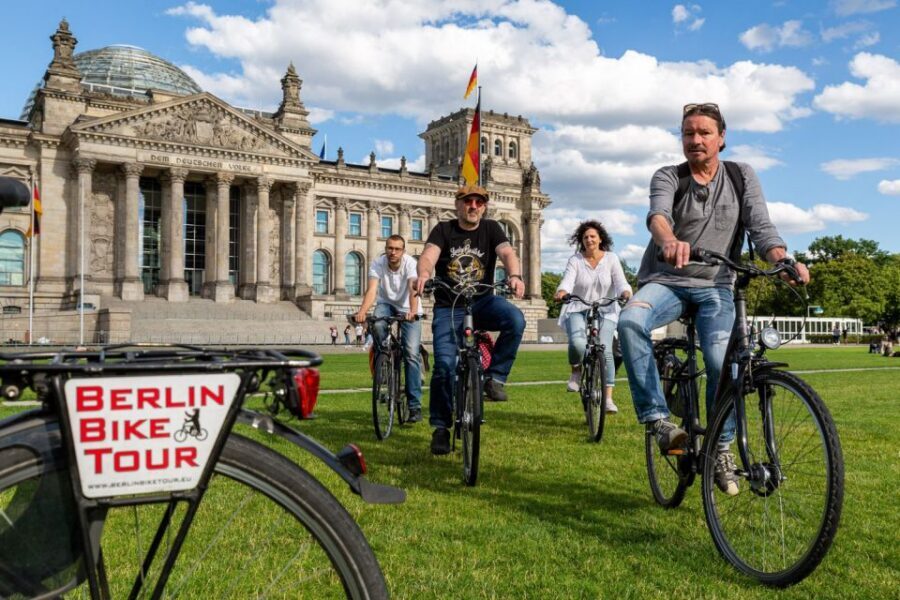
Then comes a heavy-hitter section: the Government Quarter and the Reichstag.
This is exactly the kind of moment where I’d want a guide. Landmarks like this are easy to photograph, but harder to interpret without some framing. The tour is set up so these buildings aren’t just seen—they’re connected to the theme of a united Berlin.
Even if you’ve read about these sites before, you’ll likely enjoy experiencing them from a bike route. You can see the surrounding context—how the area sits in the city’s layout—without spending the day doing slow detours. And because it’s a small group, you’re not stuck behind a huge crowd at every stop.
Brandenburg Gate and the Holocaust Memorial: two different weights on the same route
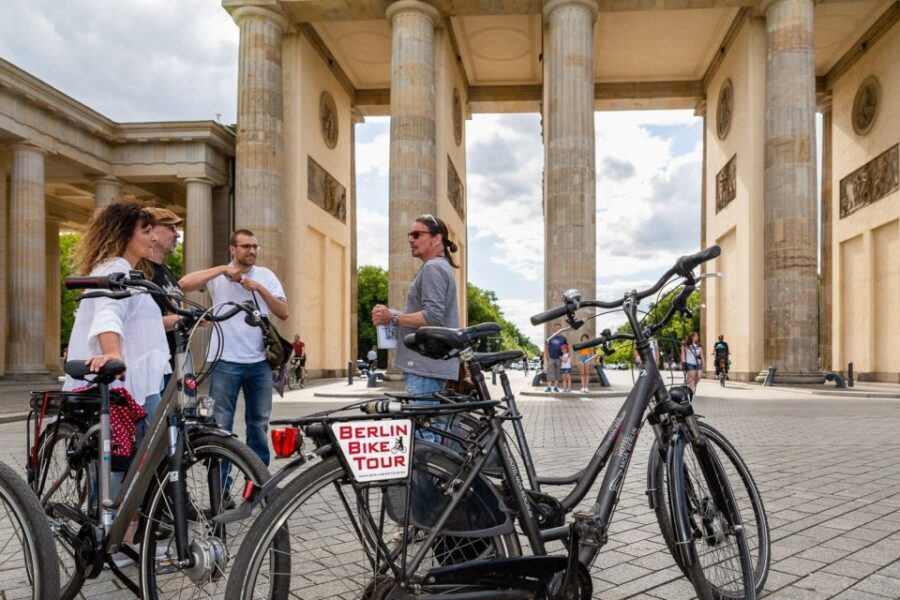
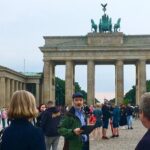
When the tour rides through the Tiergarten toward the Brandenburg Gate, it becomes the most famous part of the experience—one you probably came for, even if you’re not a Berlin history expert.
The Brandenburg Gate is presented as the most famous landmark in the city, and the way the route uses the Tiergarten matters. Instead of hopping from one isolated site to another, you get a central-park stretch that feels like a breath between major stops. It also makes the ride more enjoyable. You’re not always in “tight sightseeing mode.”
After that, the Holocaust Memorial is part of the continued route. This is one of those places where the experience should feel solemn and respectful. A bike tour still gives you a useful advantage: you arrive as part of a sequence of meaning, not like you’ve randomly parked and wandered. The guide’s context helps keep the visit grounded.
If you prefer quiet contemplation over rapid photos, tell the guide when you want extra time. In a small group, there’s usually more flexibility than with big bus tours.
You can also read our reviews of more city tours in Berlin

Alexanderplatz: big city energy plus very specific East Berlin details
The tour continues toward Alexanderplatz, one of Berlin’s most important squares. What I like here is that it’s not just “one stop.” It’s a concentrated cluster of landmark points, and you’re given a guided pass through:
- Red Town Hall
- TV Tower
- Neptune Fountain
- The East German World Clock
That last item is the kind of detail you might miss on your own unless you’re already hunting for it. The tour highlights it as unique, and it gives Alexanderplatz more character than the usual generic city-square impressions. You can feel how Berlin’s East and West histories overlap here.
Also, Alexanderplatz is where the ride helps you understand layout. If you visit it alone, it’s easy to get turned around. Cycling through with a guide gives you a clearer sense of how the square functions and how it links to nearby neighborhoods.
And yes, this is where you’ll likely want your camera ready. It’s prime “Berlin in one frame” territory.
Prenzlauer Berg finish: a newer Berlin mood after the classics
After Alexanderplatz, you’ll cycle through Prenzlauer Berg, described as hip and loved, before returning back to your starting point.
This ending choice is smart. After historical anchors, government symbols, and major memorials, Prenzlauer Berg gives you a different vibe—more contemporary, more street-level, more everyday. It also makes the tour feel complete: you see Berlin’s core landmarks, then you get a sense of what’s lively nearby.
You’ll likely enjoy this section most if you like to end tours with a walk-around feeling, even if you’re still on the bike for the transfer. It’s a good “cool down” before you head off on your own.
The 3.5-hour ride: why this format is good value at $39
At $39 per person for about 3.5 hours, this tour can feel like a bargain if your goal is efficient, guided orientation.
Here’s why the value works:
- You get a bicycle and a city guide bundled in, so you’re not paying separately for rental plus interpretation.
- The route hits major sights in central Berlin—so you’re paying for a time-saving plan, not just the mechanics of getting around.
- The small group limit (max 8) is part of what you’re paying for. It keeps the experience from turning into a crowded shuffle where you can’t hear or move comfortably.
One more practical point: you don’t have to decide between “history tour” and “neighborhood vibe” on different days. This ride mixes them. That’s worth money when you’re short on time.
Just remember what’s not included. Food and drink are on you, so plan a snack or plan to eat after. Also, no mention of extra museum entries—this is a sight-and-story bike route, designed to keep the momentum.
What’s included, what to bring, and what you should avoid
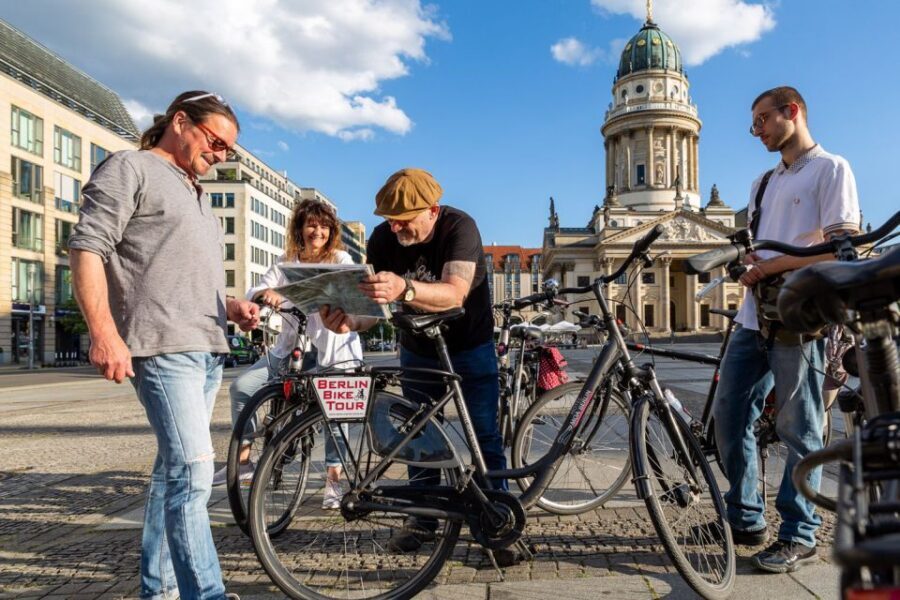
Included in the tour:
- Bicycle
- City guide
- Rain poncho (if needed)
Not included:
- Food and drink
- Arrival time to the meeting point
What to bring:
- Passport or ID card
- Sunglasses
- Sun hat
- Camera
What to avoid:
- Luggage or large bags
This matters because a bike tour works best when everyone travels light. If you’re trying to carry big day-bag weight, you’ll feel it. Leave extra luggage at your hotel and pack like you’re heading out for a few hours, not a full vacation haul.
Weather reality: riding in all weathers
This tour runs in all weather, and rain ponchos are provided on rainy days. That means you shouldn’t let a drizzle scare you off, but you should dress like you actually intend to bike.
If you have a sun-sensitive face, the sun hat tip is there for a reason. Berlin’s central areas can look mild until you’re riding with wind and direct light. Bring what helps you stay comfortable so you can focus on the sights and not on adjusting your clothes every five minutes.
Who should book this Berlin bike tour
This is a great fit if:
- You want a fast, guided overview of Berlin’s central landmarks.
- You enjoy history but don’t want a slow, sit-still museum day.
- You prefer a small group (max 8) and a live guide in the mix.
- You’re curious about how the city tells its story—from border-crossing history to today’s central districts.
It may be less ideal if:
- You hate riding bikes or you’re not comfortable cycling for about 3.5 hours.
- You’re traveling with big luggage or you need lots of gear along the way.
Should you book it?
Yes, I’d book this if you’re trying to get your bearings fast and you want a Berlin route with clear “story beats.” The combination of Bornholmer Straße, major political landmarks, the Brandenburg Gate/Tiergarten stretch, and the Alexanderplatz details makes it a solid value for $39—especially because you’re not doing it alone.
Skip it only if you know you won’t enjoy the bike time, or if you’re planning to carry heavy bags. If you can travel light and you’re open to all-weather cycling, this is one of the more efficient ways to experience the city center without missing the key moments.
FAQ
How long is the Berlin bike tour?
The tour lasts about 3.5 hours. Starting times vary, so you’ll want to check availability.
What does the $39 price include?
It includes a bicycle, a city guide, and a rain poncho if necessary.
What language is the live guide?
The live tour guide speaks German.
Where do we meet, and where does the tour end?
You meet at 75 Bornholmer Straße, Berlin 10439, and the tour ends back at the same meeting point.
What should I bring with me?
Bring your passport or ID card, plus sunglasses, a sun hat, and a camera.
Is the tour affected by weather?
Yes, it runs in all weathers. Rain ponchos are provided on rainy days.
Can I bring luggage or large bags?
No. Luggage or large bags are not allowed.